


HTRC 3A Car Battery Charger 6V/12V ⚡
Product description
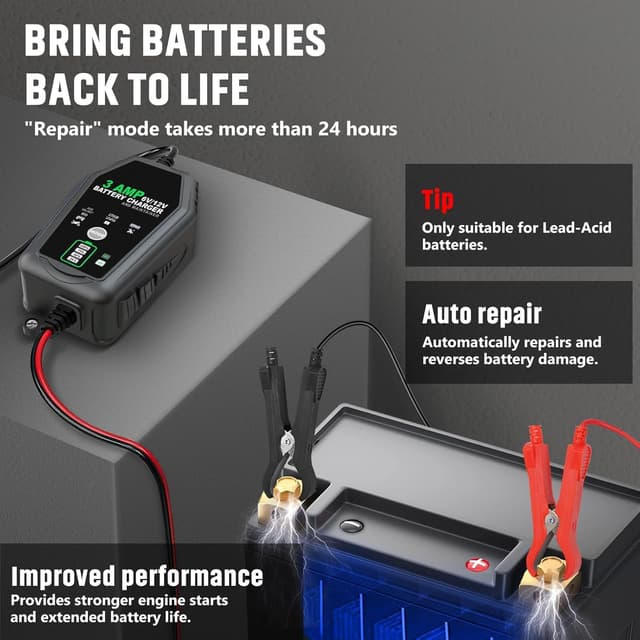
This compact battery charger from HTRC delivers a simple way to maintain and charge small vehicle batteries, offering compatibility with both 6V and 12V systems and a modest 3A current for regular top-ups and recovery. It is aimed at users who need a lightweight maintainer for motorcycles, boats and lawn mowers, and it includes a pulse repair feature that helps reduce sulphation in lead-acid batteries according to the manufacturer.
Key Points
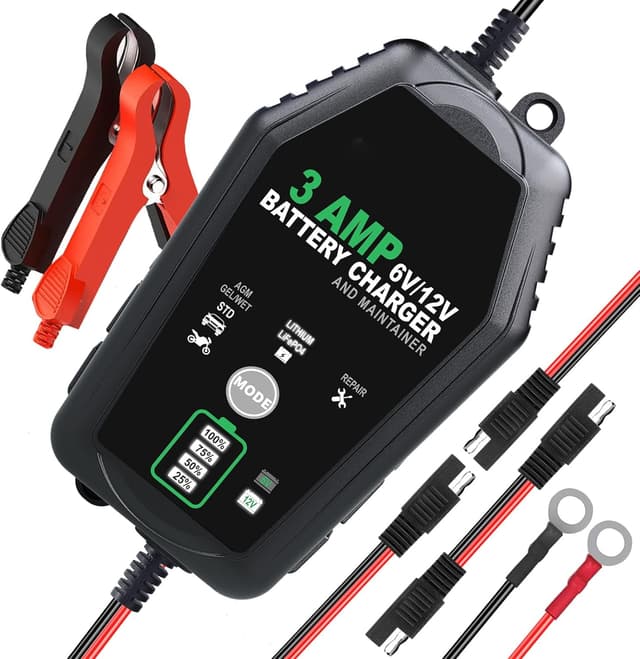
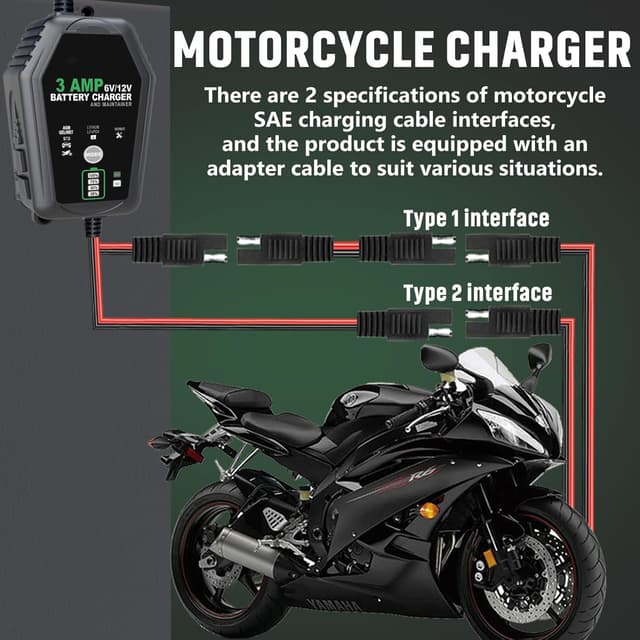
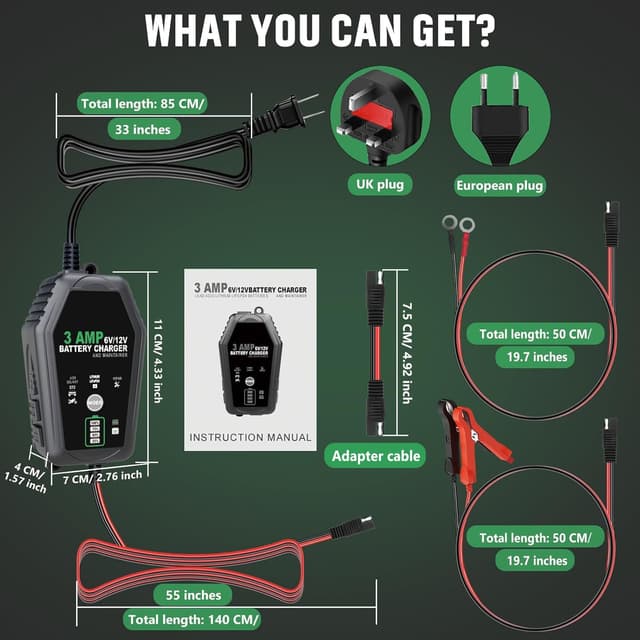
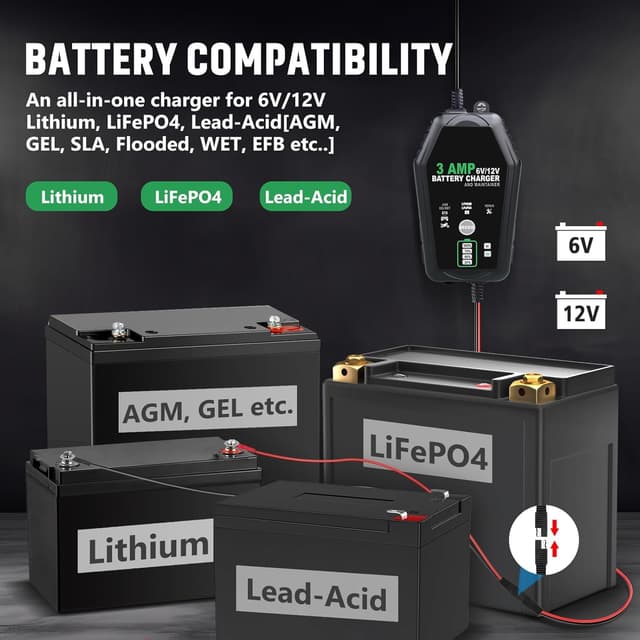
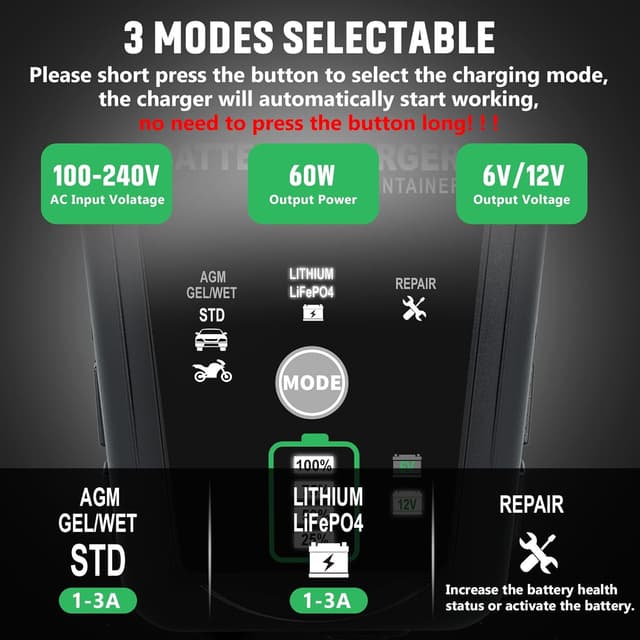
The charger works with a wide range of chemistries, including lithium and LiFePO4 as well as lead-acid variants such as AGM, GEL and EFB. Connection options are versatile, with SAE plugs for quick attachment to motorcycles, ring terminals for semi-permanent installation and fully insulated clips for occasional use. This flexibility makes it straightforward to switch between vehicles without additional adapters. ⚡️
A one-button control cycles between the available charge modes and offers a forced 12V option if a deeply discharged 12V battery is misidentified as a 6V unit. The unit also incorporates safety features that guard against sparks, reverse polarity, overcurrent, overvoltage and overheating. Consider that completely flat batteries cannot be reactivated by this charger according to the manufacturer, so it is not suitable for restoring batteries that have been left to discharge fully.
Technical Specifications
- Name: HTRC 3A Car Battery Charger
- Charging current: - 3A
- Supported voltages: - 6V/12V
- Compatible battery types: - Lead-acid (AGM, GEL, MF, EFB, SLA, WET), Lithium, LiFePO4
- Connection methods: - SAE connector, ring terminals, fully insulated clips
Benefits
Because the charger doubles as a maintainer, it can be left connected for extended periods to prevent self-discharge when a vehicle is stored. The modest 3A output limits heat build-up and is suitable for maintaining smaller batteries without excessive stress. The inclusion of a pulse repair mode can help extend usable life for lead-acid batteries that have begun to sulphate, which may delay the need for replacement and reduce running costs. 🔋
Usage Recommendations
When using the charger, select the correct voltage before connecting if the battery is severely depleted, or use the forced 12V procedure to avoid misdetection. Attach the chosen connector securely and ensure good metal contact for reliable charging. Monitor charging in poorly ventilated spaces because the device will generate some heat during operation. For long-term installations use the ring terminals for a secure link, and for temporary maintenance the insulated clips provide quick removal when needed. ⚓️