


High-Speed PLA Filament 1.75mm 1kg 🖨
Product description
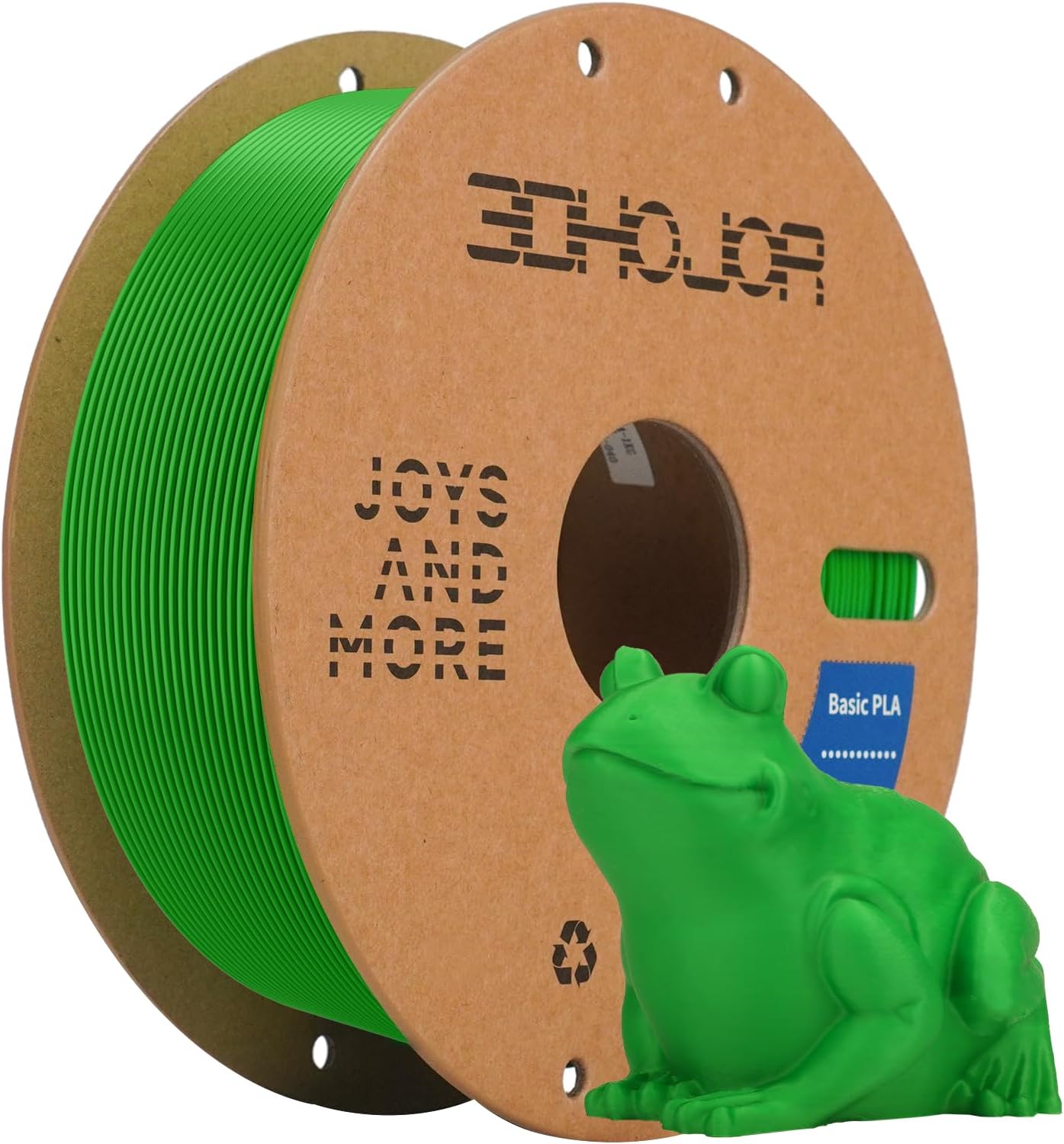
This PLA filament is built for faster 3D printing while keeping surface quality consistent. The high-speed PLA 1.75mm easily supports printing workflows that favour quicker layer deposition, and it is presented on a recycled cardboard spool for easier handling and storage. Ideal for users looking to reduce print time without a major trade-off on finish quality.
Key Points
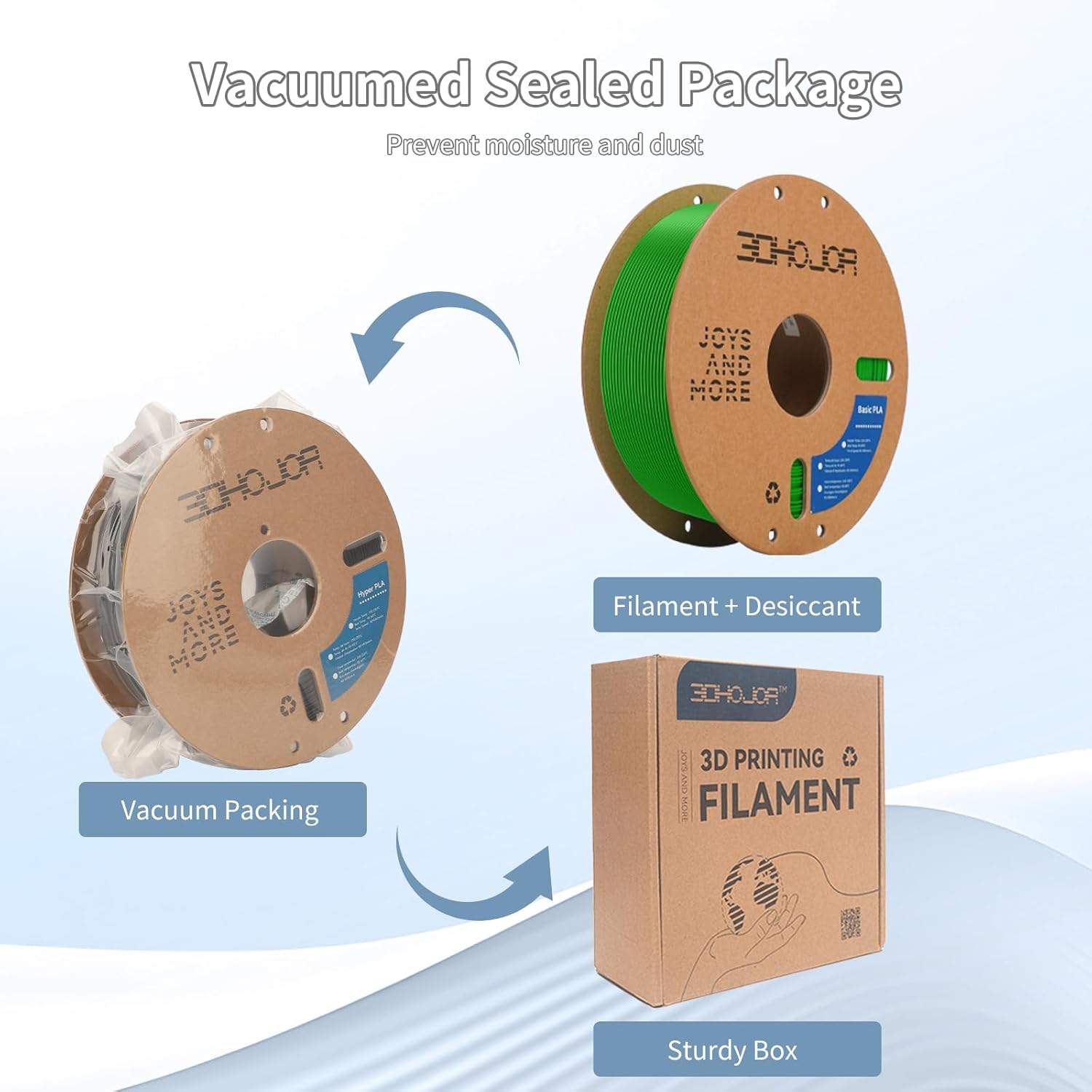
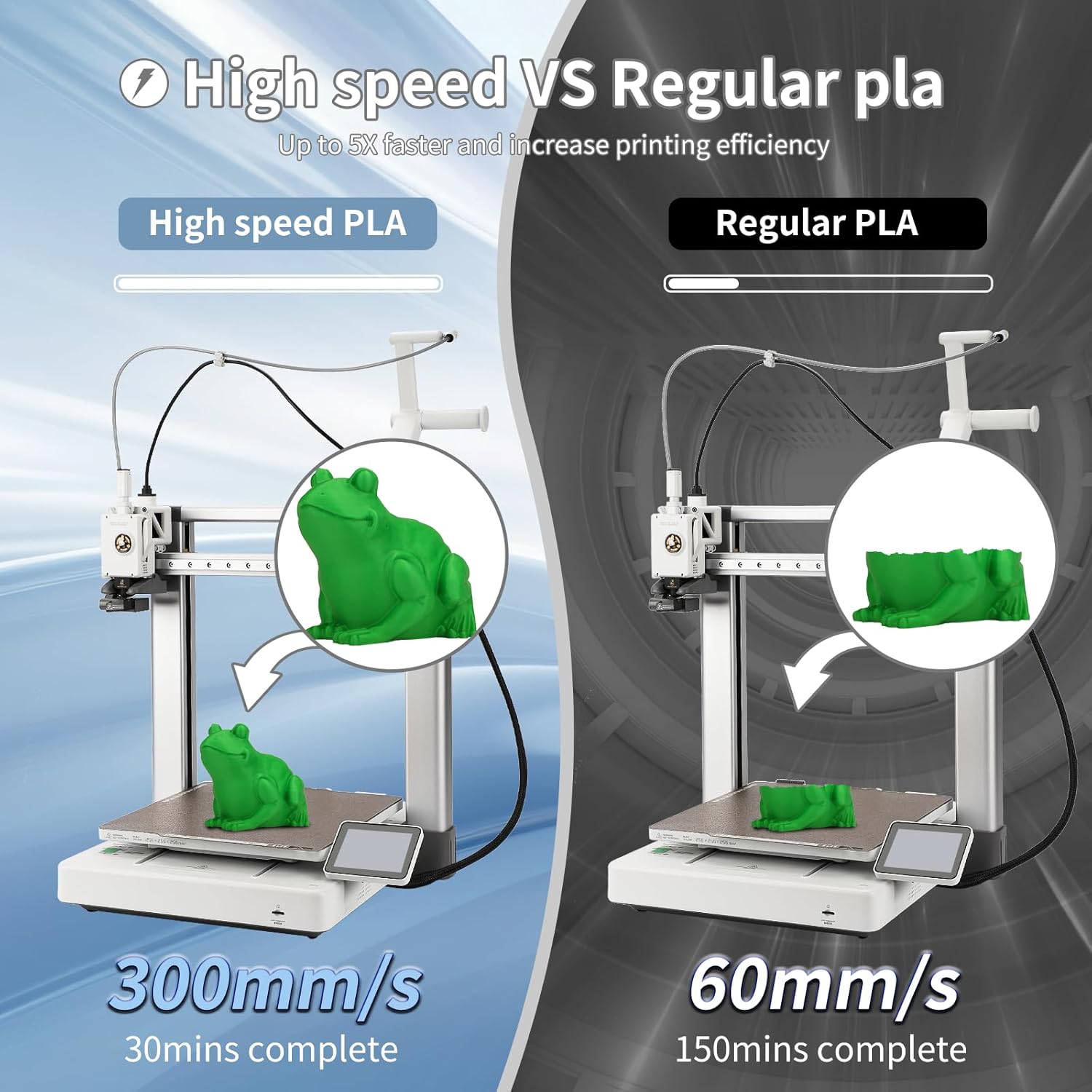
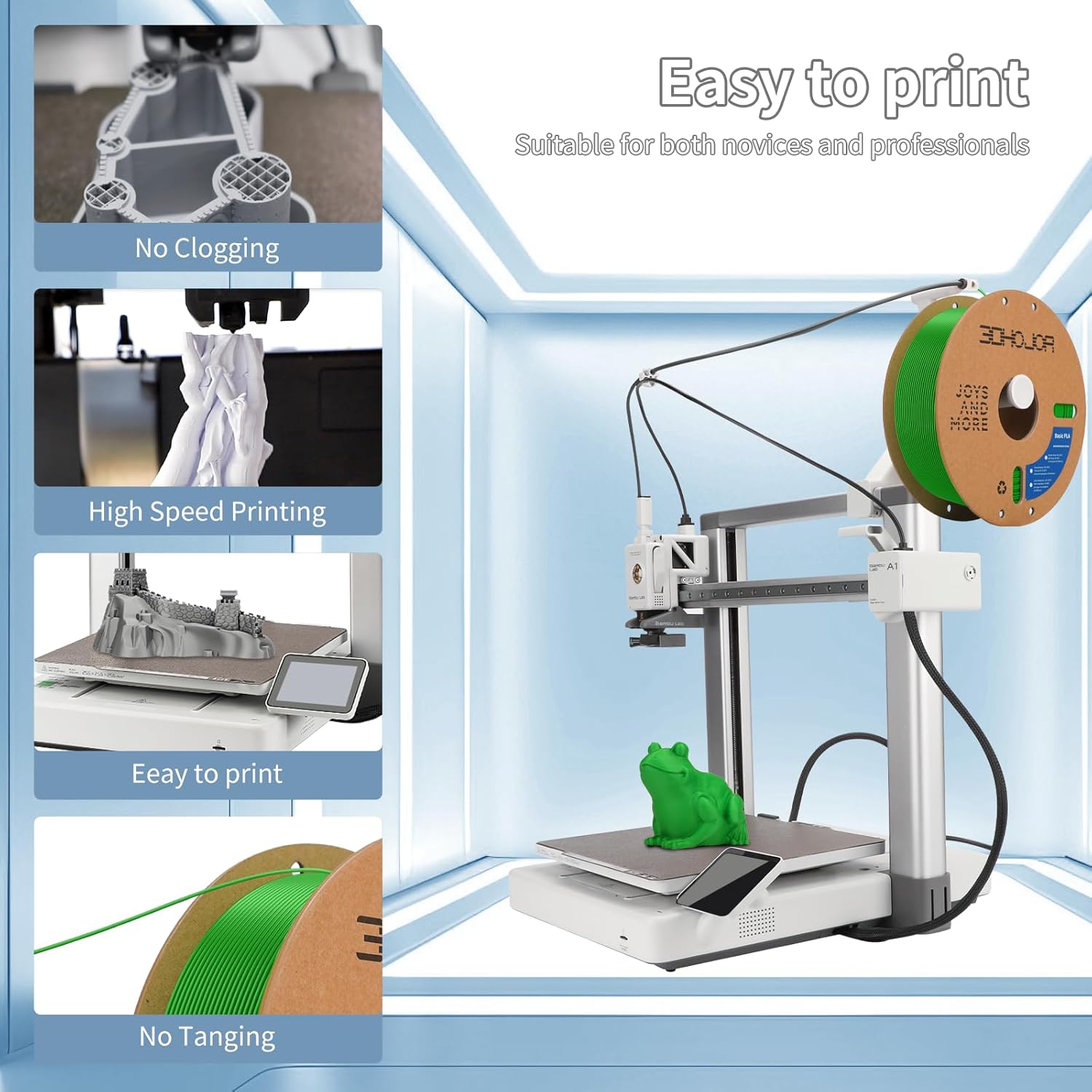
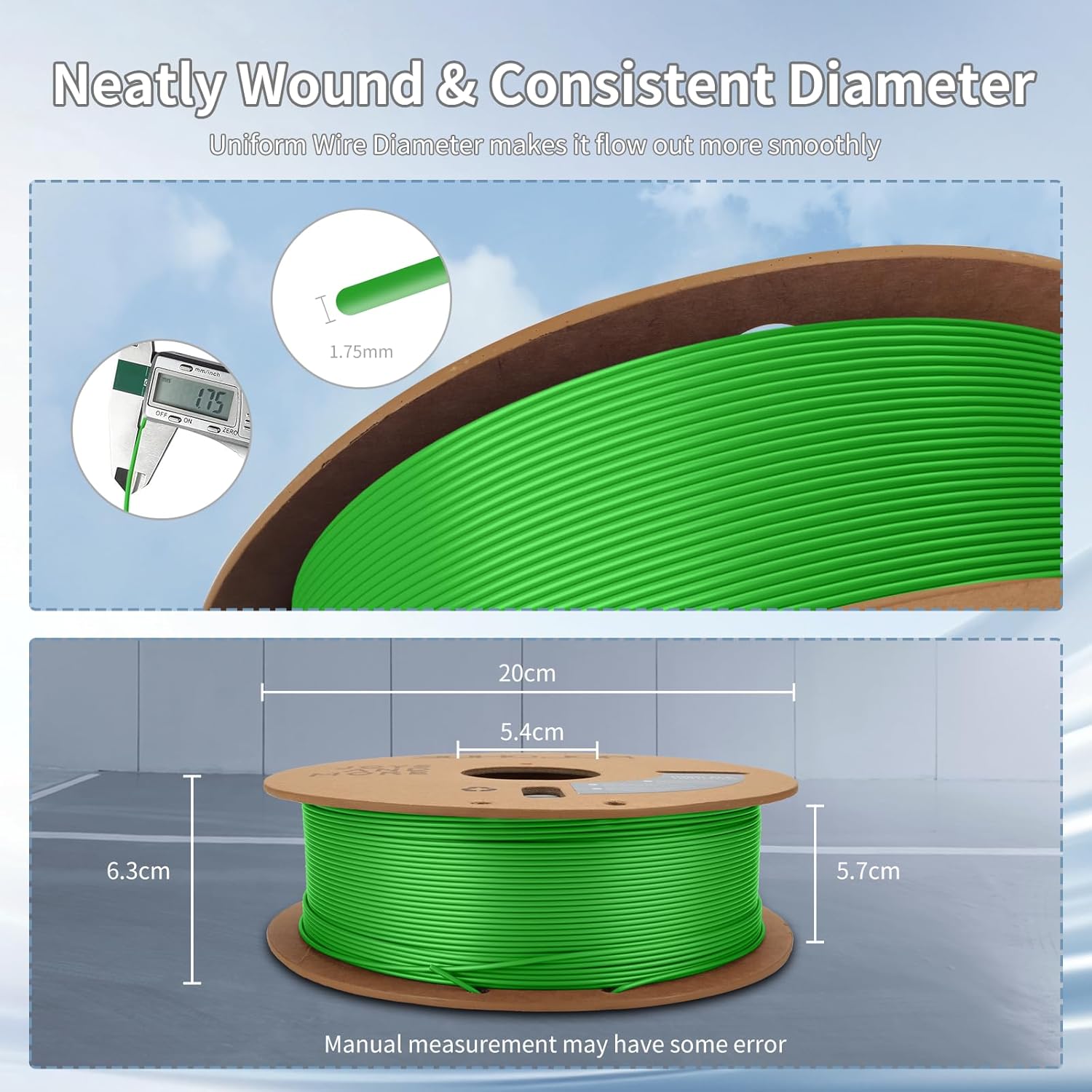
This filament supports recommended printing speeds from 40 up to 300mm/s, which can shorten job times on compatible high-speed FDM machines. It is sold vacuum-sealed with a desiccant to reduce moisture uptake and avoid bubbles, helping prints stay clean and reliable. The spool is mechanically wound and inspected by hand to reduce tangles and feeding issues, so prints start smoothly and remain stable during long runs. 🧵
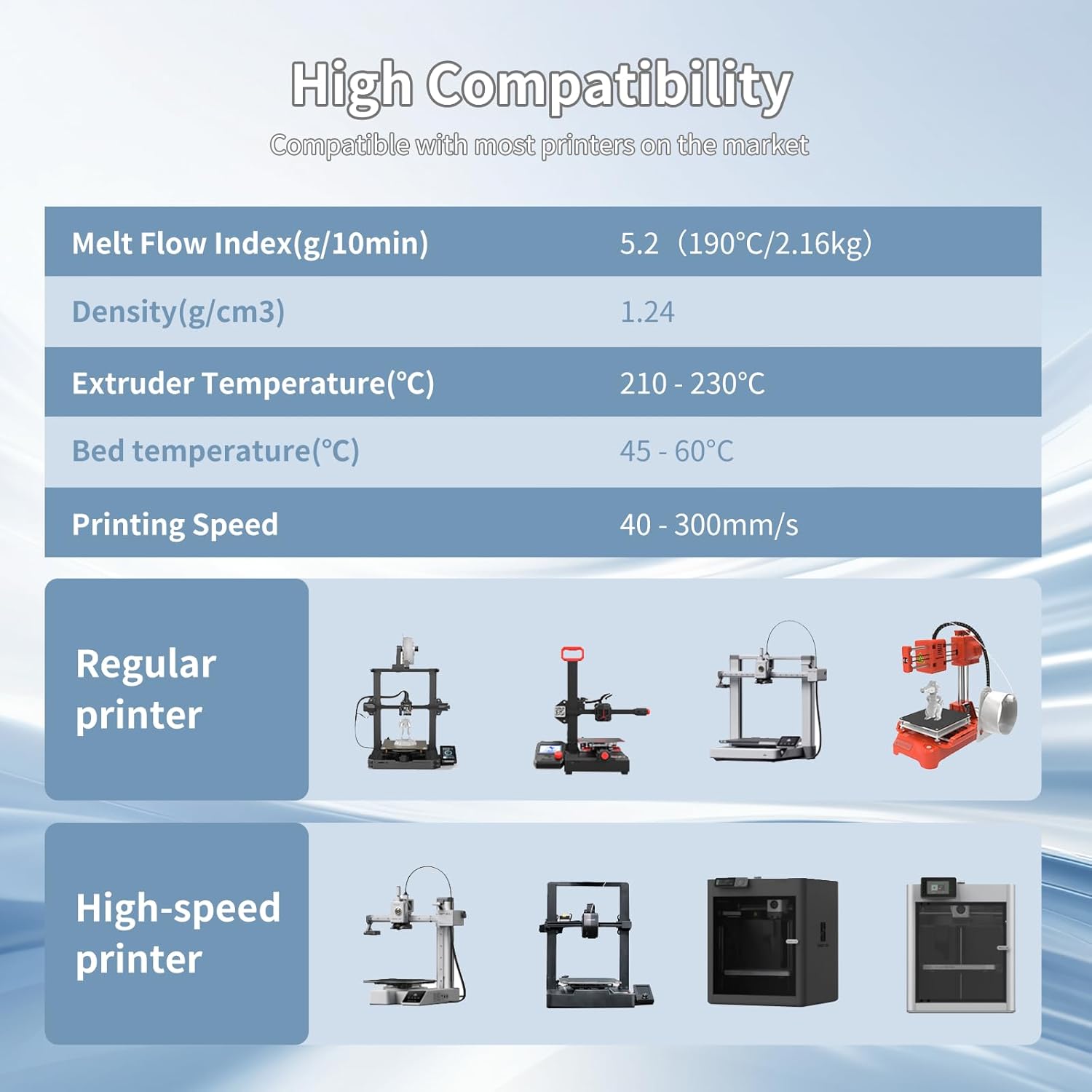
Compatibility is broad, with examples including Bambu Lab P1P and X1, AnkerMake M5, Voron 2.4, Raise3D, Prusa and Creality Ender series. Recommended temperatures are 190-230°C with a preferred setting around 215°C and a bed temperature range of 45-60°C. Cooling fan at 100% is suggested for typical PLA bridging and detail. 🔧
A note on performance: according to the manufacturer, dimensional tolerance is tight, which helps maintain consistent extrusion and layer registration across prints. Consider that very high speeds may require a printer capable of maintaining extrusion pressure and motion accuracy to fully exploit the upper range.
Technical Specifications
- Name: 3DHoJor PLA 1.75mm
- Diameter: 1.75 mm
- Recommended print temperature: 190-230°C, recommended 215°C
- Bed temperature: 45-60°C
- Dimensional Accuracy: ±0.03 mm
- Spool weight: 1 kg
- Recommended printing speed: 40-300 mm/s
Usage Recommendations
To get reliable results, load the filament onto a well-calibrated extruder and confirm the printer can handle higher accelerations and flow rates before attempting sustained prints at 300mm/s. For fine detail, print at lower speeds and use the suggested 215°C for balanced adhesion and finish. When switching spools allow the filament to dry if it has been exposed, even though the product comes vacuum-packed. For large or long prints check for loosening on the spool mount and ensure the filament path is free from sharp bends to avoid unexpected snags. 🧰
If you plan to test speed limits, perform short calibration towers to find the best compromise between velocity and surface quality on your specific machine. 🖨️