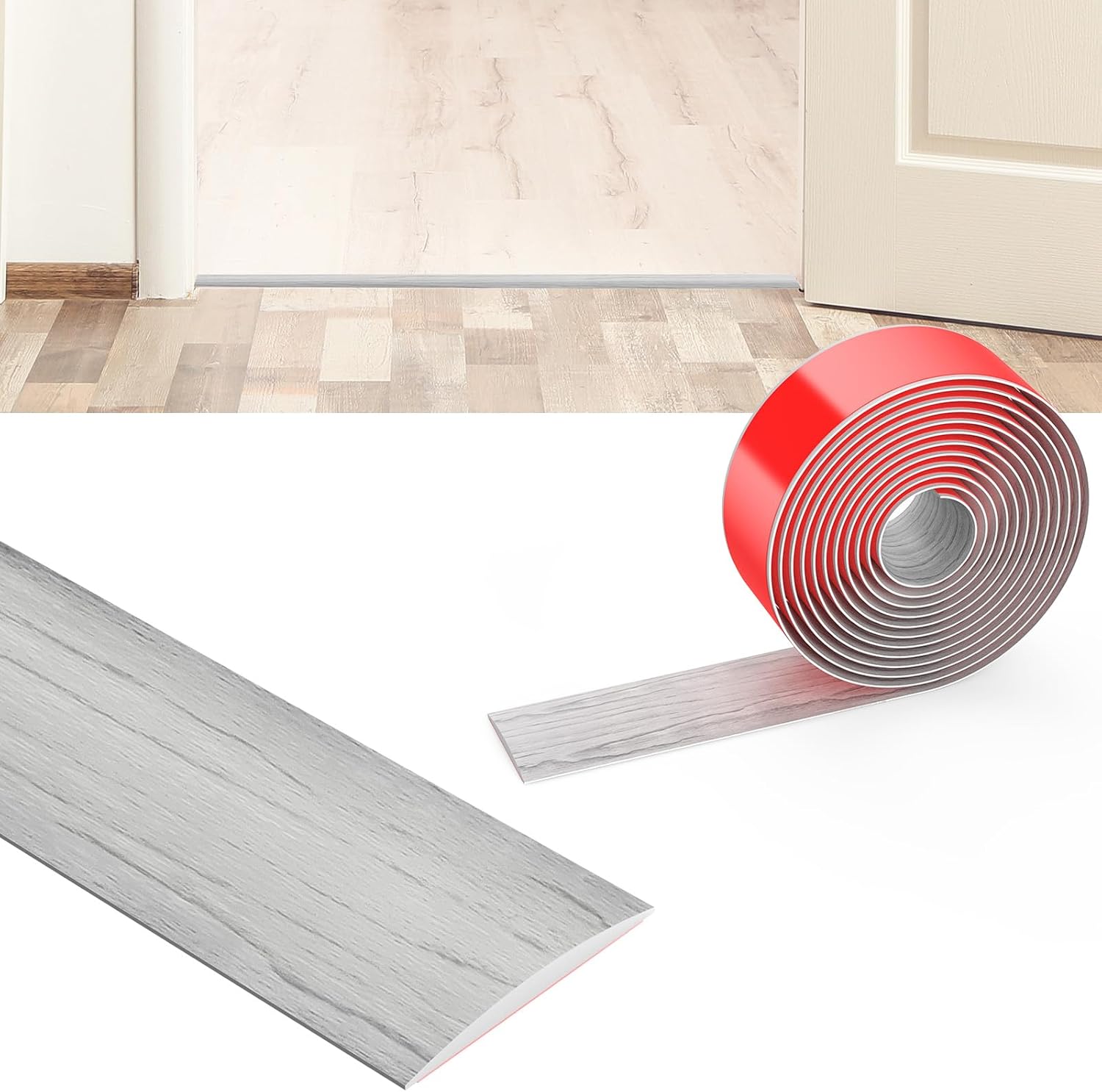
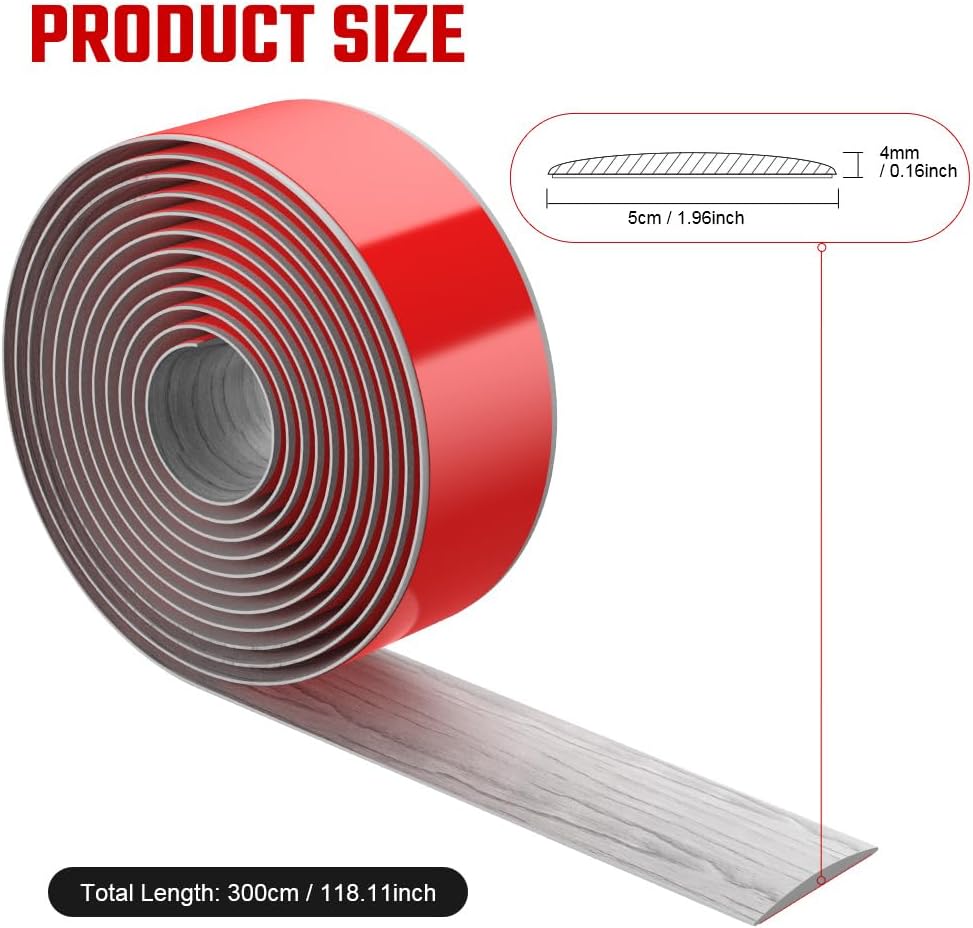
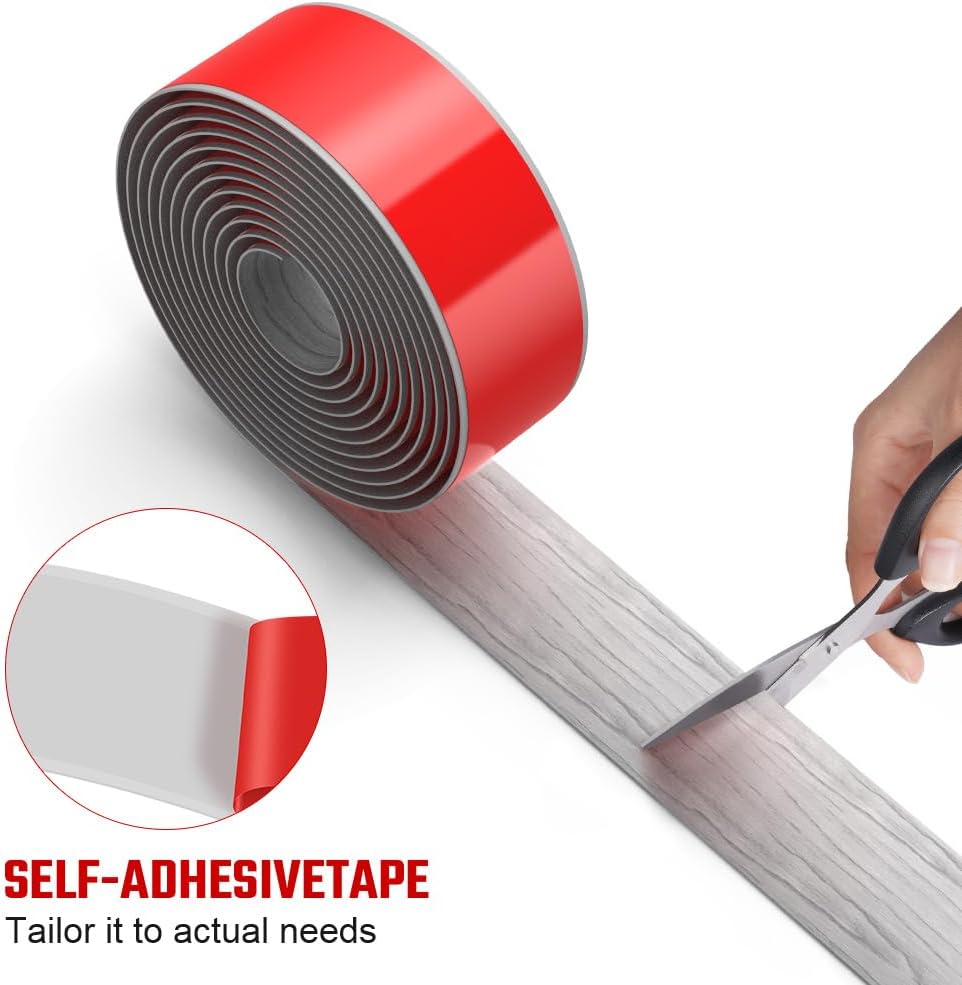
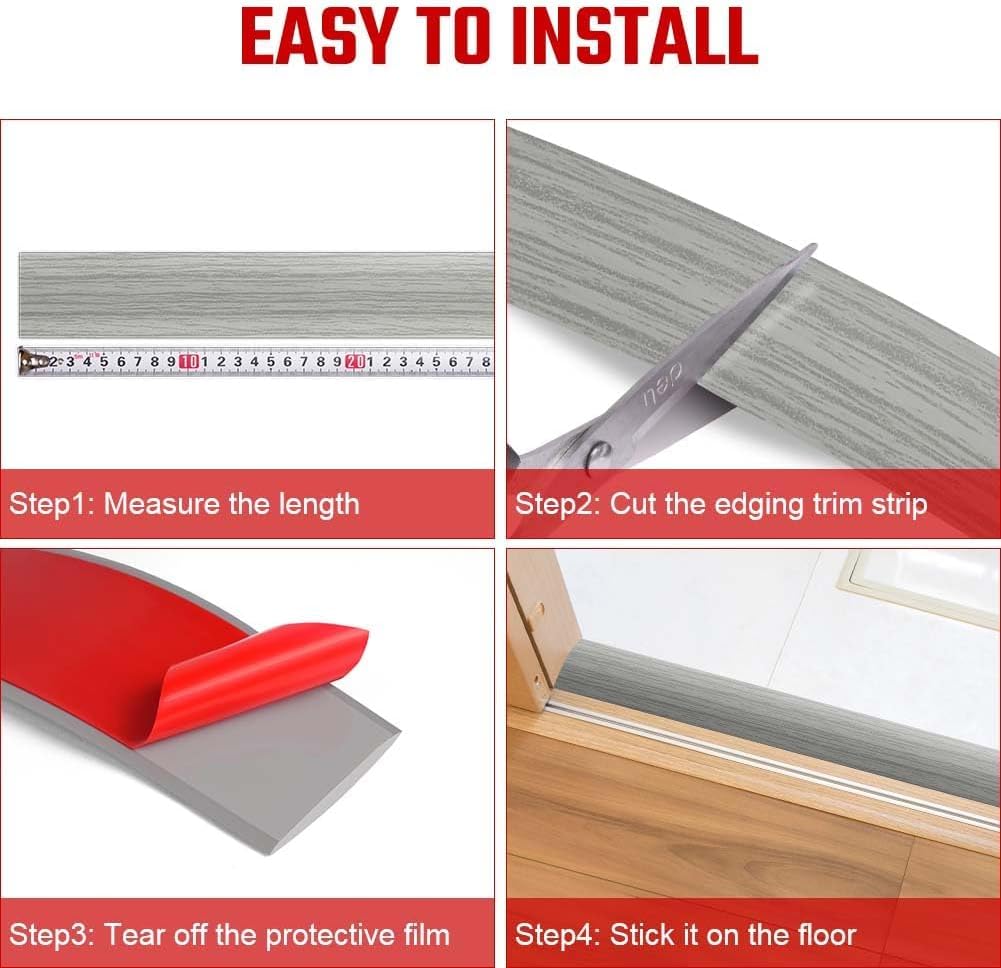
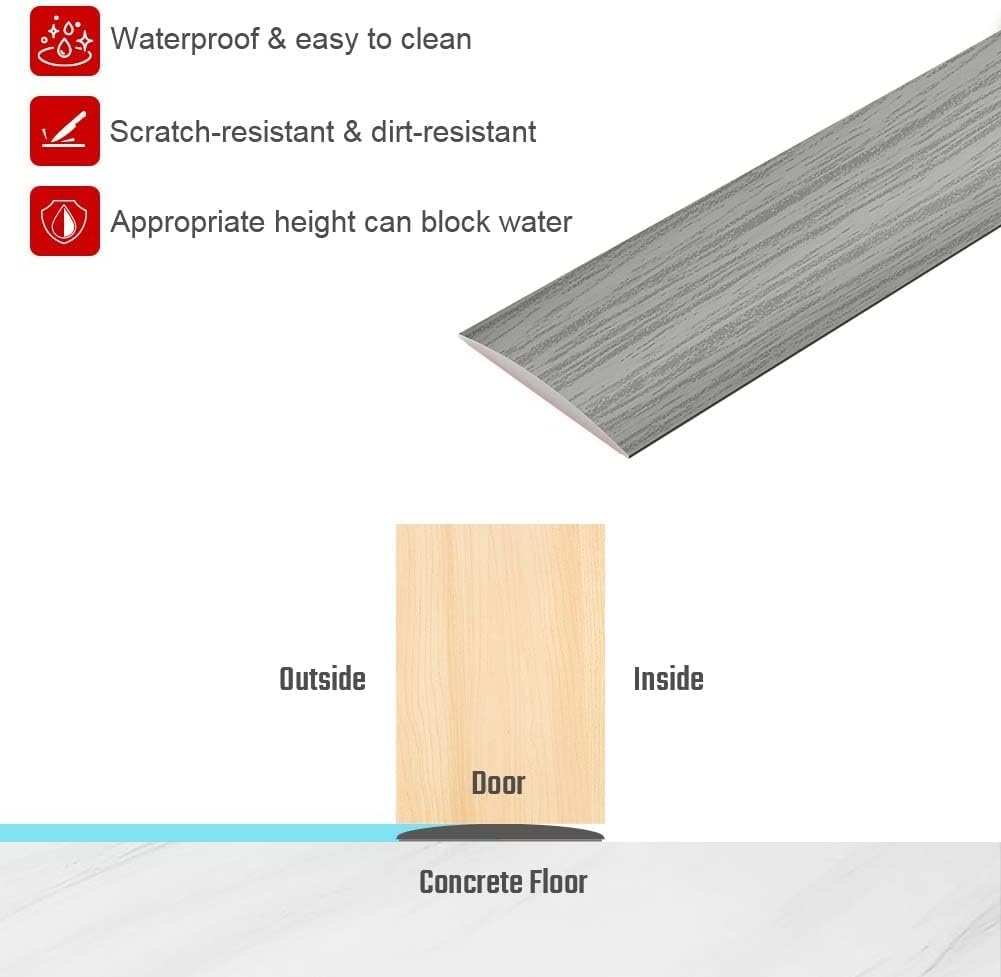
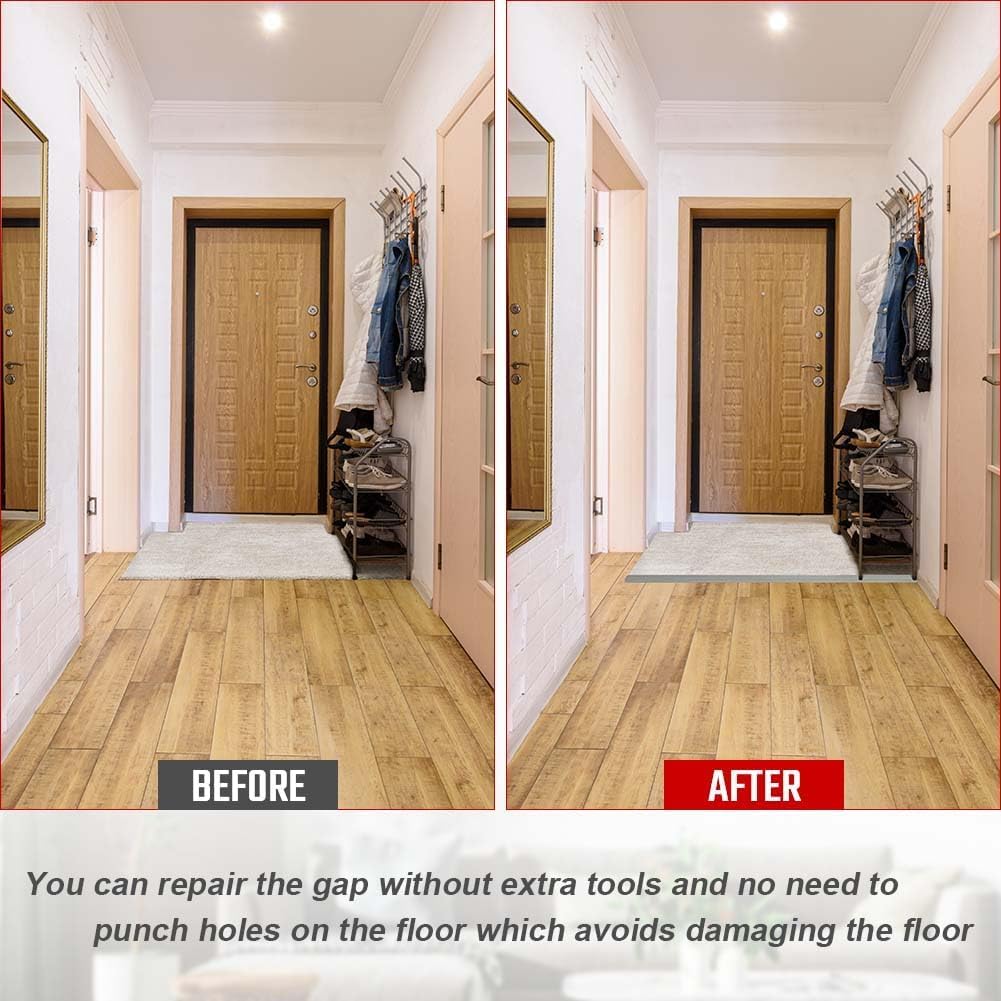
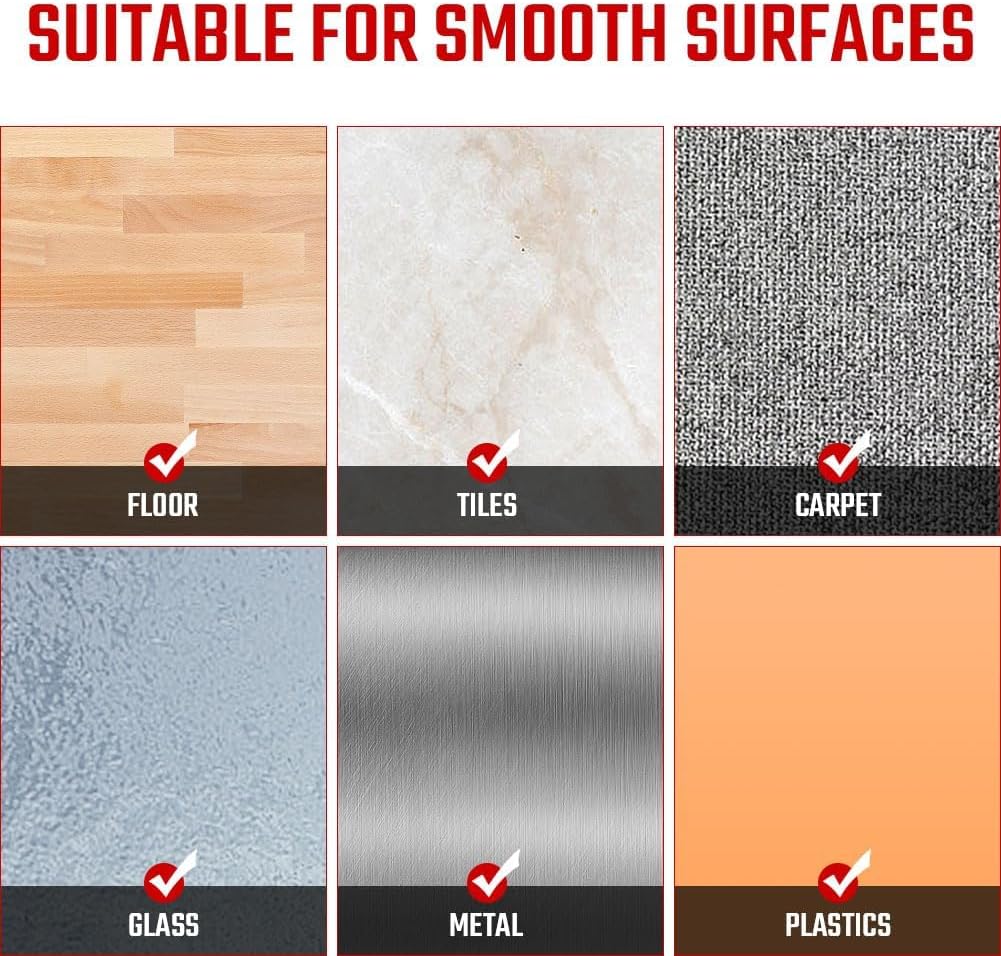
What it is and what it solves\nThis is a self-adhesive threshold transition strip designed to join laminate flooring with gaps, edges or different surface types. Made from PVC, it aims to reduce trip hazards, seal edges against moisture and provide a neat visual transition between rooms. On the page you’ll see it marketed as suitable for carpet and tile interfaces, plus a range of lengths and widths to help you tailor the fit. On paper, the concept is straightforward: cover the gap, protect the edge and create a smoother walking surface without tools other than a cutter for the length you need.\n\n## How it works and installation\nThe strip features a strong adhesive backing so you can stick it down without screws. Clean and dry the area first, cut to size, peel, and press into place. If the strip arrives bent due to extrusion, a quick pass with a hair dryer can help it flatten for better bonding. This minimal setup is attractive for quick repairs or quick room realignments.\n\n## What to consider before buying\nThere are three key decisions to make: length (1.2 m, 2 m, 3 m) and width (4 cm or 5 cm). The 5 cm width is recommended to cover gaps up to 3 cm, while the 4 cm width is better suited to gaps under 2 cm. Measure your gap carefully to choose the right size and avoid overhang or undercoverage. The product is described as durable PVC with wear and mildew resistance, but the lack of explicit warranty or user-tested performance means you should weigh it against more substantial floor-trim options if your threshold gets heavy foot traffic or is exposed to moisture frequently.\n\n## Benefits and limitations in everyday use\nWhat stands out is the no-tools installation and the ability to tailor length as needed. It’s handy for bedrooms, living rooms and kitchens where a clean line between surfaces matters and you want to avoid trip hazards. A potential limitation is that the material may warp slightly in transit, and the adhesive may perform differently on uneven subfloors or very dusty surfaces. Real-world results depend on clean preparation and correct sizing.\n\n## Who it’s for\nThis strip suits homeowners or renters looking for a low-effort, budget-friendly way to bridge minor floor gaps, seal edges and define spaces without hardware. It’s likely to appeal to those prioritising quick fixes and straightforward DIY, rather than deep upgrades or areas with persistent moisture or heavy weight loads.\n\n## When it makes sense to buy\nIf you need a simple, stick-on solution to cover gaps between laminate and other floor types, and you’re comfortable cutting to size, this product can be a practical option. It’s particularly convenient when you want a fast installation and easy removal or repurpose.\n\n## When to look elsewhere\nIf your gap is unusually large, or you expect high foot traffic, or you need a more robust, screw-fixed edge trim with a long warranty, a higher-end threshold system could be a better match. Also, if you require specific colour matching or a non-PVC alternative, you may prefer other materials.\n\n## What to check before buying\n- Confirm the gap size and choose the corresponding width and length.\n- Ensure the surface is clean and dry prior to sticking.\n- Be aware the strip may arrive slightly bent, plan to heat and flatten if needed.\n- Consider whether a self-adhesive option suffices or if a more permanent fix is desired.\n\n## Practical example of use\nIn a typical living room-to-kitchen transition, you’d measure the gap, cut the 3 m strip to length, peel off the backing and press firmly along the edge. The result should be a smoother transition and a more contained threshold, helping carpet edges meet tile floors with less snagging.\n\n## Technical details\n- Name: Flintronic 3M Laminate Flooring Threshold Transition Strip\n- Type: Threshold strip with adhesive backing\n- Material: PVC\n- Size options: 1.2 m, 2 m, 3 m lengths, 4 cm or 5 cm width\n- Colour: Various options available (as listed in product range)\n- Special features: Cuttable length, self-adhesive, easy to install, covers gaps and edges, can be used for room division and edge protection.\n\n## FAQ\n- How do I fix a bent strip? A gentle heat with a hair dryer can help it flatten for better adhesion.\n- Can I use this on uneven subfloors? It’s safest to ensure a clean, dry, and reasonably flat surface before application, significant irregularities may affect bonding.\n- What sizes should I pick? Choose 5 cm if your gap is up to about 3 cm, choose 4 cm for gaps under 2 cm.\n\n## Final thoughts\nIf you prioritise a quick, non-destructive upgrade to door thresholds and floor transitions, this self-adhesive strip offers a low barrier to entry. It won’t replace heavy-duty trims where loads are high or moisture is persistent, but for typical home use it presents a pragmatic solution with straightforward installation.