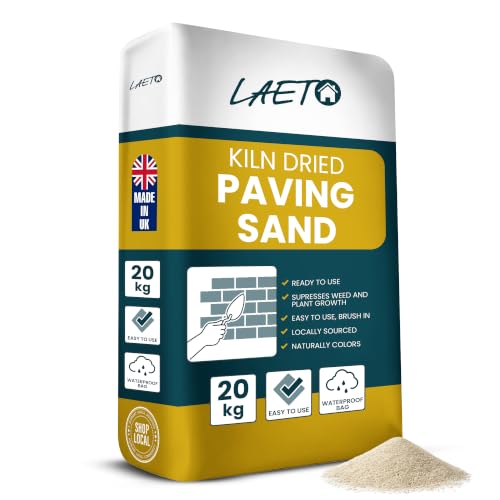
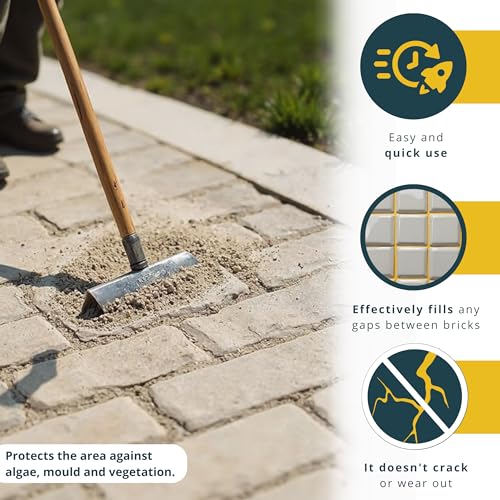
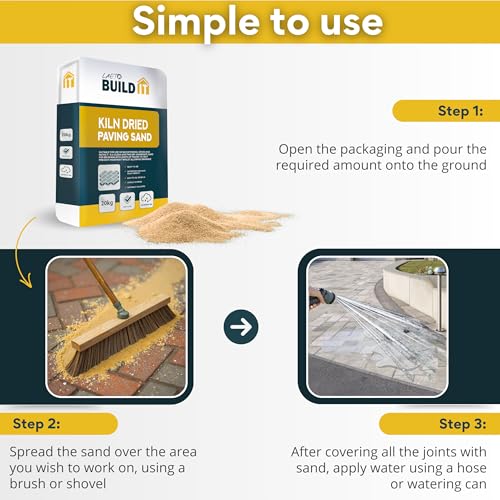
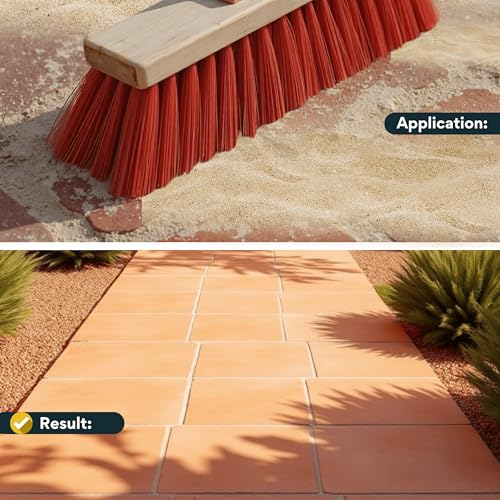
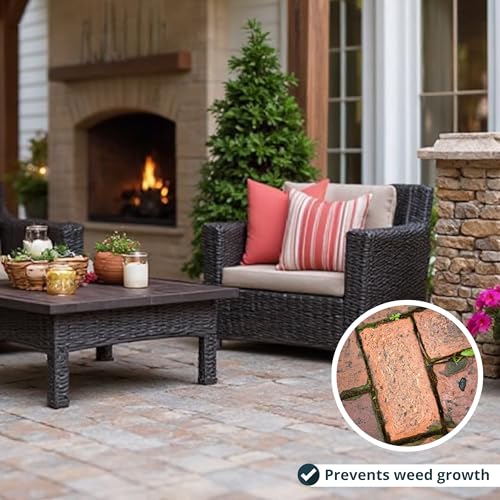
What it is and what it’s for\nLaeto Kiln Dried Sand is a fine silica sand intended for jointing paving slabs, blocks and patios. On the page it’s framed as a practical alternative to polymeric or traditional jointing materials, aimed at stabilising surfaces and reducing maintenance. If you’re renovating a patio or garden path, this product markets itself as a ready-to-use option that helps keep slabs in place and resists weed growth.\n\n## How it helps your space\nOn paper, the sand fills joints tightly, locking surfaces so slabs don’t shift over time. It’s pitched as a long‑lasting, weed‑free solution that can withstand permeating rain without losing effectiveness. The result is a cleaner, more professional finish that should cut down on regular re‑filling or re‑levelling.\n\n## What stands out (pros)\nThe kit is a single 20 kg bag designed for ease of use on driveways, patios and garden paths. It’s described as versatile across multiple surfaces—paving slabs, blocks, natural stone and brickwork—and it’s suggested as an alternative to polymeric sand. The sand is also positioned as useful beyond hard landscaping, with potential applications in gardening and horticulture as infill or general sand.\n\n## Where it may fall short (cons)\nWhile the description highlights weed suppression and stability, it does not provide specific performance data, wear rate, or suitability for all climate conditions. As with any non-polymeric joint filler, performance can depend on joint width, substrate quality and drainage. If you need ultra-fast setting or exactly quantified weed control duration, this product may not offer that granularity.\n\n## Is it for you? (Who it suits)\nIt’s likely to appeal to homeowners and landscapers looking for a straightforward, non‑technical option to stabilise patios and paths without the need for polymer binders. It could be a sensible choice if you prioritise ease of application and a weed-reduced joint over detailed performance specs.\n\n## When to be cautious (who might want to skip it)\nIf your project requires very precise joint engineering, or you expect extreme weather cycles that demand a highly resilient, fast‑setting joint system, you might prefer a product with more technical data or a polymeric solution. Also, buyers who need exact weed‑growth timelines may find the claim “weed free for years” too general without supporting tests.\n\n## What to check before buying\nEnsure the bag is intact and the sand is free of debris. Consider your joint widths and the area to cover, as a 20 kg bag will fill only a finite area depending on joint depth. Review compatibility with your existing paving materials and check whether you need additional tools (broom, brush) for an even finish.\n\n## Practical use case (an example)\nImagine re‑setting a small garden path where several slabs have shifted. A clean sweep of Laeto Kiln Dried Sand into the joints, followed by light sweeping, can create neat lines and a solid feel underfoot—the kind of finish that looks tidy without heavy machinery or complex preparations.\n\n## Quick comparison (how it fits with alternatives)\nCompared with polymeric sands, this kiln sand is positioned as a simpler, potentially lower‑maintenance option that avoids some binder‑based stiffness. It may be preferable for those who want to avoid plastics or who favour a traditional sand joint approach, while still aiming for a stable, weed‑reduced result.\n\n## Is it worth it?\nWorth considering if you want a straightforward, ready‑to‑use jointing sand that offers weed suppression and surface stability without the complexity of polymeric solutions. It may not be the best fit if you require precise joint performance data or if your project demands highly engineered joint systems.\n\n## Frequently asked questions\n- What surfaces can it be used on? It’s described as compatible with paving slabs, blocks, natural stone and brickwork.\n- Does it really prevent weeds for years? The description claims weed‑free, long‑lasting results, but exact duration isn’t specified.\n- Is it a one‑bag solution for large areas? A 20 kg bag may cover a limited area depending on joint width and depth, plan accordingly.\n