

Fixed Key Battery Cut Off Isolator Switch (Lucas Type) SSB106.K 597 — 500A, 12V/24V
Product description
The essentials
If you’ve ever come back to a vehicle, boat, or plant machine only to find the battery feels “a bit too flat”, a proper cut-off switch is one of those boring-but-important upgrades. This fixed key battery cut off isolator switch is designed to let you completely isolate the battery when the machine isn’t in use, helping avoid battery drain. It uses a heavy-duty, fixed-key approach with two switching positions, so you’re not relying on half-measures.
On paper, it ticks several boxes for downtime storage: the housing is made from durable ABS plastic, it’s described as moisture-proof with UV protection, and there’s a bottom protective cover intended to insulate the terminals and reduce the chance of short circuits.
That said, it’s not a “universal, fit-everywhere” part in practice. You’ll need the correct cut-out hole size, and the current ratings shown are specific—so it’s worth checking your setup before you commit.
Where it shines (and what it’s for)
This is a battery master switch / isolator switch with the stated goal of cutting off electrical power when a boat or vehicle (or plant use) is not in use. In everyday terms, it’s the sort of component you’d consider if you:
- Store a vehicle or leisure boat for stretches of time and want a simpler way to prevent drain
- Need an on/off power control that’s meant for heavier use scenarios than a basic switch
- Prefer a key-operated isolator for extra control (rather than leaving power live)
One practical example: if you arrive at your boat after a couple of weeks on the mooring, flicking the cut-off switch to isolate the battery first can be the difference between a quick start and troubleshooting. It’s not magic, but it’s a straightforward habit that reduces the risk of “mystery draw”.
What to know before buying
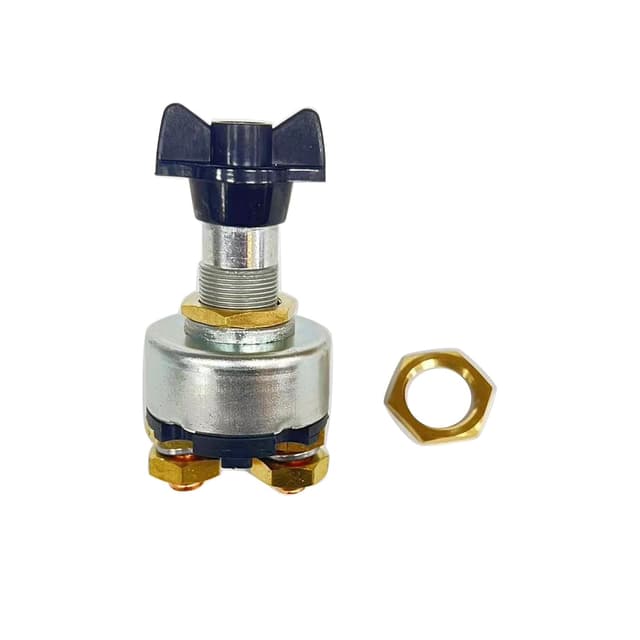
The biggest purchasing detail here is fitment. The switch requires a 19.5mm hole to fit, which matters for panel mounting and existing cut-outs. If your dash, console, or enclosure doesn’t suit that hole size, you may need to plan for rework.
The second thing to double-check is ratings and expectations. The listing provides performance parameter details that differ by voltage and by intermittent versus continuous load. It also states a “rated 100 Amps @ 24v & 500 Amps For 5 Seconds” figure, alongside 12v and 24v intermittent and continuous load numbers.
And finally, it’s not perfect for every job: if you’re expecting a flexible, low-current accessory switch or something designed around very specific wiring layouts, this fixed key isolator is more of a purpose-made battery cut-off. If you’re not isolating the battery as a whole, you may not get the full benefit.

Key specifications at a glance
The switch is described with these performance and physical details (as given in the listing):
- Requires 19.5mm hole to fit
- Rated 100 Amps @ 24v and 500 Amps for 5 seconds
- 12V: 1500A intermittent load, 150A continuous load
- 24V: 500A intermittent load, 100A continuous load
- Material: durable ABS plastic housing
- Moisture-proof and UV protection (as described)
- Bottom protective cover to insulate terminals against shorts (as described)
- Size: 89mm total length, 43mm diameter
Design and build: the part you’ll actually notice
The housing being ABS with moisture-proof and UV protection matters if you’re mounting it somewhere exposed—like an engine bay, a boat enclosure, or an outdoor plant environment. A battery isolator is a component that tends to get used “in bursts”, but it has to survive the conditions between uses.
The bottom protective cover is also the sort of detail that’s easy to overlook. In real installations, exposed terminals are where accidental contact or wiring stress can become an issue. Having that extra insulating cover can reduce that risk, assuming the rest of your wiring is done cleanly and with proper cable routing.
Where it may feel limiting is the “fixed key” aspect: if you don’t want a key-operated control, or you want quick hands-free access, this won’t match that preference. It’s built to be a cut-off, not a casual everyday toggle.
Pros
What you’ll like in use
- Key-operated battery isolation for storage and downtime
- ABS plastic housing with moisture-proof and UV protection (as stated)
- Bottom protective cover intended to insulate terminals and help prevent shorts
- Clear voltage/load figures listed for 12V and 24V scenarios
- Designed as a heavy-duty battery disconnect / isolator switch
The limitations to keep in mind
- Requires a 19.5mm hole to fit, so compatibility depends on your panel/enclosure
- Current ratings are specific, if your application involves loads outside the stated intermittent/continuous figures, you should not assume it will be suitable
- It’s purpose-made for battery cut-off, so it may be overkill if you only need a simple low-current isolator

Is it worth it?
A strong buy if you want a heavy-duty fixed key battery cut off isolator switch to help avoid battery drain when your vehicle, boat, or plant setup sits unused. The combination of moisture-proof and UV protection, plus the terminal insulating cover, makes it feel more “built for the real world” than basic indoor switches—especially where conditions vary.
It may not be the best match if your mounting situation can’t accommodate a 19.5mm hole, or if your electrical plan requires different switching behaviour or load handling than the intermittent/continuous ratings listed for 12V/24V. In those cases, it’s better to pause and verify suitability rather than treat this as a generic battery master switch.
Mini FAQ
Will this work for car or marine use?
The listing states it is suitable for car, marine or plant use, with the purpose of cutting off the electrical supply to avoid battery drain.
What size hole does it need?
It requires a 19.5mm hole to fit.
Is it rated for both 12V and 24V systems?
Yes, the listing includes performance figures for 12V and 24V, including intermittent and continuous load numbers.
Does it have terminal protection?
A bottom protective cover is described as insulating the terminals against short circuits.
Is key-operated switching secure?
It’s designed as a fixed key battery cut off switch, so it relies on the key for switching positions rather than a tool-free toggle.