

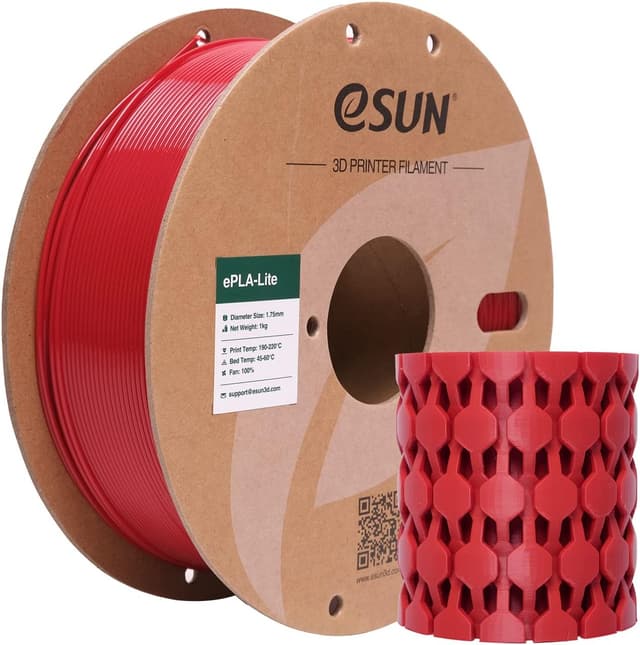
eSUN PLA Filament 1.75mm (PLA Lite) – Fire Engine Red, 1KG spool for FDM 3D printers
Product description
What it is and why people buy it
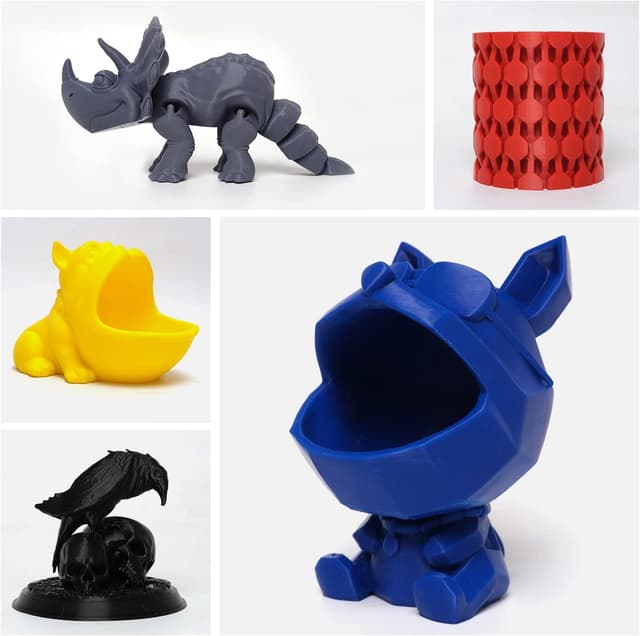
This eSUN PLA filament is a 1.75mm PLA Lite material in a Fire Engine Red colour, supplied as a 1KG spool for FDM 3D printers. The pitch here is pretty straightforward: PLA that’s designed to be easy to print, while also being tougher than ordinary PLA “on paper”. If you’re making everyday models, workshop bits, decorations, cosplay pieces, or small-to-medium accessories, PLA Lite sits in a practical middle ground: not a specialist engineering plastic, but a filament that aims to behave consistently.
The dimensional tolerance figure and the focus on stable feeding are especially relevant if you’ve ever wrestled with messy print starts, frequent stringing, or uneven extrusion. It’s not magic, but the design choices (tight diameter tolerance and smoother feeding) are aimed at reducing the stuff that slows you down.
There’s one realistic caveat to keep in mind: PLA is still PLA. So while the material is described as having improved tenacity and strength over standard PLA, it won’t replace higher-performance plastics if you need heat resistance or parts that must flex repeatedly over time.
Key features that affect print results
What stands out most in this product description is how eSUN frames PLA Lite’s day-to-day behaviour.
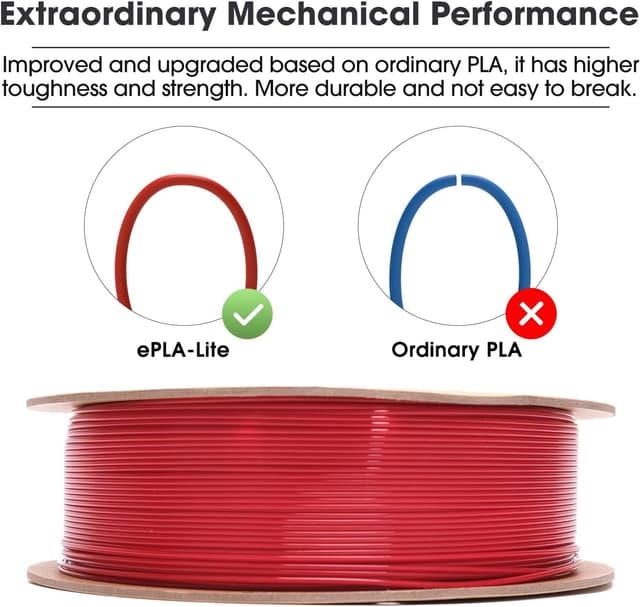
First, it’s modified from ordinary PLA with improved toughness and resistance, while keeping the usual PLA benefits. That usually matters for models that aren’t purely decorative—think items that get handled a bit, or parts that you’d rather not treat like fragile ornaments.
Second, the filament is described with stable dimensional accuracy (listed as +/- 0.03mm) and “low deformation” to support consistent feeding. In practice, that’s one of the main reasons users care about “tolerance” when comparing spools: if the printer expects a stable diameter, the extruder has less reason to compensate.
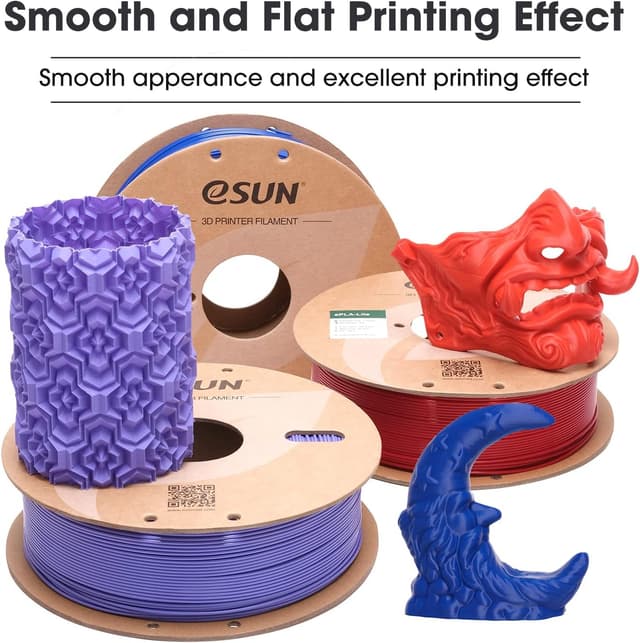
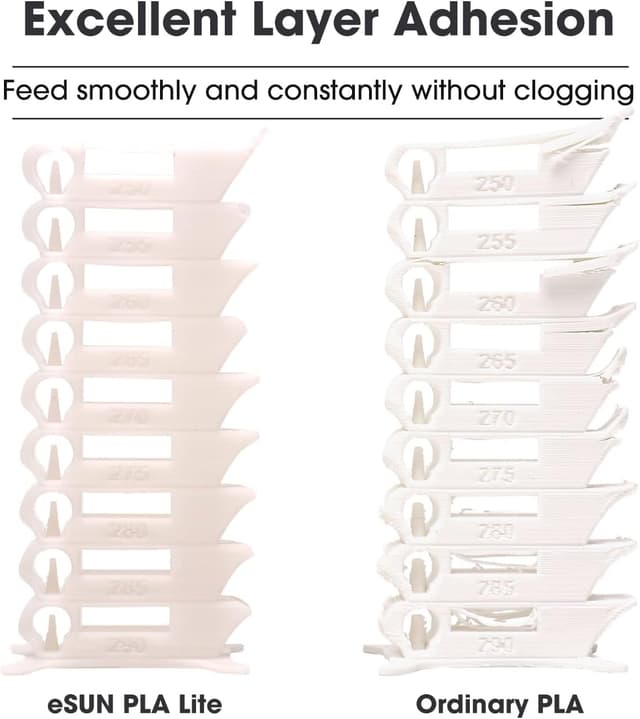
Third, eSUN mentions reduced stringing and issues like bubbles or cracks, plus good layer adhesion. If you’re chasing a cleaner surface finish without spending extra time post-processing, that’s the sort of improvement that can be noticeable.
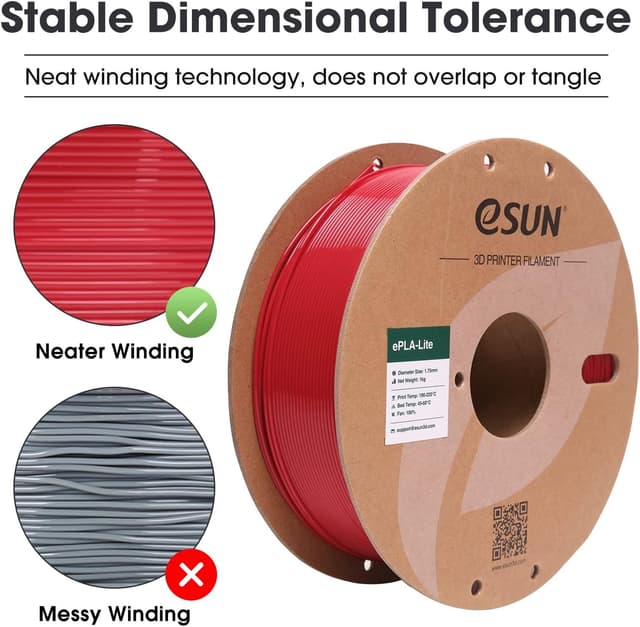
Finally, the spool and winding are described as neatly packaged—so no overlap or tangles. That sounds minor, but it can be a time-saver, particularly if you’re doing longer prints or switching between projects.
Tech specs (the numbers you should pay attention to)
- Name: eSUN PLA Filament 1.75mm (PLA Lite)
- Type: 3D printer filament
- Format: 1.75mm filament for FDM
- Size: 1KG spool
- Material: PLA (PLA Lite)
- Colour: Fire Engine Red
- Dimensions: Dimensional accuracy +/- 0.03mm
- Processor: N/A
Recommended temperatures are provided as follows: - Extrusion / Nozzle temperature: 190-230℃ - Bed temperature: 45-60℃
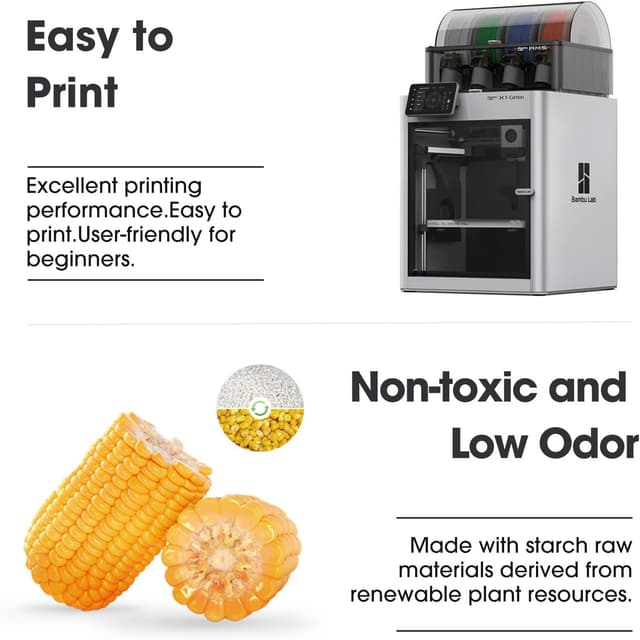
Compatibility is stated at the “most FDM 3D printers” level, and the description lists examples such as Raise3D, Prusa, Voron, Creality 3D, and Bambu Lab.
Using it in real life (and what to expect)
If you’re after a filament that’s meant to run smoothly through common FDM setups, this one is positioned for exactly that. A practical way to think about it: you load the spool, set your nozzle in the 190-230℃ range, and keep your bed in the 45-60℃ range, then print the kind of models PLA is typically used for.
For example, if you’re printing a set of small organiser hooks or cosplay accessories, you’ll likely care about layer bonding and surface finish. The description explicitly mentions excellent layer adhesion and “exceptional” surface finish, alongside “less stringing”. On typical PLA workflows, those points translate into fewer ugly cosmetic repairs—more usable parts straight off the build plate.
That said, the temperature range is broad, so your actual best setting will depend on your printer, nozzle type, and cooling. If you’ve had inconsistent results with PLA before, this filament may help, but you still might need to tune your profile rather than expecting a universal “drop-in and forget”.
Where it shines (and where it may not)
It’s not perfect, but it does look like a sensible buy for people who want reliable everyday PLA performance with a bit more toughness than standard PLA.
Strengths you’ll probably notice day to day
- More consistent feeding, thanks to tight diameter tolerance and low deformation claims.
- Stronger “PLA Lite” material framing: improved tenacity and resistance compared with ordinary PLA.
- Good layer adhesion and an effort to reduce stringing.
- Neatly wound spool to help avoid tangles and overlap.
When you may want to look elsewhere
It may not be a great match if you need: - very high heat tolerance or parts for consistently warm environments (it’s still PLA) - extremely technical engineering performance where you’d normally expect more than “better than standard PLA”
Also, if you’re specifically chasing a different special PLA variant (for example, a filament designed for particular mechanical or thermal goals), you might find this one a bit “mainstream” in comparison.
What to check before you buy
Before committing, there are a few sensible checks based on the information provided:
1) Does your printer use 1.75mm filament? This is for 1.75mm FDM setups. 2) Can you run PLA temperatures comfortably? The recommended nozzle range is 190-230℃, with bed 45-60℃. 3) Are you planning to print in the colour you want? This spool is described as Fire Engine Red. 4) Will you store it properly? The filament comes in a sealed vacuum bag with a desiccant bag. That helps, but you still want to keep it covered when not in use. 5) Do you care about consistent diameter? The dimensional accuracy +/- 0.03mm is meant to matter for stable feeding and print stability.
Is it worth it?
It’s a good fit if you want a 1.75mm PLA filament aimed at consistent feeding, good layer adhesion, and cleaner results with less stringing—especially for accessories, decorations, art/craft projects, toys, sculptures, and cosplay parts.
You may want to skip it if you’re expecting PLA Lite to behave like a high-performance plastic for demanding mechanical or heat-heavy use. If that’s your target, PLA’s nature can still be the limiting factor.
If you prioritise straightforward, mainstream FDM printing with a tolerance-focused approach (and you’re happy working within the provided nozzle/bed temperature ranges), this eSUN PLA Lite looks like a practical, value-for-money-style pick. Just remember: you’ll still get the best outcome by setting your own profile for your printer, rather than assuming every filament prints identically.