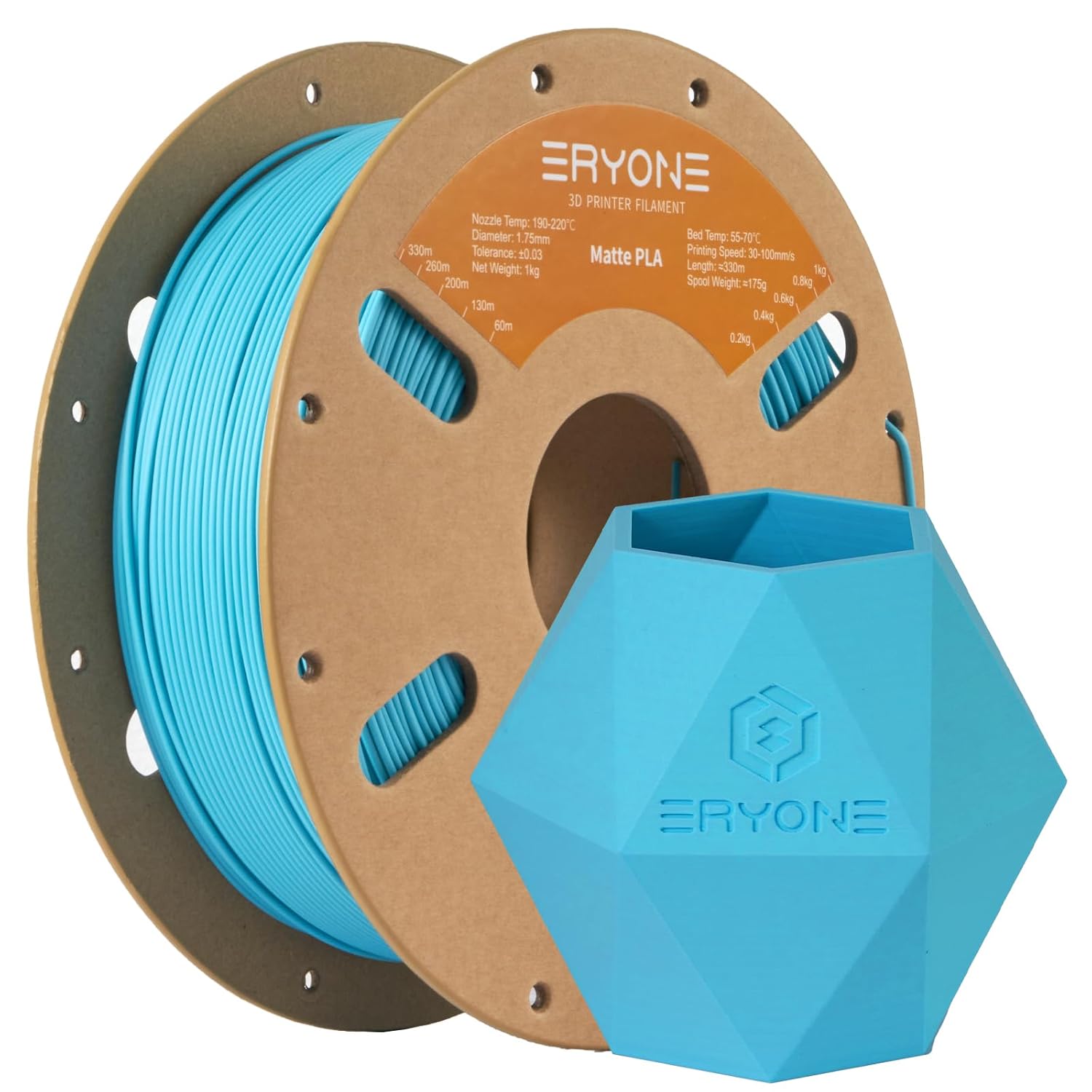
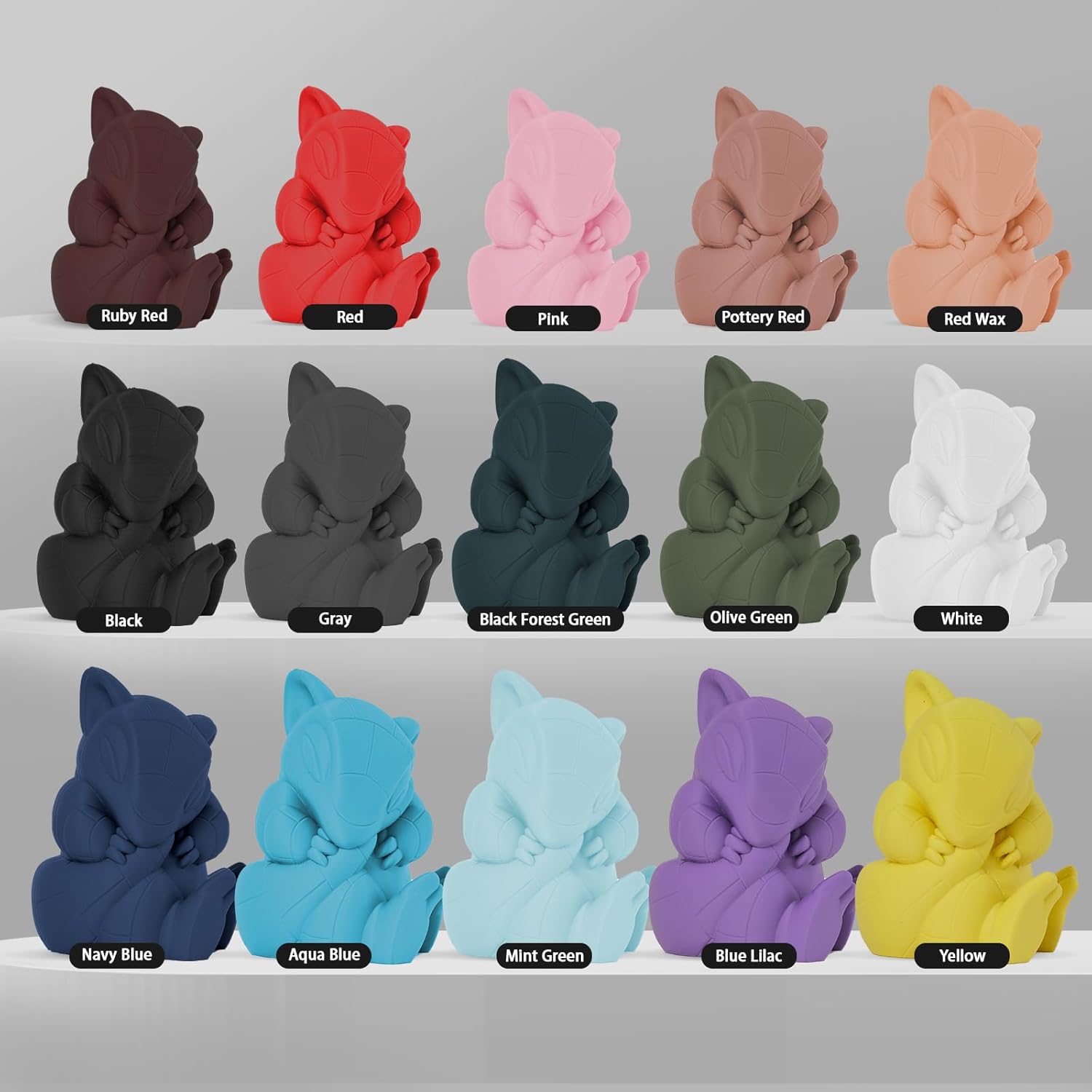
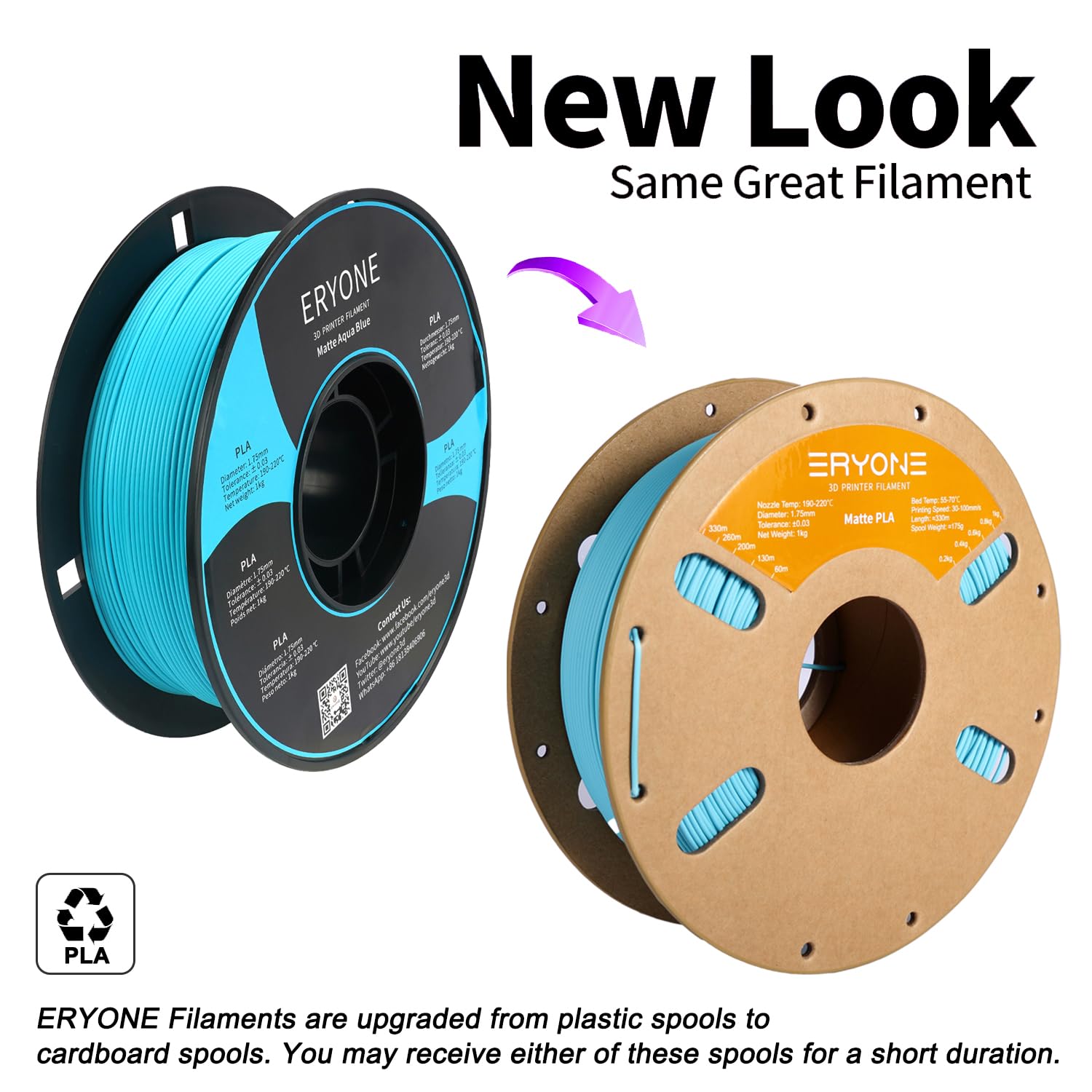
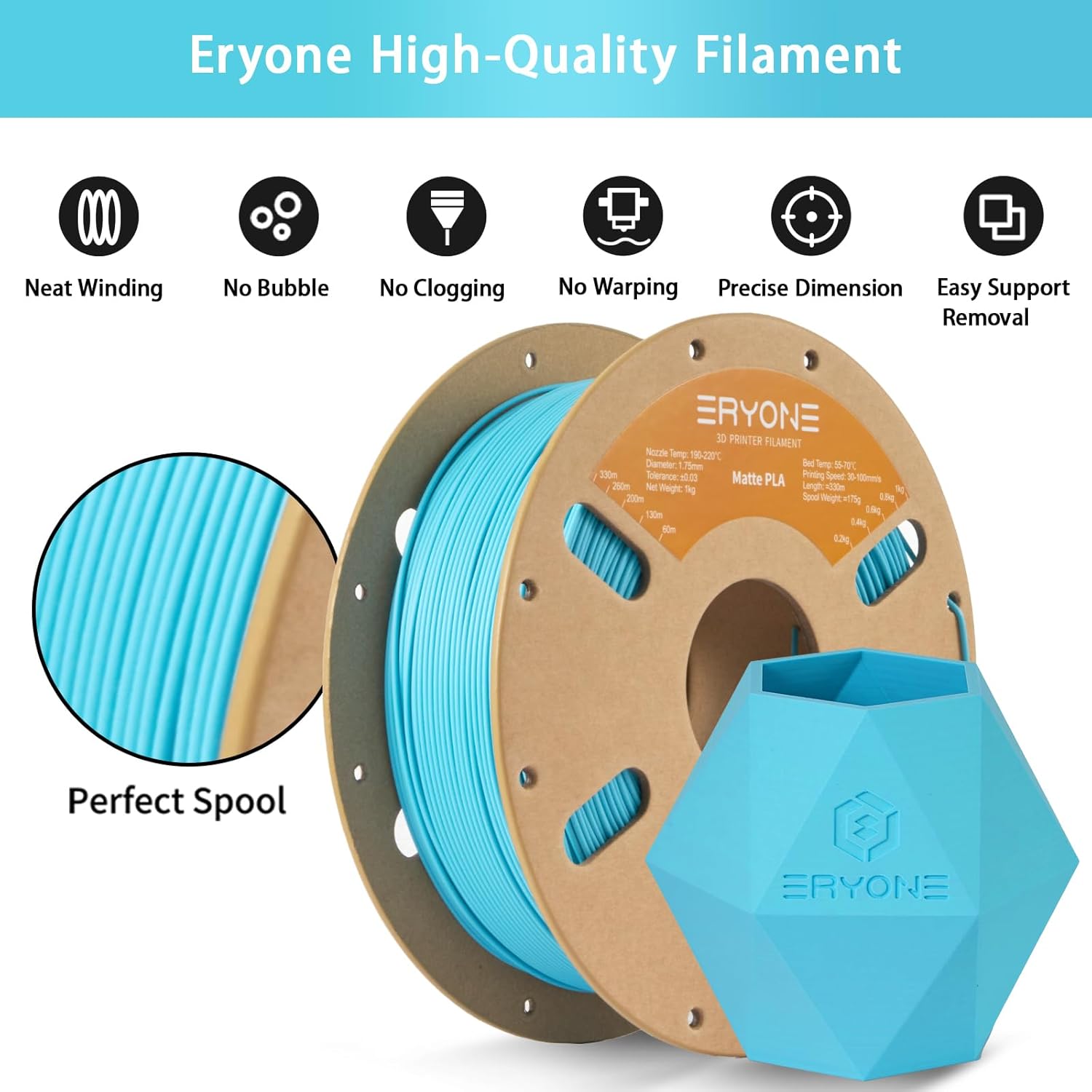
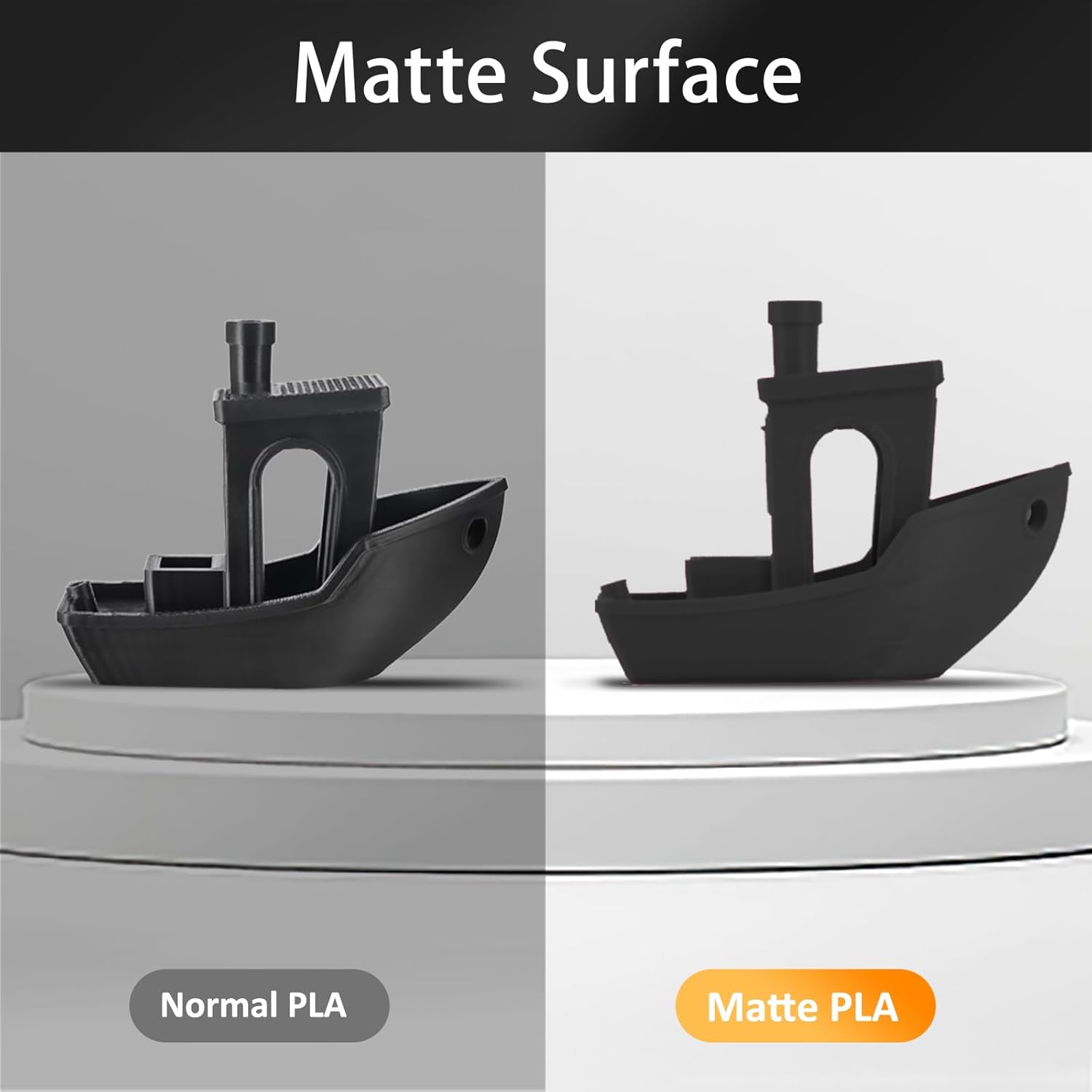
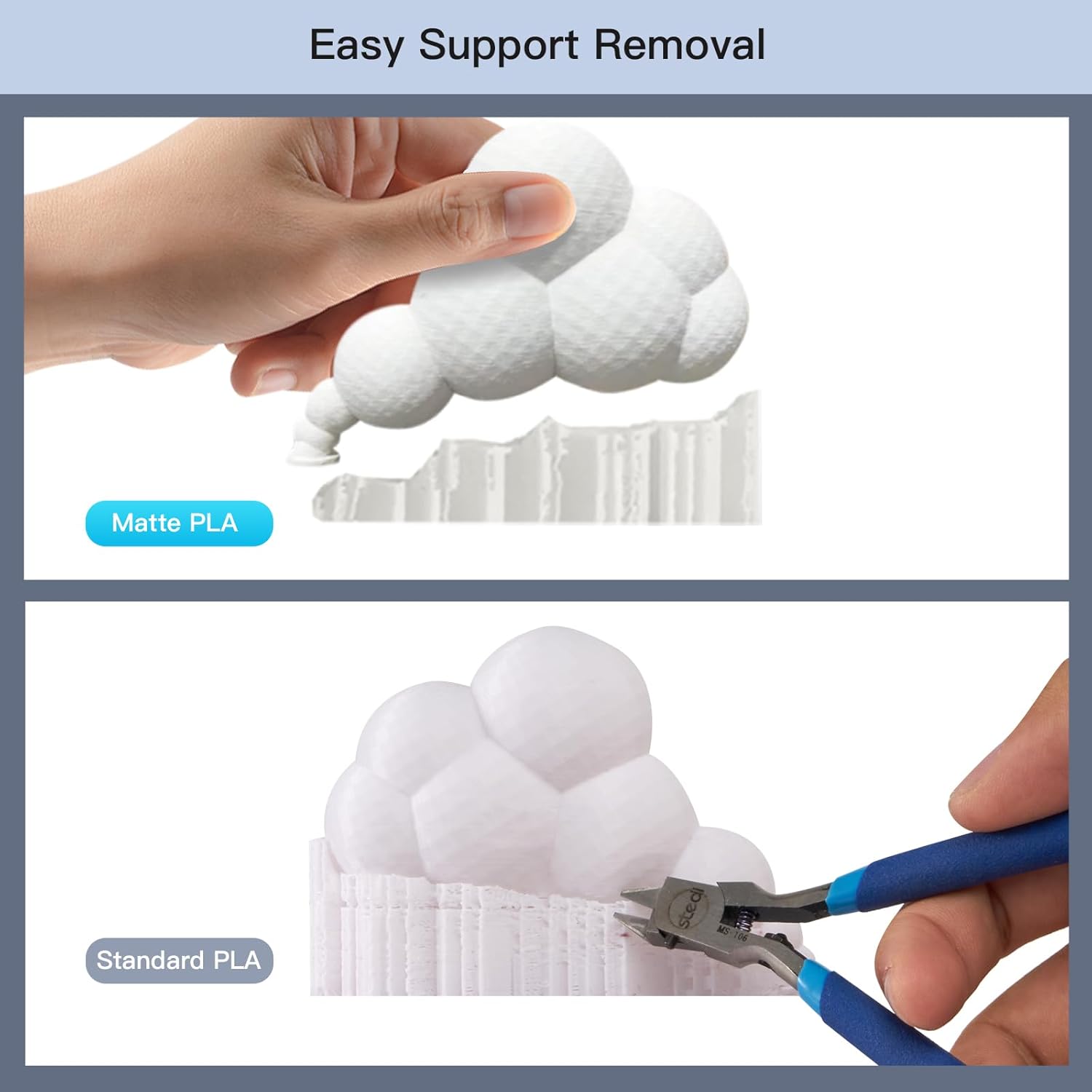
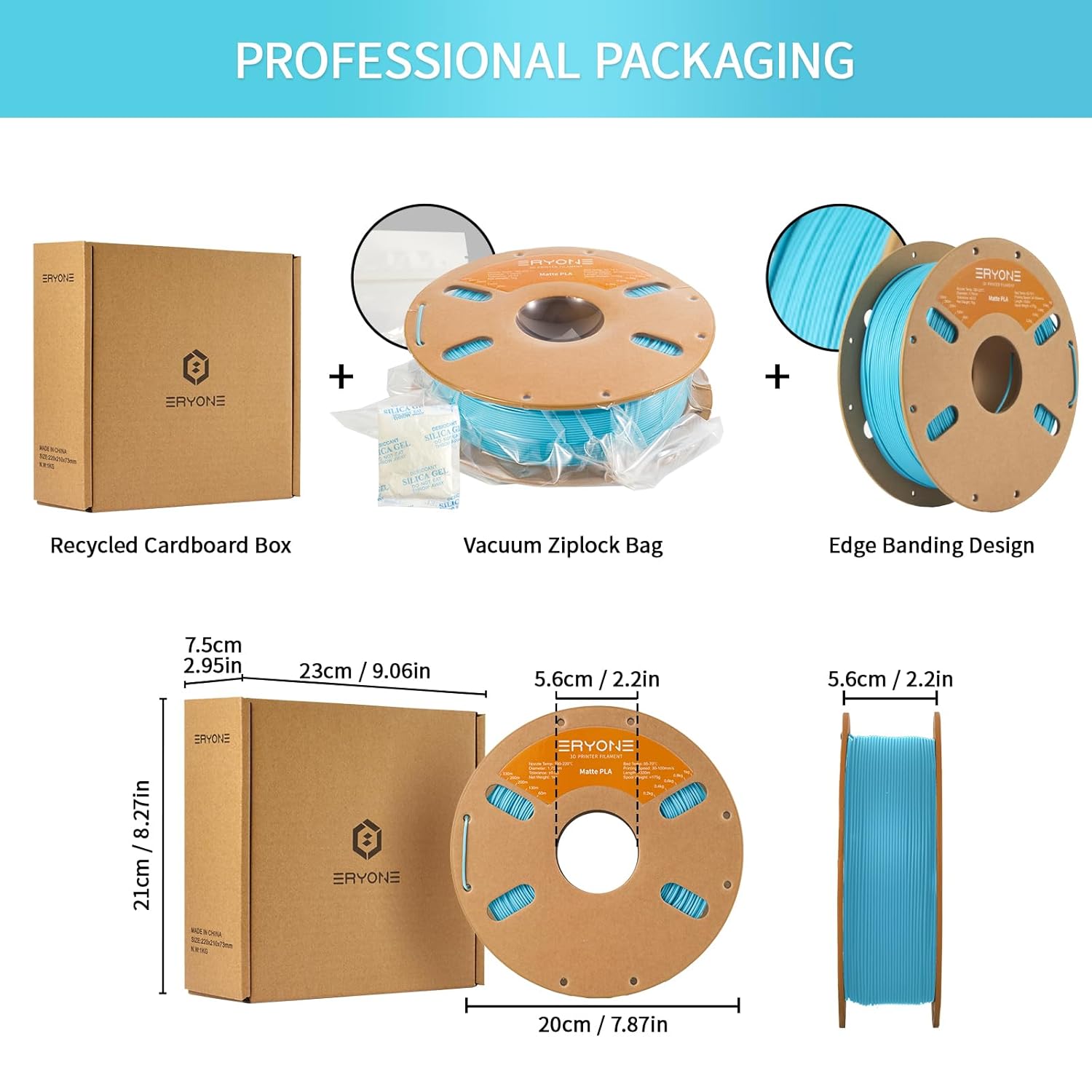
What it is and what it tries to solve\nThe ERYONE Matte PLA Filament is a 1.75 mm PLA material designed to produce prints with a distinctly matte surface. The goal is to reduce the visibility of individual layers and deliver a frosted, non-glossy finish that some users prefer for aesthetic or functional reasons. On paper, it advertises a smooth, consistent flow with a +/-0.03 mm diameter tolerance, which should help minimise nozzle clogs and ensure steadier extrusion across typical FDM printers.\n\n## How it performs in practice\nAccording to the description, the filament wraps neatly into a tangle-free spool and is compatible with a wide range of FDM printers. It claims strong layer adhesion and low deformation during printing, with an odour-friendly profile during operation. The stated density is around 1.24 g/cm3 and there are no bubbles reported in the material. In practical terms, this could translate to reliable bed adhesion and a predictable extrusion process, which matters for projects that prioritise finish consistency over extreme mechanical performance.\n\n## What stands out, and where it may fall short\nWhat helps this filament stand out is its matte result, which hides layer lines more effectively than some glossy alternatives. The trade-off to watch for is that matte finishes can sometimes alter perceived detail or sharpness compared to highly glossy PLA. The description doesn’t reveal any explicit print temperature range, heat bed requirements, or specific temperature tolerances, so you’ll want to follow standard PLA guidance and run some test prints to dial in flow and cooling.\n\n## Who it’s for\nThis filament could suit hobbyists and makers who want a muted, professional look for parts, enclosures, display pieces or prototypes where a non-reflective surface is desirable. It’s likely a decent option if you value ease of use, reliable flow and straightforward post-processing without strong odour concerns.\n\n## Who it isn’t ideal for\nIf you need ultra-high gloss, crisp micro-detail or very high-strength properties, this matte PLA may not meet those expectations. It’s also reasonable to be cautious if you rely on exact colour fidelity or very tight tolerances that demand advanced materials.\n\n## Before you buy, check these points\n- Ensure your printer is set up for PLA with standard cooling and a clean nozzle to preserve the matte surface.\n- Confirm your minimum recommended bed temperature and first-layer height match typical PLA guidelines to avoid warping or adhesion issues.\n- Consider running a small calibration print to gauge the matte finish, surface texture, and any line visibility on your specific printer.\n\n## A practical comparison in context\nFor everyday use, matte PLA like this sits between entry-level and mid-range PLA options: you gain a controlled surface finish with predictable flow, but you may trade some micro-detail and colour brightness versus high-gloss or specialty filaments. If you prioritise simple handling and a clean, non-reflective finish, it’s a sensible pick over more demanding materials, if you need high clarity or extreme mechanical properties, you might look elsewhere.\n\n## What you get and technical notes\nIn the box: 1 kg of ERYONE Matte PLA filament on a spool. Important figures include a spool inner diameter of 57 mm, outer diameter 200 mm, and height 64 mm. The material is described as “100% tangle-free when unopened” with no stringing or warping indicated, which helps when you want to avoid tinkering with feed issues. The density is about 1.24 g/cm3, with strong layer adhesion reported.\n\n## Final thoughts and decision (Is it worth it?)\nIf you value a matte finish, straightforward printing, and reliable feeding in a broad range of FDM printers, this ERYONE Matte PLA offers a pragmatic option. It may not be the best choice if you require ultra-high resolution finishes or specific performance metrics that go beyond standard PLA capabilities. A sensible approach is to test with a small project first to confirm adhesion, finish, and consistency on your machine.\n\n## FAQ (practical, non-technical answers)\n- How matte is the finish in real prints? It aims for a frosted look that hides layer lines, but finish perception can vary by printer and settings.\n- Will it clog my nozzle? The supplier notes smooth flow and reduced clogging potential, following standard PLA printing practices helps.\n- Is it odour-friendly? The description mentions low odour during printing, which should be pleasant for desk setups.\n- Can I use it on a basic budget printer? Yes, it’s described as universally compatible with a wide range of FDM printers.