

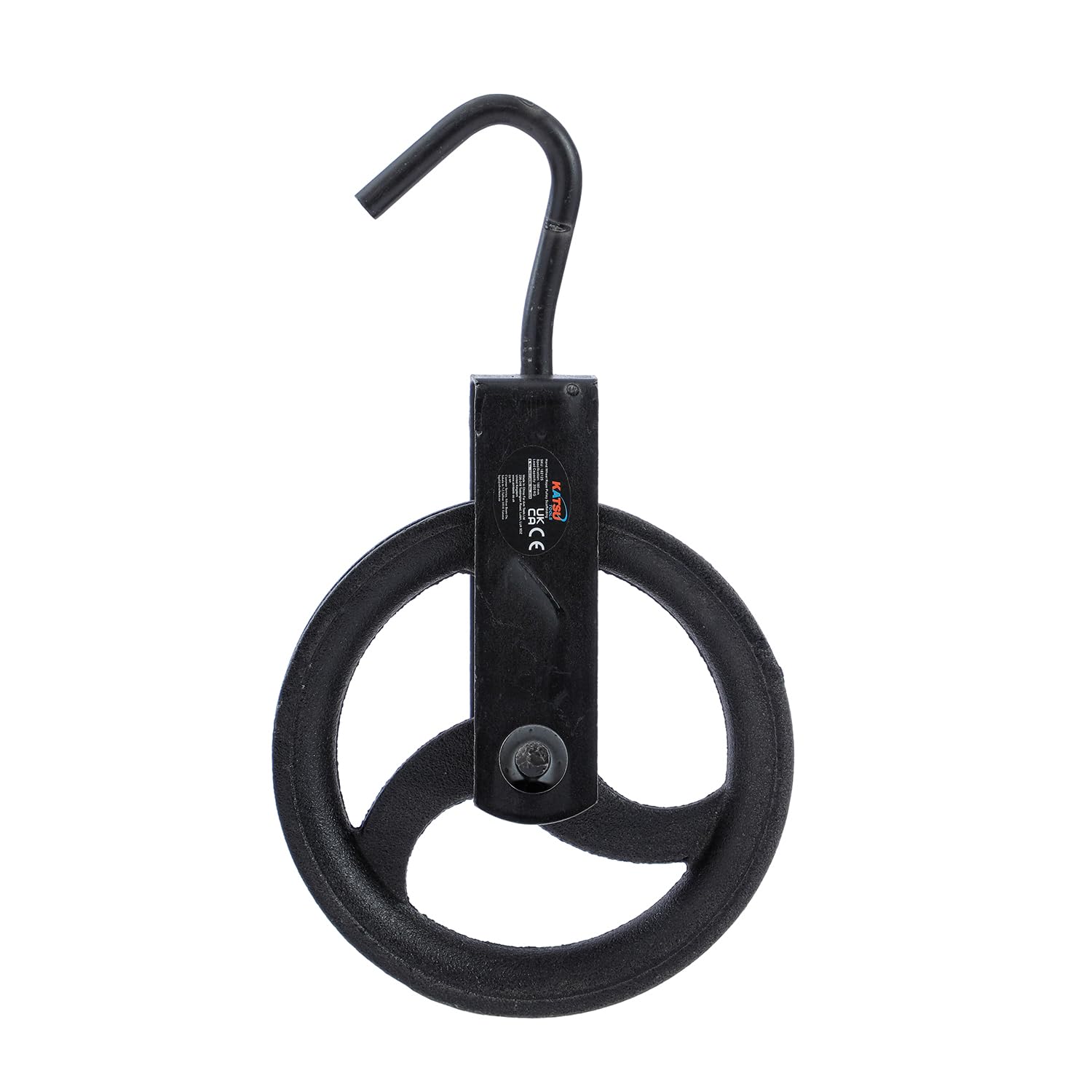
KATSU Tools 250mm gin wheel scaffolding rope pulley with swivel hook (182127)
Product description
The essentials
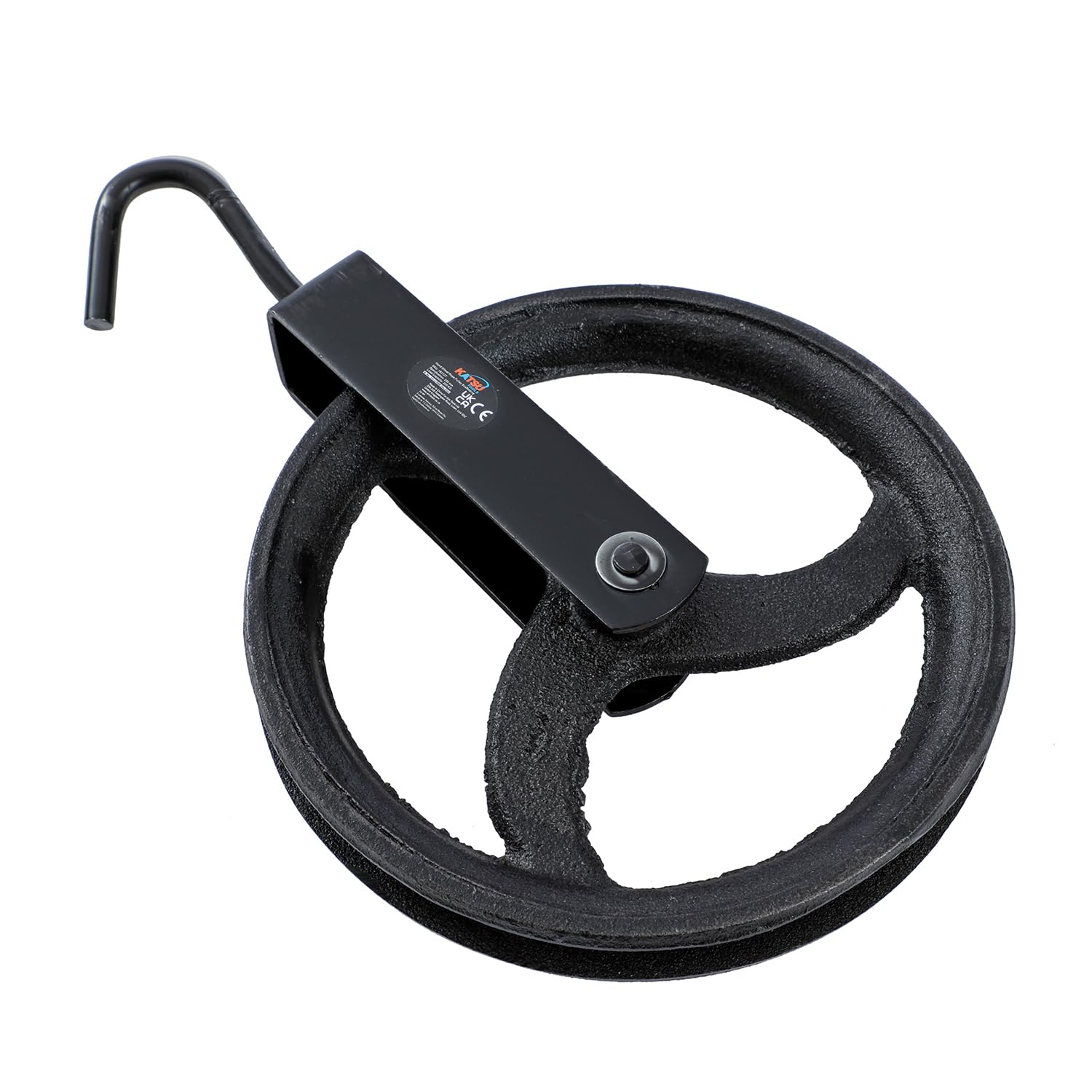
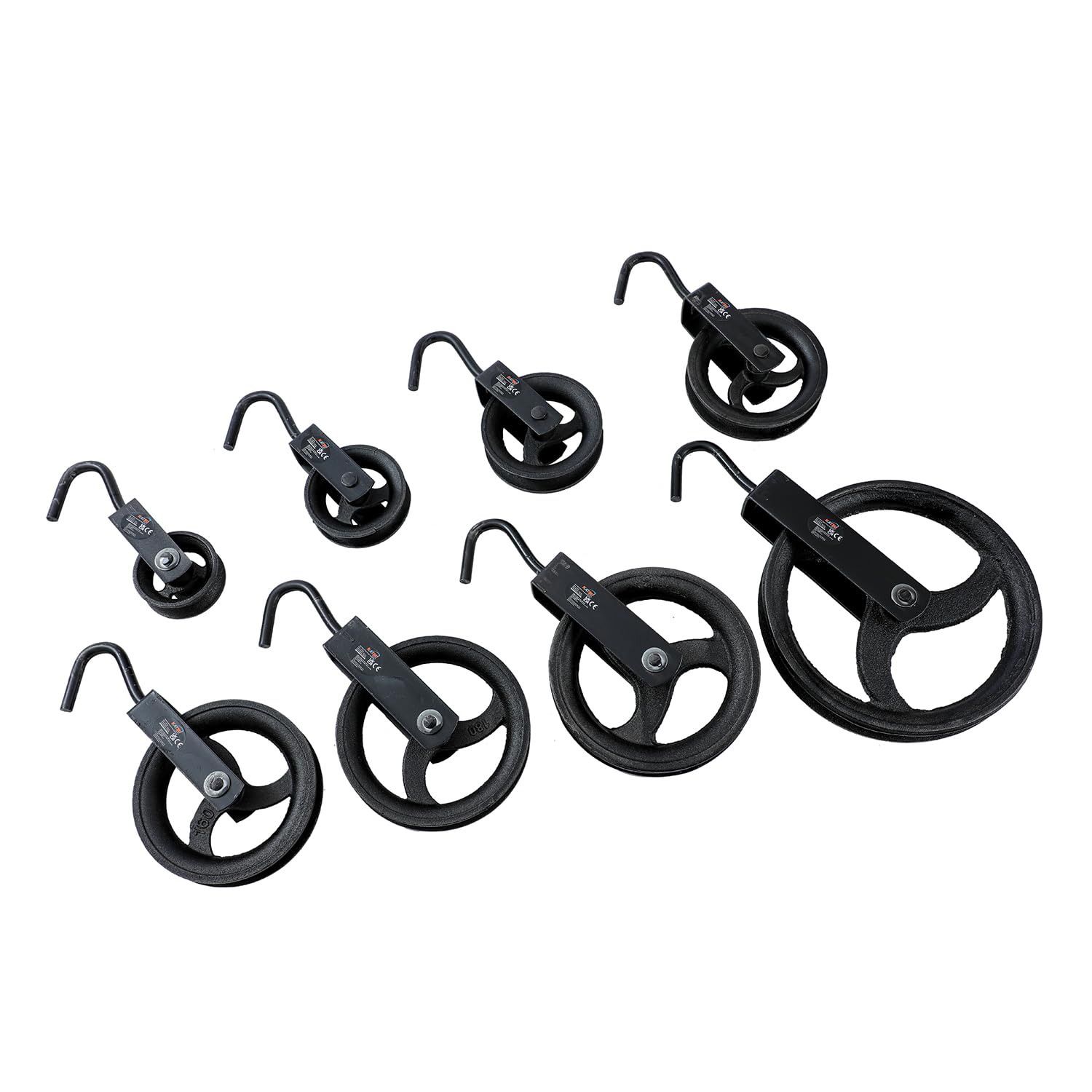
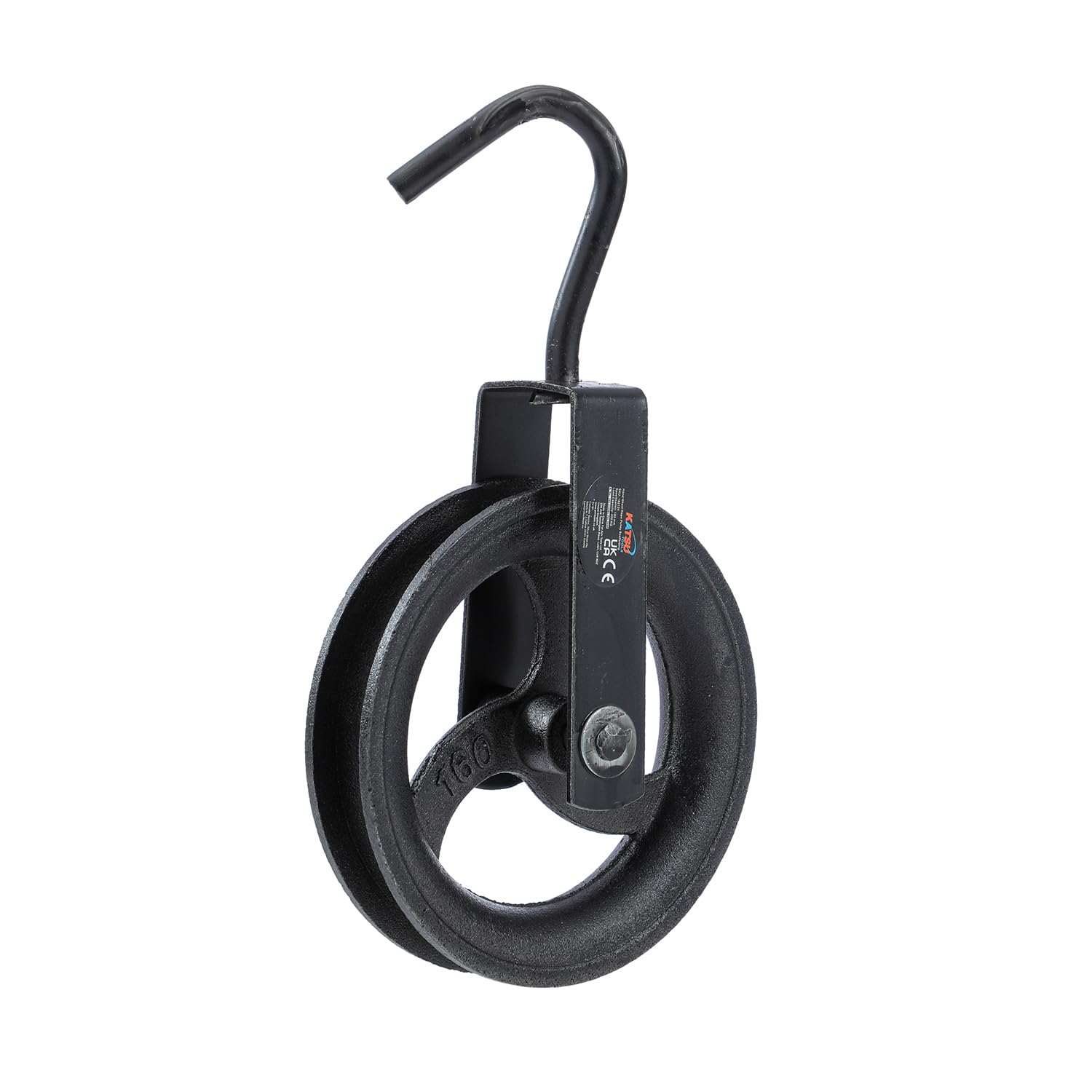
This KATSU Tools gin wheel pulley is a hand rope pulley wheel designed for lifting loads on construction sites, typically by attaching it to scaffolding. On paper, it’s the kind of simple, rugged piece of kit you use when you need a controlled way to hoist things like tool boxes or buckets up to where they’re needed.
It uses a cast iron wheel and a swivel hook, which hints at a focus on durability rather than anything lightweight or “portable” in the everyday sense. The big practical message here is that it’s made for rope-and-wheel lifting, not for a system that does the safe holding for you.
What you’ll notice in use
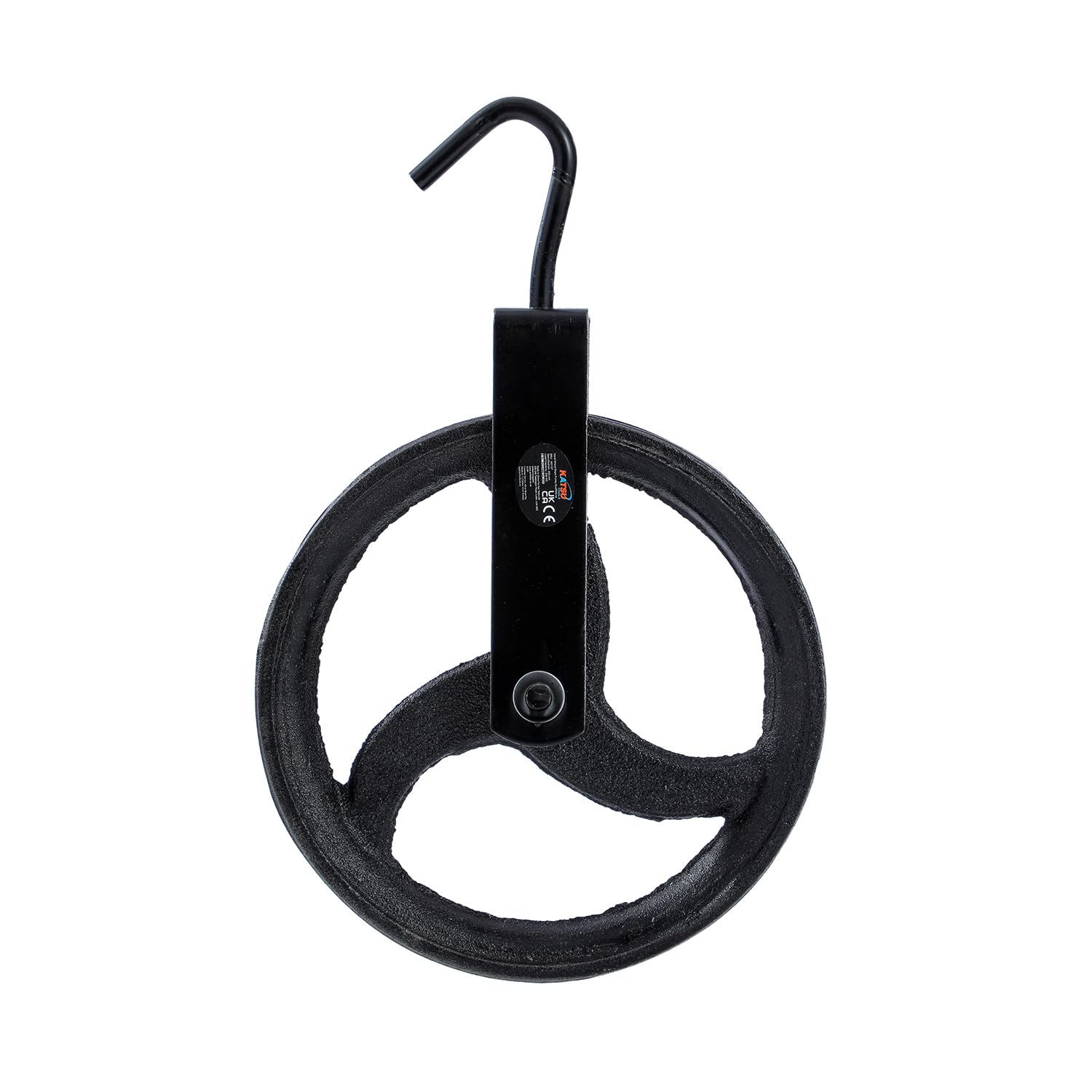
The 250mm cast iron wheel is the core of the setup: you feed rope through the pulley path and manage the lift by hand. Because it isn’t fitted with a brake, the system relies on the operator to lift and also to manage the load so it doesn’t drop.
In a real-world workflow, that often looks like: you clip the swivel hook to a suitable point on the scaffold, thread the rope, hoist a small equipment crate up to a work level, then keep control as you position it. It’s straightforward, but it also means you’re actively responsible for steadiness and safe handling.
Worth noting that this is “mainly used on construction sites” as described, so if you’re imagining a casual garden hoist or a low-stakes domestic setup, you might find other lifting options more forgiving.
Tech specs you should check
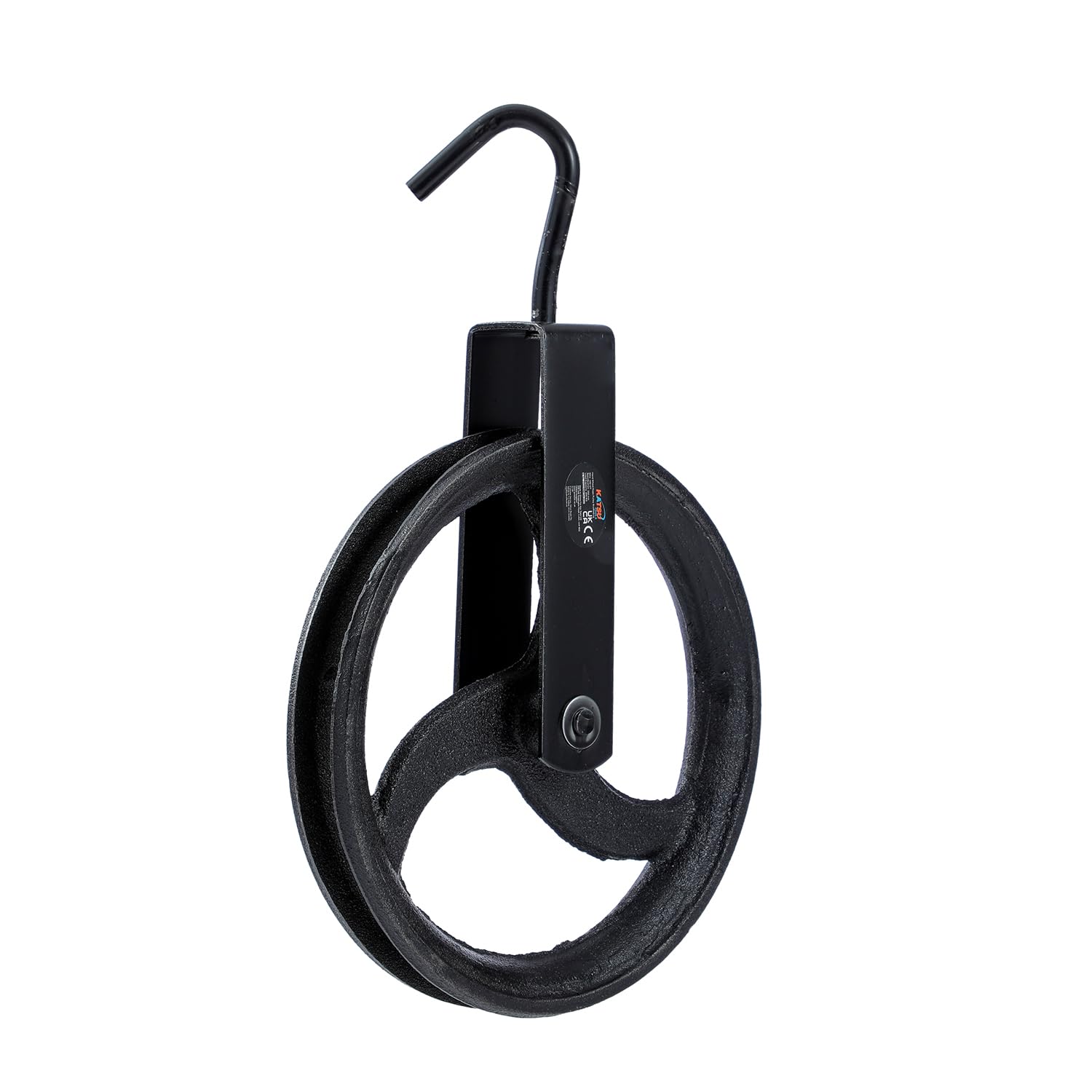
- Safe Working Load (SWL): 250kg
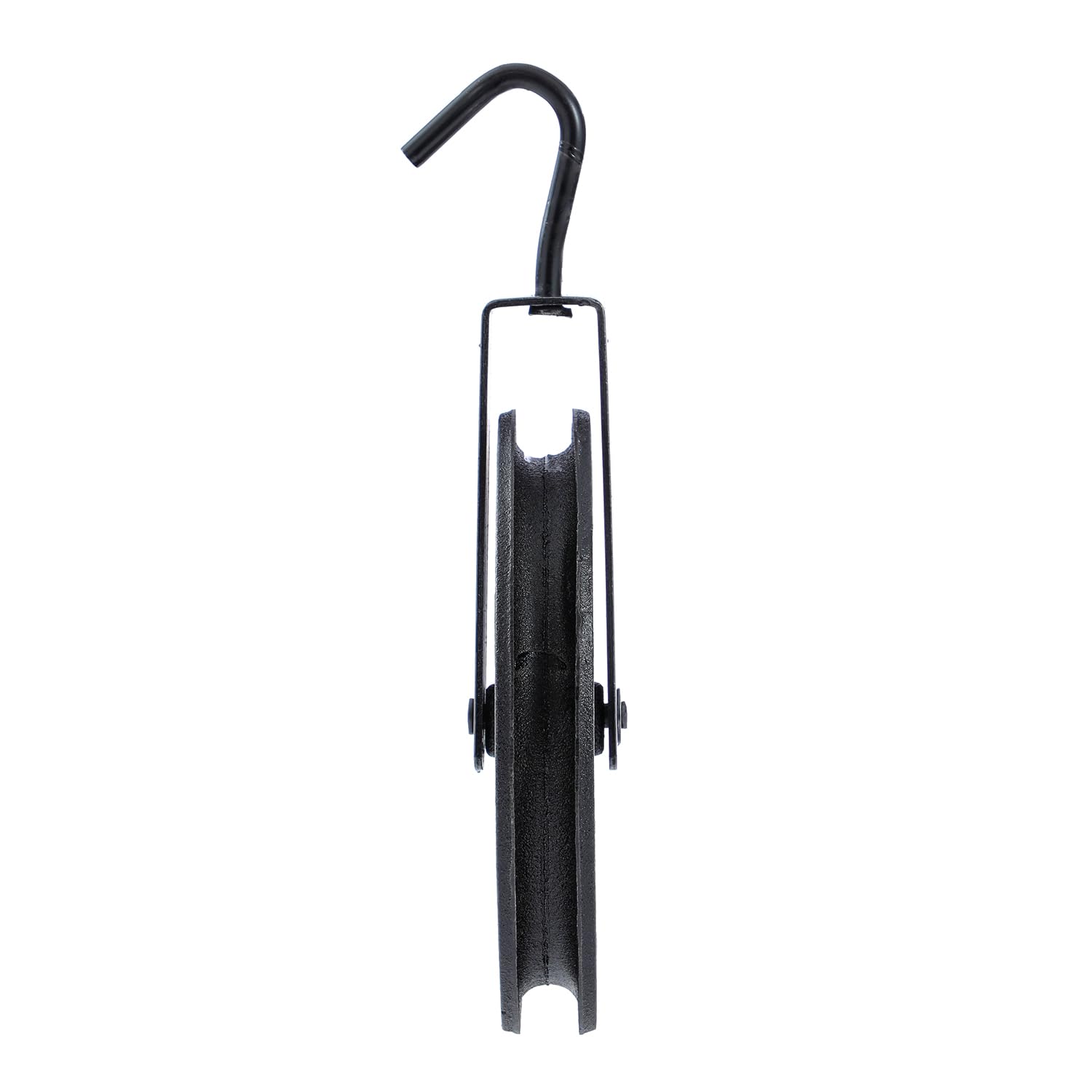
- Max rope diameter: 26mm
- Construction: cast iron wheel and swivel hook
- Braking: not fitted with a brake (operator control required)
- Intended use: lifting equipment such as buckets and tool boxes on scaffolding
Where it makes sense (and where it doesn’t)
It’s a solid pick if you want a traditional gin wheel rope pulley for scaffolding-based lifting, and you’re working in an environment where the lifting point and rope spec can be matched properly. The 250kg SWL is the sort of figure that can be reassuring for typical site equipment moves, provided your method and rigging are appropriate.
It’s not the best choice if you need a self-braking or assisted control approach. Since there’s no brake, you shouldn’t expect it to hold a load without you actively managing the rope during lifting and positioning.
You may want to skip it if your plan depends on “set-and-forget” behaviour, or if your use case doesn’t comfortably fit around careful operator control.
Buying considerations before you commit
Before buying, pay attention to the details that often decide whether a pulley is a good fit or a headache:
- Rope compatibility: the maximum rope diameter is 26mm, so confirm your rope falls within that.
- Load handling approach: because there’s no brake, your working method needs to account for how you prevent dropping during movement and when you’re aligning the load.
- Mounting point: it’s usually attached to scaffolding in the described use case, so make sure your attachment point is suitable for the lifting setup.
- What you’re lifting: it’s described for equipment like buckets and tool boxes—fine for many site tasks, but if your load is unusual, heavy in an atypical way, or needs a different controlled mechanism, you may need a different style of hoist.
Is it worth it?
Consider this KATSU Tools gin wheel pulley if you want a straightforward, cast iron rope pulley wheel with a swivel hook for scaffolding lifting, and you’re comfortable working with rope systems where the operator maintains control throughout. It’s very much in the “site kit” category: practical, durable on the materials side, and matched to everyday lifting of equipment.
You may want to avoid it if your priority is a braking feature or if you’re looking for a more forgiving, hands-off load holding mechanism. In that case, the lack of a brake is a genuine limitation rather than a minor detail.
If you’re set up for careful handling and rope spec compliance, it can be a useful addition. If not, it might end up being more risk than convenience.
Quick FAQ
What does “no brake” mean for safety?
The description states the pulley is not fitted with a brake and relies on the operator to lift and ensure the load does not drop. That means you should plan your handling method accordingly.
What rope diameter can it use?
The max rope diameter given is 26mm, so your rope needs to be suitable within that limit.
What is it mainly used for?
It’s mainly used on construction sites, typically attached to scaffolding to lift equipment such as buckets and tool boxes.
What’s the safe working load?
The Safe Working Load is stated as 250kg, but you still need to make sure the overall setup and rigging are appropriate for your task.
Is it suitable for every lifting job?
It’s designed around the scaffolding rope pulley use case described. If your job needs self-holding or a braked mechanism, this may not fit what you’re after.