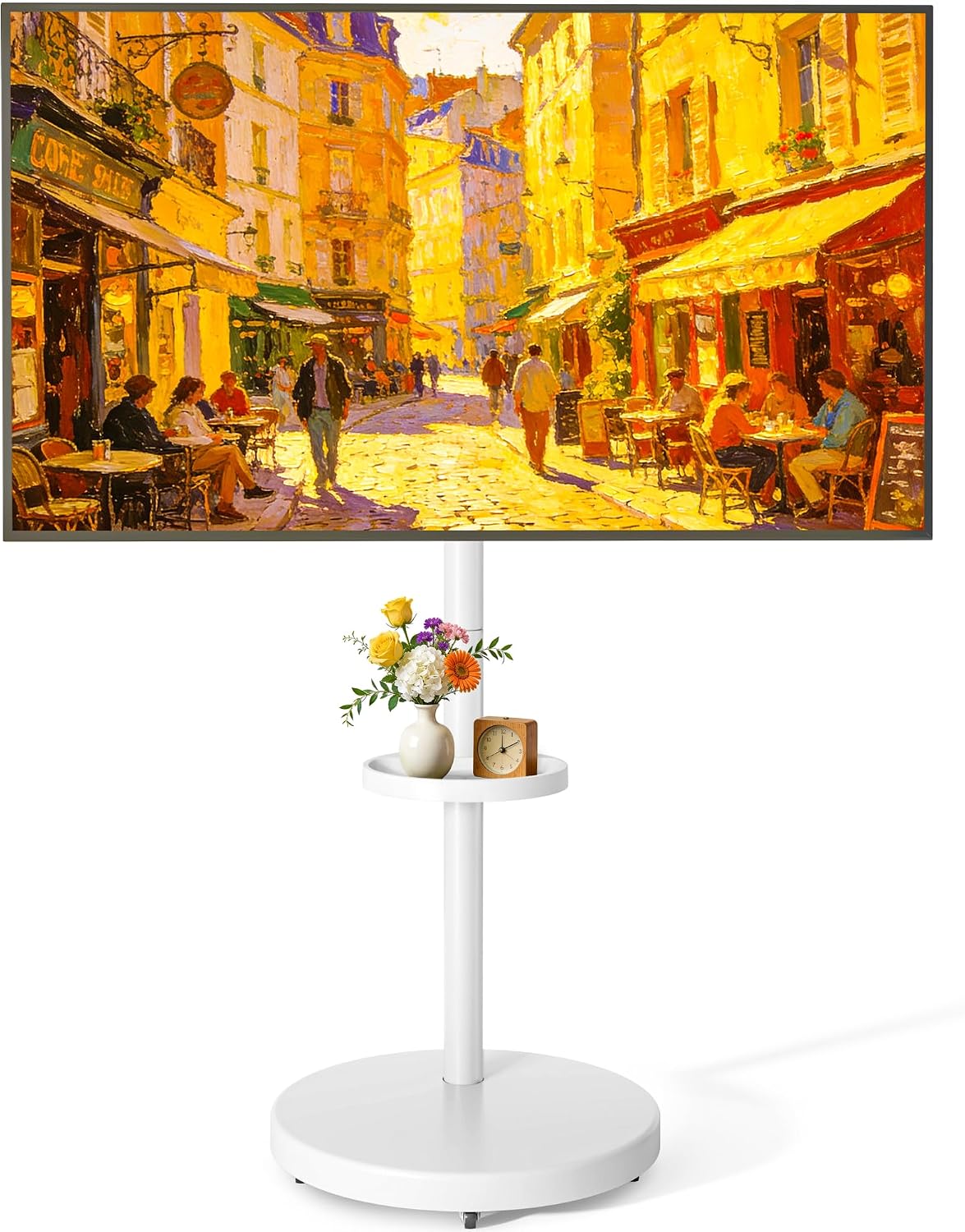
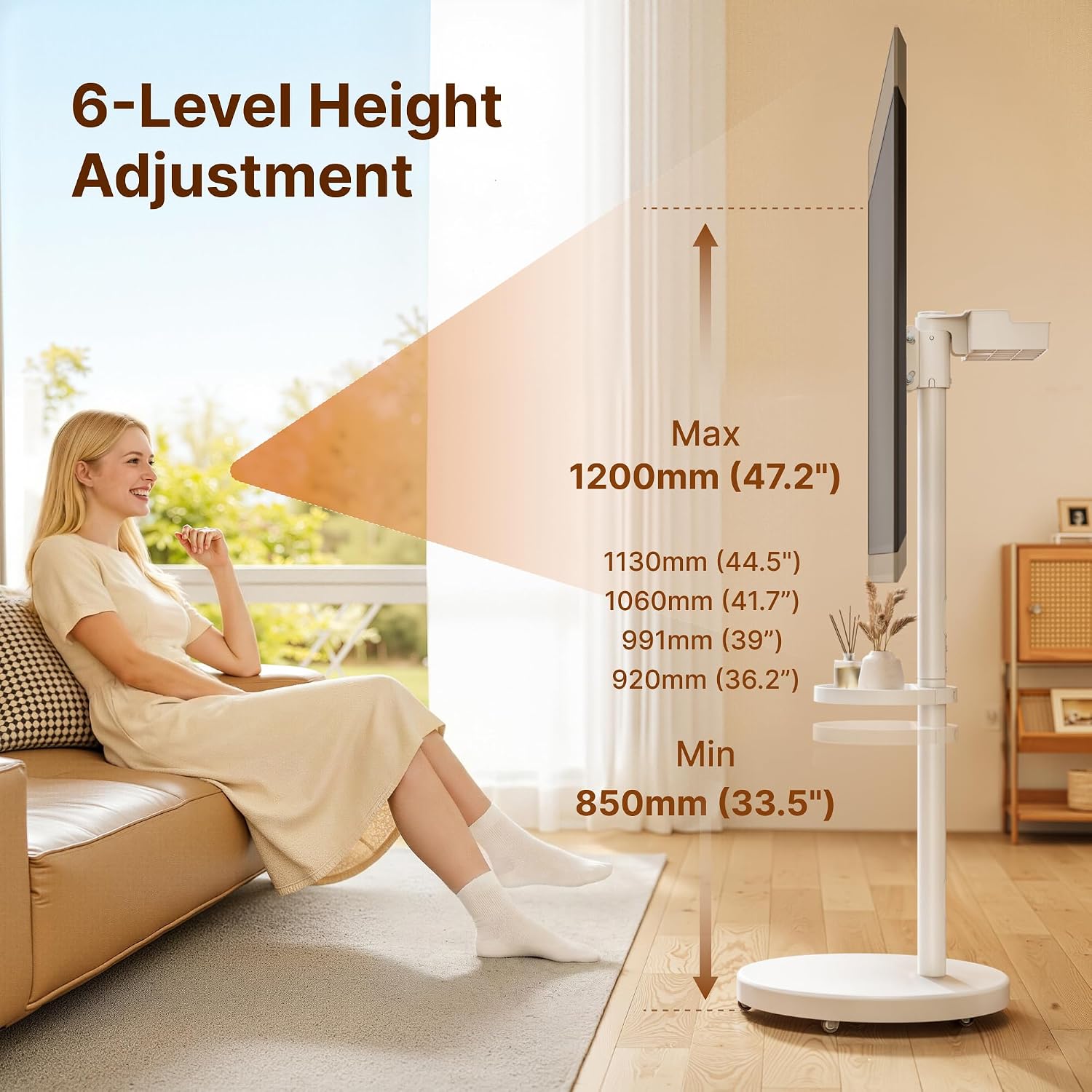
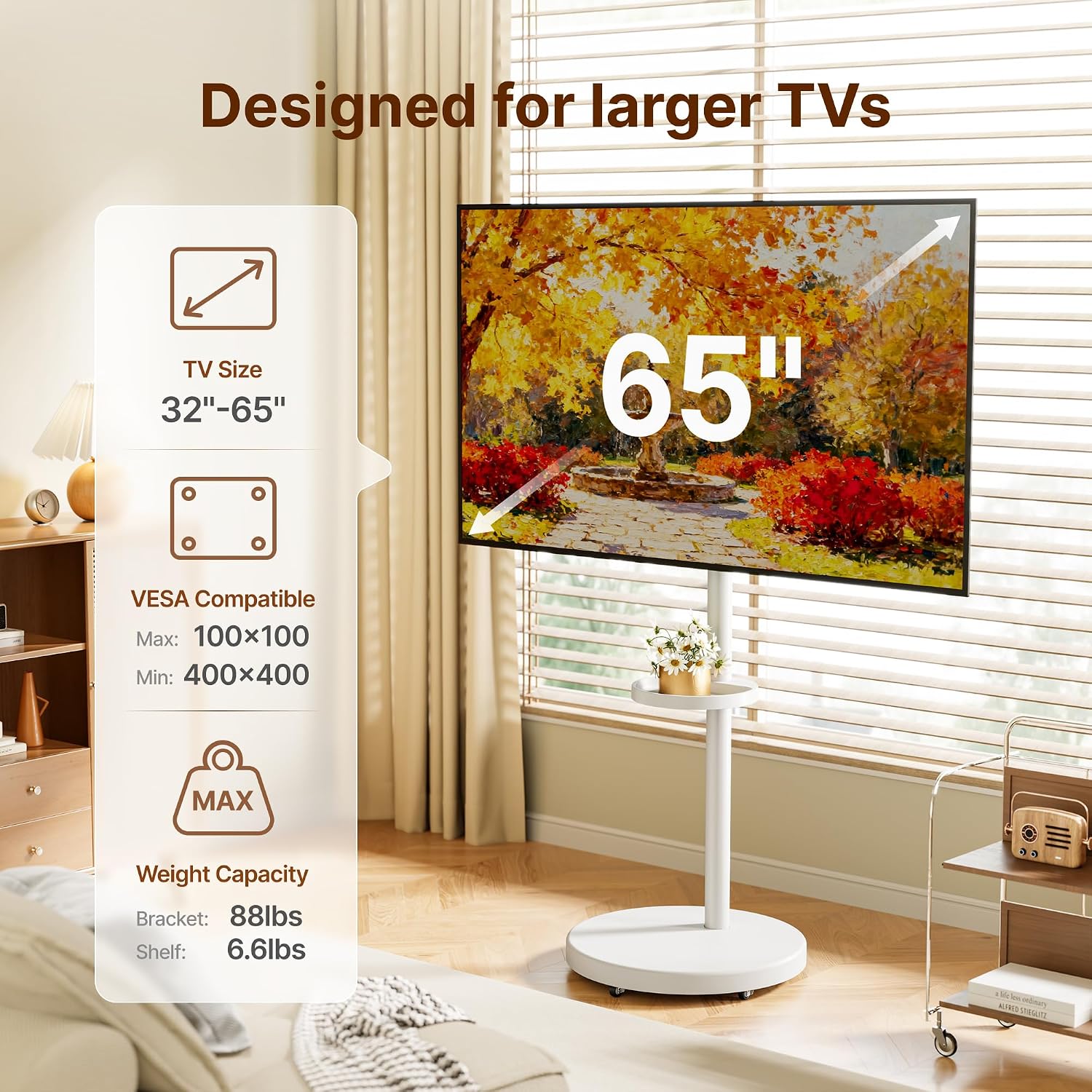
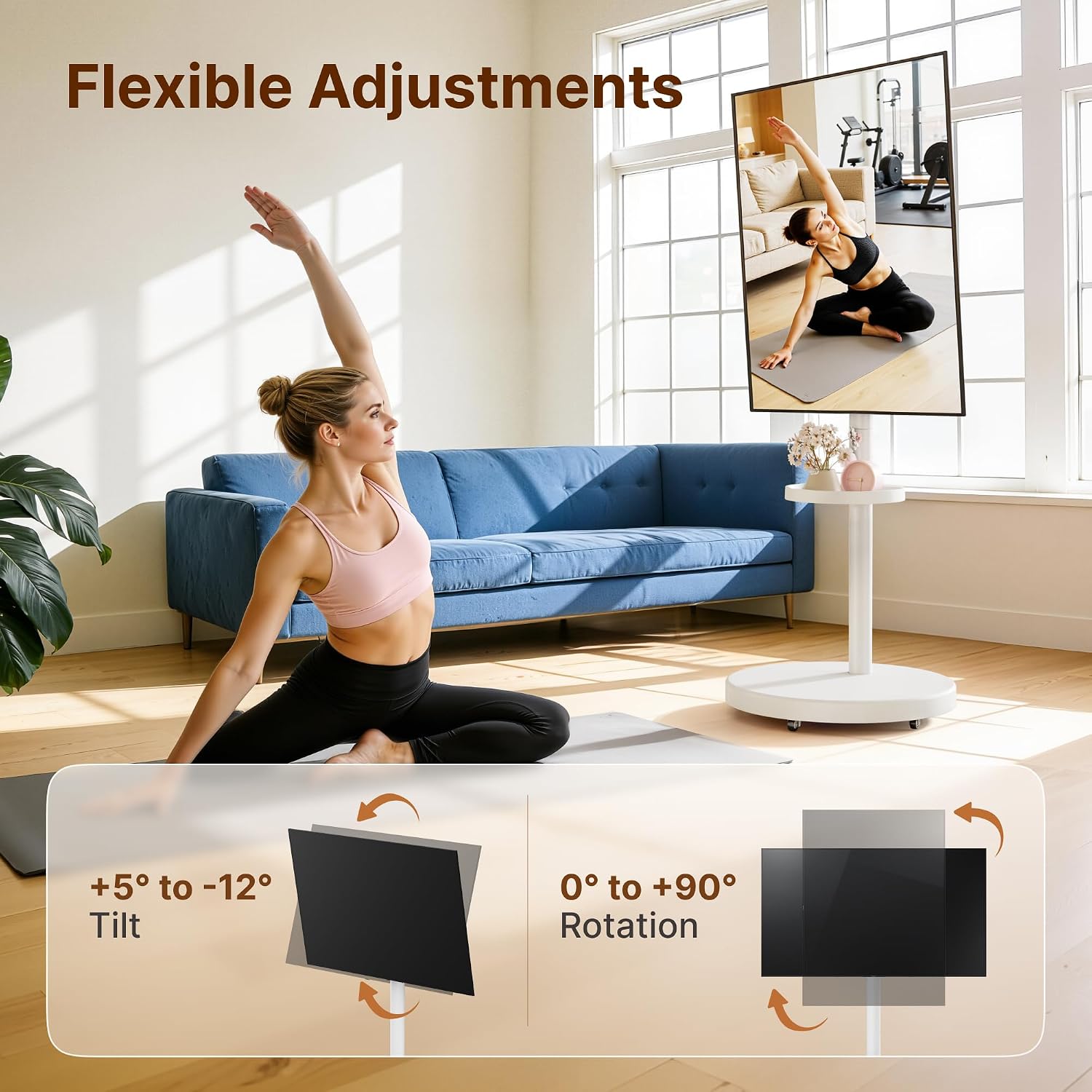
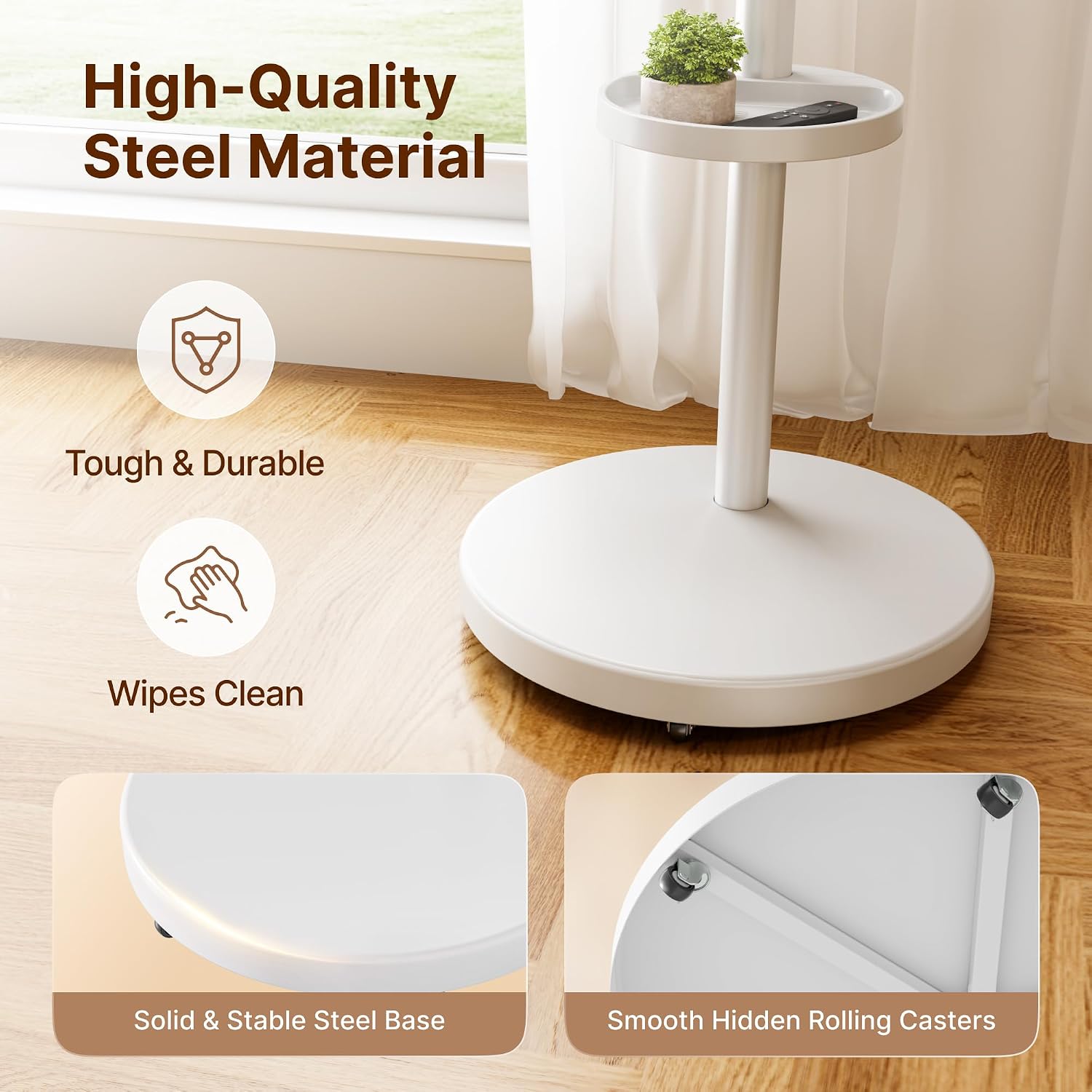
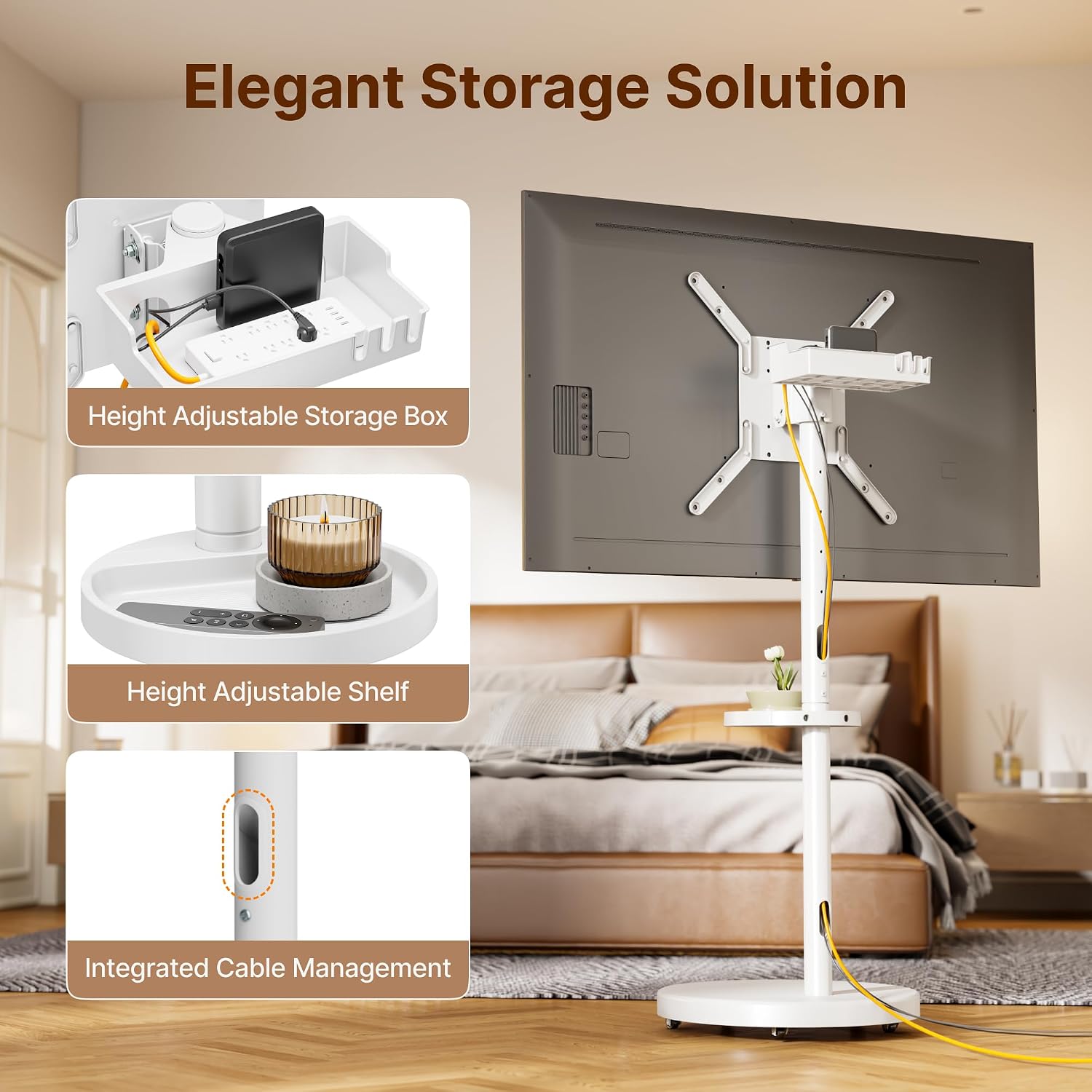
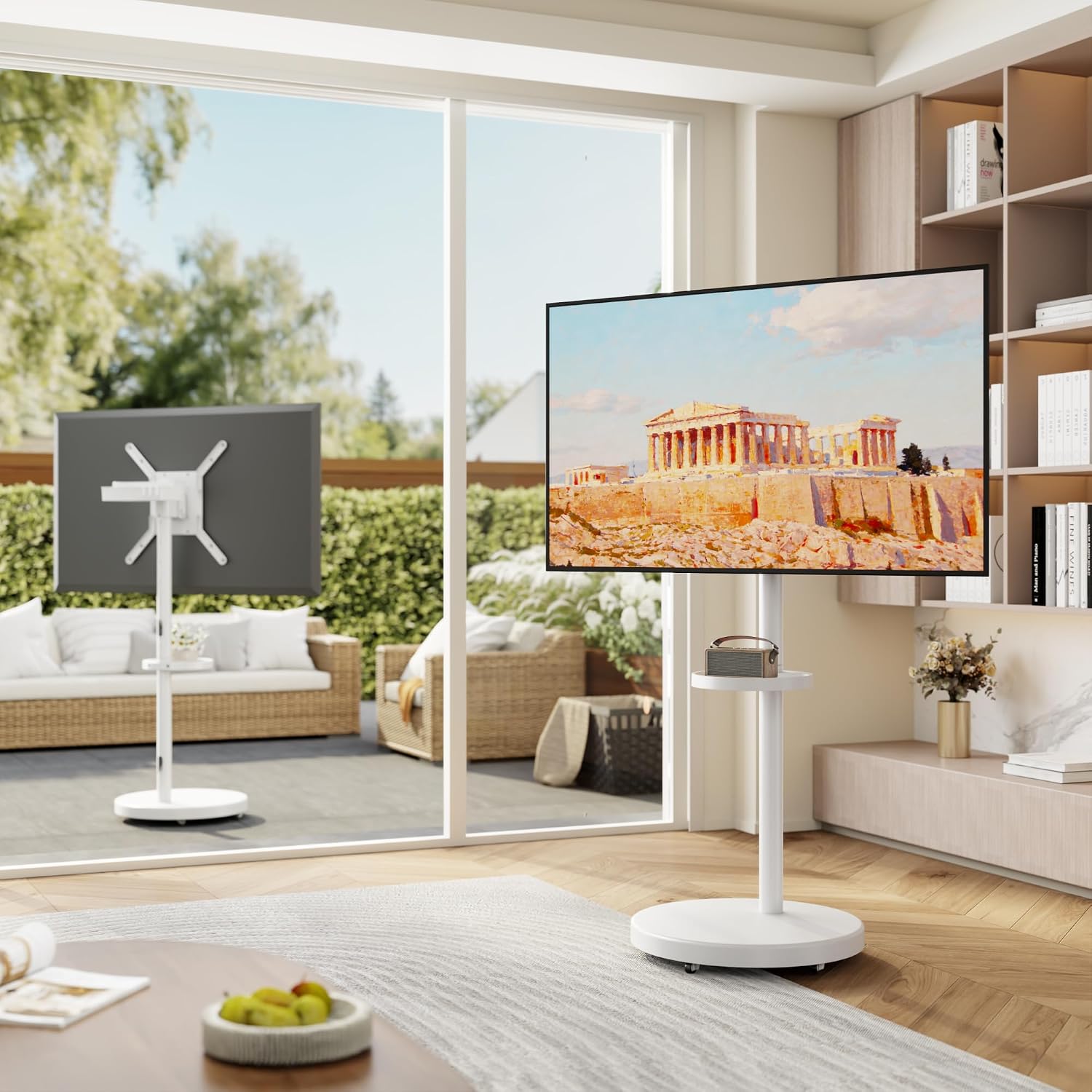
What it is and the need it meets\nThe ECOTINY rolling TV stand is a mobile media stand designed to raise and reposition a mid to large screen, from 32 to 65 inches and up to 40 kg. It emphasises flexibility for living spaces, conference rooms, or classrooms where viewing comfort and layout adaptability matter. On paper, its height range (850 mm to 1200 mm) enables aligning the screen to various seating heights, which can reduce neck strain during long viewing sessions. It’s a practical option when you want an all-in-one cart that can move between rooms or reconfigure a space without drilling or fixed installations.\n\n## Design and build quality\nThe base is constructed from metal for stability, and the surface is described as easy to clean and durable for daily use. The wheels are hidden, which helps maintain a quiet, unobtrusive presence as you shuttle the display between locations. While the base promises strong stability, the overall impression depends on how the stand will be used in busy environments where mobility and footing matter.\n\n## TV compatibility and adjustments\nThe stand supports a maximum VESA pattern of 400 × 400 mm, which covers a broad subset of common mounting patterns. It offers a tilt range of –5° to +12° and rotation from 0° to 90°, enabling a flexible viewing angle in both portrait and landscape orientations. If you prioritise fine-tuning the angle for group viewing or presentations, this degree of adjustability is a meaningful plus.\n\n## Storage and cable management\nIn addition to the mounting area, there are storage and organisation features: an adjustable bracket, a built‑in cable management system, and an adjustable storage box. These elements help keep cables tidy and provide space to stow remotes, manuals, or small peripheral devices. It’s helpful for reducing clutter, particularly in rooms where multiple devices share the stand.\n\n## What you get and limits to consider\nThe product is pitched as a ready-to-use mobile stand with a white finish, which may suit lighter interior schemes. However, there are practical checks to consider: ensure your screen’s weight and mounting holes align with the 40 kg limit and 400 × 400 mm VESA, and verify ceiling or doorway clearances if you plan to move the unit between rooms or through tight spaces. The height adjustment is stepless, which is convenient for precise positioning, but it may require two-handed operation when adjusting on carpet or uneven floors.\n\n## Who it’s for\nThis ECOTINY stand is suited to households or small-to-medium spaces seeking flexible TV placement without wall mounting. It can appeal to environments where room reconfiguration happens often, or where a temporary setup is preferred for demonstrations or events. It’s less ideal if you need a stand for very heavy displays near the upper end of its weight limit or if you require an extensive range of mounting options beyond 400 × 400 mm.\n\n## Practical usage scenarios\nA typical living room might benefit from moving the TV between seating areas to capture different viewing angles. In an office or classroom, the height adjustability helps align the screen with different users, while the built‑in cable management keeps the setup neat during demonstrations. A real‑world note: if you regularly tilt or rotate the screen to accommodate multiple presenters, the 0–90° rotation helps, but you’ll still want to test the reach of cables and any adjacent equipment before heavy use.\n\n## How to decide before you buy\n- Check the TV size and weight against the 32–65 inch / up to 40 kg specification.\n- Confirm VESA compatibility up to 400 × 400 mm.\n- Consider how often you’ll need to move the stand and whether hidden wheels will satisfy your quiet operation needs.\n- Think about space for storage—both in the stand and in the surrounding room—since the adjustable box and integrated cable management can affect available room.\n- If you frequently adjust height, consider the effort required on different floor types, stepless adjustment is handy, but you’ll want a stable base on the surface you use.\n\n## Comparison in context\nCompared with fixed mounts, this stand offers mobility and height versatility at the potential expense of wall-mounted stability. It sits in a practical middle ground: more flexible than a fixed wall mount, less integrated than purpose-built, high-end conference cart options. If you value portability and a cleaner, modern look in a temporary or mixed-use space, this could be a sensible compromise.\n\n## FAQ (practical answers)\n- Is it suitable for landscape and portrait use? Yes, with tilt and rotation features and support for both orientations.\n- Can I run cables neatly with the stand? The built‑in cable management helps tidy cables, but plan for your specific peripheral layout.\n- What happens if the TV is heavy near the limit? Ensure the weight stays well within 40 kg and test stability in your floor type before full deployment.\n\n## Final decision: Is it worth it?\nWorth considering if you want flexible, mobile TV placement without wall mounting and you prioritise straightforward height adjustment and basic storage. It’s a pragmatic option for spaces that change layout often and where quiet mobility matters. If you require extensive, high‑end mounting versatility or are not moving the stand between rooms, you may prefer alternatives that prioritise static stability or different size/weight ranges.\n