

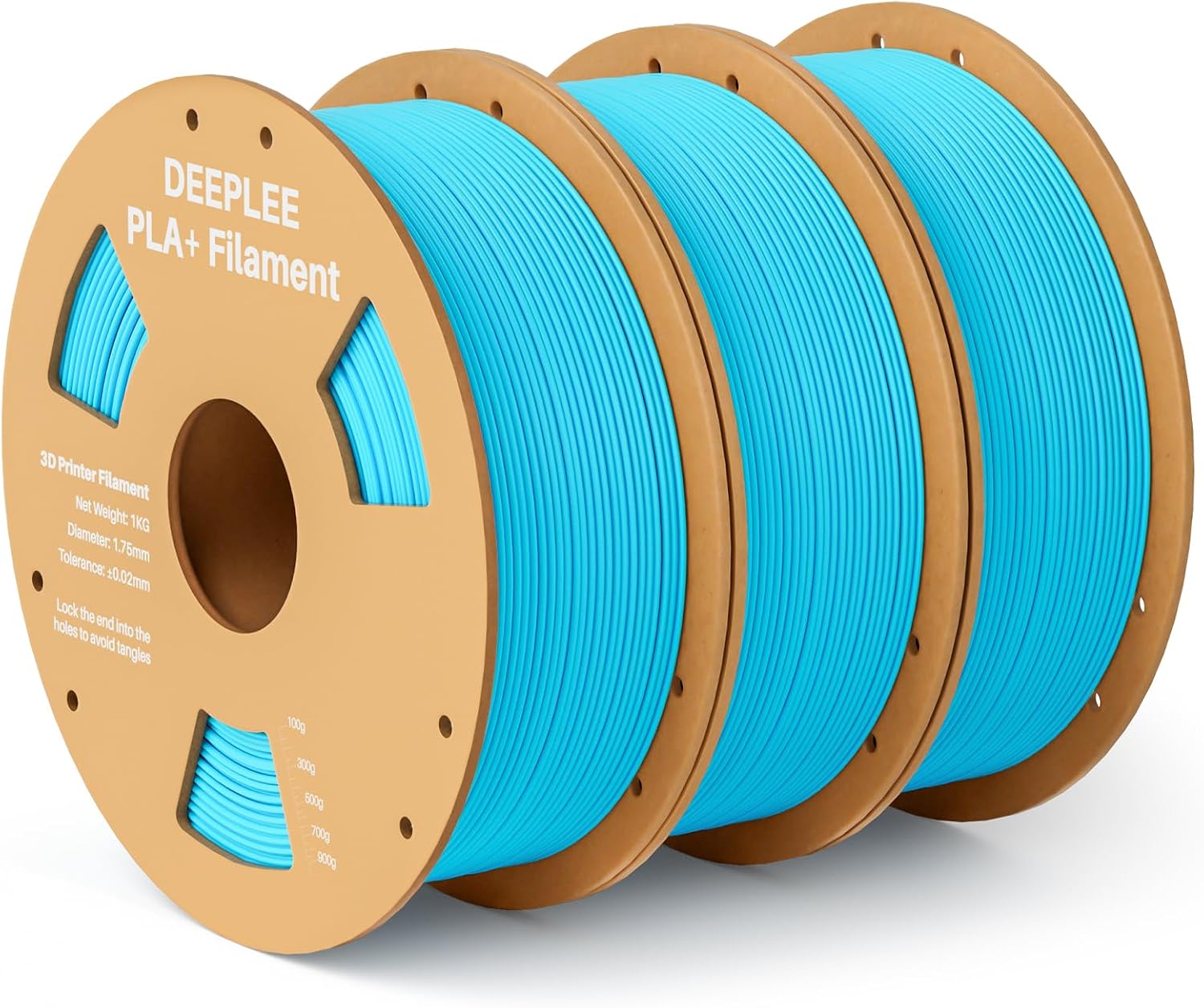
DEEPLEE PLA Plus 1.75mm Sky Blue Filament, 3kg – Stronger PLA+ for Reliable FDM Printing
Product description
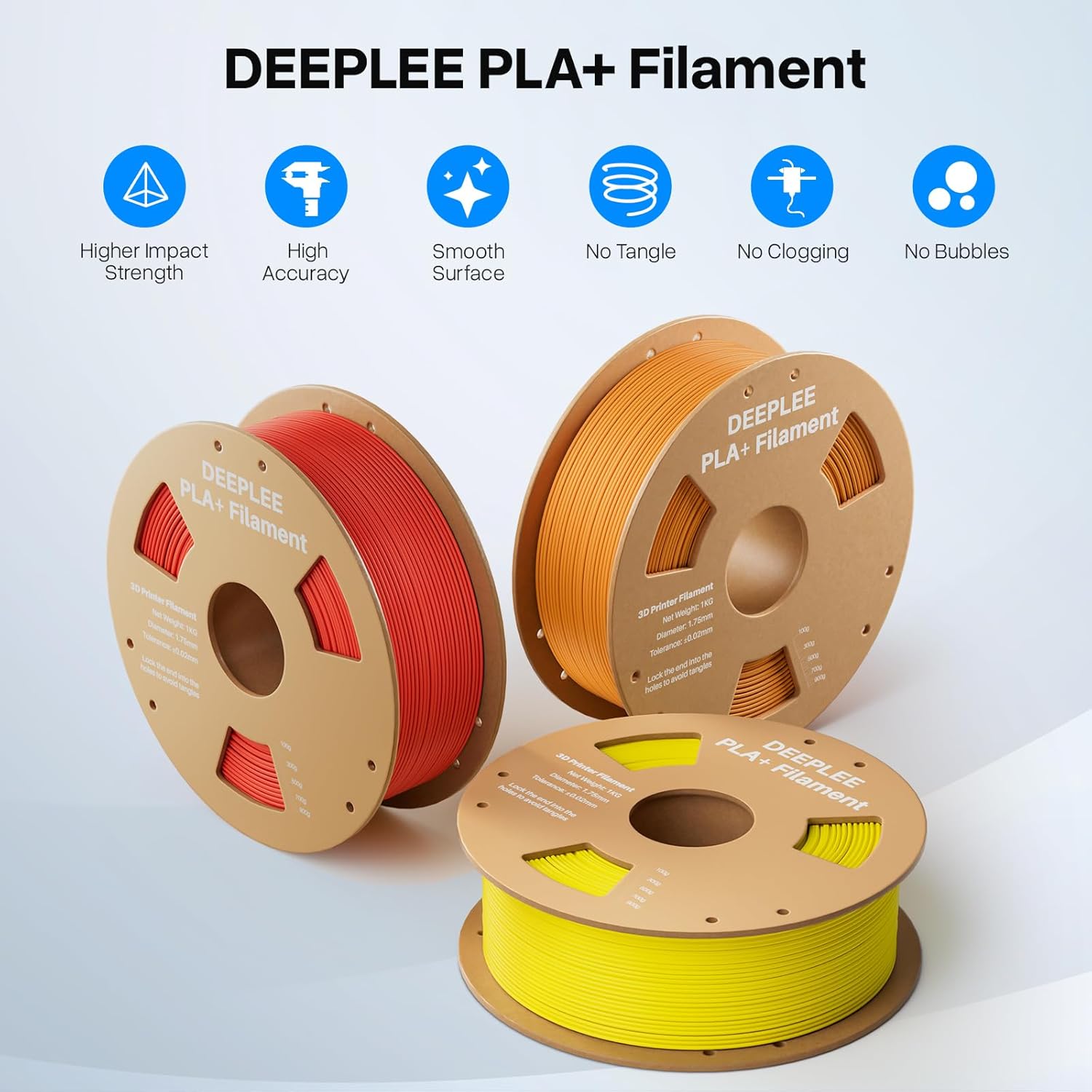
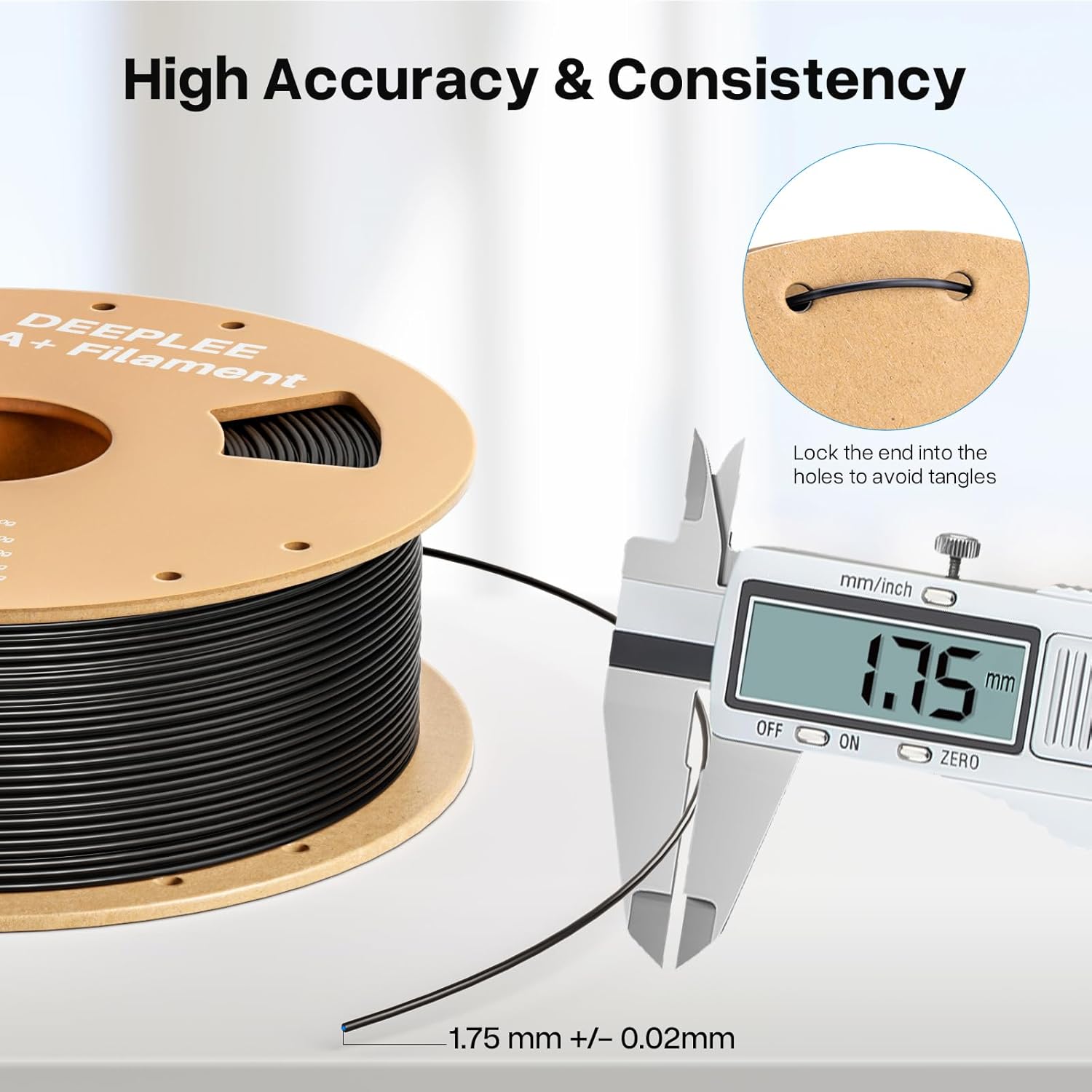
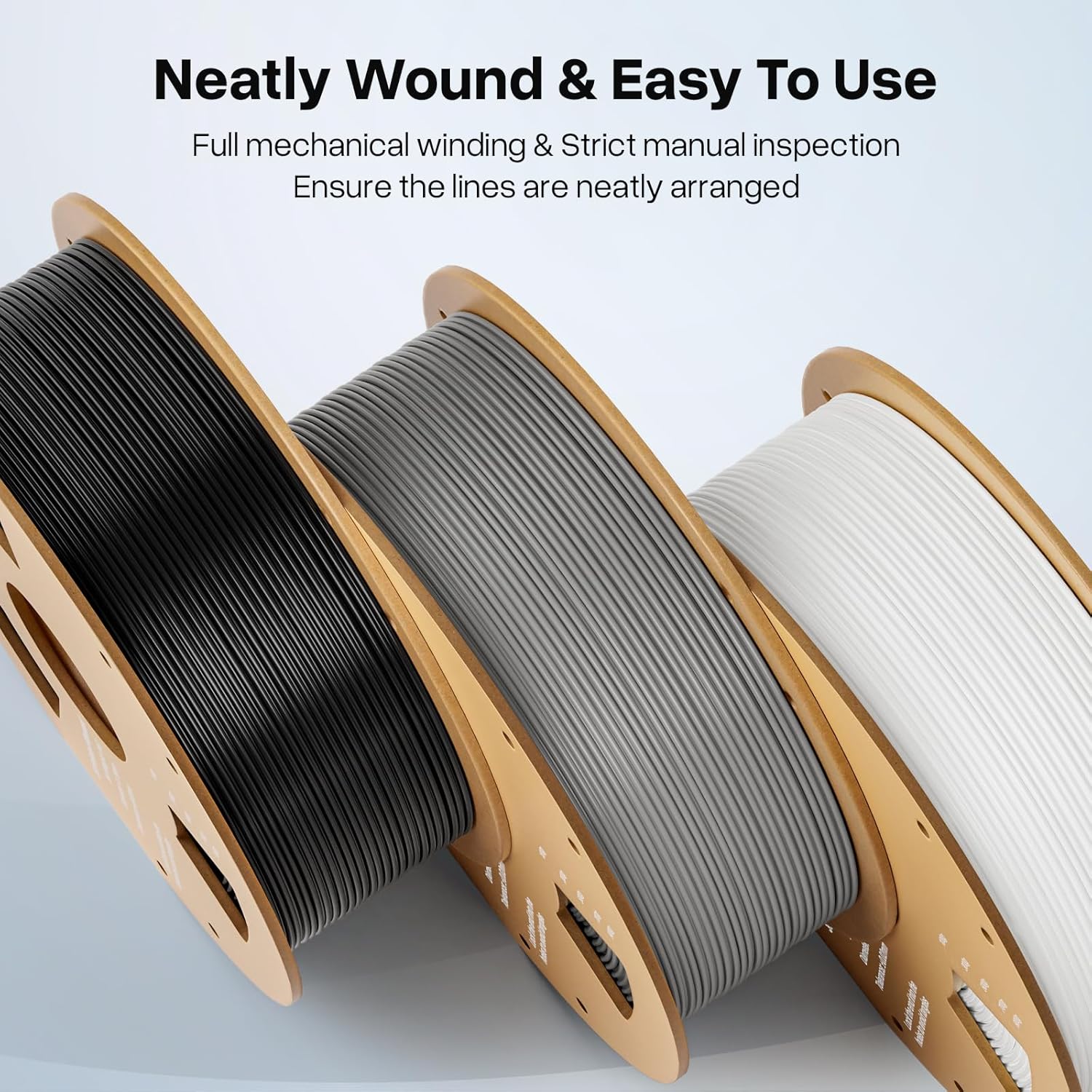
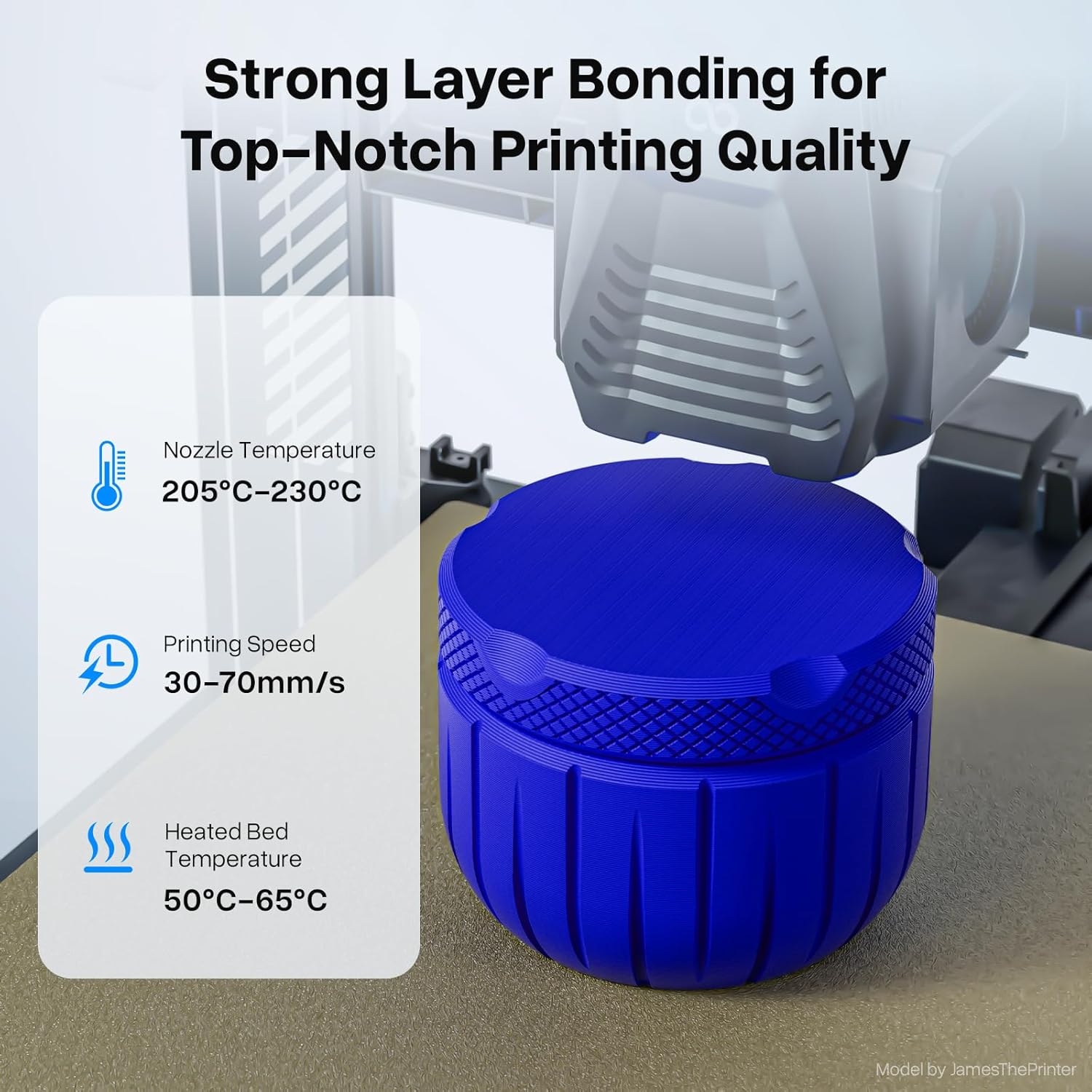
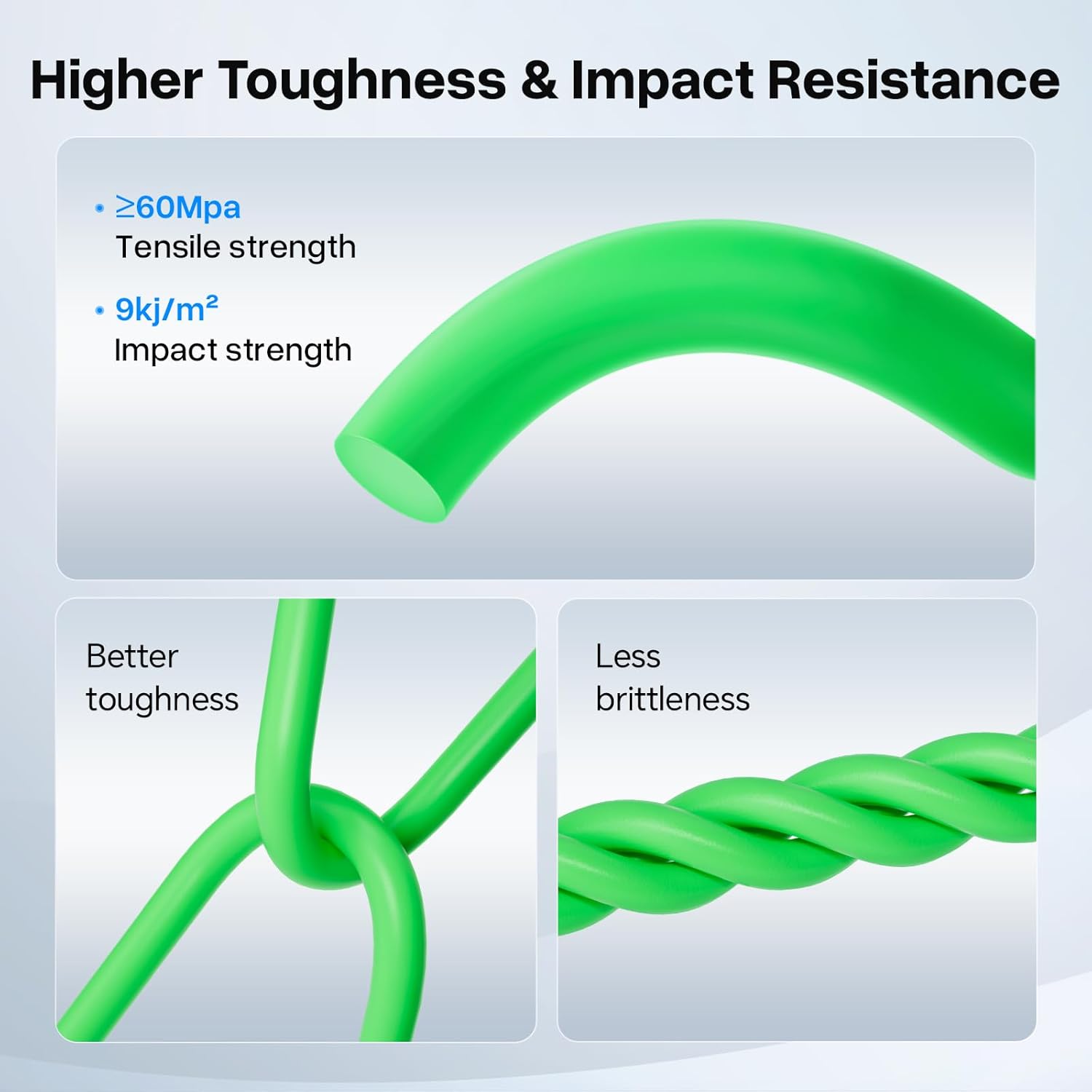
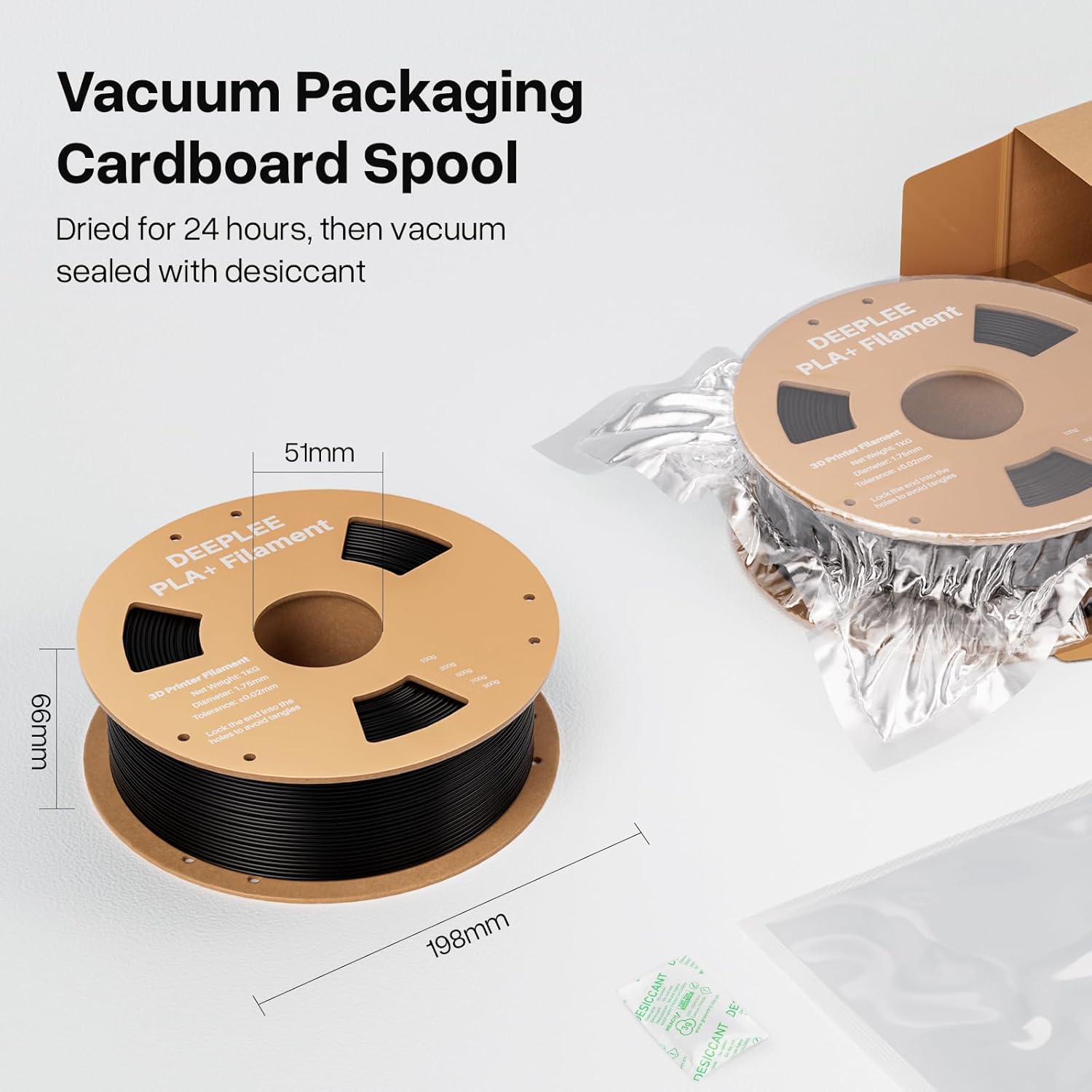
What it is and what it tries to solve\nDEEPLEE PLA Plus is a 1.75 mm diameter PLA+ filament sold in a 3 kg reel, marketed for stronger toughness and better mechanical strength than standard PLA. It targets everyday desktop 3D printing where durability and reliable feeding matter, such as functional parts, hobby projects, or prototypes. The Sky Blue colour is a practical aesthetic if you want visible, colourful prints without excessive gloss.\n\n## How it’s made for better results\nA key claim is tighter diameter tolerance and dimensional accuracy of ±0.02 mm, which helps consistent feeding and reduces clogging or under-extrusion issues that can derail prints. The wire is fully mechanically wound and manually checked, aiming for stable and smooth filament delivery. The reel design is cardboard and designed for easy loading and unloading, with recycling in mind. Filaments are vacuum-sealed to keep moisture out, which helps maintain material properties and surface finish.\n\n## Pros and what to watch for\nWhat stands out is the claimed improved toughness over standard PLA, which can translate into more robust prints that resist cracking under light stress. For beginners or casual makers, the combination of good dimensional stability and a tidy winding can reduce troubleshooting time. On the other hand, PLA+ remains a thermoplastic — it’s easier to print than many engineering plastics but not as heat- or impact-resistant as specialist materials. If you expect the print to endure high loads or high temperatures, you may want to consider the limits of PLA+ and be mindful of environmental conditions.\n\n## Who it’s for\nThis filament suits hobbyists, educators, and makers who value consistent flow, decent strength, and a reliable colour option for models, widgets, or display pieces. It’s a practical choice if you prioritise straightforward print settings and a predictable outcome on a wide range of FDM printers.\n\n## Who it isn’t for\nIf your projects demand extreme mechanical performance, heat resistance, or very high precision over many cycles, PLA+ might fall short compared with dedicated engineering polymers. It also depends quite a bit on printer calibration, if your machine has aggressive retraction or vibration, you may notice variations in surface finish.\n\n## When it makes sense to buy\nChoose this filament when you want an easy-to-print material with a bit more toughness than standard PLA, a clean feed, and a clear sky-blue aesthetic. It’s sensible for regular hobby use, rapid prototyping, or classroom settings where reliability matters.\n\n## What to review before purchase\nCheck that your printer can run 1.75 mm filament within the ±0.02 mm tolerance band, and ensure you store filaments in a dry, vacuum-sealed package between uses. When first printing, start with standard PLA+ settings and adjust nozzle temperature and cooling to balance layer adhesion and print speed.\n\n## Practical usage example\nImagine printing a small functional enclosure for a DIY project. The improved toughness helps the shell resist cracking if handled or lightly pressed, while a neat reel reduces feeding issues on a mid-range printer. The Sky Blue colour adds a friendly, visible finish that’s useful for visually inspecting wall thickness and feature details during assembly.\n\n## Quick comparison (without naming rivals)\nIf you’re choosing between generic PLA and PLA Plus, the Plus variant usually offers a bit more strength and resilience with similar print ease, which makes it a sensible step up for practical parts. If you only need rigid prints for display pieces, standard PLA may suffice, but you may sacrifice some durability under load.\n\n## What’s in the box / What you get\nA 3 kg reel of DEEPLEE PLA Plus 1.75 mm in Sky Blue, vacuum-sealed to protect moisture-sensitive properties, with a tidy mechanical winding for smooth feeding.\n\n## FAQ (brief)\n- Is this suitable for high-temperature environments? It’s designed for standard desktop use, extensive heat exposure isn’t its strongest suit.\n- Will it work with most FDM printers? Yes, it’s described as compatible with most printers that accept 1.75 mm filament.\n- Do I need special storage? Vacuum sealing helps keep it dry, store in a cool, dry place when not in use.\n\n## Final verdict
Final verdict: If you prioritise reliability, modest toughness gains over basic PLA, and a clean, easy printing experience for everyday projects, DEEPLEE PLA Plus 1.75mm Sky Blue 3kg is worth considering. It may not be the best choice for extreme mechanical demands or high-temperature applications, but for regular prints and prototyping, it offers sensible value given its stated tolerances and packaging approach.