

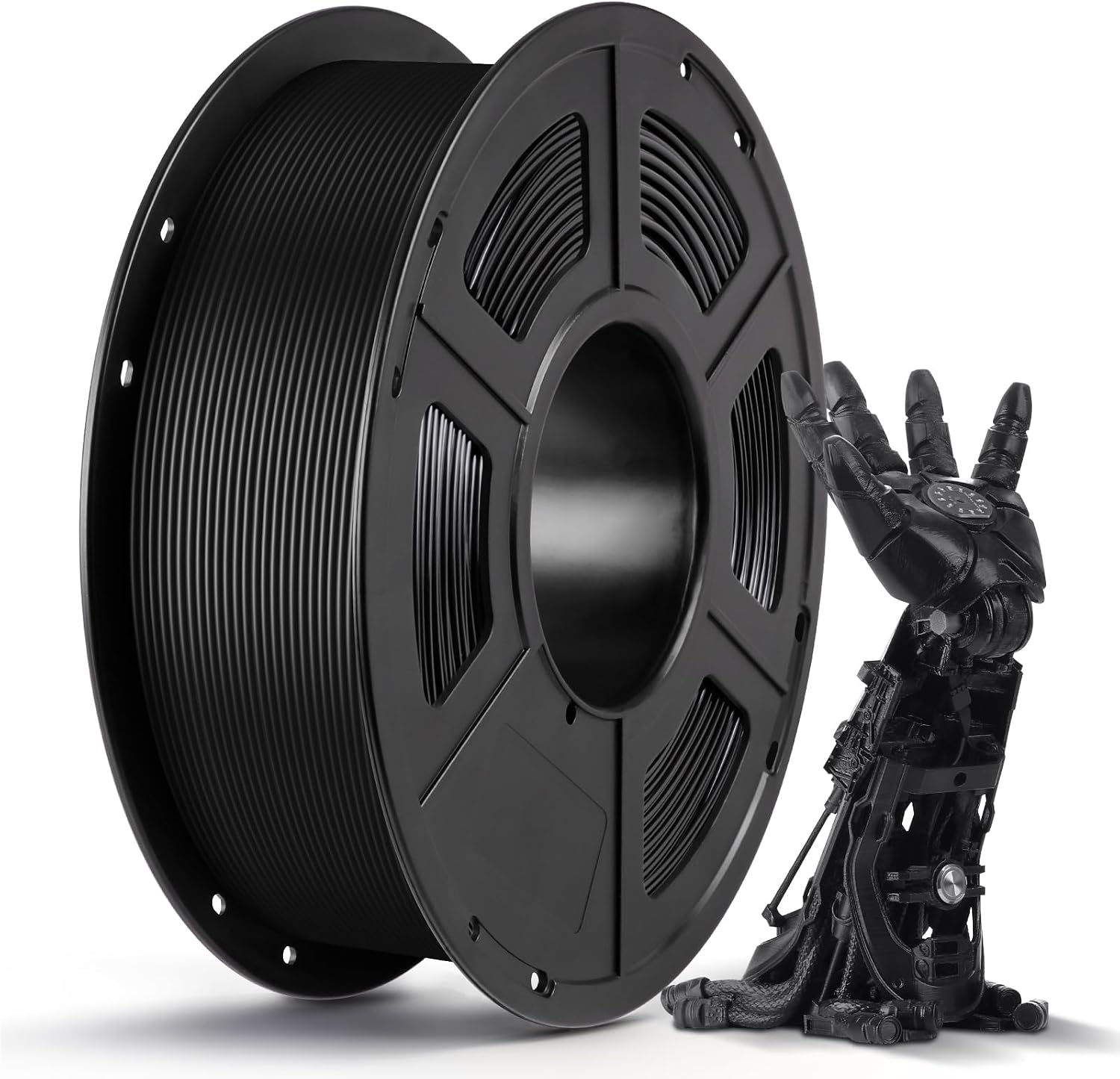
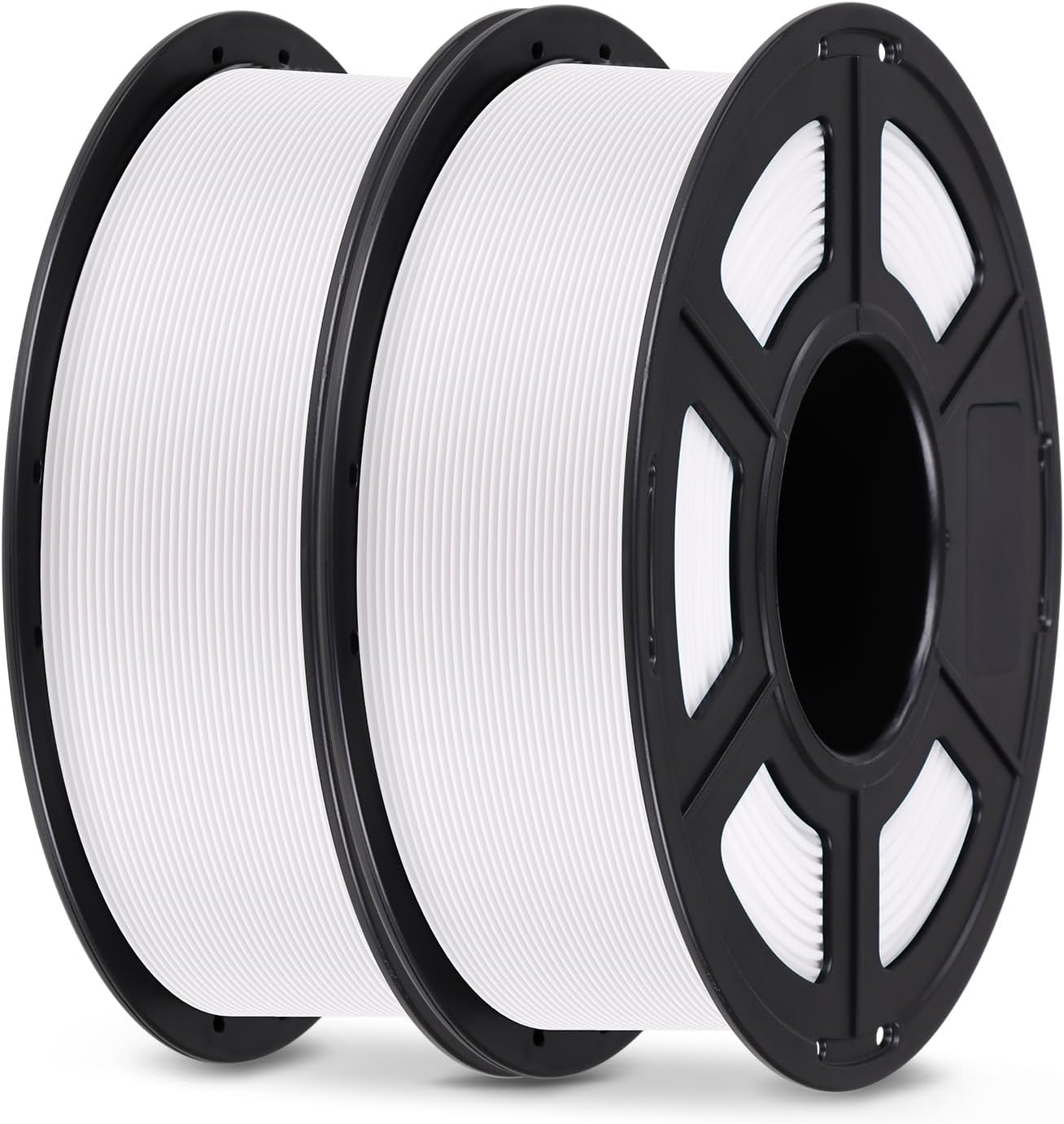
ANYCUBIC PLA Filament 1.75mm (2 x 1kg) with Intelligent Identification, White+White
Product description
The essentials
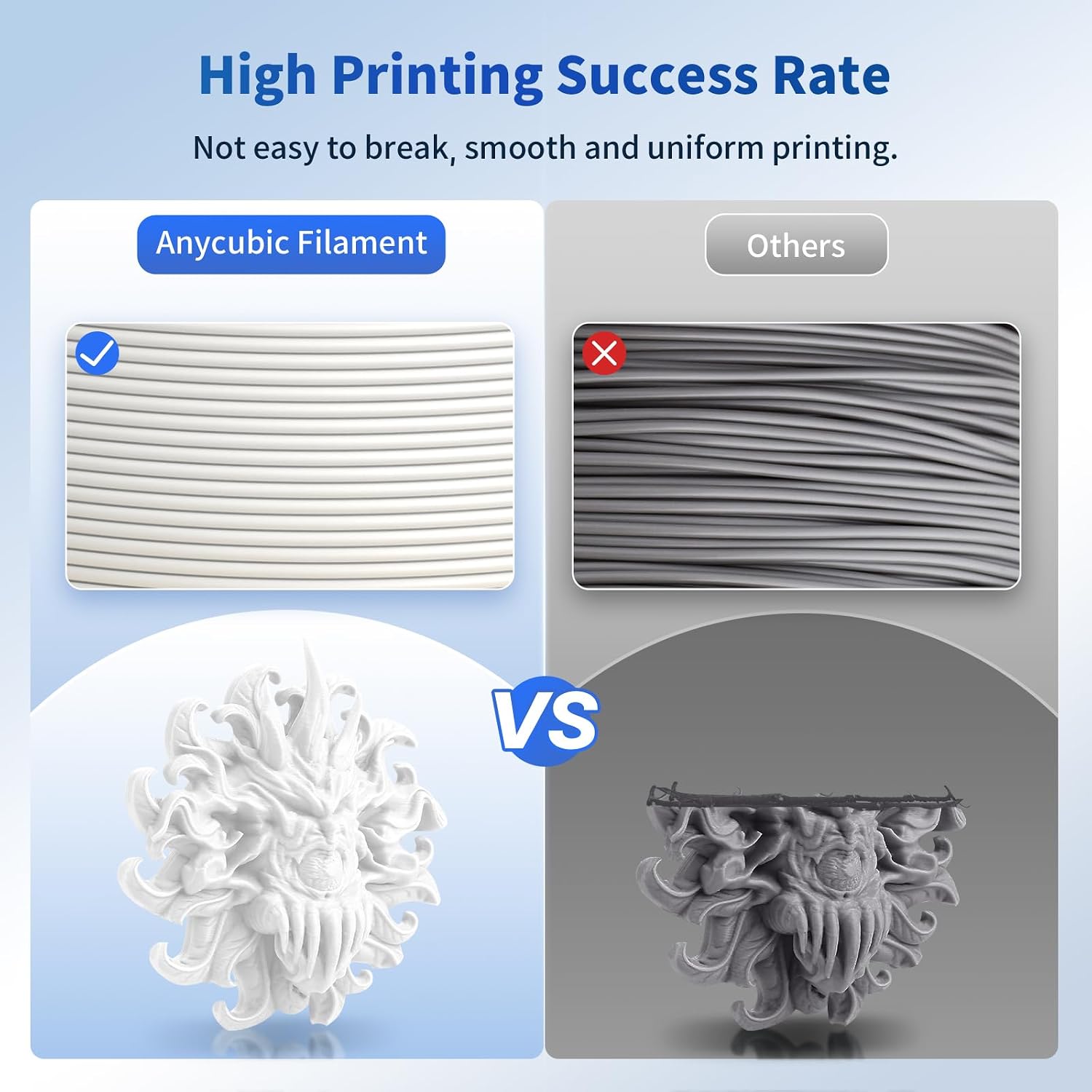
If you’re shopping for PLA filament, you’ll quickly find the same headline everywhere: “easy to print”. Where this ANYCUBIC PLA set aims to stand out is on the boring but important stuff—dimensional consistency (stated tolerance of +/- 0.02mm), and practical storage handling via vacuum-sealed packing. On paper, that combination is what helps with repeatable results, fewer frustrations at the nozzle, and smoother prints.
This is a 1.75mm FDM 3D printer filament offered as a 2-pack, with 1kg per spool, in White+White. It’s also positioned as compatible with common 1.75mm FDM printers and 3D pens that use the same filament diameter.
Key features that matter in day-to-day printing
The most purchase-relevant claims here are about consistency and workflow.
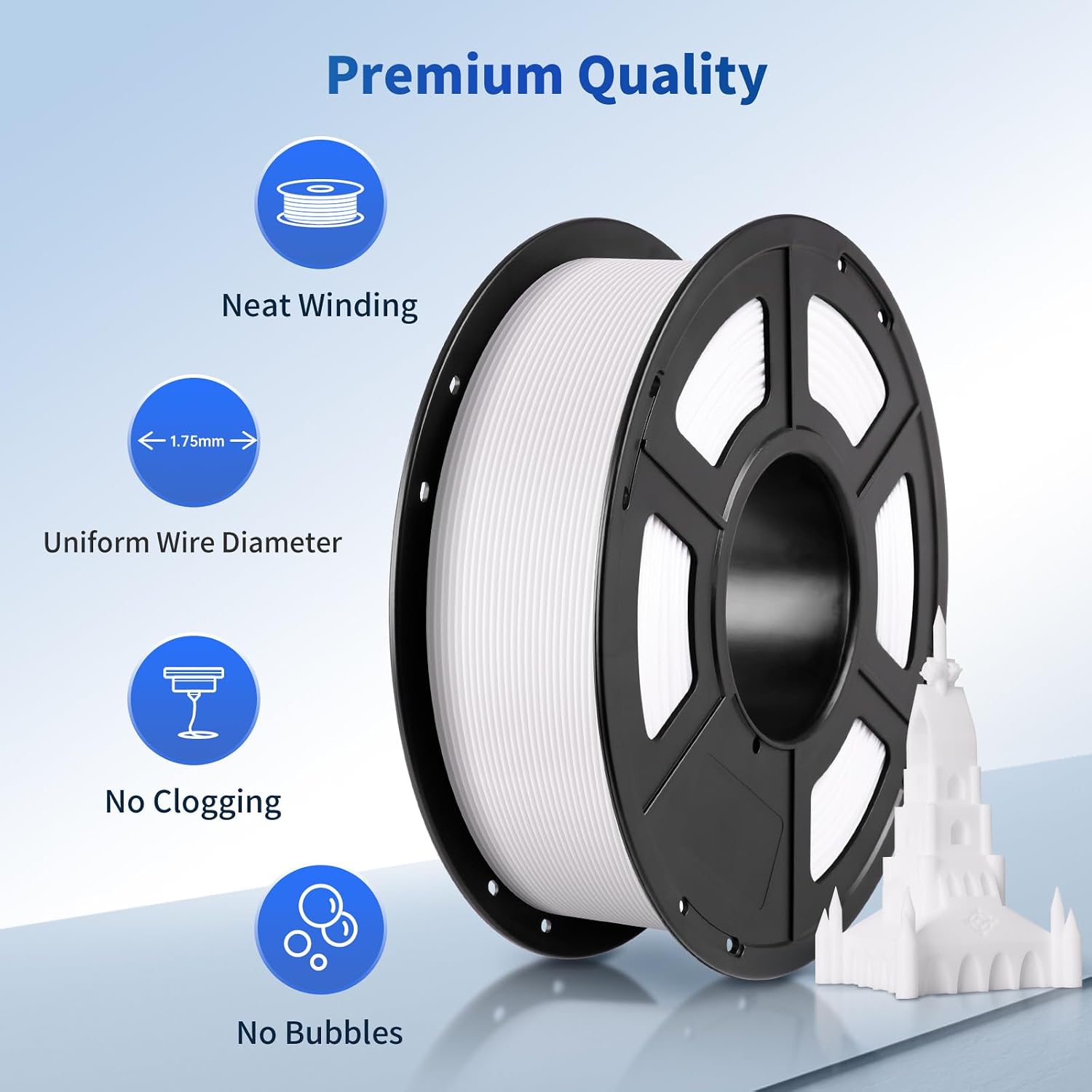
- Dimensional accuracy (stated tolerance +/- 0.02mm): tighter diameter tolerance can make feeding more predictable, especially if you’ve ever had prints that start fine and then slowly lose quality.
- Intelligent identification: the listing suggests there’s some kind of identification support. In practice, this only becomes useful if your printer supports intelligent filament features—so it’s worth checking before you assume it will “just work” on your setup.
- Vacuum-sealed packaging: this is mainly about keeping dust and dirt out and helping you store filament more cleanly before opening.
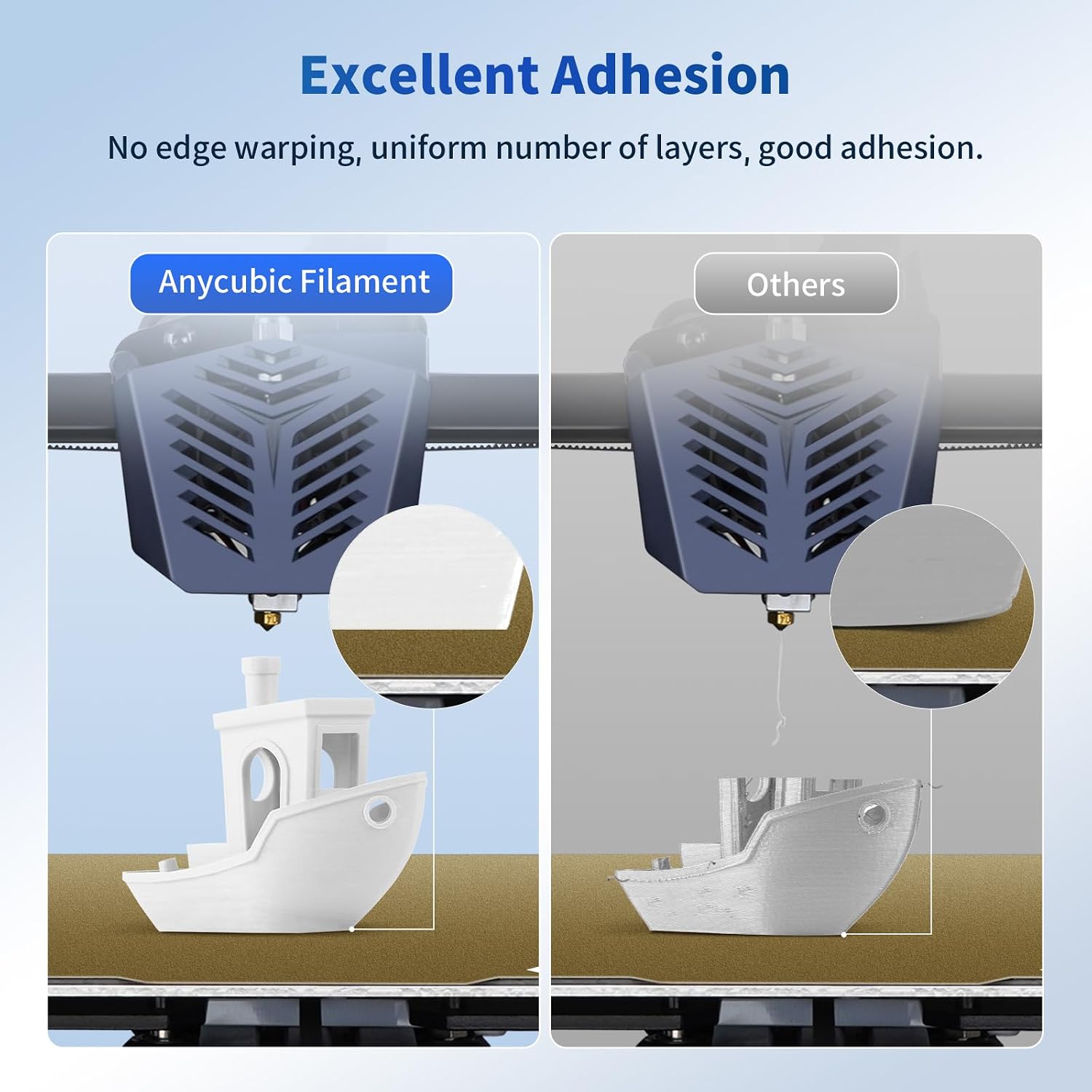
- Low odour / minimal warping claims: PLA is often chosen because it’s generally more approachable than many other materials. This product leans into that, with “minimal warping” and “no odour” listed.
One small limitation to keep in mind: even with tight manufacturing tolerances, print quality still depends heavily on your printer’s calibration, temperature settings, and environment.
Performance expectations (and where it may feel average)
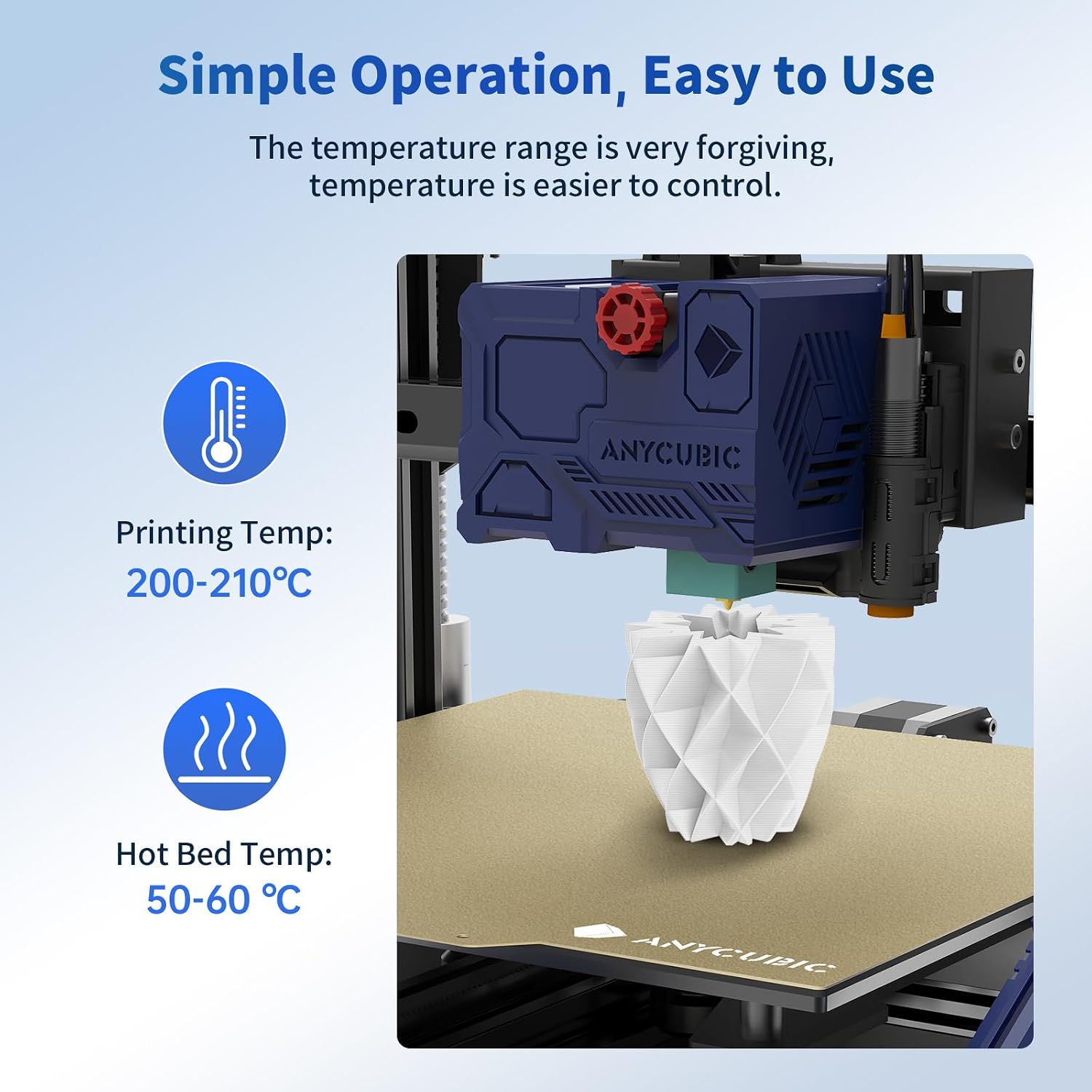
PLA tends to be a strong choice for everyday models, prototypes, and educational or hobby printing because it’s usually easier to handle than more demanding filaments. This set is clearly designed around that “get reliable results” mindset.
That said, the information provided doesn’t mention special performance upgrades like enhanced strength, temperature resistance, or specific surface finishing traits. So if you’re aiming for parts that need to handle heat, heavy loads, or long-term outdoor exposure, PLA may not be your best bet anyway—this remains a straightforward PLA option rather than a premium, engineered material.
Compatibility & requirements
The listing states it’s compatible with most 1.75mm FDM 3D printers and common 1.75mm FDM 3D pens. That’s helpful if you have multiple devices or you’re standardising filament across them.
Worth noting: compatibility with intelligent identification depends on your printer. If you don’t have filament recognition hardware or settings, you may get all the “normal PLA filament” benefits while the “intelligent” part stays unused.
Storage, safety and practical handling
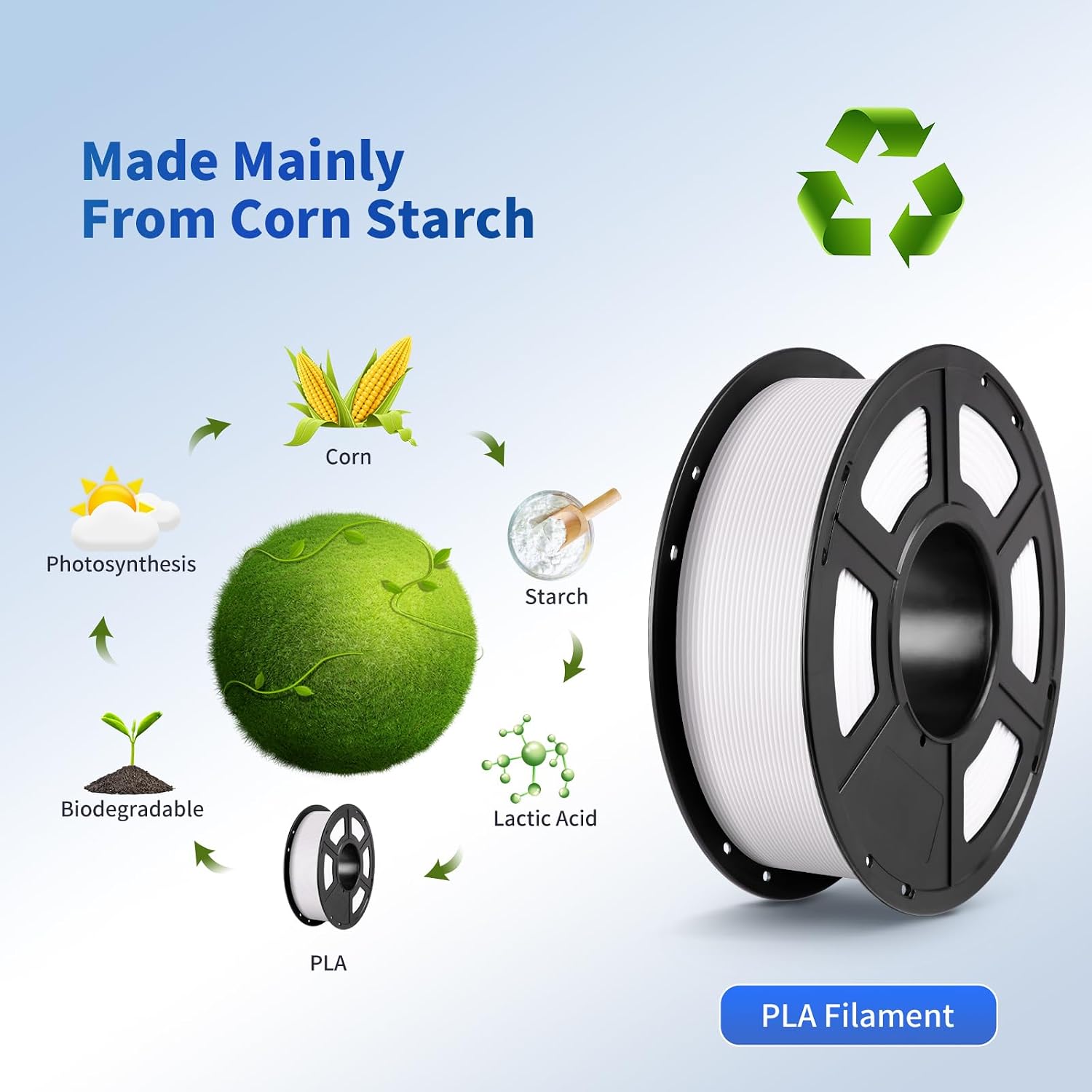
This filament is described as non-toxic with low odour, and it also mentions compliance with RoHS and being free from potentially hazardous substances. It’s further described as vacuum sealed to keep storage conditions “optimal” before you open it.
In terms of real-world use, vacuum sealing can make a difference if your printer area is dusty, or if you’ve had issues with filament picking up grime over time. It won’t magically fix poor drying habits once opened, but it’s a sensible packaging approach.
What you’ll notice after a few prints
Imagine you load a spool, print a small calibration piece, and then switch to a simple functional model. With a stated tight diameter tolerance (+/- 0.02mm) and claims of minimal warping and no clogging, you’re ideally trying to avoid the usual “needle in a haystack” problems—random feeding hiccups, inconsistent layer lines, or annoying nozzle blockages.
However, don’t ignore the basics: if your slicer settings, nozzle condition, and printer calibration aren’t in a decent place, even precise filament can’t fully compensate.
Pros
- Stated dimensional tolerance +/- 0.02mm for consistent feeding
- Vacuum-sealed packaging for cleaner storage pre-opening
- Low odour and minimal warping are specifically called out
- Supplied as 2 x 1kg spools, which suits regular printing
Cons
- “Intelligent identification” only helps if your printer actually supports it
- The description doesn’t position this as a high-performance PLA for demanding mechanical or thermal tasks
Should you buy it?
You should consider this ANYCUBIC PLA filament if you print with 1.75mm FDM regularly and you want a standard PLA that leans into dimensional consistency and sensible storage. The 2-pack also makes sense if you’d rather not keep re-ordering small quantities.
It might not be the best match if your printer setup doesn’t support (or you’re not sure it supports) intelligent filament identification, or if you’re specifically chasing a PLA variant known for special mechanical/thermal performance beyond “reliable everyday prints”.
For most hobbyists, it’s a practical choice—just make sure you’re buying for the right material category (PLA) and that your slicer and printer settings are reasonably dialled in.
Quick FAQ
How accurate is the diameter on this PLA?
The listing states a dimensional tolerance of +/- 0.02mm.
Is it suitable for 1.75mm FDM printers?
Yes—it's described as compatible with most common 1.75mm FDM 3D printers and 3D pens that use the same filament diameter.
What’s the point of vacuum-sealed packaging?
It’s mainly there to help keep filament in better storage conditions before opening, helping protect against dust or dirt and reducing the chance of storage-related issues.
Does intelligent identification work on every printer?
Not necessarily. The listing suggests intelligent identification support, but it will only be useful if your printer has the relevant support.
Final thought: what’s it best for?
Based on the information, it’s aimed at straightforward PLA printing—small parts, prototypes and general FDM jobs where consistency and ease of use matter.