

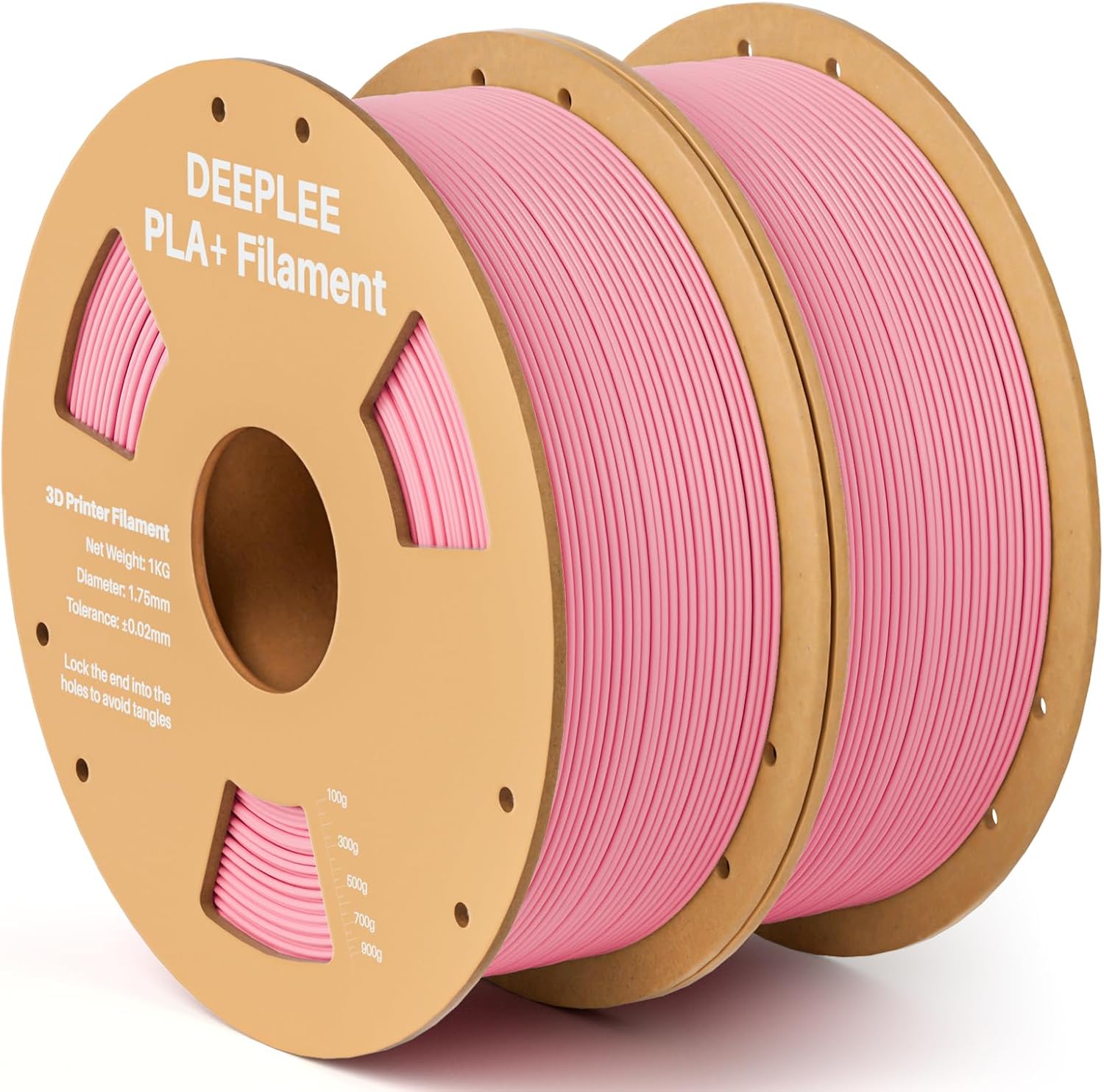
DEEPLEE PLA Plus 1.75mm Pink 2kg filament (PLA+) for FDM 3D printers
Reviews
Price
Product description
What it is and why people buy PLA+
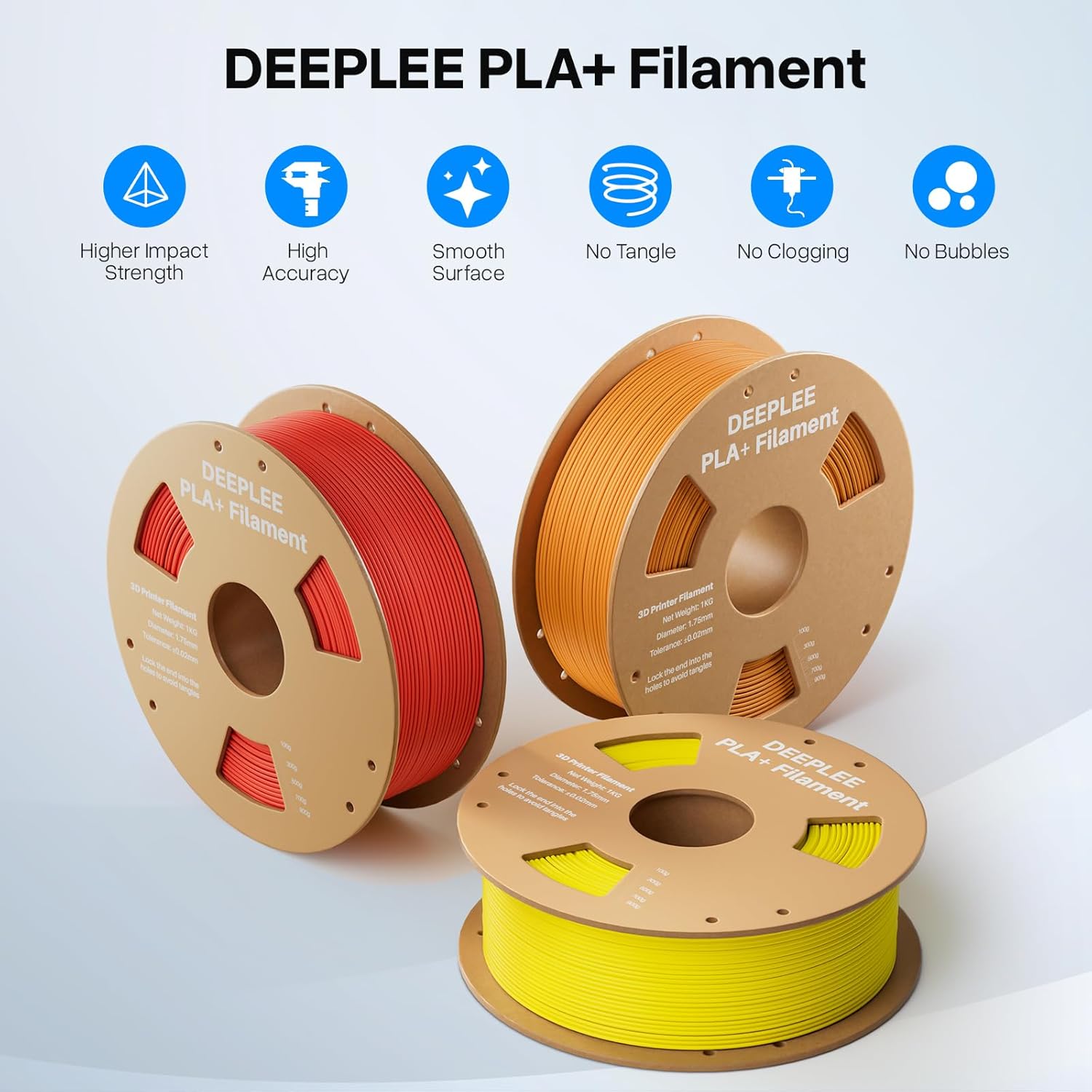
DEEPLEE’s PLA Plus filament is a 1.75mm pink PLA+ spool aimed at FDM 3D printing. The pitch is pretty straightforward: PLA+ is positioned as a step up from standard PLA, with stronger toughness and better mechanical strength. On paper, that matters if you’re printing parts that are meant to take a bit more stress—think practical household fixtures, simple brackets, or functional prototypes where you’d rather not worry about brittle failures.
That “better strength than PLA” claim is the core reason this sort of filament gets chosen over basic PLA. But it’s still PLA+—so it’s not the same league as high-end engineering plastics. If your priority is extreme heat resistance or long-term durability in harsh environments, you may find PLA+ can feel a little limited.
Key features that affect printing success
Where this filament differentiates itself is mainly around consistency and how it behaves during feeding.
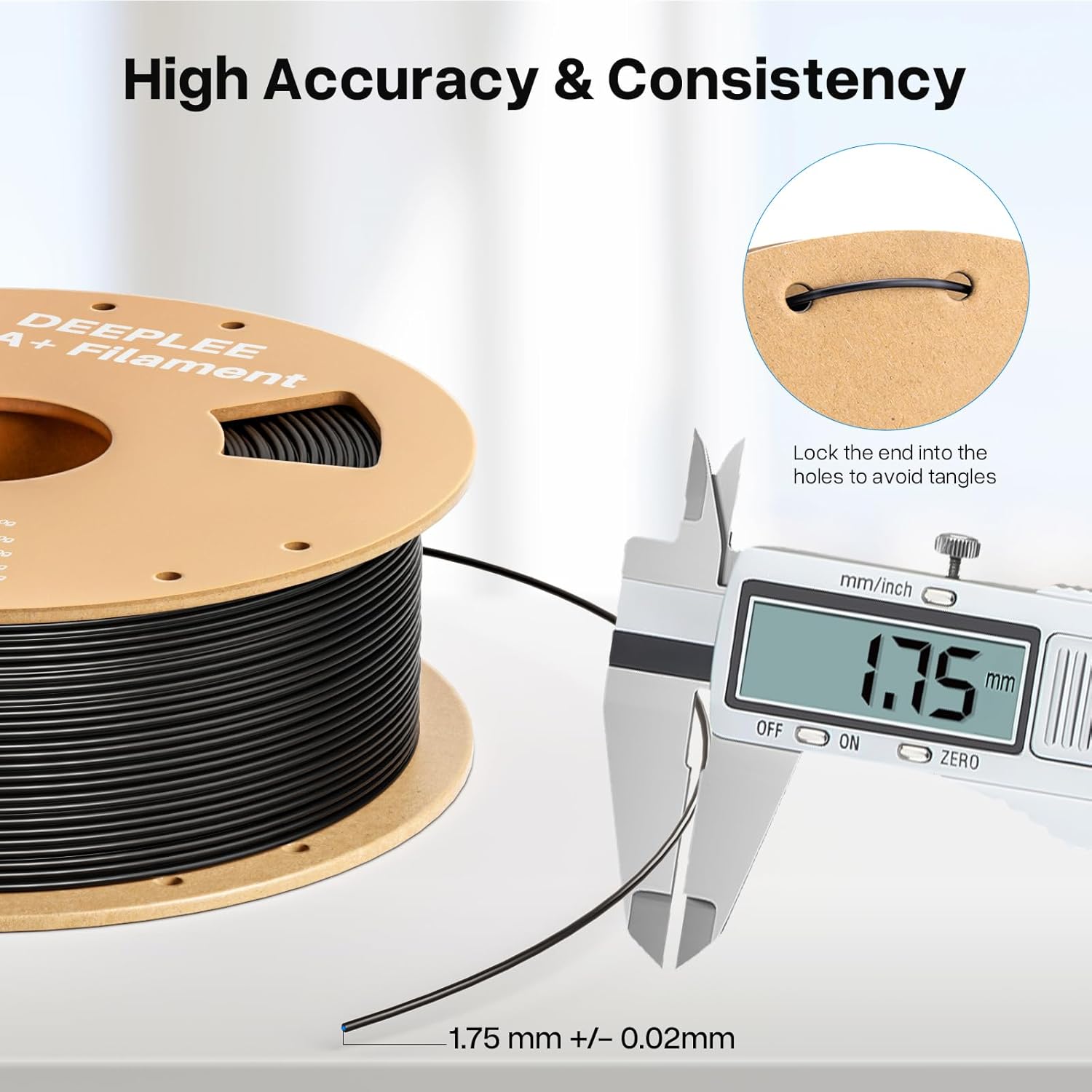
The company states it keeps tighter control of the wire diameter tolerance, with an accurate diameter of 1.75mm and dimensional accuracy of ± 0.02mm. In real-world terms, that sort of spec is there to reduce feeding issues: more consistent diameter can mean fewer surprises with extrusion, especially if your printer is a bit sensitive to filament quality.
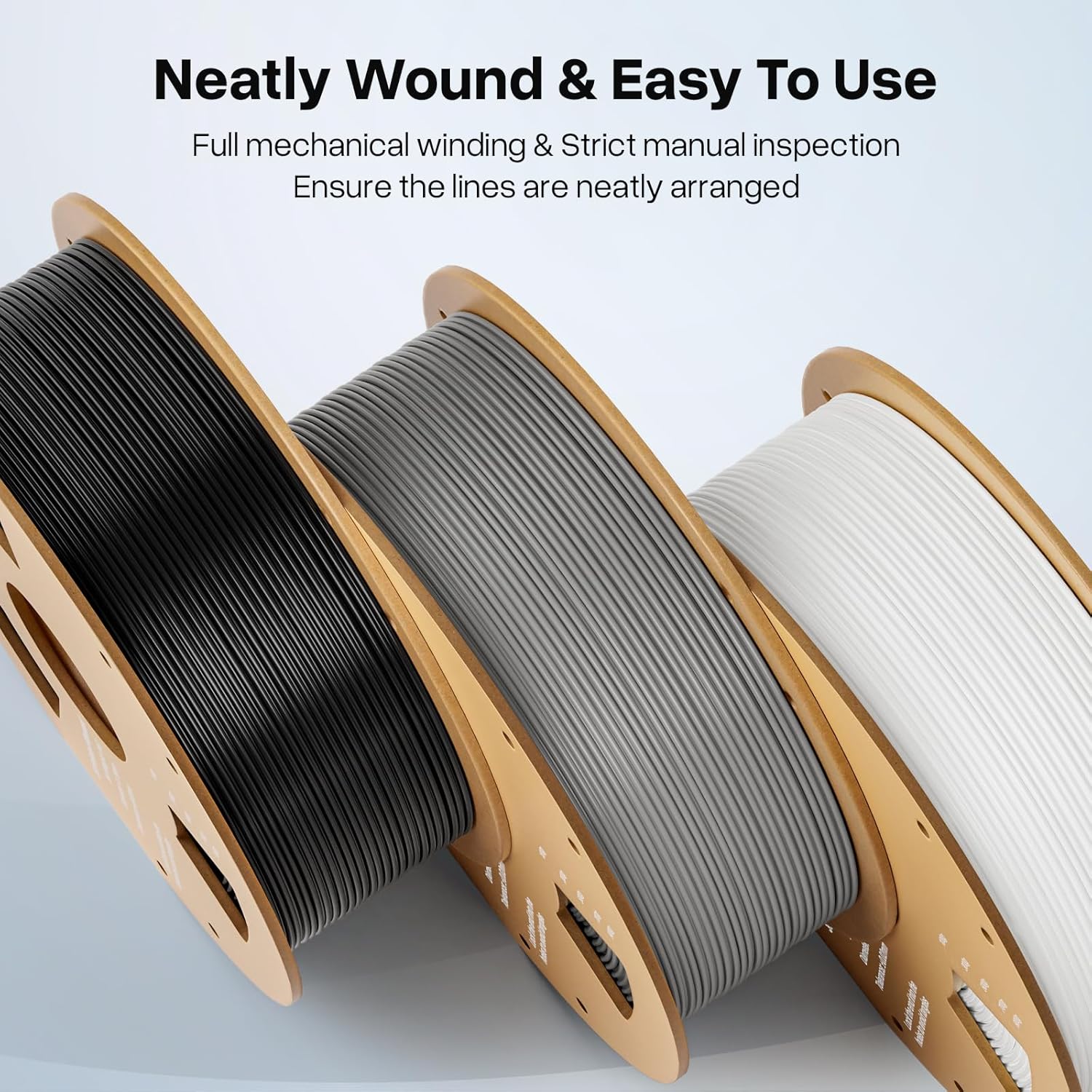
It also claims stable, smooth wire feed thanks to the way the filament is mechanically wound and inspected. That’s not glamorous, but it’s exactly the kind of detail that can reduce tangles, uneven laying, or inconsistent pulling—issues that can waste time even when your slicer settings are good.
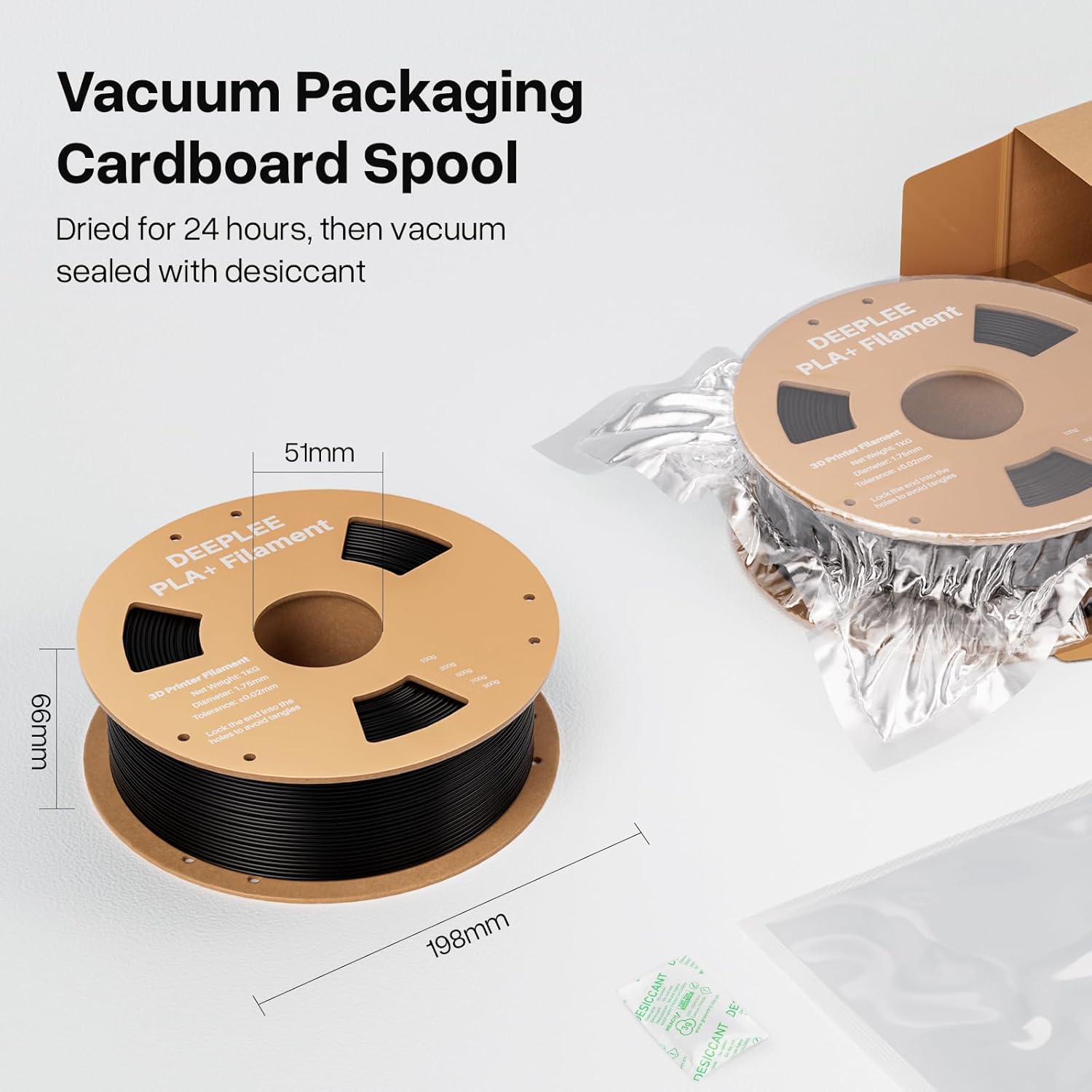
Another practical factor is the packaging. The filament is vacuum-sealed and described as dust-proof and dry, designed to protect against moisture and air. If you live in a more humid area (or you’ve had PLA absorb water before), this is the sort of thing you’ll appreciate from day one. Still, it doesn’t automatically remove the need to store filament sensibly after opening.
Tech specs (from the provided details)
- Name: DEEPLEE PLA Plus 3D filament
- Type: PLA+
- Format: Filament roll
- Size: 1.75mm
- Colour: Pink
- Capacity: 2kg
- Dimensional accuracy: ± 0.02mm
- Compatibility (stated): Fits for most FDM 3D printers
Where it shines (and where it may not)
It’s a solid fit if you want PLA+ benefits—more toughness and mechanical strength than standard PLA—while also caring about consistency. The dimensional accuracy and diameter tolerance details are aimed at improving repeatability, so you’re more likely to get consistent results across prints, rather than treating every job as a new experiment.
It makes sense if you’re using an FDM printer that expects reliable 1.75mm filament and you prefer a straightforward setup: load the roll, dial in your usual PLA+ profile, and focus on model details.
It might not be the best choice if your parts need high heat tolerance, because PLA-based materials generally aren’t what people reach for when temperature resistance is the deciding factor. Also, “fits for most” is broad—depending on your printer and extruder setup, you may still need to verify that it behaves well with your settings and that feeding is smooth.
And one more gentle limitation to keep in mind: the filament can be vacuum-sealed to help keep it dry, but once opened, your storage habits still matter.
Getting the most from it: usage tips
A small routine can make a difference with any PLA+ filament.
Start by loading the roll smoothly—this product is described as having a cardboard roll design that’s easy to load and unload. After that, do a quick first-layer check on a simple test piece before committing to a full print. If the first layer looks good, you’ll usually get fewer downstream issues.
For a practical example, if you’re printing a functional bracket or a small enclosure clip: choose a print that uses the strength advantage of PLA+ and runs long enough for you to feel whether the filament is feeding consistently. If you see repeated under-extrusion or gaps that don’t match your slicer preview, that’s your cue to review filament handling and your printer’s extrusion calibration.
What to check before you buy
Before committing to a 2kg spool, it’s worth confirming a couple of basics:
- Your printer uses 1.75mm filament (this is stated, and it’s the key compatibility detail).
- You’re actually after PLA+ rather than standard PLA. This filament is marketed for stronger toughness and better mechanical strength than PLA.
- You have a plan for storage after opening, even though the filament arrives vacuum-sealed.
If you’re only printing decorative items that never see stress, you might not need PLA+ in the first place. On the flip side, if you want more robustness from your everyday prints, this is the kind of filament that fits that mindset.
Buying verdict
It’s worth considering if you’re looking for PLA+ filament in 1.75mm that’s positioned around dimensional accuracy (± 0.02mm) and stable feeding, with vacuum-sealed packaging to help keep moisture and dust at bay.
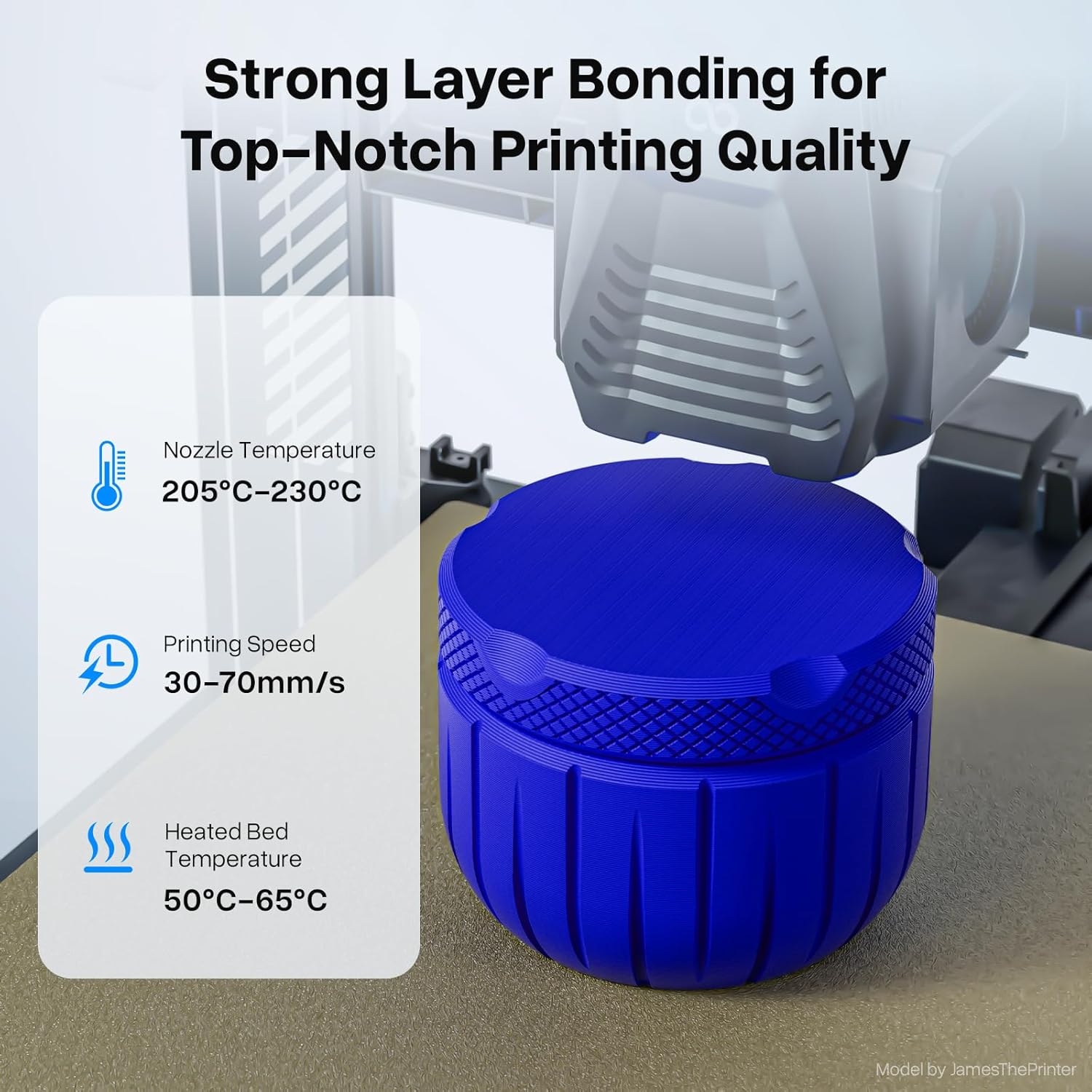
Buy it if you want tougher-than-PLA prints and you value consistency—especially for functional prototypes, simple brackets, and parts where brittleness is a recurring annoyance.
Skip it if you need high heat resistance, or if you prefer to stick with standard PLA because your prints don’t require that extra mechanical strength.
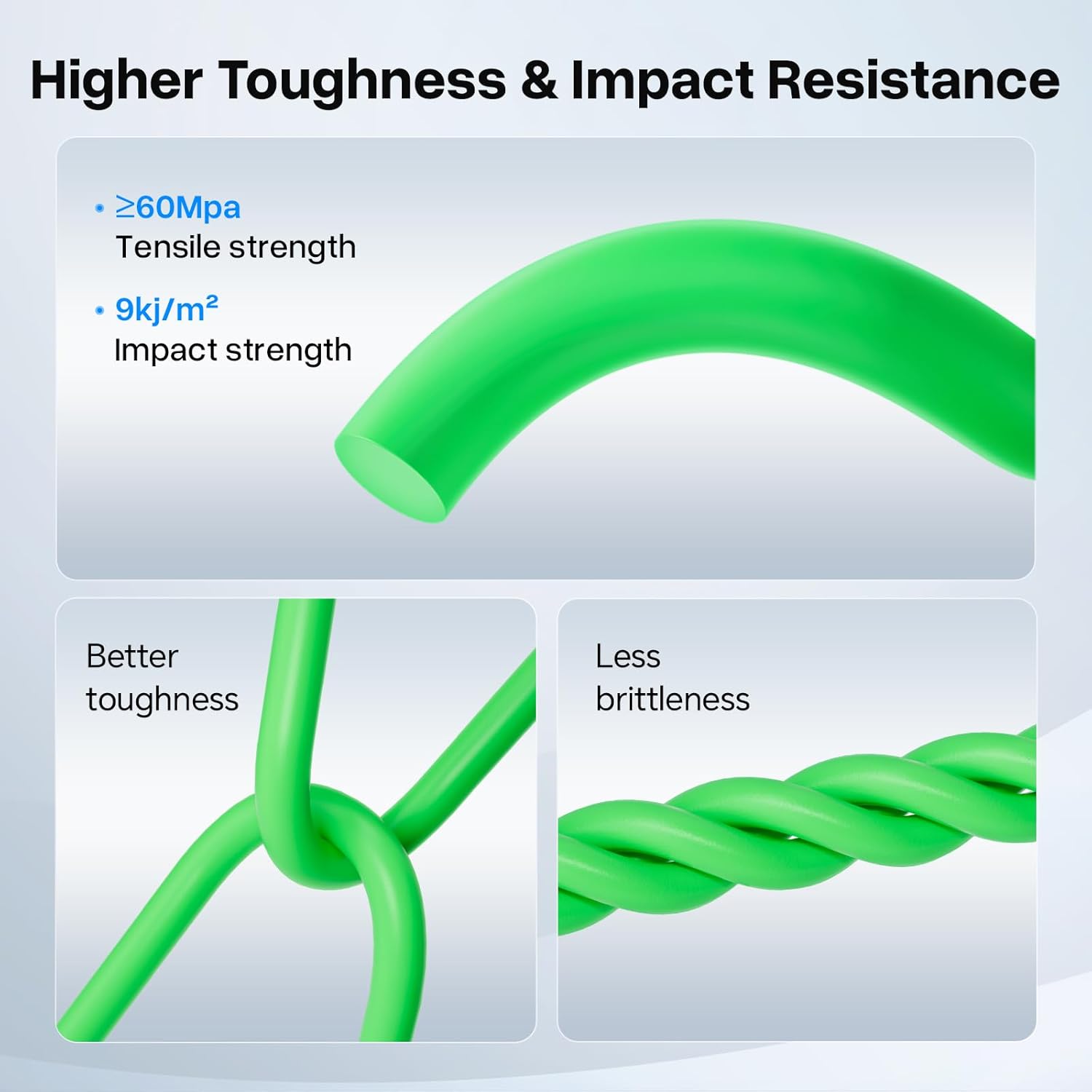
Finally, remember that “fits for most FDM 3D printers” is still a starting point: your printer’s settings and extrusion behaviour are what decide whether the print results match the promise.
Mini FAQ
Is this filament suitable for most FDM printers?
It’s described as fitting for most FDM 3D printers, but you should still verify your printer supports 1.75mm filament and that your feeding/extrusion setup is compatible.
What does ± 0.02mm dimensional accuracy mean in practice?
It’s intended to indicate tight control of filament diameter, which can help with consistent feeding and extrusion during printing.
Why choose PLA+ instead of regular PLA?
The provided details suggest PLA+ offers stronger toughness and better mechanical strength compared with PLA, which can improve reliability for parts that see some stress.
Does the vacuum packaging remove the need for storage care?
It helps protect the filament while sealed, but once opened, sensible dry storage is still a good idea if you want stable results.
What’s the main downside to watch for?
If you need parts that handle high temperatures or extreme conditions, PLA+ may not be the best material direction.