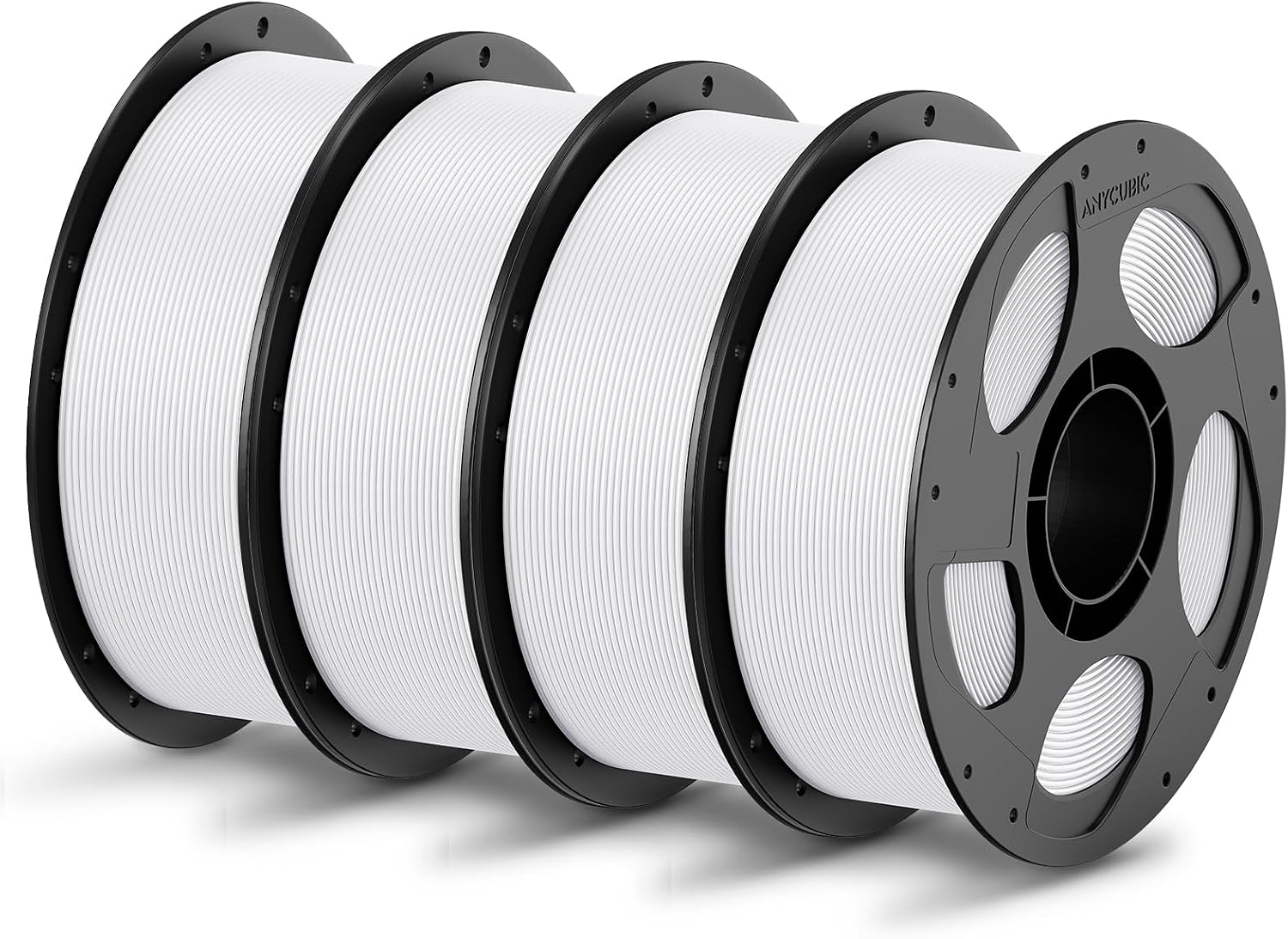
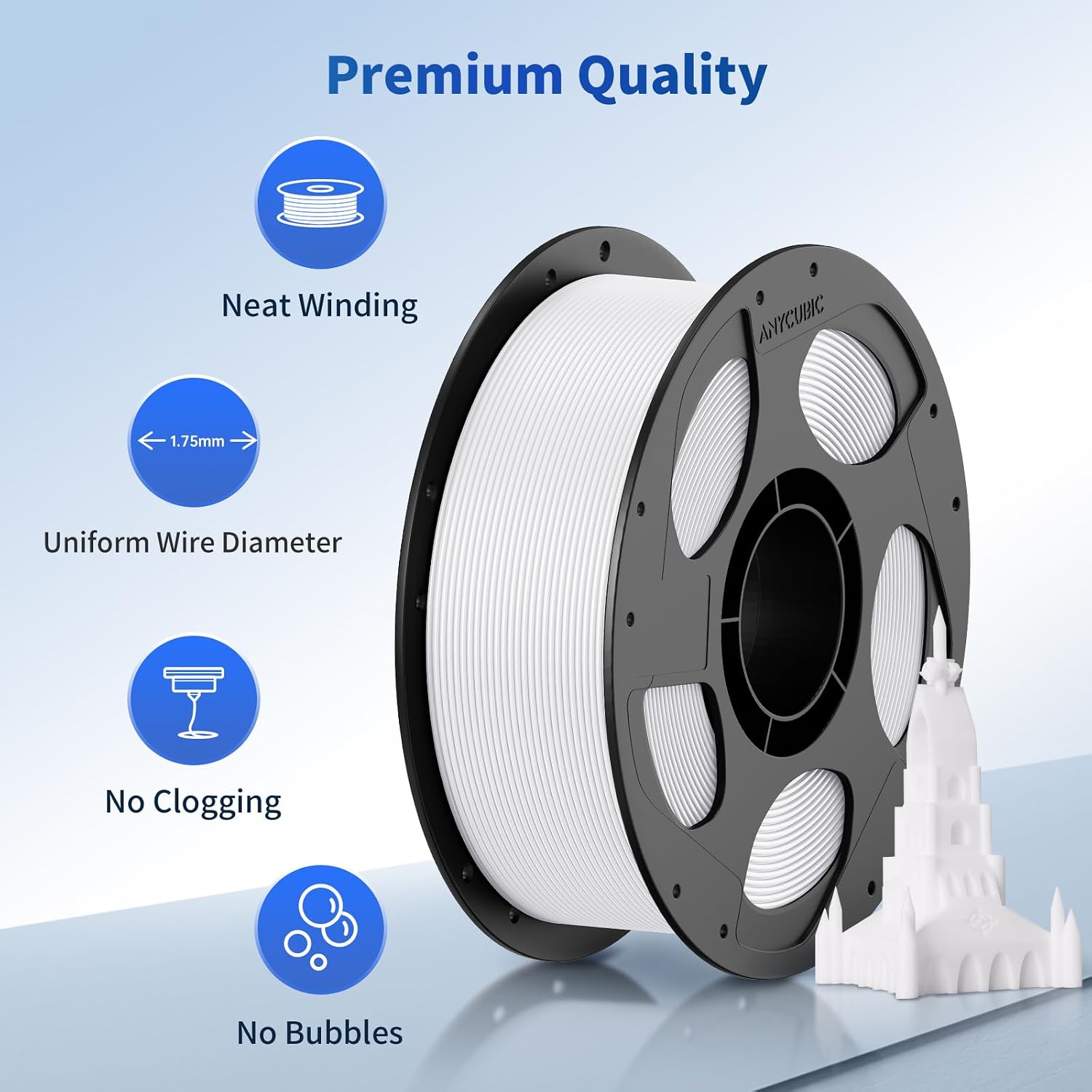
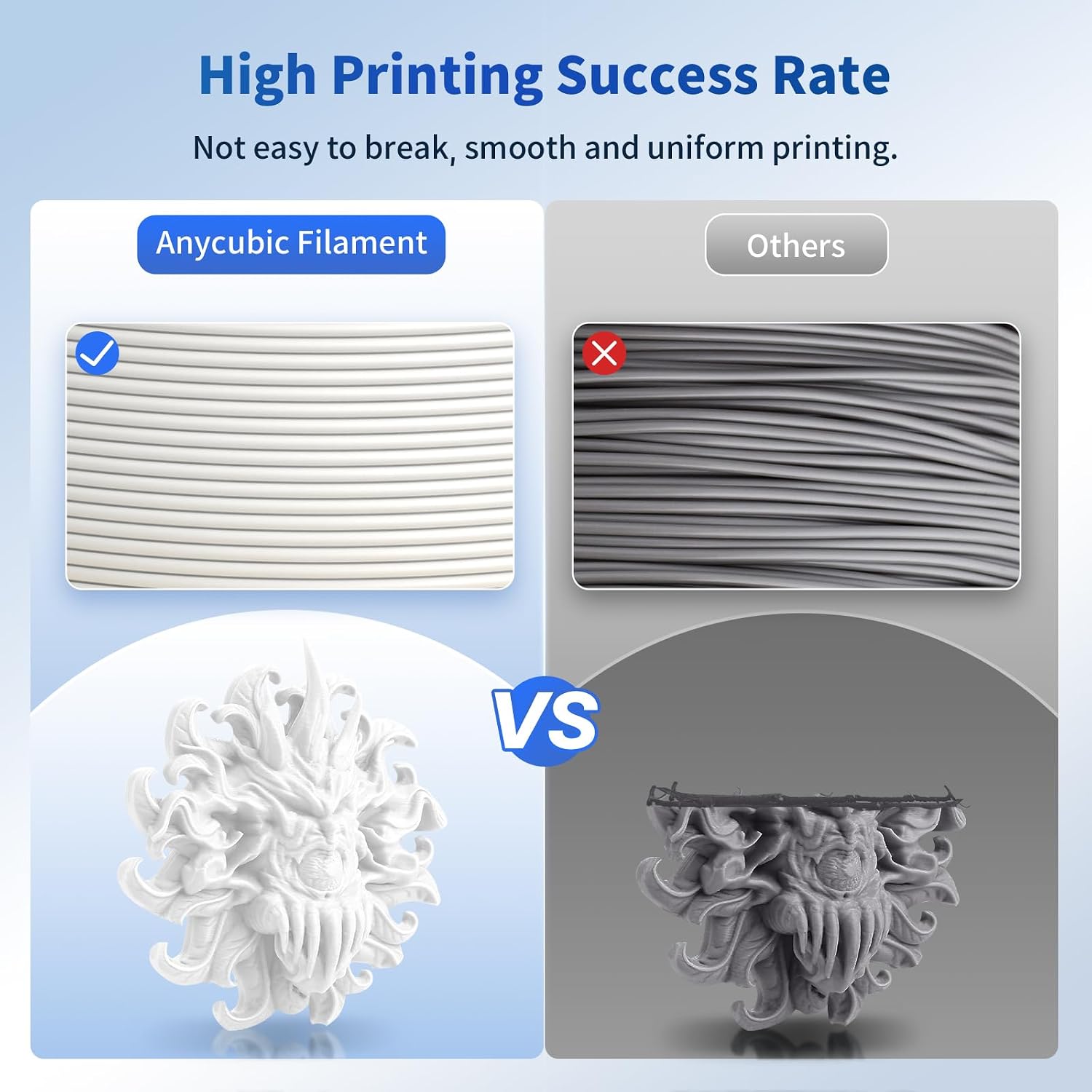
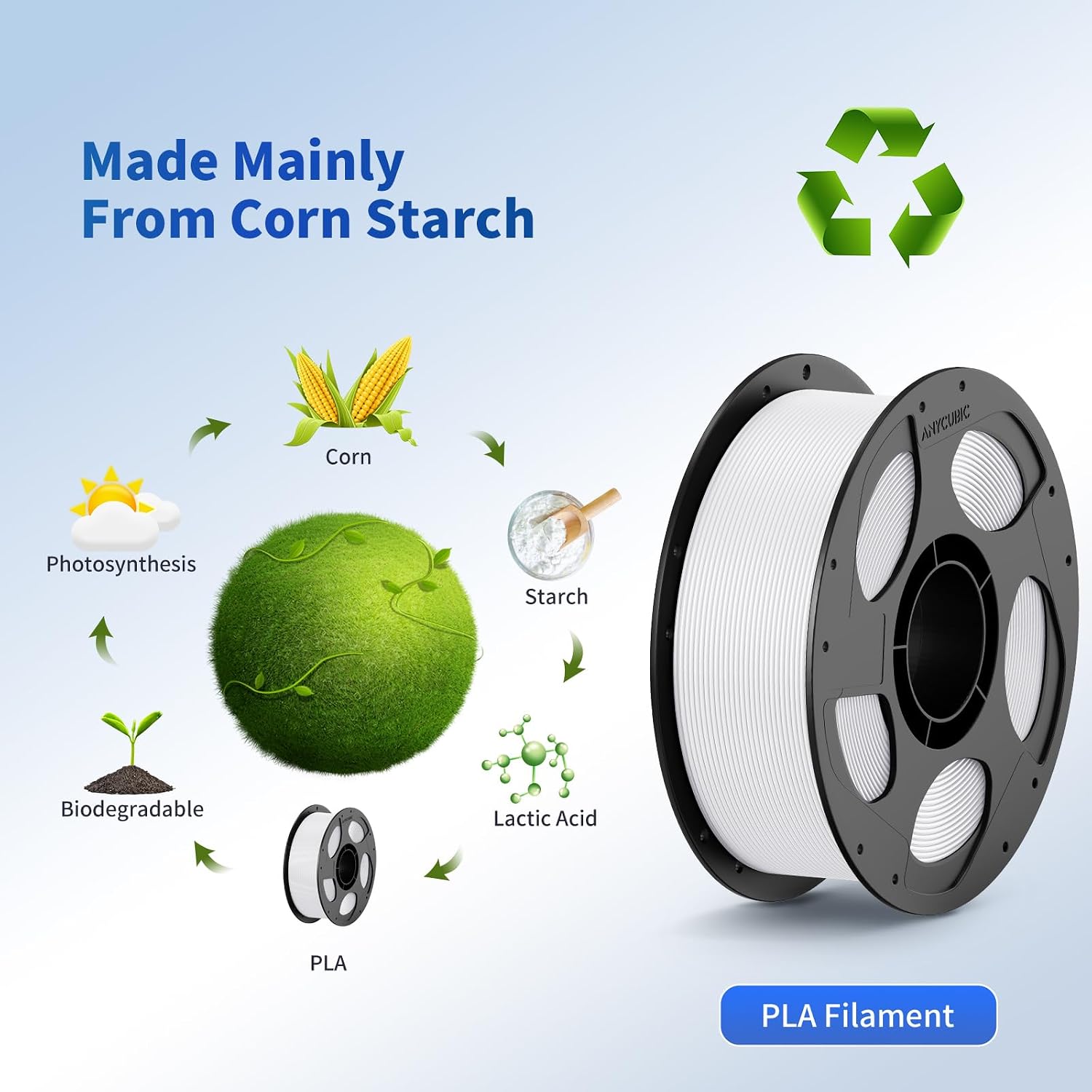
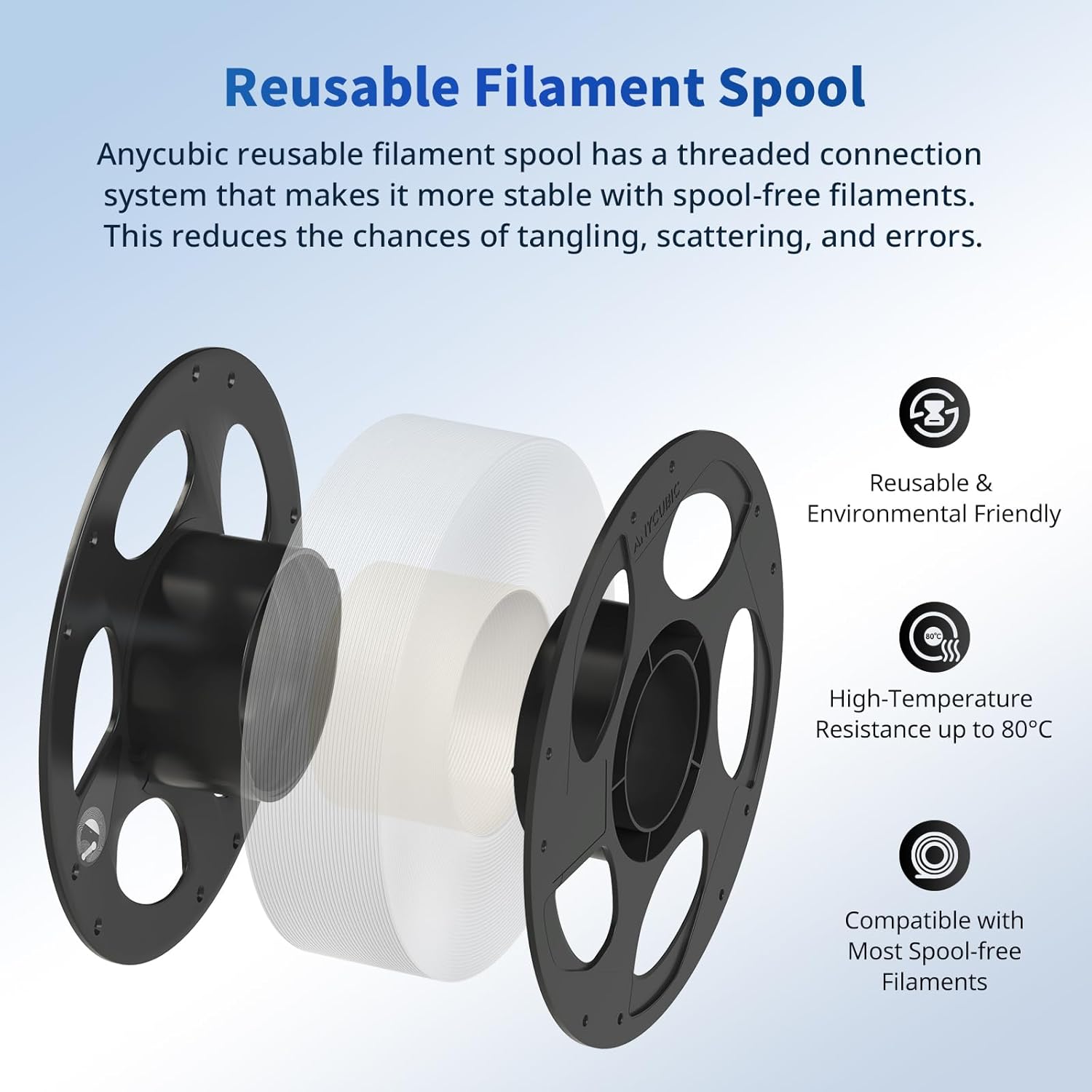
What it is and what it’s for\nAnycubic PLA Filament is a 1.75mm 3D printing material designed for consumer 3D printers and pens that use the standard PLA format. The 4 x 1kg spools come in white, offering a practical, ready-to-use solution for ongoing projects without constant re-ordering. The key appeal on paper is stable dimensional accuracy, claimed tolerance of ±0.02mm, which should translate into smoother extrusion, consistent layer bonding and less risk of over- or under-extrusion across prints. This can be particularly valuable for models with fine details or bridges where precise layer alignment matters.\n\n## How it performs in practice\nBased on the description, the filament is manufactured to minimise shrinkage and maintain stable print dimensions. A smoother flow is expected, aiding bridging and reducing noticeable banding between layers. The manufacturer emphasises a neat reel that feeds smoothly from the spool, which can help minimise tangling, clogging and under-extrusion during longer print sessions. The material is claimed to be low-odour and non-toxic, which is often cited as a practical advantage for home or classroom use where ventilation may be limited.\n\n## What stands out and where it may fall short\nOn the positive side, the combination of dimensional stability and neat spool design can save time in calibration and reduce failed prints caused by feed issues. The claim of “clog-free” printing and bubble-free extrusion is appealing, though it’s important to understand that real-world results depend on the specific printer, nozzle temperature, cooling, and print settings. The ability to print without a heated bed is typical of PLA, which makes this a user-friendly option for beginners or those who want to simplify their setup. The 4-pack adds value if you print regularly, providing a rotating supply of white filament with predictable performance.\n\n## Who it’s for\nThis PLA is likely well suited to hobbyists, educators, and makers who want reliable, easy-to-handle filament for general-purpose parts, prototypes, or decorative objects. If you prioritise consistency in layer adhesion and a glossy finish with minimal stringing, you’ll probably appreciate the emphasis on even extrusion and smooth flow.\n\n## When it makes sense to buy\nConsider this option if you’re after a straightforward PLA with predictable performance, a neat packaging solution, and a practical colour (white) that tends to show details well. If you’re starting out and want a forgiving material with simple printing, this could be a sensible choice. It may be less compelling if you frequently print very high-detail models that require ultra-fine tolerances or if you need a broader colour range for multi-colour projects.\n\n## Before you buy: what to check\n- Ensure your printer uses 1.75mm filament and can handle PLA without a heated bed (as claimed, PLA generally prints well with or without heated bed).\n- Confirm your usual print temperature range aligns with PLA recommendations to preserve dimensional stability.\n- If you’re swapping filaments, preheating the nozzle before loading can minimise the risk of nozzle block.\n- Consider the spool’s inner diameter and feed path, Anycubic highlights a larger inner diameter for smoother feeding, which helps during longer prints.\n\n## Practical use and comparison to alternatives\nIn daily use, you’ll likely notice smoother layer transitions and a neater finish when printing with this PLA, particularly on models that benefit from stable layer bonding. Compared with more budget-oriented filaments, you might notice less stringing and a finer surface gloss, assuming print settings are optimised. For users who want a simple, low-odour PLA for general parts and visual prototypes, this approach offers sensible value. If your priority is a very wide colour palette or accelerated prototyping with aggressive tolerances, you might explore other filaments or blends, but that would be a different budget and setup.\n\n## FAQ (practical answers based on available information)\n- Does it require a heated bed? PLA generally does not require it, and the description implies compatibility without a heated bed.\n- Is the filament compatible with most 3D printers? It’s described as compatible with printers using 1.75mm PLA, which covers a wide range of FDM devices.\n- What about odour and safety? The filament is described as having no odour and non-toxic during printing.\n- How many spools are included? The kit contains 4 x 1kg spools.\n\n## Is it worth it?\nA solid pick if you value predictable extrusion, easy handling and a neat spool design for regular PLA prints. It may not be the best choice if you require a broader colour range or very high-detail parts beyond what PLA typically delivers. Overall, it sits more in the mid-range for PLA filaments in terms of value and performance, suited to everyday projects and educational use.