

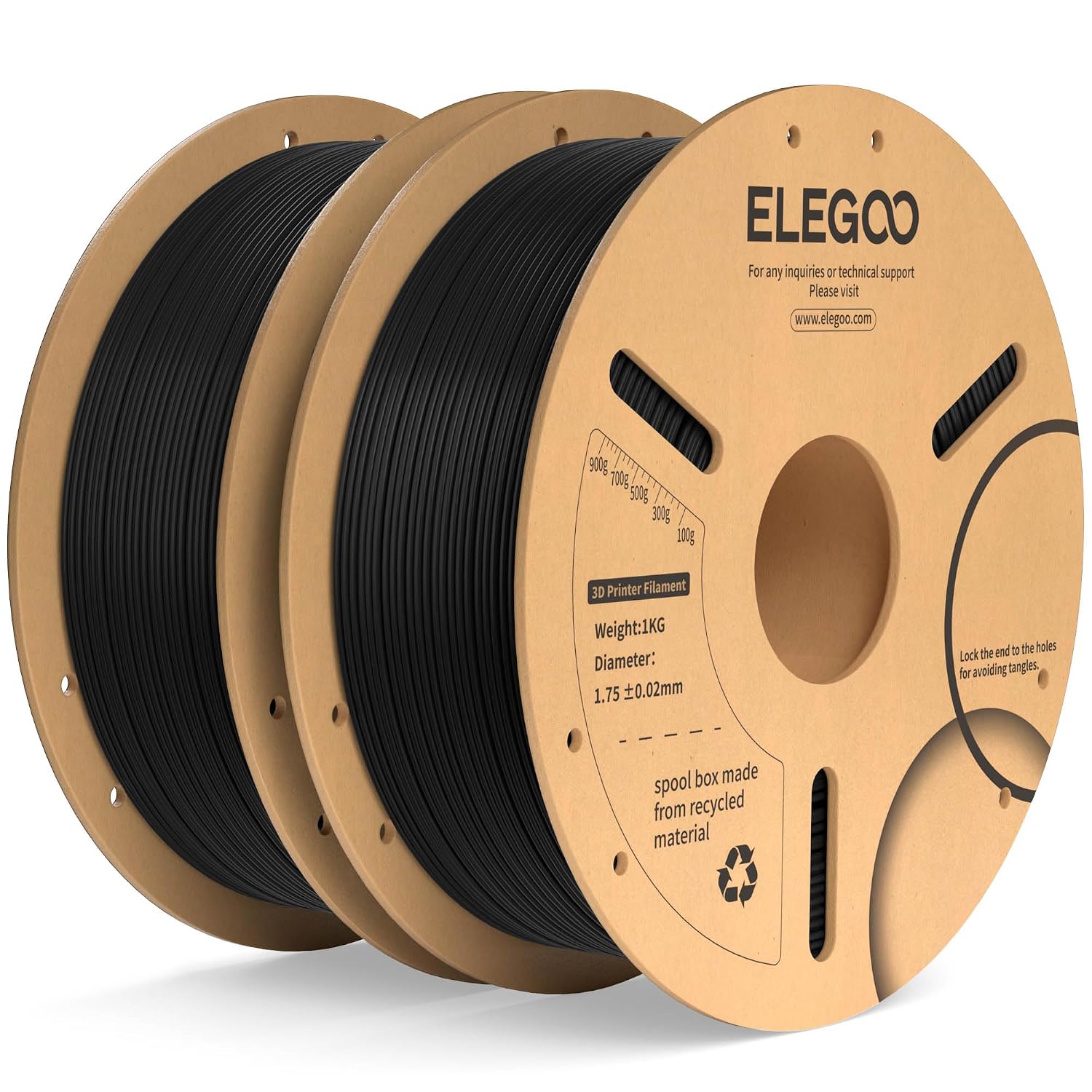
ELEGOO PLA+ Filament 1.75mm Black – 2kg dual-pack for tougher, smoother 3D prints
Reviews
Price
Product description
What it is and what it’s for
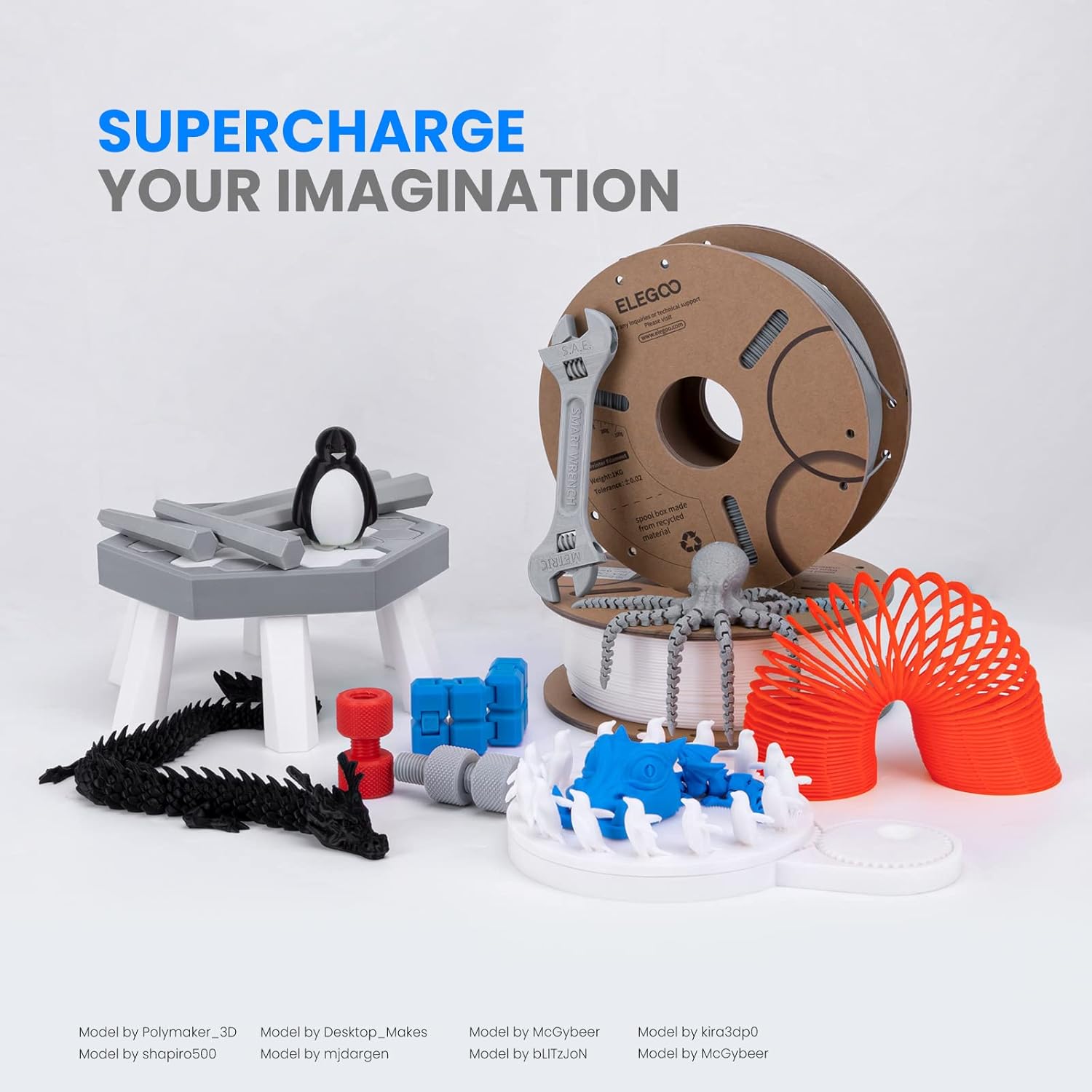
This is ELEGOO PLA+ filament in 1.75mm, supplied as a dual-pack with a total of 2kg on cardboard spools. It’s aimed at hobbyists and small-scale makers who want stronger, more impact‑resistant prints than standard PLA, while keeping the relative ease of printing that PLA-based materials offer. If you’re printing functional parts, jigs or small prototypes, PLA+ is positioned as a practical middle ground between rigidity and toughness.
How it performs on the printer
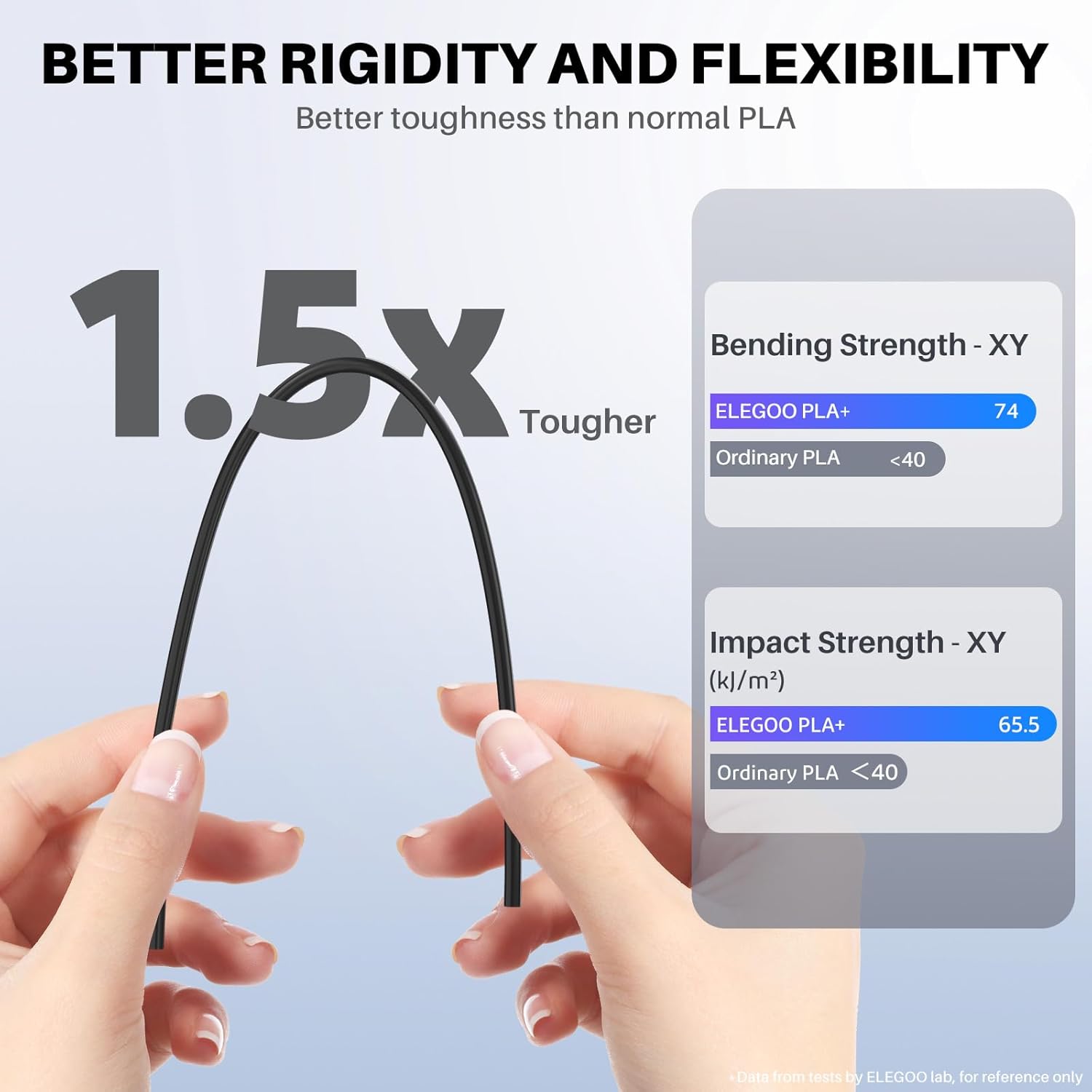
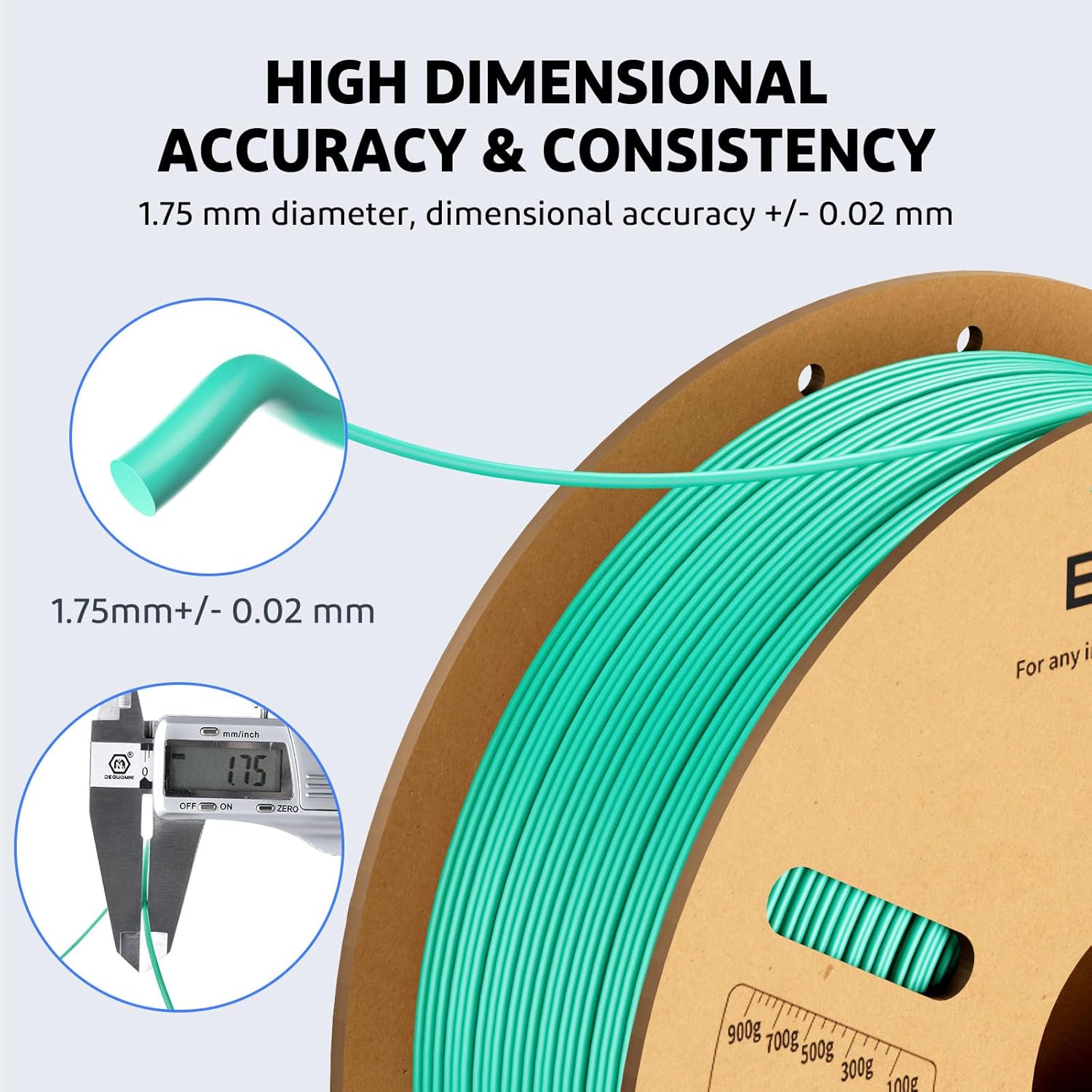
On the surface, PLA+ is described as having enhanced toughness and impact strength compared with regular PLA. The claim of low warpage and reduced shrinkage is helpful for larger parts or prints that need to stay dimensionally stable. The result, on paper, is a smoother surface finish with good layer adhesion and a tidy appearance, aided by precise extrusion at 1.75mm with claimed dimensional accuracy of +/- 0.02mm. In practice, you’ll typically find it feeds reliably and isn’t prone to excessive stringing when printed at sensible temperatures for PLA+. If you prioritise easy prints with better durability, this material aligns with those expectations, if you rarely need tougher parts, it might feel like more than your everyday PLA needs.
The packaging and handling
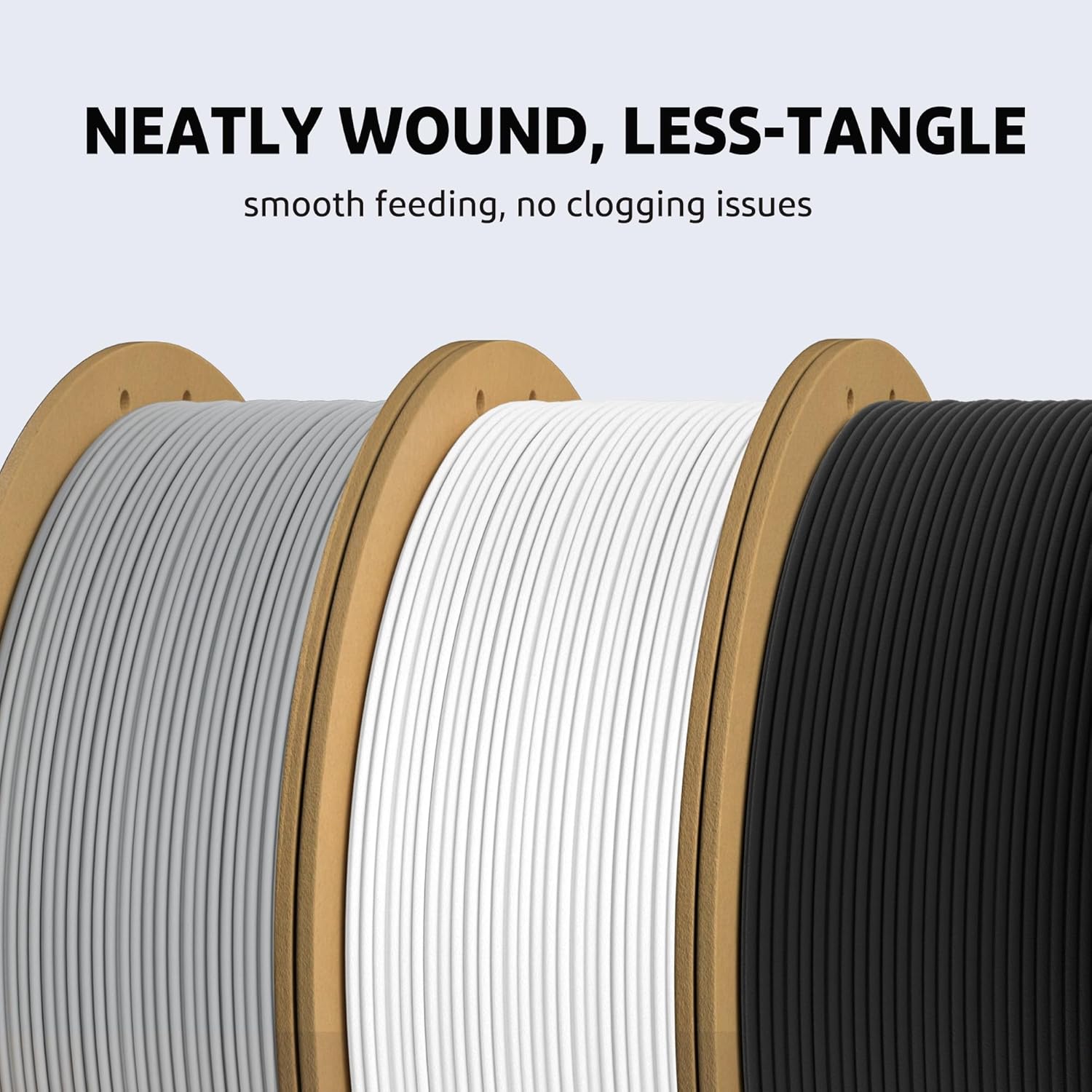
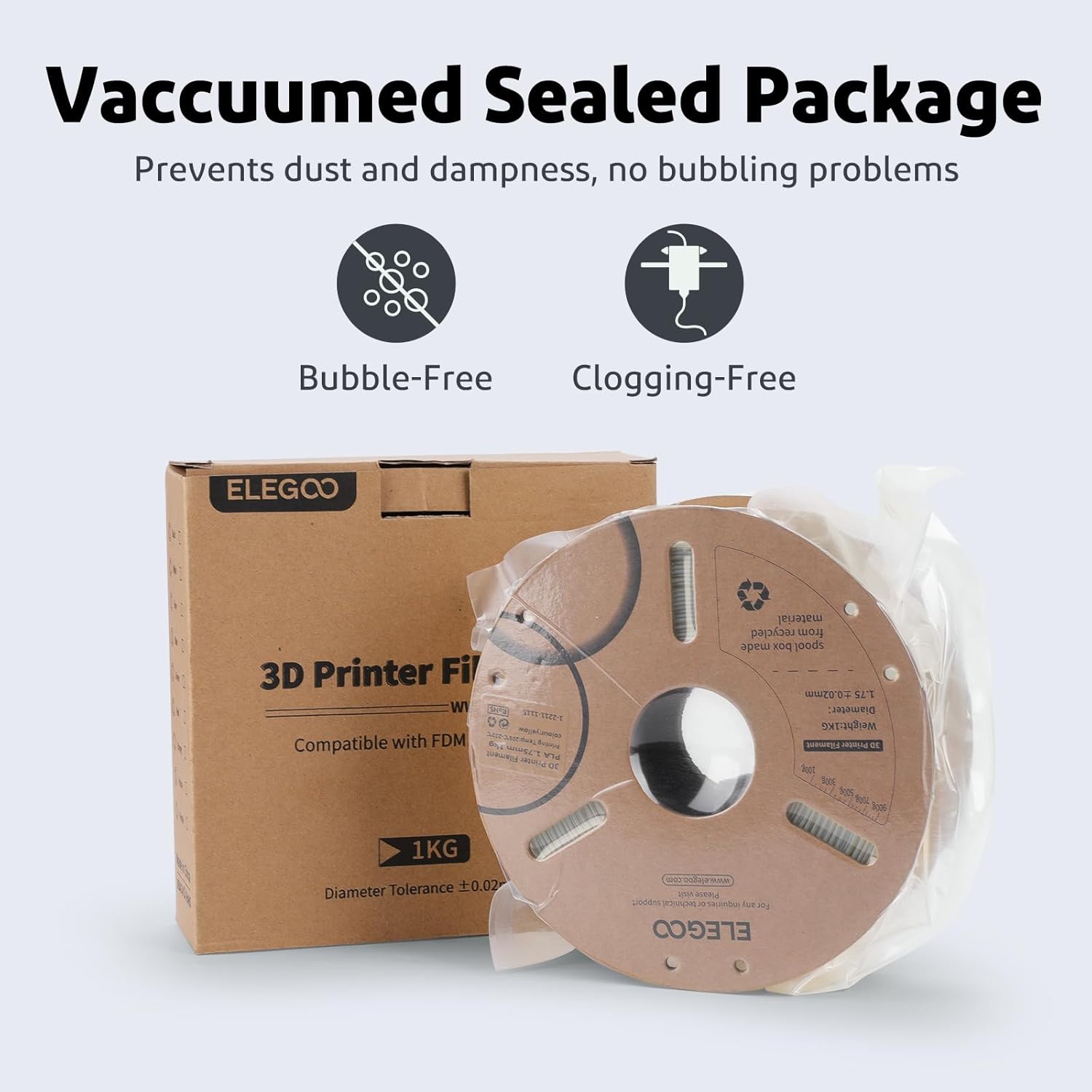
The packaging notes that the filaments are dried prior to packing and vacuum sealed to protect against moisture and dust. That helps minimise problems like bubbling or temporary weakening due to moisture, especially in humid environments. The winding is described as neat with full mechanical winding and manual inspection, which should reduce tangles and breakages during feeding. Realistically, you’ll still want to store the filament properly between uses to avoid moisture ingress and keep feed smooth.
Pros and cons in everyday terms
Pros include improved toughness over standard PLA, generally reliable dimensional accuracy, and a glossy surface finish that prints cleanly when used with compatible printers. The low warpage and easier bed adhesion are useful for parts with bigger footprints or fine details. Cons aren’t buried: with any PLA+ formulation, ultimate performance depends on print settings, cooling, and bed preparation. Some users may find that the toughness comes with a slightly higher printing temperature or different cooling needs than plain PLA. If you’re after ultra-high strength or heat resistance, you’ll want to manage expectations and test a few small prints first.
Who it’s for
This filament is well-suited for makers who want more dent and impact resistance than standard PLA, without stepping up to ABS or other more demanding materials. It’s a reasonable choice for functional prototypes, light-load components, and hobbyist projects that benefit from a smoother surface and precise tolerances. It’s also convenient for those who print at 1.75mm with widely compatible FDM printers and want a reliable dual-pack option.
When it makes sense to choose it
If you value a straightforward print that looks good out of the box, with better durability for functional parts and a tidy workflow from spool to nozzle, PLA+ fits the bill. The 2kg total weight and 1kg per spool design offer practical usability for small teams or individual creators who print regularly but don’t need industrial quantities. The packaging and winding quality are practical bonuses for reducing downtime due to tangles—especially if you’ve struggled with messy spools in the past. Consider this option if you’re upgrading from standard PLA and want a noticeable upgrade in toughness without diving into more complex materials.
What to check before buying
Ensure your 3D printer supports 1.75mm filament and has compatible extrusion temps for PLA+ formulations. While the description highlights low warpage, it’s still wise to confirm your bed adhesion setup and cooling strategy, especially for larger prints. If you’re projecting frequent prints with high mechanical demand, it’s sensible to test with a small part first to gauge layer bonding and edge integrity. Also keep storage in mind: reseal and keep away from moisture to preserve the claimed performance.
How it compares to other approaches
Compared with standard PLA, PLA+ typically offers greater toughness and better impact resistance, which can translate to longer-lasting prototypes or functional components. It won’t match the heat resistance of materials like PETG or ABS, so for parts exposed to higher temperatures or continuous wear in challenging environments, consider alternatives. If you’re after the simplest possible printing with minimal process tweaks, PLA+ is a sensible upgrade path from regular PLA, while still staying comfortable for most desktop setups.
Decision point: Is it worth it?
Is it worth it? If you want improved durability without a steep learning curve or special equipment, this PLA+ dual-pack represents a practical, value‑driven option for typical home and hobby use. It’s not a miracle material, but it offers predictable results with a familiar workflow. You’ll want to buy if you foresee regular prints that benefit from a tougher filament, and you’re happy to manage standard storage and print settings. If your priority is maximum heat resistance or specialist mechanical properties, you may want to explore other materials.
FAQ
- What printer settings should I start with for PLA+? Start around conventional PLA temperatures and adjust cooling for your printer, exact temps depend on the printer and part geometry.
- Will it clog more than PLA? The description implies consistent feeding, but always ensure the filament is dry and stored properly to minimise issues.
- Does it really bond well between layers? The claim is good layer bonding with a smoother surface, verify with a test print for your model details.