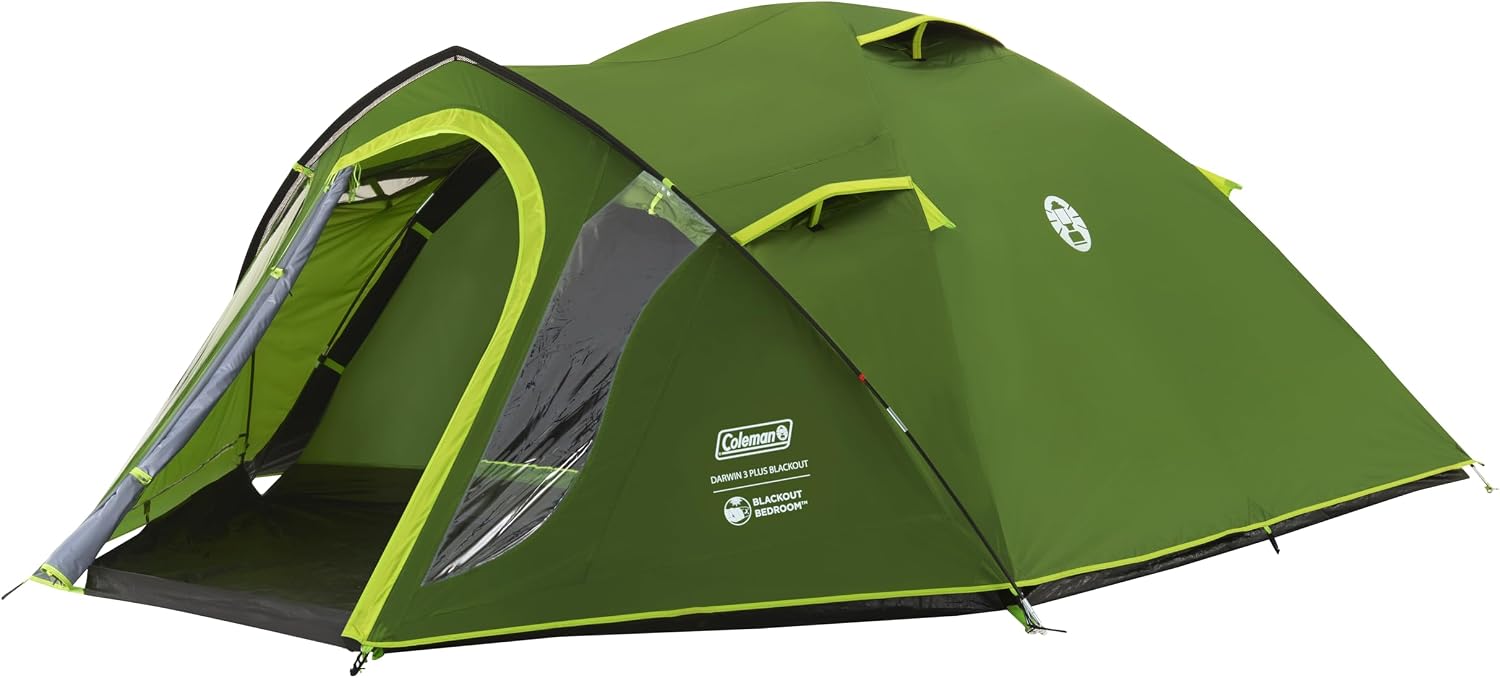
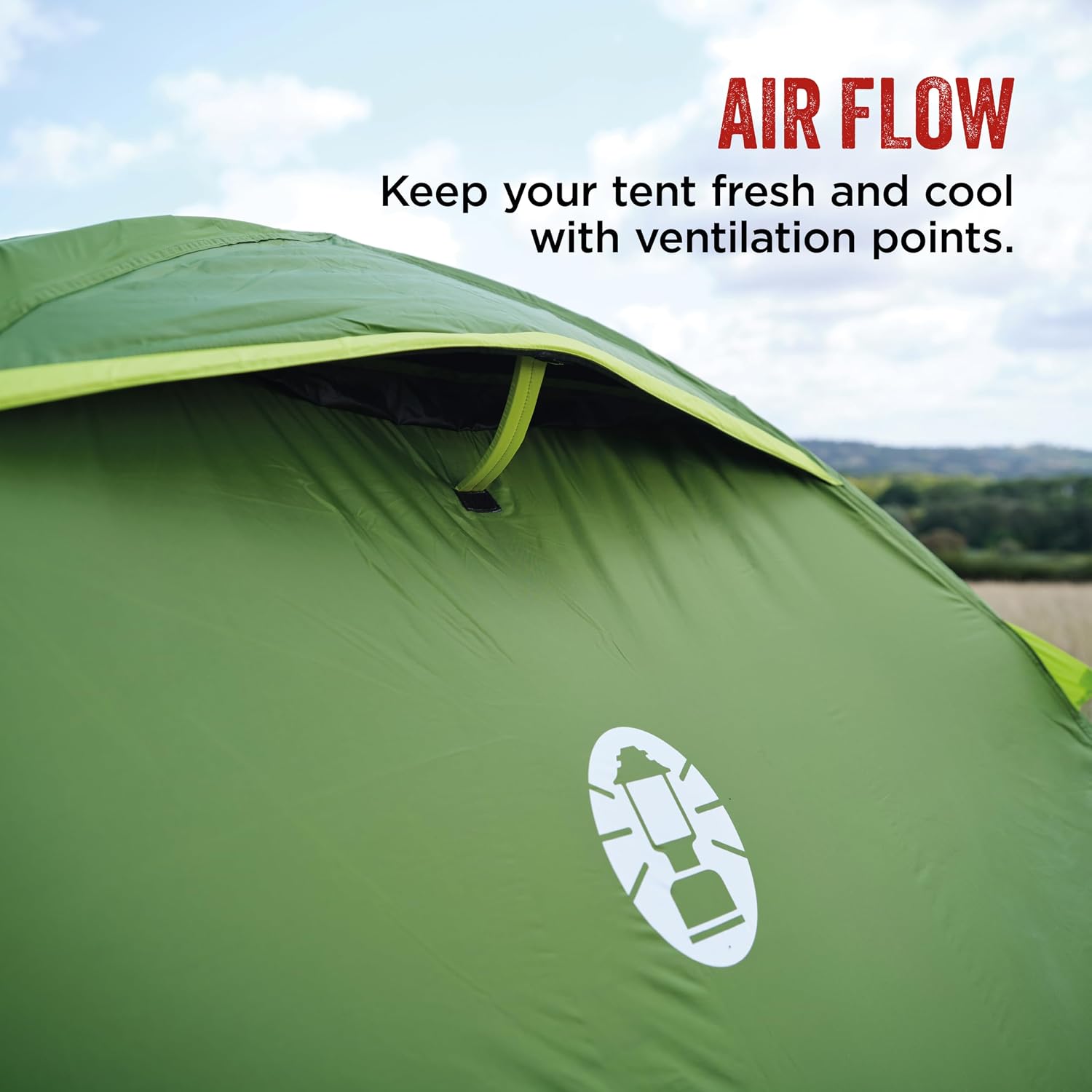
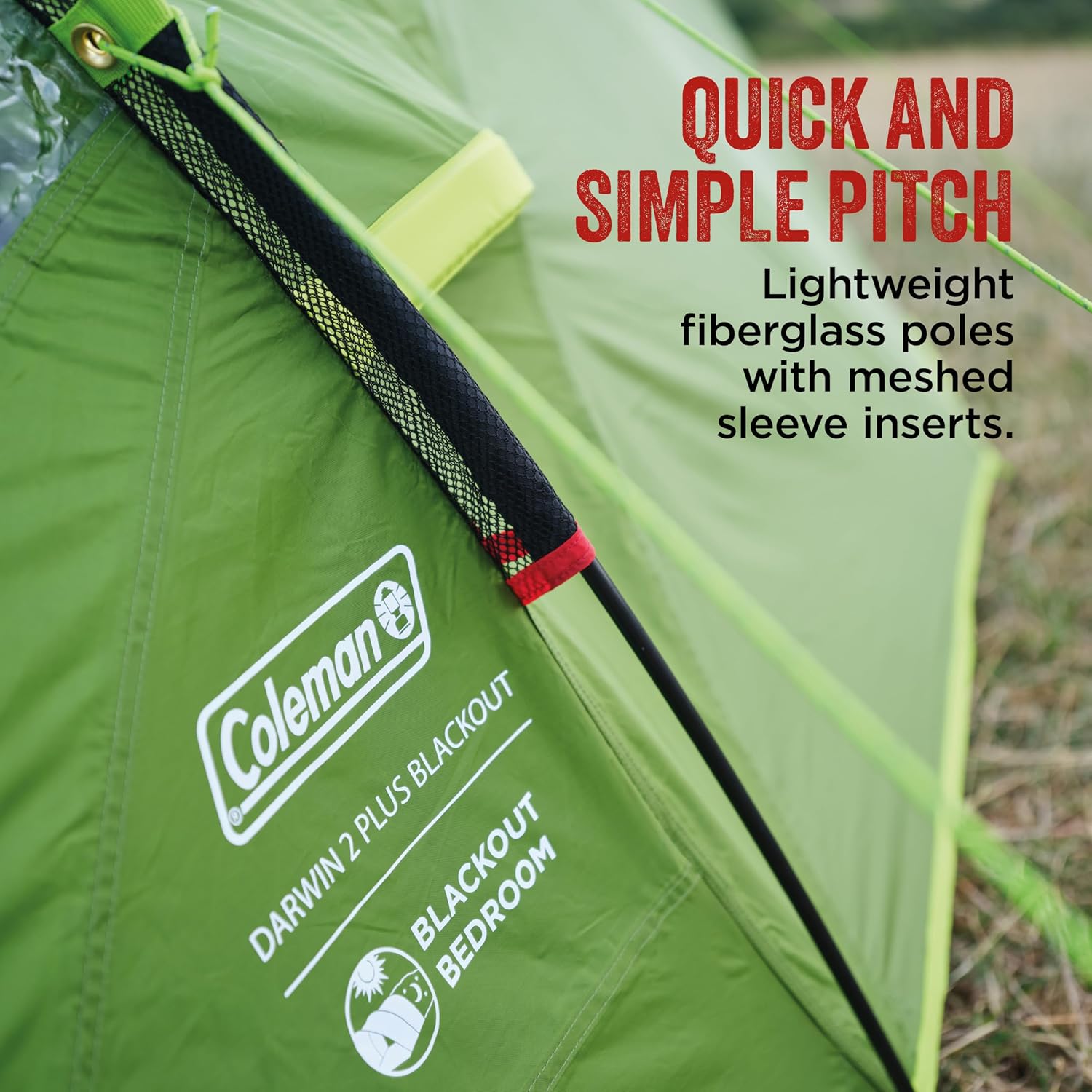
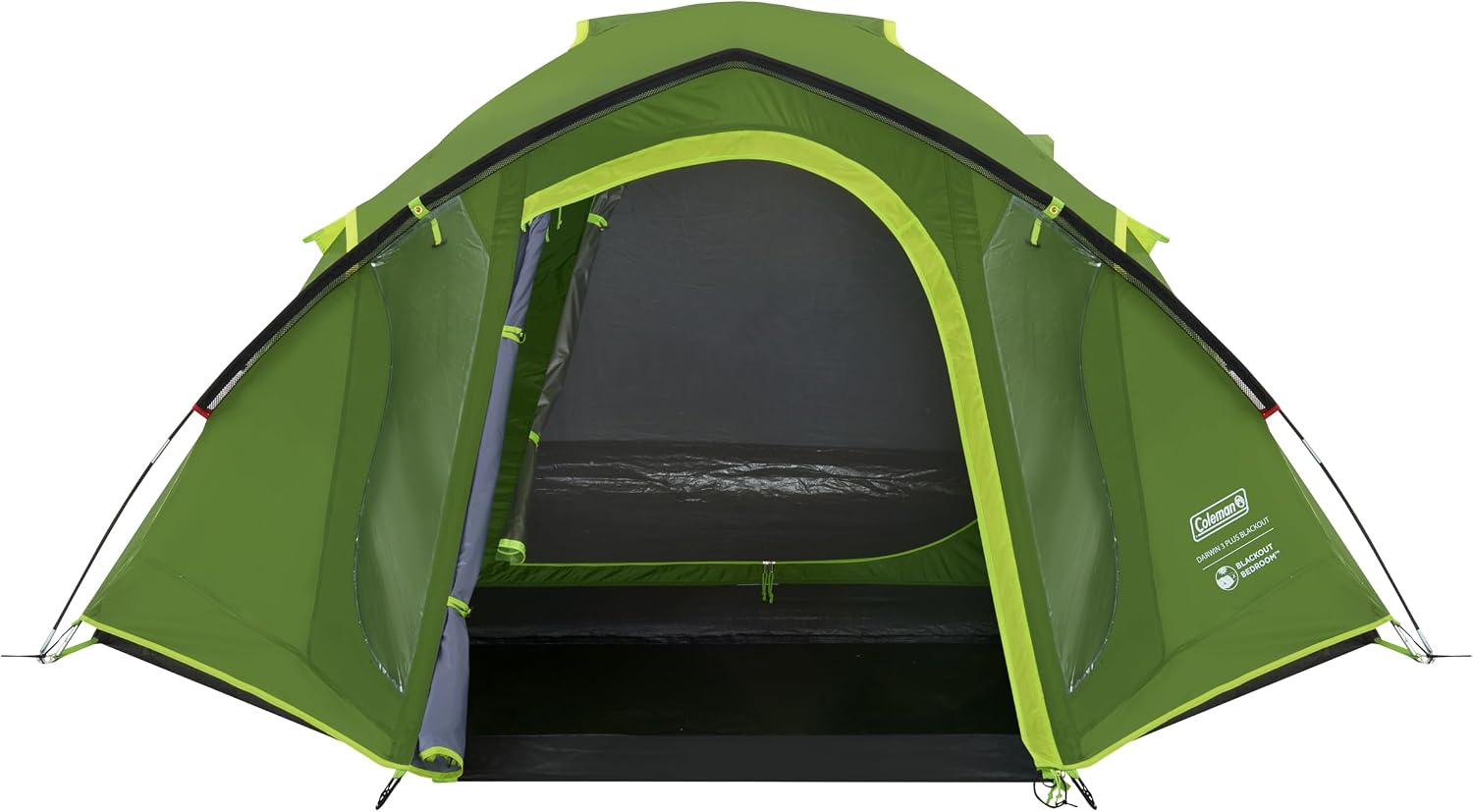
What kind of tent is this and the need it addresses\nThe Coleman Tent Darwin is a three‑person, family‑friendly camping shelter designed to keep you dry and comfortable when you’re out in the British countryside, at festivals or during quick trips away. It blends a practical sleeping area with a weather‑ready antechamber, and it uses BlackOut Technology to reduce daylight in the bedroom. On paper, that should help you sleep a bit later on bright mornings. It’s pitched as a light yet stable build, with flexible fibreglass poles intended to resist gusts of wind, making it a reasonable choice for casual campers who prioritise ease of setup over extreme speed.\n\n## Daily use and setup practicality\nSetting up is described as fast and straightforward, with the inner tent erected first and a compact awning that provides extra space for drying or storing gear. The structure relies on taped seams and a welded, sewn‑in groundsheet to boost waterproofing, which is helpful for typical UK upland drizzle or campsite showers. If you value a simple layout that keeps living space separate from gear, Darwin’s design aims to deliver that split.\n\n## What stands out in terms of comfort and climate control\nThe sleeping area measures about 3.8 m², while the awning adds roughly 1.7 m² of covered space. The hallmark feature is the EXTRA‑DARK BEDROOM enabled by BlackOut Technology, which blocks up to 99% of daylight. In practice, this can translate to a more forgiving sleep window on bright mornings, though individual light sensitivity and tent orientation will influence results. Air flaps are included to improve circulation and reduce condensation, an everyday concern in damp British conditions. UV guard 50+ rounds out the exterior protection.\n\n## What you get and what to check before buying\nThe package includes a carry bag with a zipper, guylines and tent pegs. The overall weight sits around 5.1 kg with a pack size of 58 x 16 x 16 cm, which makes it reasonably portable for a small car or a couple of hikers carrying gear a short distance. If you’re planning longer treks with frequent pitching, you may want to consider how you’ll transport the poles and the groundsheet, but for a weekend break the setup and pack dimensions are fairly sensible.\n\n## Pros and cons in real terms\nPros: practical 3‑person capacity, water protection rated at 4500 mm, reliable seam work and groundsheet, dedicated dark bedroom for better lie‑ins, decent ventilation via air flaps. Cons: the dark bedroom helps, but it won’t turn a long night into an early‑start redemption, no reinforced door panels or modular partitioning are listed, which could matter if you want stricter separation between sleeping and living spaces. It may also feel a touch snug for taller occupants or for those who bring extra camping furniture.\n\n## Who it’s for and who should think again\nIt suits casual campers, small families or groups who value a straightforward, weather‑resistant tent with a focus on sleep comfort. If your camping style revolves around minimalist packs or you need rapid, ultralight setups for frequent airline‑style moving between sites, this model might feel a bit less optimal. It’s more of a value‑oriented mid‑range option than a high‑end expedition tent.\n\n## How to decide before you buy\nConsider the typical weather you’re likely to encounter, how often you’ll pitch in one location vs. moving sites, and whether a dedicated dark bedroom is a priority for your group. Check that the fabric feels robust and that the groundsheet’s waterproofing is indeed adequate for your usual damp nights. Also think about the access points and how much gear you want to leave under the awning.\n\n## Practical use case in real life\nImagine opening the tent after a breezy day on a festival site: you step inside, the inner space feels compact but practical for two adults and a child, and you use the awning to dry jackets and shoes while you get the kettle going. The darkened bedroom makes it easier to sleep in after a late evening activity, provided daylight filters are effectively blocking out the sun.\n\n## Quick FAQ\n- How waterproof is it? It uses a 4500 mm water column with taped seams and a welded groundsheet.\n- How heavy is it? About 5.1 kg in total, with a pack size of 58 x 16 x 16 cm.\n- Is it easy to set up? It’s described as fast to set up, with the inner tent erected first and a light yet stable frame.\n- Would it suit a taller person? The sleeping area is 3.8 m², which is typical for a 3‑man design but may feel snug for taller individuals with gear.\n\n## Decision time\nIs it worth it? If you want a dependable, weather‑resistant three‑person tent with a dedicated dark bedroom and straightforward setup for family weekends or casual festival trips, the Coleman Tent Darwin offers sensible value and practical features for typical UK conditions. It’s not the lightest or most feature‑dense option, but for everyday use and reasonable protection against rain, it deserves consideration. For travellers who prioritise ultralight packs or feature‑heavy camping systems, you might want to compare with models that emphasise corrosion‑resistant poles or modular interiors.