

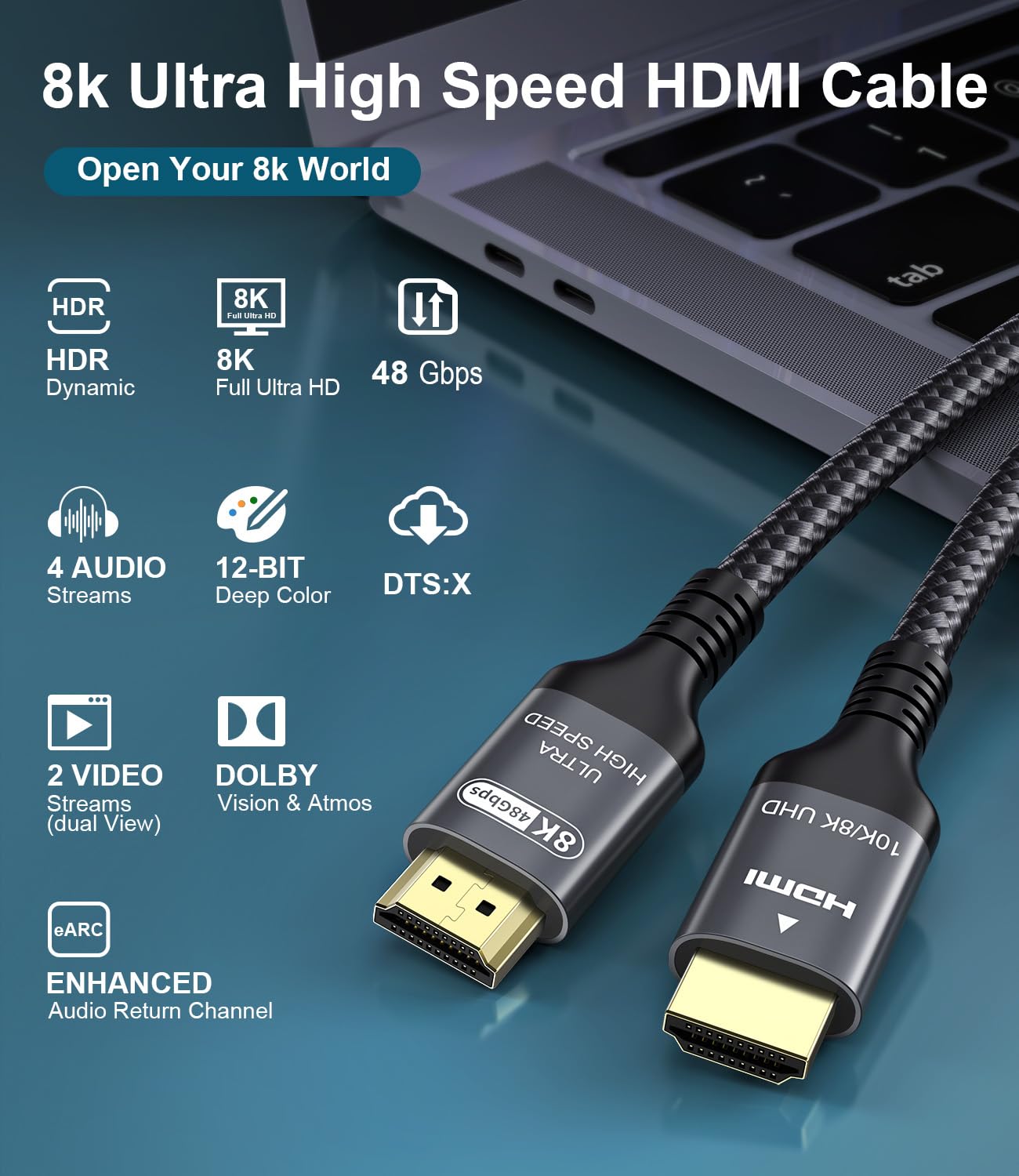
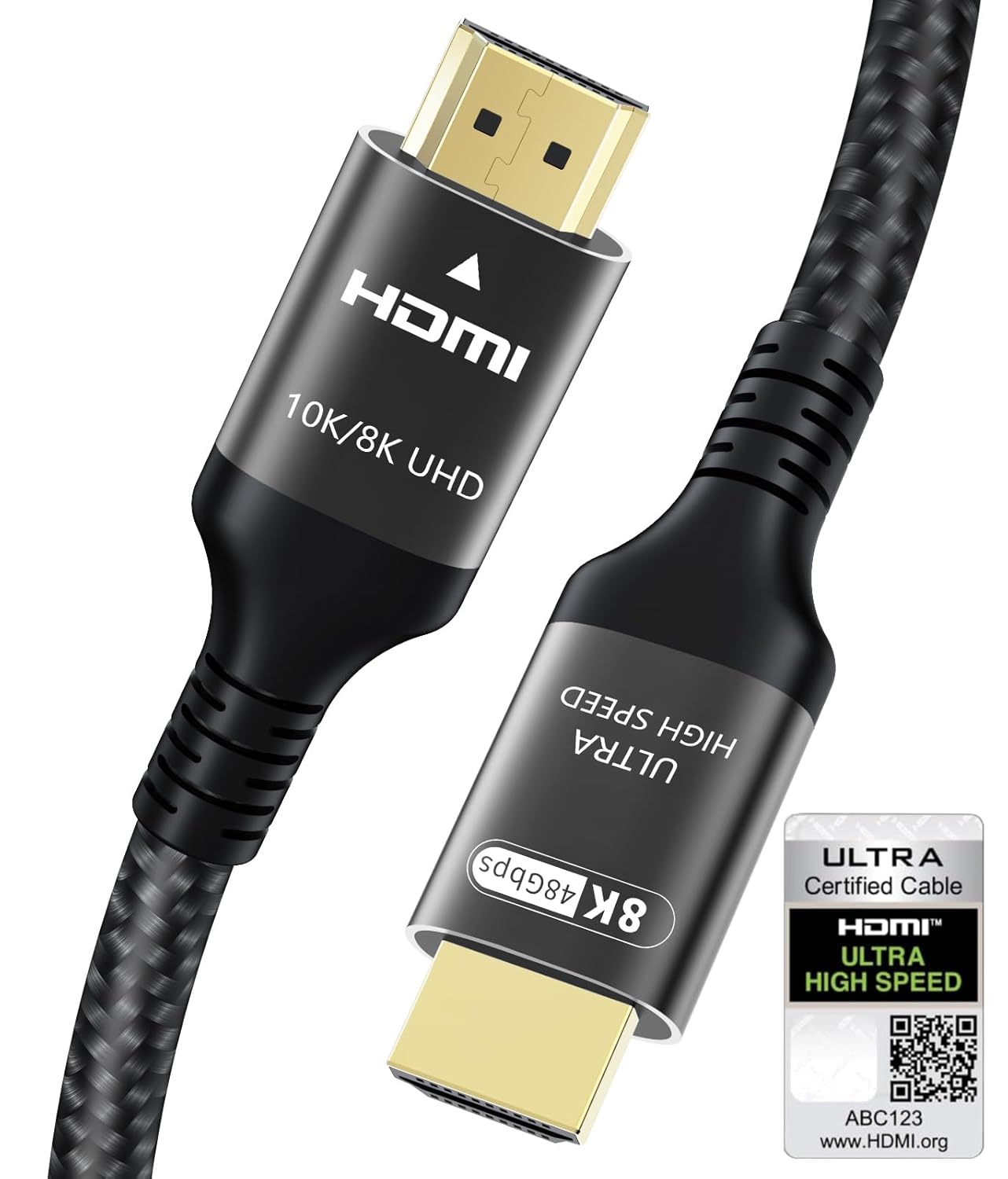
Certified 10K/8K HDMI 2.1 Cable (3m) 48Gbps with Ethernet, eARC & 4K 240Hz support
Product description
If you’re trying to feed a modern TV, console, or AV setup with the right HDMI spec, cable choice can quietly make a difference. This Certified HDMI 2.1 cable is designed for higher bandwidth use-cases, including 8K and high-refresh 4K—plus features like eARC, HDR formats, VRR, and ALLM depending on what your equipment supports.
That said, it’s not “one size fits all” perfection. Some of the headline modes (like the top-end refresh rates) only make sense when your source device and display can actually run them.
The essentials
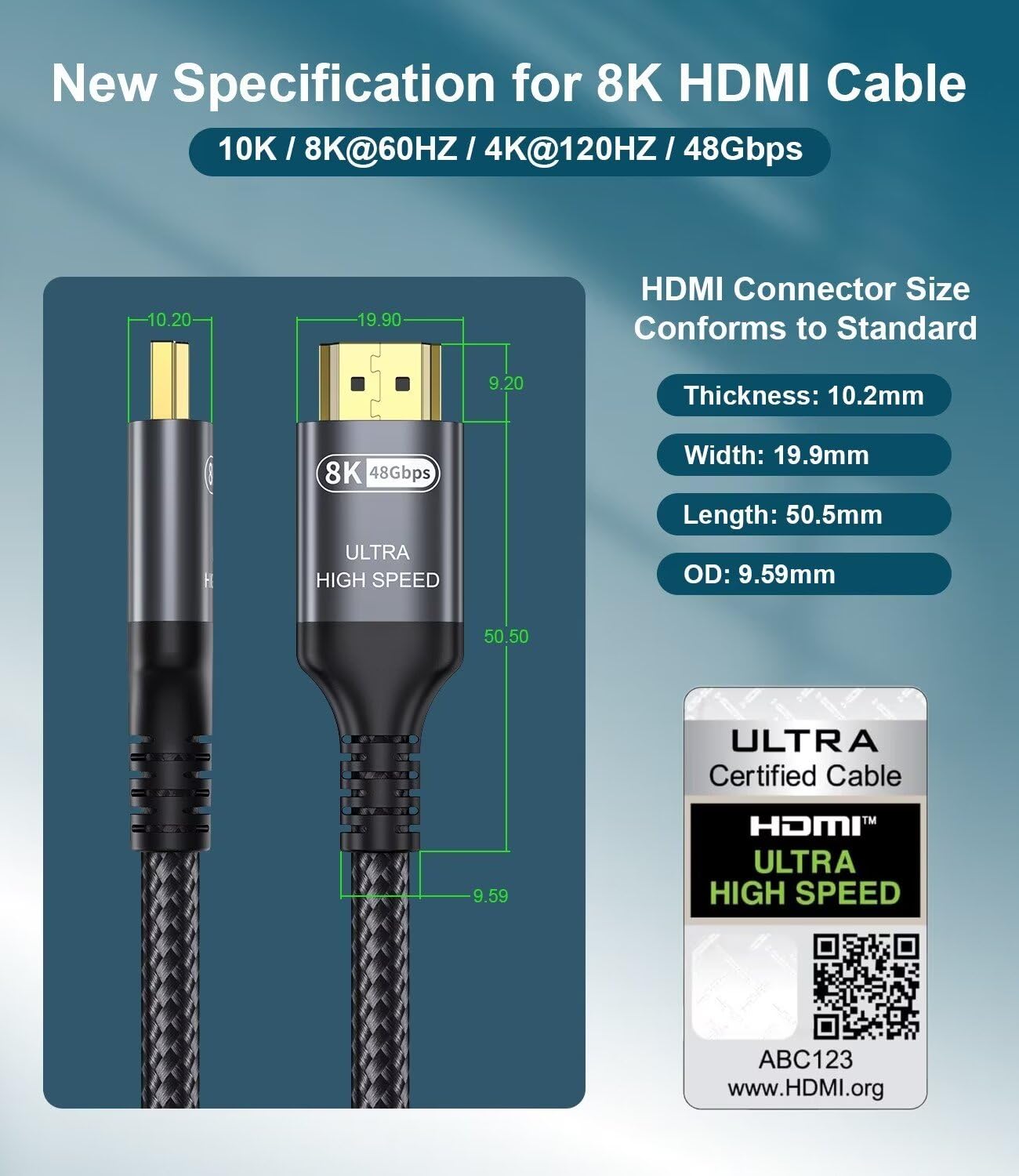
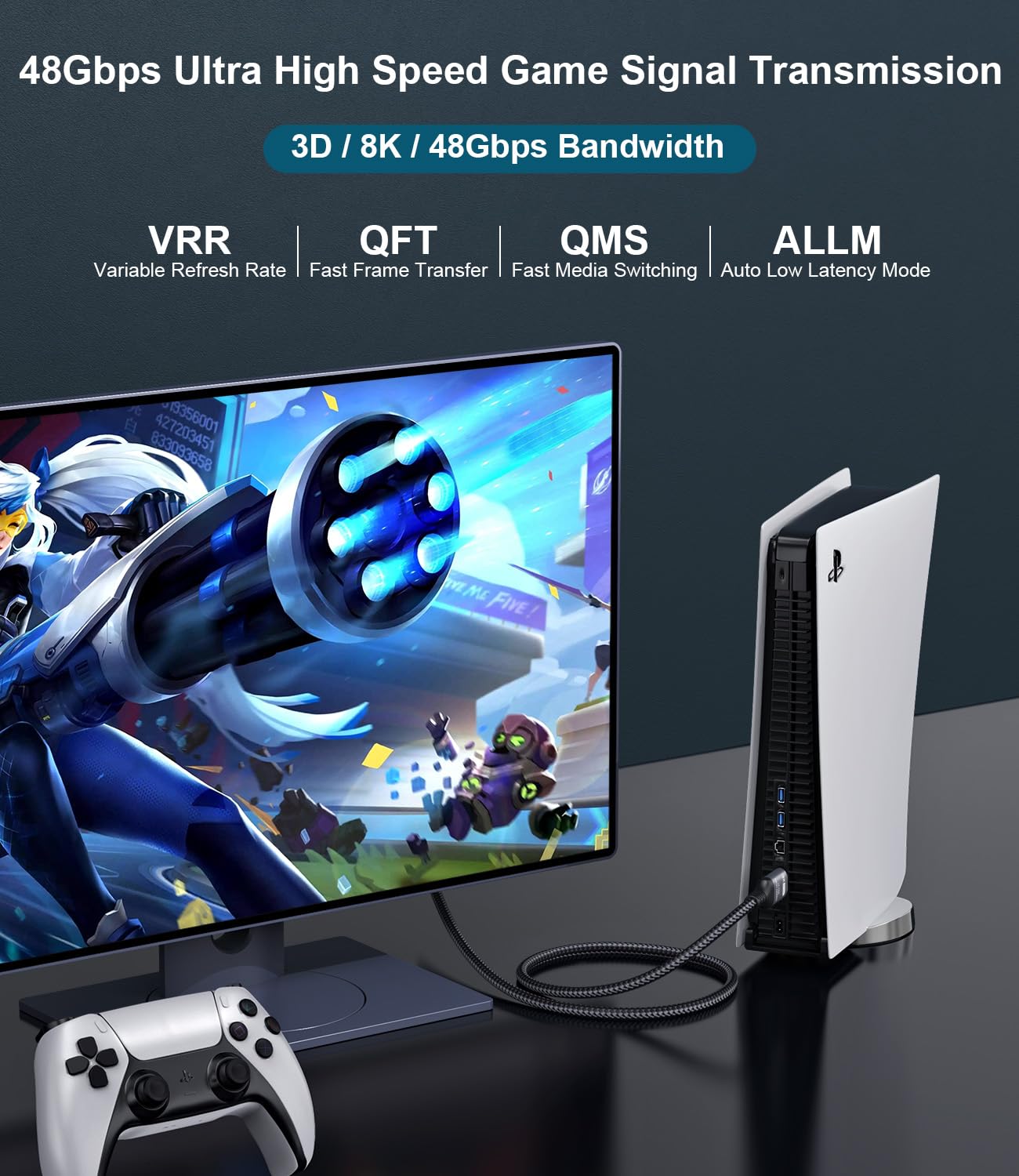
This is an HDMI to HDMI cable in a 3m length, built around HDMI 2.1 with a claimed 48Gbps Ultra High Speed bandwidth. On paper, it’s aimed at people who want more than basic 4K: the spec includes support for 10K@60Hz and 8K@60Hz, and it lists multiple 4K refresh options (including 4K@240Hz, 4K@165Hz, 4K@144Hz and 4K@120Hz). It also includes Ethernet support and CEC (CEC is referenced as CEC support).
It’s also marketed as “authoritatively certified” and positioned for game-friendly setups, where reduced latency and consistent signal handling matter.
Where it shines for real use
In everyday terms, you’re usually buying a cable like this for one (or more) of these reasons:
- You want to run high-refresh gaming at 4K (if your TV/monitor and console support the exact mode).
- You want 8K/10K capability for future-proofing, not because you’ll always be streaming in those formats.
- You’ve got an AV setup where sound formats and TV/receiver control matter—eARC support is included in the feature list.
- You care about HDR compatibility, with support listed for dynamic HDR, HDR10+, and HDR-related features.

A quick micro-scenario: imagine you’ve mounted a 4K gaming monitor slightly away from your desk. With a 3m lead you’re not forced into awkward cable routing, and if everything on the chain supports it, the cable’s HDMI 2.1 bandwidth and listed high-refresh modes are what you’d look for. For media, eARC can matter if your TV is the hub and you want audio to flow back to a compatible soundbar or AV receiver.
What matters most: features and compatibility claims
The listing states support for:
- HDR formats including dynamic HDR and HDR10+
- HDCP 2.2 and HDCP 2.3
- 12-bit colour depth and wide colour gamut
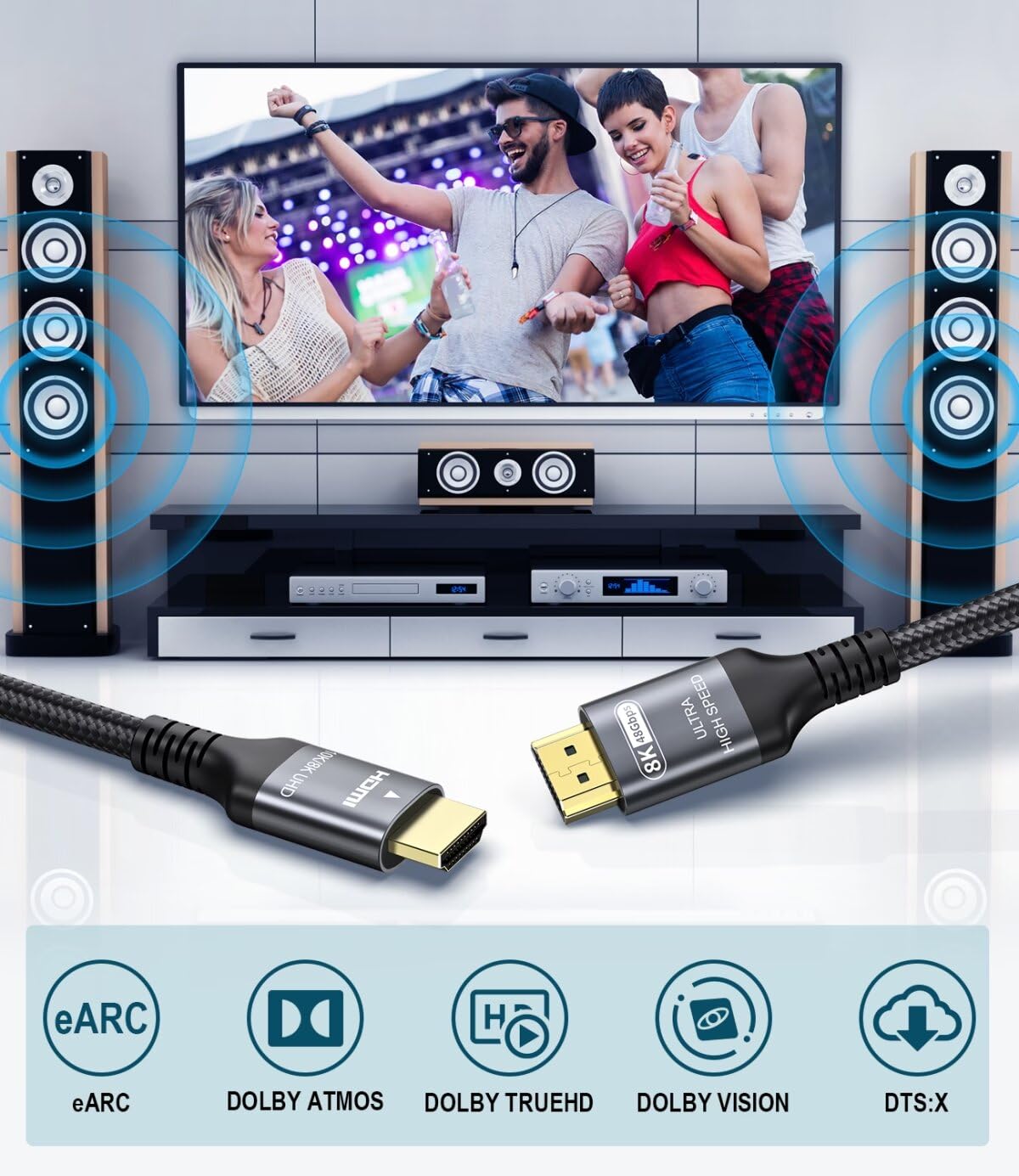
- eARC, with lossless surround audio support (Dolby Atmos, DTS:X, DTS Master are mentioned)
- VRR, ALLM, and also QFT and QMS
- Backward compatibility with HDMI 2.0/1.4 devices
It also mentions Ethernet capability and delay-free, uncompressed audio/video transmission on the spec sheet side.
Worth noting: compatibility depends quite a lot on what’s at the other end of the cable. Even with a capable HDMI 2.1 cable, you can only get the best refresh rate or HDR mode if your source and display both negotiate it.
Tech summary (from the product listing)
- Type: HDMI to HDMI (HDMI 2.1 cable)
- Length: 3m
- Bandwidth: 48Gbps Ultra High Speed
- Resolutions and frame rates supported (as listed): 10K@60Hz, 8K@60Hz, 5K@100Hz/120Hz, 4K@240Hz/165Hz/144Hz/120Hz
- HDR / copy-protection: dynamic HDR, HDR10+, HDCP 2.2 and HDCP 2.3
- Audio: eARC and lossless surround formats listed (Dolby Atmos, DTS:X, DTS Master)
- Gaming features listed: VRR, ALLM, QFT, QMS
Build and durability: what you’ll notice over time
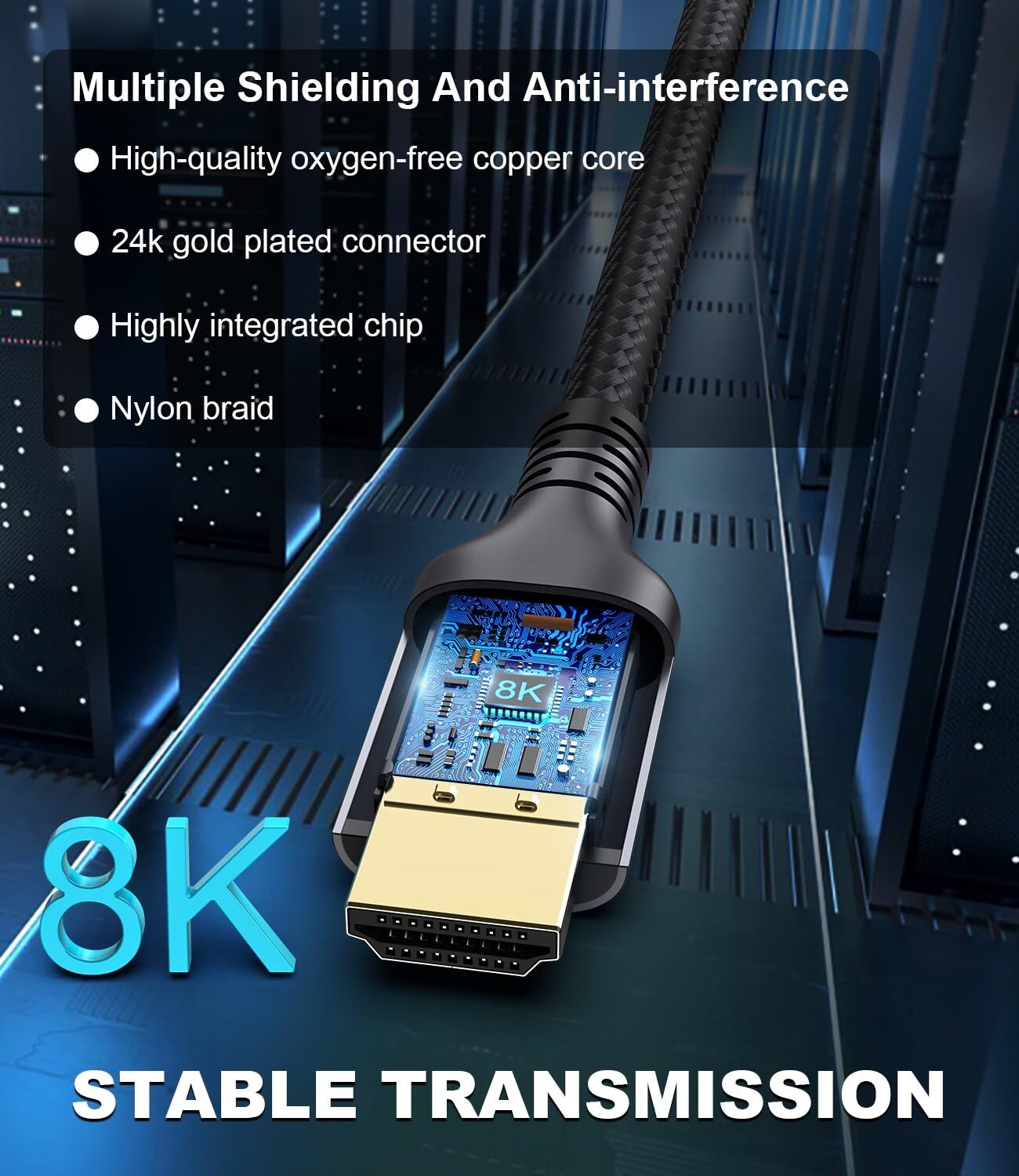
This cable is described as using an aluminium alloy shell with gold-plated connectors, intended to resist oxidation. The cable body is described as nylon braided, with an anti-bending tail sleeve designed to reduce stress and help limit signal interference.
If you routinely bend cables around furniture or run them behind a TV stand, the reinforcement details are the kind of thing that makes sense on paper. Still, it’s a 3m cable—so if you need something shorter to reduce cable slack and strain at either end, you may want to consider your layout before committing.
Pros
- HDMI 2.1, bandwidth-forward approach (48Gbps) with a lot of high-end modes listed
- eARC support plus lossless surround format references, useful for soundbar/AV workflows
- HDR10+ and dynamic HDR support are mentioned, alongside HDCP 2.2/2.3
- Braided build and reinforced connectors and strain points are designed for everyday handling
Cons / limitations to keep in mind
- The top-end refresh rates (like 4K@240Hz) only apply if your display and source can actually negotiate those modes
- Some feature claims (Ethernet/CEC behaviours, specific gaming tech combinations) are dependent on device support—so don’t expect miracles with older kit
- At 3m, it’s fine for typical rooms, but it may be more slack than you want for tight desks or wall-mounted set-ups
Is it worth it?
You should buy this Certified 10K/8K HDMI 2.1 cable if you’re building a home setup where HDMI 2.1 features matter—especially if you want eARC audio handling, HDR10+ support, and the possibility of high-refresh 4K gaming (where your devices support the exact modes). It also makes sense if you’re trying to standardise on a single, higher-spec HDMI lead for a mix of streaming, consoles, laptops, or a projector.
You may want to skip it if your devices are older HDMI versions and you’re not chasing high refresh rates or advanced HDR/audio features. In that situation, the extra spec headroom may not translate into noticeable benefits.
Mini FAQ
Will this cable work with HDMI 2.0 or older devices?
The listing says it’s backward compatible with HDMI 2.0/1.4 devices, so it should work for standard use, but the advanced features (like the highest refresh rates and HDR modes) rely on what your equipment supports.
Does it support eARC for soundbars?
Yes—eARC support is included, and lossless surround audio formats are mentioned (Dolby Atmos, DTS:X, DTS Master). Whether you get the full benefit depends on your TV and soundbar/AV receiver supporting eARC.
Can it really do 4K at 240Hz?
The product listing states support for 4K@240Hz. However, you only get that result if your monitor/TV and source device both support the same mode and you’re using compatible settings.
Is 3m the right length?
It’s a practical length for many rooms, but if your setup is close together, you might prefer a shorter cable to avoid extra slack and bending near the ports.