

Cerhot EU Self-Powered Wireless Light Switch Kit (EU 2Gang) with 433MHz Kinetic Switch
Product description
A switch you don’t have to charge or wire
This Cerhot EU self-powered wireless light switch kit is designed for people who want light control without a battery, a WiFi setup, or rewiring the switch into the mains. On paper, the idea is simple: press the switch panel and it generates enough power from your finger press (kinetic energy) to send a wireless 433MHz signal to the receiver, which then turns the connected light(s) on or off.
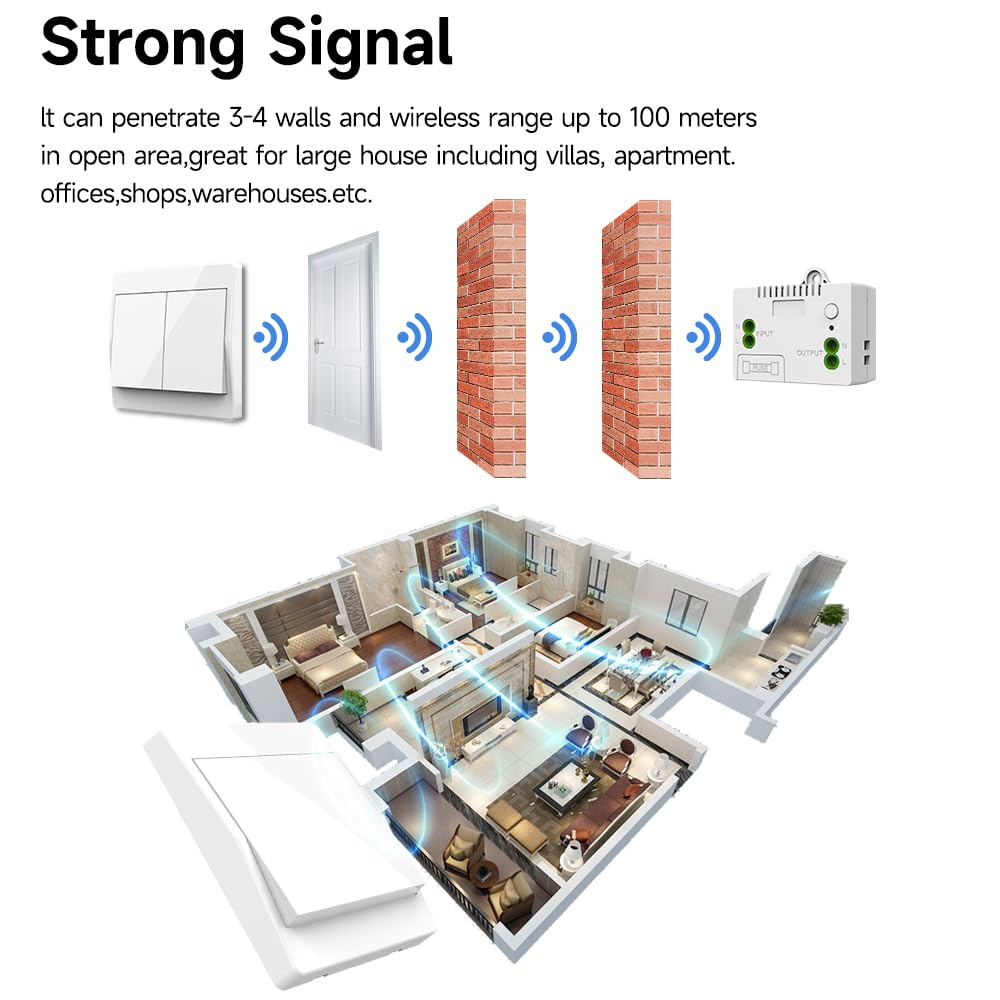
That “no battery, no WiFi” angle is where it tends to feel most practical. You get a wireless solution for awkward switch locations, short DIY jobs, or places where you’d rather not deal with running new cables. It also has a handy claim around staying readable through walls and doors, so it’s aimed at typical home layouts rather than perfect line-of-sight situations.
How it works in everyday use
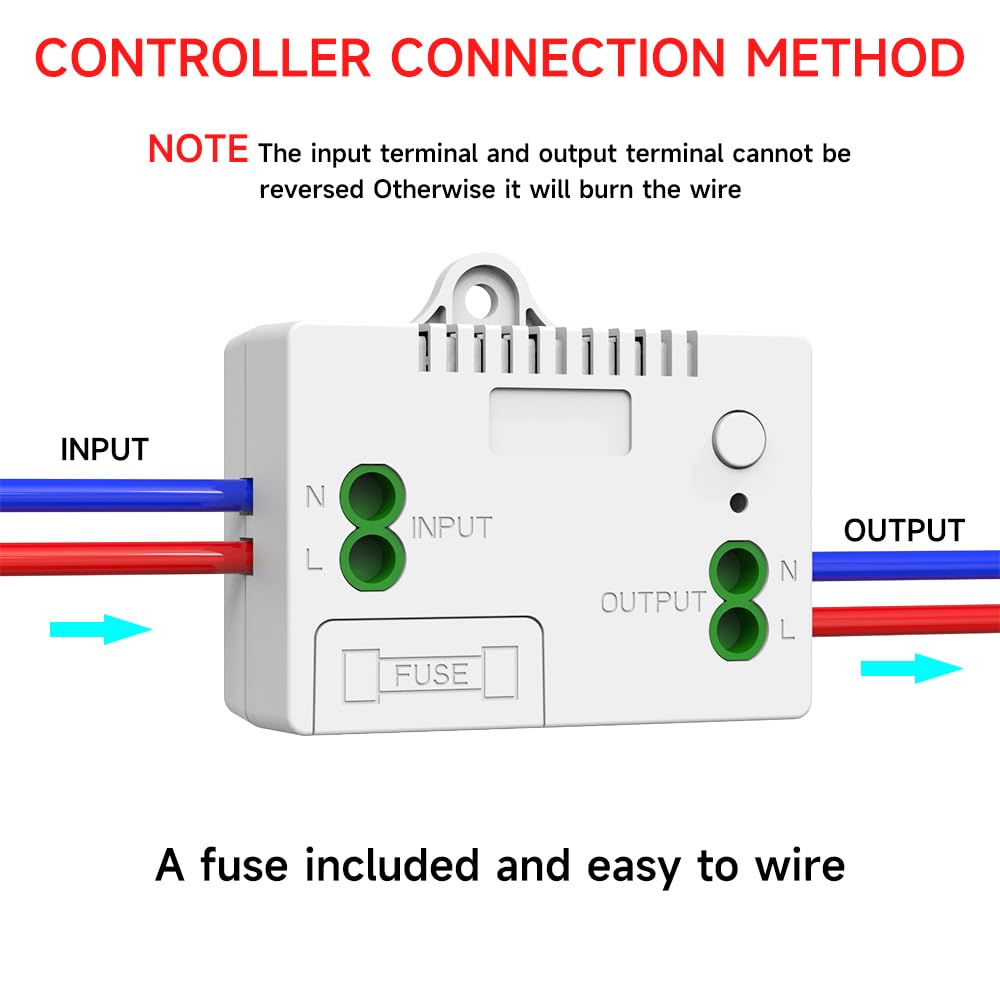
In a real home scenario, it’s the kind of kit you might use when a hallway light switch is in the “wrong” place, or when you want a second control point for stairs. You’d mount the switch panel where you can reach comfortably, then connect the receiver to the live and neutral wires of the light you want to control.
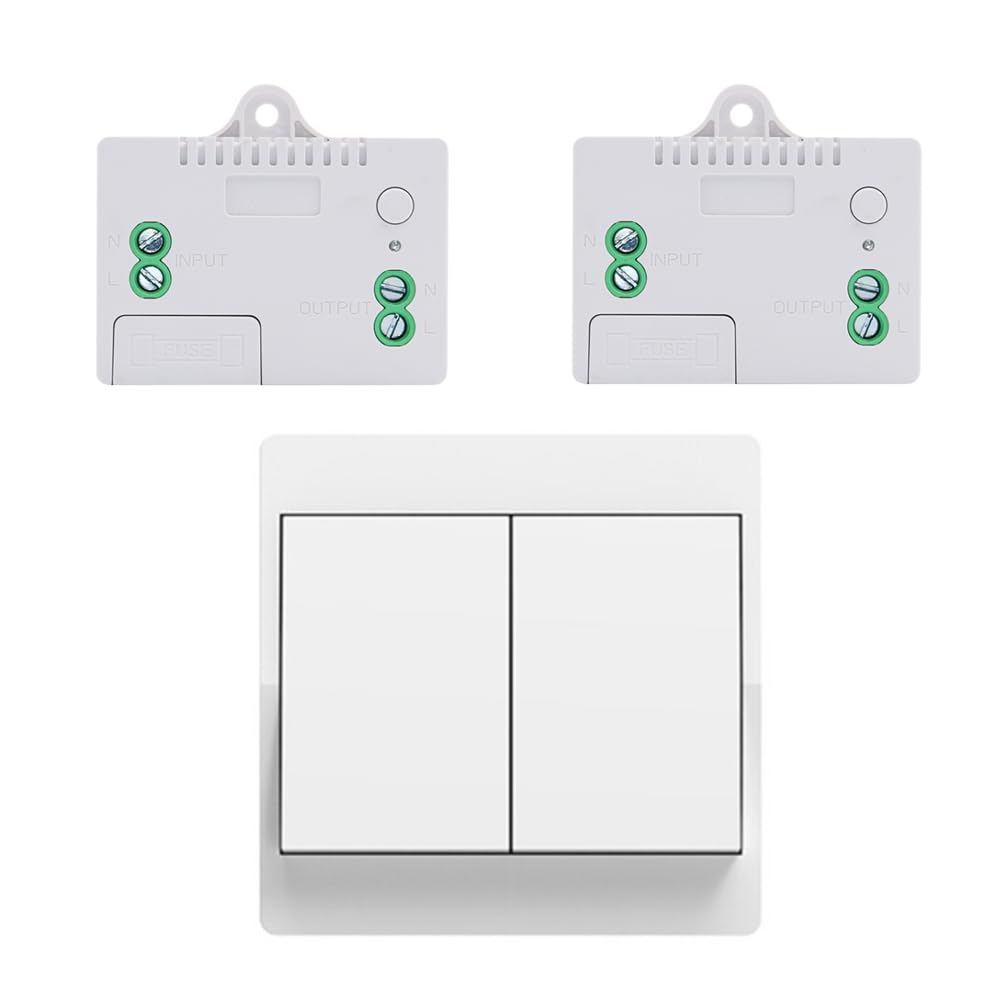
Once it’s set up, you’re essentially controlling the receiver by pressing the panel—no charging leads, no pairing to WiFi, and no battery swapping. If you decide later you want separate switch panels (for example, one upstairs and one downstairs, or one by the bedside and one at the entrance), the kit is described as supporting multiple switch panels controlling the same receiver (with the note that different kits shouldn’t cross-code).
Do note the limitation: the switch needs to generate power from the press, so if you’re expecting a “set-and-forget” scene controller with lots of automation options, this isn’t that kind of system. It’s straightforward on/off lighting control.
Where it stands out (and why people buy it)
The most convincing parts are the things that reduce hassle over time and during installation:
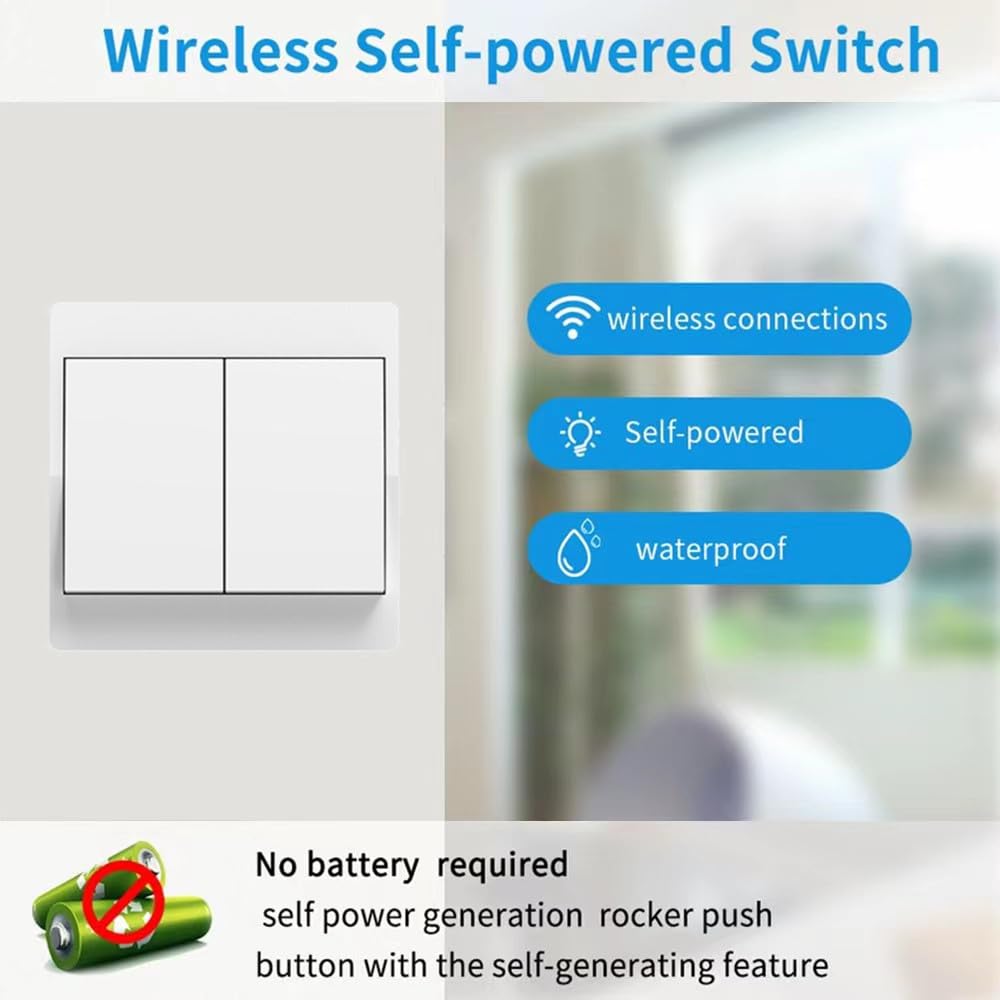
- Self-powered switching: no battery requirement, so you avoid the usual “dead remote” problem.
- No WiFi dependency: you don’t need a network to control the lights.
- Wireless control via 433MHz: the kit is positioned as able to transmit through walls and doors.
- DIY-friendly installation approach: the receiver connects to the live and neutral wires of the target light.
- Waterproof switch panel for damp areas: it’s described as usable even in environments like bathrooms and courtyards.
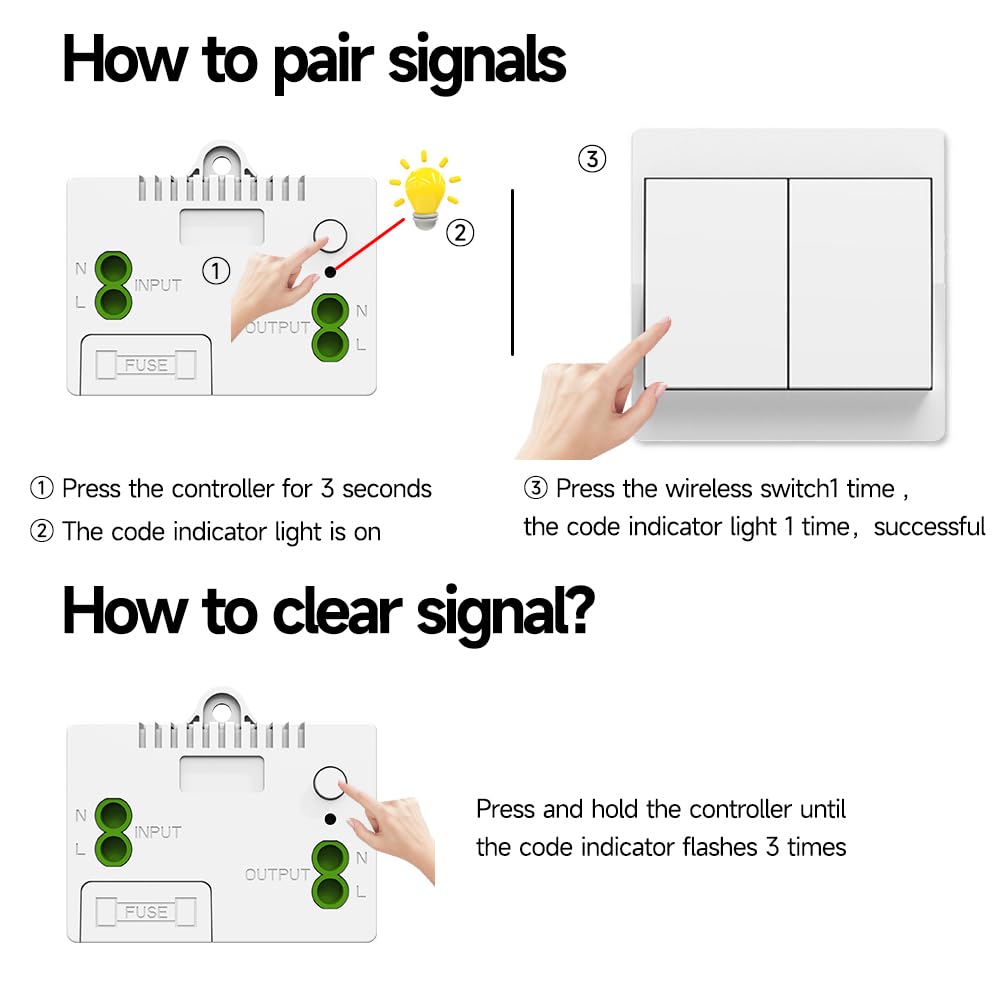
There’s also a practical pairing reassurance mentioned: the product code is matched at the factory, so you should be able to use it directly without code confusion.
What to know before you buy
This is one of those products where the fit depends on your wiring setup and building layout, so it’s worth checking a few things first.
Signal and materials matter. The kit description specifically says it cannot be installed inside a metal box because metal will shield signals. If you’re planning a concealed install behind metal trim, it’s a red flag.
Receiver wiring is still mains-related. Even though the switch panel doesn’t require rewiring, you still connect the receiver to the live and neutral wires of the desired light. If you’re not comfortable working around mains wiring, you may need a qualified person for the receiver part.
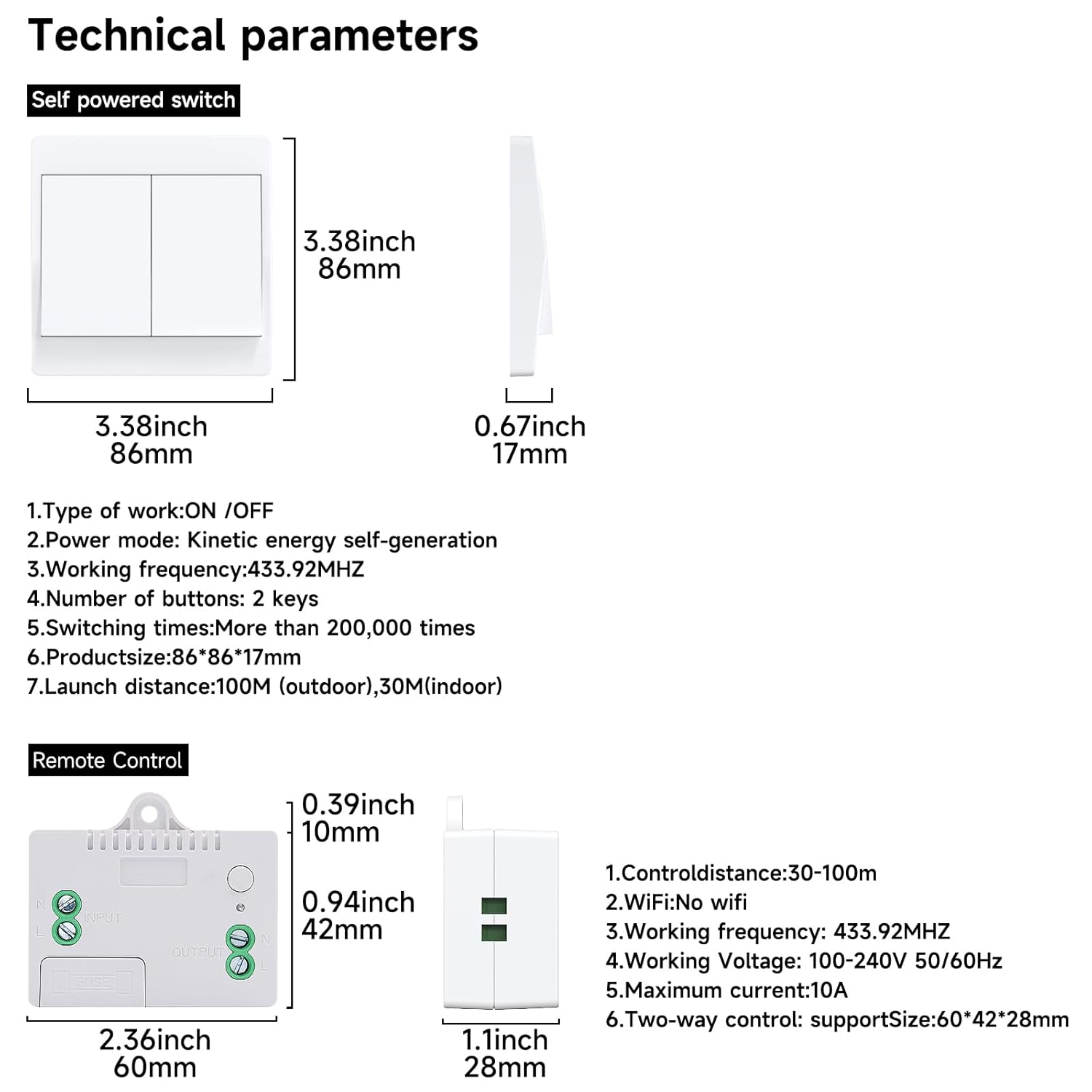
Range figures are conditional. The claimed transmission range is “around 50 metres indoors (150 metres outdoors)”, but real-world performance can vary with walls, doors, and how the house is built. So if you’re trying to control a light across many thick barriers, it may end up being more “works most of the time” than guaranteed.
Wide receiver voltage is helpful, but it’s still a receiver install. The receiver is described as AC100-240V, which sounds broadly usable for many countries, but you still need to ensure it matches the light circuit you’re connecting to.
Key considerations for your lighting setup

If you’re building a basic wireless lighting control plan, this kit makes sense where you want practical on/off control rather than complex automation.
It’s a good match if you: - Want a wireless second location for switching without running new wiring to the switch panel. - Need control in places where battery maintenance is annoying. - Are dealing with damp locations (bathroom/courtyard-type use is mentioned for the switch panel). - Want to potentially add more switch panels later to control lighting “scenes” via multiple panels.
It might not be the best fit if you: - Need a system that relies on WiFi/app control or features beyond turning lights on/off. - Plan to mount the switch panel inside a metal box. - Are expecting full functionality without doing the receiver connection to live and neutral.
Also, while the kit claims multiple panels can work together without interference and without cross-code issues, that still implies you’ll be following the system setup correctly if you add panels.
Final verdict
It’s worth considering if you want a no-battery, no-WiFi wireless light switch approach that’s positioned for typical home use, including through-walls control and damp-area suitability for the switch panel. The kinetic self-power element is the standout benefit, and the installation concept is fairly straightforward—receiver to live/neutral, switch panel wherever you want it.
However, it’s not a “fully hands-off” upgrade, because you’ll still be dealing with mains wiring for the receiver, and it won’t suit installs inside metal boxes due to signal shielding. If those points don’t bother you, this kit can be a practical way to improve where light switches live in a home.
Mini FAQ
Does it need batteries or WiFi?
The kit is described as self-powered and does not require a battery, and it also does not require WiFi.
Can the switch panel be installed in a metal box?
No. The description says metal will shield signals, so it cannot be installed inside a metal box.
How far will it transmit?
It’s described as transmitting around 50 metres indoors and 150 metres outdoors, though real-world performance will depend on your building materials and layout.
What wiring is involved?
You connect the receiver to the live and neutral wires of the desired light, while the switch panel itself does not require rewiring.
Is it suitable for bathrooms?
The switch panel is described as waterproof for use in damp environments such as bathrooms and courtyards.