

Celestron 22461 StarSense Explore DX 130 Newtonian Reflector Telescope (smartphone app-enabled)
Product description
What it is and the problem it solves
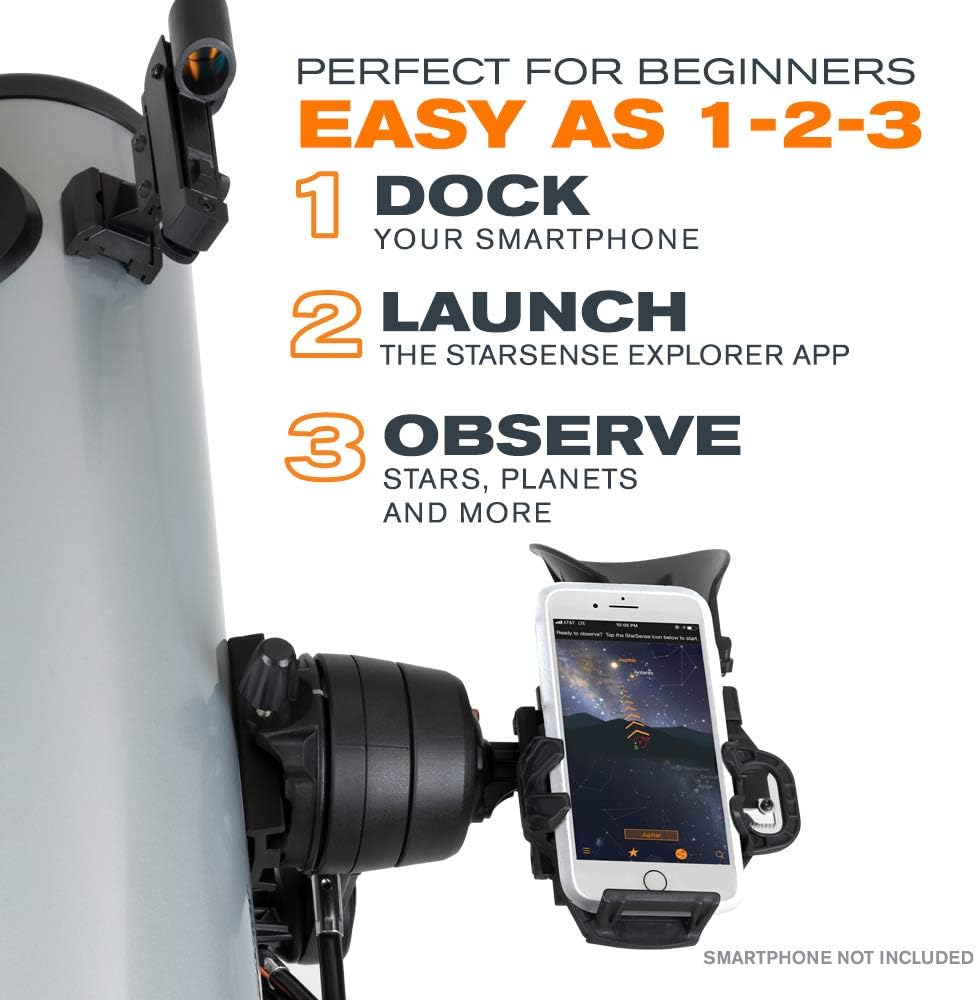
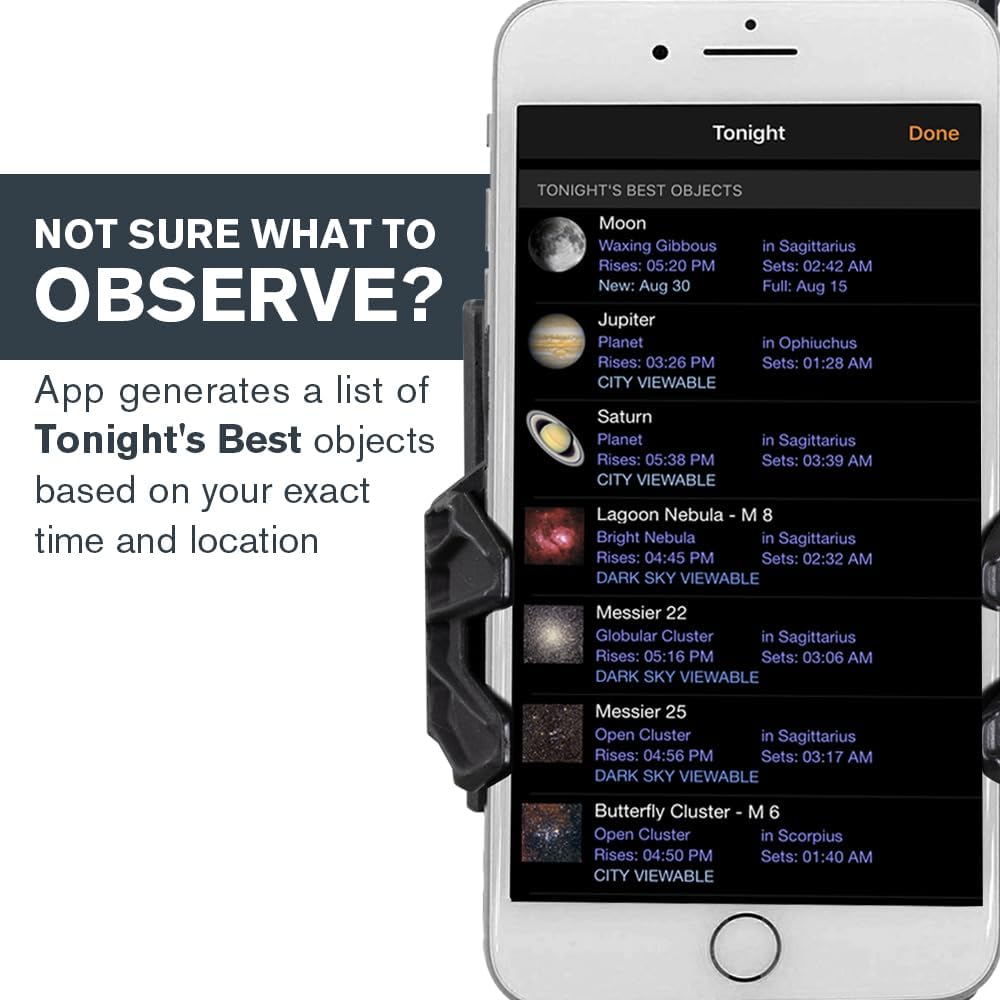
The Celestron 22461 StarSense Explore DX 130 is a Newtonian reflector telescope aimed at people who want to see more of the night sky without getting stuck in the steep learning curve that comes with aligning and finding targets. On paper, the clever bit is the StarSense smartphone recognition technology: your phone analyses star patterns overhead and helps calculate the sky’s position in real time. Instead of guessing where to point, you follow on-screen guidance.
This is paired with a manual altazimuth mount and smooth dual-axis slow-motion controls. That combination matters because even with phone assistance, you still need to physically aim and fine-tune. If you like the idea of hands-on control, but you also want the “where do I look?” part to be guided, it fits the brief.
It’s not the kind of telescope that magically removes everything you’ll need to learn, though. You’ll still spend time getting used to the eyepiece view, balancing the tube on the mount, and using the arrows until the target locks in.
The essentials: what you get for a first telescope setup
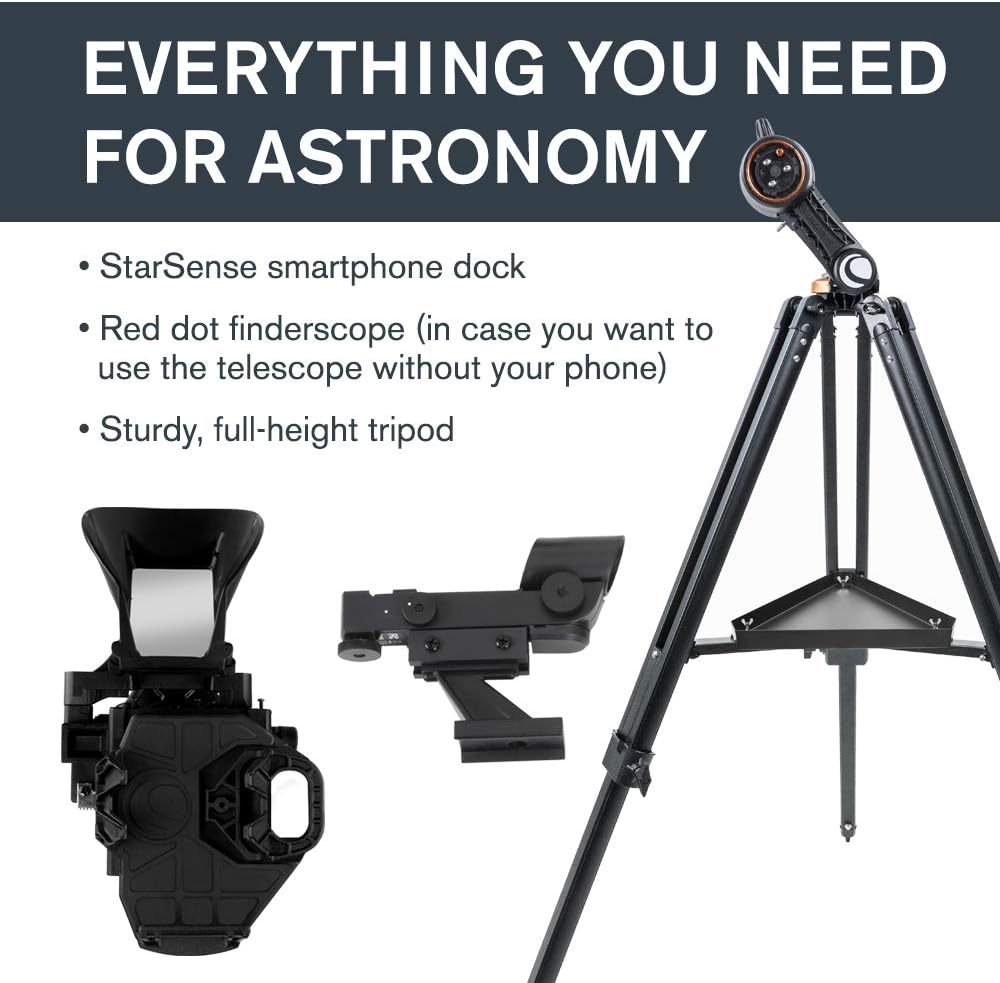
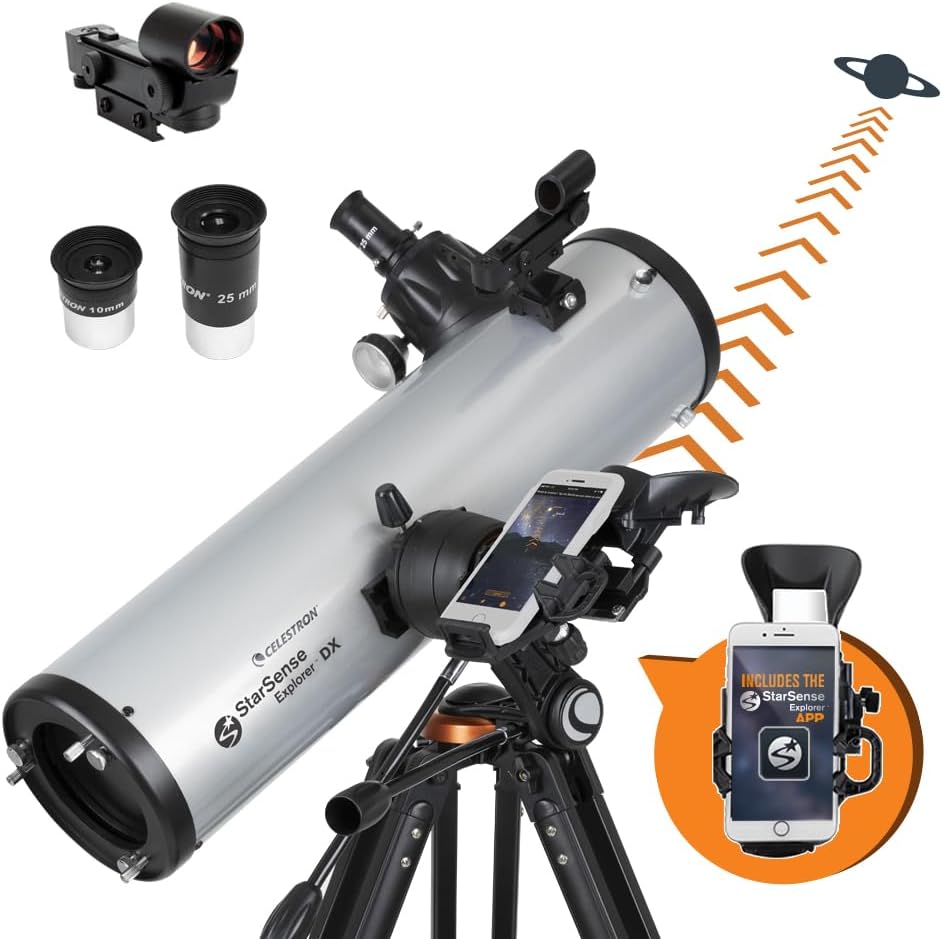
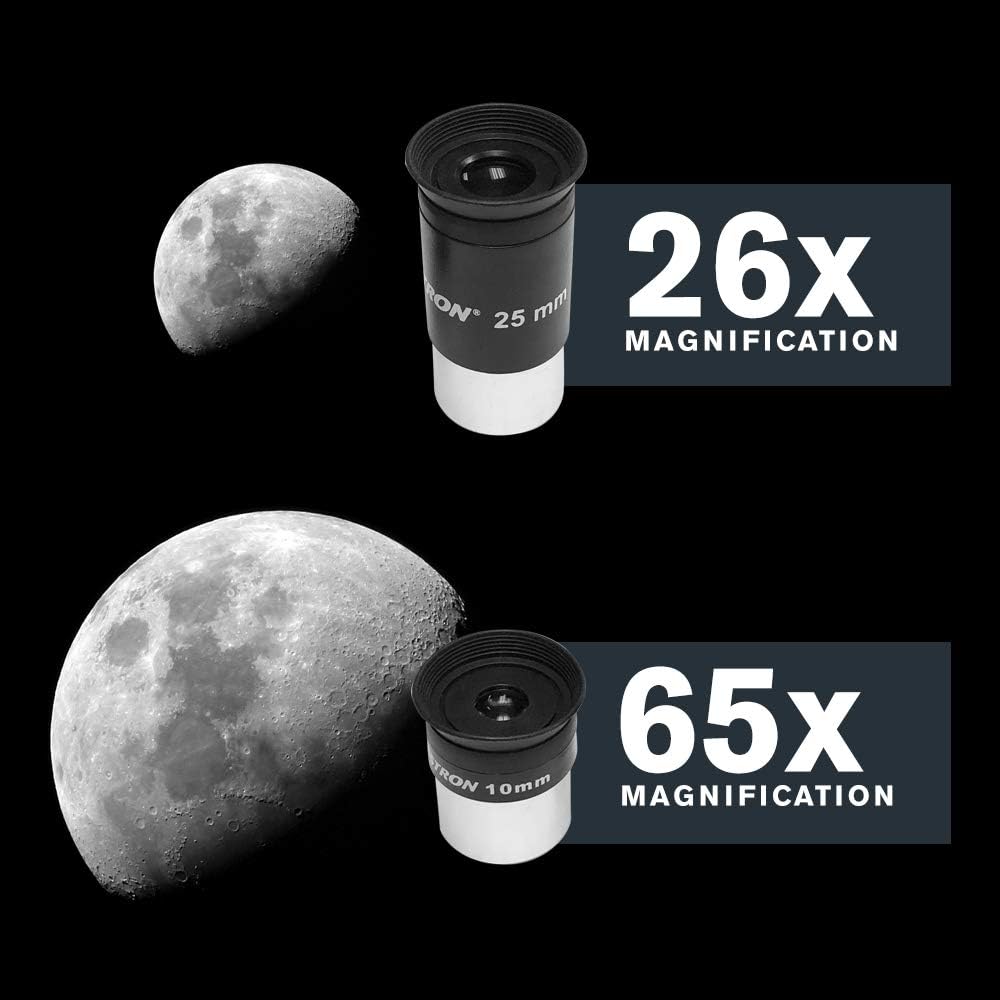
A big reason this model is often considered a sensible buy is the included kit. The telescope comes with two eyepieces (25mm and 10mm), which gives you more flexibility in magnification than a single-eyepiece starter kit. There’s also a phone dock designed for the StarSense smartphone approach, plus a red dot finderscope in case you want to use the telescope without the phone.
The package also includes a height-adjustable tripod, which is practical because it lets you set your viewing position more comfortably. That may sound minor, but for longer sessions—especially if multiple people take turns—it’s the difference between sticking with a target or giving up early.
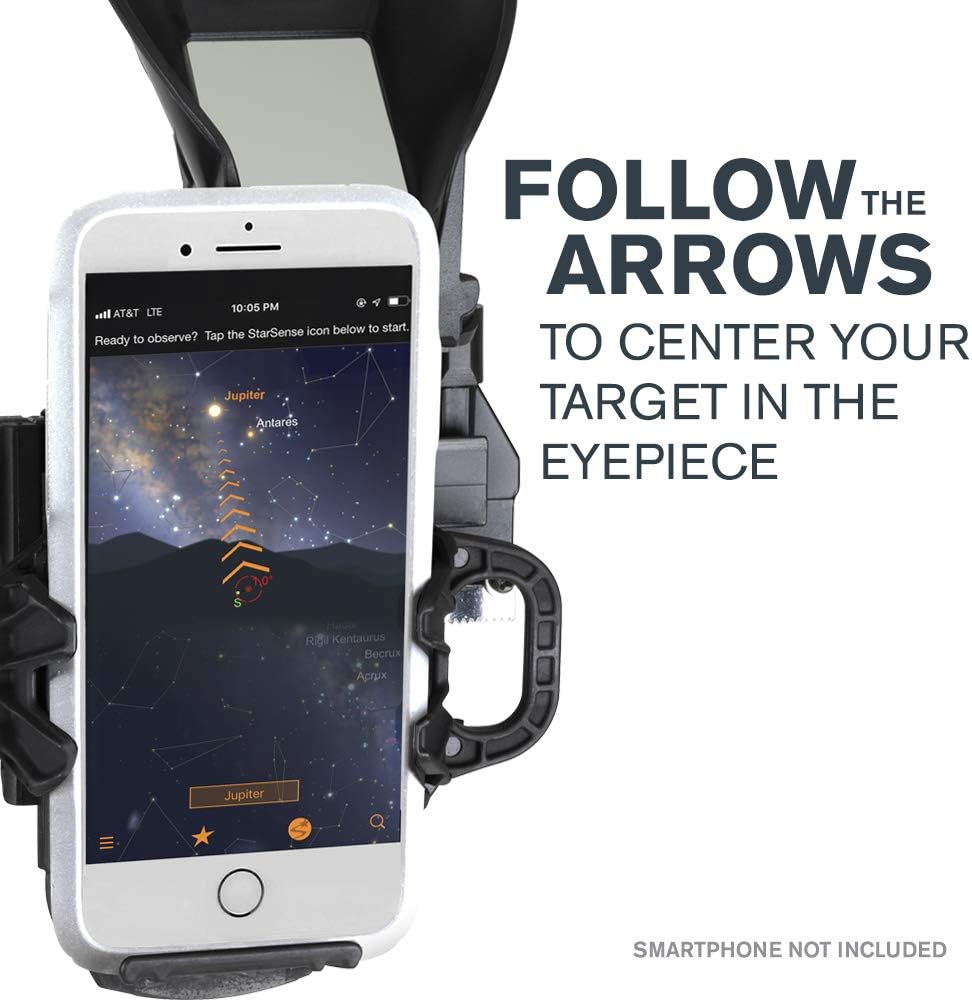
As a practical micro-experience: once your telescope is set up and you’re viewing through the eyepiece, you can use the on-screen arrows to guide the tube towards the sky object. When the interface indicates the bullseye turns green, it’s ready to look through the eyepiece. It’s a straightforward workflow compared with traditional “find it yourself” methods.
Where it stands out day to day
The StarSense guidance is the standout feature. For beginners, the biggest frustration is often not the optics—it’s navigation. This system is designed so you can go on a guided tour of the night sky without needing prior telescope experience. In other words, it helps turn “point and hope” into “follow the cues.”
The mount controls are also worth noting. A manual altazimuth mount with smooth, dual-axis slow-motion adjustment is the kind of setup that tends to feel predictable while you refine your aim. It’s not automated tracking as described here, so expectations should stay realistic: you’re actively adjusting as you observe.
Tech overview (no fluff)
- Type: Newtonian reflector telescope
- Aperture: 130mm (5”)
- Mount: manual altazimuth with dual-axis slow motion adjustment
- Eyepieces included: 25mm and 10mm
- Smartphone tech: StarSense sky recognition software using your smartphone to analyse star patterns and calculate position in real time
- Compatibility: iOS/Android compatible
- Finder: red dot finderscope (for use without the phone)
What to check before buying
Before you commit, there are a couple of things worth considering because they can affect your experience.
First, this is smartphone-assisted. If you don’t want to rely on a phone for sky recognition, you can still use the included red dot finderscope, but the “guided tour” experience likely becomes less central to how you use the telescope.
Second, the mount approach is manual. That’s perfectly normal for many beginner-to-intermediate setups, but it does mean you’ll be doing the adjusting rather than letting the system handle everything.
Third, remember that eyepiece choice changes how the sky looks. With only two eyepieces included, you may find yourself wanting more variety later—especially if your observing style moves from quick targets to longer sessions.
Who it’s for (and who should probably look elsewhere)
It’s a good fit if you’re buying your first telescope and you want help finding objects, but you still want to control the viewing with smooth manual adjustments. It also suits you if you plan to observe in short sessions where guided aiming helps you get to the interesting part faster.
It may not suit you if you’re after a more hands-off, fully automated observing experience, because the workflow described is still manual aiming plus smartphone guidance. And if you dislike using a mobile phone at the eyepiece, it might feel like extra faff—your fallback is the red dot finderscope, but the guided recognition is the core differentiator.
Pros and limits to keep in mind
What you’ll like: - StarSense smartphone recognition designed to guide you using on-screen arrows - Included eyepieces (25mm and 10mm) for a bit more choice straight away - Red dot finderscope option if you prefer using the telescope without your phone - Height-adjustable tripod for more comfortable viewing - 2-year warranty and a customer support stance tied to a longstanding telescope brand
What could feel limiting: - It’s still a manual altazimuth mount, so you’ll be doing the fine aiming - You’ll be relying on a smartphone for the most guided experience, so it’s not a “set and forget” setup
Is it worth it?
If your priority is getting started with telescope viewing without spending ages learning how to locate targets, the Celestron StarSense Explore DX 130 is compelling on its approach: smartphone-enabled sky recognition paired with a straightforward manual mount. It’s the kind of telescope that can make nights under the stars feel less like homework and more like discovery.
You should think twice if you want a fully autonomous or phone-free experience, or if you’re specifically searching for a high-end “do everything for you” observing setup. For a first telescope and for guided beginner sessions, it looks like a sensible purchase, for people who strongly dislike smartphone-assisted workflows, the value drops.
Mini FAQ
Can I use it without a smartphone? Yes. The package includes a red dot finderscope for use without the phone.
Is it only for beginners? It’s designed to help beginners, but the manual dual-axis slow-motion control means it can still suit more hands-on users who enjoy adjusting aim.
Does it work with iPhones and Android phones? It’s iOS/Android compatible, according to the product description.
What eyepieces are included? Two eyepieces are included: 25mm and 10mm.
What kind of mount is it? It uses a manual altazimuth mount with smooth dual-axis slow-motion adjustment.