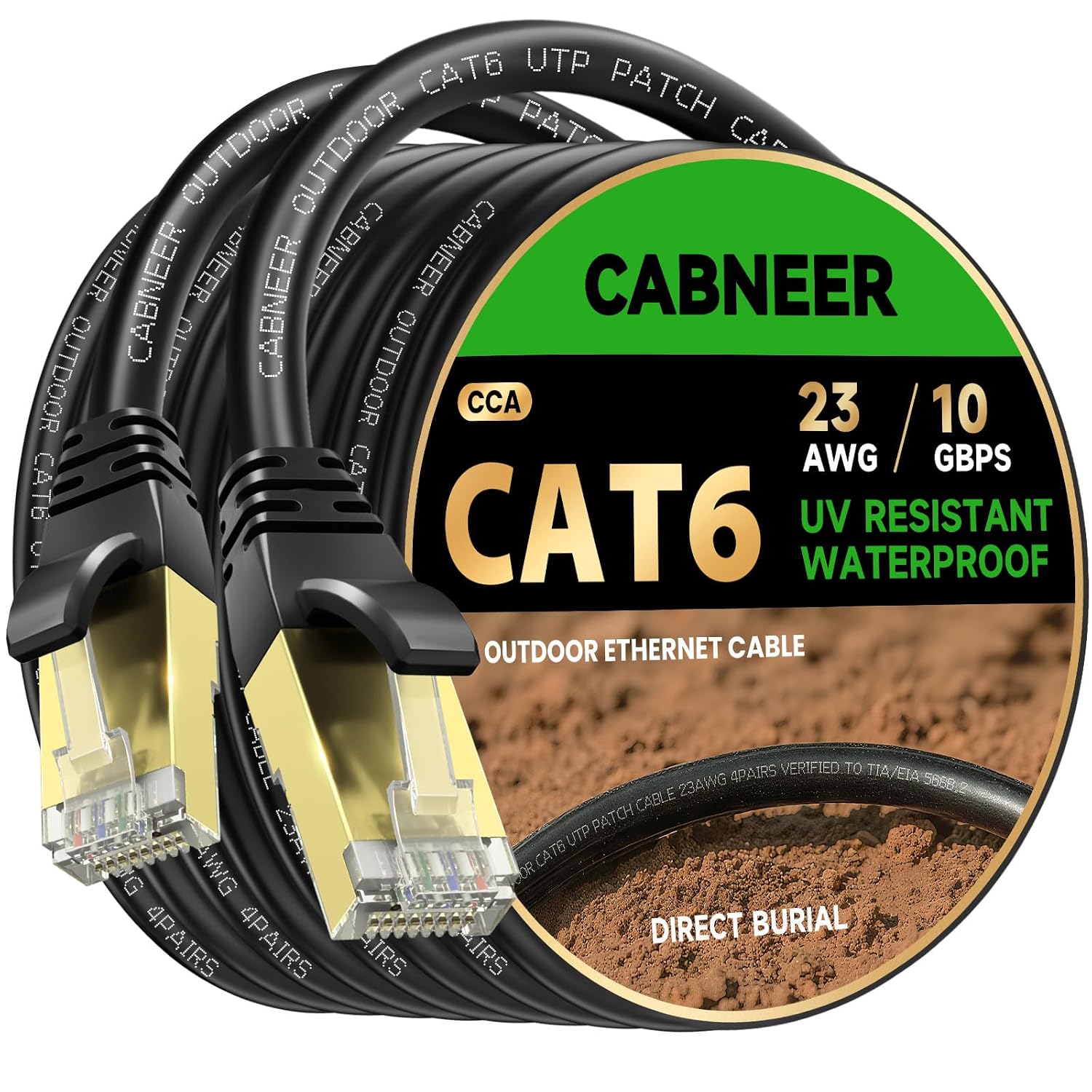
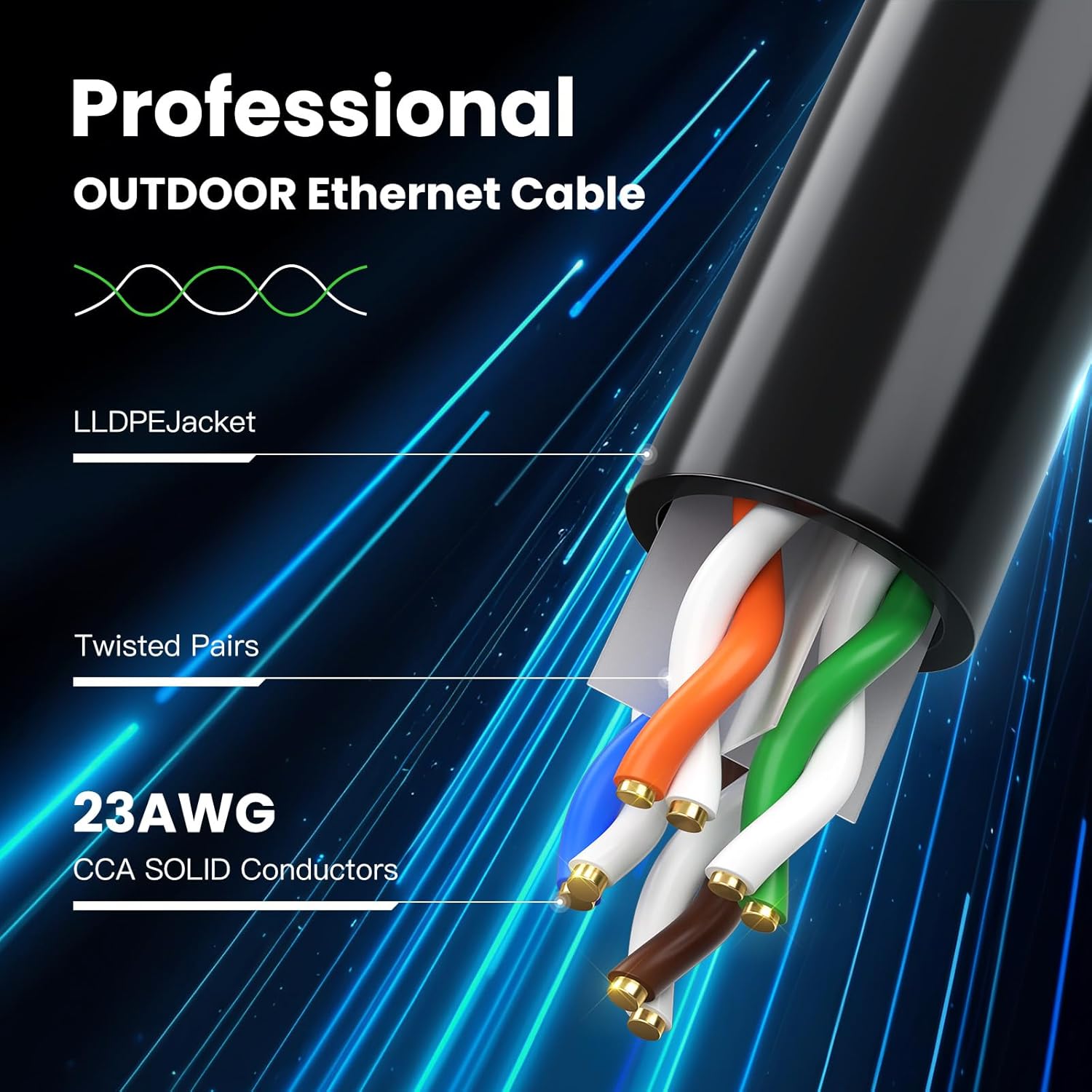
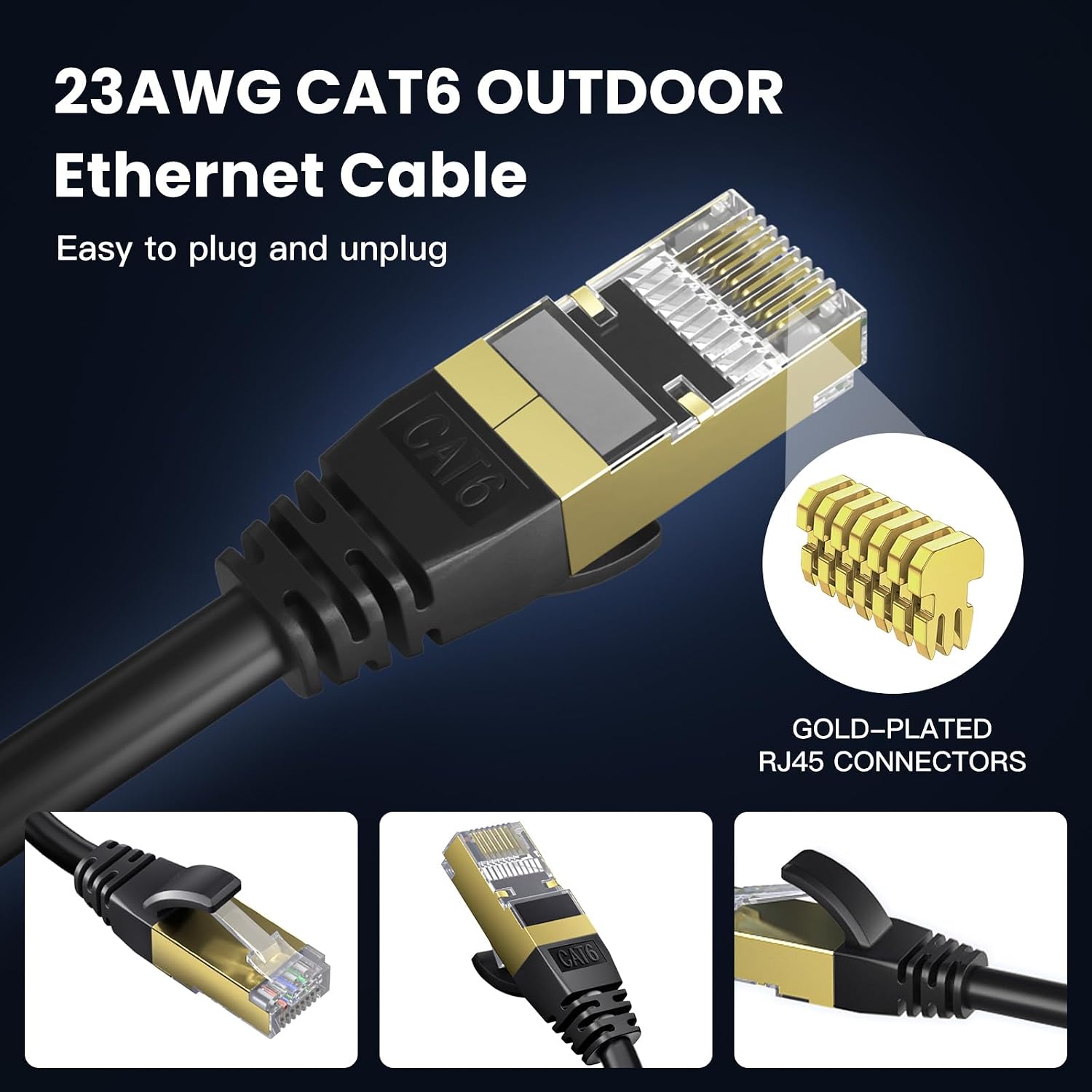
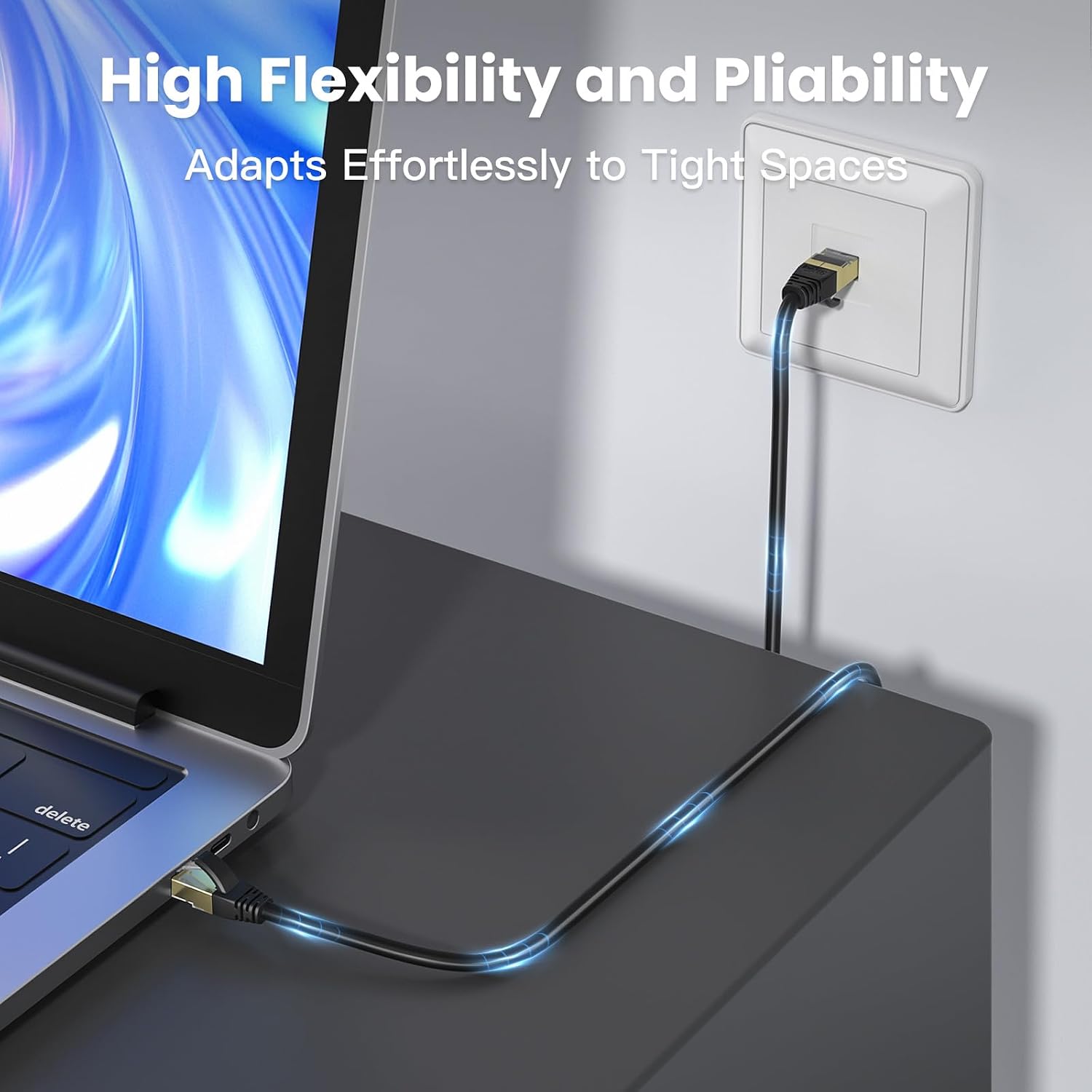
What this is and what it’s for\nCABNEER’s Cat 6 Outdoor Ethernet Cable is a direct burial, heavy‑duty network lead designed for outdoor and garden use. Built with 23AWG copper conductors and an LLDPE jacket, it seeks to deliver stable, high‑speed connections for low‑voltage outdoor setups. If you’re wiring a shed, garden office, or security camera system, this cable aims to provide a reliable route for data while withstanding the elements.\n\n## On-paper durability and environmental tolerance\nThe jacket is designed to resist UV exposure, water ingress, corrosion and abrasion, with an operating range from -40°C to 80°C. In practical terms, that suggests it shouldn’t become brittle in sun or crack in cold snaps—helpful if you’re burying it or routing it outdoors where weather changes are the norm. However, as with any outdoor installer, it’s sensible to verify local conditions and installation practices to protect the run from mechanical damage.\n\n## Installation and flexibility\nDirect burial compatibility means you can bury the cable without conduit in suitable soil, potentially saving time and cost on outdoor projects. It’s described as flexible enough to handle routine bending, which aids in garden layouts and wall passes. The PVC/LLDPE construction should support easy movement through conduits or along garden paths, reducing the risk of kinks during routing.\n\n## Performance and compatibility\nCAT6 aims to support up to 10Gbps across short to mid‑distance networks with a bandwidth up to 550MHz. The design uses twisted copper pairs and RJ45 connectors with gold plating to foster low latency and reduce crosstalk. For homes expanding smart‑home setups, cameras, or media streaming outdoors, this cable intends to offer a stable connection where run quality and resistance to interference matter. It’s backward compatible with CAT5e and CAT5, which is useful if you’re upgrading an existing network step by step.\n\n## Use cases and who it suits\nIdeal for garden projects, patios, garages, or outdoor kitchens where a robust, weather‑resistant link is needed. It’s suitable for connecting modems, routers, hubs, printers, smart TVs, or camera systems in outdoor zones. If your priority is a weatherproof, direct burial option that stays flexible under temperature shifts, this cable aligns with that need.\n\n## Pros and cons in practical terms\nPros: durable UV and weather resistance, direct burial capability, relatively straightforward installation, high‑speed potential for outdoor setups.\nCons: the description focuses on capability rather than real‑world mileage in different soils or long‑term performance, performance claims assume standard CAT6 grade and typical household equipment. If you expect cinema‑grade, ultra‑long outdoor runs, you may want to assess the distance and shielding specifics for your layout.\n\n## What to check before buying\nConfirm that the 10 m length fits your space and that you have a suitable burial route or conduit. Consider future expansion or changes in the garden layout, and verify that your outdoor devices can operate at CAT6 speeds over the planned distance.\n\n## How it compares to the alternative approaches\nIf you’re weighing outdoor cabling options, you might compare direct burial CAT6 to indoor‑rated runs routed through conduit. For longer outdoor runs or higher resilience against interference, you’d typically look at specialised shielded or higher‑category solutions—but for many garden setups, CAT6 offers a pragmatic balance of cost, speed and ease of installation.\n\n## FAQ (brief)\n1. Can it be buried directly without conduit? Yes, it’s described as suitable for direct burial.\n2. Is this suitable for outdoor cameras and smart devices? Yes, the design targets outdoor/wide‑temperature environments and general RJ45 connectivity.\n3. Will it support 10Gbps everywhere along the run? CAT6 supports up to 10Gbps at shorter distances, actual performance depends on total run length and connected hardware.\n\n## Final decision\n### Is it worth it?\nWorth considering if you need a durable, outdoor‑rated CAT6 cable for garden or exterior installations and want the option to bury it directly. It suits practical, value‑driven setups where weather resistance and straightforward routing matter more than ultra‑premium shielding.\n