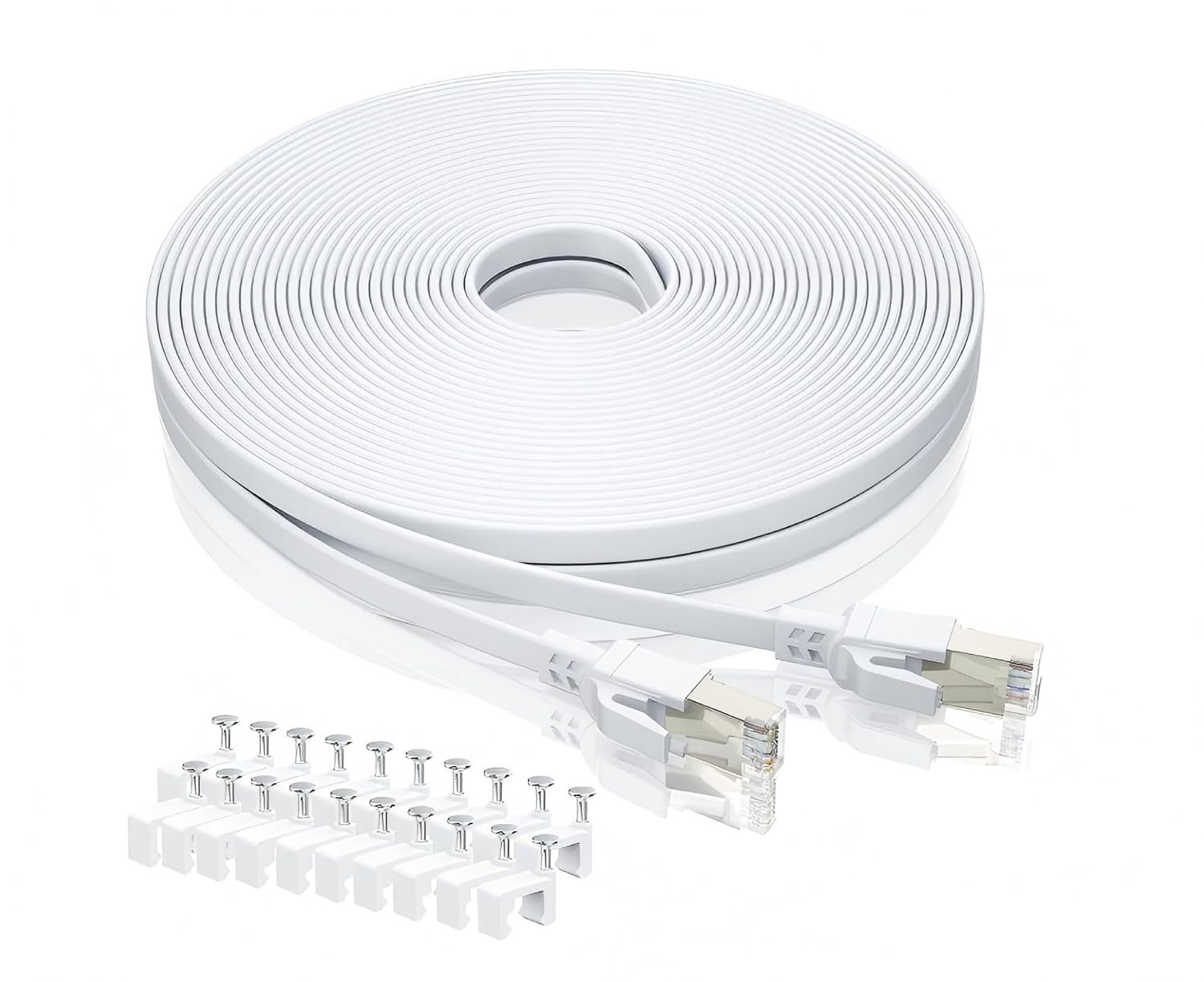
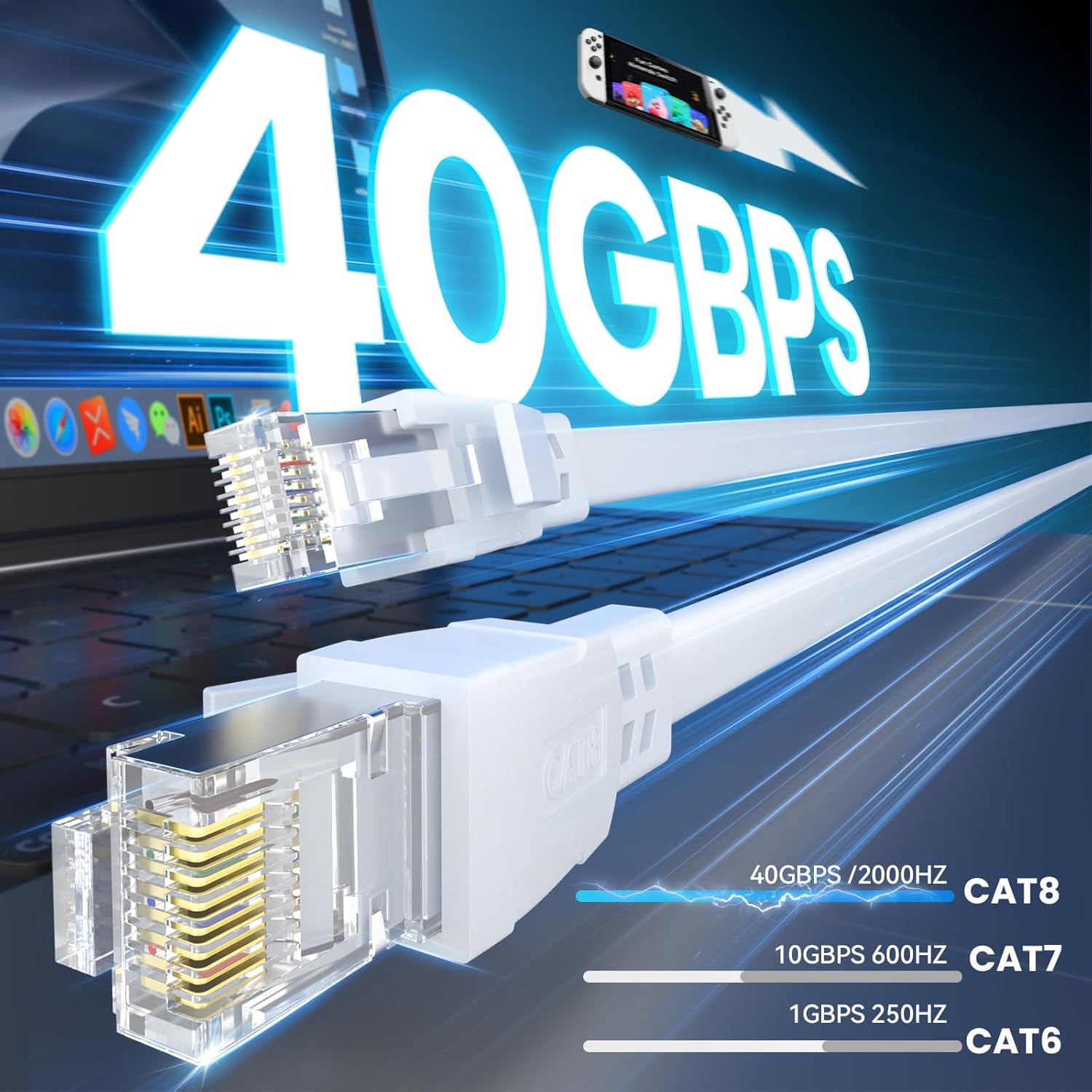
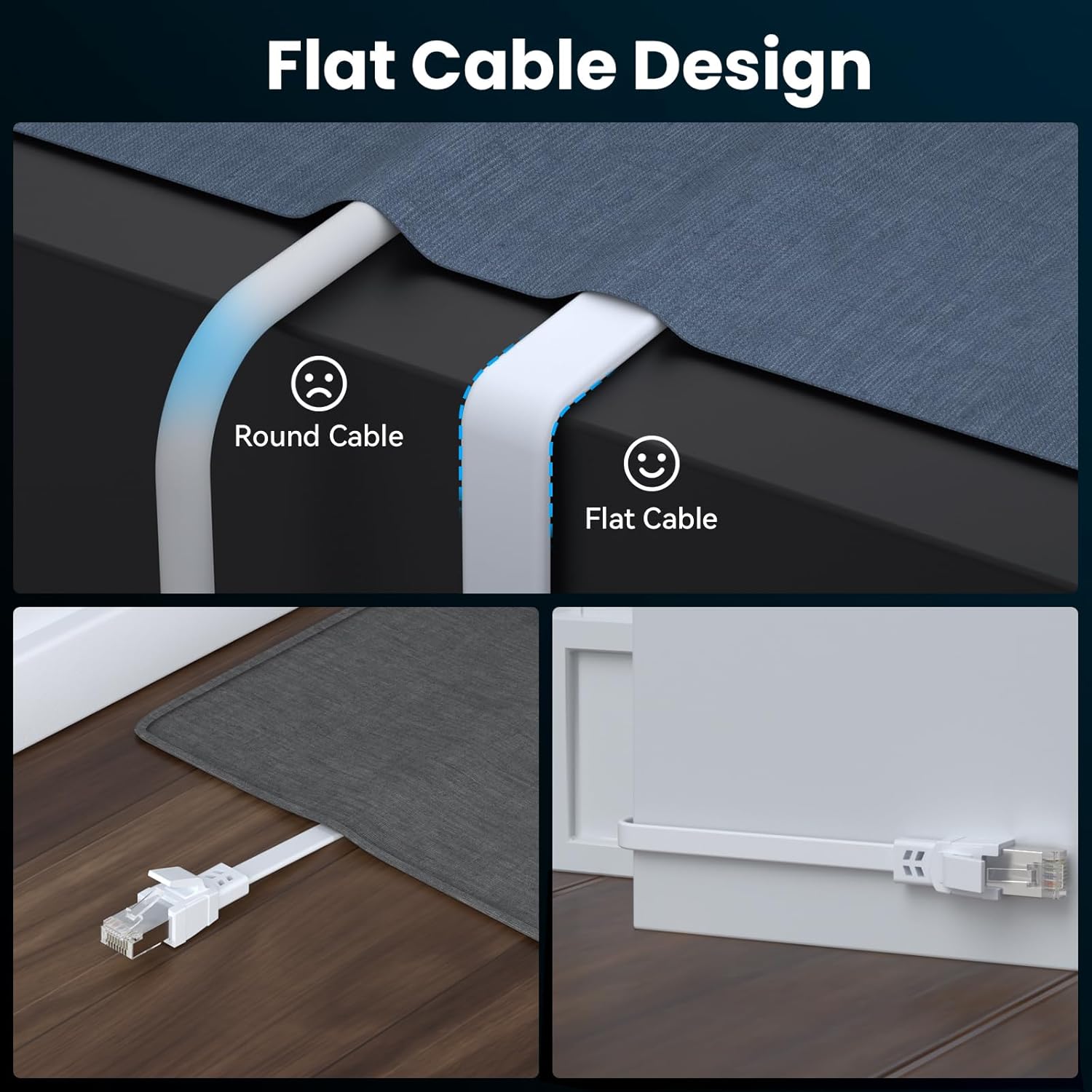
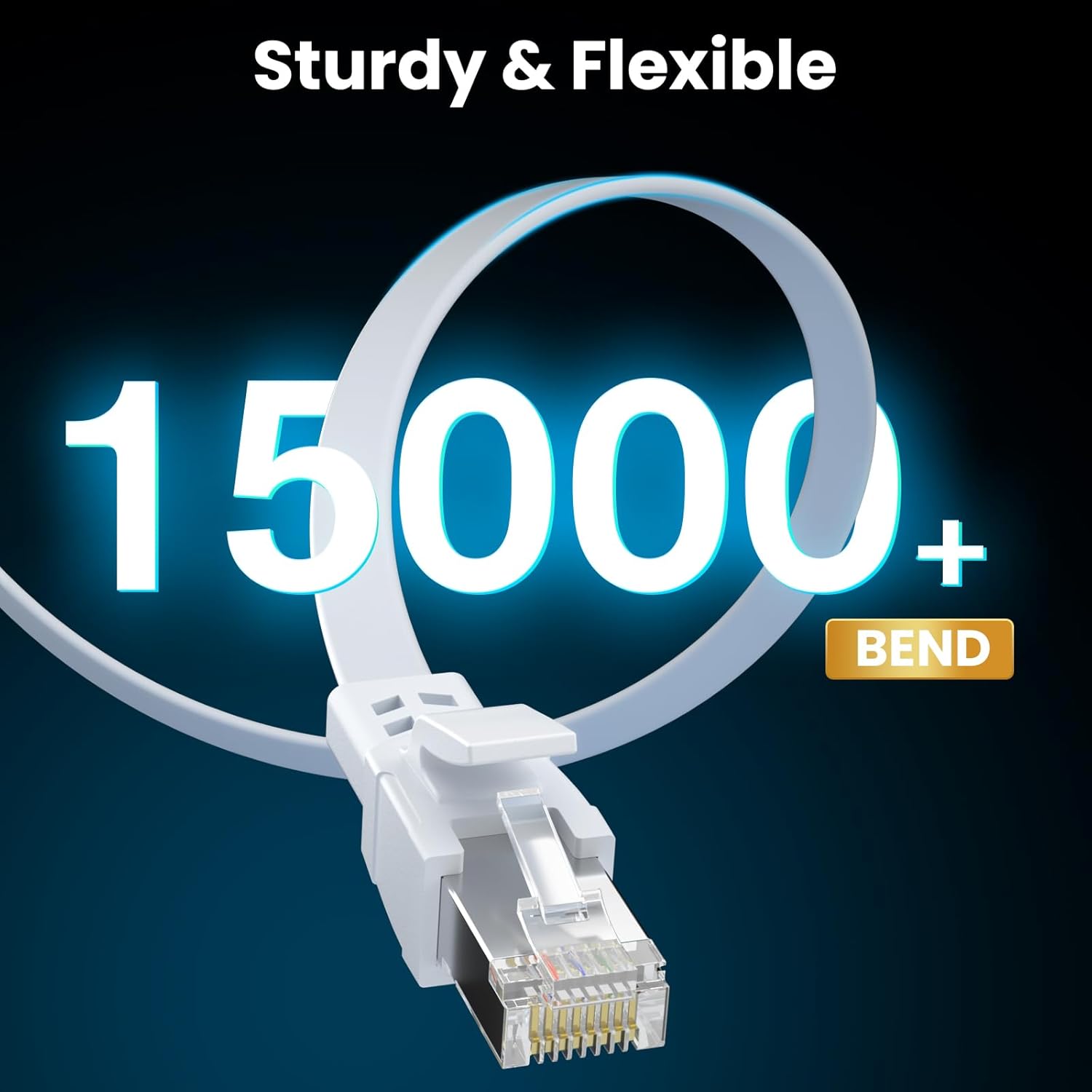
What it is and why you might consider it\nA Cat8 Ethernet patch cable, 10 metres long, designed to push high-speed network connections with up to 40Gbps and a bandwidth of 2000MHz. On the page you’ll find it pitched as suitable for server applications, cloud storage, gaming and HD video streaming. If your setup includes a capable router, modem, PC or laptop and you’re looking to minimise latency and data loss in demanding tasks, this kind of cable is meant to deliver a more robust link than older Cat5e/6 options.\n\n## How it’s built and what that means\nConstruction uses four shielded twisted pairs of solid bare copper with a PVC jacket designed to resist wear. The connectors are gold-plated RJ45, which can help with reliable contact and a marginal reduction in data loss at the interface. The combination of shielding, conductors and robust connectors is aimed at mitigating external interference and ensuring the connection remains stable in busy network environments. It’s also described as weatherproof and UV-resistant with an anti-corrosion edge, which broadens its appeal for homes that deploy cabling in longer runs or in light outdoor usage.\n\n## Design and practicality\nA flat design is highlighted here, which can make installation tidier—easy to tuck under carpets, along walls or behind furniture. The flexibility and claimed durability (bending tests noted) suggest it could cope with some routing challenges around desks or within wall cavities. However, in practice the longevity of any patch lead will depend on use conditions and how aggressively it’s rearranged.\n\n## What it can (and can’t) do\nOn paper, Cat8 supports higher speeds and bandwidth than Cat7, Cat6a or Cat6. If your devices and network plan can exploit that headroom, you may notice smoother performance with large file transfers, cloud backups or gaming traffic runs that demand low latency. But it’s important to recognise that real-world gains hinge on the rest of your network stack: your router, switch gear, and end devices need to match or exceed these capabilities. If your current hardware tops out well below 40Gbps, the incremental benefit could be less evident.\n\n## Who it’s for\nThis cable is likely to appeal to users who want to future-proof or improve performance where long runs meet higher-speed requirements. It can be a sensible choice for setups involving servers, NAS, or high-end workstations in demanding tasks. For casual browsing or typical streaming use with modest local networks, the advantage over solidly performing Cat6a may be marginal.\n\n## When it makes sense to buy\nIf you prioritise stability under load, reduced interference, and the potential for very high throughput on compatible hardware, this Cat8 option fits the bill. It could be a practical upgrade for a home lab, a small business network, or a gaming rig that already has the capable infrastructure to take advantage of 40Gbps links.\n\n## When to pause and reconsider\nIf your current network gear tops out at 10Gbps or less, or you rarely transfer large files across multiple devices simultaneously, the benefits may not justify the cost or the effort of rerouting cables. Also, if you’re installing in a tight or highly variable environment, the promised durability and weatherproof performance may not fully translate to everyday wear and tear.\n\n## What to check before buying\nConfirm that your router, modem and any switches support higher-speed Ethernet. Consider your typical network tasks—gaming, backups, media streaming—and whether you have devices that will actually utilise 40Gbps. Check that you have the right connector standard (RJ45) and that you are comfortable with a flat lead for your space.\n\n## Practical use case in brief\nImagine running a 10-metre, flat cable from a router to a workstation across a room, with the lead tucked along skirting or under a carpet to keep things tidy. In a setup where the network hardware can handle it, you’d expect a tidy, structured cabling solution that minimises clutter while retaining a high-capacity link for heavy data tasks.\n\n## FAQ snapshot\n- Q: Will this improve everyday Wi‑Fi performance? A: It supports wired connections and won’t directly boost wireless speed, but it can stabilise wired links that feed your devices.\n- Q: Is it suitable for outdoor use? A: It’s described as weatherproof and UV-resistant, but verify if outdoor-rated installation is required for your environment.\n- Q: Do I need to replace other hardware to see benefits? A: Yes, the greatest gains come when router, switch and NICs can handle the higher speeds.\n\n## Is it worth it?\nShould you buy it? It depends on your network needs and hardware. If you’re chasing the most reliable, high-capacity wired link and you already operate with compatible gear, this Cat8 lead offers a coherent upgrade path. If your use is mainstream or your gear maxes out well below 40Gbps, you may prefer a mid-range Cat6a/7 option that aligns better with your actual throughput and budget.