

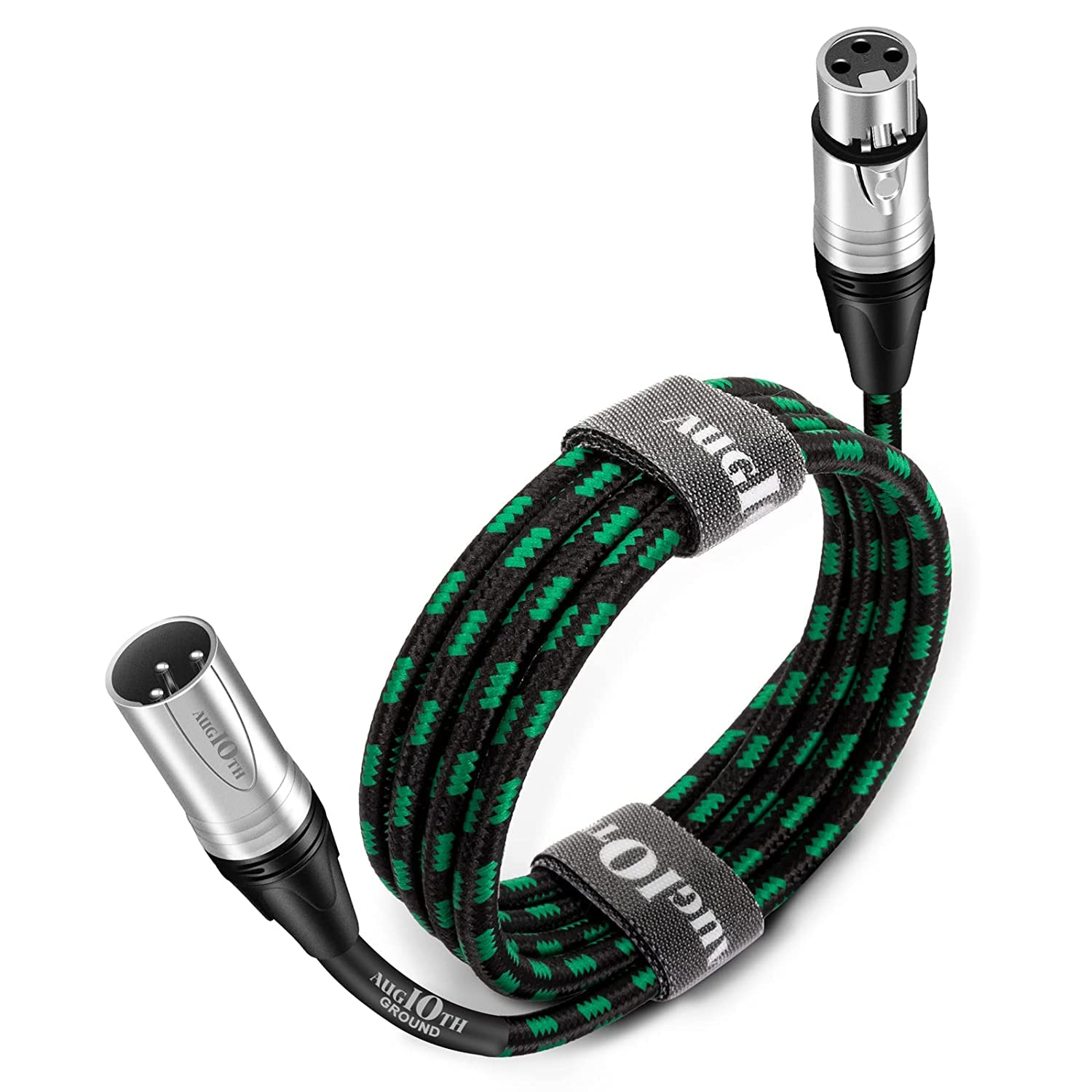
Augioth XLR to XLR Pro Mic Cable (3-pin, male to female) – 6 metre green balanced shielded cable
Product description
If you run microphones into mixers, amplifiers or recording interfaces, a decent XLR cable is one of those boring essentials that quietly affects how “clean” everything sounds. This Augioth XLR to XLR Pro Mic Cable is designed as a balanced 3‑pin male-to-female lead with shielding and a flexible braided jacket, so it’s aimed at day-to-day use in rehearsal rooms, studios and live setups.
That said, it’s worth setting expectations: the spec focuses on interference rejection and build for routine handling, but the information provided doesn’t spell out more advanced audio performance details. So it’s a practical choice on paper, especially if you want a 6 metre length and a cable you can spot easily among black leads.
The essentials
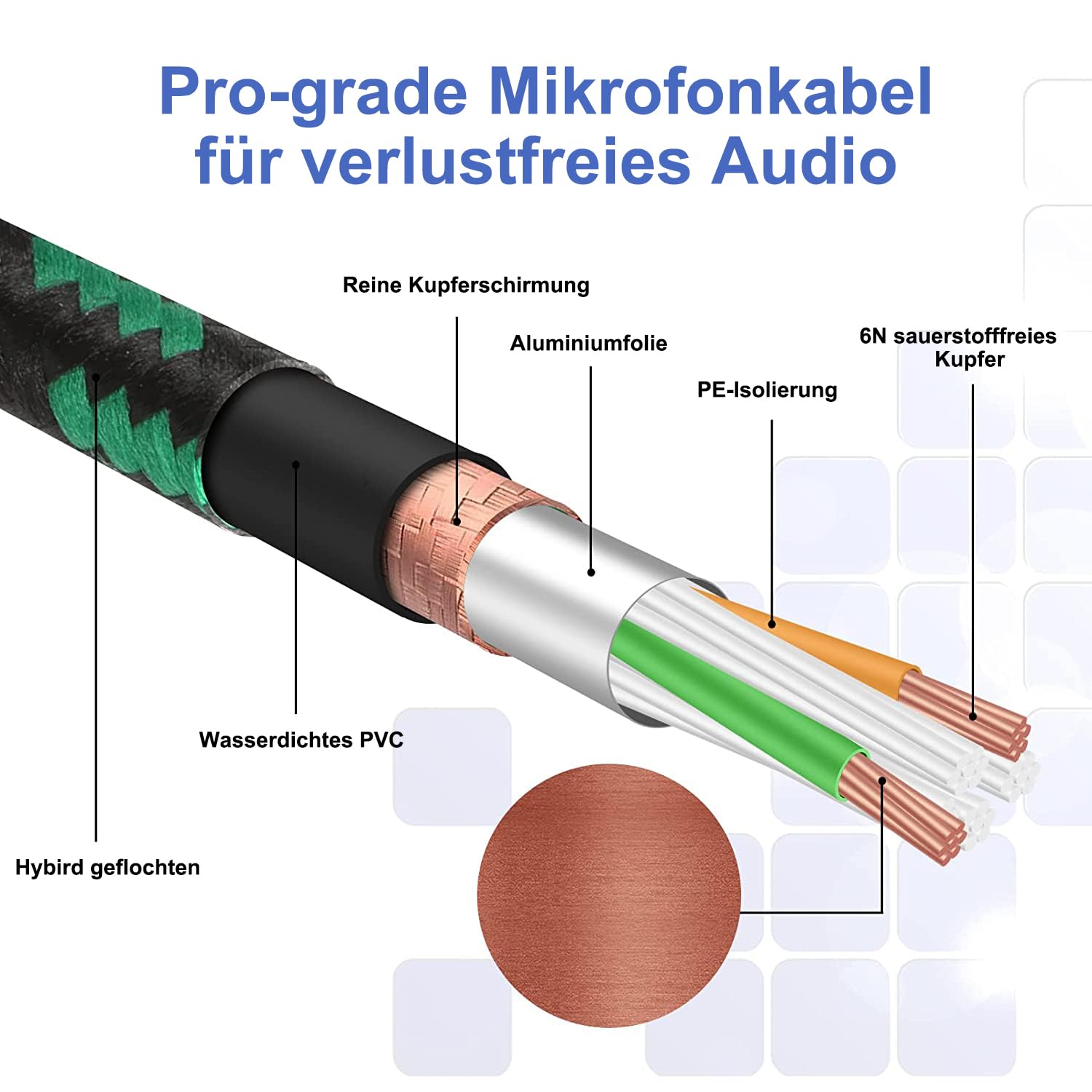
This is a balanced microphone cable with 3‑pin XLR connectors, wired as male to female for connecting a mic or device to the next piece of kit in your chain. The lead is described as using oxygen-free copper conductors (24AWG) and a double-shielding approach (aluminium foil shielding mentioned) to reduce shaking noise, trampling noise and electrostatic interference. In everyday terms, that’s the sort of design you’d look for if your setup involves cable crossings, foot traffic, or less-than-ideal lighting and power environments.
What stands out in use
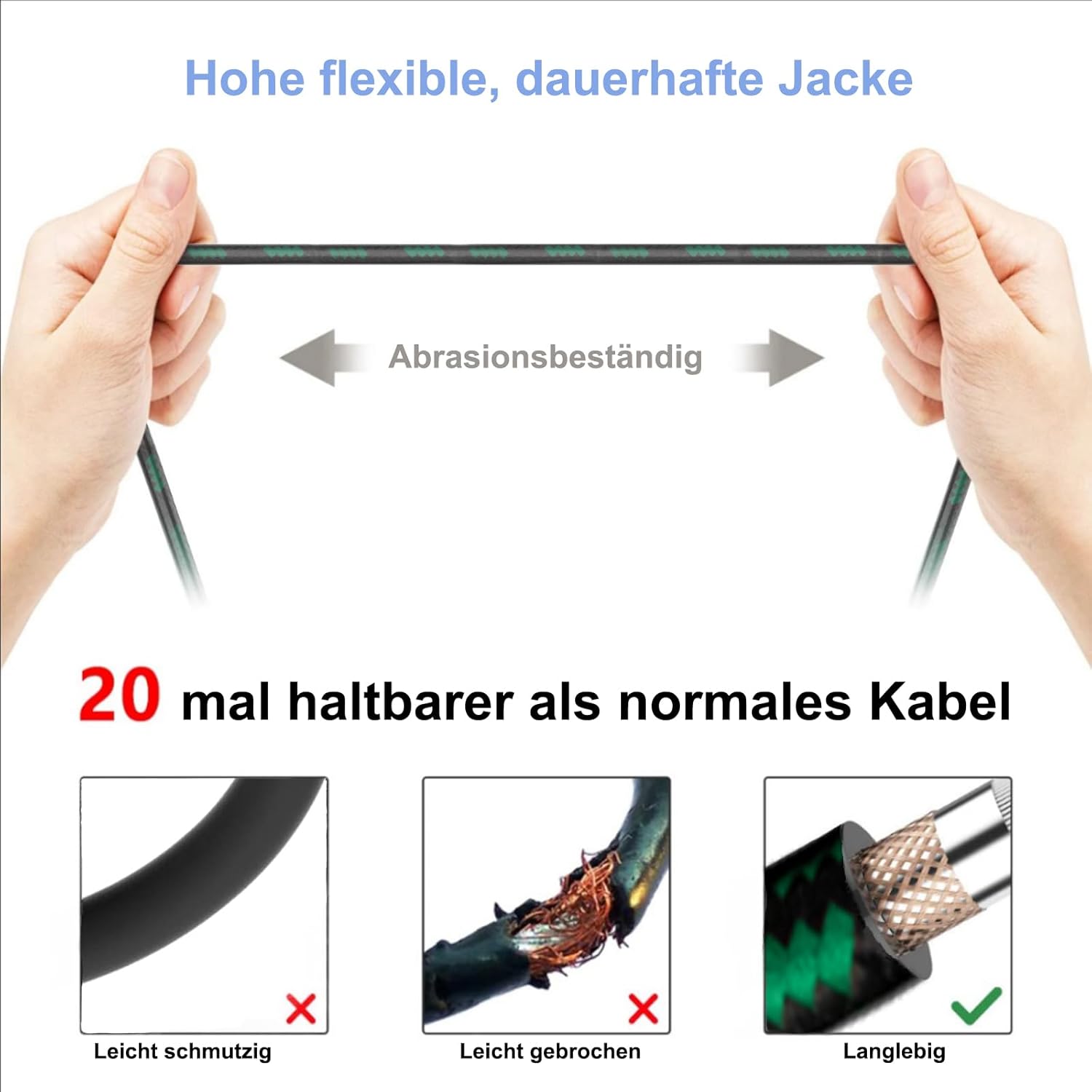
The most “hands-on” part of this cable’s design is how it behaves physically. It’s wrapped in green nylon braid, positioned as both flexible and soft, and the bright colour is clearly intended to make it easier to identify quickly when you’re juggling multiple leads.
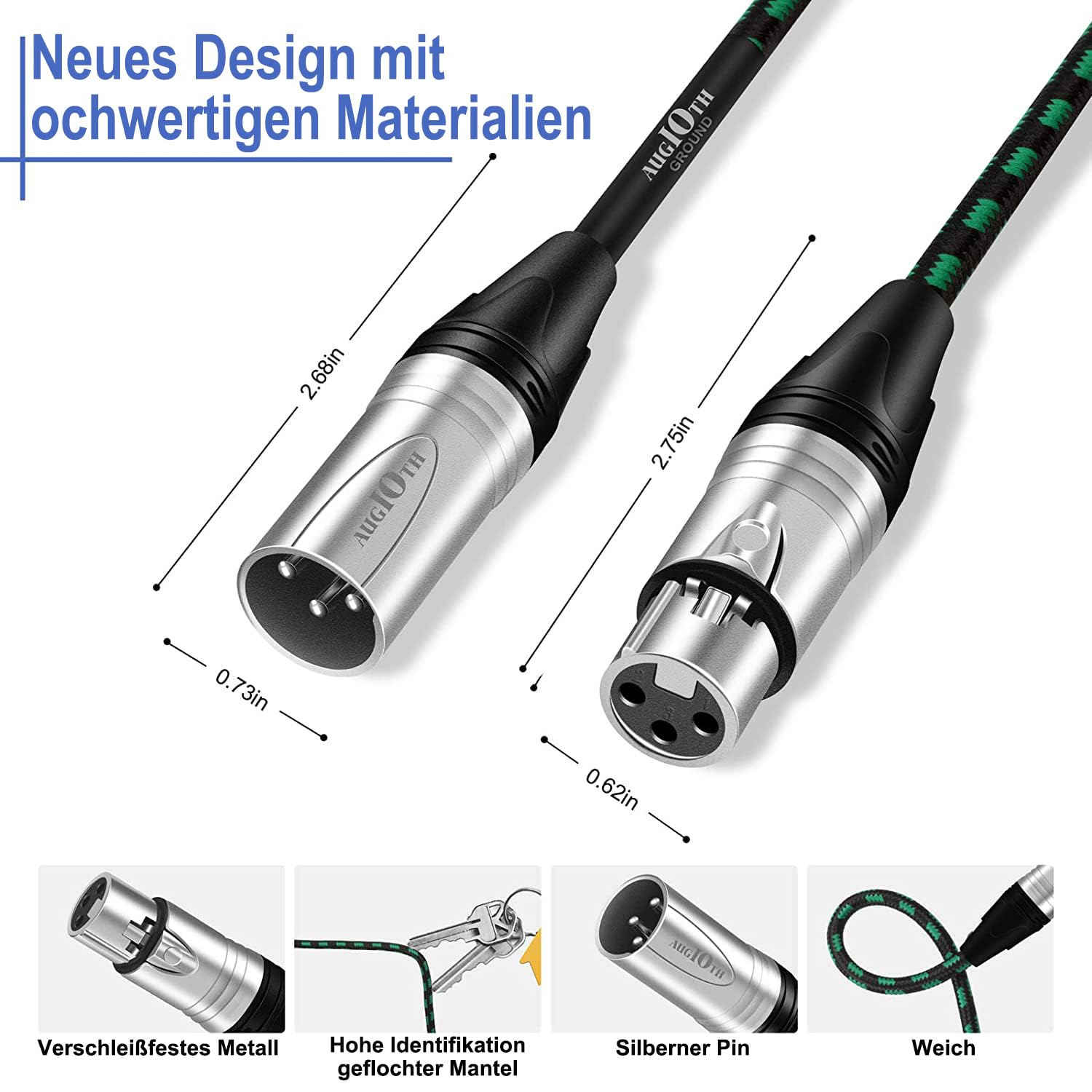
It also comes with heavy-duty metal connectors (male and female) with a moulded stress relief and a frosted texture. For buyers, that usually translates to fewer worries about the plug end if you regularly plug and unplug during rehearsals, gigs or sessions.
A simple micro-scenario: imagine you’ve got a live rehearsal—set up in a rush, then run back and forth between the stage and the amp/mixer. A flexible braided cable that’s easy to recognise can save you from grabbing the wrong lead, while the reinforced connector design helps the plug area cope with repeated handling.
Key points on shielding and signal
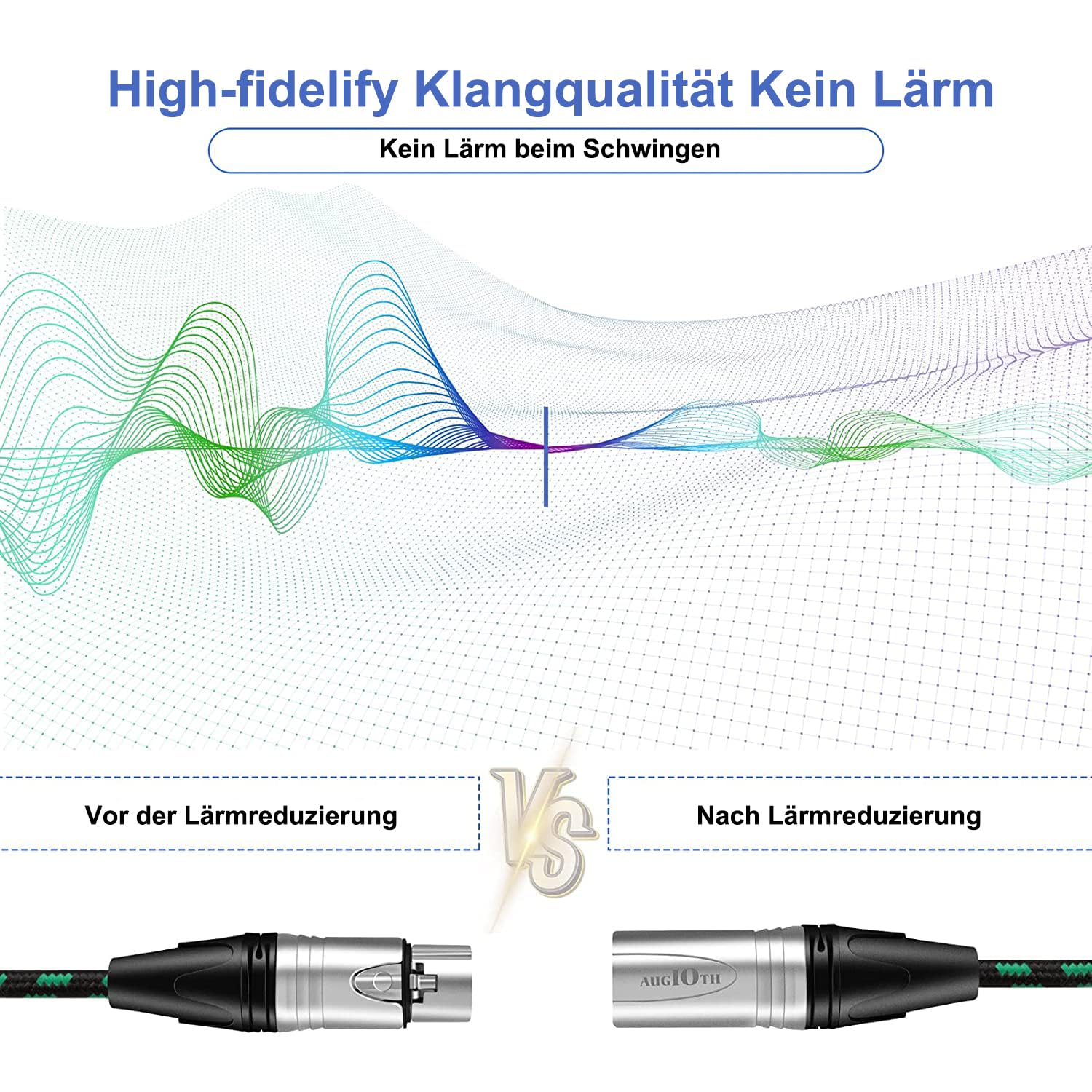
The double shielding and anti-interference focus is the headline here: it’s meant to block electrostatic sound interference and help keep the transmission “high-definition”, according to the description.
However, it’s still sensible to remember that cable shielding can only do so much. If your environment has major grounding issues or the rest of your signal chain is noisy, the cable won’t magically fix everything. Where this cable makes the most sense is when you want a balanced XLR lead built to resist common interference in real-world setups.
Compatibility and where it fits
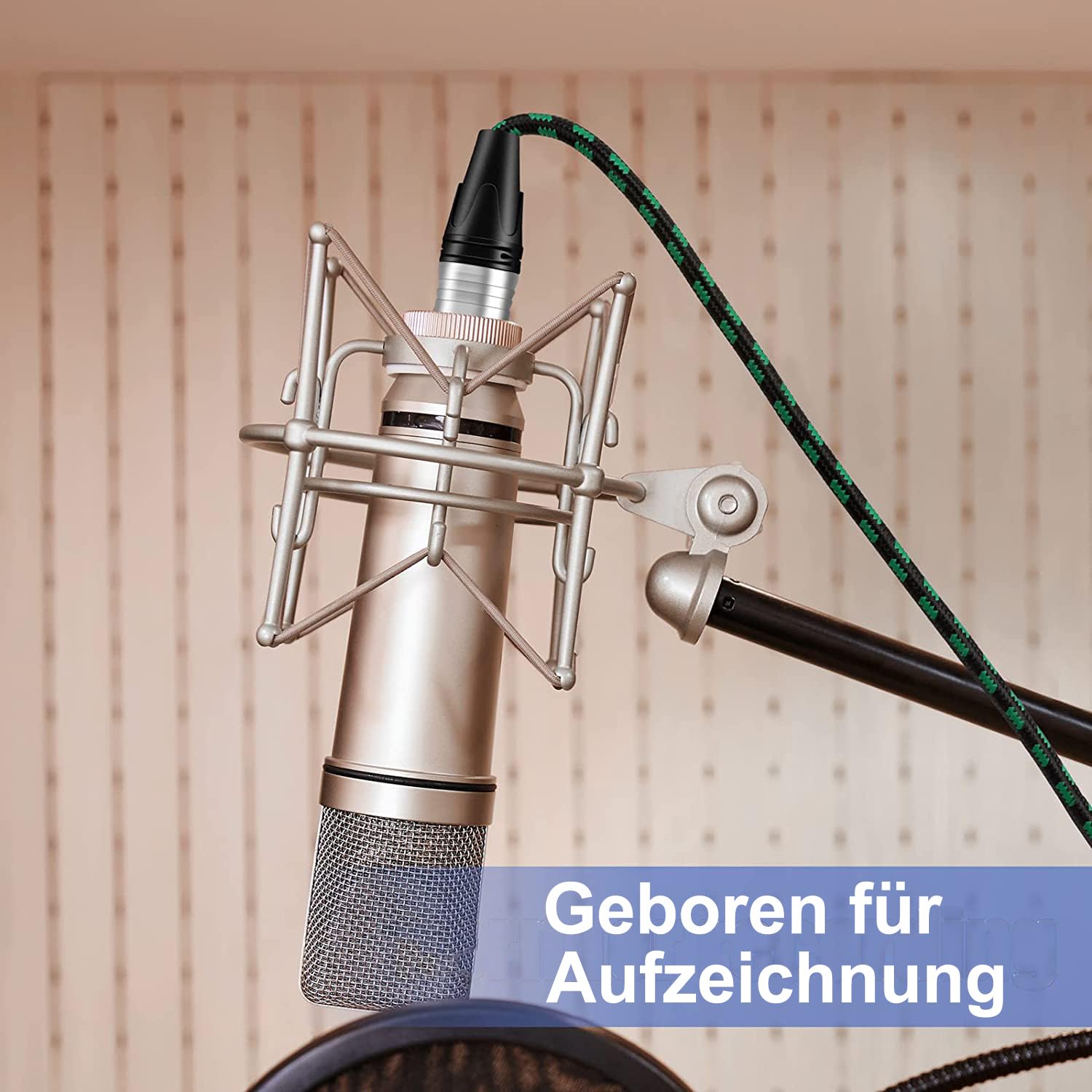
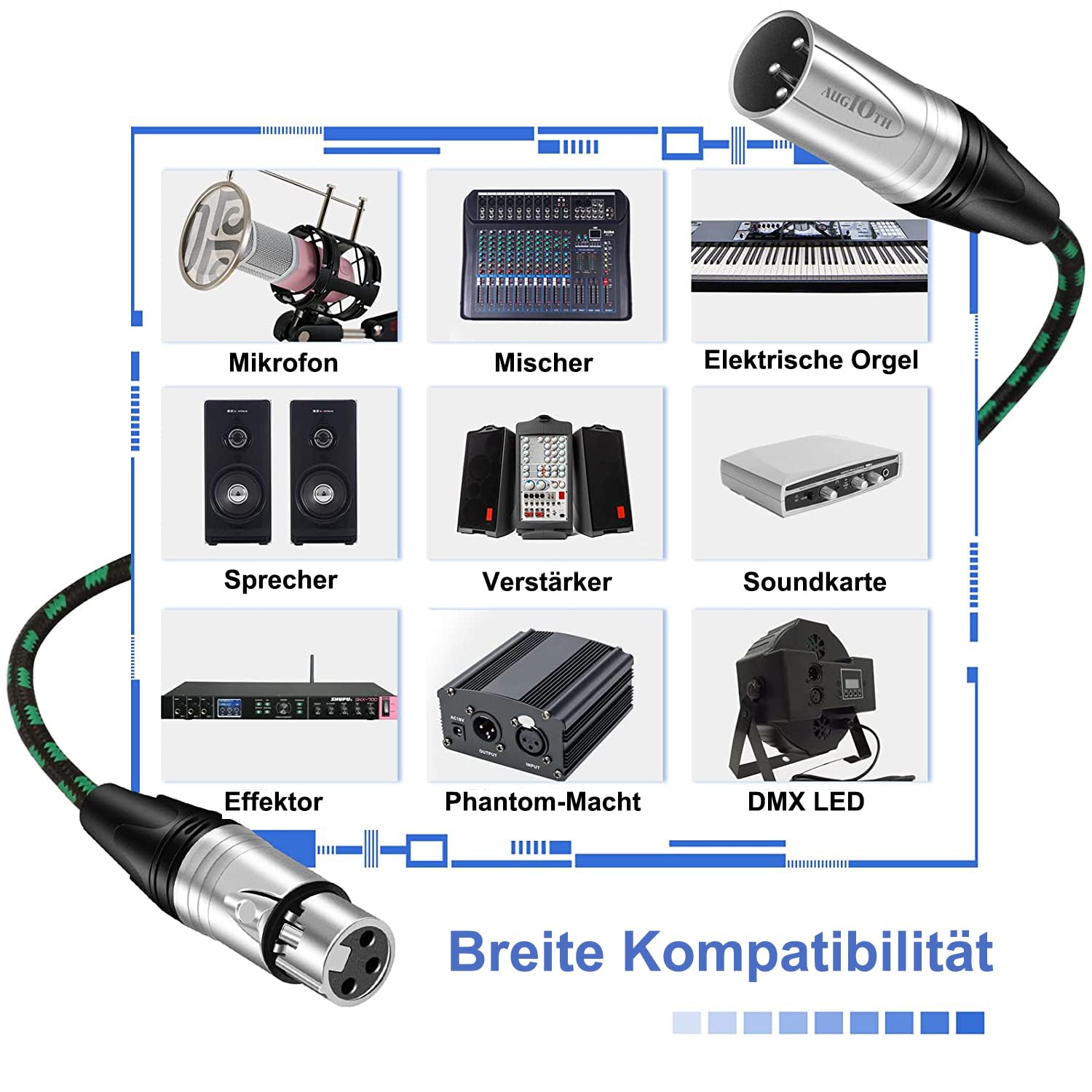
The manufacturer text frames it as widely compatible with 3‑pin XLR equipment. That includes microphones, amplifiers, mixers, power amplifiers, recording studio gear, patch bays and even stage lighting contexts mentioned in the description.
In practice, it’s a good fit if your main need is a balanced 3‑pin XLR connection with a sensible, live-friendly length (this one is 6 metre). It’s also potentially useful if you prefer colour-coded cabling for faster setup and easier troubleshooting.
Tech specs
- Type: Balanced XLR microphone cable, 3‑pin
- Format: Male to female
- Conductor: Oxygen-free copper (24AWG)
- Shielding: Aluminium foil shielding with double shielding approach (as described)
- Length: 6 metre
- Connector build: Heavy alloy metal connectors with moulded stress relief and frosted texture
- Outer jacket: Green nylon braided jacket
Pros and limits to consider
On the plus side, the design choices are coherent: double shielding for interference rejection, oxygen-free copper conductors for the signal path (as claimed), and a braided jacket plus reinforced metal connectors for handling.
The main limitation is that the provided details don’t include independent performance measurements (for example, quantified noise rejection), so you’re ultimately buying based on construction and intent rather than hard lab figures. It’s not the type of purchase you make if you’re specifically chasing ultra-high-end specs, on paper, it looks more like a solid functional cable for stages, clubs, KTV-style setups and home recording than a specialist flagship.
Should you buy it?
It’s a strong pick if you need a 6 metre balanced 3‑pin XLR male-to-female microphone cable, and you want shielding-focused construction plus flexible braided handling, without having to rely on a sea of identical black leads.
It may not be the best match if you’re expecting detailed, measurable performance claims beyond the general anti-interference and shielding description, or if you’re building a system that depends on very specific connector standards not covered in the information you’ve got.
Worth considering: before buying, double-check that your device inputs are 3‑pin XLR and that you actually need a male-to-female lead (not the opposite gender). Also think about routing—if the cable will sit underfoot or get trampled, shielding and stress relief are exactly the sort of “boring” protections you’ll appreciate.
Mini FAQ
How long is this XLR cable?
The cable length is 6 metre.
Is it suitable for a microphone setup?
Yes, it’s described as a 3‑pin balanced microphone cable with male-to-female XLR connectors, intended for use with microphones and related audio equipment.
What does the double shielding aim to do?
The description says it helps eliminate shaking noise, trampling noise and electrostatic sound interference, improving noise resistance.
Why is the cable green?
The green nylon braid is intended to make the cable easier to spot among black cables, and it’s described as more flexible and soft.
Final verdict
A practical, shielding-focused XLR microphone cable that prioritises interference resistance, flexible braiding and tough connector handling. If your main goal is a reliable 6 metre balanced 3‑pin male-to-female lead for mixing, amplification or recording, it’s the kind of choice that usually makes sense—just be sure your gear uses 3‑pin XLR and that the gender/length match your layout.