

Anycubic ABS Like Resin 3.0 (Grey) – 2kg, 405nm UV Fast-Curing Photopolymer
Product description
What it is
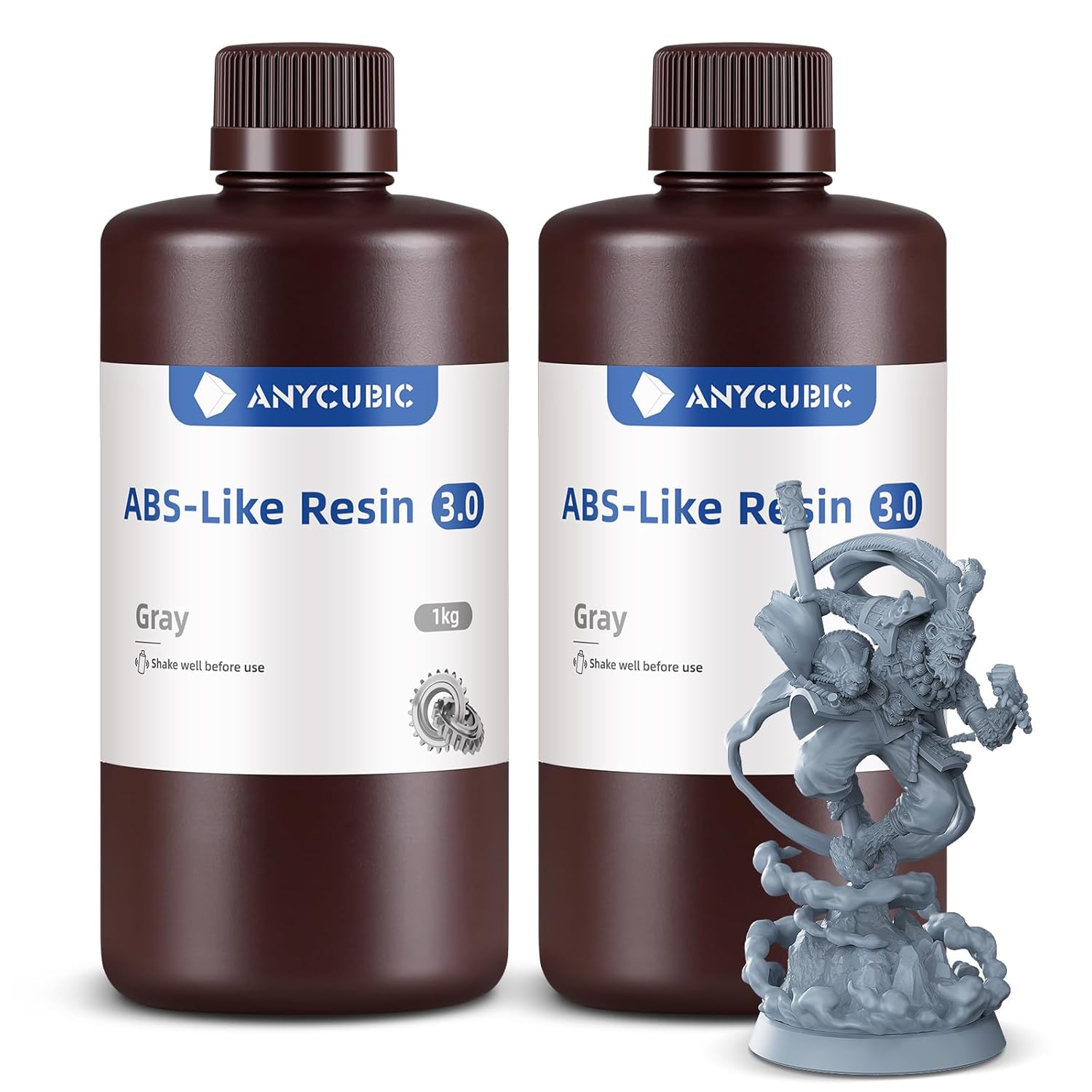
Anycubic ABS Like Resin 3.0 is a grey, 405nm UV-curing photopolymer designed for LCD/DLP 3D printers. Marketed for high strength and durability, it aims to provide ABS-like performance with better resistance to cracking and deformation.
What it solves
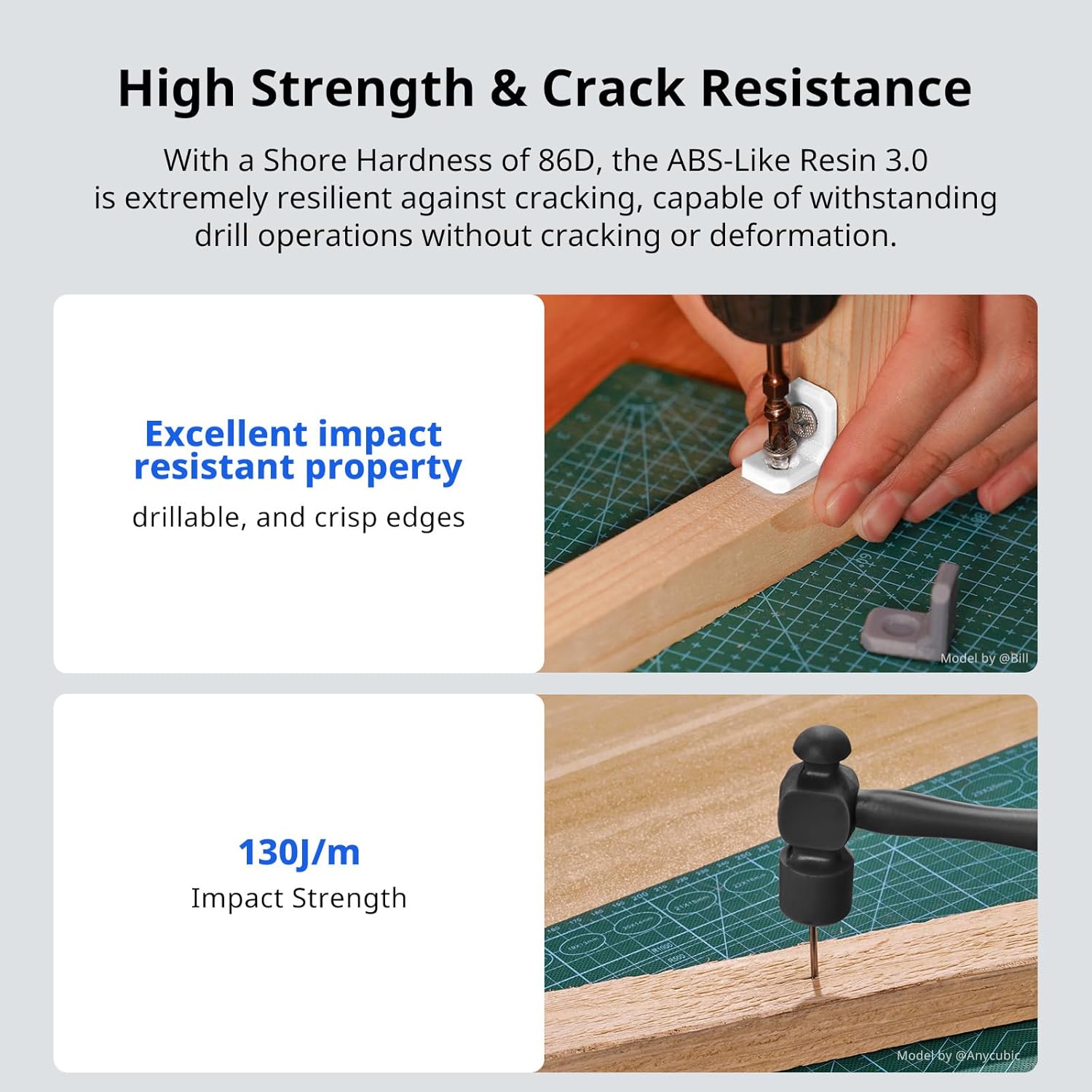
If you need durable, useable parts and prototypes that can withstand drilling, bending and general wear, this resin targets that use-case. It promises crisp edges, good edge retention and a practical balance between rigidity and some flex, which can help reduce brittle failures in functional components.
Key features at a glance
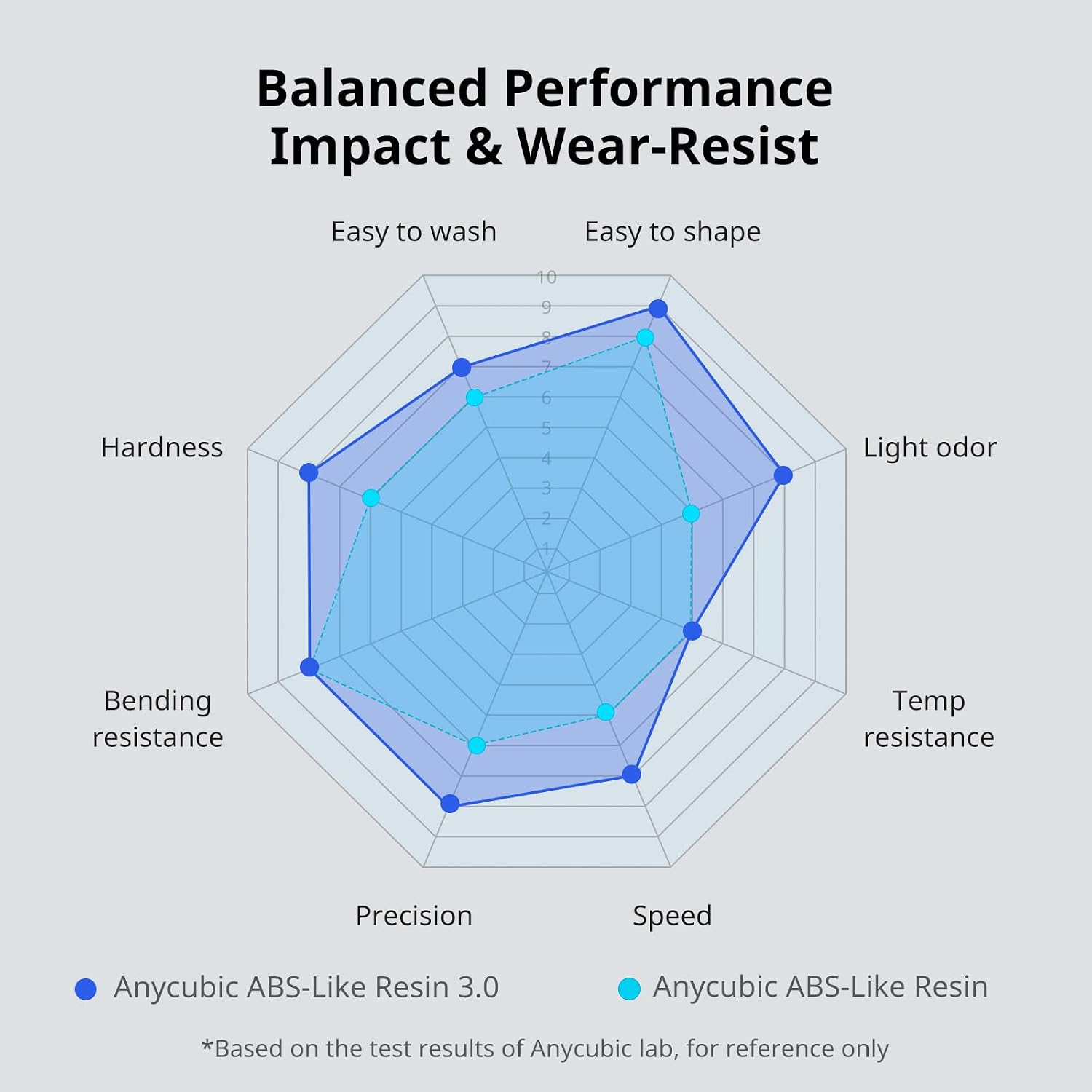
- High strength with a Shore hardness around 86D, resisting cracking under stress.
- Notable elongation at break (about 30%), offering more bending resilience than typical ABS-like resins.
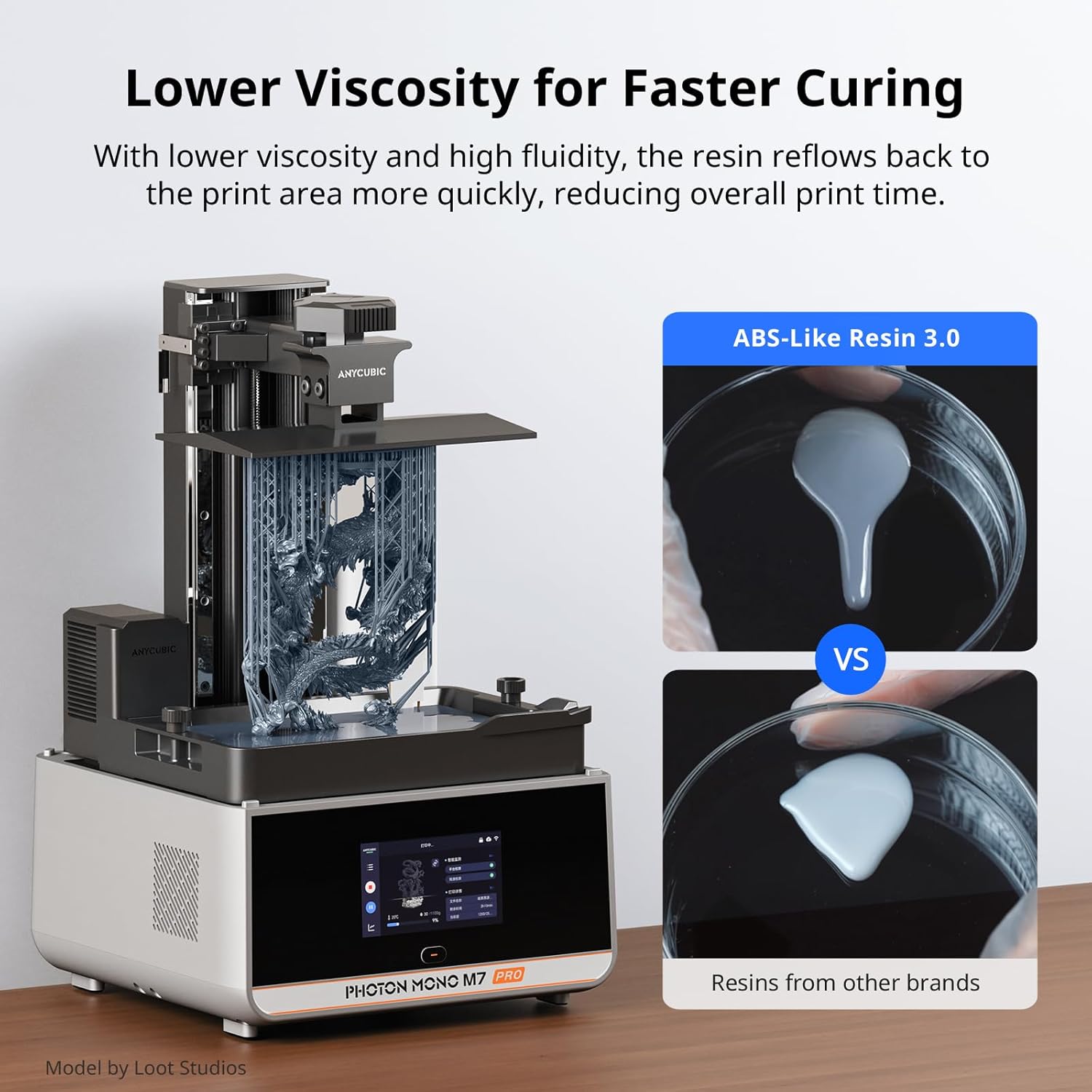
- Fast curing and lower viscosity to improve print flow and reduce overall print time.
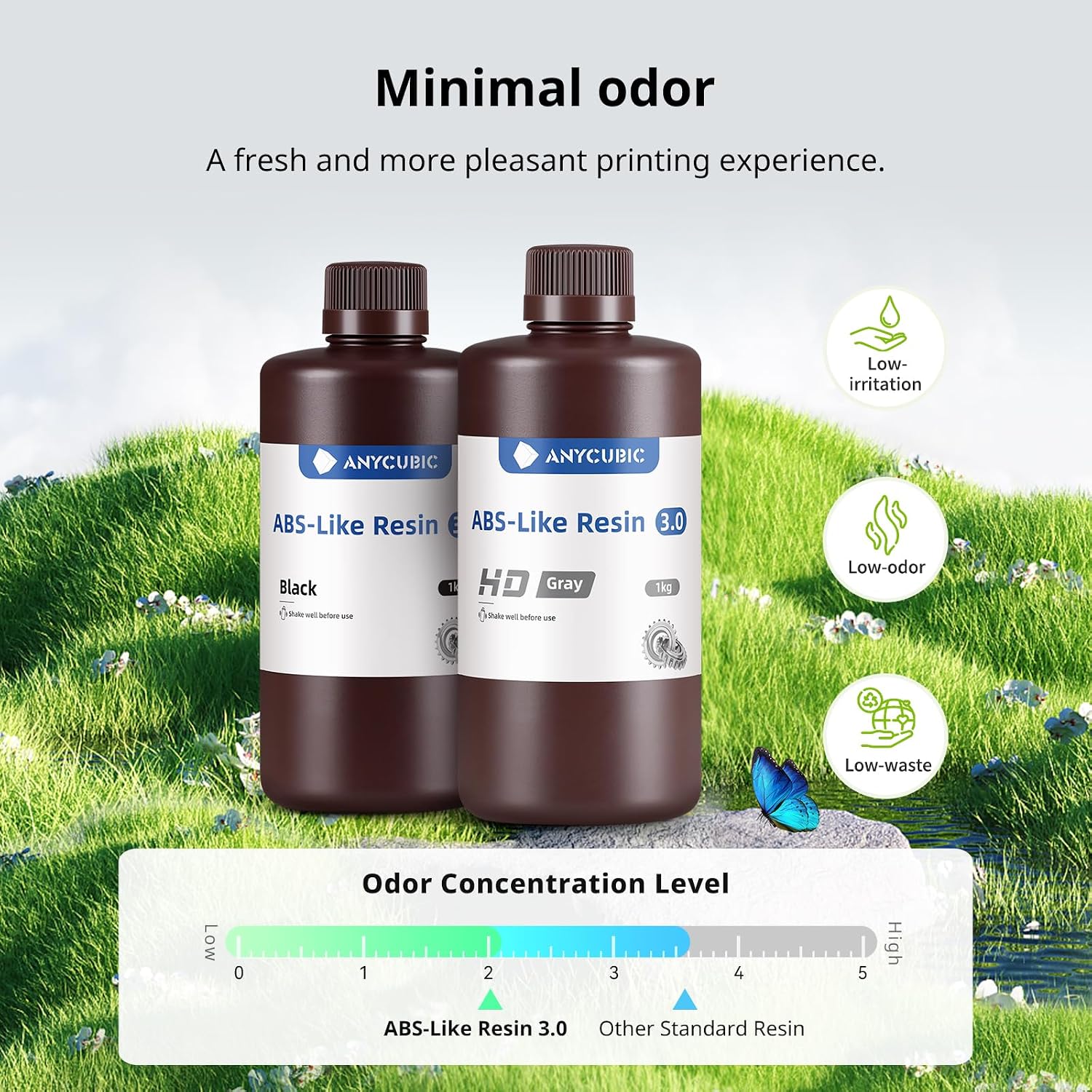
- Low odour during printing and post-processing, with easier handling.
- Broad compatibility with 405nm LCD/DLP printers, particularly Anycubic resin printers.
Who it’s for
This resin is suited to engineers, makers and hobbyists who need tough, durable prints for engineering parts, tools, fixtures or other high-wear applications where edge crispness and dimensional accuracy matter.
How it performs in use
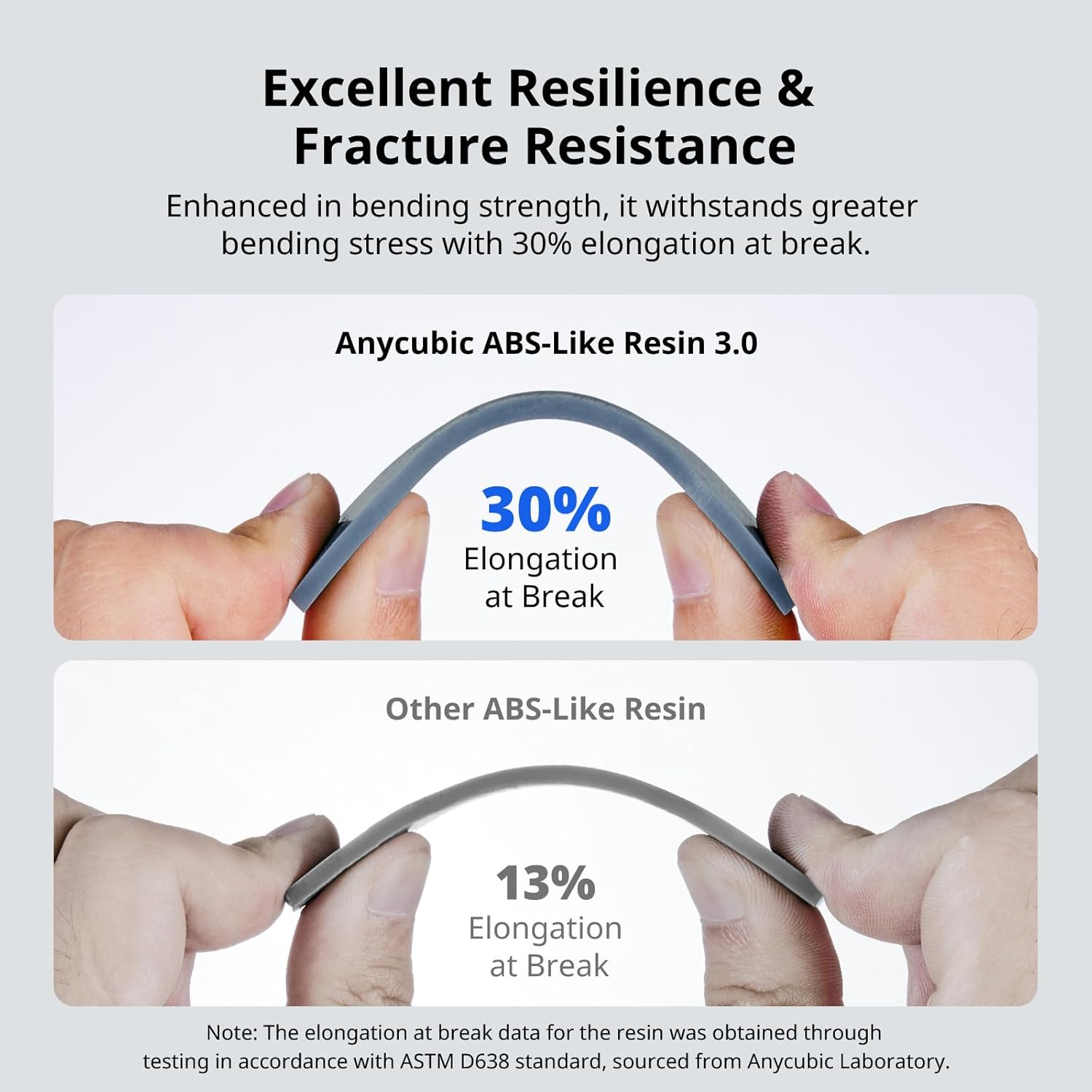
On the paper spec, you get a good mix of rigidity and some give, which helps parts survive bending stress without snapping. The lower viscosity aids resin flow, which can translate to fewer print defects and smoother layer transitions. It may not be the best choice if you prioritise ultra-tight tolerances at micro-scale, where other resins could offer marginal gains in surface finish.
Pros
- Strong, crack-resistant prints with practical impact resistance.
- Good elongation for parts subject to bending.
- Faster cure times and smooth flow compared to slower formulations.
- Relatively low odour for a resin-based workflow.
- Broad 405nm printer compatibility, especially with Anycubic ecosystems.
Cons and limitations
- The description focuses on durability, if ultra-fine surface finish or extreme heat resistance are priorities, you may want to compare with specialised resins.
- Real-world results depend on printer calibration, exposure settings and post-processing, so you may need some testing to dial in youroptimal workflow.
Practical use cases

Think of durable jigs, fixtures, bracket prototypes and small tooling parts that need to withstand handling and minor mechanical stress. It’s not a cosmetic resin, but a workhorse resin for functional parts with decent life-span expectations.
What to check before buying
- Confirm your printer’s compatibility with 405nm resins and verify exposure settings for best results.
- Prepare for post-processing steps that suit tougher prints, ensure ventilation and safe handling even if odour is reduced.
- If you’re aiming for extremely tight tolerances or a highly glossy finish, consider testing alternative resins or adjusted curing parameters.
How it compares to alternative approaches
For users weighing durability versus surface finish, this resin sits between basic standard resins and higher-end engineering formulations. If your priority is raw strength and resilience with reasonable print speed, it’s a sensible middle-ground choice. If you prioritise maximum detail or heat resistance, you might explore other resin families with those focuses.
Final decision
Is it worth it?
Worth considering if your projects demand durable, impact-resistant prints with decent bend tolerance and a straightforward workflow. It’s a solid option for engineering parts and tools where reliability in everyday use matters.
Quick FAQ
- Do I need special post-processing for ABS Like Resin 3.0? Post-processing generally involves washing and curing as per standard resin guidelines, the formulation aims for smoother handling, but follow your printer’s and resin’s recommended steps.
- Will it print fine on any 405nm printer? It’s designed for all 405nm LCD/DLP printers, with best synergy on Anycubic resin ecosystems, but results depend on calibration.
- Is the odour completely gone? Not completely odourless, but described as low odour and less irritating than some alternatives, which may improve the printing environment.