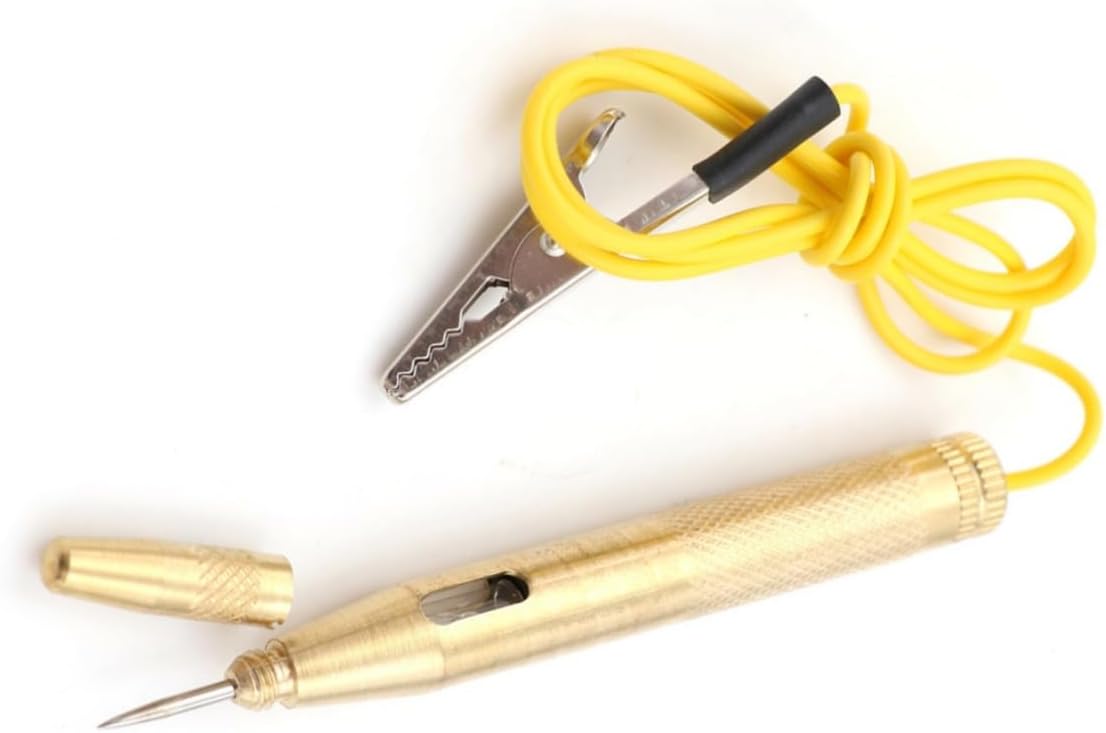
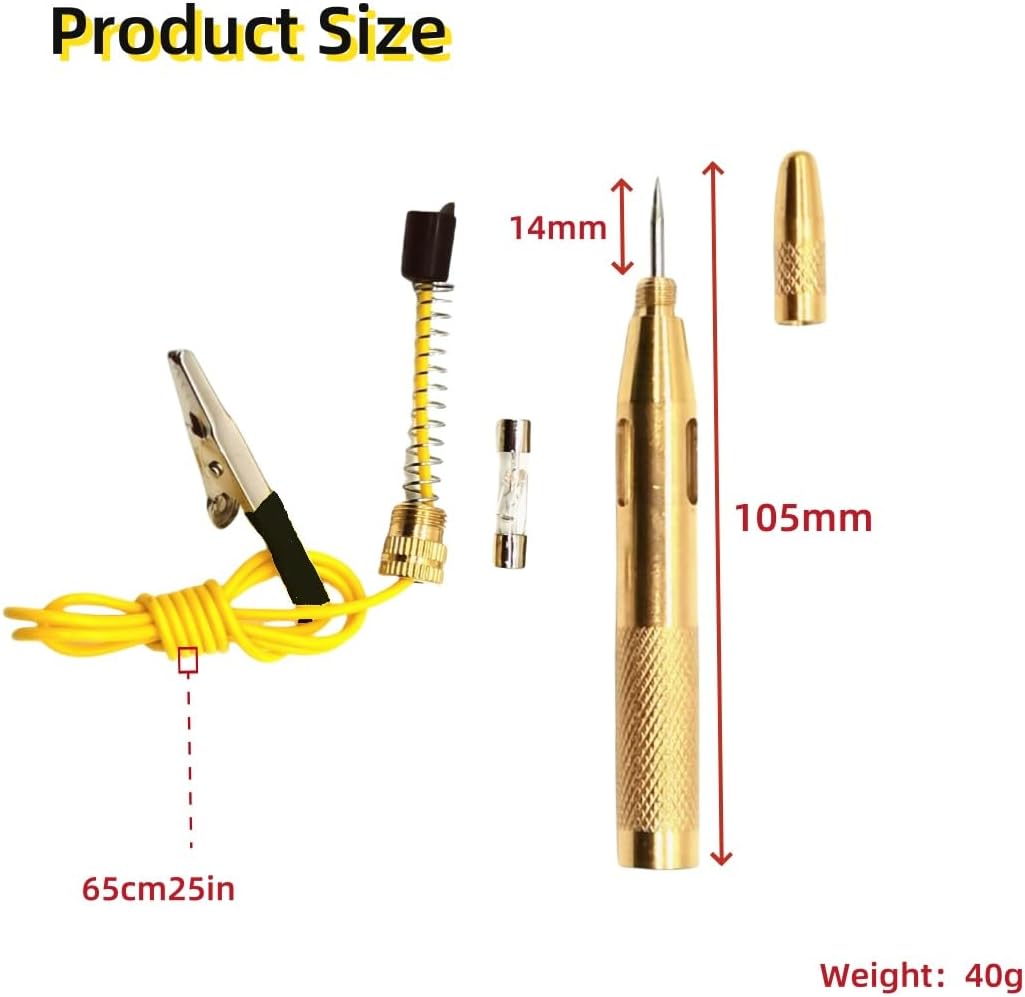
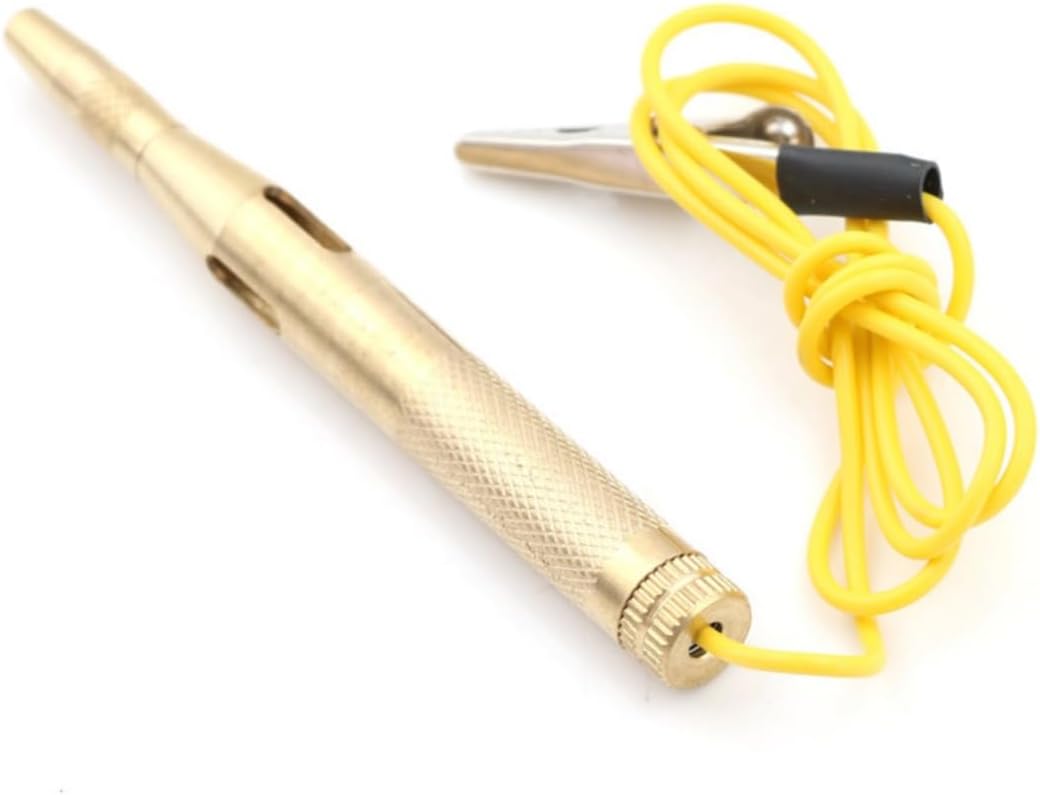
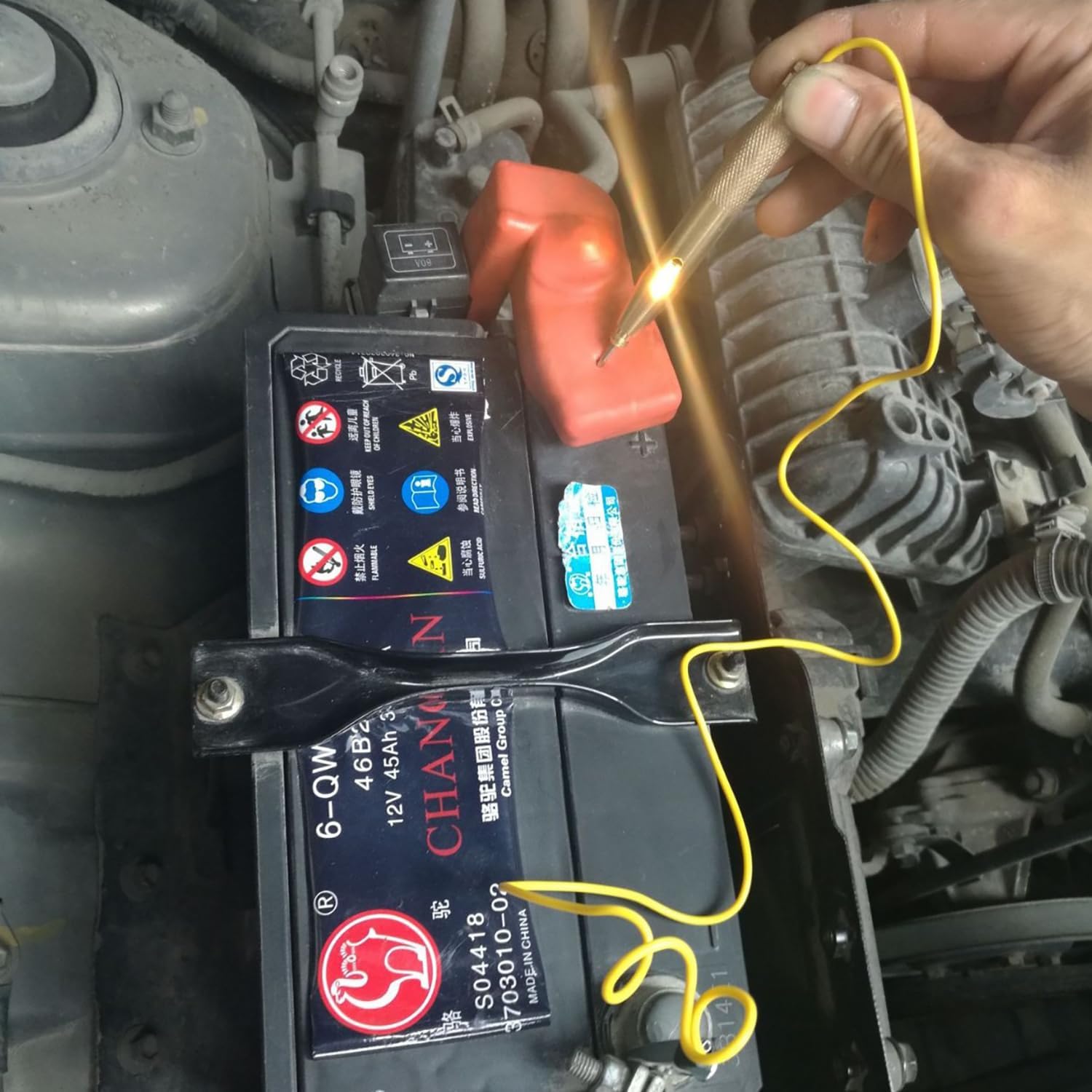
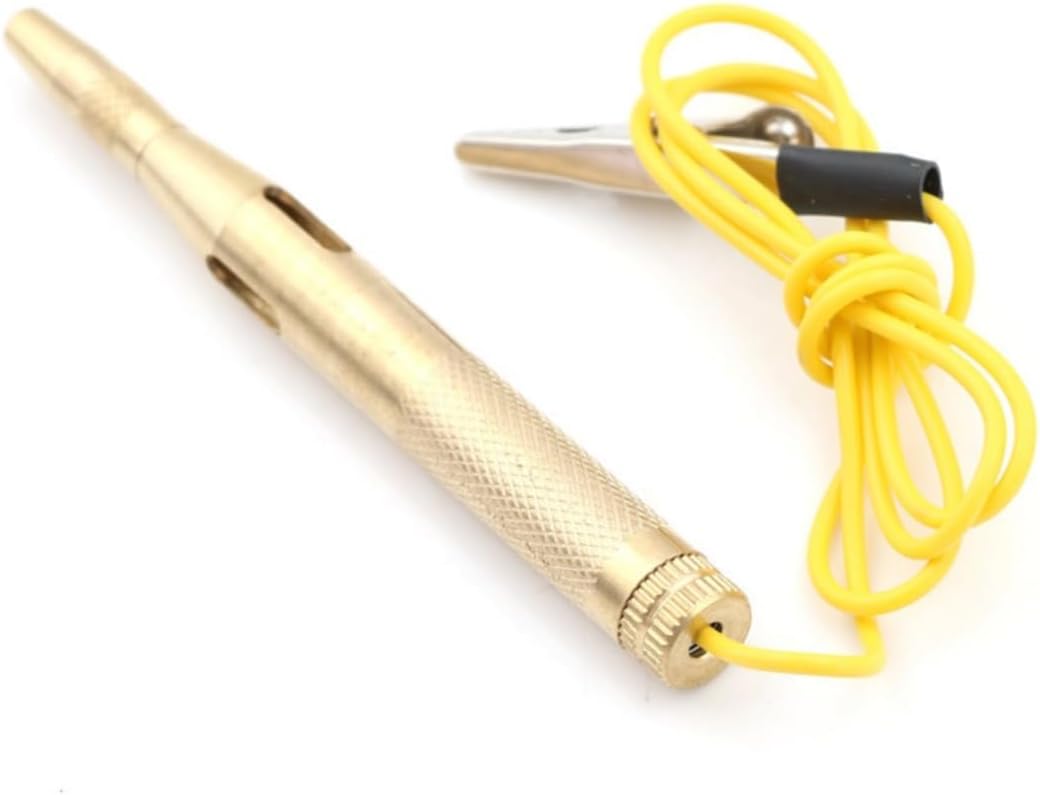
What it is and what problem it solves\nThe Angelkiss Car Circuit Tester is a handheld voltage test pen designed for quick, on-the-spot electrical checks in vehicles and related machinery. It targets everyday automotive maintenance tasks, especially those involving 6 to 12 volts DC circuits. If you’ve ever needed to verify power or pinpoint a circuit fault without pulling out bulky equipment, this compact tester offers a simple, practical option that fits in a tool bag or glovebox.\n\n## How it works (on the surface)\nThe tester relies on a sharp probe and a copper-handled body. The probe is described as tempered carbon steel with chromium plating, which helps it maintain a sharp edge to pierce insulation when necessary. The handle is copper, which provides a sturdy contact point for the user. When you connect the circuit, the indicator light on the handle lights up, offering a quick visual cue that the circuit is live or that a fault may be present in a low-voltage system. This makes it convenient for on-demand checks rather than setting up a test bench.\n\n## What stands out on paper\nOn the surface, the device is straightforward: it tests 6–12 V DC, uses a robust, metal probe, and provides a light indicator for quick fault detection. The emphasis on a compact form factor and simple operation can help reduce the time spent diagnosing common electrical issues in cars, motorcycles, and other transportation machinery. If you prioritise a low-complexity tool for basic circuit verification, it’s worth considering.\n\n## Important limitations to keep in mind\nThe description focuses on a basic voltage test light for 6–12 V DC circuits. It doesn’t outline additional features such as measuring current, resistance, or data logging, nor does it specify IP ratings or test range beyond the DC voltage window. Depending on your needs, this may be a supplementary tool rather than a full diagnostic instrument. The practical accuracy and durability in harsh environments (rain, dust, vibration) aren’t detailed here, so you may want to assess whether a more comprehensive tester is required for heavy-use workshops.\n\n## Who this is for\nThis tester is suited to hobbyists and professionals performing routine maintenance on vehicles, motorcycles, excavators, and other transport machinery where a quick low-voltage check is useful. It’s particularly handy for confirming live circuits during repair work or wiring inspections where a fast, visual indication is preferred over more elaborate instrumentation.\n\n## Who it isn’t ideal for\nIf you need precise measurements, multi-range testing, or diagnostics across a wider voltage spectrum, this device may fall short. It’s not described as a primary tool for high-voltage systems, nor as a replacement for more robust automotive multimeters. And if you require waterproofing or ruggedised construction for rough field work, the information available here doesn’t confirm such capabilities.\n\n## When it makes sense to buy\nConsider this tester when you want a compact, affordable tool to perform rapid checks on DC circuits within the 6–12 V range. It can save time in routine maintenance tasks and help verify basic circuit continuity and live status before proceeding with more invasive diagnostics. It’s a practical add-on for a general repair kit or a starter set for someone building up a basic automotive toolkit.\n\n## What to review before buying\nAssess whether the product’s stated voltage range matches your typical use cases. Consider how often you’ll rely on a single-purpose tester versus a more versatile instrument. If you expect frequent exposure to harsh conditions, check for additional protection features in the full product specs.\n\n## Practical usage example\nIn a typical garage scenario, you might use the tester to confirm that a headlight circuit receives power when the switch is on. You can also check a suspect wire’s insulation by carefully probing the conductor edge to verify continuity, then rely on the indicator light for a quick read. Practically, it’s a quick check that can prevent unnecessary disassembly of wiring harnesses.\n\n## Quick comparison in practice\nIf you need something more than a simple pass/fail indicator, you’d likely look toward a more feature-rich automotive multimeter or dedicated circuit tester. This Angelkiss model seems to fit the “basic, portable, and affordable” niche, which is ideal for light-use scenarios or as a supplementary tool in a well-equipped workshop.\n\n## FAQ (where data allows)\n- What voltages does it test? 6–12 V DC.\n- What is the material of the probe? Tempered carbon steel plated with chromium.\n- Is it suitable for heavy-duty, high-precision diagnostics? Not based on available details, it appears to be a simple indicator tool suitable for quick checks.\n\n## Should you buy it?\nThis product offers a low-cost, compact solution for basic automotive circuit checks. If your needs align with quick voltage confirmation and simple fault indication in light to moderate use, it could be worth adding to your toolkit. If you require broader measurement capabilities or rugged field performance, you may want to explore alternatives with more features.