

2500W Pure Sine Wave 12V to 240V Power Inverter with 2 UK Sockets, LCD Remote & USB (Type-C + USB-A)
Product description
At a glance
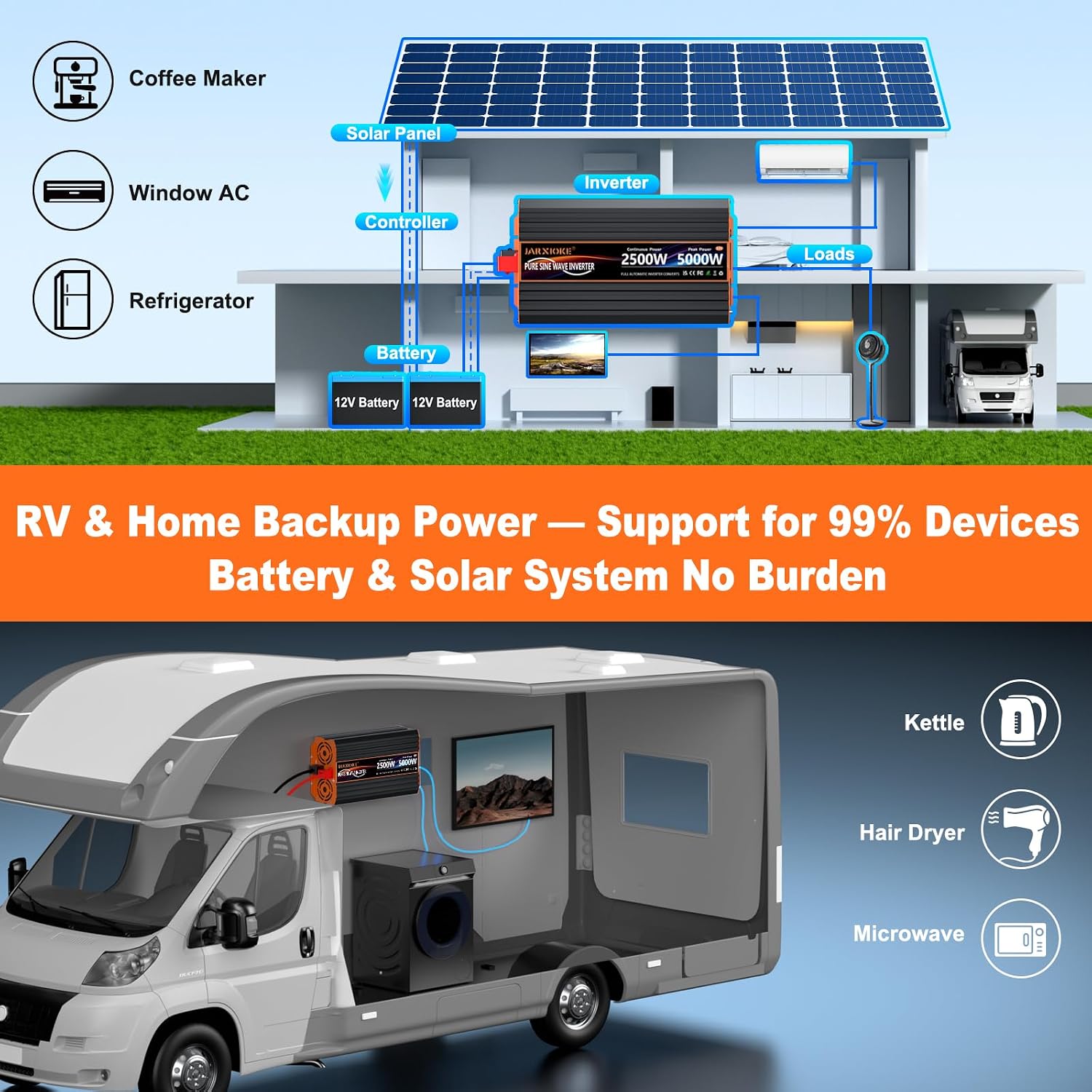
A power inverter is one of those buys you don’t think about until you need it. When you’re relying on a 12V battery in a motorhome, truck, on a boat, or at a campsite, this 2500W pure sine wave inverter is designed to turn DC power into household-style AC power for more everyday devices.
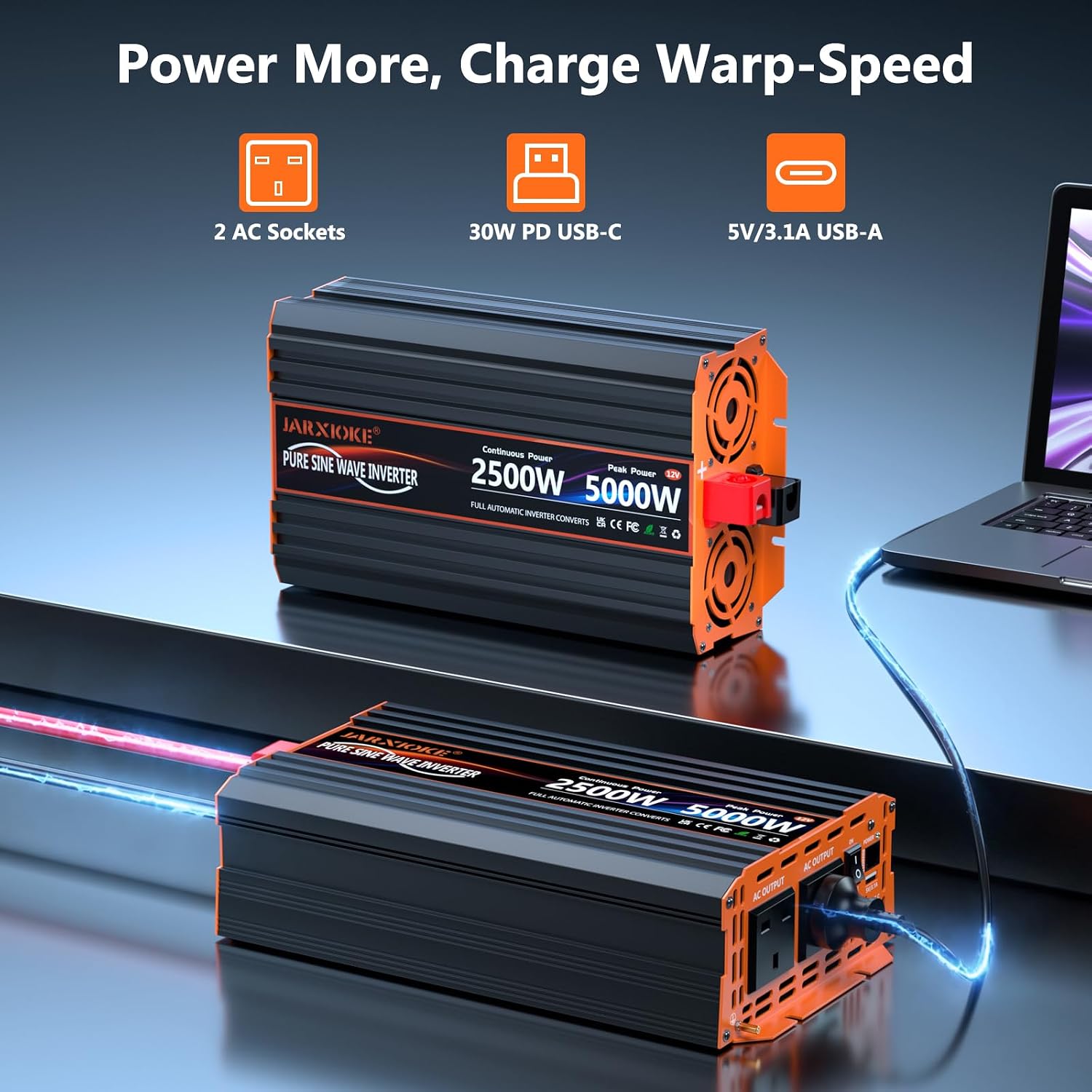
On paper, it leans towards “power that behaves more like mains” via pure sine wave technology, and it adds a practical mix of ports: two UK sockets, plus USB-A and Type-C (30W Type-C and 5V 3.1A USB-A). The included LCD remote control is also a nice touch if you don’t want to constantly check the unit itself.
What it does (and what matters in real life)
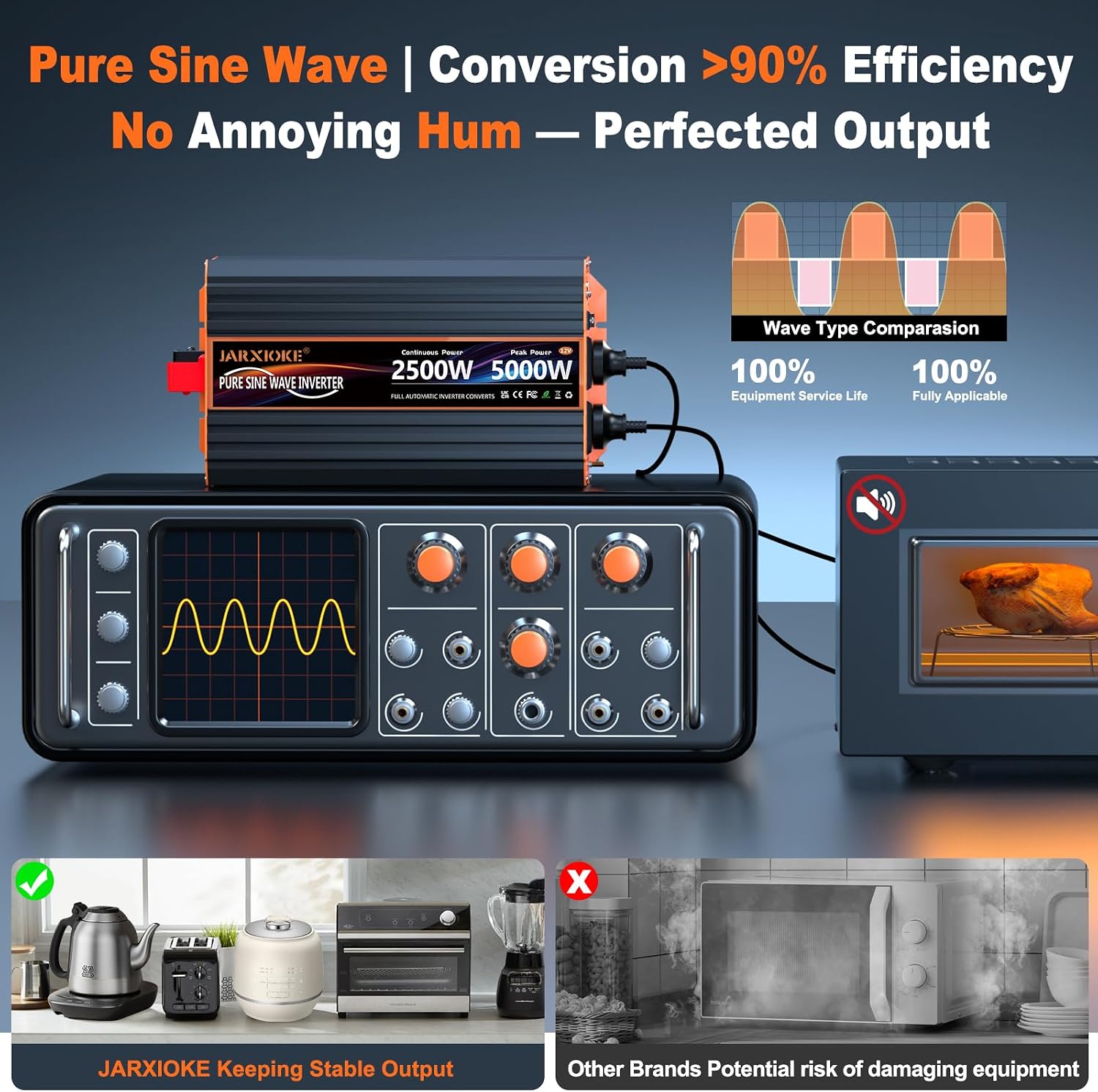
This inverter converts 12V DC to 240V AC using a pure sine wave output. The practical point of pure sine wave (compared with simpler modified outputs) is that it’s typically better suited to sensitive electronics and tends to feel more “polished” for equipment that doesn’t like rougher waveforms.
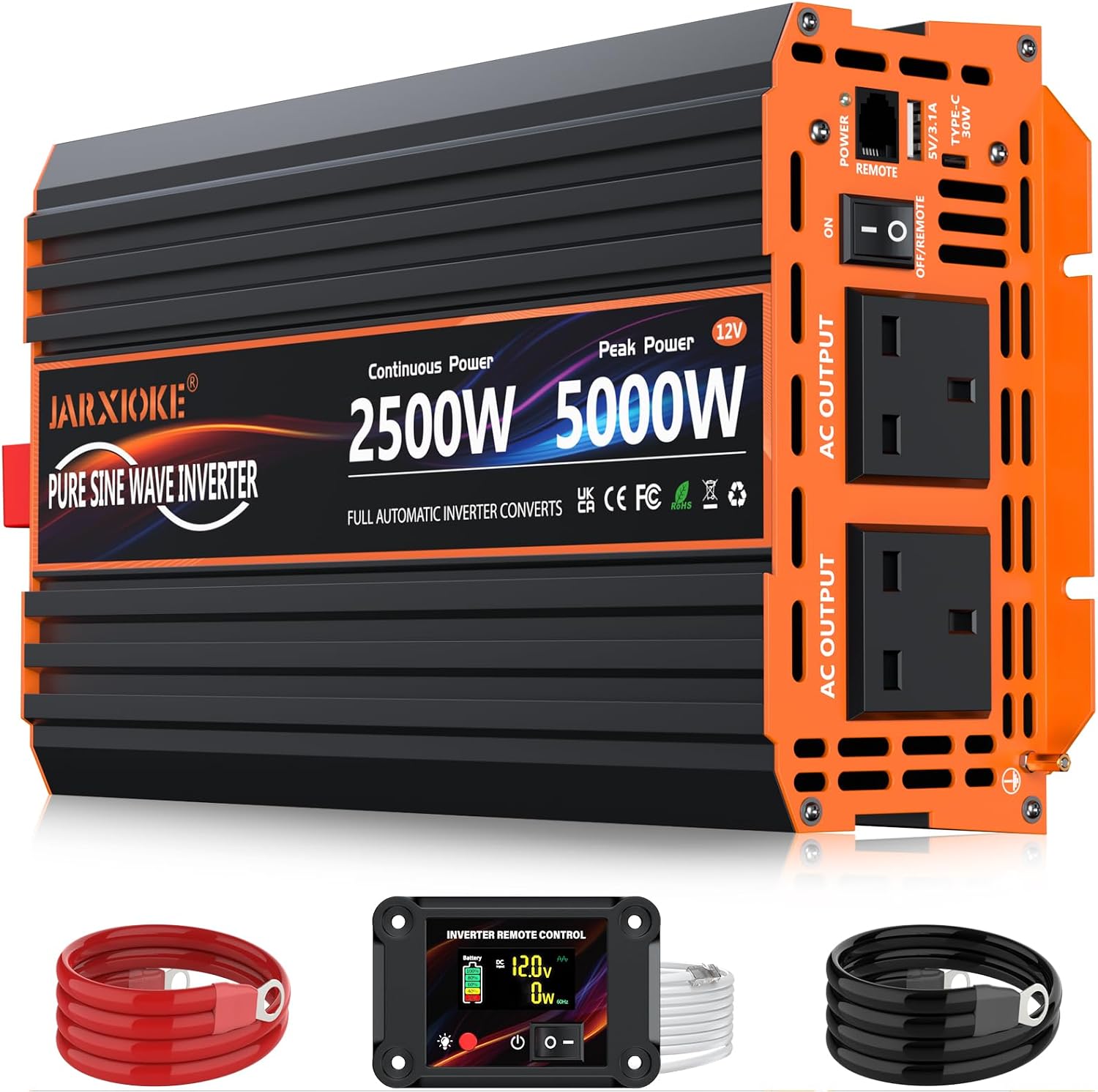
The description also claims high conversion efficiency (>90%) and a 5000W peak figure with 2500W continuous power. That’s important for expectations: peak numbers are usually brief bursts, while continuous power is what you should plan around if you’re running something for longer.
A micro-example of how you’d use it: you arrive at a site, plug in a laptop charger and a small entertainment device into the two sockets, then top up a phone or tablet via USB. If you’re in the cab or near the battery isolator, the 4.5m remote means you can check output and battery capacity without walking back to the inverter every time.
Key features you’ll actually notice
The “day to day” value here is spread across power output, monitoring, and cooling.
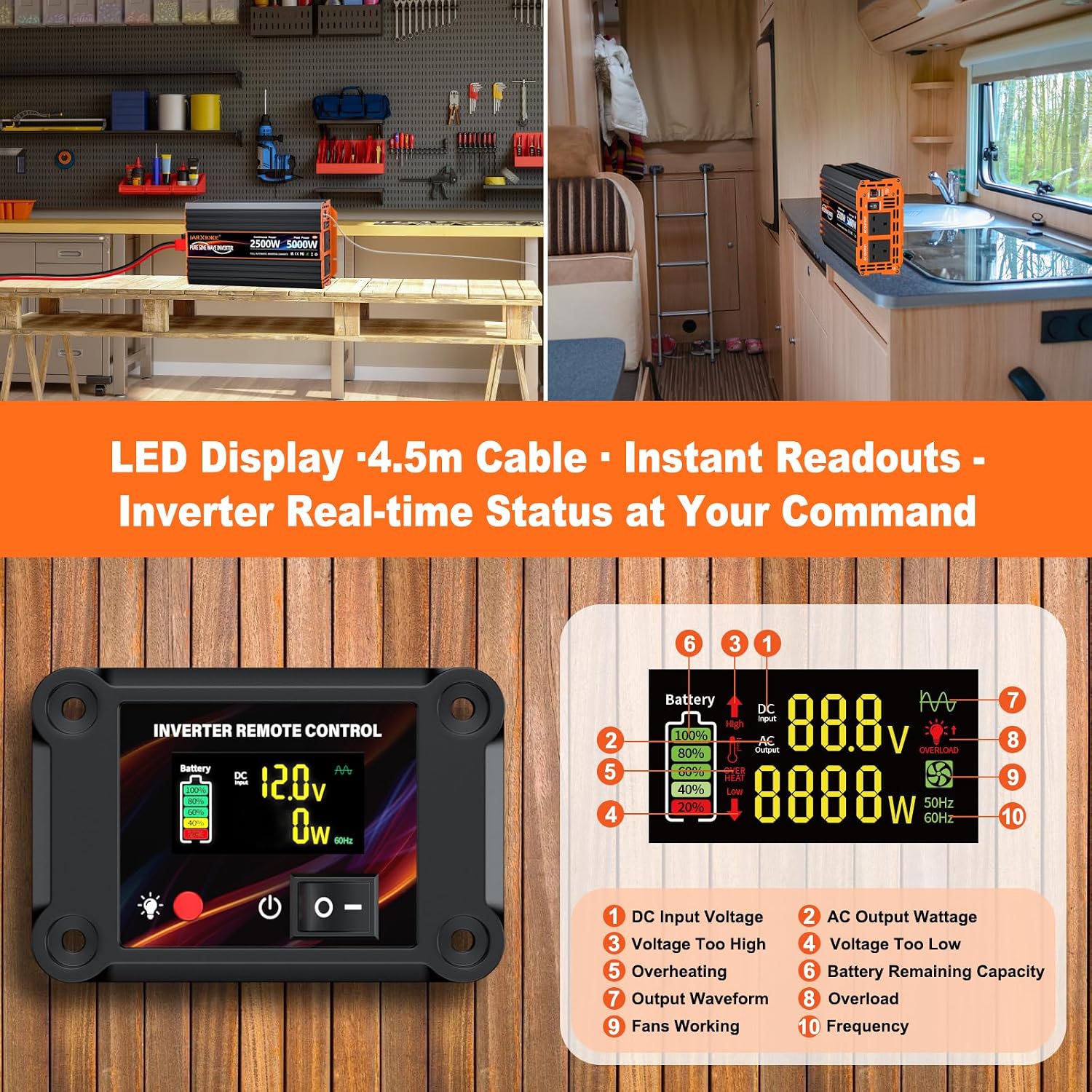
The LCD remote is meant to show battery capacity, output power, and troubleshooting info. That helps you keep an eye on load before things get strained. It also supports the idea that this inverter is meant for setups where you want visibility, not guesswork.
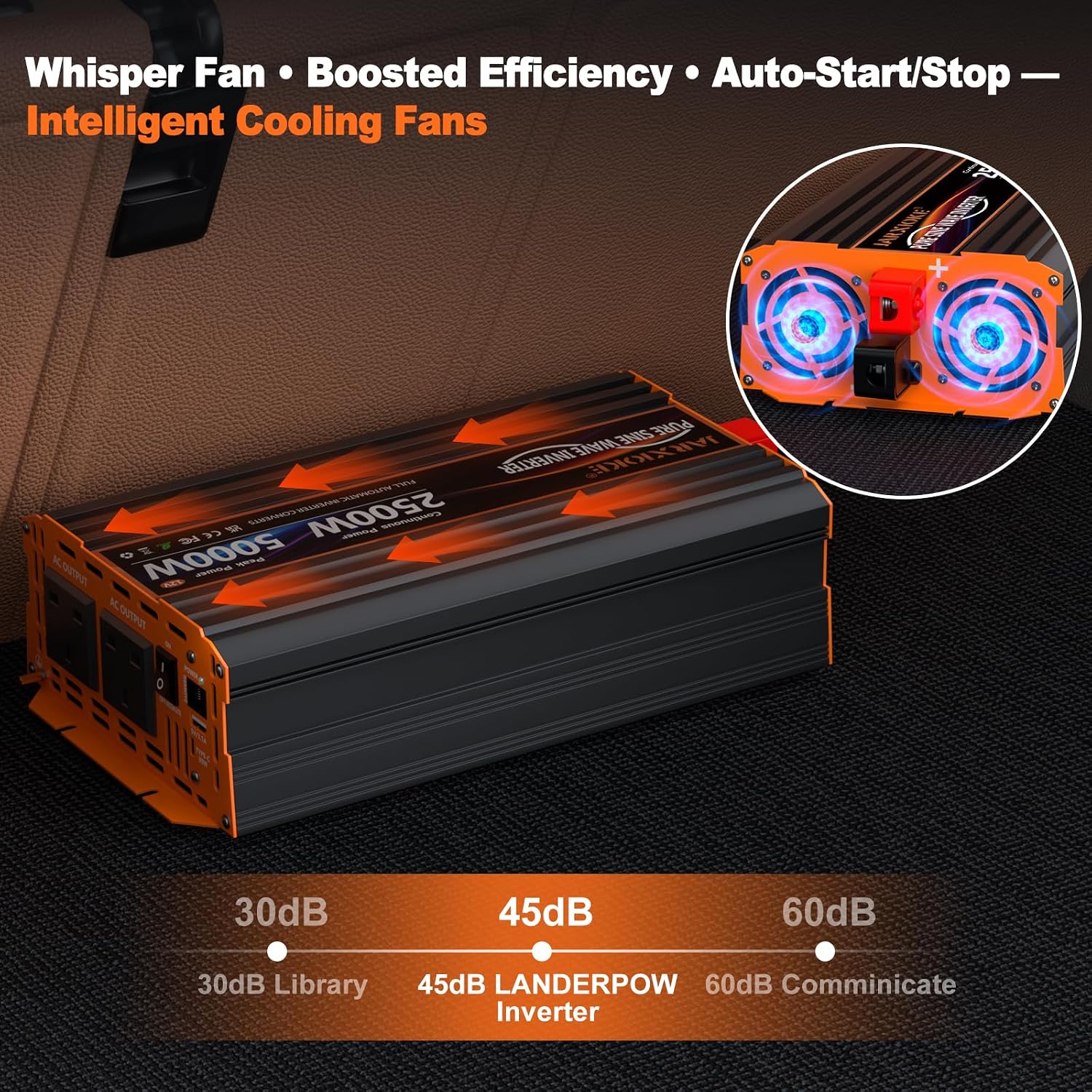
Cooling is handled by a smart fan that adjusts based on load and temperature, aiming to reduce heat build-up and keep noise down compared with fixed-speed fans.
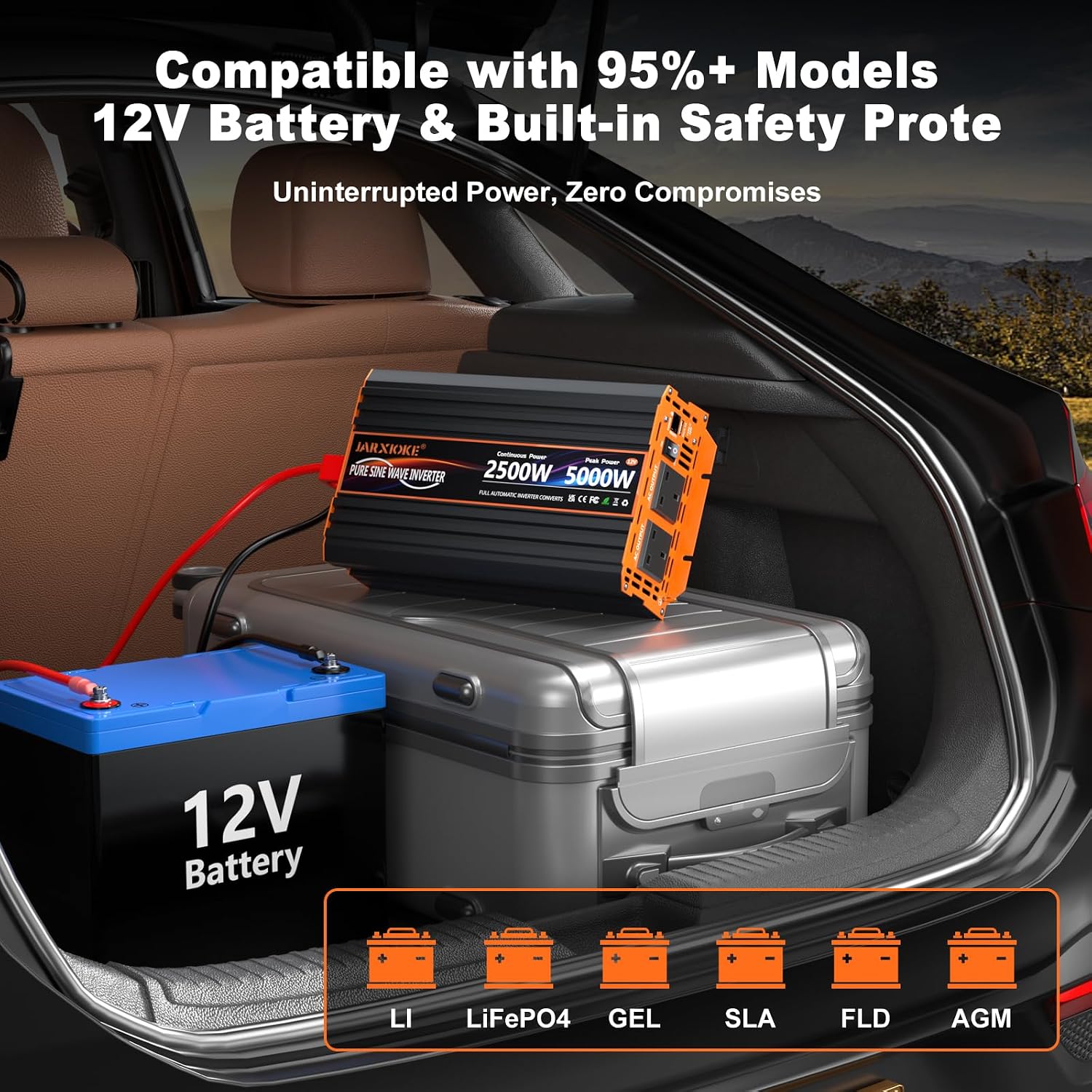
On the power side, it includes soft-start technology and multiple protection mechanisms, plus 32mm² battery cables (as stated). Those details matter because inverters aren’t just about “can it power it?”, they’re also about how comfortably and safely it behaves under load.
Where it shines—and where it can fall short
It’s a strong fit if you want a single inverter to cover typical AC needs on the move: charging, powering entertainment, running smaller appliances, and generally giving you more flexibility than relying purely on USB.
However, keep a limitation in mind: 2500W continuous is still a lot to pull from a 12V battery system, so runtimes will depend heavily on your battery capacity and what you’re powering. If you plan to run higher-wattage appliances for long periods, you’ll want to be realistic about battery draw and cabling/infrastructure.
Also, while the remote and ports are convenient, this is still a proper inverter installation scenario. If your setup needs additional considerations (battery sizing, secure mounting, correct routing), those practicalities will matter as much as the inverter itself.
It may not be the best match if your goal is “just charge a phone occasionally”. In that case, simpler 12V USB chargers or smaller inverters are often more proportionate.
Tech specs (based on the info provided)
- Type: Pure sine wave power inverter (DC 12V to AC 240V)
- Continuous power: 2500W
- Peak power: 5000W
- AC outlets: 2 UK sockets
- USB-A output: 5V 3.1A
- Type-C output: 30W
- Remote control: 4.5m LCD remote
- Battery cable size: 32mm² (as stated)
- Conversion efficiency: over 90% (claimed)
Quick compatibility & buying checks
Inverters can be surprisingly “setup-dependent”. Before you buy, it’s worth checking:
- Your maximum device load: match what you want to run to the stated continuous/peak figures, and remember that peak is usually not the steady state.
- Whether your electronics benefit from pure sine wave: the whole point is cleaner power for sensitive devices, so if that matters to your kit, it’s a plus.
- Battery and cabling situation: the product mentions 32mm² cables and protections, but your installation still needs to be sensible for the system you’re plugging into.
- How you’ll monitor it: the LCD remote is useful if the inverter won’t be right next to you.
The big “worth it” decision comes down to whether you’ll use both the AC sockets and the USB outputs often enough to justify a 2500W-class inverter.
Mini FAQ
Is this inverter suitable for camping or motorhomes?
It’s presented for camping, motorhomes, emergency power, and sensitive electronic devices, so it’s clearly aimed at that kind of lifestyle use.
What ports does it include besides the UK sockets?
You get 2 UK sockets plus USB-A (5V 3.1A) and Type-C (30W).
What is the point of the LCD remote?
The remote is designed to provide real-time monitoring such as battery capacity and output power, plus troubleshooting information, from up to 4.5m away.
Does it include protections?
The description says it includes multiple protection mechanisms and soft-start technology.
What should I watch out for when powering devices?
Think in terms of continuous power for what you’ll run for longer, not just peak figures. Also consider how much load your 12V battery setup can realistically handle.
Is it worth it?
Worth considering if you need a pure sine wave 12V-to-240V inverter with two UK sockets, built-in USB charging (Type-C + USB-A), and an LCD remote for monitoring—especially for motorhome, truck, boat, solar-related setups, or campsite use where you’re running more than just small chargers.
Better avoided if your usage is minimal (e.g., occasional phone charging) or if you can’t comfortably plan around the power draw that comes with a 2500W-class continuous inverter on a 12V system.
If you prioritise clean power for sensitive electronics and you’ll actually make use of the sockets and remote monitoring, this inverter makes sense. If not, you may end up paying for capacity you won’t regularly use.