

2026 TV Aerial Booster Amplifier – High Gain Freeview HD Signal Booster for UK Indoor Aerials (USB Powered, White)
Product description
The essentials
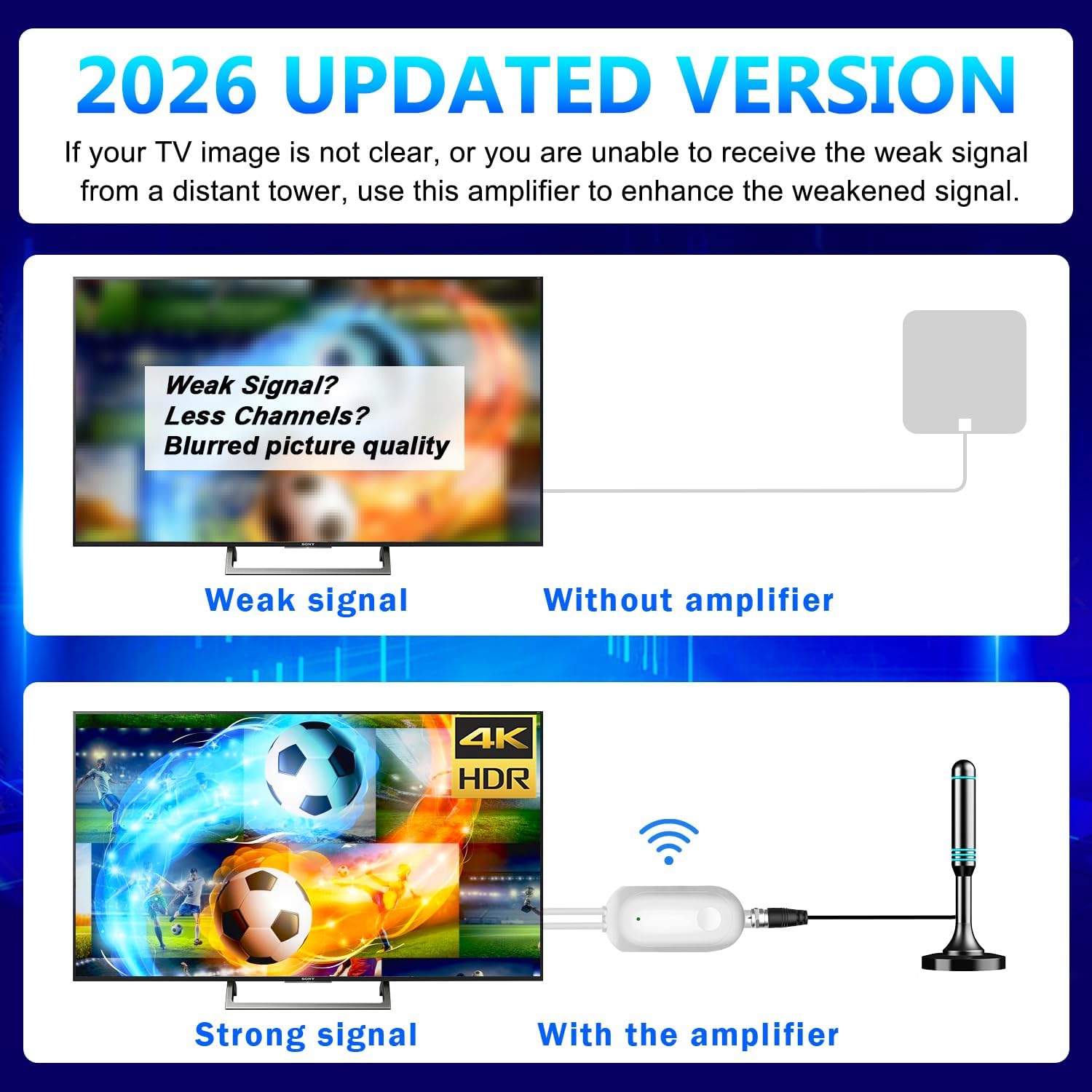
If you’re dealing with Freeview HD that turns patchy at times, this kind of TV aerial booster is often what people reach for. The 2026 TV Aerial Booster Amplifier is designed to give indoor aerial setups a stronger nudge, with the aim of reducing weak-signal symptoms like pixelation and signal dropouts.
On paper, the promise is pretty straightforward: a high-gain amplifier built for digital TV reception, intended to work with UK-style indoor aerials. It targets both VHF and UHF signals, which matters because Freeview services can sit across those bands, and an underpowered setup can struggle when reception is borderline.
One thing to keep your expectations grounded: a booster can help where the issue is weak signal. If your aerial positioning is poor or reception is being affected by physical obstacles, you may still need to sort out the aerial placement before the booster makes a real difference.
What it’s for (and when it helps)
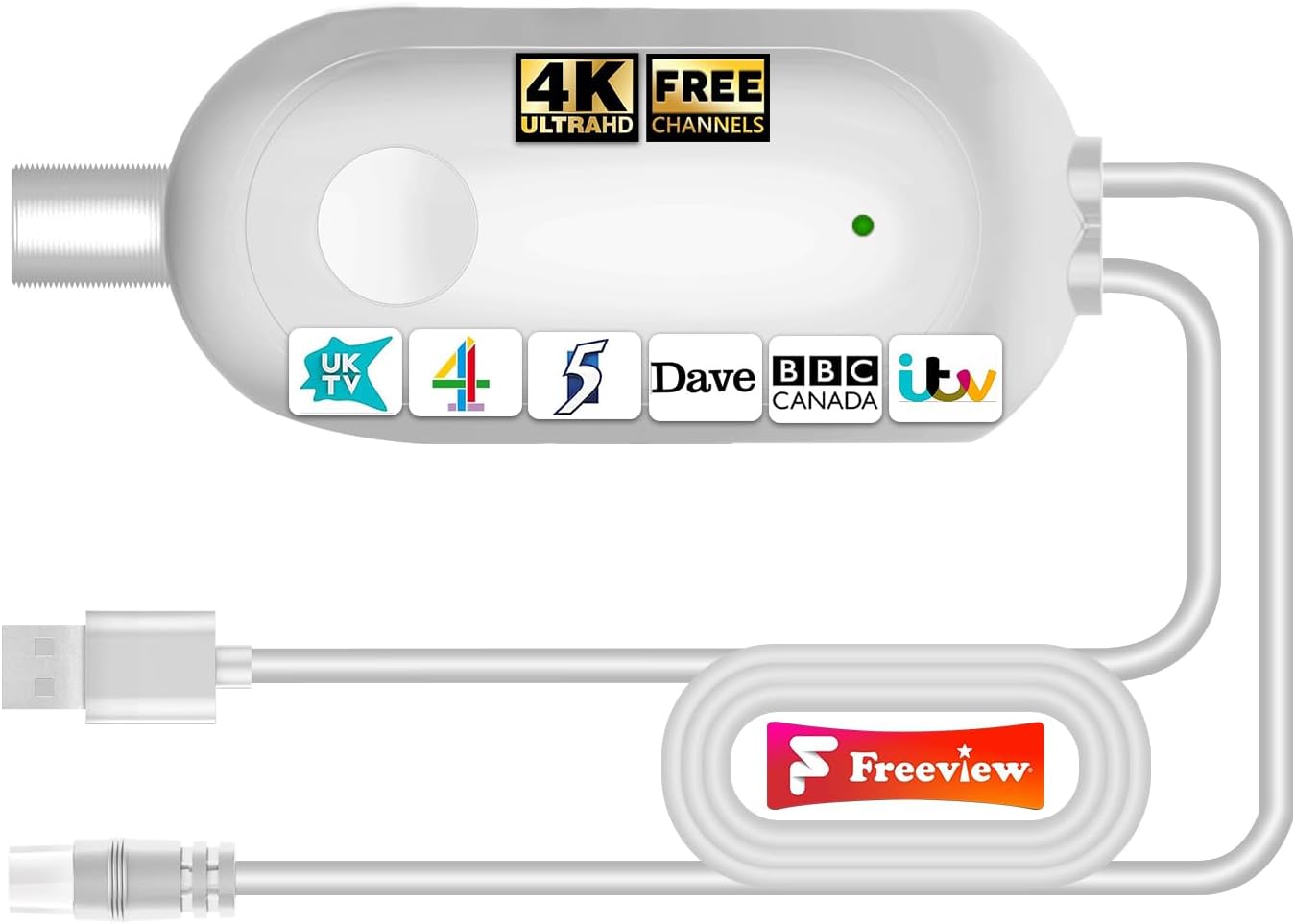
This booster is aimed at homes where indoor aerial reception is inconsistent. A common everyday scenario is living room viewing where the picture is fine one minute and then breaks up—especially during weather changes or at certain times of day.
The amplifier is built to be used with an indoor TV aerial, boosting weaker Freeview HD and digital TV signals to support a smoother picture quality and clearer sound. If your current setup is a compact indoor aerial, or you’re using an indoor antenna that doesn’t reach as far as you’d like, a booster can be a practical middle step versus rethinking the entire aerial system.
It also mentions 4K and 1080p visuals. That’s useful context, but it’s still worth remembering the booster isn’t turning a bad signal into a guaranteed perfect one. It’s more about helping the receiver “get over the line” when reception is weak.
Key features that matter in use
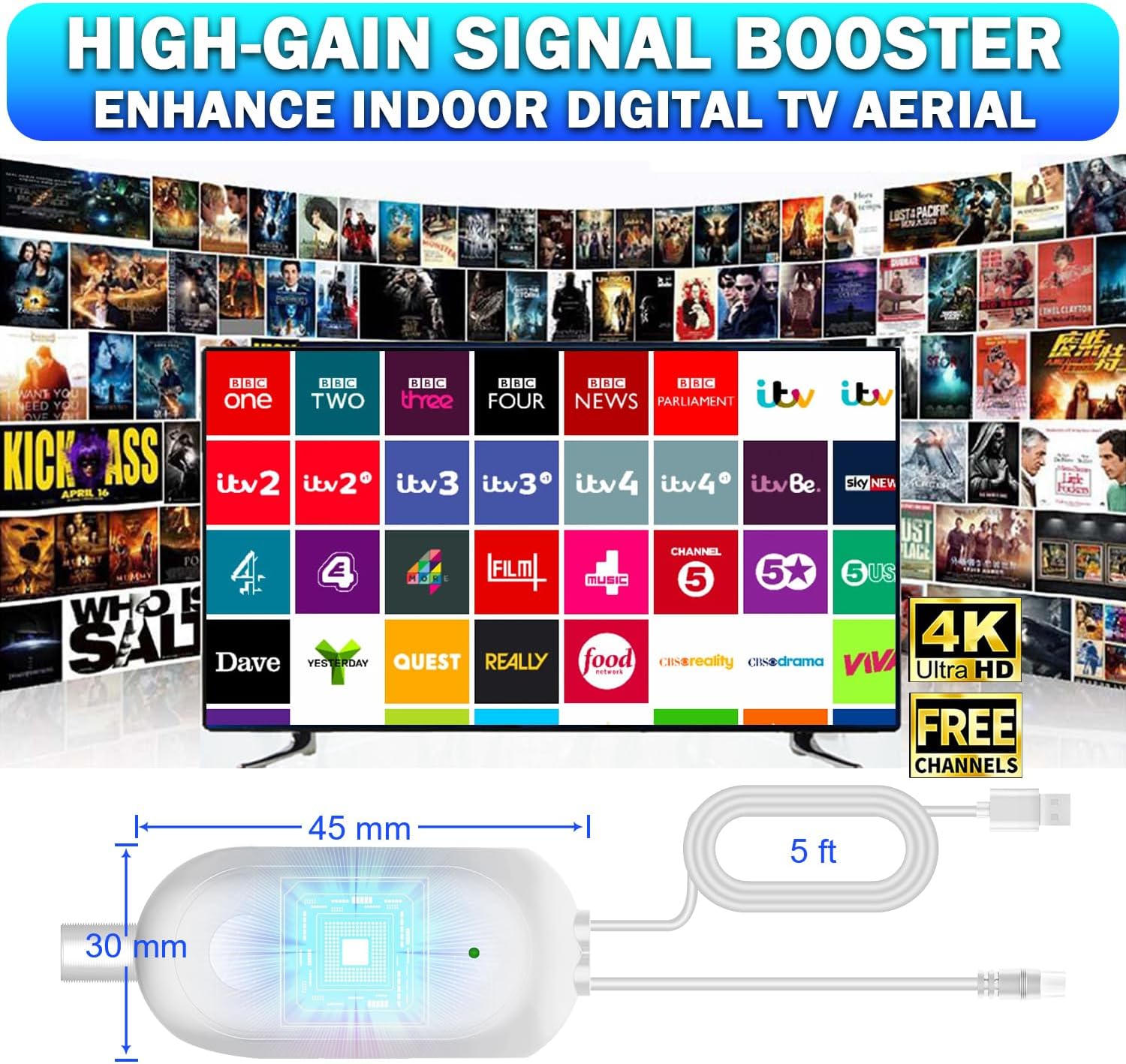
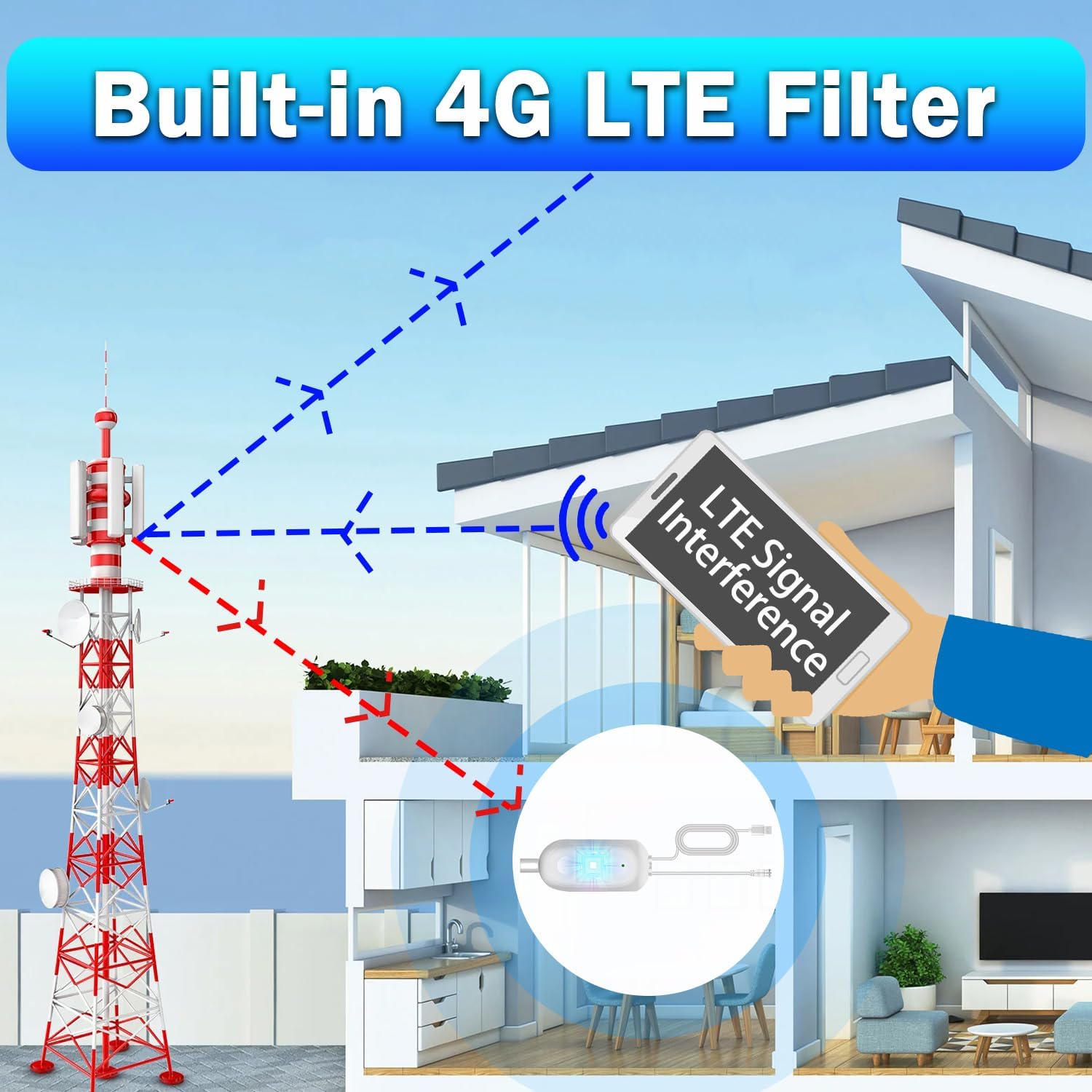
The amplifier is described as low-noise, with a design intended to enhance weak channels without adding distortion. That’s an important distinction: some signal add-ons can make things louder rather than clearer. Here, the emphasis is on cleaner signal handling, which is where you’ll typically notice benefits—fewer corrupted frames and less interruption.
You also get a high-gain approach, plus the coverage for VHF and UHF signals. In practical terms, that gives you wider coverage for typical indoor reception conditions.
And then there’s the day-to-day convenience: it’s USB powered. That means you’re not hunting for an extra wall socket, and you can power it from a USB port on a TV, set-top box, or compatible USB power adapter.

Installation approach (what “easy” looks like)
This is positioned as a simple plug-and-play add-on: connect the booster between your aerial and TV, power it via USB, and you should be able to start testing immediately.
For many people, the easiest way to think about it is this: you’re inserting the booster inline so the aerial signal gets boosted before it reaches your television. If you’re already set up with an indoor aerial, this is the type of upgrade that doesn’t require specialised tools.
Still, do take a moment to sanity-check the setup flow—if the booster isn’t placed correctly in the path between aerial and TV, you won’t get the intended improvement.
Where it stands out
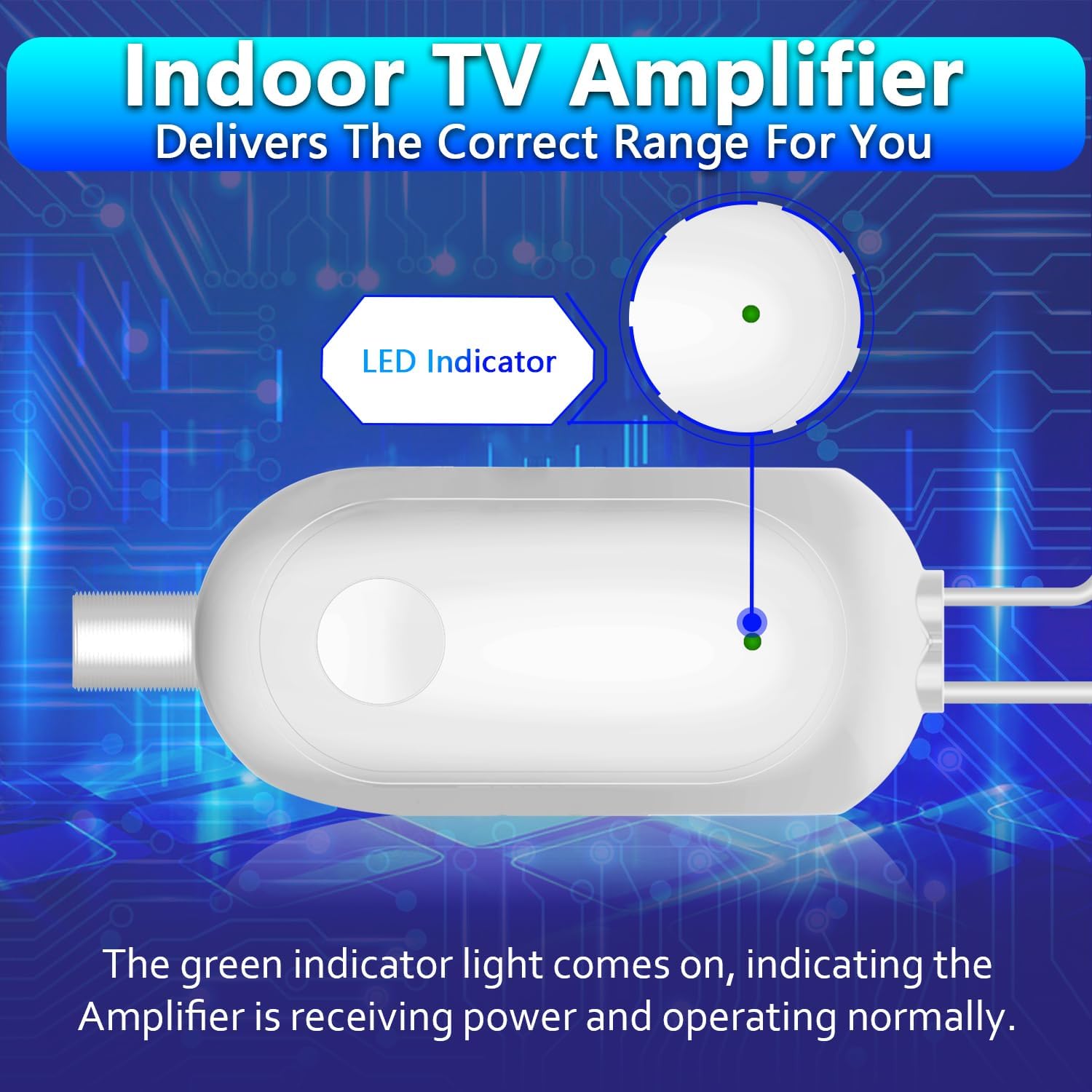
- Focused on weak Freeview HD and digital TV reception symptoms like pixelation and signal dropouts.
- Designed for indoor UK aerial use, covering both VHF and UHF signals.
- Low-noise amplifier design is aimed at cleaner results, not just stronger signal.
- USB-powered, which suits modern TV and home setups with spare USB ports.
Tech specs
- Type: Digital TV aerial booster amplifier (Freeview HD, indoor aerial use)
- Signal bands: VHF and UHF
- Power: USB powered
- Colour: White
- Design focus: Low-noise amplification
Should you buy it?
This is a solid pick if your indoor aerial setup is producing weak or inconsistent Freeview HD reception, and you’re specifically seeing issues like pixelation or signal dropouts. It makes sense for people who want an uncomplicated upgrade that’s powered via USB and intended for inline use with indoor aerials.
You may want to skip it if your reception problems are mainly down to aerial placement, cable routing, or physical obstructions—because even a booster can’t fully compensate for a fundamentally poor signal path. It might not be a great match if you’re expecting it to “fix everything” with no other changes.
Mini FAQ

Will this work with any indoor TV aerial?
The product is described as designed to work seamlessly with any indoor TV aerial, boosting VHF and UHF signals.
Does it improve both picture and sound?
The description states it’s intended to provide smoother picture quality and clearer sound.
What does USB powered mean in practice?
It’s powered by any USB port, so you can connect it to your TV, set-top box, or a USB power adapter.
What if I still get dropouts after fitting it?
If symptoms persist, it’s worth considering that the booster helps with weak signals, but reception can also be affected by aerial positioning and installation factors.