

UK Online Cart Optimisation: Save More at Checkout (Legit Ways)
Practical UK checkout tactics: delivery thresholds, bundles, vouchers, membership perks and timing—without relying on random codes.
Most online “savings tips” focus on big sale days or cashback stacking. Useful, sure — but a lot of everyday money is won (or lost) right at checkout. The trick is to treat your basket like a mini budget: adjust it, test it, and only pay for what actually improves the final price.

The UK cart-optimisation mindset (before you touch a voucher box)
In the UK, the headline product price isn’t always the final cost that matters. Delivery charges, minimum order thresholds, multi-buy pricing, subscription perks and even “free gift” bundles can make the same item effectively cheaper or more expensive depending on how you buy.
A good rule: don’t chase the biggest discount; chase the lowest delivered cost for the exact product and delivery speed you need — with returns you’re comfortable with.
The five checkout moves worth doing first (in order)
Here are the tactics that tend to move the needle most often. Use them in this order so you don’t waste time on tiny gains.
-
1) Check the delivery threshold and decide whether to meet it or avoid it. Why: A small delivery fee can wipe out a voucher, and adding a low-cost essential might be better value than paying delivery. When to use it: Any time delivery isn’t free by default, or when the retailer offers free delivery over a spend threshold.
-
2) Test “split basket vs single basket” before you pay. Why: Some promos apply per order (or per item), while others vanish when you mix brands, sizes, or categories. Occasionally, splitting lets you use a targeted offer twice — but sometimes it doubles delivery costs. When to use it: When you’re buying a mix (e.g., household bits plus one higher-value item), or when a discount says “selected lines only”.
-
3) Compare bundle deals against price-per-unit (not the label). Why: “3 for 2” and “multi-buy” offers can be brilliant, but only if the unit cost stays sensible and you won’t end up returning part of the deal (which can complicate refunds). When to use it: Toiletries, pantry staples, printer ink, pet supplies — anything you genuinely repeat-buy.
-
4) Use legitimate discount routes before random code hunting. Why: Time spent trying ten expired codes is rarely worth it. UK retailers often have reliable discount paths: email sign-up offers, student or NHS eligibility, app-only promos, or loyalty pricing. When to use it: First purchase with a retailer, or when you’re about to create an account anyway.
-
5) Decide whether “faster delivery” is actually saving you money. Why: Paying extra for next-day delivery can make sense if it avoids a second trip, a missed gift deadline, or a replacement purchase. Otherwise, standard delivery is often the true bargain. When to use it: Gifts, time-critical items, or when you know you’ll be home (or can use a safe place Ofertas locker Ofertas Click & Collect).
1) Delivery thresholds: the smartest way to “top up”
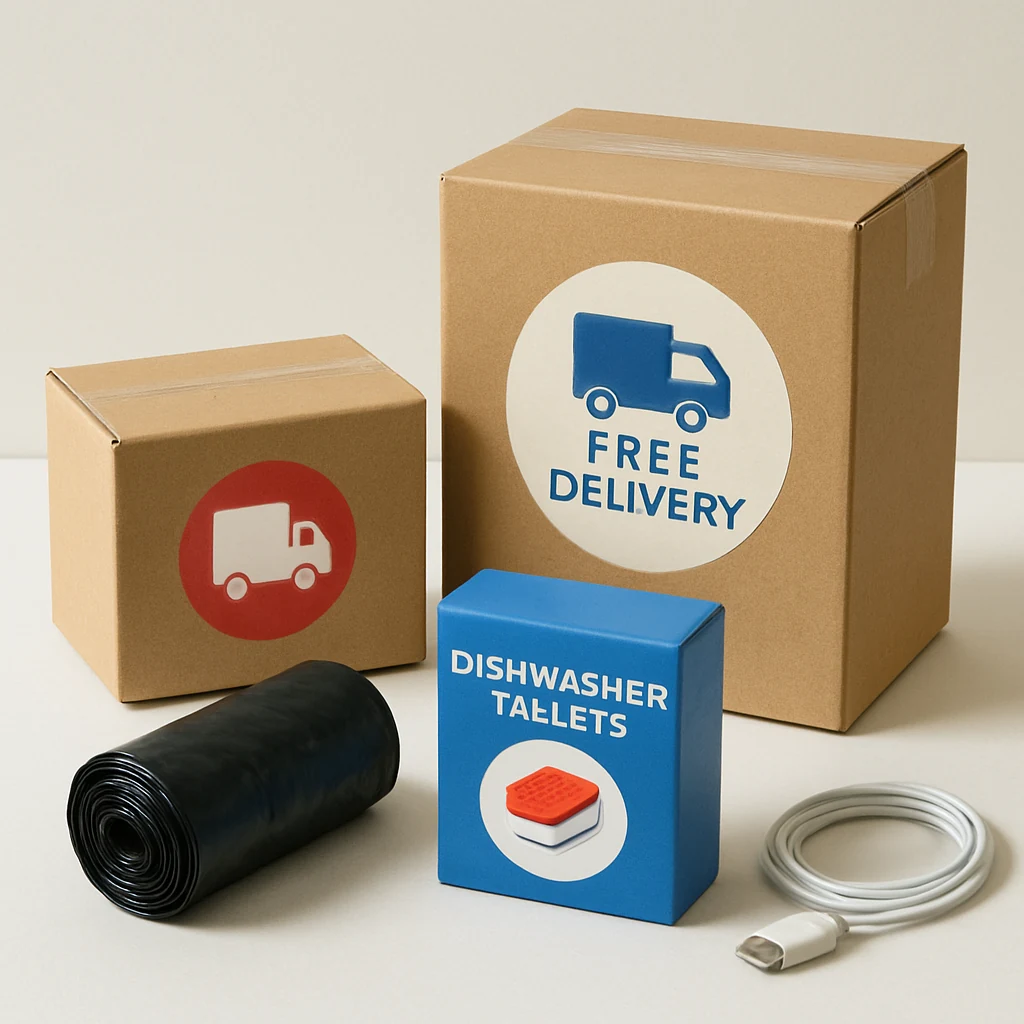
If you’re £2 short of free delivery, it’s tempting to throw anything into your basket. Instead, add something you’d buy anyway within the next month — and ideally from the same retailer to avoid duplicating delivery later.
Think boring-but-useful: bin bags, dishwasher tablets, phone charging cable, razor heads, or a replacement filter. For clothing retailers, it can be socks or basic tees if you already know your sizing, because returns can erase the value of a forced top-up.
If you’re still unsure, pause and do a quick alternative check: would buying the item elsewhere (with free Click & Collect, for example) be cheaper than meeting the threshold here?
2) Split basket vs single basket: a quick test that often pays off
This is a quiet money-saver that many people skip because it feels fiddly. It takes a minute and can reveal pricing quirks, especially with:
- category-based discounts (“20% off home”, but not electronics)
- quantity limits (“max 2 per order”)
- marketplace baskets where items ship from different sellers (and delivery charges stack)
A practical method: go to checkout, note the totals, then remove the “odd one out” item (the one that doesn’t match the promotion) and re-check. If the promotion improves meaningfully and delivery doesn’t jump, split the order. If delivery doubles, keep it together.
One caution: if you want everything delivered together for convenience (or to reduce missed deliveries), the slightly higher price might be worth it.
3) Bundle maths: don’t let a “deal” force a bad buy
Bundles and multi-buys are great in UK online shopping, especially around seasonal pushes (think pre-Christmas gifting bundles, January “health kick” packs, or back-to-school multipacks). But they’re also where overspending sneaks in.
A simple sanity check is to compare price per unit across:
- the single item price
- the bundle price
- a larger size (often cheaper per ml/g)
If the bundle only wins because it includes something you don’t really want, it’s not a bargain. And if you’re likely to return one item from a bundle, read the returns/refund wording — some retailers refund at the “adjusted” multi-buy price, which can reduce the value you thought you were getting.
4) Legit discount routes that beat “voucher roulette”
Voucher codes can work, but in the UK you’ll often do better by using discounts that are actually designed to be used.
Start with the retailer’s own options: newsletter sign-up prompts, first-order offers, app-exclusive pricing, and loyalty schemes. These tend to be more reliable at checkout and less likely to break when you apply them.
If you qualify, check recognised programmes (student discounts and similar). You don’t need to become a full-time code hunter; you just need a repeatable habit: before you pay, ask “Is there an official discount route for this retailer?”
Also, don’t ignore free gifts. Sometimes they look like fluff, but if it’s something you’d genuinely buy (or can gift), it can tilt the value without messing with returns.
5) The delivery-speed decision: when paying more is still a saving
“Cheapest” isn’t always the lowest cost outcome. If slower delivery makes you buy a temporary replacement locally, or forces an extra journey, you can end up spending more overall.
Ask yourself two quick questions:
- If it doesn’t arrive on time, will I end up buying something else anyway?
- Will I be in to receive it, or will delivery attempts create hassle?
For many UK shoppers, Click & Collect (or locker collection) is the sweet spot: it can be cheaper than home delivery, removes the “missed delivery” risk, and lets you pick up when convenient.
A “checkout rehearsal” you can do in two minutes
Before you press pay, do a mini rehearsal — like you’re checking a restaurant bill.
Scan for: delivery cost, delivery date, and whether VAT is included in the displayed price (it usually is for consumer purchases in the UK, but it’s still worth noticing if you’re buying from less familiar sellers). If something looks off, step back.
If you want a deeper set of UK shopping basics, the homepage has more guides you can dip into as needed: /
Common mistakes that quietly kill a bargain
A few patterns show up again and again:
Buying add-ons just to “unlock” a discount, then returning them later. That can backfire if the refund recalculates the original deal.
Assuming a marketplace basket is one parcel. If the items come from different sellers, delivery charges (and return processes) can multiply.
Paying for speed when you don’t need it — especially outside peak periods. If it’s not time-critical, standard delivery is often the best value.
FAQs
Is it worth creating an account just for a discount?
Often, yes — if the retailer is reputable and you’re likely to buy again, because it can also simplify order tracking and returns. If you’re not sure you’ll return, consider guest checkout, but still weigh up any first-order offer you’d lose.
If I split my order, can I use the same discount twice?
Sometimes, but it depends on the terms (and many retailers restrict “one per customer”). The point of testing split vs single isn’t to game the system; it’s to avoid accidentally cancelling your own discount by mixing items that don’t qualify.
Are app-only deals in the UK actually better?
They can be, especially during seasonal sales periods when retailers push app engagement. Just make sure the app price still works out once delivery is included, and double-check returns are the same as the website.
What’s the safest way to handle multi-buy offers if I might return something?
Avoid multi-buy “commitments” on items you’re unsure about (fit-sensitive clothing, for example). If you do go for it, read how refunds work when part of the bundle is returned — it can change the effective price.
Do I need to wait for Black Friday or Cyber Monday to get a good deal?
Not always. Those periods can be useful, but everyday checkout tactics (delivery thresholds, basket splits, sensible bundles) often save money year-round — and with less time spent watching the calendar.

If you take nothing else from this: treat your basket like a draft. Run one quick “what if” (threshold, split, bundle maths), then buy with confidence. That’s how you get consistent savings in UK online shopping without living in the voucher box.
You may also be interested
The UK Wishlist Method: Plan Your Next Online Deal (No Panic Buying)
A practical UK step-by-step guide to saving online by setting target prices, tracking drops, and buying at the right moment—without falling for “was/now” hype.
Marketplace vs Retailer: How UK Shoppers Pick the Real Deal
A practical UK guide to choosing between marketplaces and direct retailers—price, delivery, returns, warranty and hidden costs—so the ‘deal’ stays a deal.
After You Buy: UK Tricks to Save with Price Drops & Returns
A practical UK guide to saving after checkout: price-drop checks, delivery refunds, returns timing and safe ways to re-order for less.