

XMSJSIY Toslink optical audio splitter 1.5 m
Product description
How to use it
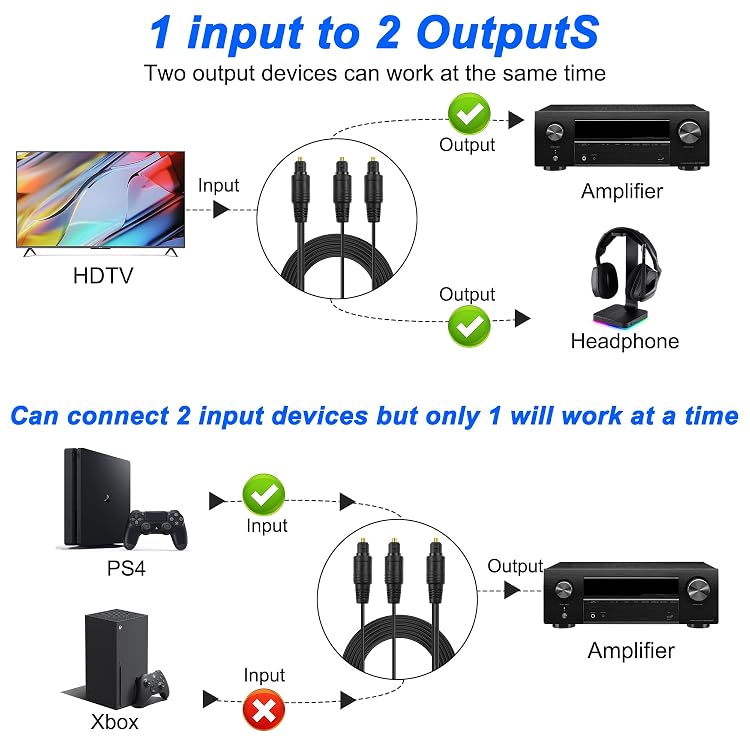
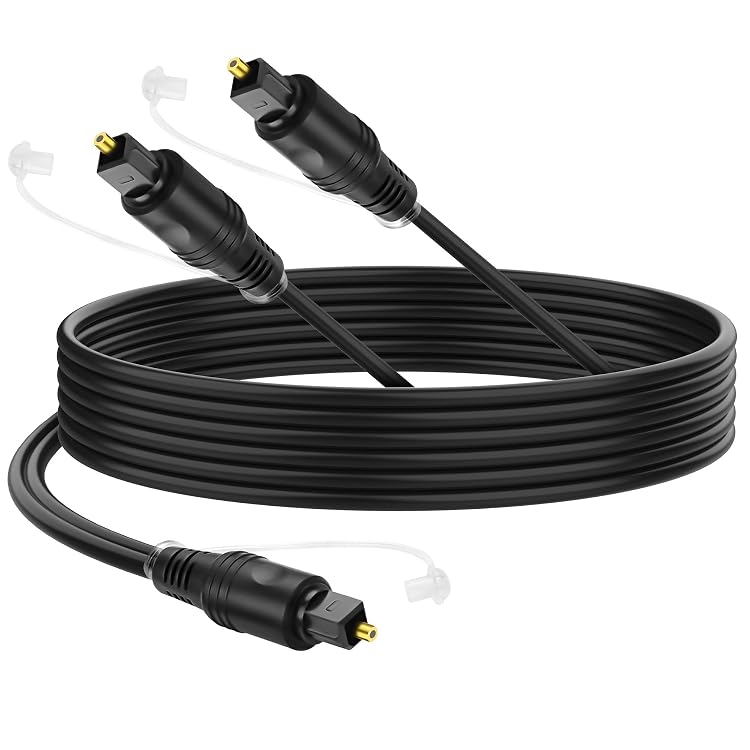
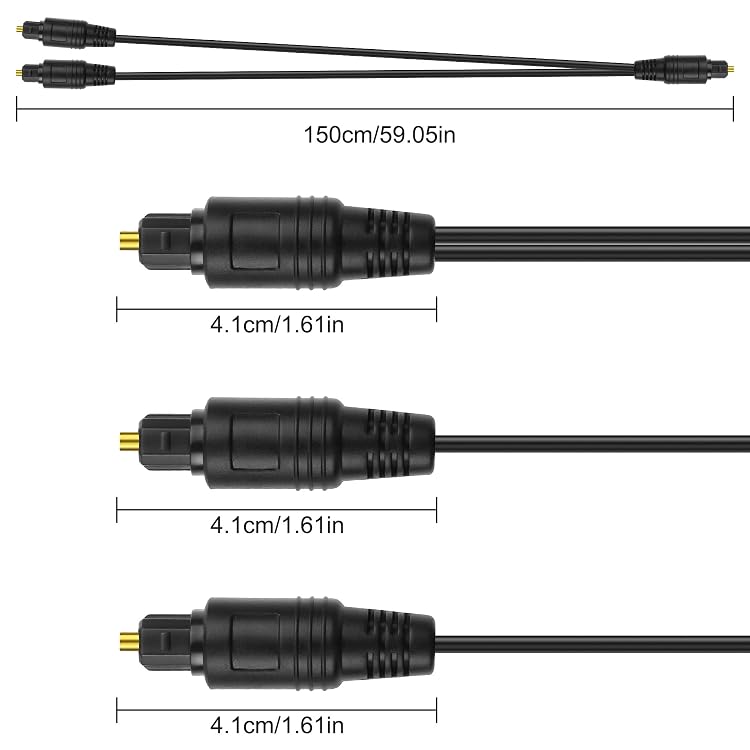
The flexible TPE cable body is designed to handle everyday routing around a TV cabinet without the stiffness of a rigid cable. Its layout is specific: one male Toslink plug takes an optical audio signal from a source, while two male plugs connect to equipment with Toslink inputs. The listed cable length is 1.5 m, so it may suit a nearby soundbar and receiver setup, but it is worth checking the distance and connector positions before choosing it.
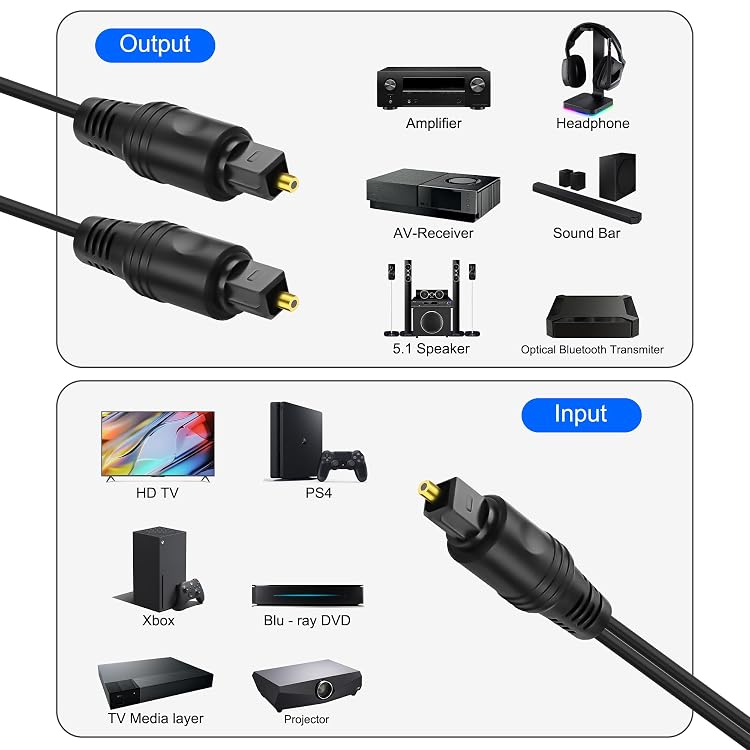
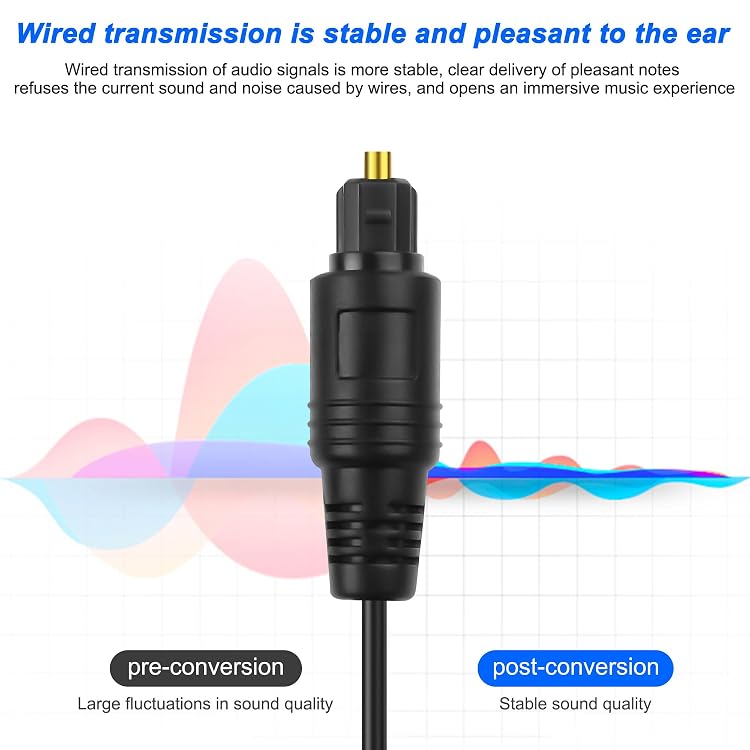
In practice, you could run the TV’s optical output to the single plug, then route the two output plugs towards a soundbar and another compatible audio device. What matters is that the source has an optical output and both destination devices have Toslink inputs, this cable does not add optical ports to equipment that lacks them.
Pros
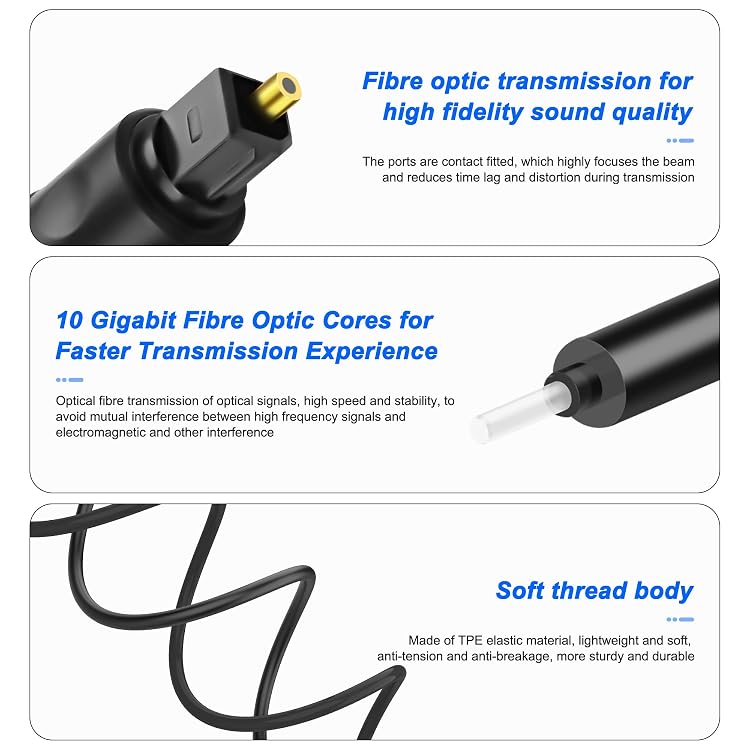
The one-to-two layout is useful when you want to route a single optical source to two destinations without rearranging the cable every time. Dust caps help keep the plugs covered when they are not connected, and the stated TPE construction is soft and lightweight. The contacts are described as gold-plated, although the listing does not provide independent performance measurements to quantify any effect on sound.
It suits you if your setup already uses Toslink and the devices sit within reach of the 1.5 m cable. It is also a more direct fit than buying a cable with only one output when you need two destination connections from one source.
Spec sheet
- Type: Digital optical audio splitter cable
- Format: One male input to two male outputs
- Size: 1.5 m / 4.9 ft
- Material: TPE cable body
- Connector detail: Gold-plated contact surface
- Included feature: Dust caps
What I’d weigh
This is a connection cable, not a source selector or an audio converter. It is intended for an optical output feeding devices with optical inputs, it will not connect to equipment that only offers another type of audio port. The listing also does not explain whether both outputs are intended to operate at the same time, so if simultaneous playback is essential, that detail matters before you commit.
The practical trade-off is straightforward: choose this format when one Toslink source needs two cable runs, rather than a basic single-output cable. If you need to switch between several sources, control separate listening zones, or bridge different connector types, a different kind of setup may make more sense. Mejor evitarlo si your equipment lacks Toslink connections or the 1.5 m run cannot reach comfortably. For a TV-and-audio arrangement with matching optical ports, the connector layout is the main reason to consider it.