


Visual Fault Locator 50 km
Product description
Best use cases
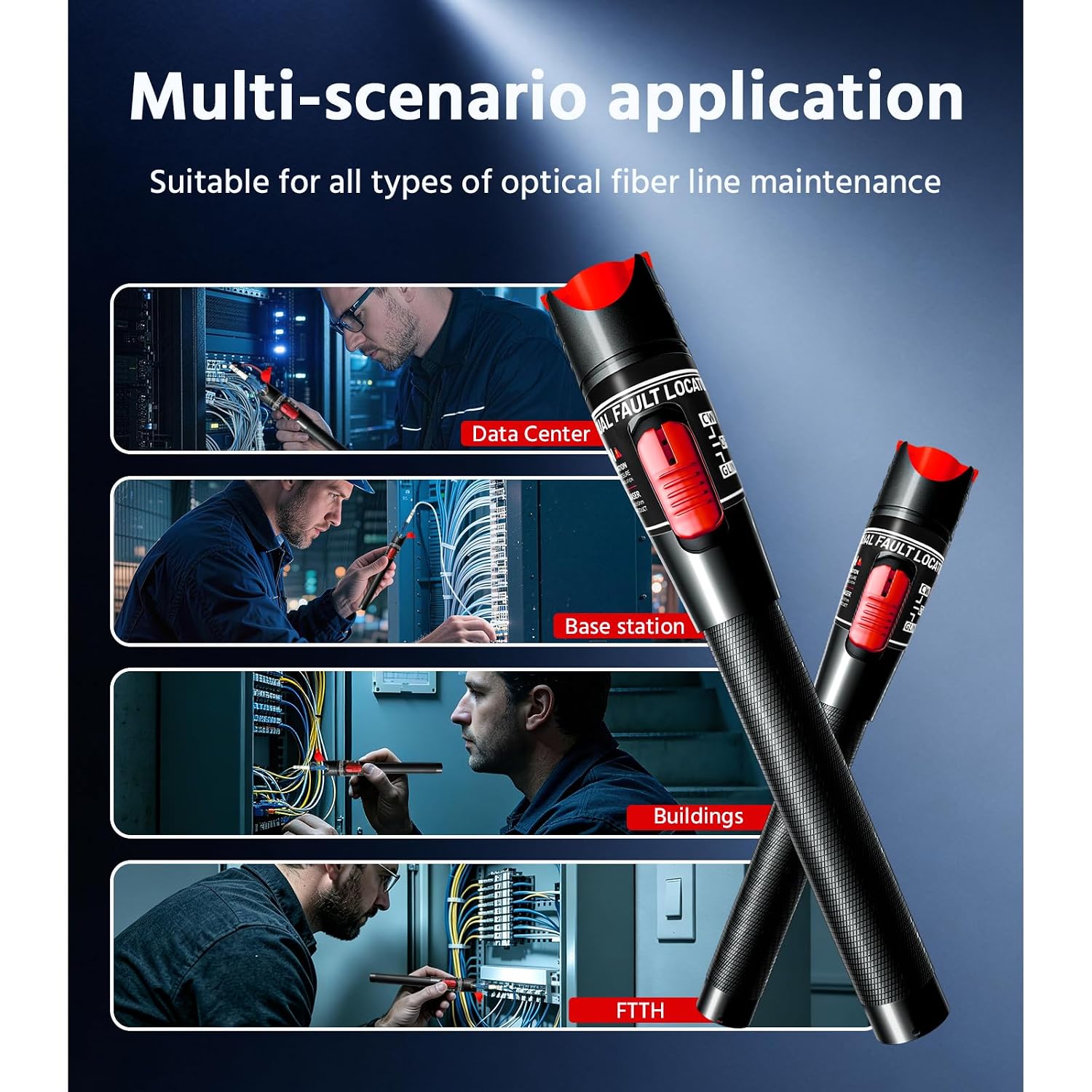
When a fibre link stops behaving as expected, a visual fault locator can help narrow the search to a break, bend or loose connection instead of relying on guesswork. This pen-style kit is intended for telecom and network maintenance, fibre engineering and data-centre troubleshooting, with a carrying pouch for work away from a bench. Its listed fibre format is single mode, 9/125μm.
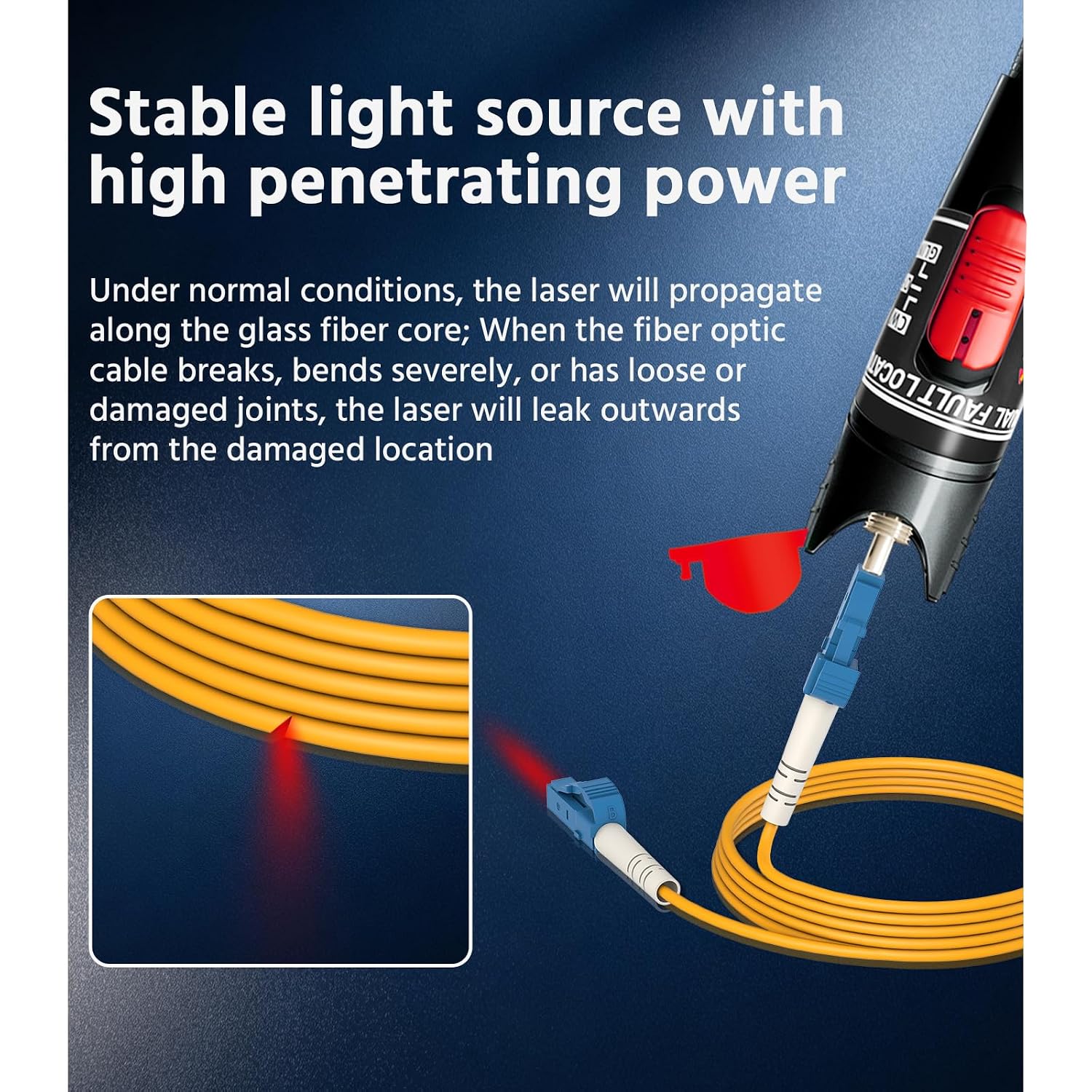
Picture checking a suspect run during a maintenance call: the red light can help reveal where the route is interrupted or sharply bent. Is that enough to replace more detailed test equipment? Not necessarily, this tool is positioned for visual fault finding, not as a complete fibre-testing setup.
Product specs
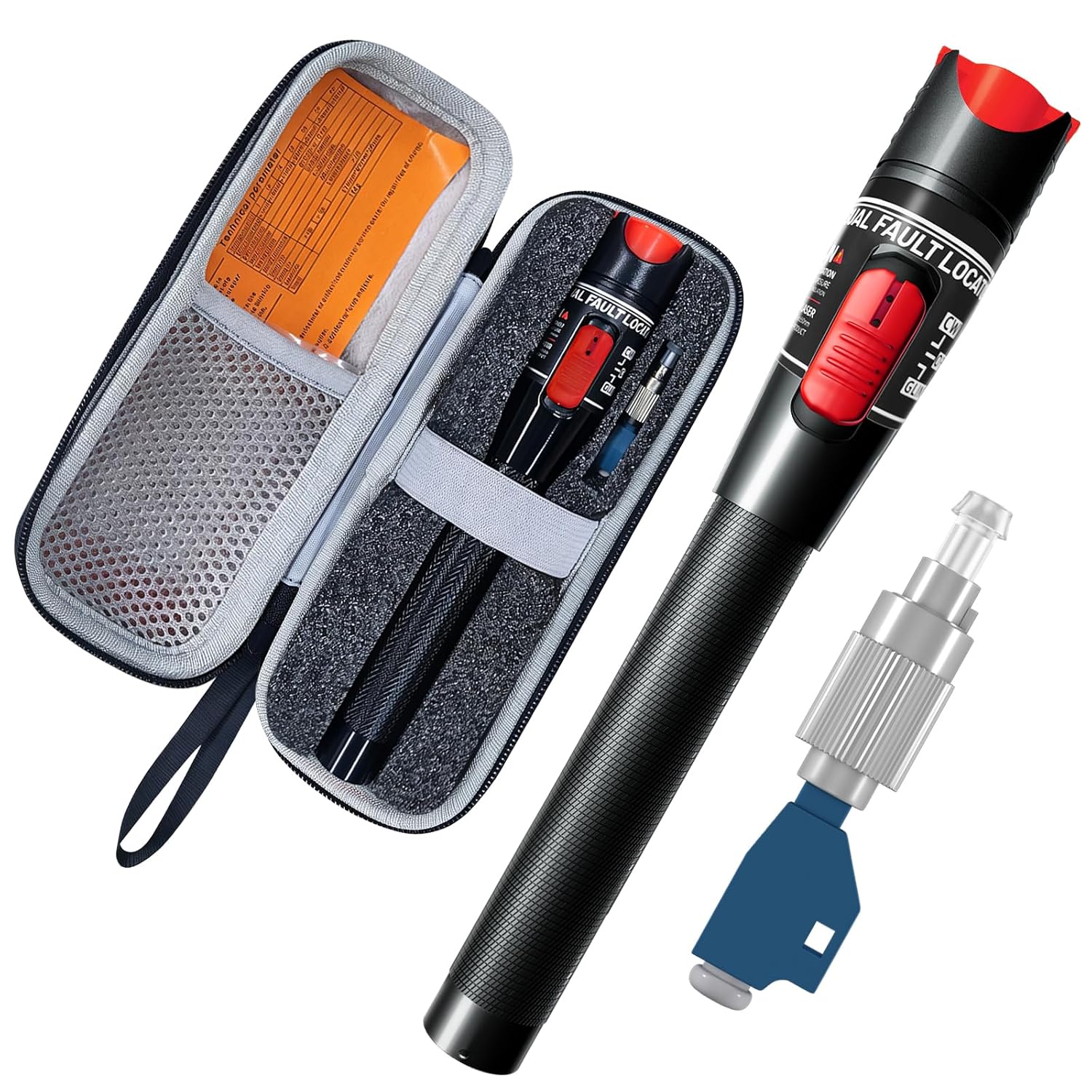
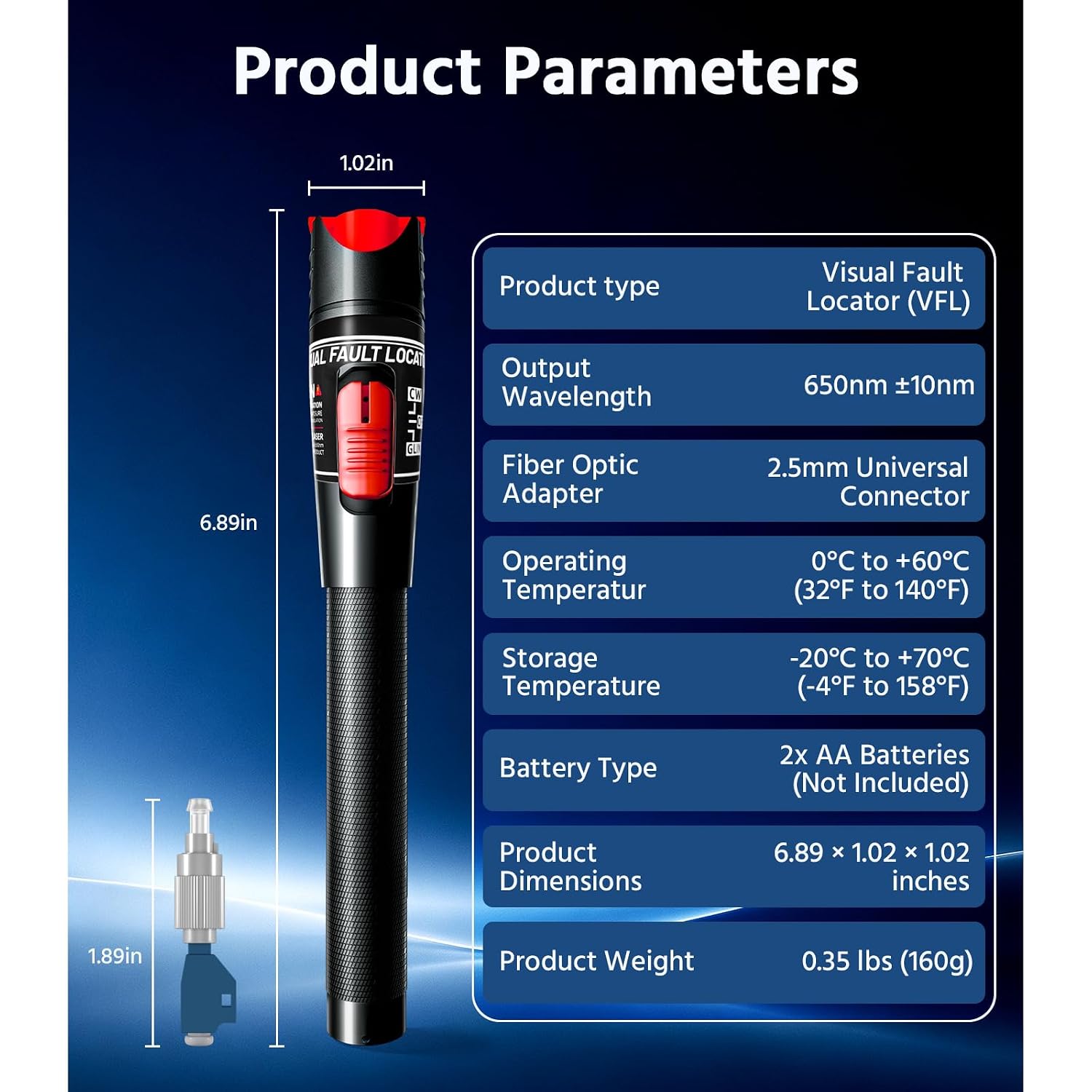
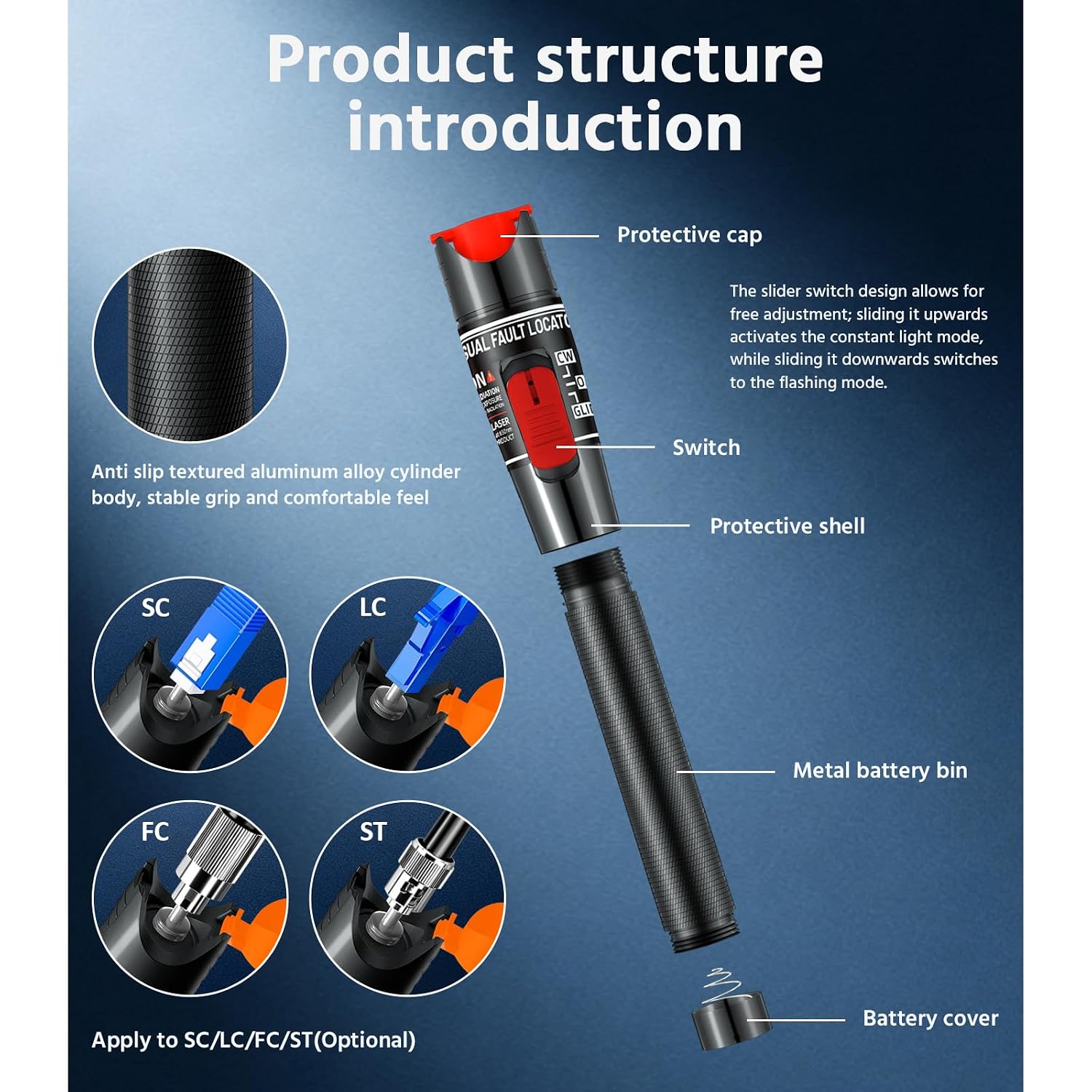
The locator uses a 650 nm ±10 nm red light and is supplied with a 2.5 mm universal connector and an LC adapter. The listing names ST, SC, FC and LC compatibility, as well as round and square fibre types. It is labelled as a 50 km visual fault locator, but the supplied details do not explain the conditions behind that range or what detection performance to expect across different installations.
Power comes from two AA batteries, which are not included. The body is aluminium with a stainless-steel tip, a low-battery alert and carrying pouch are also listed. The stated operating range is 0°C to 60°C, with storage from -20°C to 70°C. The product description also claims resistance to drops, dust and electrostatic discharge, but gives no test standard or protection rating. With that detail unavailable, treat those claims as general guidance rather than a defined ruggedness rating.

Where it shines
The appeal is straightforward: a compact, pen-style tool can be easier to carry and use for a quick check than a larger, more involved test setup. The connector options also make it practical for technicians who encounter different connector types during routine maintenance. Constant light output is listed as a feature, while the energy-saving circuit is intended to extend battery life, no runtime figure is provided.
It suits you if you need a portable way to trace visible faults on compatible fibre and are comfortable supplying your own AA batteries. It isn't for you if you need documented test results, a specified battery runtime or detailed performance guarantees for the stated distance. A more comprehensive tester would make more sense when the job calls for measurements rather than a visual indication.
Final decision
This kit is worth considering for basic field diagnosis where quickly checking a fibre run is the main task. Its listed connector support, pouch and compact format speak to maintenance work, while the stated single-mode format gives a clearer sense of its intended application. The main trade-off is the lack of detail behind the 50 km label and the absence of batteries in the package. Choose it for visual troubleshooting, look elsewhere if you need quantified testing or a fully specified range.