

Naturehike One-Person Tent, 20D Nylon
Product description
Technical details
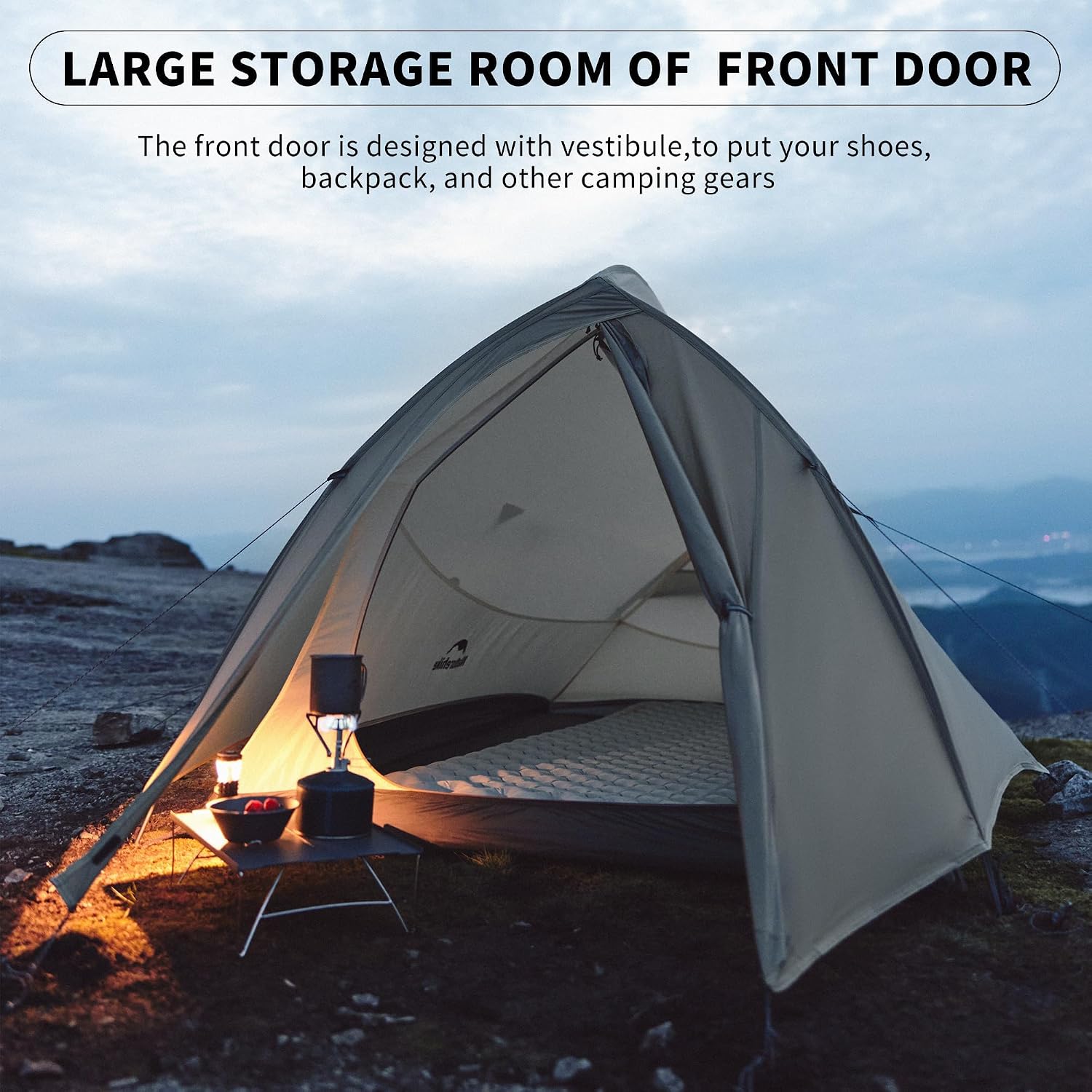
A solo tent can be a useful step up from a basic shelter when you want a separate inner tent and a little covered space for gear. The Naturehike Cloud Up is designed for one person, with a two-layer construction and a front area that can hold shoes or a backpack outside the sleeping compartment.
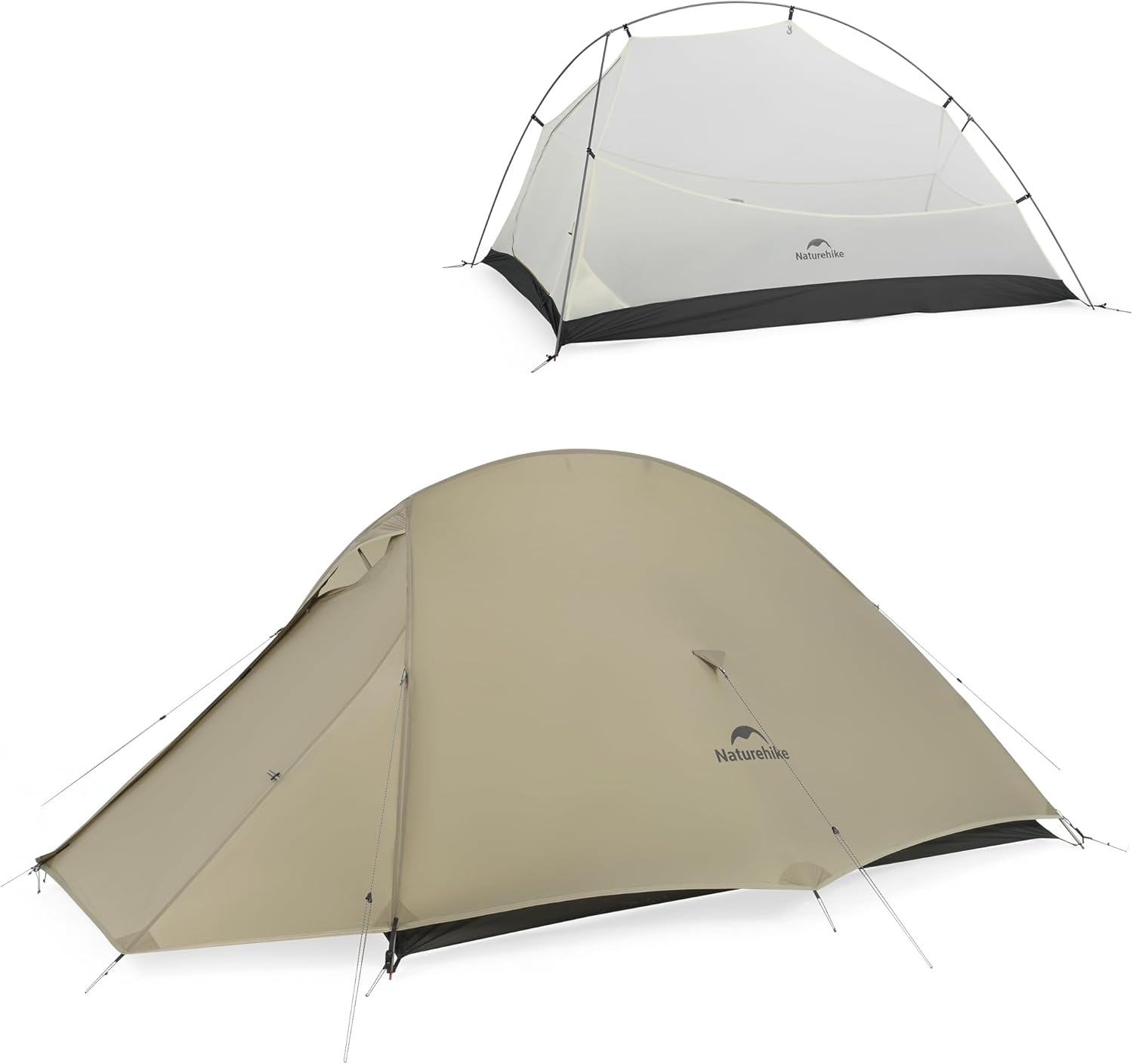
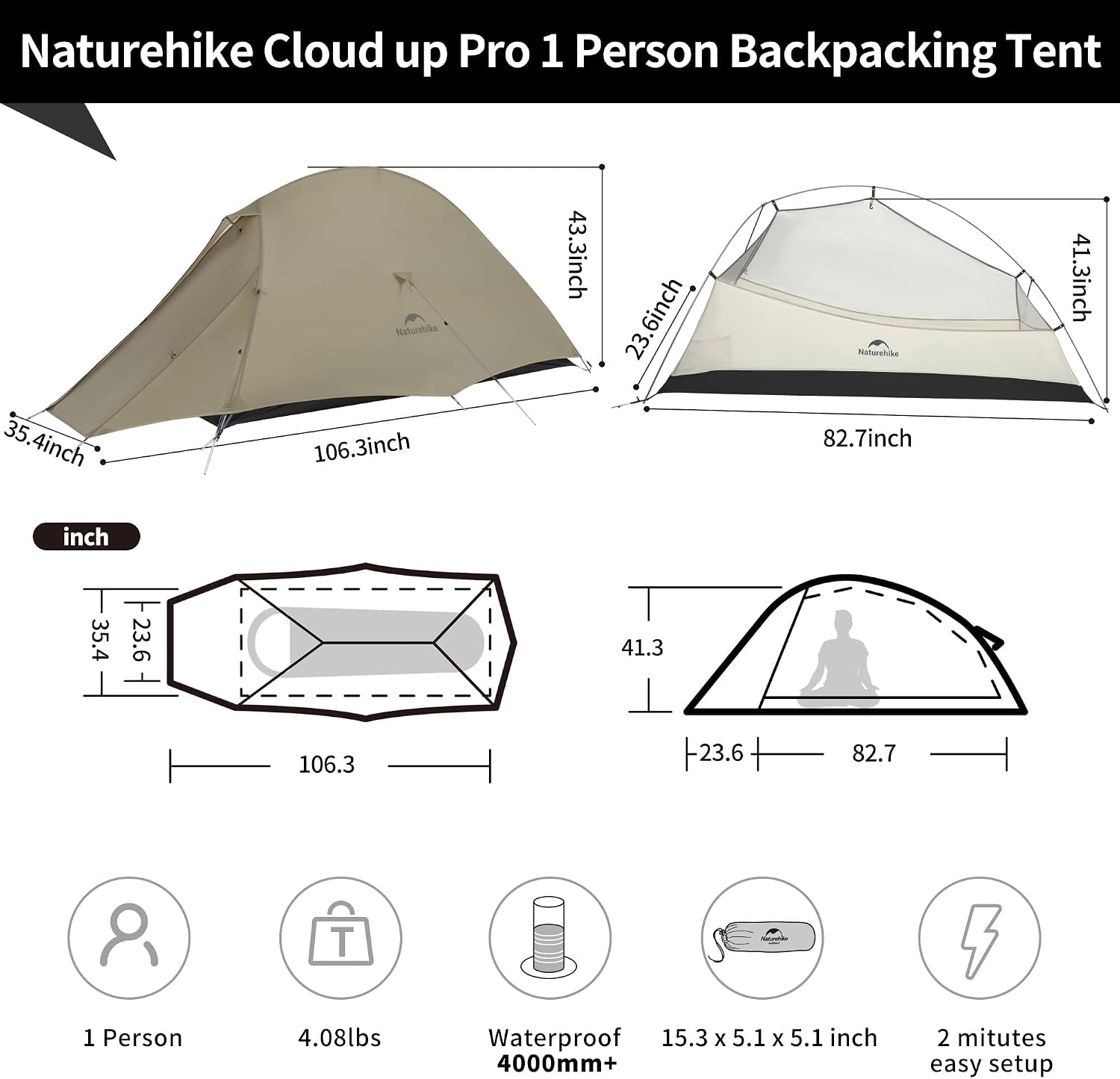
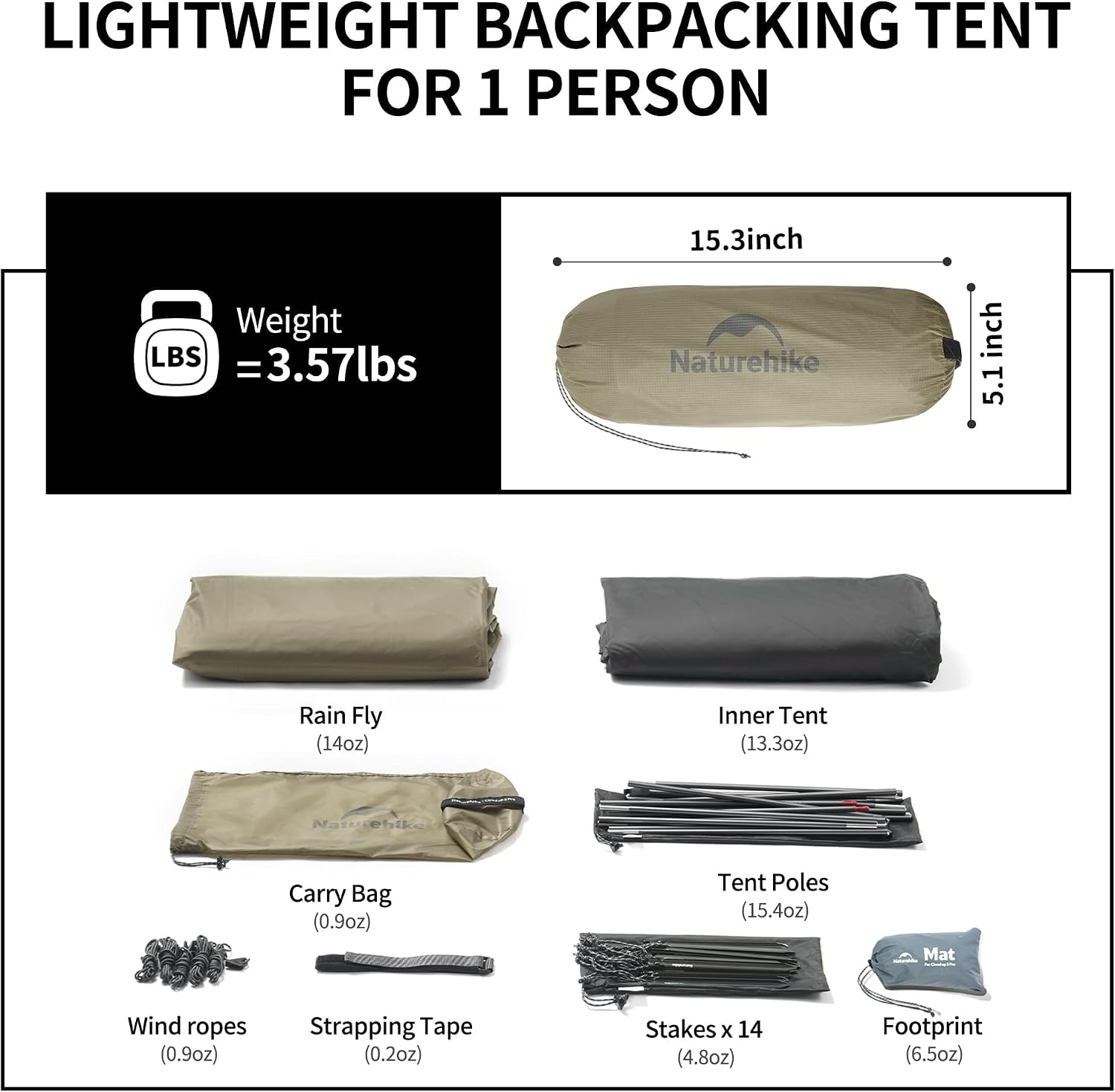
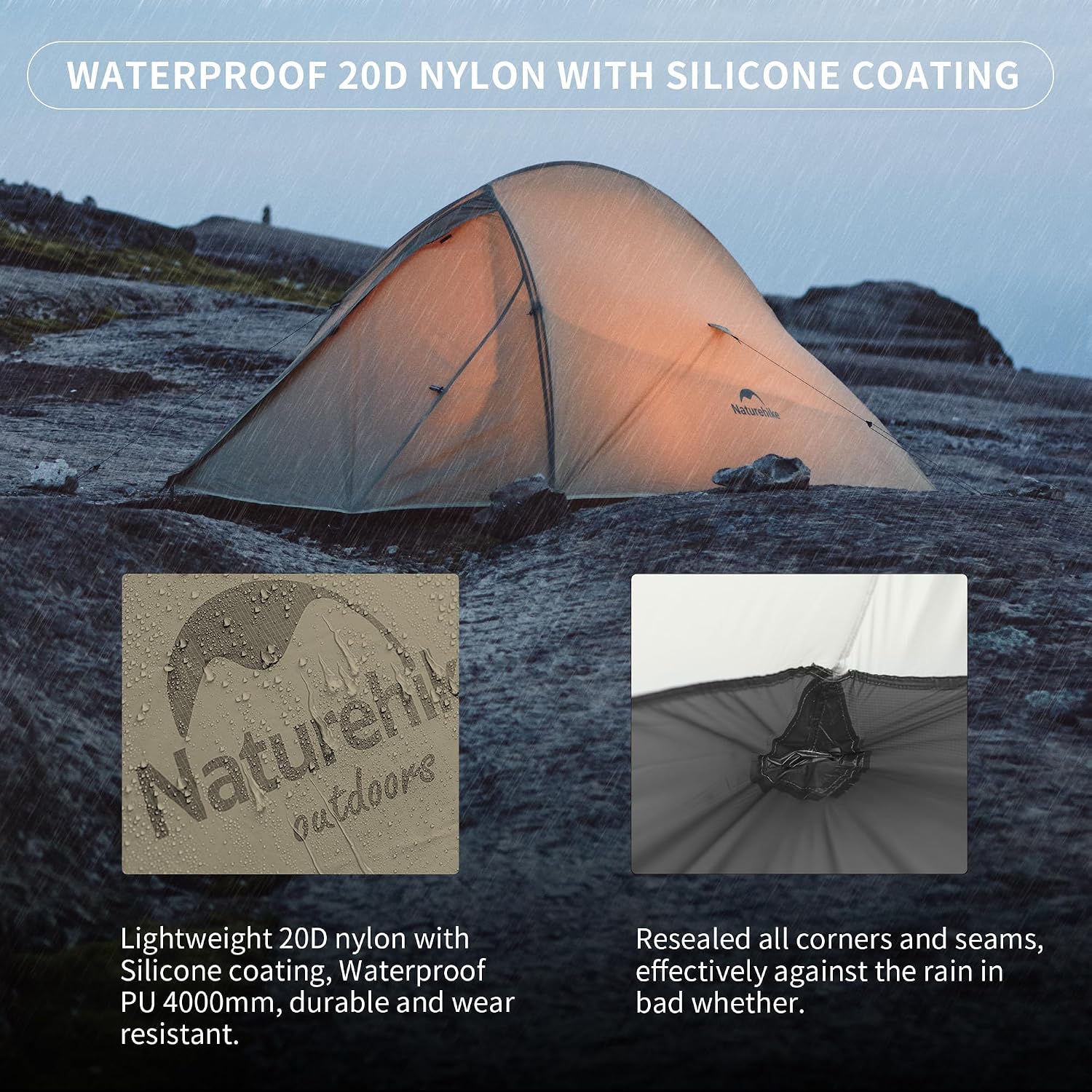
It weighs 3.47 lb and packs to 17.7 x φ4.7 in, so it is intended to travel in a backpack or on a bicycle. The listed dimensions are (25.6 + 82.7) x 43.3 in, with a height of 39.3 in. The fly and floor use 20D nylon with a silicone coating and a stated 4000 mm waterproof rating. The poles are 7001 aluminium, and the tent has a free-standing design with a Y-type inner structure.
Getting the most from it
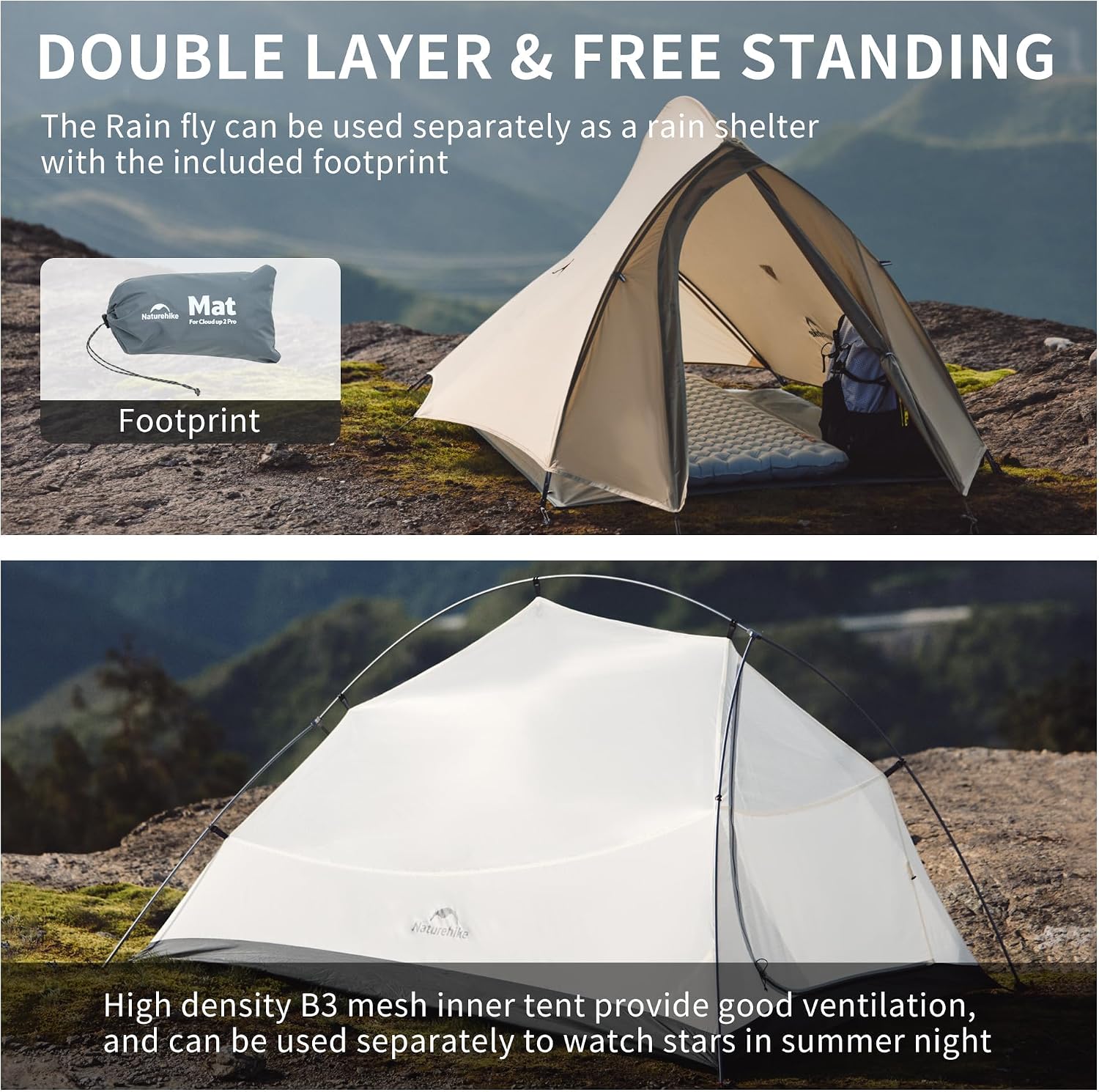
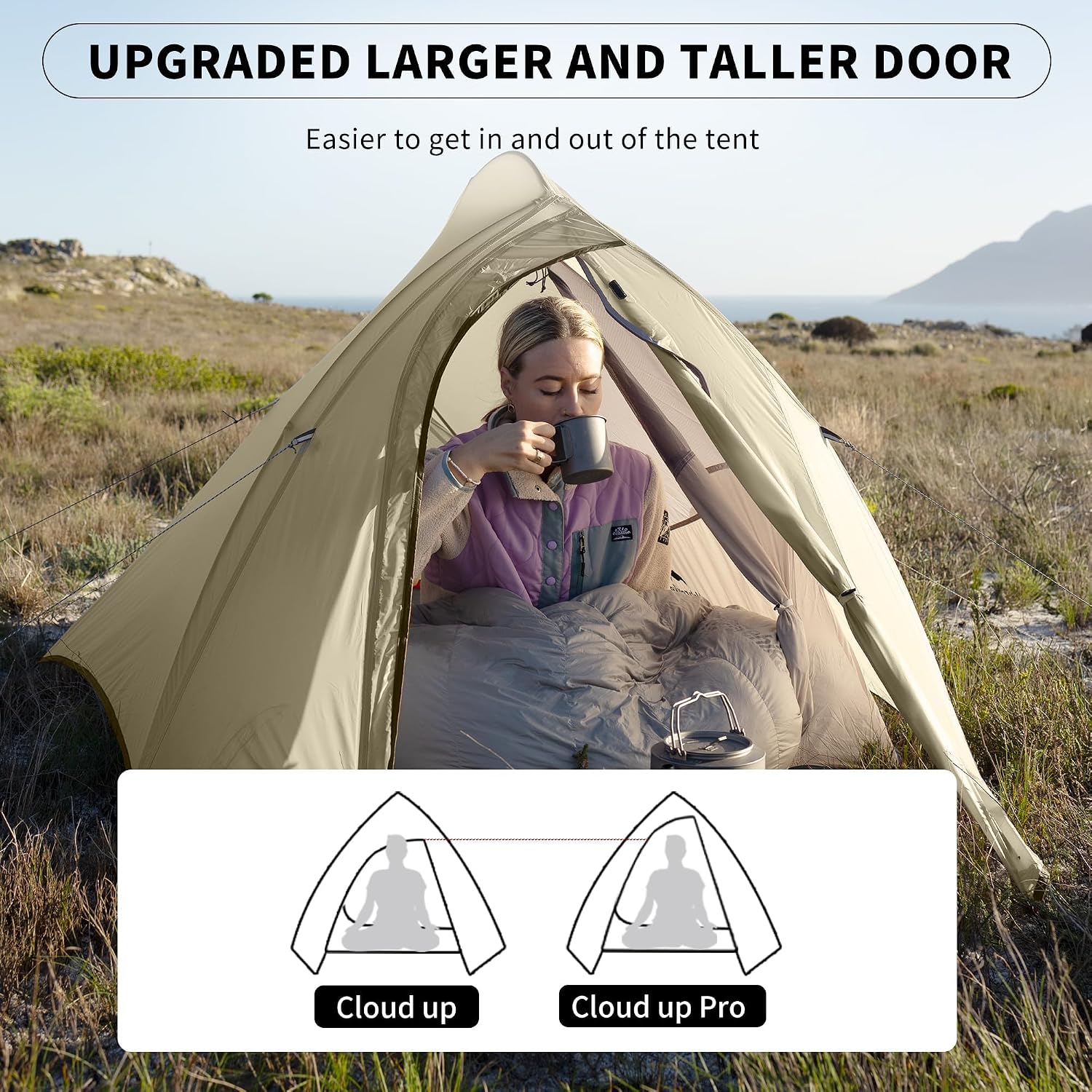
The two layers serve different purposes: the outer tent provides the covered front storage area, while the inner tent is where you sleep. A larger front window and mesh panels are intended to support airflow, the product description also says the inner tent has more breathable fabric to help limit exposure to wind at night. There is a mesh pocket for small items such as a phone, plus a hook at the top for a camping light.
That layout makes sense for a solo overnight trip: keep footwear and a pack near the entrance, then leave the sleeping area less cluttered. It is a good option if keeping your shelter compact matters more than having room to spread out. The stated one-person capacity is also a practical boundary, this is not a shared tent for two campers or a roomy base for bulky equipment.
Usage tips
The free-standing design is described as quick to pitch without particular skills, but take time to arrange the poles and outer layer correctly before relying on the shelter outdoors. The two-way YKK zipper gives access through the door, and the carry bag is sized to store the tent when packed. For a damp stop, keep wet footwear in the front area rather than beside your sleeping gear.
The 4000 mm rating and reinforced waterproofing at the corners are relevant details for wet conditions, but the listing does not provide test conditions or a broader weather rating. It may not be the best option if you need a tent specifically described for severe weather or want more space to sit upright, its listed height is 39.3 in.
Before deciding
Is this tent intended for more than one person? No. It is described as a one-person tent, so choose a larger capacity if you need shared sleeping space.
Can a backpack fit under cover? The product description says the outer tent provides extra room in front of the inner-tent door for shoes and a backpack. It does not give a separate storage-area measurement.
Does it include a place for small items or a light? Yes. The inner tent has a mesh storage pocket and a hook at the top for a camping light.
Before you buy
This tent’s appeal is its solo-focused setup: a separate inner space, a small covered gear area and a packed size intended for carrying on a hike. That is a more organised approach than taking a basic single-layer shelter, especially when you want to keep a pack and muddy shoes near the entrance rather than in the sleeping area. The trade-off is limited room, and the listed details do not establish how it performs in particular storm conditions. Choose it for compact solo camping when its dimensions suit your needs, look elsewhere if you need more sleeping capacity, extra headroom or a clearly specified severe-weather shelter.