

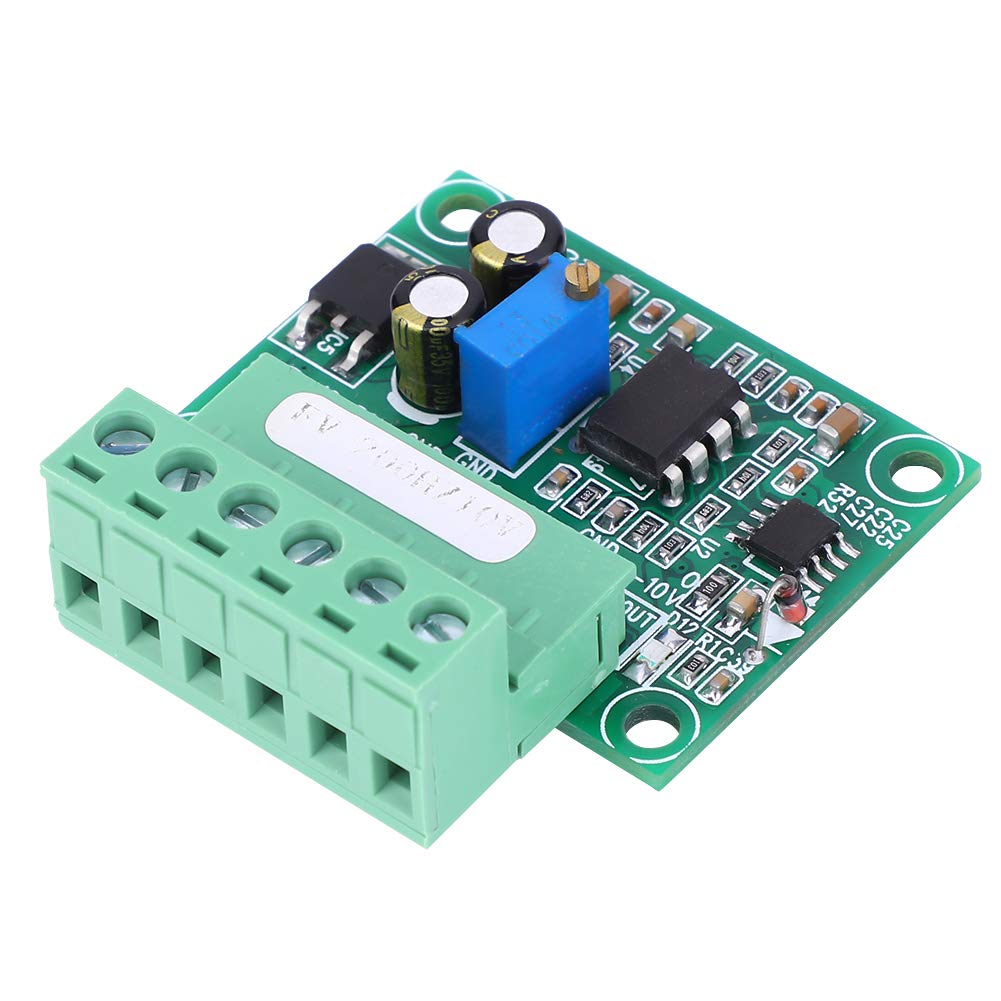
Jeanoko FV 200Hz10V Frequency-to-Voltage Converter Module, 0–200 Hz to 0–10 V
Reviews
Price
Product description
Connect a digital pulse signal to an analogue voltage input when linking control equipment such as a PLC and a frequency converter. The Jeanoko FV 200Hz10V module converts frequencies from 0–200 Hz into a 0–10 V analogue signal.
Its stated conversion points are 20 Hz to 1 V, 100 Hz to 5 V and 200 Hz to 10 V. That defined relationship makes it easier to match a frequency signal to equipment that uses a voltage input.
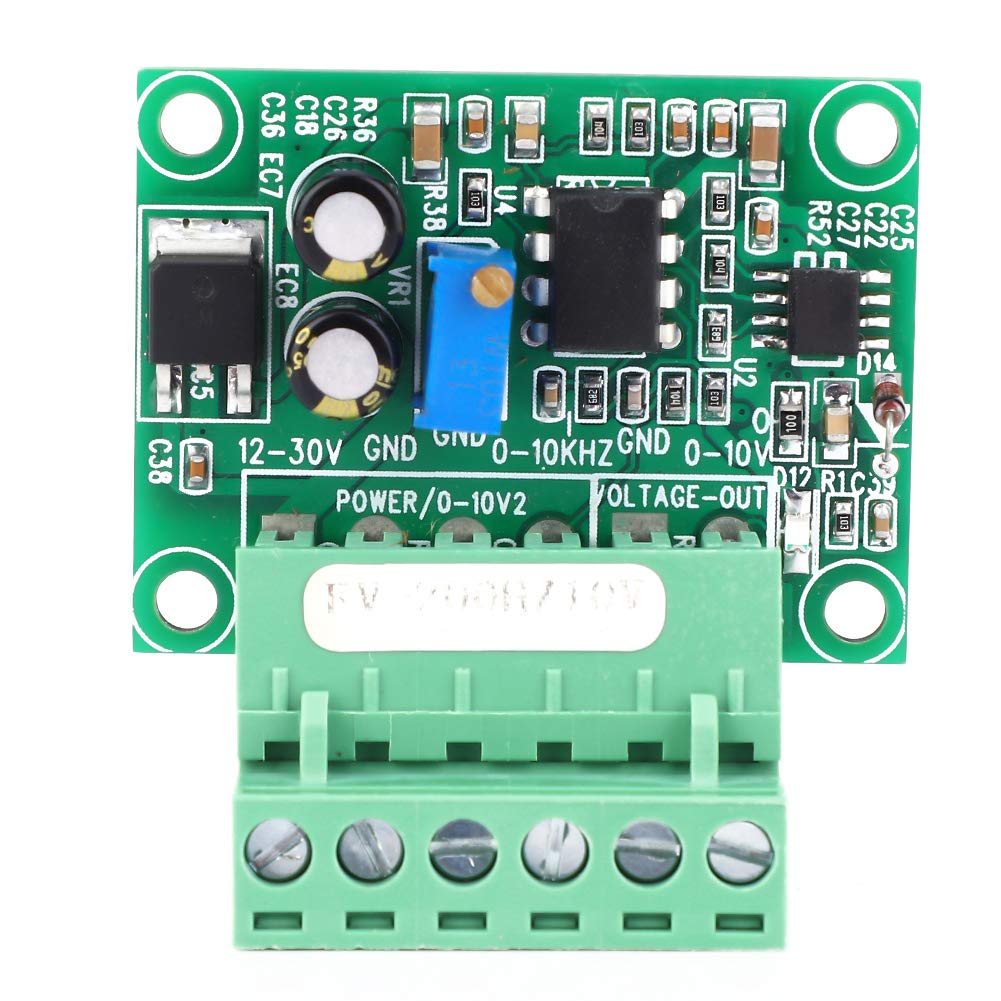
Need a straightforward way to bridge those two signal formats? The module is designed for that specific interface task, including use with motion control cards.
Key points
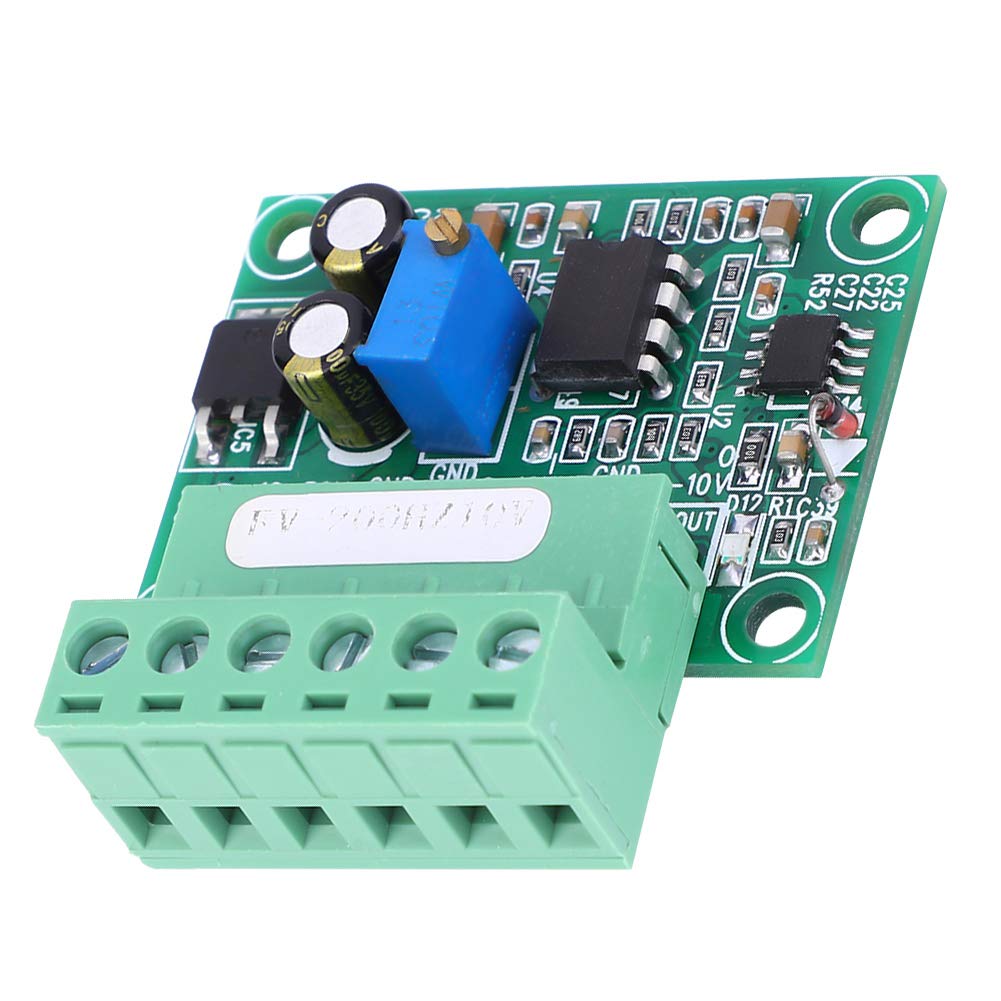
This single-channel module translates digital frequency input into analogue voltage output across the 0–200 Hz and 0–10 V ranges. The signal input accepts pulse levels of 5 V, 12 V or 24 V directly, without an added resistor. Its input is isolated, helping keep the signal interface separate from the rest of the setup.
The conversion relationship is provided at three reference points: 20 Hz produces 1 V, 100 Hz produces 5 V, and 200 Hz produces 10 V. A multi-turn potentiometer on the board is used to calibrate the frequency-to-voltage correspondence. The module is preset to a relationship at shipment, so calibration is available when it is needed rather than being part of routine setup.
Usage tips
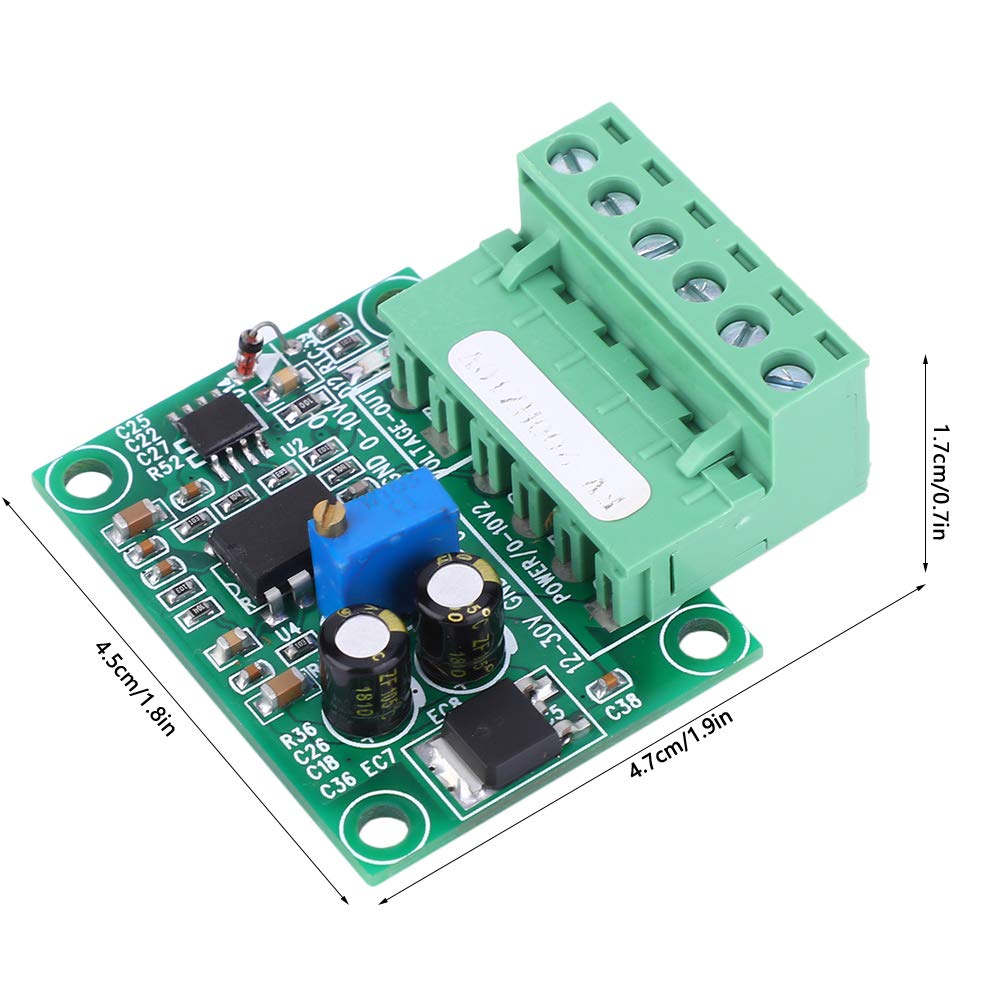
Plan the power supply and signal wiring around the input level you will use. The module’s supply range is 12–30 VDC, with 15–24 VDC recommended. For a 12 V pulse level, the supply must be at least 15 VDC, when using a 24 V input level, use a 24 VDC supply. If connecting a PLC, the module supports NPN type and requires a ground wire.
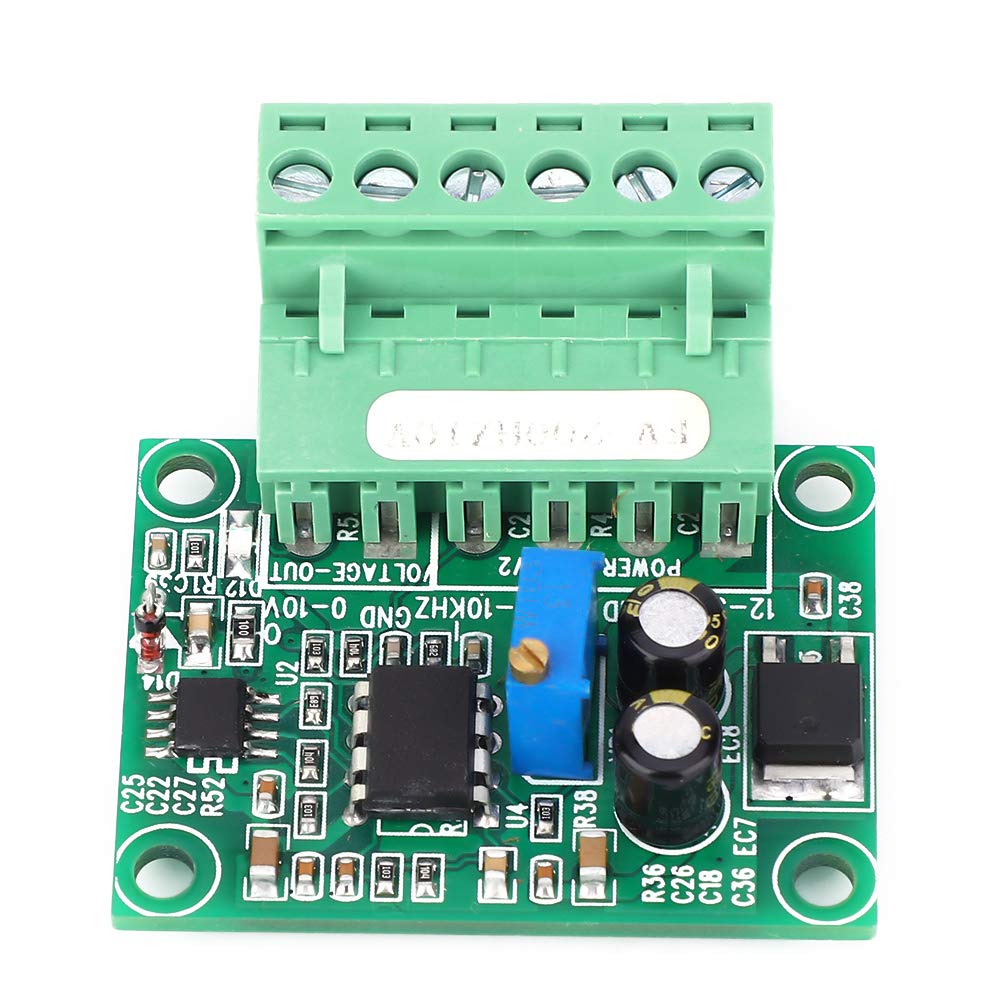
For encoder applications, keep the encoder rotating at a steady speed for more than 0.5 seconds. The stated response time is approximately 0.3–0.5 seconds, a practical consideration when setting up the control signal. Use the board’s potentiometer for calibration only when adjustment is required.
Everyday use
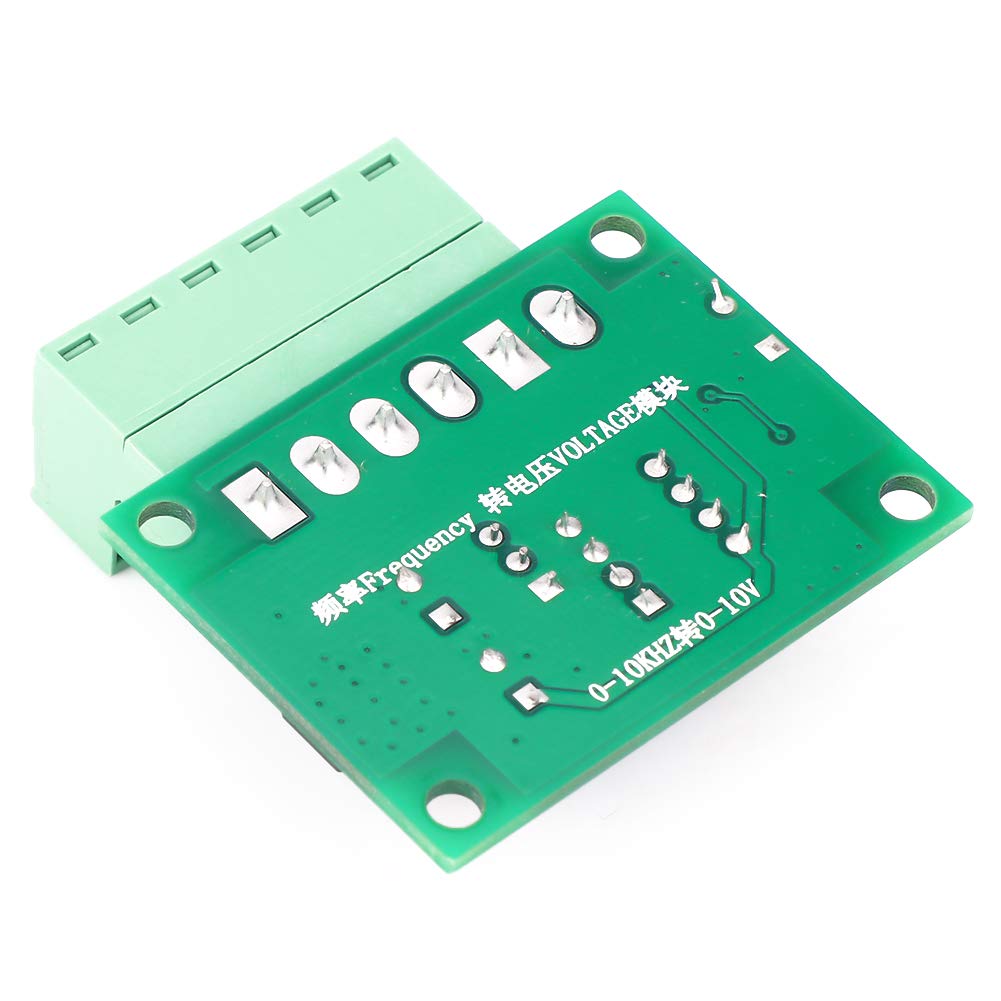
In a PLC-to-frequency-converter interface, the module provides a way to turn a frequency signal into a voltage signal for the connected equipment. The same conversion can be used to match an interface between a motion control card and a frequency converter. Rather than choosing separate interface hardware for each signal format, this module focuses on the specific digital-frequency-to-analogue-voltage conversion.
For example, a control setup using a 100 Hz signal can use the stated 5 V reference point when matching the output to the receiving equipment. The three listed conversion points give a useful starting reference for planning the signal relationship, while the onboard potentiometer provides a means of calibration where needed.
Practical questions
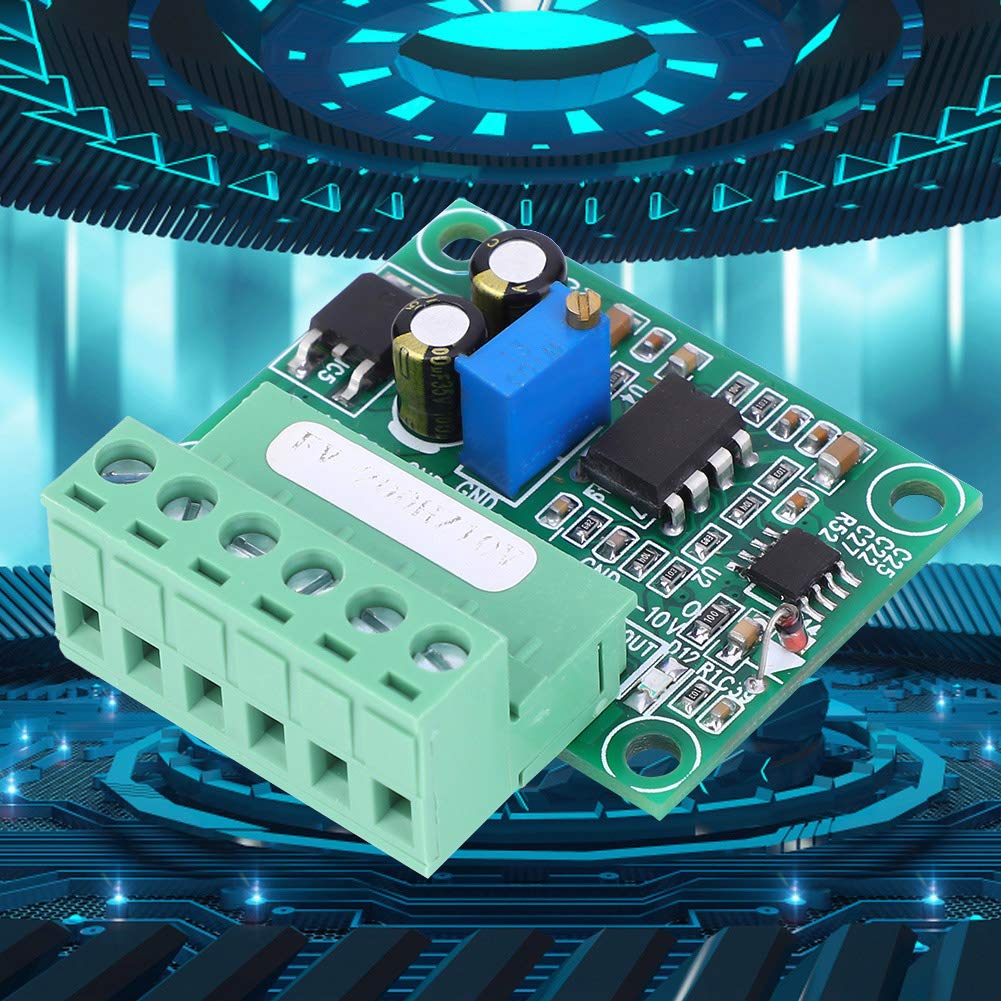
What output corresponds to the input frequency? The listed reference points are 20 Hz to 1 V, 100 Hz to 5 V and 200 Hz to 10 V. The board’s multi-turn potentiometer is used to calibrate that relationship.
Which pulse levels can the input accept? It accepts 5 V, 12 V and 24 V pulse levels directly, without an added resistor. For a 12 V pulse level, use a supply of at least 15 VDC, a 24 V input level calls for a 24 VDC supply.
Can it be used with a PLC? Yes. It is intended for PLC and frequency-converter interface work, supports NPN-type PLCs and requires a ground wire for that setup.
Buying verdict
For a control system that needs a 0–200 Hz digital frequency signal converted to a 0–10 V analogue output, the Jeanoko module brings the conversion and calibration point together in one interface component. Its defined voltage mapping and support for PLC and motion-control connections make it a practical fit for frequency-to-voltage signal matching.