

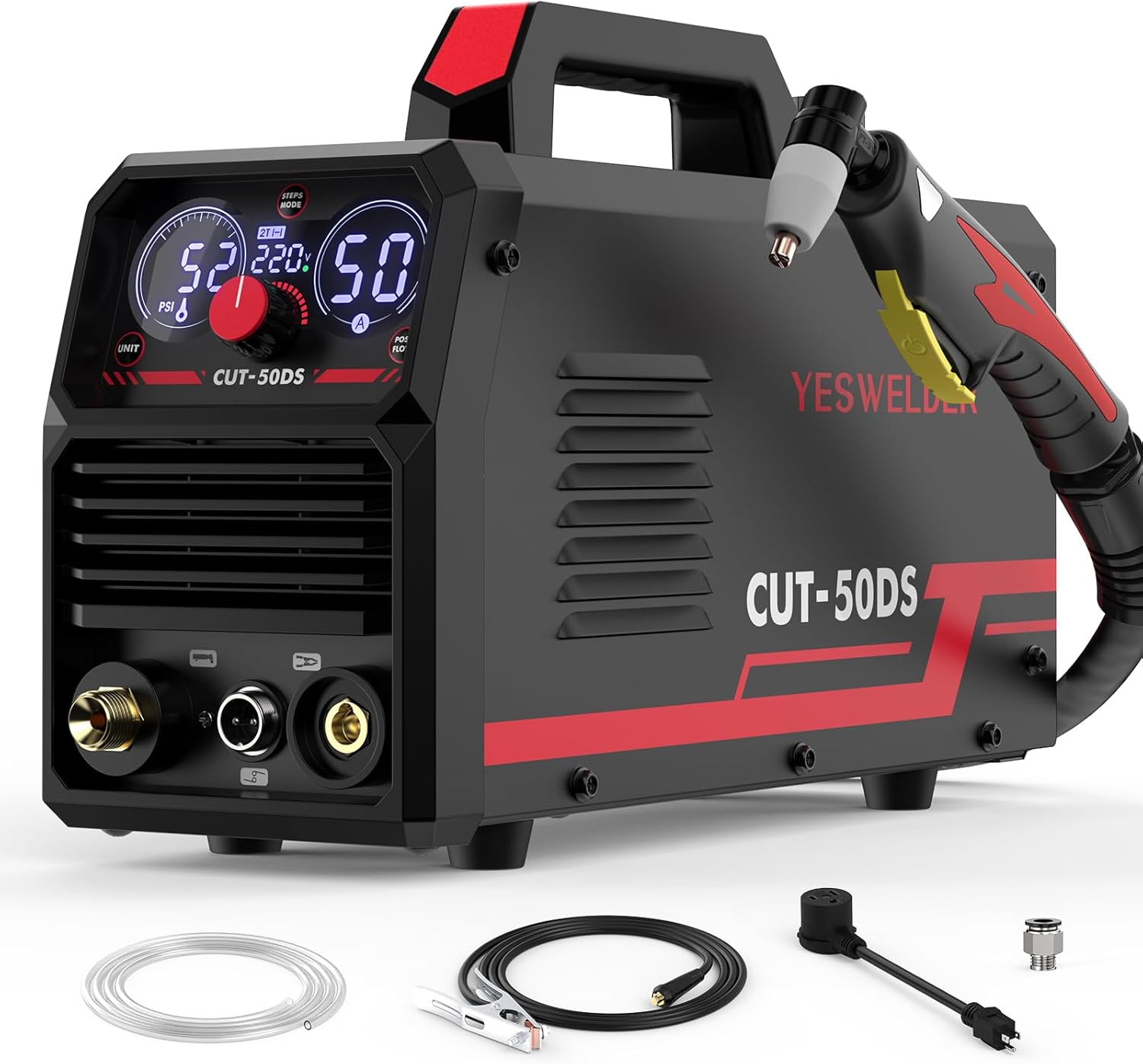
YESWELDER CUT-50DS Plasma Cutter (50Amp) with Digital Display, Dual Voltage 110/220V
Product description
What it is and why people buy it
The YESWELDER CUT-50DS is a plasma cutting machine built for people who want faster, cleaner cuts on metal without having to tap and drag a torch tip across the work. Instead of “touch-start,” it uses an arc pilot without contact, which is the kind of detail that matters when you’re cutting through rough, painted, or lightly rusted surfaces. In practice, it’s aiming to make setup quicker and the cutting edge more consistent, with minimal slag compared to approaches that disturb the surface more.
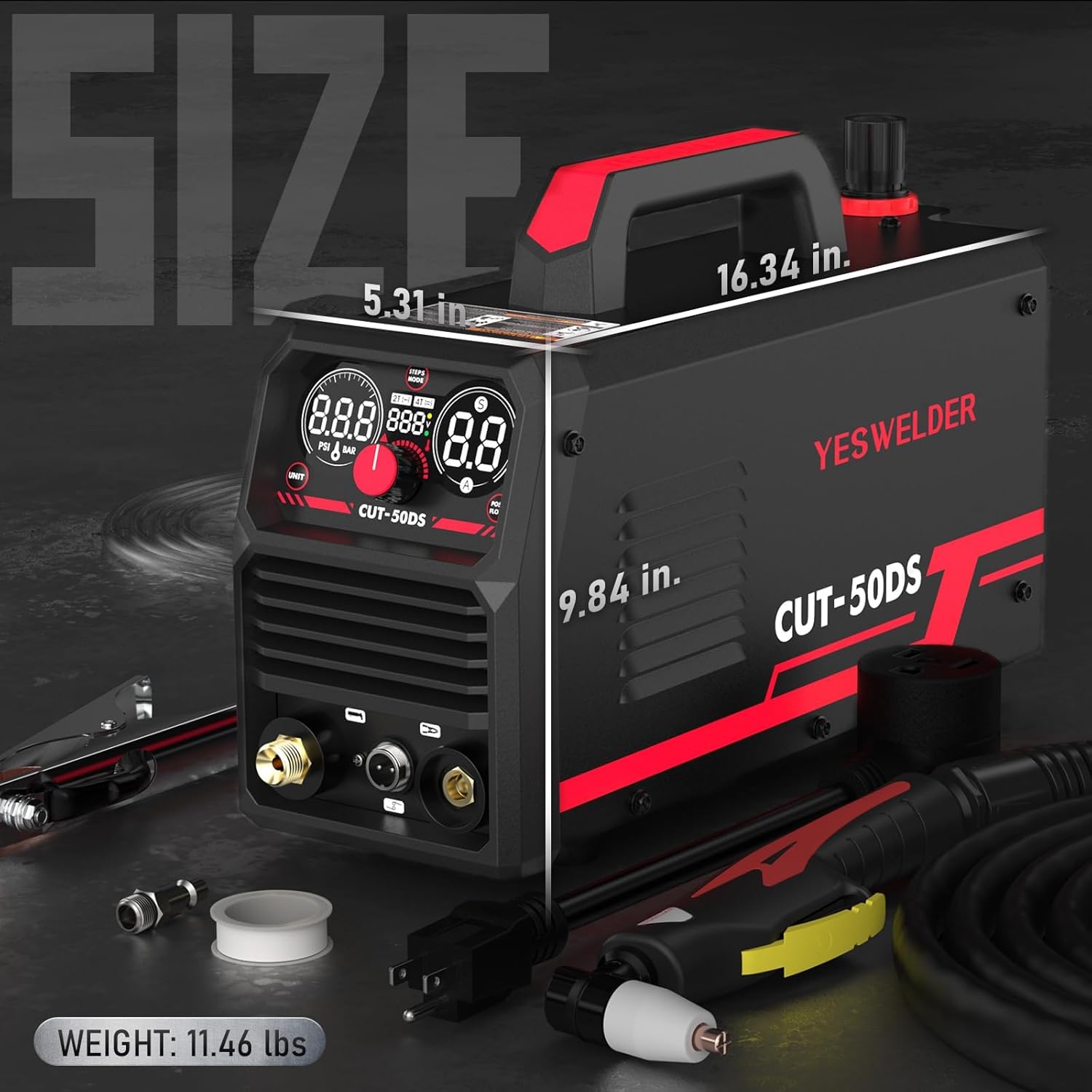
It’s also positioned as a portable, dual-voltage unit: you can plug it into 110V or 220V receptacles without tool-based rewiring. With its stated weight of 12 lb, it’s the kind of tool that feels less like a permanent shop fixture and more like something you can move between jobs.
Key points you’ll notice during use
This cutter leans heavily on two ideas: better start behavior and easier day-to-day handling.
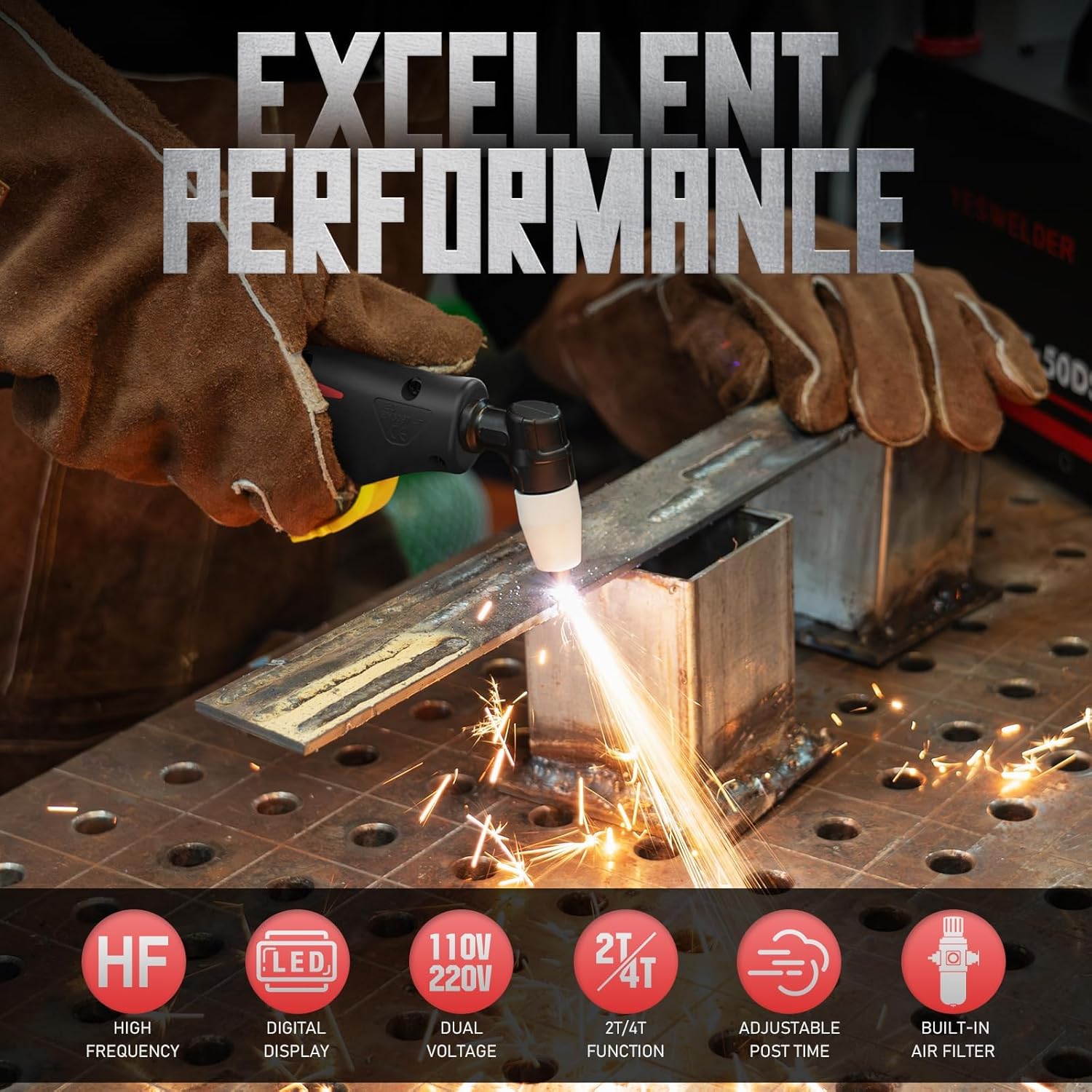
First, the pilot arc / no-touch start. That design is meant to let the machine begin cutting without the torch tip touching the metal. Over multiple cuts, that can translate into fewer interruptions and less hassle when the surface isn’t perfectly clean.
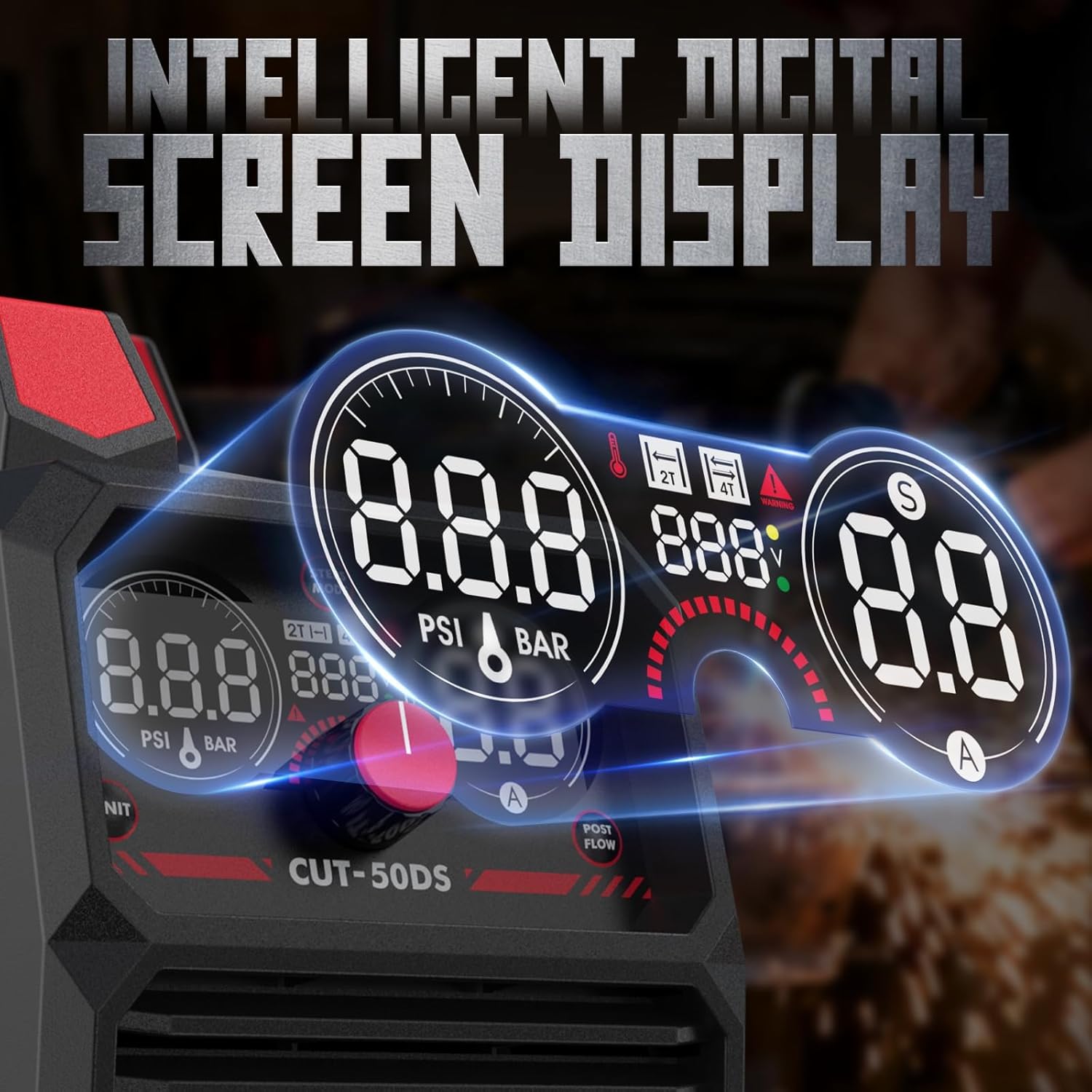
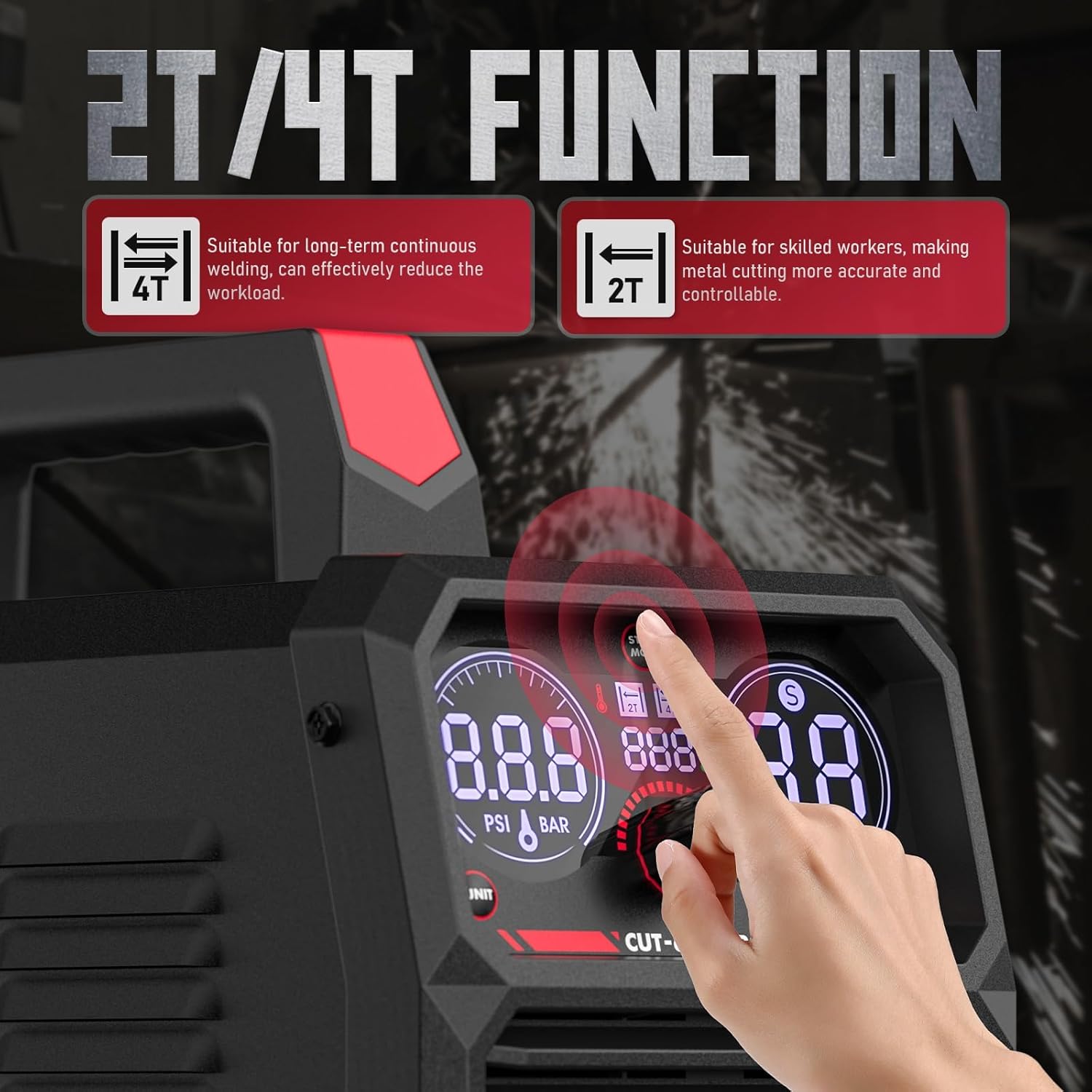
Second, the digital display. Having a digital readout improves how quickly you can verify settings while you’re working, especially if you’re switching between jobs or adjusting output for different material thickness.
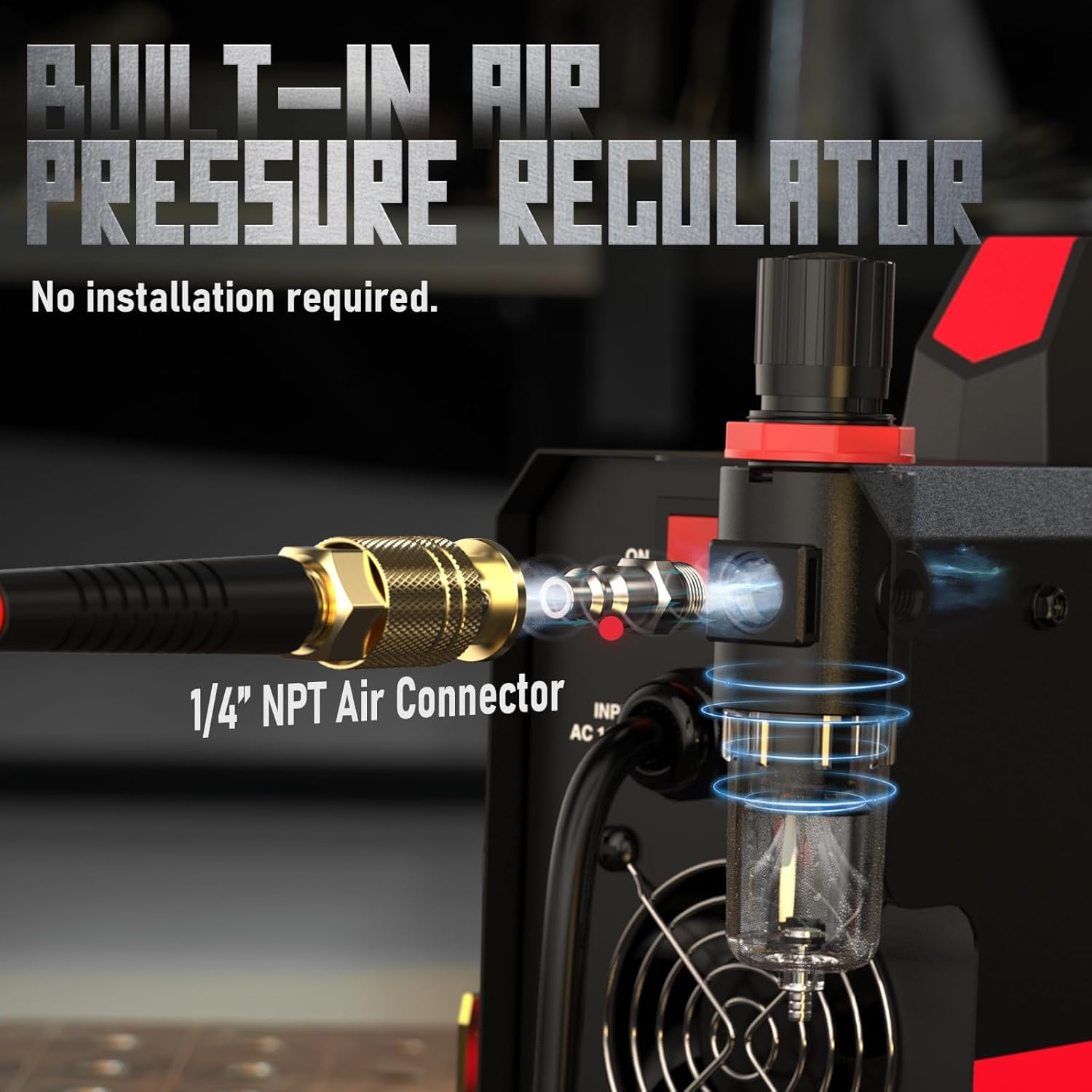
And there’s one more small-but-real operational convenience: integrated post-flow cooling. When you stop cutting, the air runs for about a minute to cool the plasma torch consumable. That’s exactly the sort of feature that can help extend consumable life—assuming normal use and proper maintenance.
There are limits, though. A plasma cutter like this can be a strong “in-between” machine, but it may not satisfy buyers who need the absolute highest output consistency for heavy industrial production. Also, your results will depend on technique and material condition.
Cutting performance, voltages, and thickness ranges
On paper, the CUT-50DS is built to handle a practical range of jobs with different thicknesses depending on whether you run 110V or 220V.
The listing describes: - “Clean cut” thickness targets of 3/25 in on 110V and 1/5 in on 220V - A maximum cut thickness of 2/5 in on 110V and 16/25 in on 220V
It also states it uses safe compressed air (non-hazardous air) and is intended for cutting stainless steel, alloy steel, mild steel, copper, and aluminum. If you routinely cut a mix of those materials, the value is that you’re not buying a “one metal only” tool.
One limitation to keep in mind: the machine’s thicker-cut capability is described as stronger on 220V. If most of your worksite is only 110V, the performance ceiling is likely lower.
Tech specs that matter for buying decisions
Tech specs
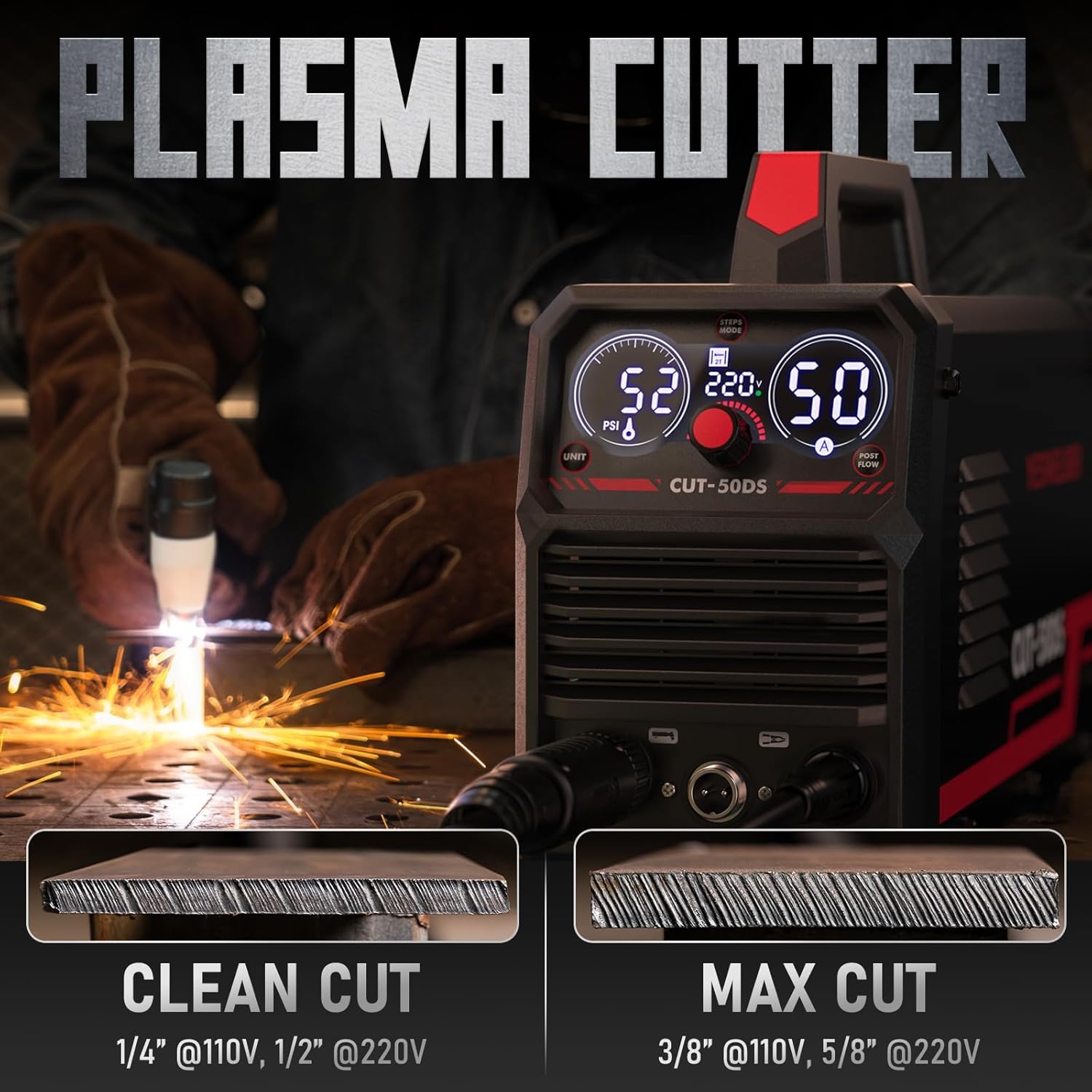
- Type: Plasma cutting machine (pilot arc without touch)
- Amperage: 50Amp
- Power / input: Dual voltage 110/220V
- Inverter tech: IGBT inverter
- Display: Digital display for clearer visual operation
- Cooling feature: Integrated post-flow air for about one minute after cutting
- Safety certifications: ETL
- Protection features: automatic voltage fluctuation compensation, over-current protection, overload protection, temperature control
- Weight: 12 lb
Safety and build details (what’s reassuring, what to still watch)
Safety features are a clear part of this model’s pitch. It’s listed as ETL-certified, with multiple protections including automatic voltage fluctuation compensation, over-current protection, overload protection, and temperature control.
Is that a guarantee you’ll never run into problems? No. Any plasma cutter can still be sensitive to setup, air quality, ventilation, and how long you push it. But having layered protection and temperature control is generally what you want when you’re using a tool more than once a month.
Also, the “post-flow” cooling is worth paying attention to: if you regularly stop mid-job and start again, that minute of airflow after cutting is designed to help cool the consumable rather than leaving it hot.
Who it suits best (and who should skip it)
It makes sense if you want a portable dual-voltage plasma cutter that’s meant to handle real-world messy surfaces using a no-touch pilot arc. The combo of digital display, post-flow cooling, and multiple safety protections fits well for hobbyists, small fabrication, and jobsite users who don’t want to treat metal cutting like a perfectly controlled lab environment.
It might not be the best match if: - You mostly work at 110V and need consistently near the upper thickness limits. - You’re expecting the kind of performance you’d typically associate with higher-end shop systems designed for heavy continuous use. - You’re not prepared to follow good cutting practices (clean setup, proper airflow, and correct technique), because plasma cutting results still depend on how you run it.
Is it worth it?
Worth considering if you’re looking for a 50Amp class plasma cutter with pilot arc without contact, a digital display, and a dual-voltage setup that you can move between 110V and 220V receptacles. The post-flow cooling feature is a practical bonus for consumable longevity, and the safety protections are reassuring for day-to-day operation.
Not the best choice if your projects consistently require maximum-thickness cutting under 110V, or if you need top-tier performance for continuous production work. In that case, this may feel more like a capable mid-range cutter than a “do everything forever” machine.
Mini FAQ
Mini FAQ
Does it start without touching the metal? Yes. It’s described as an arc pilot without touch, intended to cut without touching the torch tip to the metal.
What thickness can it cut? The listing provides “clean cut” and maximum thickness values for 110V vs 220V. If thickness matters most in your work, double-check the 110V numbers vs the 220V ones.
What air does it use? It uses compressed air described as non-hazardous for cutting.
Will it work on painted or rusty surfaces? The base description says it can cut efficiently on rough, painted, and oxidized/rusted surfaces, with minimal slag.
Is it safe to use? It’s listed as ETL-certified and includes protections like over-current, overload, and temperature control, plus automatic compensation for voltage fluctuations.