

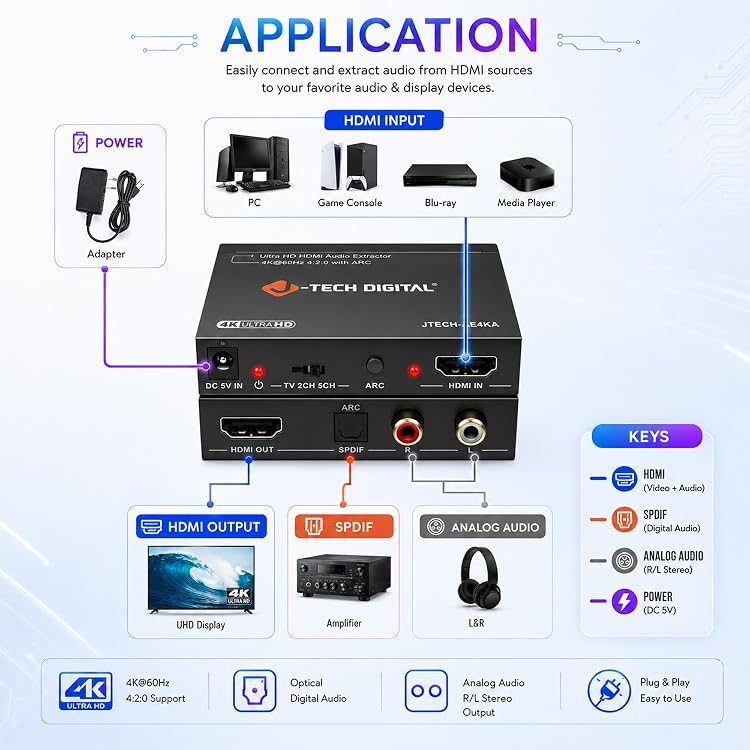
J-Tech Digital HDMI Audio Extractor 4K 60Hz with ARC Support (JTECH-AE4KA)
Product description
If your TV (or smart display) is sending video over HDMI but the sound needs to go somewhere else, an HDMI audio extractor can make that setup a lot less painful. The J-Tech Digital HDMI Audio Extractor 4K 60Hz & ARC Support (JTECH-AE4KA) is built to pull audio from an incoming HDMI signal and route it to an external sound system using RCA (stereo) and/or optical output.
It’s not a do-everything box, though. Some limitations—like how 5.1 audio is handled over RCA and what ARC can output—matter more than most people expect. Below is a practical way to think about whether this extractor fits your gear and your expectations.
Quick overview
On paper, this is an HDMI-to-audio adapter that focuses on audio extraction rather than video scaling. It supports 4K@60Hz (4:2:0) and 4K@30Hz (4:4:4), and it follows HDMI 1.4 and HDCP 1.4 standards. For audio, you get:
- Stereo via RCA out
- Up to 5.1Ch via optical out
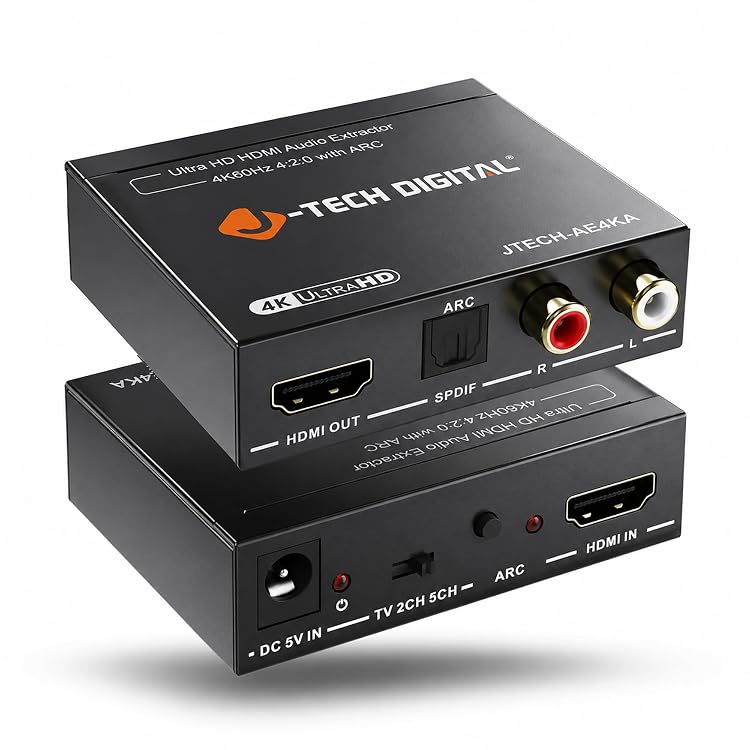
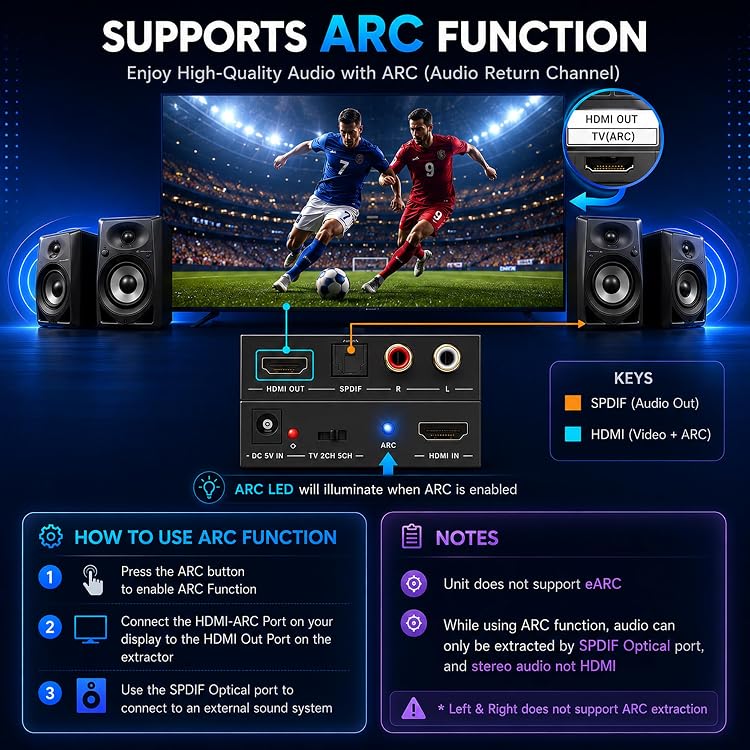
There’s also an ARC-focused approach: it can take audio from a smart display using its ARC function, but the base behavior is more specific than you might think.
Key points (what to know before you buy)
The biggest “gotcha” here is audio routing—especially if you want one connection type to handle everything. The unit does not downmix 5.1Ch audio to RCA. So if you connect to RCA and your source is set to output 5.1, you should not expect RCA to deliver a downmixed stereo signal.
ARC support is useful for certain living-room setups, but again, it’s not fully symmetrical across outputs. While using ARC, audio can only be extracted via the optical output. If you planned to run ARC audio over RCA, this is one of those areas where the product may not match your plan.
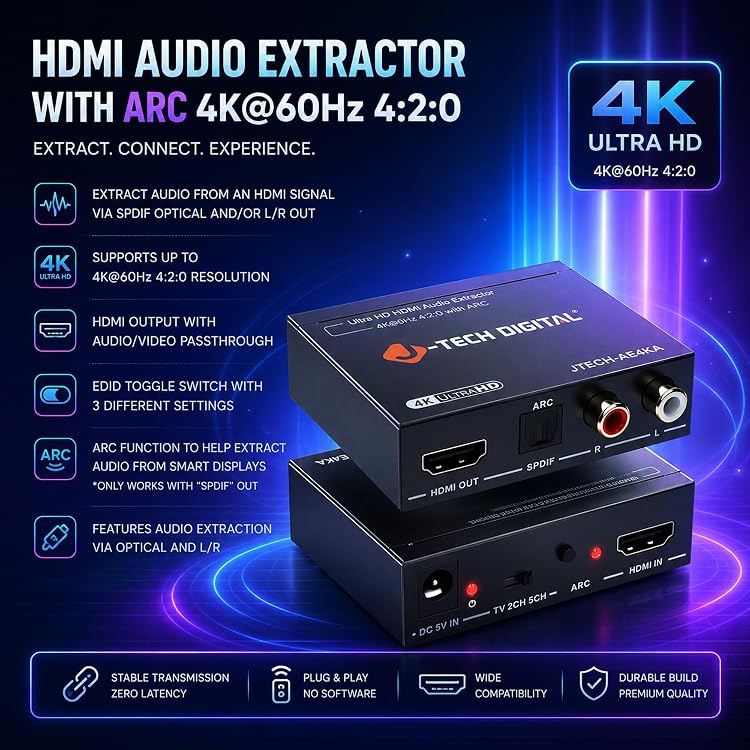
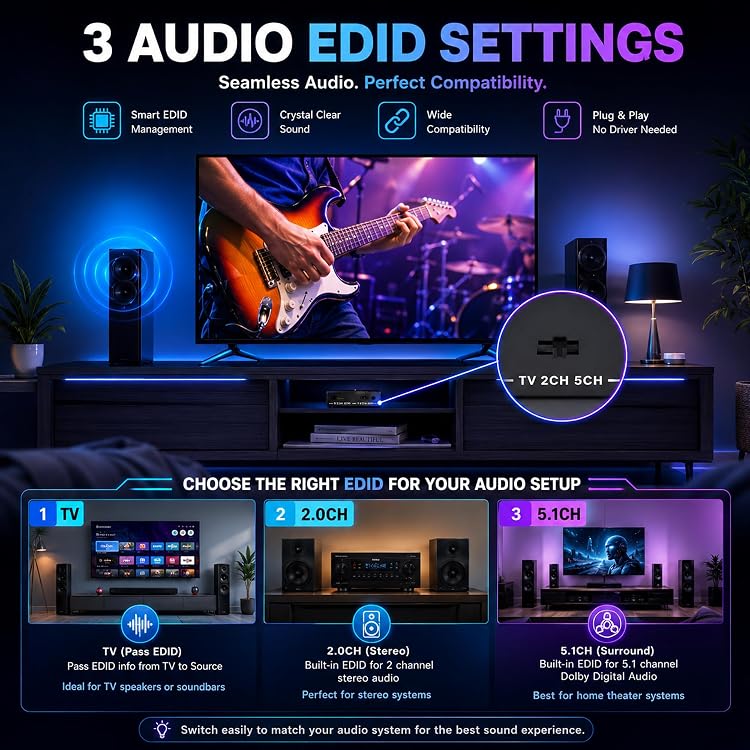
On the compatibility side, it includes EDID functionality with a toggle switch for 3 EDID modes: TV, 2CH, and 5CH. In real use, that can help reduce the “it works sometimes” feeling when the source and display disagree about capabilities.
And one more detail that’s easy to overlook: if your source device doesn’t output 4K@60Hz (4:2:0), you may need to lower output resolution to 4K@30Hz or 1080P for the extractor to properly process the signal.
What it’s for (and a realistic use case)
This kind of extractor makes sense when you have HDMI video going to a display, but you want audio to land at a separate receiver, soundbar, or speaker system.
Example: imagine you’re gaming on a laptop through HDMI into a TV, but you’d rather hear sound through a home setup that takes optical or RCA. With this extractor in the middle, you can route the HDMI audio out to the optical input for surround-capable playback (or to RCA for stereo), while the video continues to your display. It’s a practical “split the job” setup: HDMI in for the signal, then audio out to the system you actually want to use.
Where it shines (and where it can fall short)

Where it shines:
- If you want stereo audio over RCA and don’t need 5.1 on RCA
- If you want 5.1Ch over optical
- If you’ve run into HDMI handshaking issues and want EDID modes (TV/2CH/5CH)
- If your source/display supports ARC and you’re okay using optical during ARC mode
Where it may not be the right fit:
- Not ideal if you specifically need eARC support (it does not support eARC HDMI to RCA converter & HDMI to Optical converter per the provided notes)
- Not the best choice if your plan is “ARC to RCA” (ARC audio can only be extracted via optical)
- Not for you if you expect 5.1 audio to automatically downmix to RCA. This unit explicitly does not downmix 5.1Ch to RCA.
Tech specs
- Type: HDMI audio extractor (HDMI to RCA and HDMI to Optical)
- Supported video signal: 4K@60Hz (4:2:0) and 4K@30Hz (4:4:4)
- Compatibility: HDMI 1.4 and HDCP 1.4 standards
- Audio outputs: RCA (stereo) and optical (up to 5.1Ch)
- ARC note: During ARC use, audio can only be extracted via the optical output
- EDID modes: 3 modes (TV, 2CH, 5CH) via a toggle switch
- eARC support: Not supported
Final verdict
It’s a solid pick if you want a dedicated way to extract HDMI audio and you’re comfortable matching your desired sound format to the output you’ll use—RCA for stereo, optical for 5.1. Worth considering if EDID-related handshake issues are part of your setup headaches, because the TV/2CH/5CH modes are there to help.
You may want to skip it if you’re specifically counting on eARC support, or if your plan requires 5.1 audio to be downmixed when outputting through RCA. It might not be a great match if your source doesn’t output the expected 4K@60Hz (4:2:0) signal and you don’t want to lower resolution to make the extractor work correctly.
Mini FAQ
FAQ: common buying questions
1) Does this extractor downmix 5.1 to RCA?
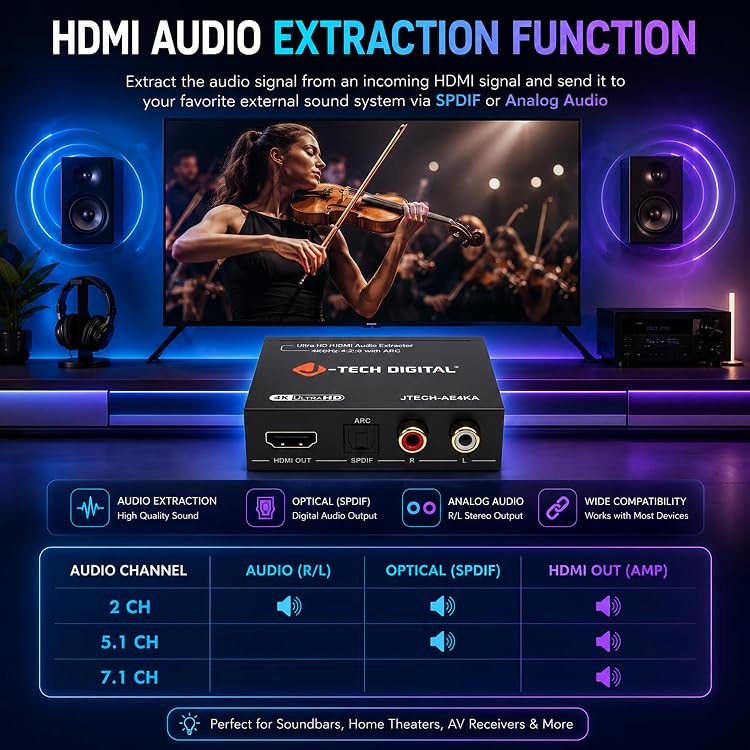
No. The provided notes say it does not downmix 5.1Ch audio to be output via RCA.
2) Can I use ARC and get audio through RCA?
While using the ARC function, audio can only be extracted via the optical output, not RCA.
3) What EDID modes does it include?
It includes a toggle switch with 3 EDID modes: TV, 2CH, and 5CH.
4) What resolution should I expect it to handle at 60Hz?
It supports 4K@60Hz (4:2:0). If your source doesn’t output that mode, the notes suggest lowering to 4K@30Hz or 1080P.
5) Is eARC supported?
No—based on the provided notes, it does not support eARC HDMI to RCA/optical conversion.