

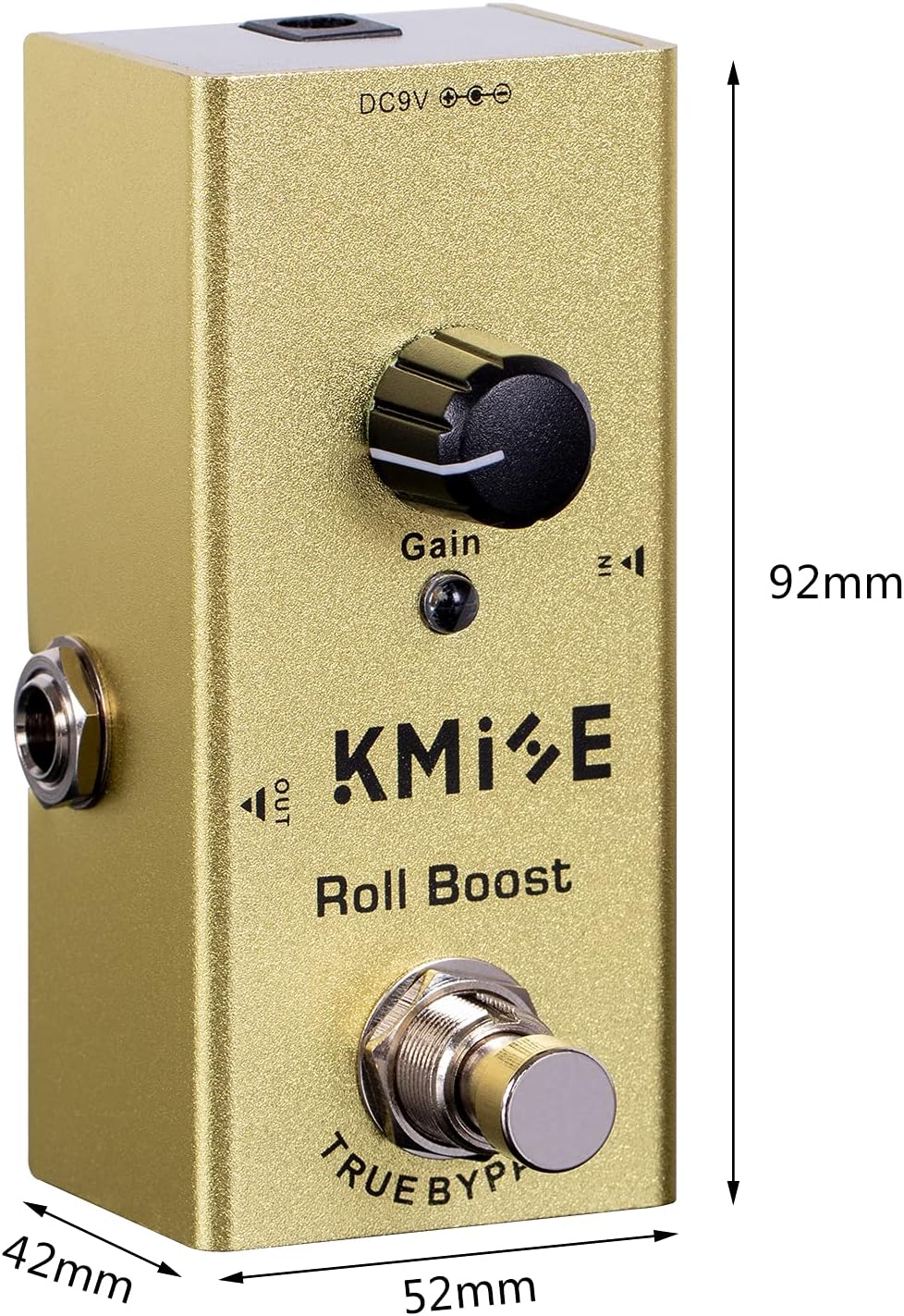
Kmise Roll Boost MI3430 Electric Guitar Boost Pedal with True Bypass
Product description
Highlights
True bypass keeps your guitar signal on a direct path when the Roll Boost is switched off, making it easy to add a boost for a song section and return to your bypassed signal afterward. Gain, Volume, and Tone controls let you shape the effect at the pedal. Its compact mini-stompbox format helps save room on a pedalboard, while the analog signal format suits a straightforward guitar-to-amp setup.
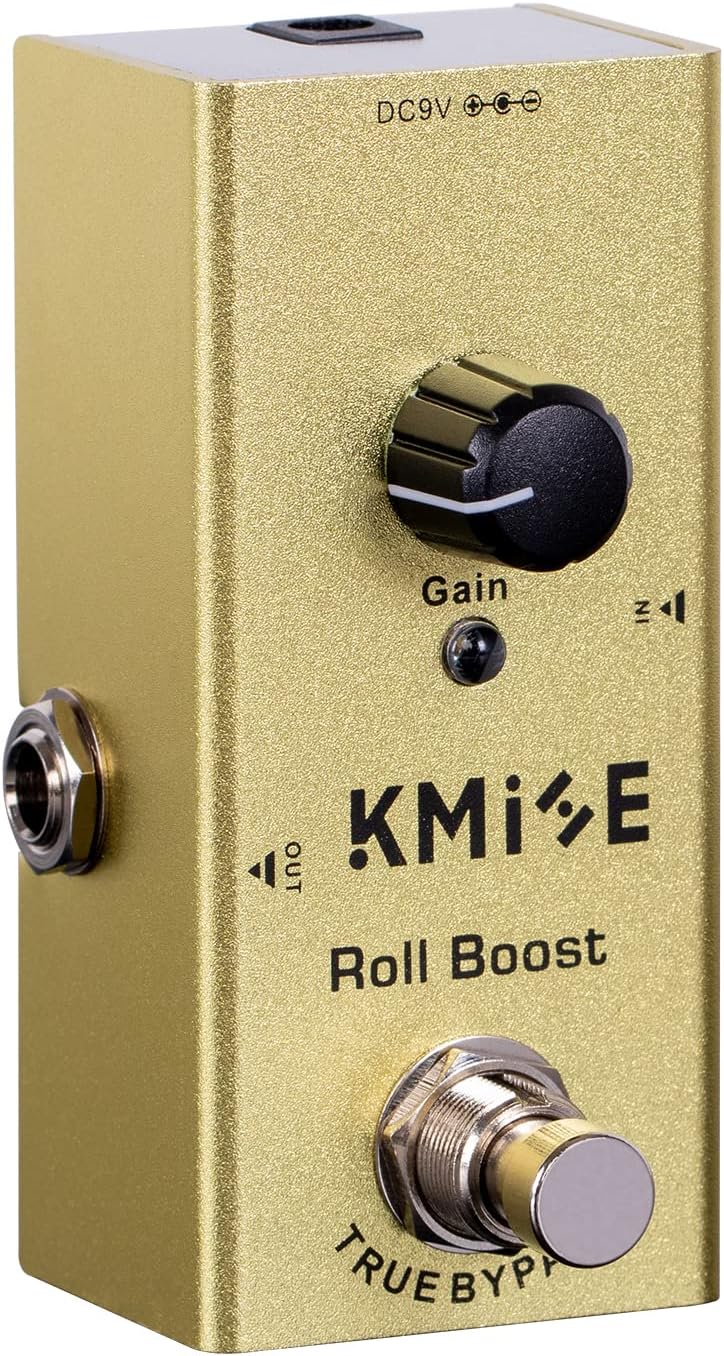
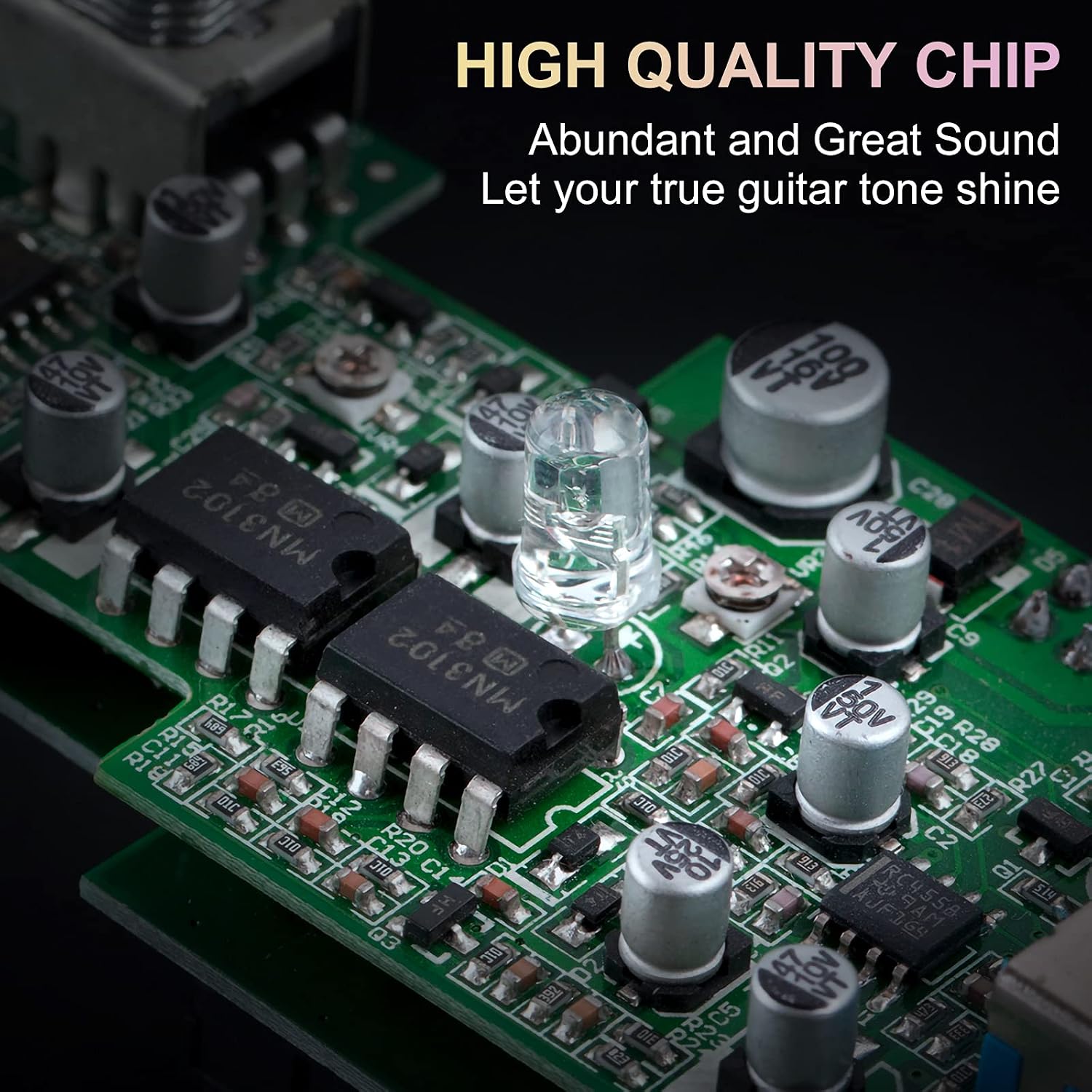
A noise-reduction design is intended to reduce noise swells associated with the Roll Boost circuit. The pedal is designed to boost the guitar signal before the amp, providing a dedicated control point for sections that call for more signal rather than a change to shared amp settings. For a gigging setup or a crowded board, that focused role and small form make it practical to place alongside other effects.
Usage tips
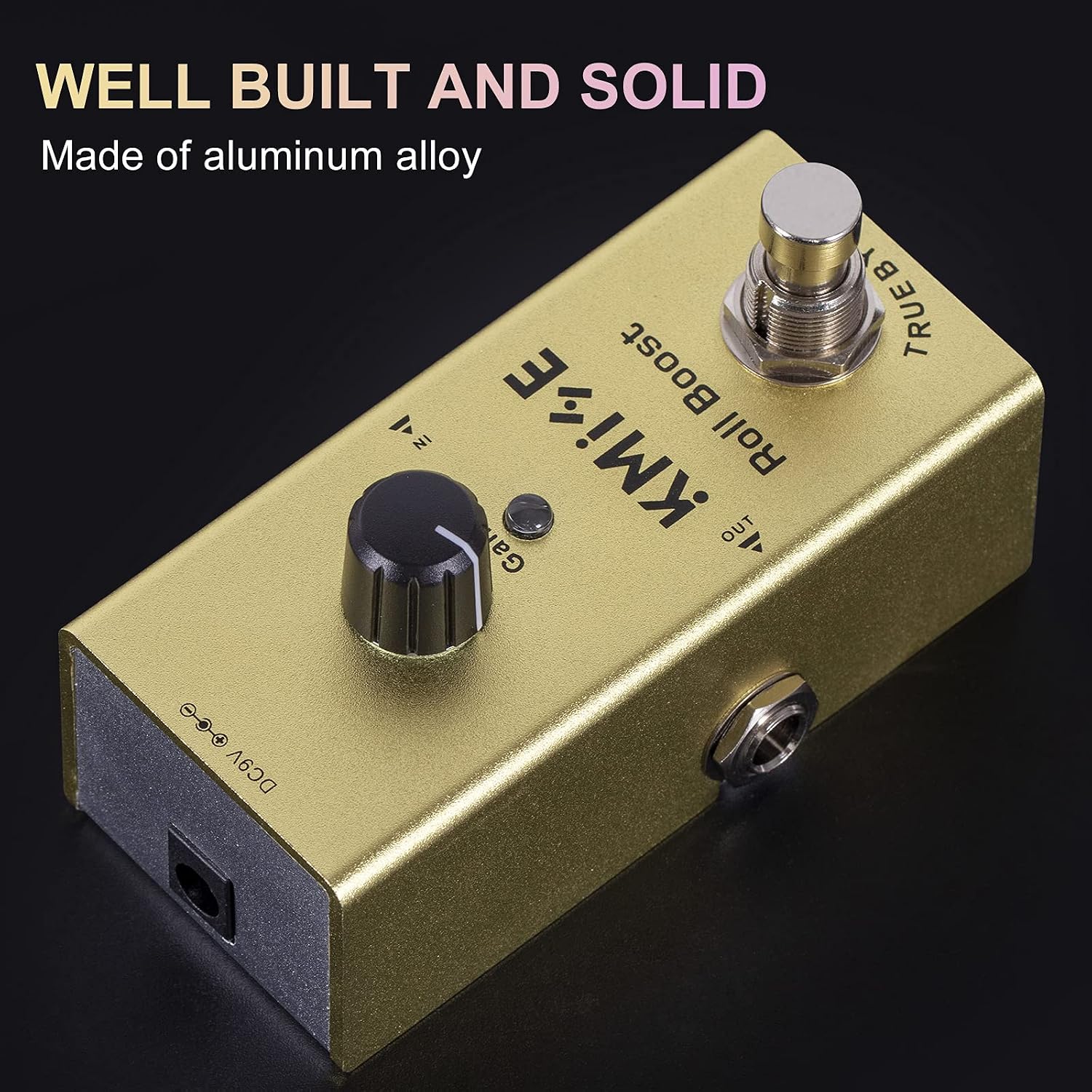
Connect the guitar and amplifier with instrument cables through the pedal’s input and output, then use the Gain, Volume, and Tone knobs to tailor the boost. Place it before the amp when you want to boost the guitar signal for particular song sections. When the effect is disengaged, true bypass routes the signal through a non-electronic bypass line.
Power it with a 9V DC adapter using the tip-negative configuration and 2.1mm DC power jack. The adapter is sold separately, and the pedal does not support battery power. This makes the power connection a useful part of planning a pedalboard or portable gig rig.

Who it’s for
The Roll Boost is suited to guitar players who want a dedicated boost pedal with hands-on Gain, Volume, and Tone adjustment, without giving up much pedalboard space. It can be used to shape the signal going into an amp for selected parts of a song, while its true-bypass switching provides a direct signal path when the boost is off. Players comparing a standalone boost with adjusting amp settings can use the pedal to keep boost control at the instrument’s signal chain.
Questions before you buy
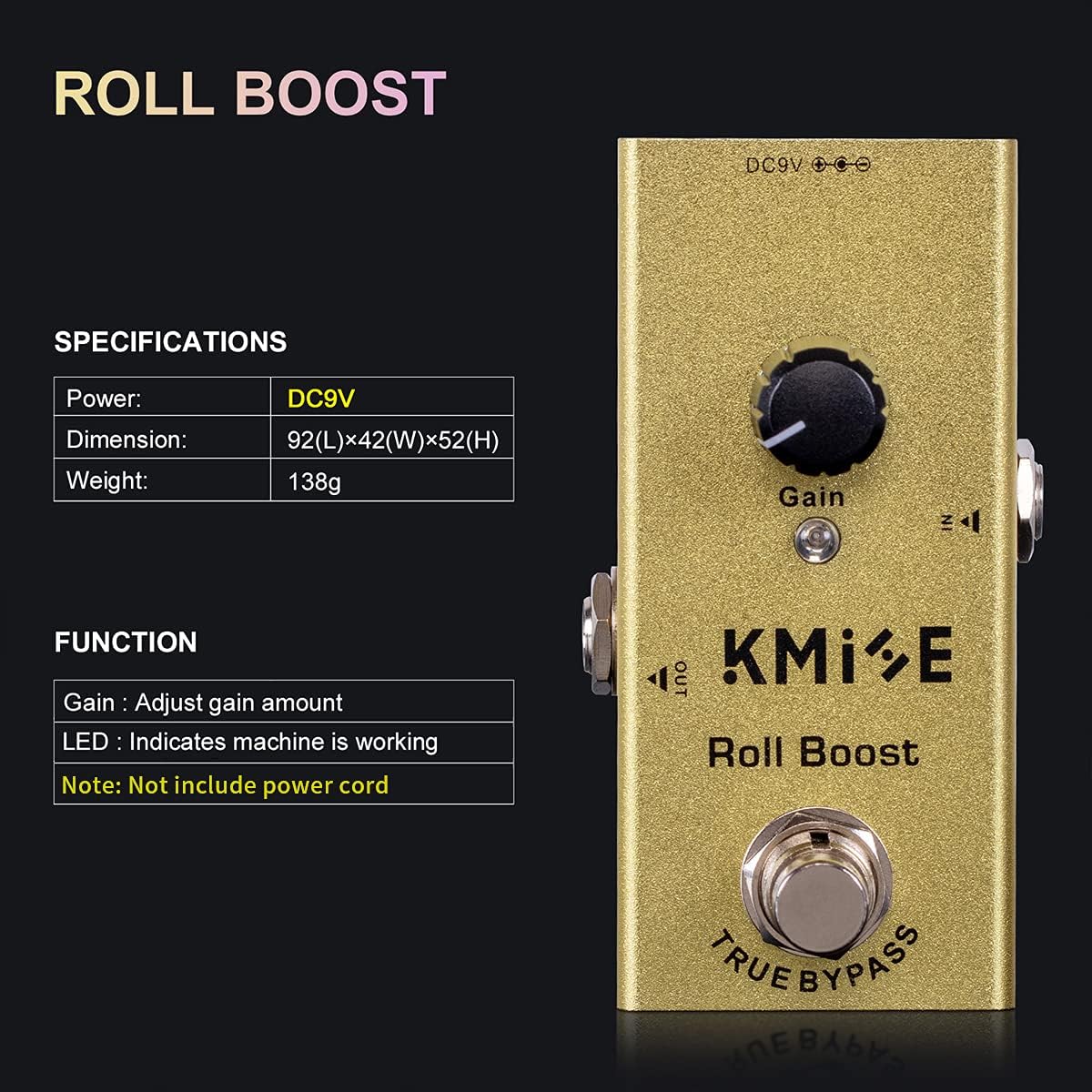
What power supply does the pedal use? It uses a 9V DC adapter with a tip-negative connection and a 2.1mm DC power jack. The adapter is sold separately, and battery operation is not supported.
What happens to the signal when the pedal is off? True-bypass switching sends the instrument signal through a non-electronic bypass line when the effect is disengaged.
Which controls can I adjust? Dedicated Gain, Volume, and Tone knobs let you tailor the boost effect directly on the pedal.
Final verdict
Choose the Kmise Roll Boost MI3430 for a compact, analog boost with direct onboard tone and level controls. Its true bypass and space-saving format make it a practical fit for guitarists who want a dedicated way to shape their signal before the amp, whether at rehearsal or on a gigging pedalboard.