

Snap Circuits Light STEM Kit 175 Projects 🧪
Reviews
Price
Product description
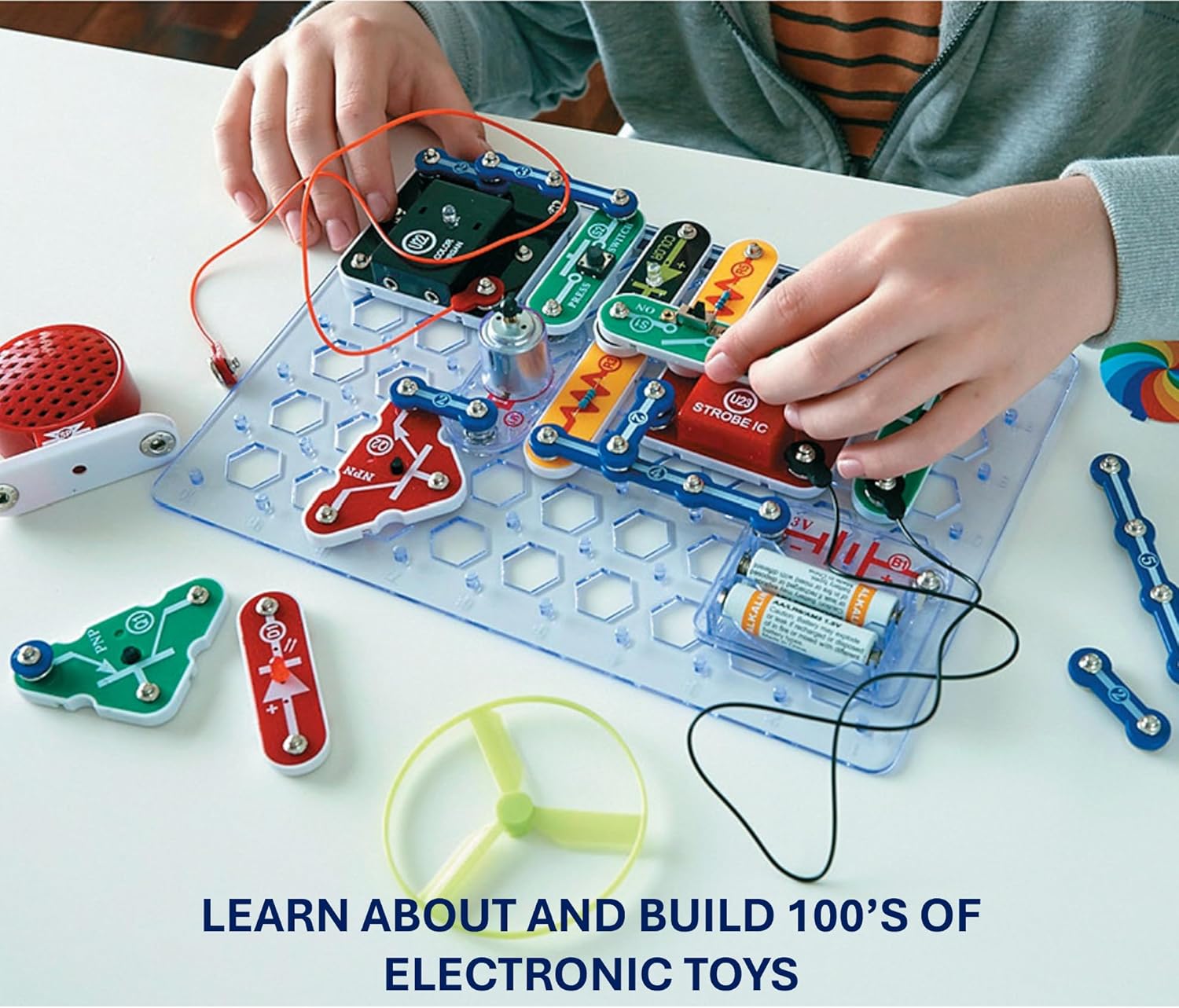
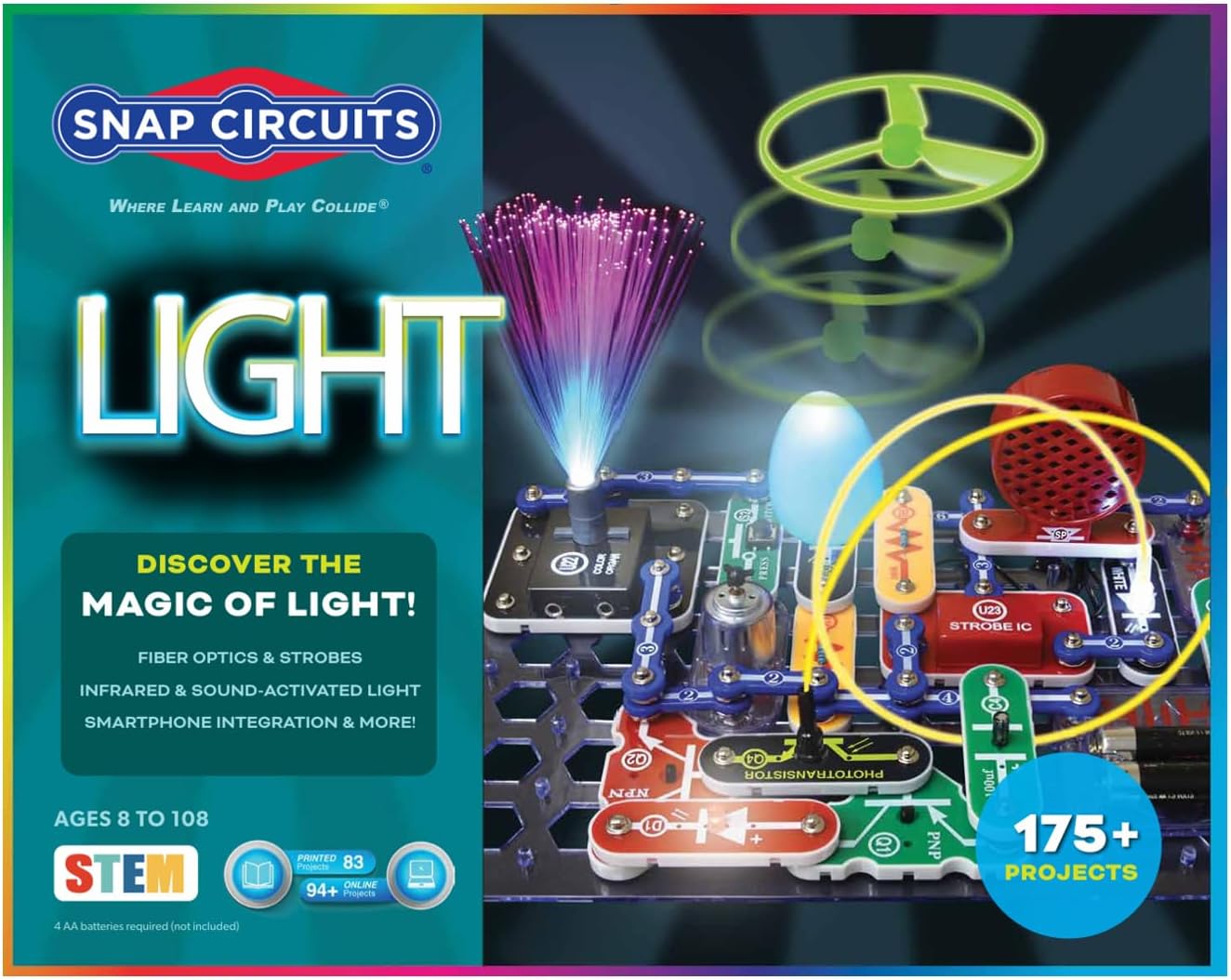
This Snap Circuits Light Electronics Exploration Kit brings hands-on STEM learning to life for kids ages 8 and up. It combines playful building with clear outcomes, so young makers can assemble electronic gadgets and see immediate results. The kit works well for homeschool sessions, classroom clubs, or rainy day projects.
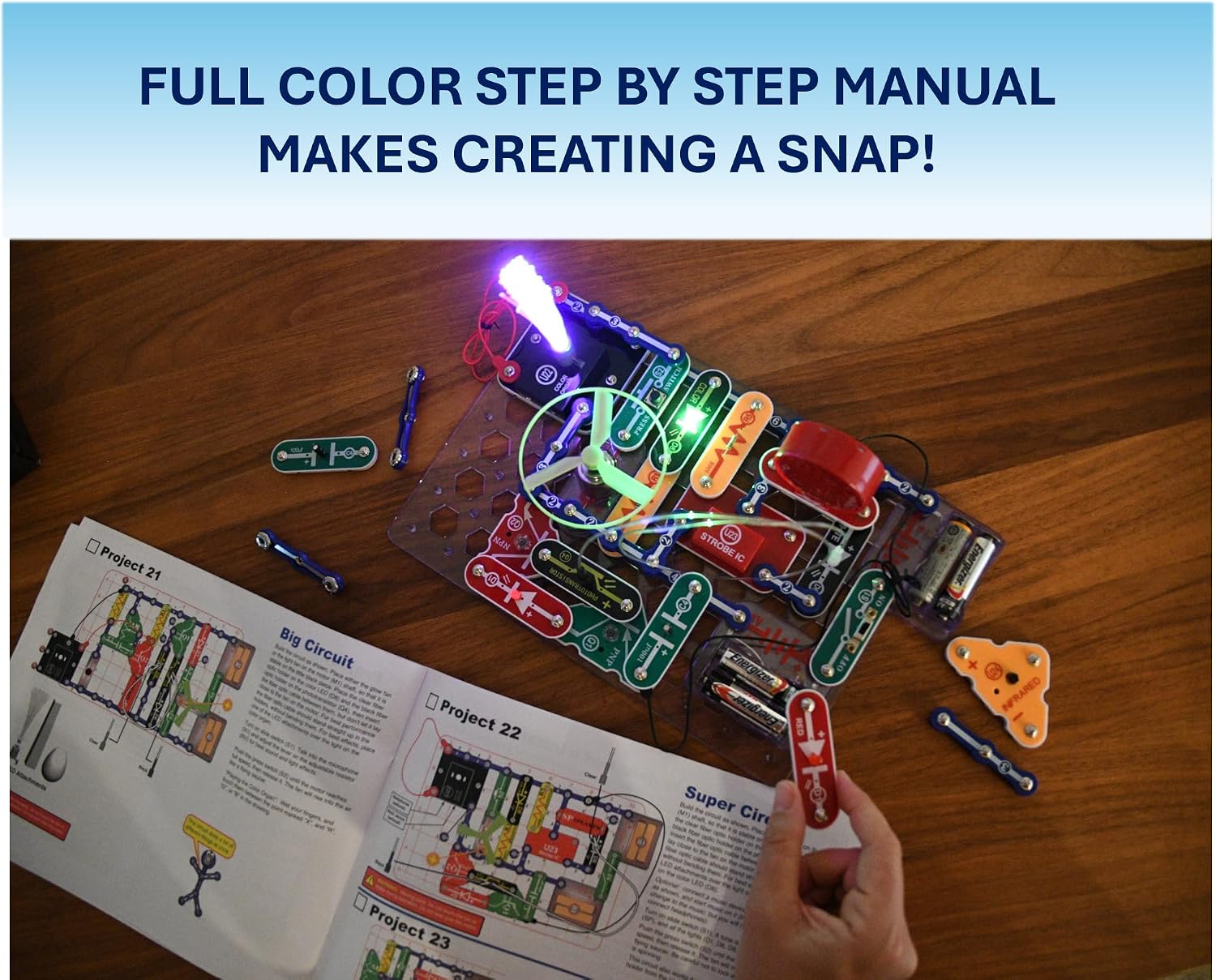
Start building right away with easy snap-together pieces and a full color project manual. This STEM educational toys for kids 8+ approach keeps lessons tangible and fun, and the first projects are quick to finish which helps sustain interest. Kids learn basic circuit concepts while creating light shows and sound-reactive effects.
Key features
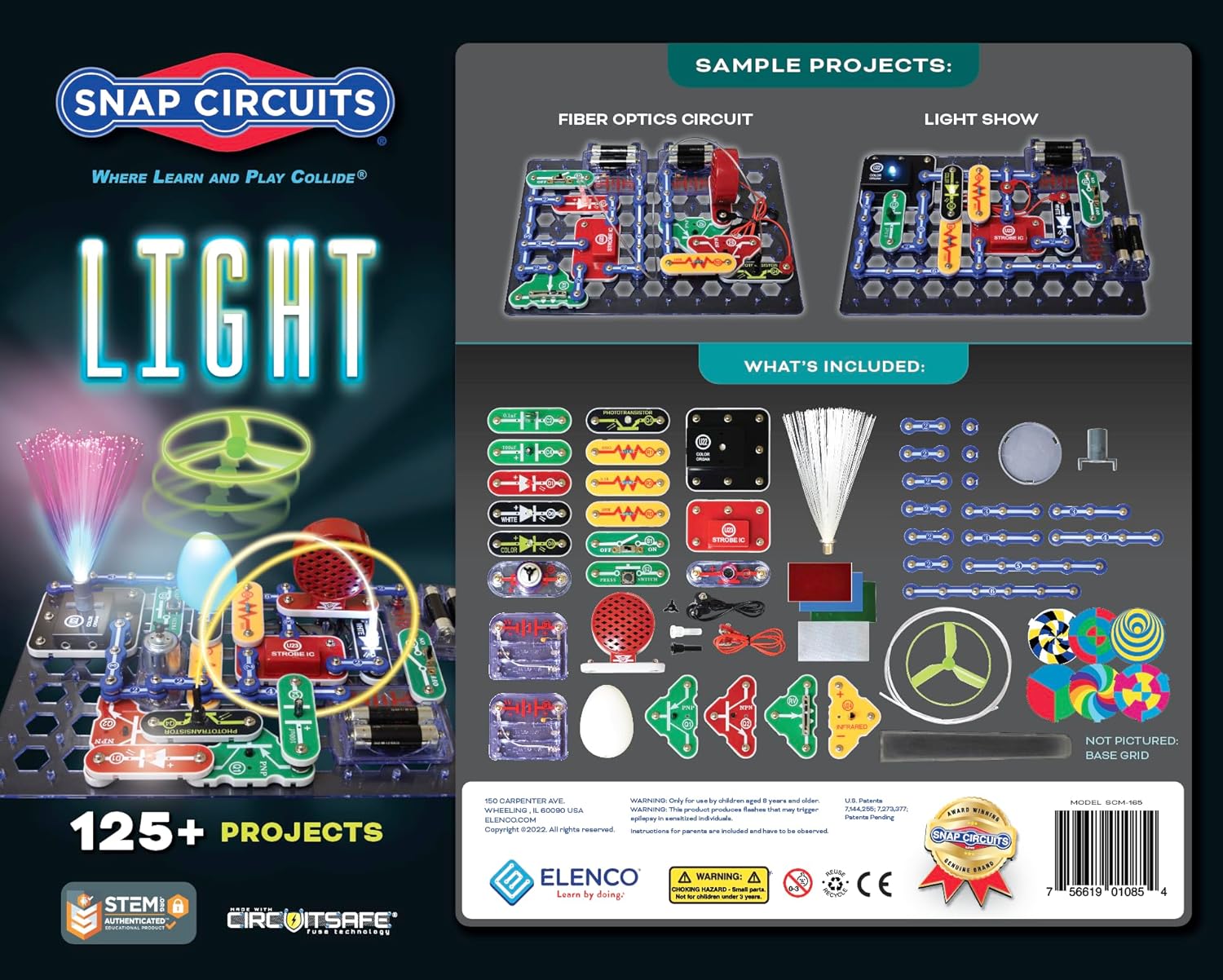
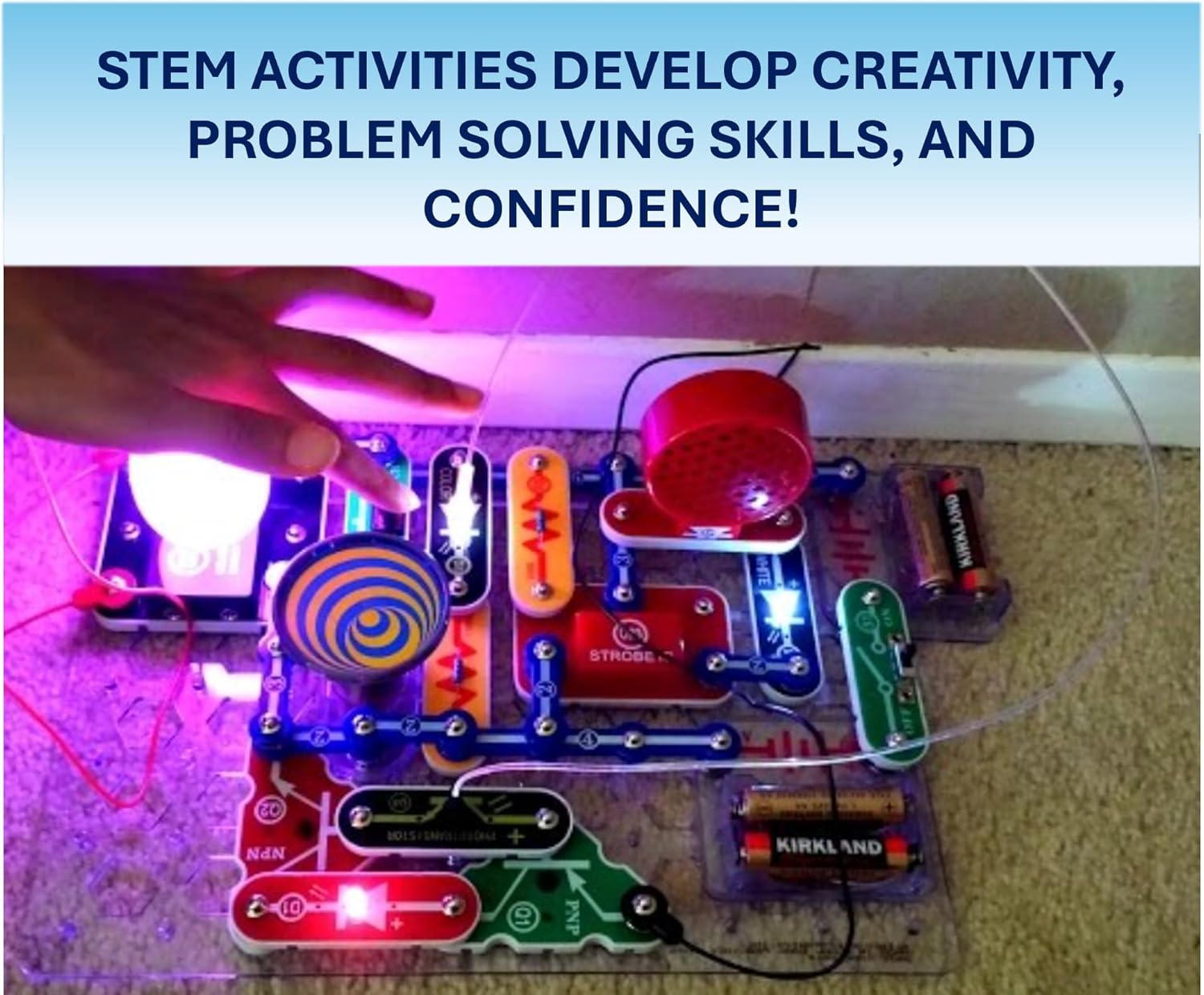
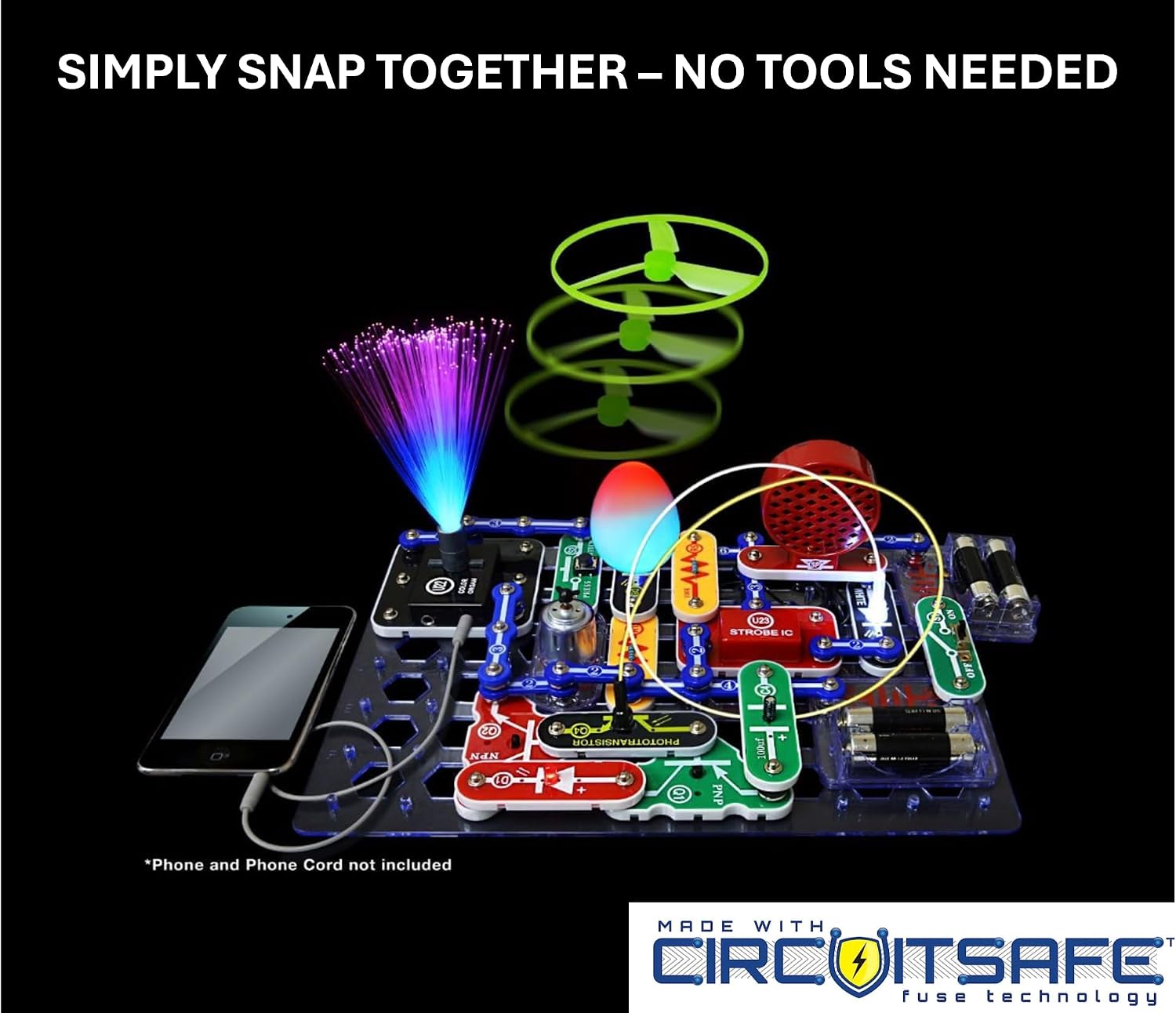
The kit includes more than fifty snap-together parts and a colorful guide that walks learners through each experiment, encouraging trial and error and iterative improvement. Snap Circuits Light Electronics Exploration Kit highlights practical skills like following schematics and troubleshooting simple connections. You can create fiber optic light shows and even attach a smartphone to sync lights to music for a playful audio-visual result 🎶. Does a child in your life enjoy both gadgets and hands-on play? This kit answers that curiosity with clear steps and repeatable outcomes.
Tech specs
- Name: Snap Circuits Light Electronics Exploration Kit
- Capacity: 175 projects
- Battery: Batteries required
- Compatibility: Works with smartphone for color organ feature
- Color: Full color project manual
What stands out
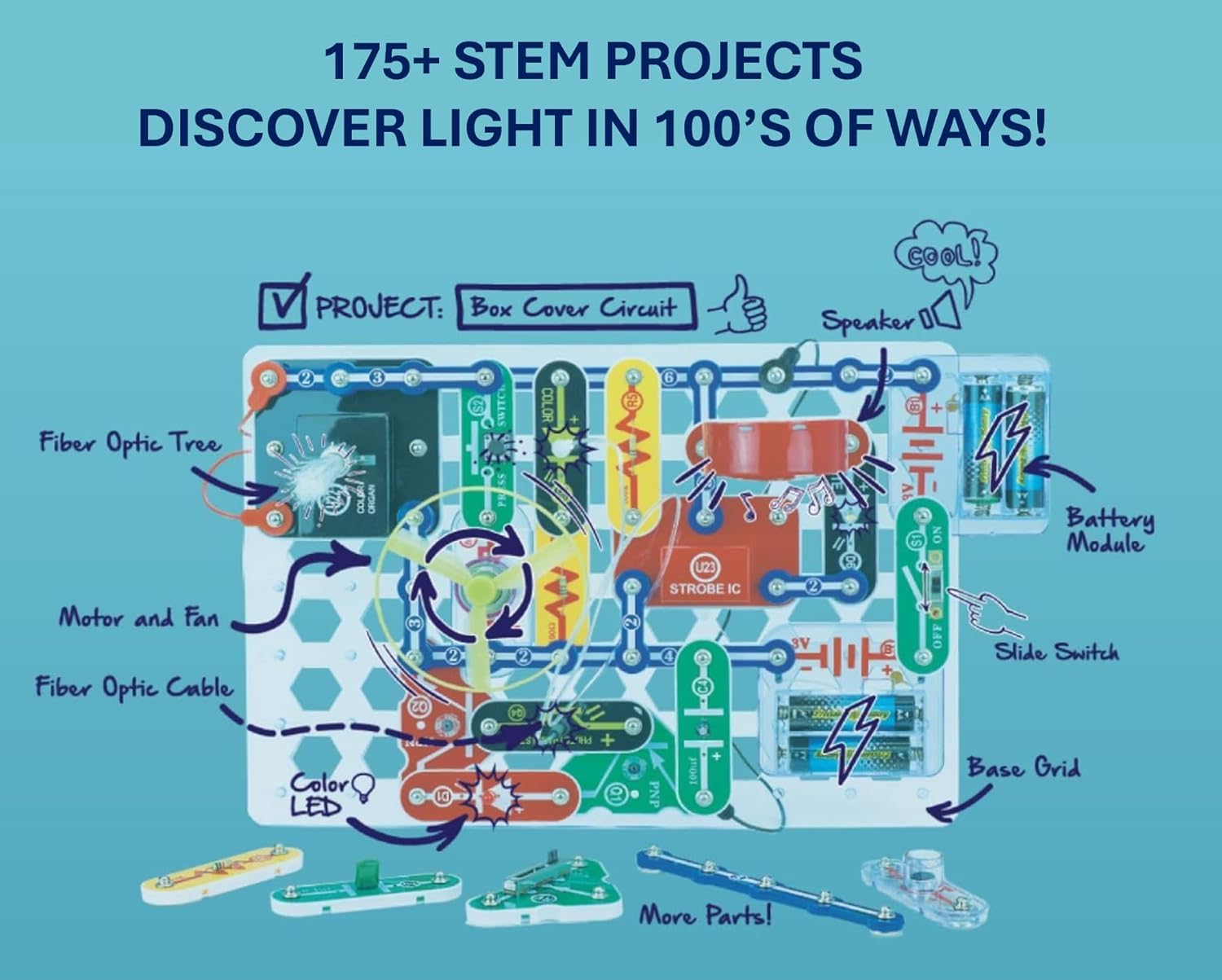
The variety of projects helps sustain engagement across multiple sessions, and the color-coded pieces make assembly approachable for younger builders. 55+ parts provide a broad set of modules without overwhelming beginners, and over 175 projects gives room to experiment and combine ideas. Expect playful learning moments as circuits light up and motors spin, and note that batteries are needed to power many experiments according to the original product notes.
What it works with
This kit pairs well with other Snap Circuits sets to expand possibilities, and it accepts common batteries for portability. It also interacts with smartphones for a light organ experience, so families with a device can explore sound-reactive builds. For educators, the manual supports guided activities and free exploration alike.
The tone stays practical and informative, highlighting what children will build and learn while pointing out modest limits like the need for batteries and the requirement of adult supervision for younger users.