

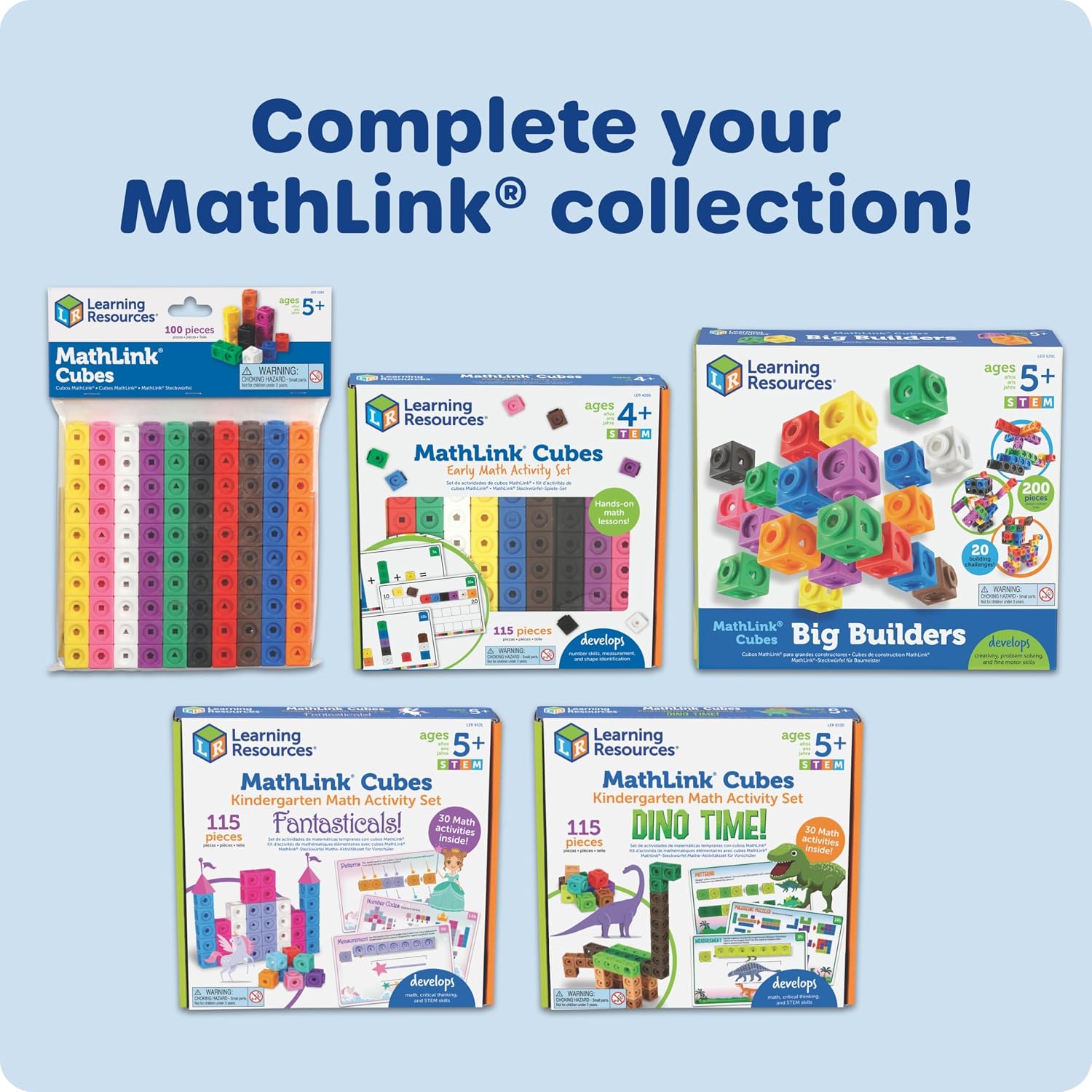
Learning Resources MathLink Cubes - Set of 100 Cubes for Early Math & STEM
Reviews
Price
Product description
What it is
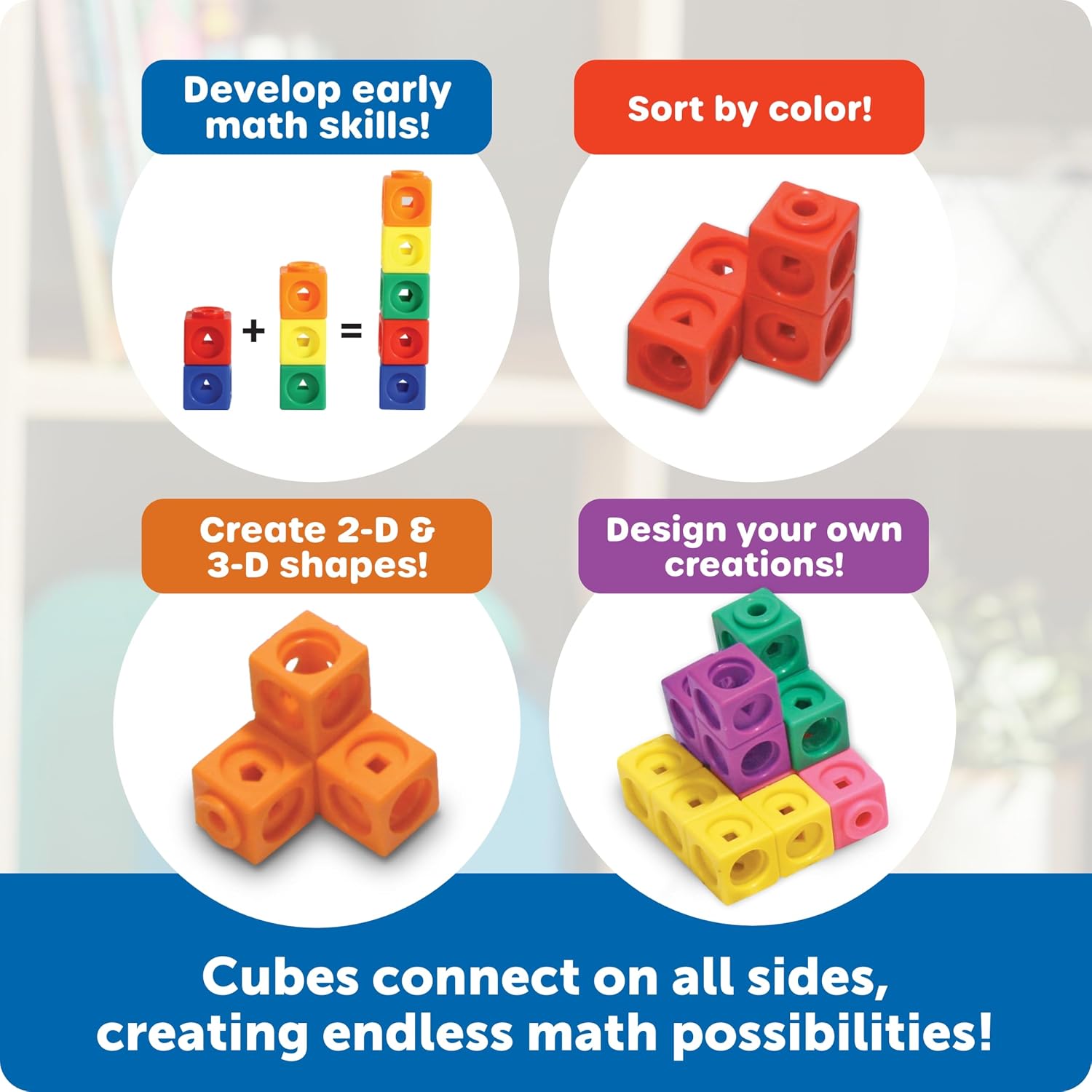
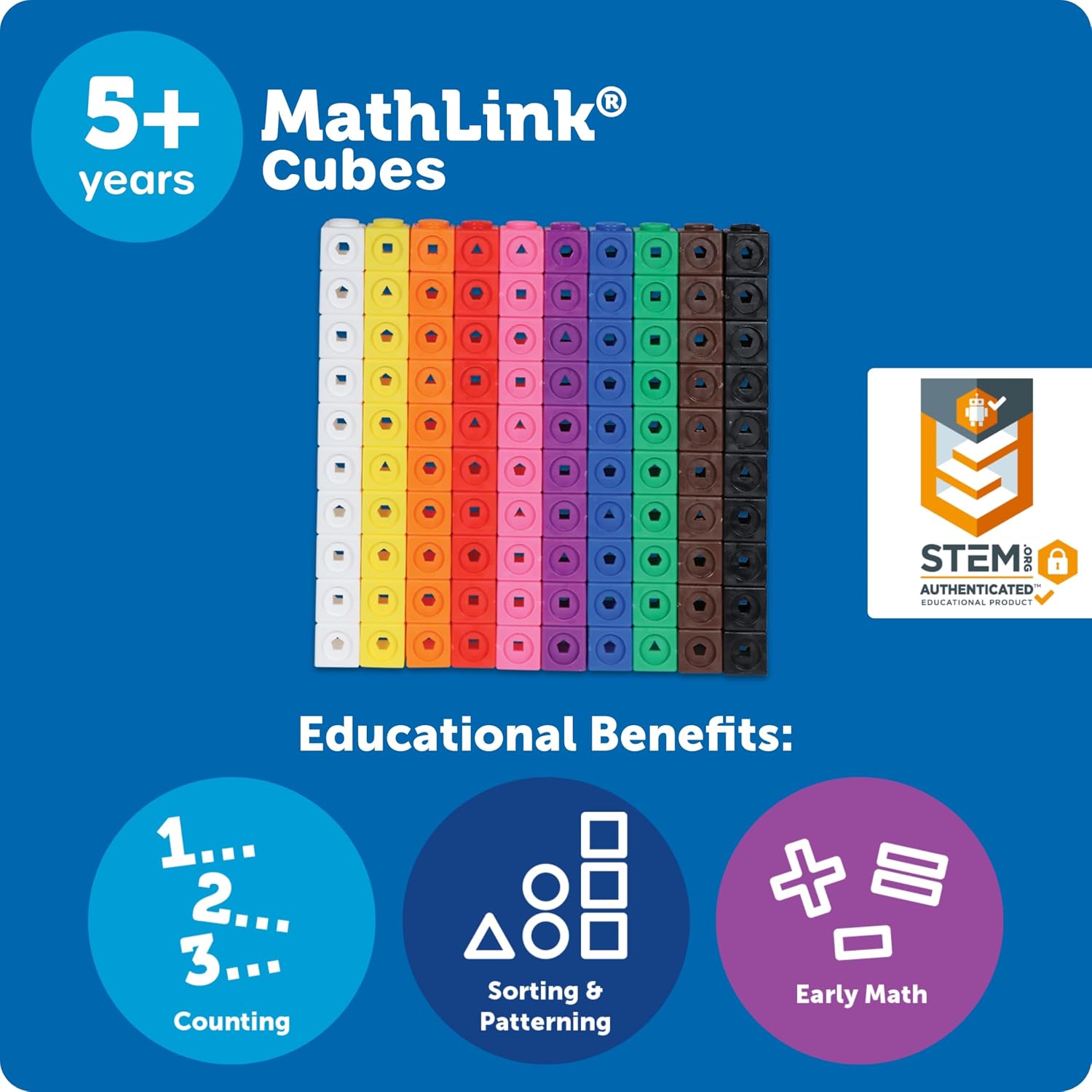
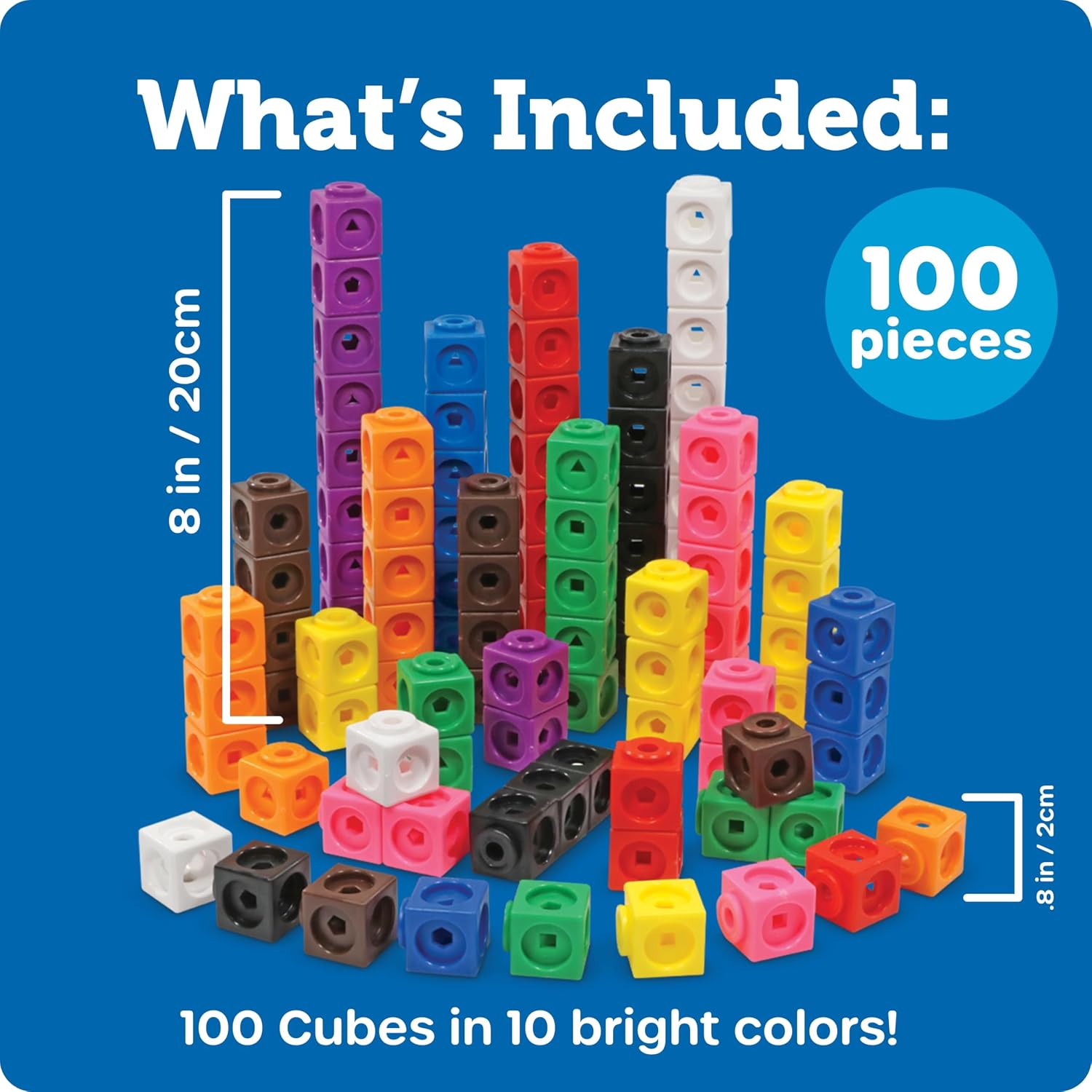
Learning Resources MathLink Cubes are a set of 100 snapping cubes designed for hands-on math exploration. Each cube features geometric cutouts on the faces that support more complex patterning and counting activities, making it a versatile tool for elementary learners.
What it helps with
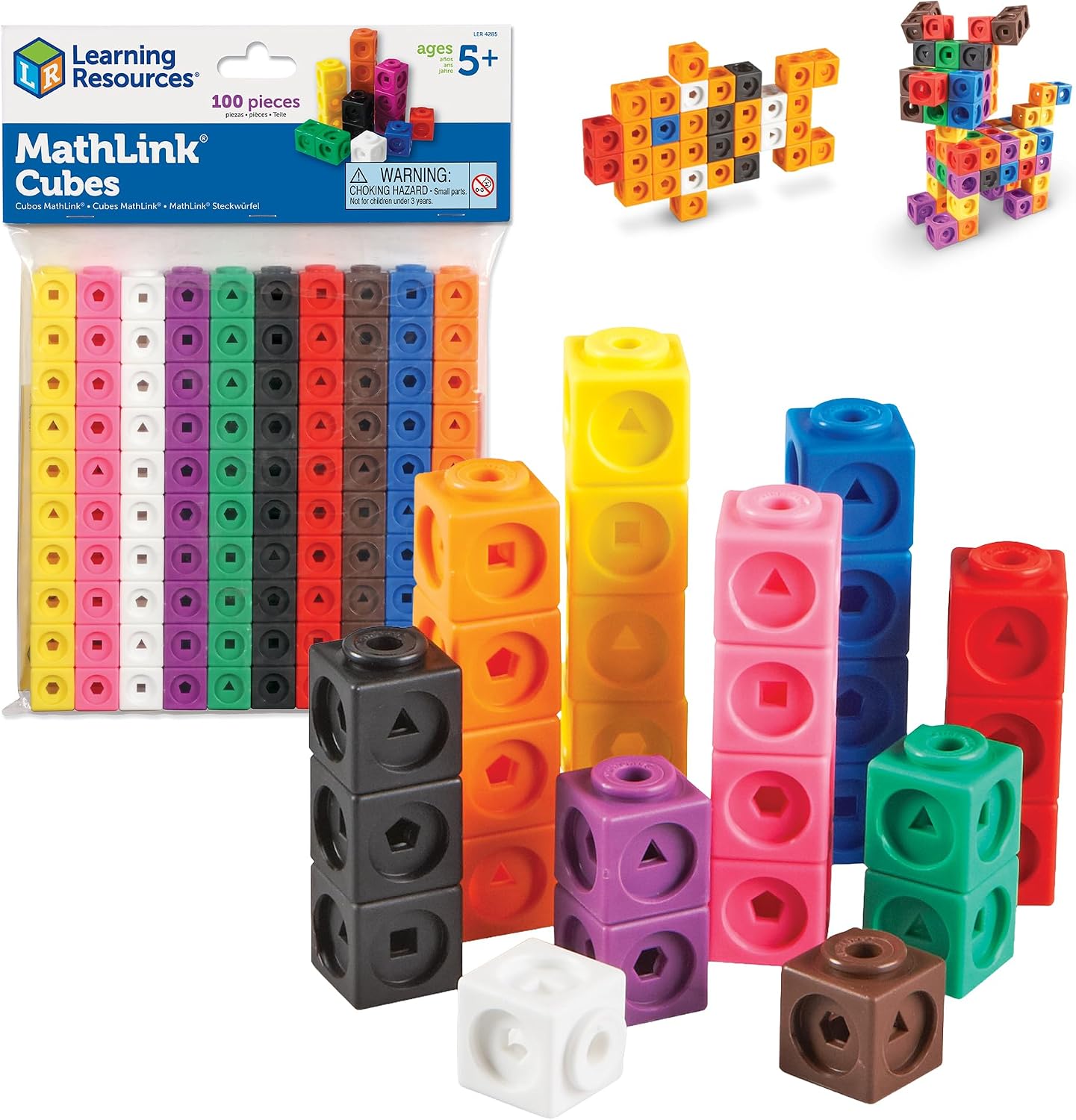
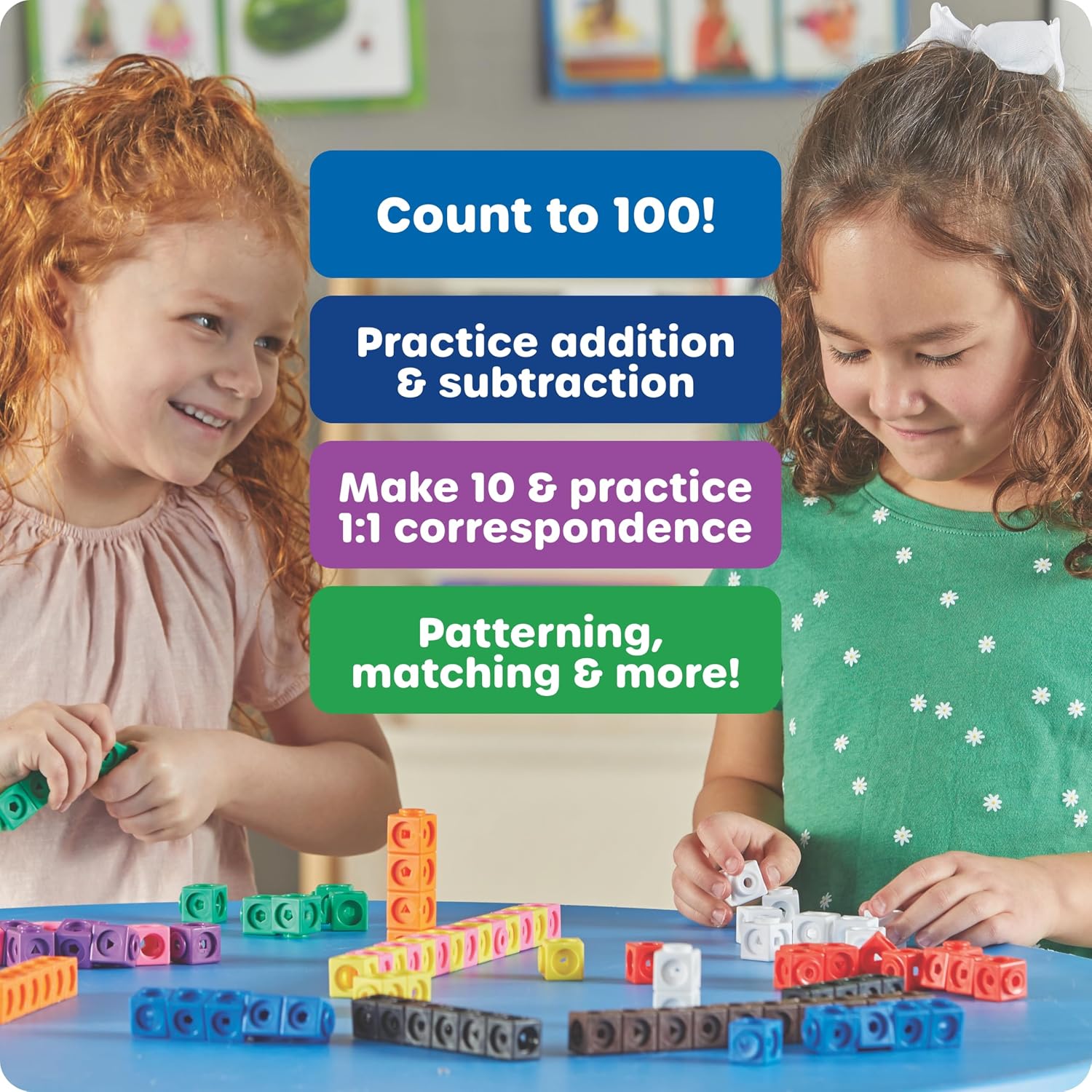
On the surface, these cubes support basic skills like counting to 100, one-to-one correspondence, and patterning. They also aid skip counting, addition and subtraction, comparing quantities, and even nonstandard measurements. Beyond math, they contribute to color and shape identification, eye-hand coordination, fine motor skills, and motor planning—helping kids prepare for classroom routines and independent learning.
How to use in practice
If you’re homeschooling or running a classroom activity, start with simple counting drills and color-shape sorting. Use the cutouts to build visual patterns or create hands-on regrouping games for grouping and making 10. As kids gain confidence, layer in skip counting by 2s or 5s, then move to basic addition and subtraction using multiple cubes grouped into sets.
What stands out (pros)
The set is clearly structured for early math readiness and STEM play. The geometric cutouts on each cube add a tactile dimension to patterning activities, which can help visual learners connect concepts to physical manipulation. The cubes are lightweight and easy to snap together, supporting active movement and classroom-ready setups.
Where it could fall short (cons/limitations)
If you’re aiming for advanced math practice beyond basic operations or high-speed counting, this set may feel limited. Some learners might need additional manipulatives or digit cards to extend activities beyond simple patterns and basic arithmetic. Also, exact color varieties and cube dimensions aren’t specified beyond what’s described, so planning storage or matching with other tools can require a closer look at what you have.
Who it’s for
Ideal for kindergarten to early elementary learners, homeschoolers, and educators looking for a tactile math manipulative to reinforce counting, patterning, and early operations. It also works well for kids building fine motor skills during focused math warmups or small-group activities.
Who it isn’t for
Not the best choice if you need a broader range of math challenges (e.g., fractions, decimals, or algebraic patterning) within a single kit. If you require extensive color variety or unusually large/capacity options, you may want to pair this set with additional tools.
When it makes sense to buy
Consider this set when you want a reliable, tactile tool to promote school readiness in math and basic STEM exploration. It supports hands-on learning in both homeschool and classroom contexts and can serve as a core manipulative for daily math routines.
What to review before purchasing
Check how the 100 cubes align with your current activities: are the geometric cutouts compatible with your patterning goals? Consider your space for storage, and think about whether you’ll pair these with number cards, pattern cards, or graphs to maximize use.
How it compares to alternatives
Compared with generic counting blocks, MathLink Cubes add geometric cutouts that spur more complex patterning and visual-tactile learning. If you want more explicit patterning challenges or a broader range of manipulation types, you might complement this set with additional manipulatives or activity guides.
Practical example of use
Picture a small-group warmup where kids count out 20 cubes, separate them into two groups of 10, and build a simple addition sentence by combining groups. The cutouts help kids visually connect parts of the equation, while the act of snapping and un-snapping supports fine motor coordination.
FAQ
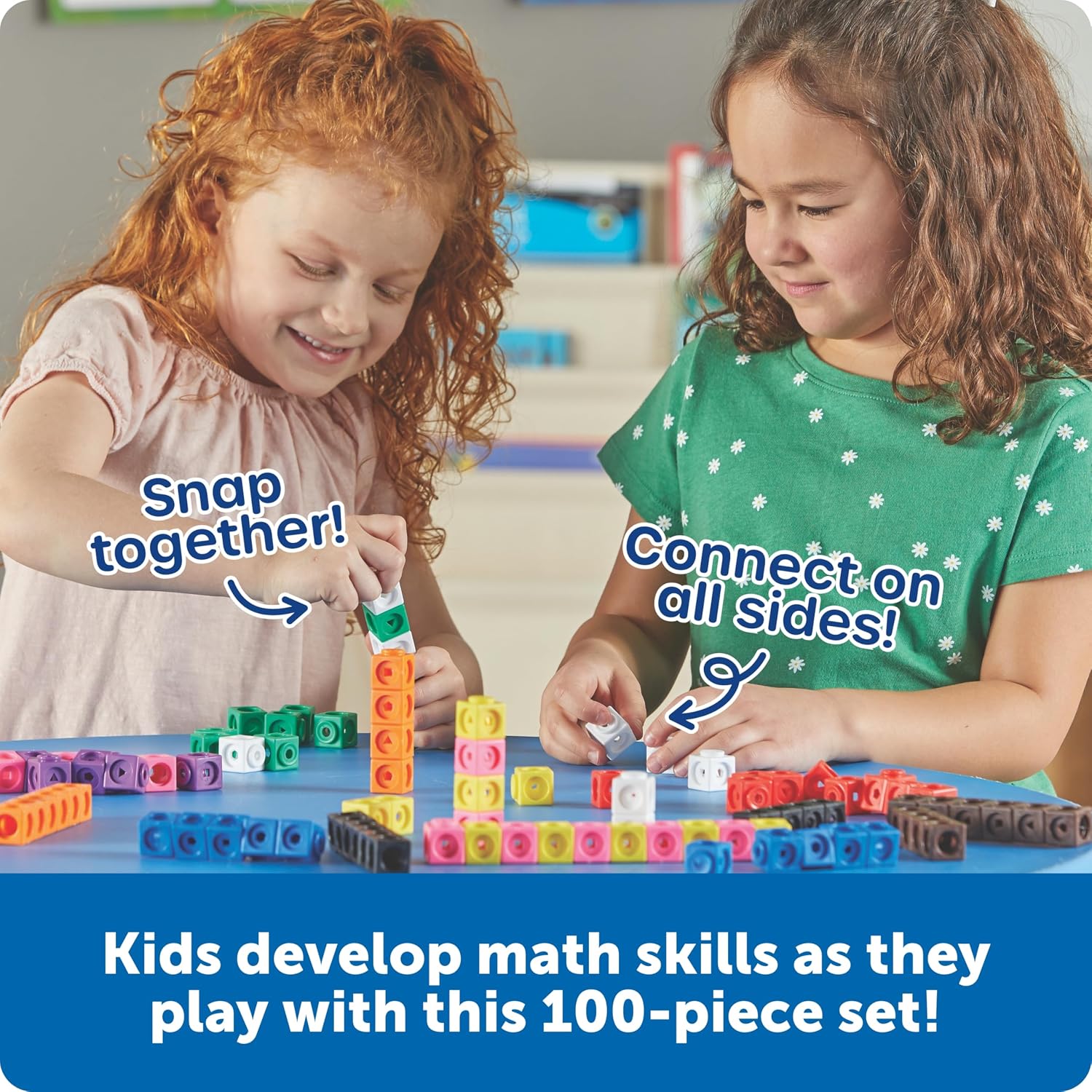
- Do the cubes connect on all faces? Yes, they’re designed to snap together on all sides for varied configurations.
- Can these be used for nonstandard measurements? They can support early measurement activities through counting and grouping, but explicit measurement tools aren’t described.
- Are there color or shape limitations? The description notes color identification and shape cutouts, but specific color counts aren’t provided.
Is it worth it?
Worth considering if you prioritize a hands-on, classroom-ready math manipulative that supports counting, basic operations, and pattern work in a compact kit.