

Raylix Tesla to J1772 Adapter (Max 80A, 250V) — NACS to J1772 for Tesla Wall Connector & Mobile/Destination Chargers
Product description
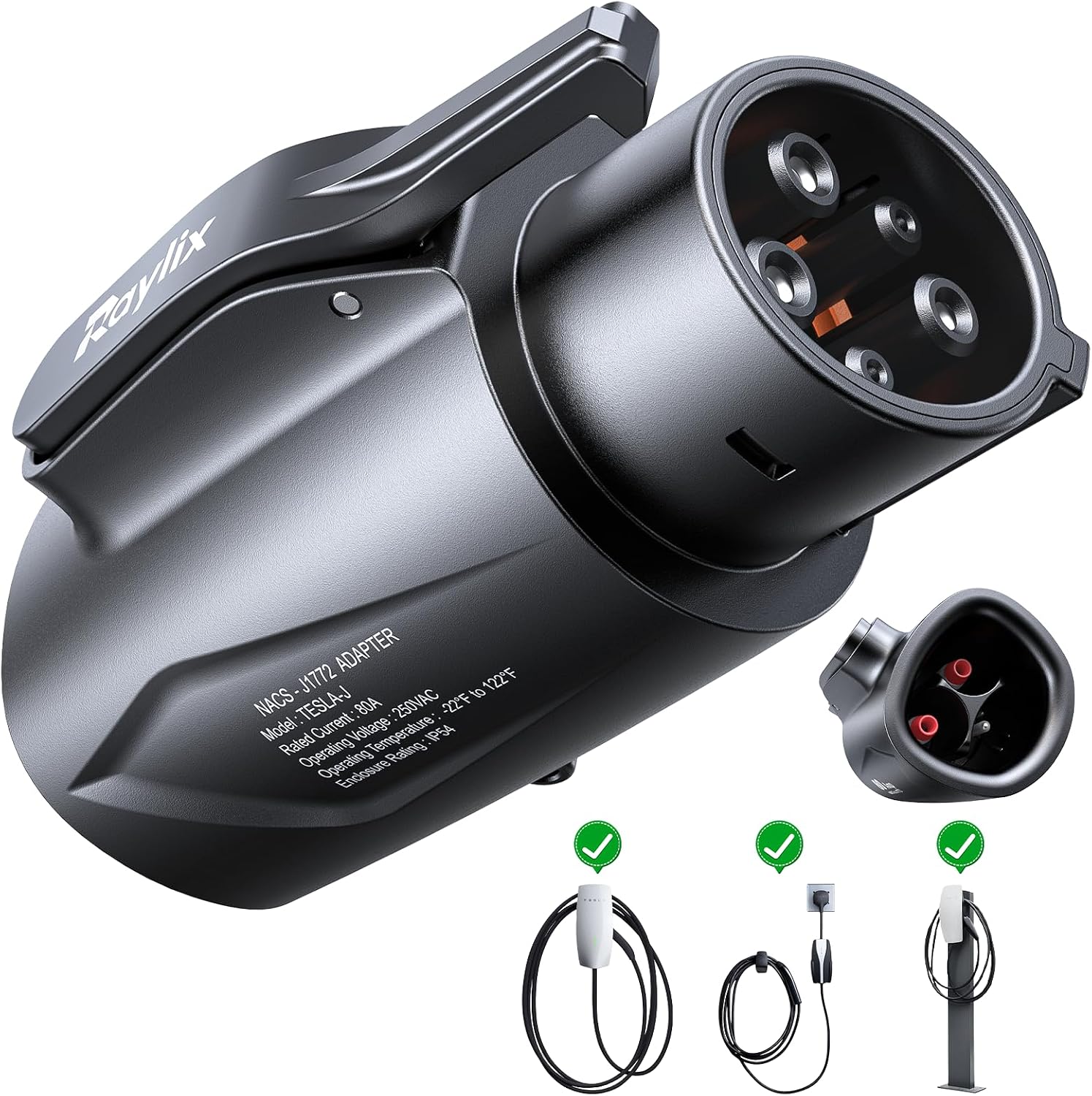
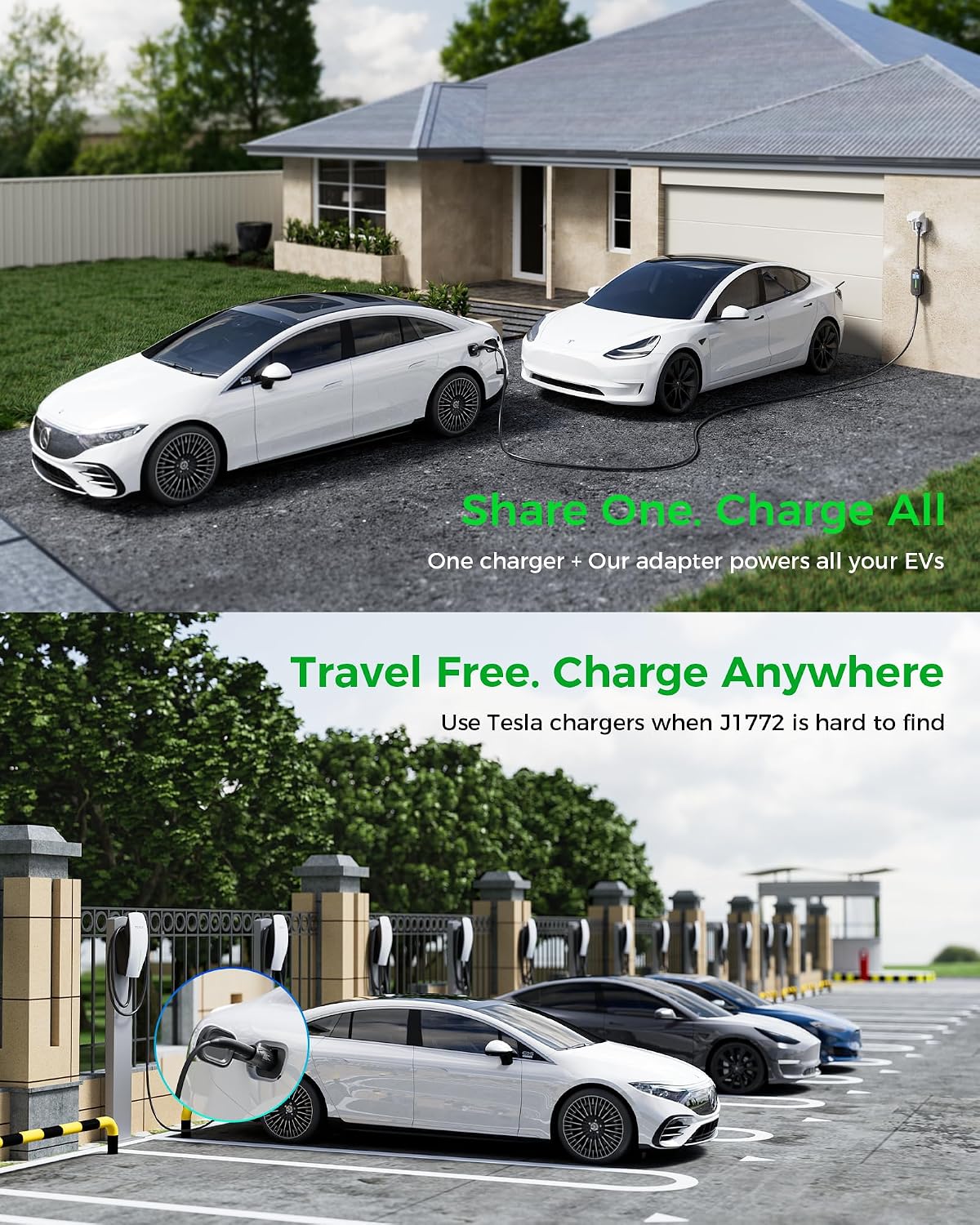
If your EV is J1772-compatible but you keep running into Tesla AC chargers in real life, this Raylix Tesla to J1772 Adapter is built for that exact situation. It’s designed to let a J1772 EV plug into Tesla Wall Connector, Destination Chargers, or Mobile Connectors—no setup process described, just plug in and charge.
That convenience is the headline. Still, it’s not a universal “all chargers” adapter, so it matters that you understand where it does and doesn’t work before you buy. Let’s break down what you’re actually getting, what you’ll notice day to day, and where the limits are.
The essentials
This adapter converts NACS (Tesla plug style) to J1772 so your J1772 EV or PHEV can use many Tesla AC charging setups across North America. The product description frames it as access to “172,000+” Tesla Wall Connectors / Mobile / Destination Chargers, which is the practical value if you travel, commute, or regularly park at locations with Tesla chargers.
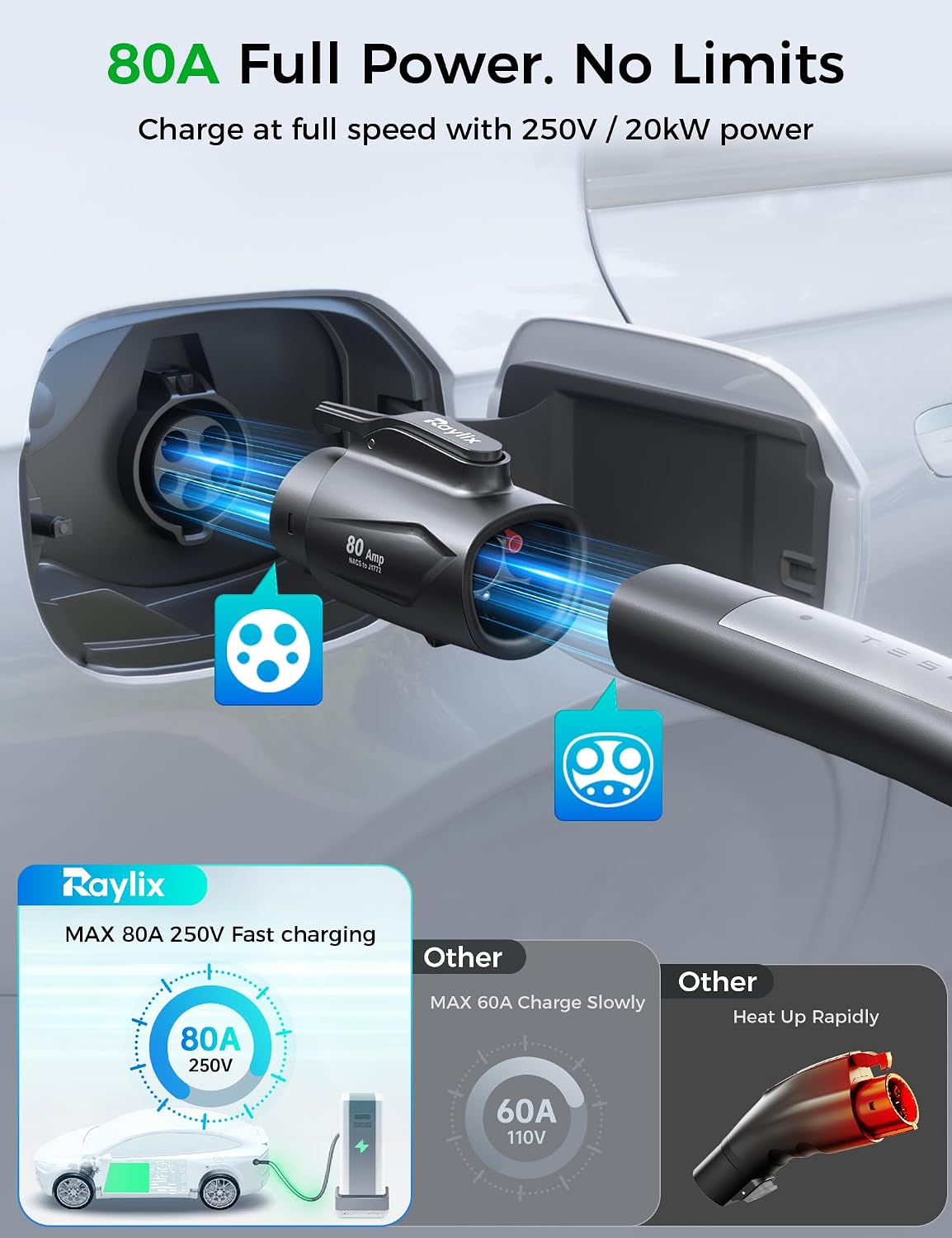
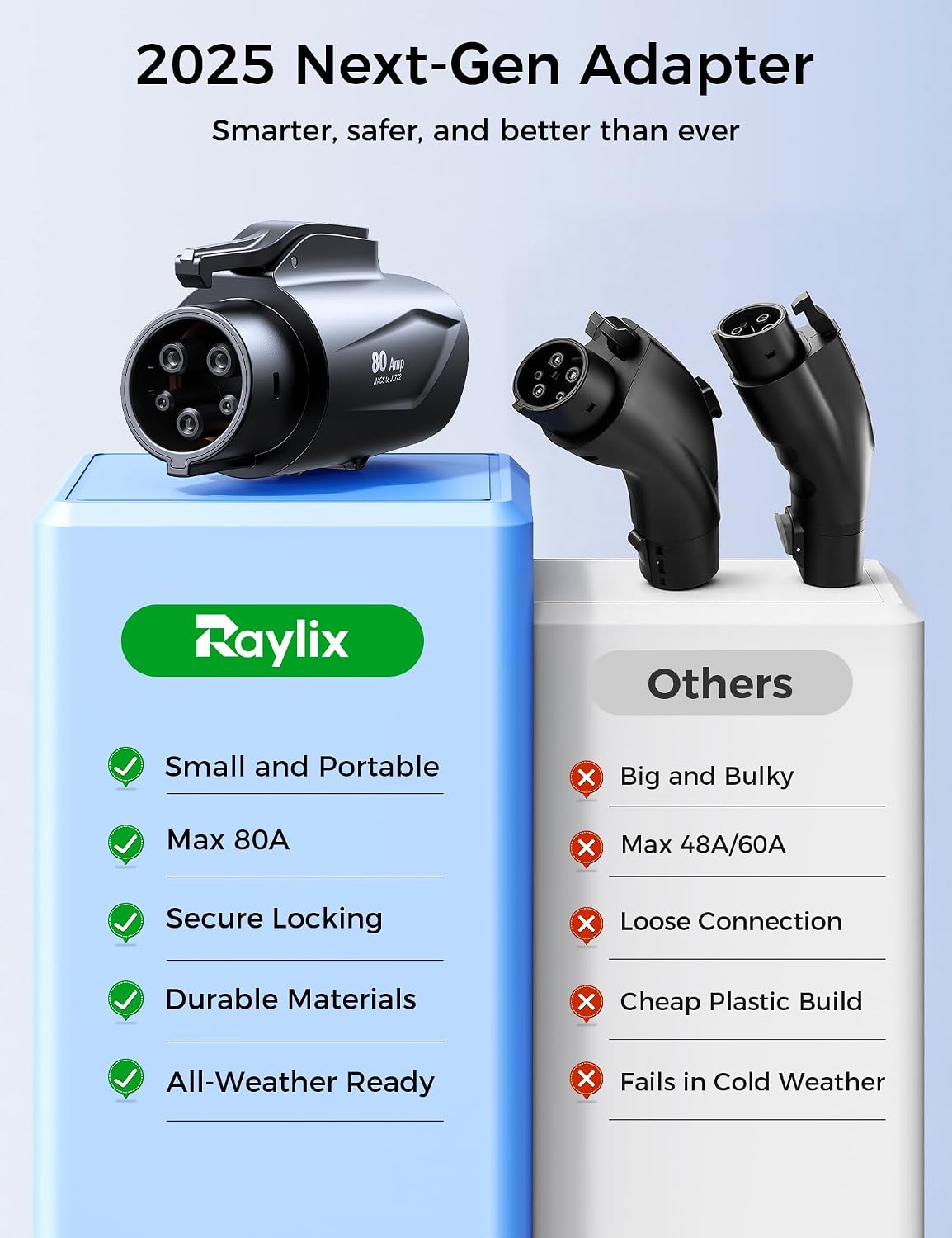
On paper, it also targets faster AC charging than some commonly sold adapters. It claims support up to 80A and 250V, and it specifically calls out the idea that adapters capped at 48A can slow you down compared with this one. Just keep in mind that real-world charging speed depends on what your vehicle can accept—an adapter can’t override your EV’s onboard limits.
Key features that matter in practice
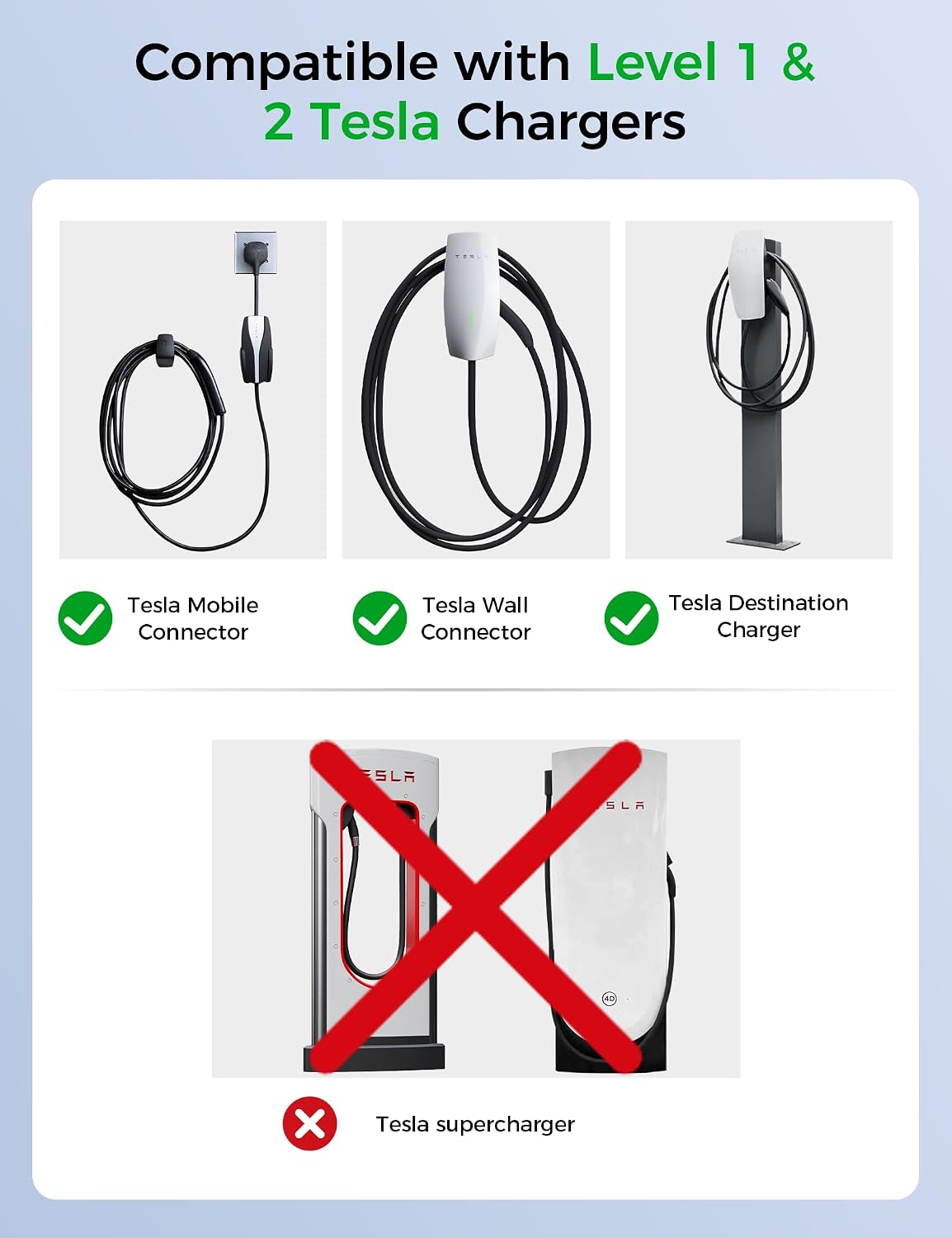
The most convincing part of this adapter is simple: it’s for AC charging access, not DC fast charging. The description explicitly says it does not support Tesla Superchargers (Level 3/DC fast chargers). So if your plan is “find a Supercharger and go,” you’ll need a different solution.
Where this adapter is positioned to shine is the everyday stuff:
- Using Tesla Wall Connector, Destination Charger, or Mobile Connector with a J1772 EV/PHEV.
- Reducing the friction when you’re at a friend’s place, a hotel, or a workplace that offers Tesla AC charging.
- Helping you carry one small piece of hardware rather than hunting for a matching port.
Speed and rating: what “up to 80A” means
Raylix states a maximum of 80A and 250V. That spec is the main reason this adapter won’t feel like a “lowest common denominator” pick on paper. The description also contrasts it with adapters capped at 48A and claims a meaningful improvement for certain high-demand vehicles, including an example for a Ford F-150 Lightning.
A fair caution: those mileage-per-hour and percentage claims are vehicle-dependent and assume a specific charging scenario. If your EV charges less aggressively on AC, you may not experience the same jump. But if you’re shopping specifically to avoid unnecessary adapter caps, this is the kind of detail you’d want to check.
Outdoor-ready design (and where it helps)
Charging is rarely a controlled lab environment. This adapter is described as handling extreme temperatures from -22°F to 122°F, which matters if you’re dealing with winter mornings or hot summer days.
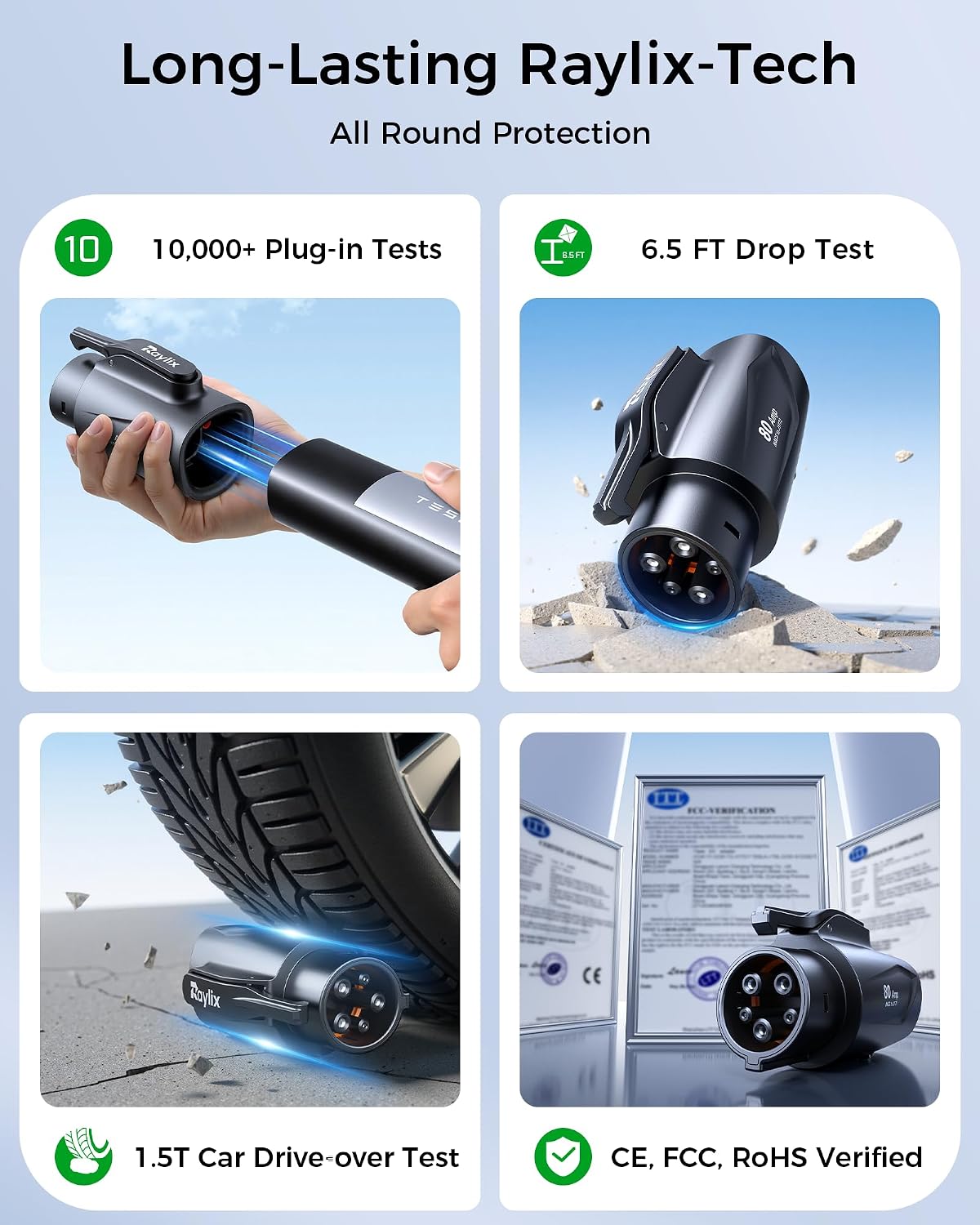
It’s also described as being tested for durability and built with waterproof and flame-retardant materials. The input even mentions 10,000+ plug-ins, drop testing, and a drive-over test. Again, nobody can guarantee every scenario, but the intent here is clearly “carry it, use it, don’t baby it.”
Compatibility: the part you should verify first
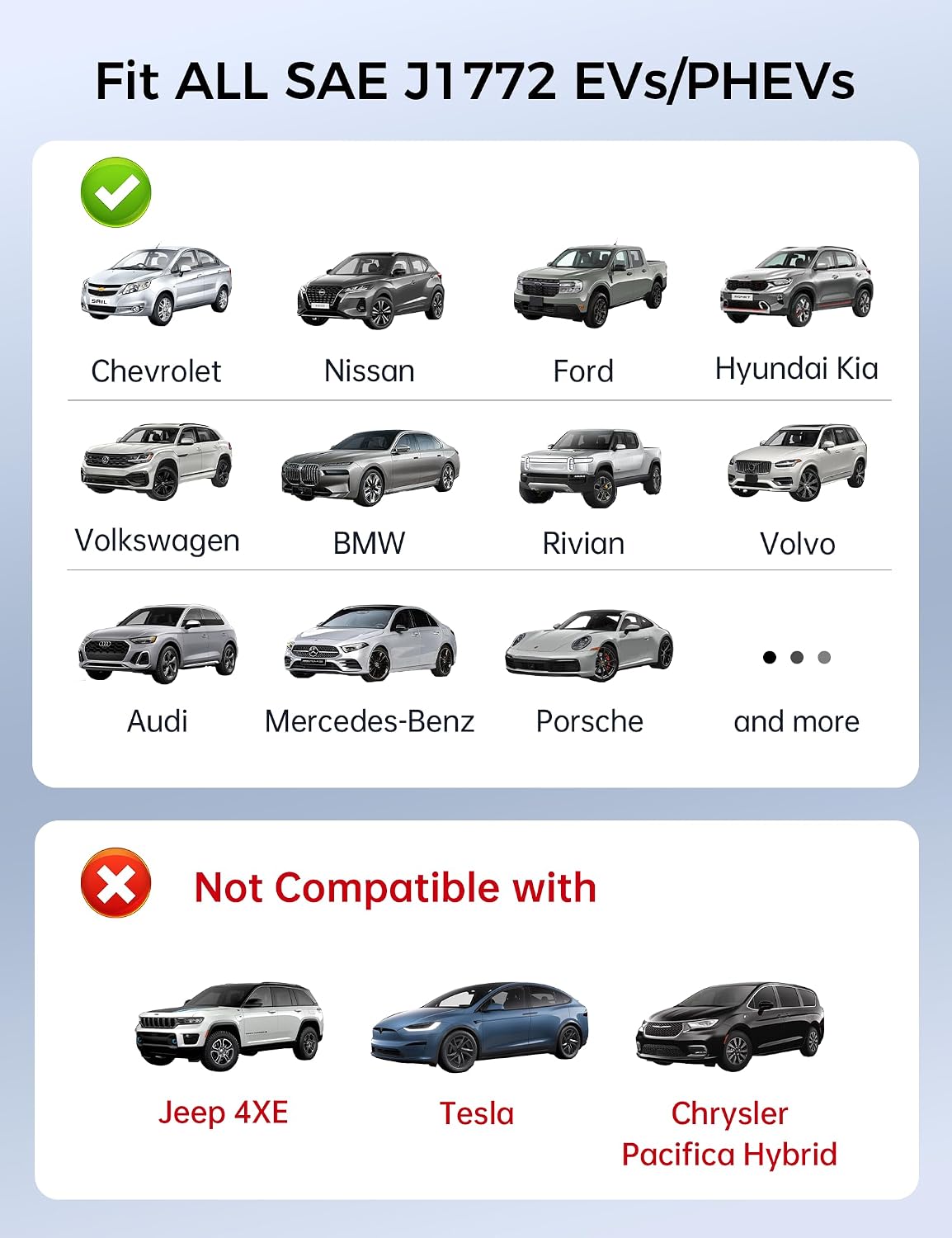
This adapter is meant for J1772 EVs and PHEVs. The description lists wide compatibility across many popular brands, including Ford, Hyundai, Chevrolet, Honda, Cadillac, Rivian, BMW, Volkswagen, Toyota, and more.
However, there are explicit exclusions: - It does not support Tesla Superchargers (Level 3/DC fast chargers). - The description also states it is not compatible with these vehicles: Jeep Cherokee 4xe, Chevy Bolt, Chrysler Pacifica Hybrid, and all Tesla vehicles.
Also, note the phrasing “designed for J1772 EVs and PHEVs—including…”: if you’re not sure whether your exact model is included, it’s smart to double-check your vehicle’s charge port requirements before relying on this adapter.
Who it’s for (and who should skip it)
It’s a strong fit if you regularly encounter Tesla AC chargers and you own a J1772 EV or PHEV that you want to charge there without switching infrastructure. It also makes sense for road trips and visits where the parking options are more “Tesla-enabled” than “J1772-friendly.”
It’s not for you if you: - Need Tesla Supercharging (DC fast) because this adapter is explicitly not designed for Level 3/DC. - Own one of the listed incompatible vehicles (including all Tesla vehicles, per the description). - Want an adapter for a setup where compatibility isn’t clear.
Final verdict
This Raylix Tesla to J1772 Adapter is worth considering when your real problem is access: you want to plug a J1772 EV into Tesla Wall Connector, Destination Chargers, or Mobile Connectors without hunting for matching ports. The “up to 80A” angle is a meaningful differentiator if you’re trying to avoid lower adapter caps.
But don’t buy it expecting Supercharger-style convenience. The compatibility limits (including “all Tesla vehicles” and a short list of excluded models) are the deal-breakers for some buyers, and you’ll want to confirm your vehicle fits the description before you commit.
Mini FAQ
Does this adapter work with Tesla Superchargers?
No. The description says it does not support Tesla Superchargers (Level 3/DC fast chargers).
What chargers does it work with?
The adapter is designed for Tesla Wall Connector, Destination Charger, and Mobile Connector (Tesla AC charging setups).
Is it compatible with all Tesla vehicles?
No. The description states it is not compatible with all Tesla vehicles.
What’s the maximum charging rating listed?
It’s listed as max 80A and 250V.
Is it good for travel?
Yes, the description highlights a compact, lightweight design intended for glovebox/trunk travel use, which is exactly how most people will treat an adapter like this.