

Power Circuit Probe Tester 6V/12V/24V DC Automotive Circuit Tester (Short Circuit Finder, Voltage & Continuity)
Product description
If your car electronics act up—headlights that won’t come on, a cigarette lighter that’s dead, power windows that stall—it usually comes down to one of a few electrical issues. This Power Circuit Probe Tester is built for that exact moment: quick circuit diagnosis without repeated disassembly.
Key takeaways
On paper, it’s a compact automotive circuit tester that combines continuity-style checking with live voltage readings, plus overload/abnormal voltage alerts. The goal is to help you narrow down whether the problem is a short circuit, open circuit, bad grounding, or an abnormal voltage condition—then get to the right repair faster.
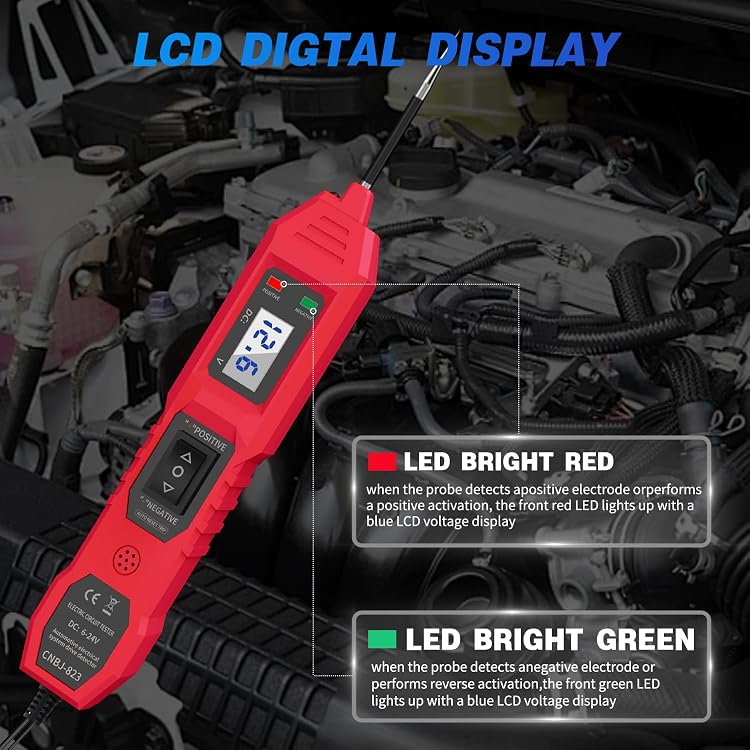
It also includes a backlit LCD screen for voltage values in real time, a built-in LED light for darker spaces, and a buzzer that sounds when an overload is detected. That combination is practical when you’re working around tight engine bays, trunk areas, or anywhere visibility is limited.
That said, it’s not a “magic fix.” If your expectations are to trace every cause down to component-level with zero multimeter knowledge, you may end up still doing additional checks—especially if the fault is intermittent.
What it does for car troubleshooting
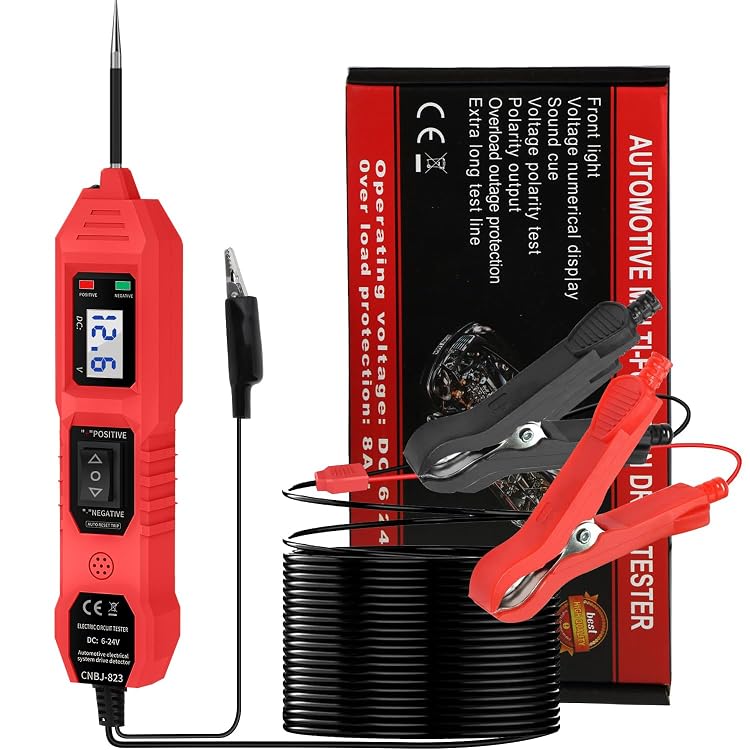
The tester is positioned as a short circuit finder for continuity testing, but its real usefulness is broader. You can check whether a circuit point has power, confirm continuity, and also check polarity status by touching the probe to a circuit point.
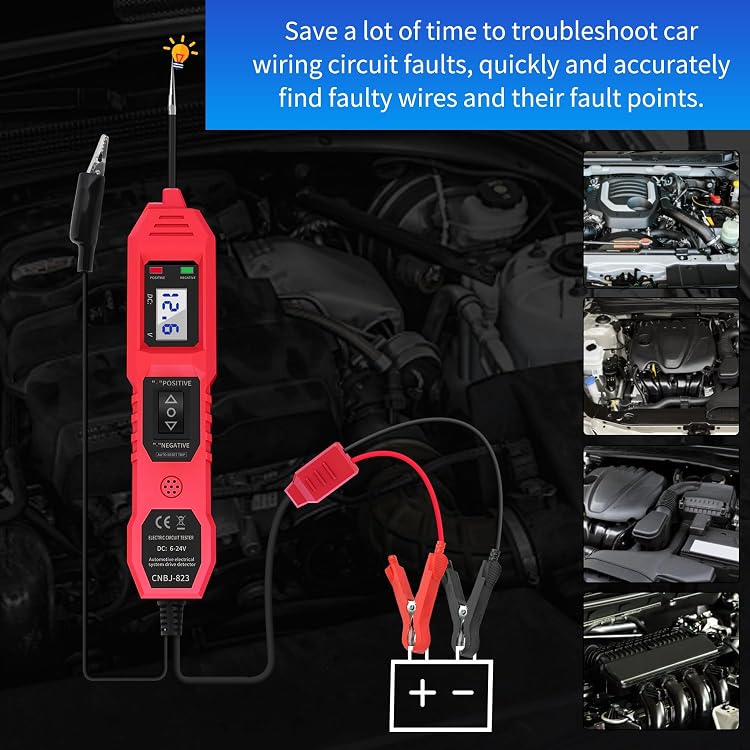
The workflow described is straightforward: connect the red clip to the battery’s positive terminal and the black clip to the battery’s negative. Once powered on, the voltage reading should appear instantly, then you use the probe to check different points.
A small example of how this helps in the real world: imagine a headlight that won’t turn on. Instead of tearing into wiring right away, you can probe likely power points and related circuit locations to see if you have voltage where you should, and whether the circuit path looks continuous. If you’re dealing with a bad ground or a short/open situation, this kind of quick “is power present?” scanning can save a lot of time.
The screen, lighting, and alerts you actually notice
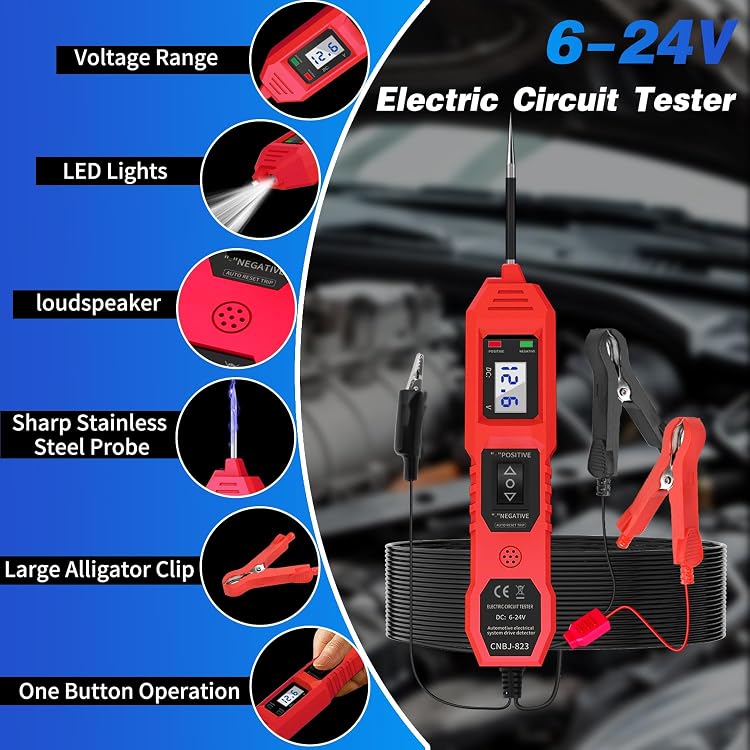
One of the differentiators here is the tester’s display and visibility. It has a backlit high-definition LCD screen so you can read voltage values as you test. The input data also mentions a low margin of error as low as ±0.2V, which can help when you’re trying to spot small voltage fluctuations rather than only “high vs low” readings.
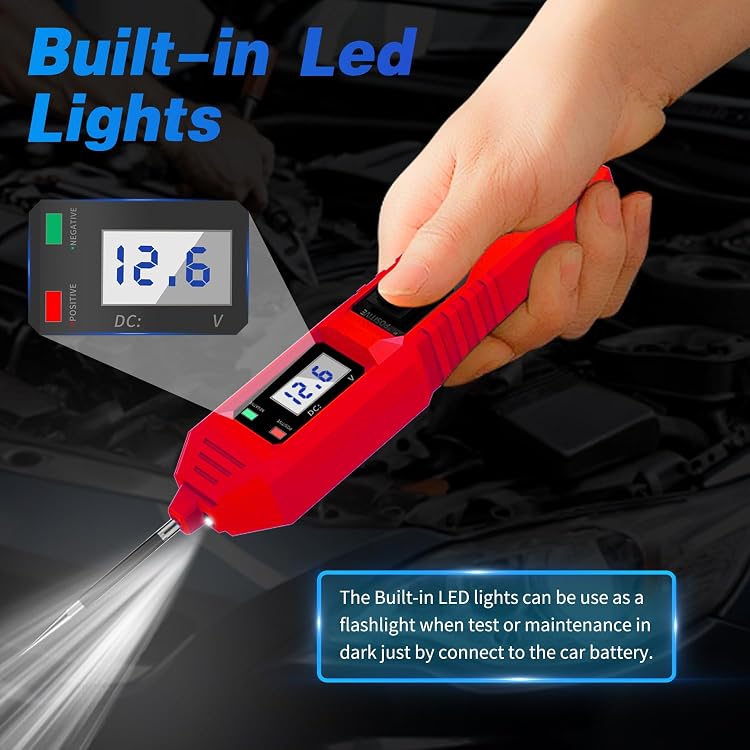
For working in dark areas or cramped spaces, the built-in LED light is there so you’re not relying on the garage overhead lighting. And if an overload is detected, the buzzer sounds immediately. That’s not just convenience—overload warnings can help protect both the battery and the tester during troubleshooting.
Key specs (so you know what you’re buying)
Tech specs
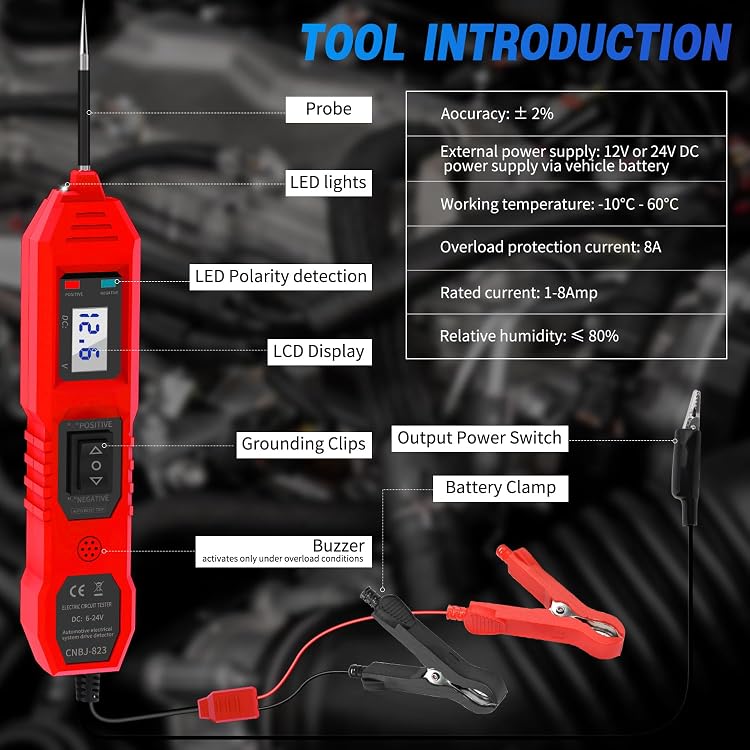
- Name: Power Circuit Probe Tester
- Type: Automotive circuit tester / short circuit finder
- DC circuit range: 6V/12V/24V
- Display: Backlit high-definition LCD screen
- Built-in light: LED light
- Alert: Buzzer for overload detection
- Probe reach: 14.7 ft flexible extension cord
- Stated use cases: continuity testing, voltage status checks, polarity status checks
- Compatible systems (as described): wide compatibility with 6V–36V DC systems (for vehicles and equipment)
Where it shines—and where it may fall short
Where it shines is speed and practicality. If you want to reduce trial-and-error disassembly and you’re regularly dealing with everyday automotive electrical failures, this tester is meant to streamline the early steps:
- identifying whether power is present
- checking continuity-style behavior at circuit points
- flagging abnormal voltage situations and overload events
- helping you narrow down short vs open vs grounding problems
But you should keep expectations grounded. The information provided doesn’t position it as a full diagnostic tool for complex modules, deep wiring breakdowns, or computer-controlled systems verification. If you’re chasing an intermittent electrical issue (the kind that shows up only after the car heats up, or only when you wiggle a connector), you may still need a more thorough testing approach.
Who it’s for (and who should skip it)
This makes the most sense if you’re:
- a hands-on DIY car owner who wants a quicker way to check continuity and voltage before taking everything apart
- a mechanic who values faster “first-pass” circuit confirmation during repairs
- someone troubleshooting common electrical problems like non-working lights, accessories, or power windows
It may not suit you as well if:
- you already rely on a high-end multimeter workflow and want specialized diagnostic depth (this is more about quick circuit probing and status checks)
- you need detailed fault localization in cases that are purely intermittent or require scope-level analysis
Also, double-check your specific system voltage needs. The tester is described around 6V/12V/24V DC, with broader 6V–36V compatibility mentioned, but the exact fit depends on what you’re testing.
Everyday use tips
Getting reliable results is mostly about how you probe. Since the tool works by connecting to the battery and touching the probe to circuit points, good contact matters. Take your time aligning the probe tip to the exact place you’re measuring rather than hovering around nearby wiring.
If you’re working in tight spaces, use the LED light early so you don’t “guess where you’re probing.” And if you hear the buzzer for overload, treat it as a stop-and-check moment—don’t just keep pushing through.
Final verdict
Worth considering if you want a practical automotive circuit tester that helps you check voltage presence and continuity-style circuit status quickly, with a readable backlit LCD, built-in LED lighting, and overload/buzzer alerts. It’s especially useful when you’re trying to figure out whether a fault is closer to a short circuit, open circuit, grounding issue, or abnormal voltage—without repeatedly disassembling parts.
Skip it if your goal is deep, module-level diagnostics or if you expect it to do everything a full diagnostic setup does. It’s more of a streamlined troubleshooting tool than a replacement for comprehensive testing.
Mini FAQ
What does this circuit tester help diagnose?
It’s designed to help identify common electrical issues such as short circuits, open circuits, bad grounding, and abnormal voltage, using continuity testing and voltage/polarity checks.
How do you start using it?
The basic approach is connecting the red clip to the battery’s positive terminal and the black clip to the negative, then using the probe on circuit points while reading the display.
Does it work in dark spaces?
Yes. It includes a built-in LED light and a backlit LCD screen to help with visibility while you test.
Will it alert me to overloads?
Yes. The buzzer is described as sounding immediately when an overload is detected.
Does the tester reach the whole vehicle?
It includes a 14.7 ft flexible extension cord, which is intended to help you reach different areas without repositioning your battery connections.