

NOONE Jumper Cables 10 ft, 10-Gauge for Cars
Reviews
Price
Product description
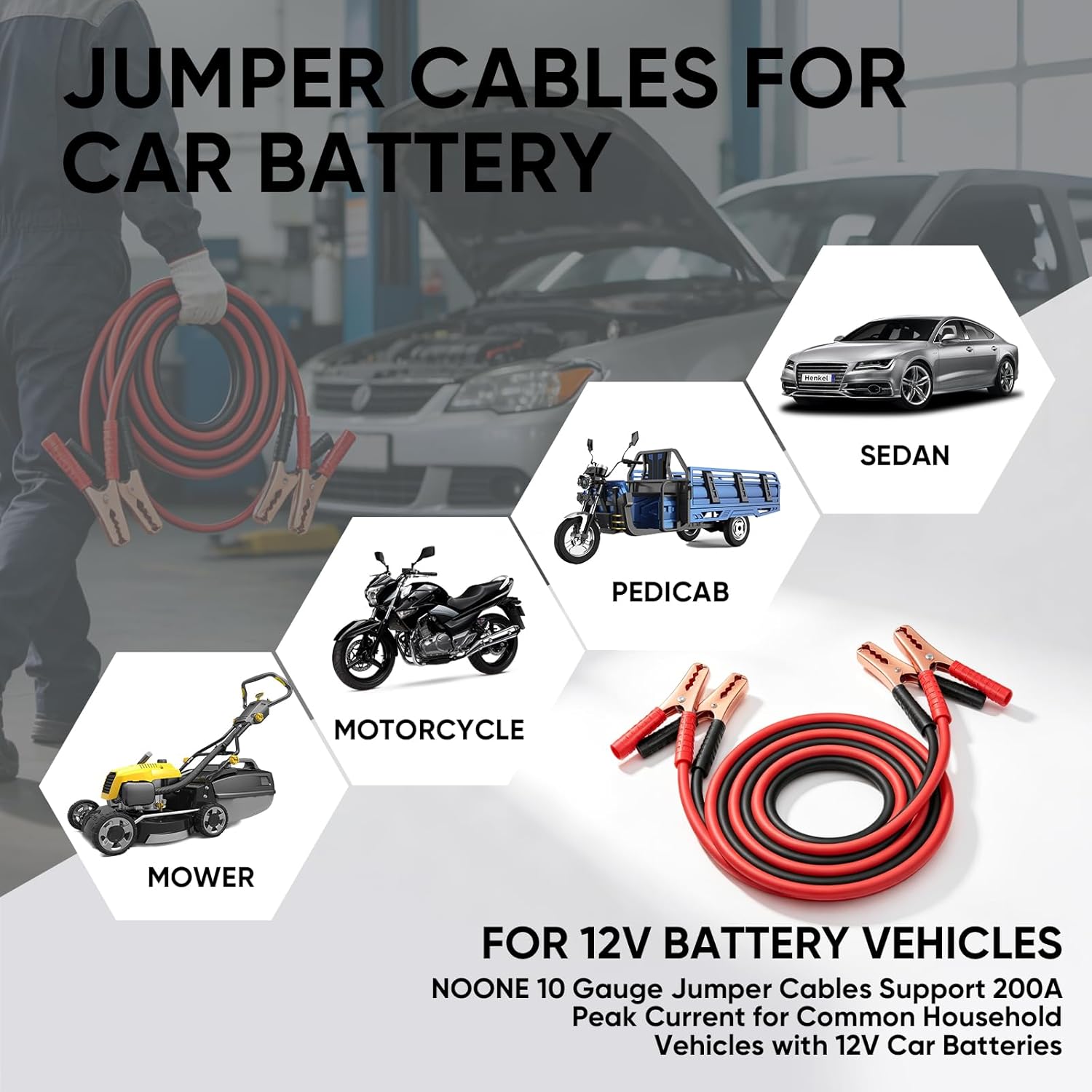
This set of heavy duty jumper cables 10 gauge 10 feet delivers a straightforward way to revive a dead or weak car battery, offering insulated protection and solid conductivity for roadside boosts. They support up to 200 A and work with 12 V and 24 V systems, making them useful for everyday cars with gasoline engines up to 3.0 L and light trucks that fall within that range.
Key Points
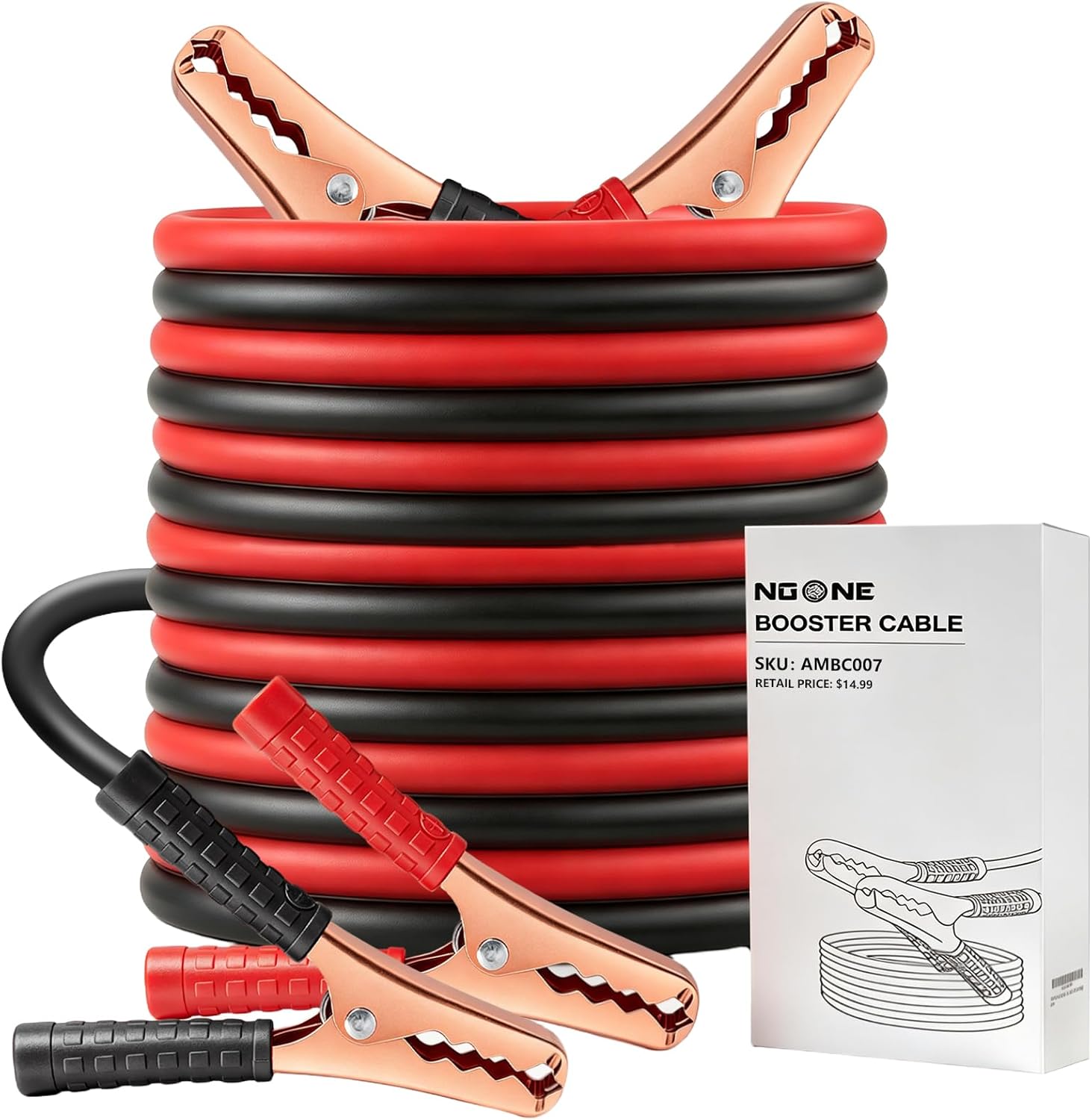
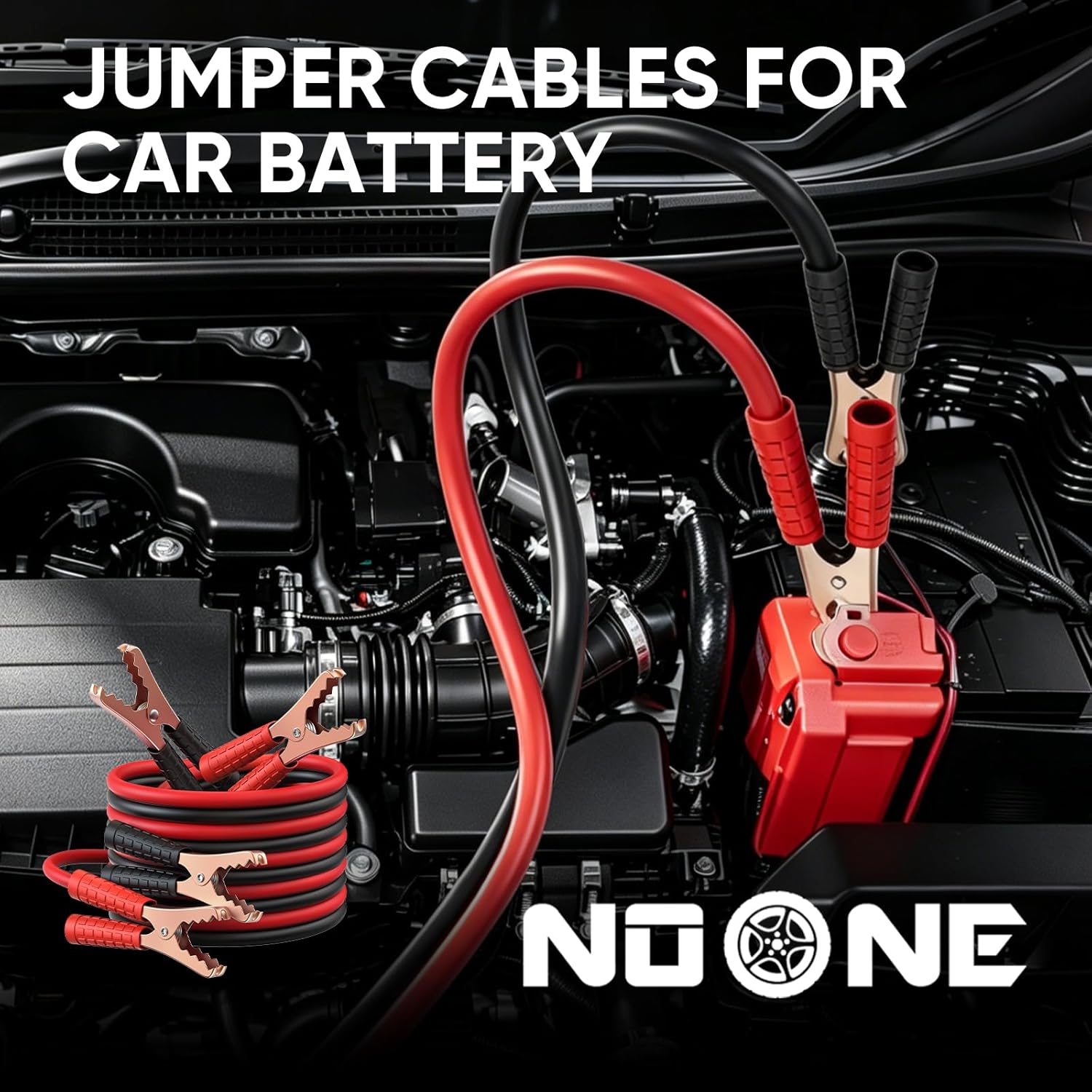
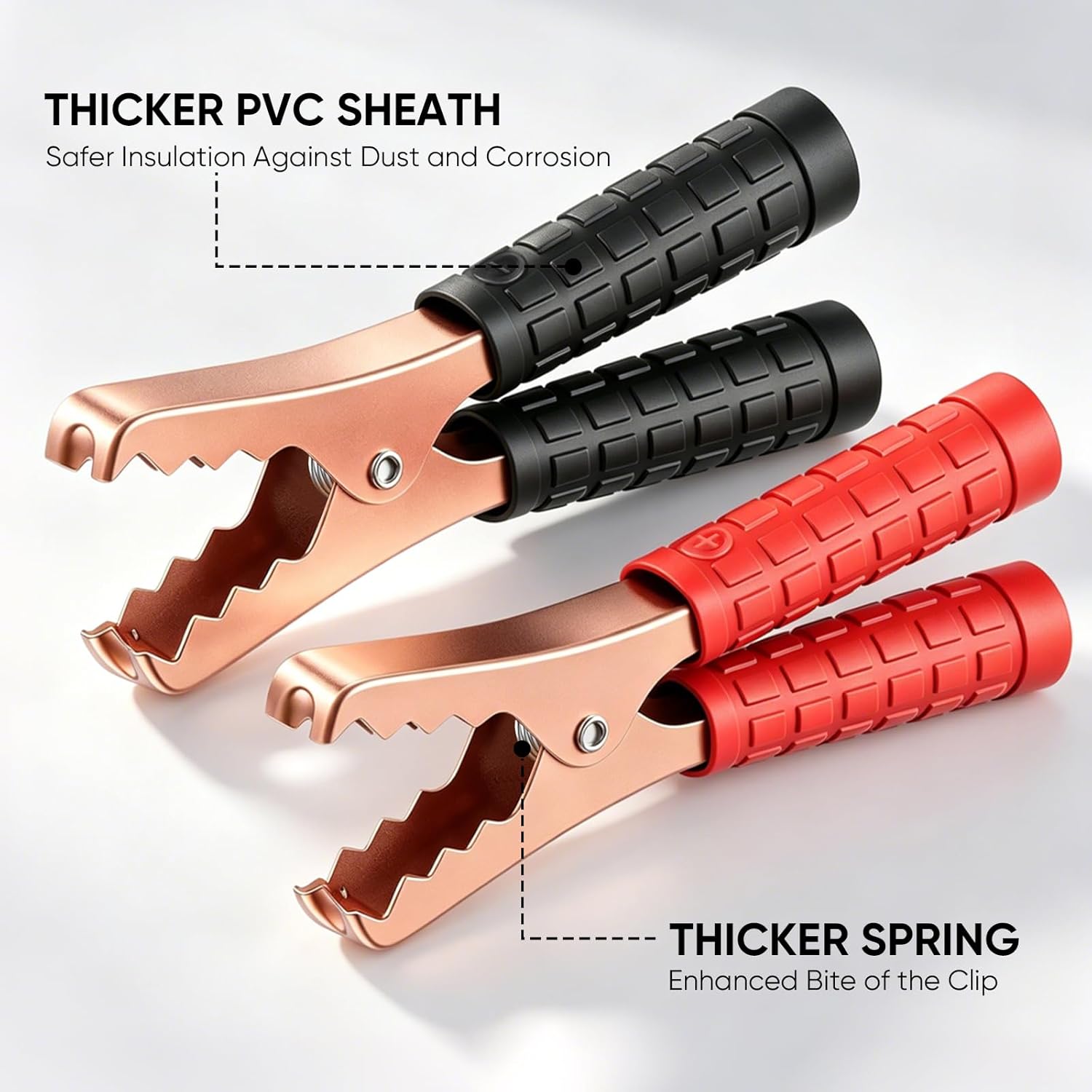
These jumper cables feature thick PVC insulation and a rubber-coated exterior that helps reduce the risk of accidental contact and improves grip when handling in cold or wet conditions. The aluminum core with copper coating aims to balance conductivity and flexibility so the cables remain usable at temperatures from -40 °F to 140 °F, according to the manufacturer. The clamps include reinforced jaws and a molded handle that resists heat and sparks, which can be reassuring during quick roadside procedures. Consider that these cables are 10 feet long, which gives modest reach between vehicles but may be limiting if more distance is needed between battery locations.
Technical Specifications
- Name: NoOne Jumper Cables 10-Gauge 10-Feet
- Gauge: 10 AWG
- Length: 10 feet
- Maximum current: 200 A
- Voltage compatibility: 12 V / 24 V
Advantages
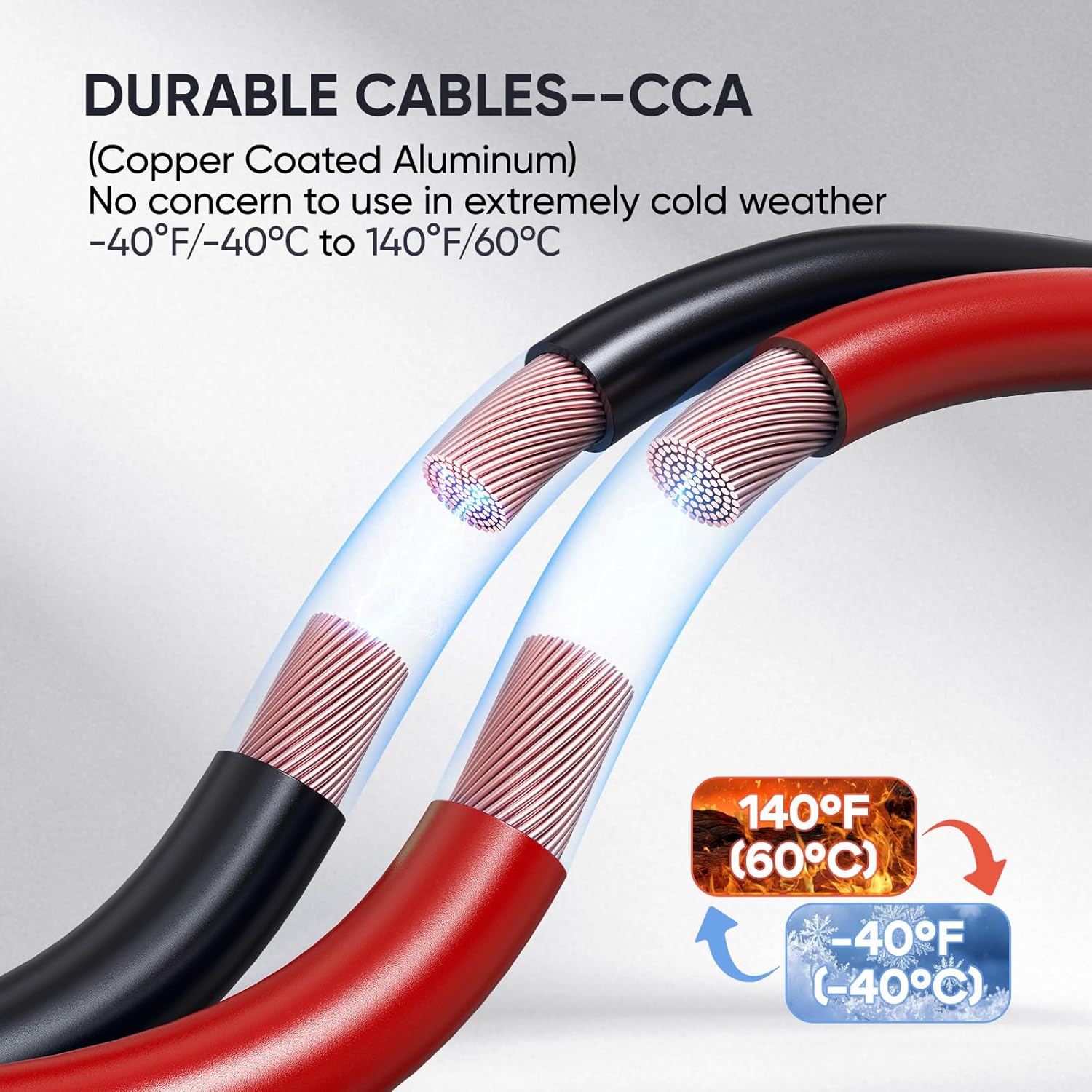

The construction combines flexible conductors with a flame-resistant PVC grip on the clamps, which increases handling safety during use. Because the conductors are aluminum with a copper coating, the cables are lighter than comparable pure-copper designs while maintaining reasonable conductivity. This makes storage and transport easier for drivers who prefer to keep a kit in the trunk without adding much weight. Another practical advantage is the included storage box that helps keep the cables organized and reduces the chance of kinking.
🚗 The clamps are crimped tightly for a strong bite on battery terminals and the molded covers help prevent accidental metal-to-metal contact. ⚠️ Keep in mind that while these cables support many everyday gasoline engines up to 3.0 L, they may not deliver sufficient current for larger displacement engines or commercial vehicles with higher cranking requirements.
Usage Recommendations
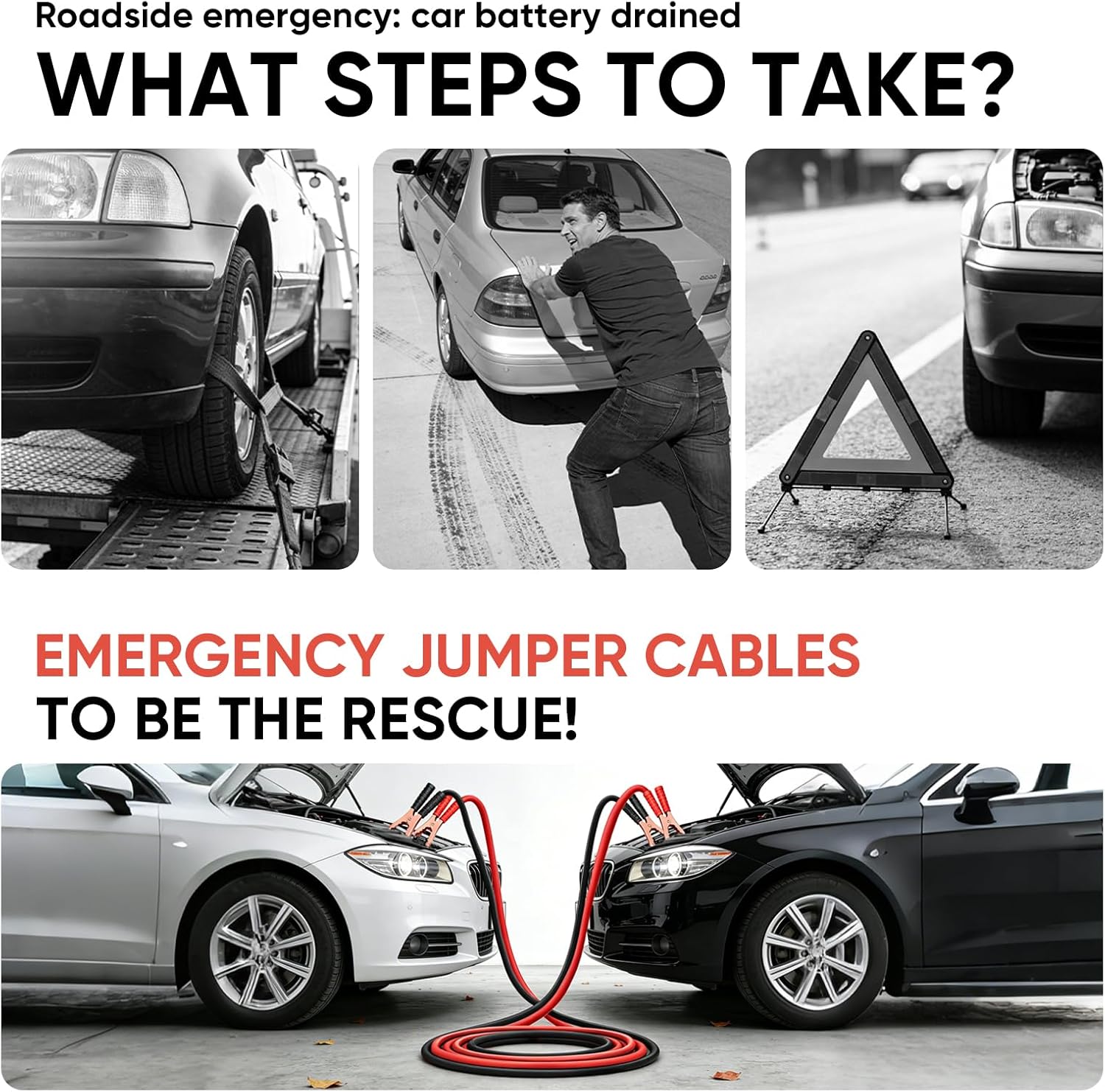
Before use, verify that both vehicles are off and follow standard safety practices for jump-starting a vehicle. Position the donor vehicle so the cables can reach without stretching the line of tools or creating tripping hazards. Attach the clamps to clean terminal surfaces for better contact and avoid touching clamp ends together while connected to a battery. After jump-starting, allow the engine to run for several minutes to stabilize charging, and store the cables dry in the provided box to prolong the insulation life.