

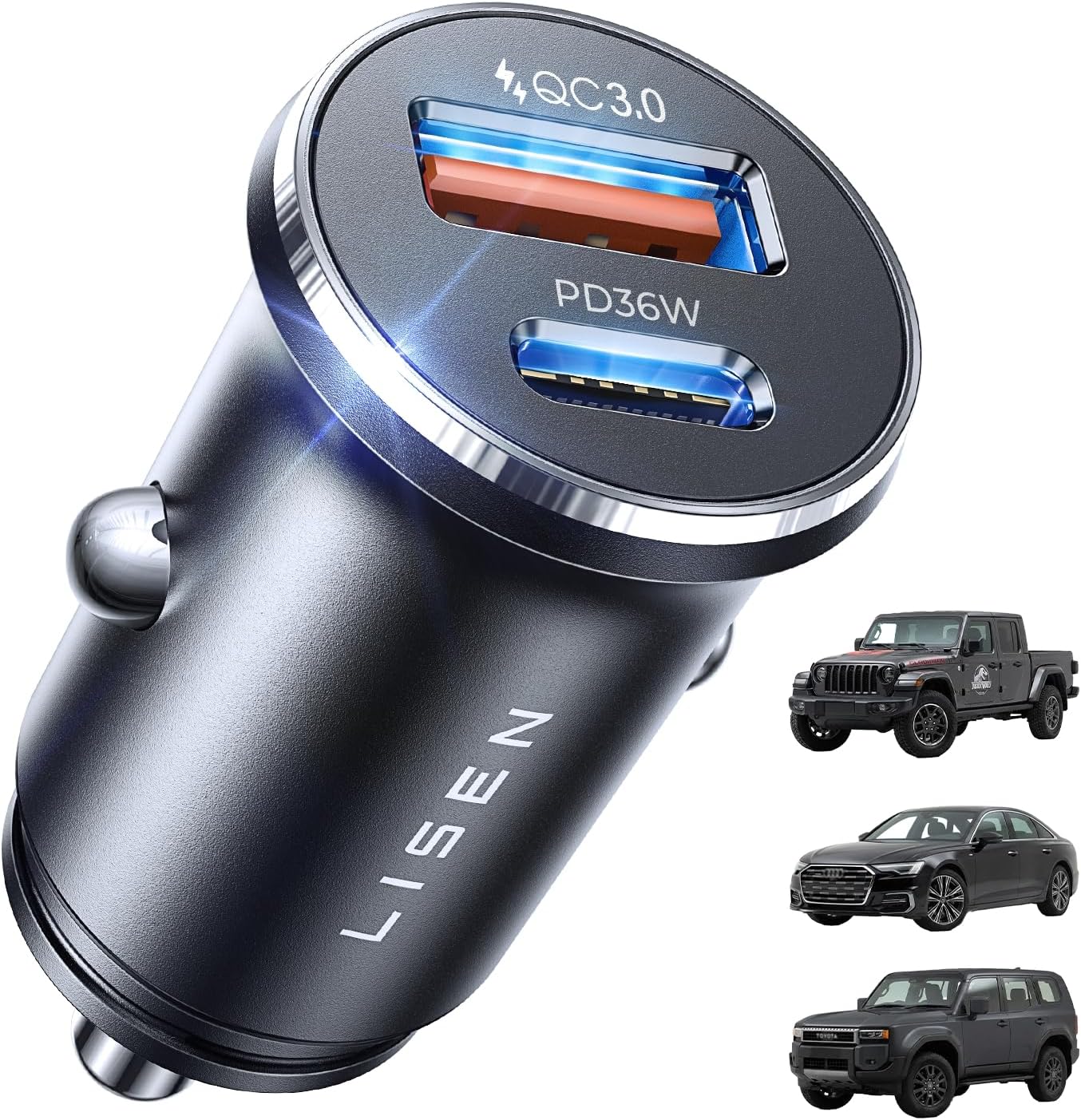
LISEN USB-C car charger 12V
Product description
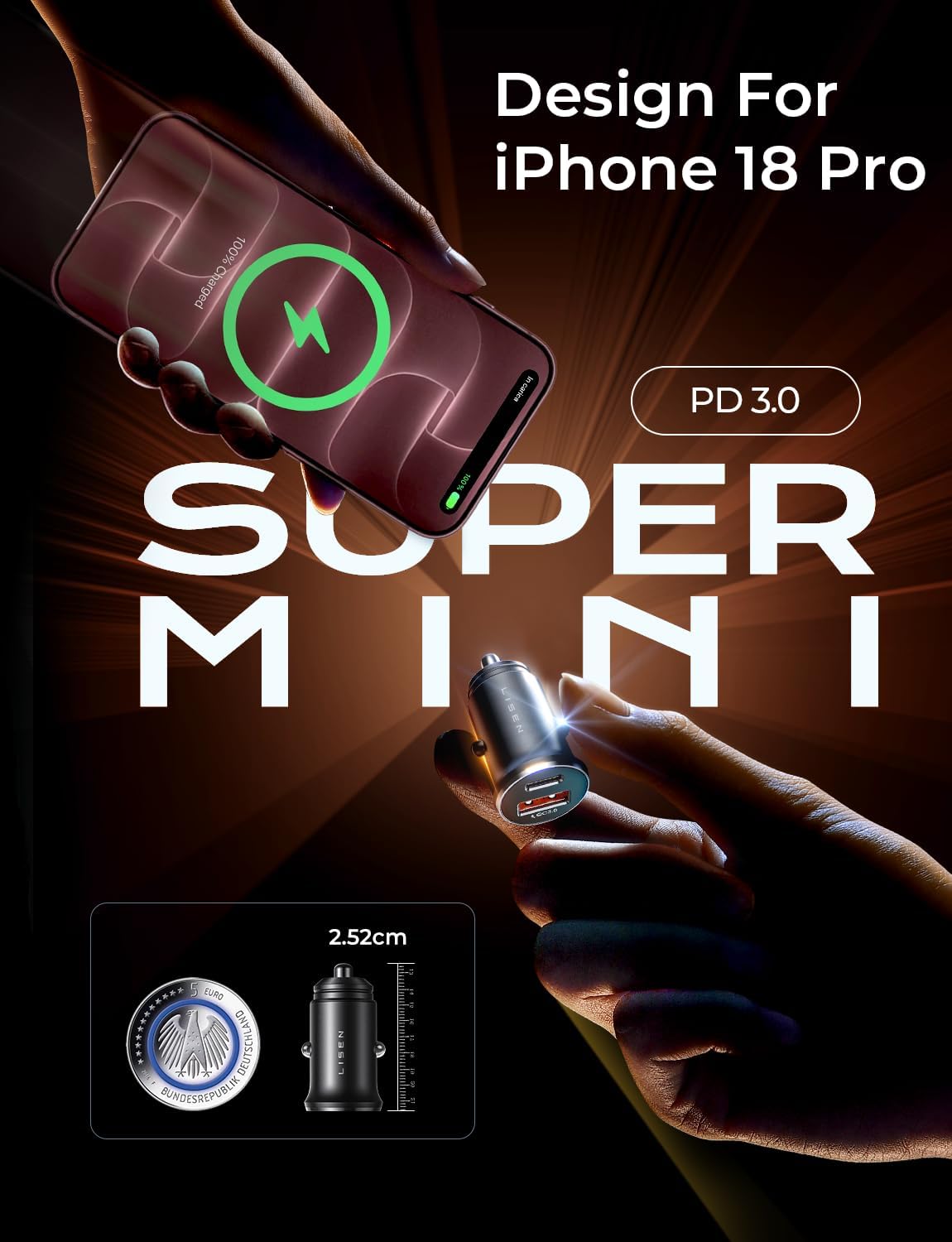
If you want a small charger that stays mostly out of sight, this LISEN adapter is designed for a different priority than a bulky multi-port unit: a compact fit in the car’s power socket. It has USB-C and USB-A ports for charging devices on the go.
If you prioritize a low-profile setup, the mini aluminum design may suit your dashboard, if you prefer both ports to deliver their maximum fast-charging speeds at once, the listed limitation matters.
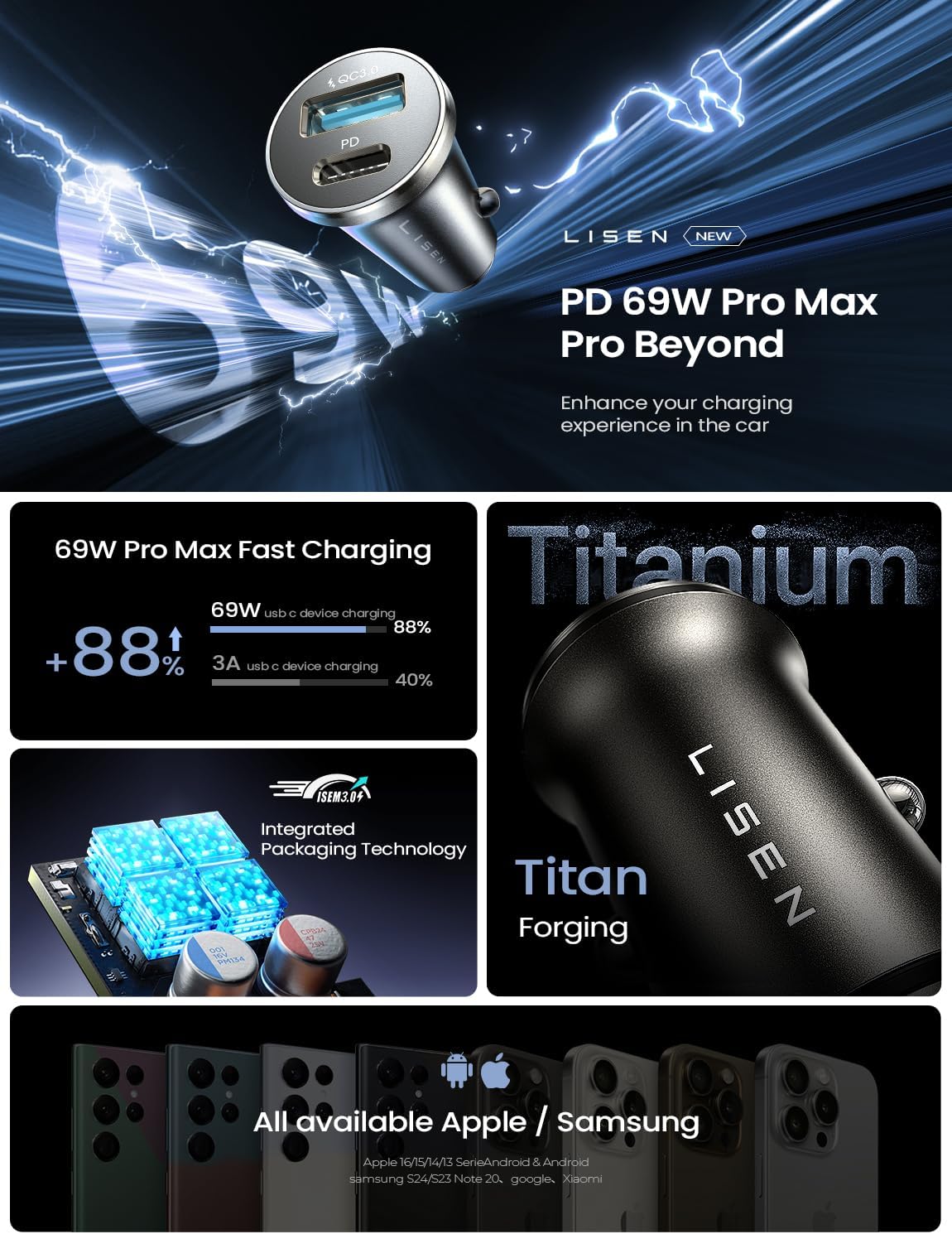
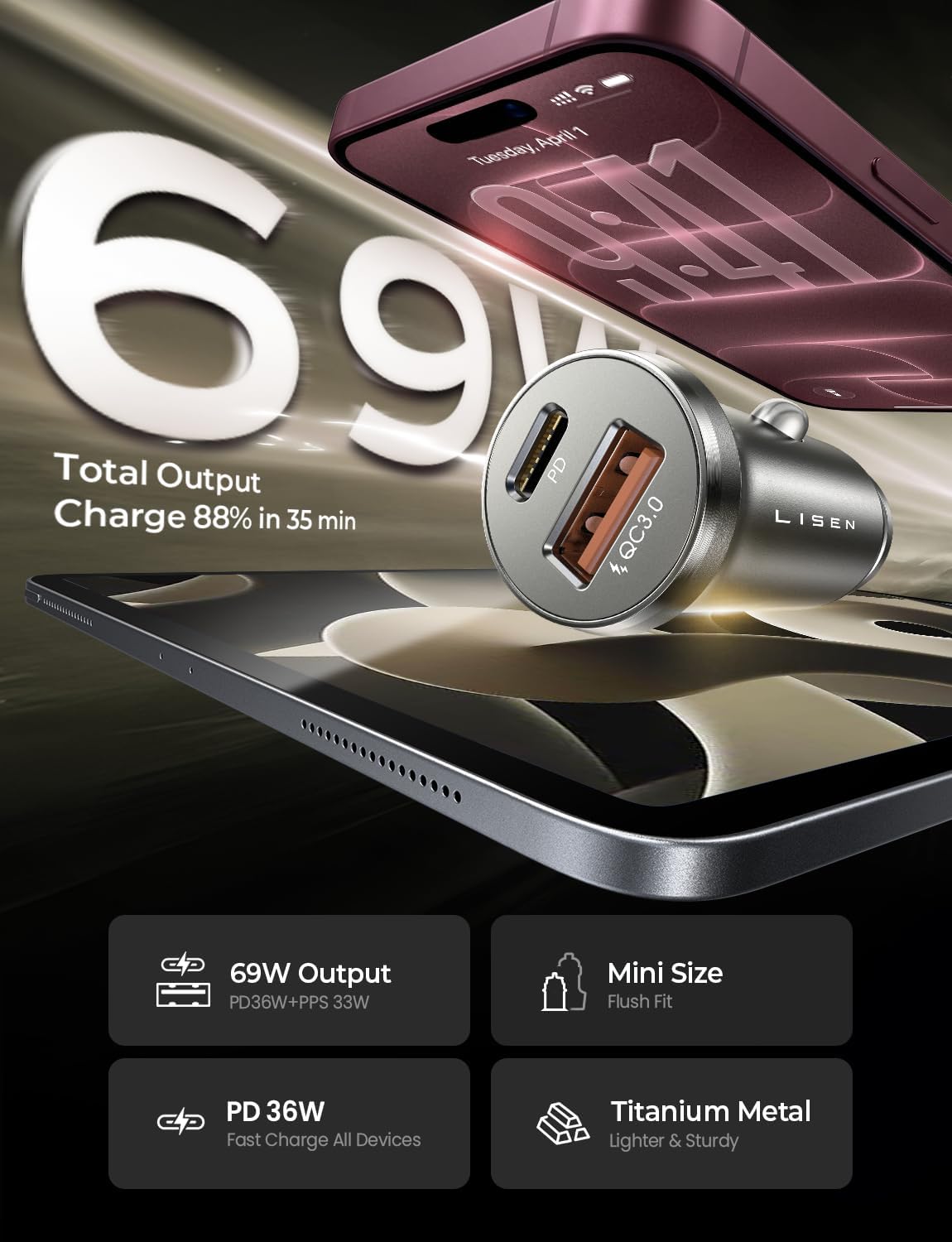
The product name says 69W, but its details describe 54W total output. That distinction is worth noting before choosing it for multiple devices.
Where it shines
The charger fits standard 12V and 24V cigarette-lighter sockets, making it relevant for cars, trucks, SUVs, and RVs. Its compact, flush-fit shape is meant to sit close to the socket rather than protrude like a larger adapter. That can be handy when you want to keep the dashboard uncluttered or leave the charger in place between trips.
For example, you could connect a USB-C phone for navigation while topping up another device through USB-A during a commute. It supports USB-C and USB-A devices, with compatibility examples in the product details including iPhone, Samsung Galaxy phones, tablets, GPS units, and dashcams. Actual charging speed depends on the device and charging protocol it supports.
Highlights
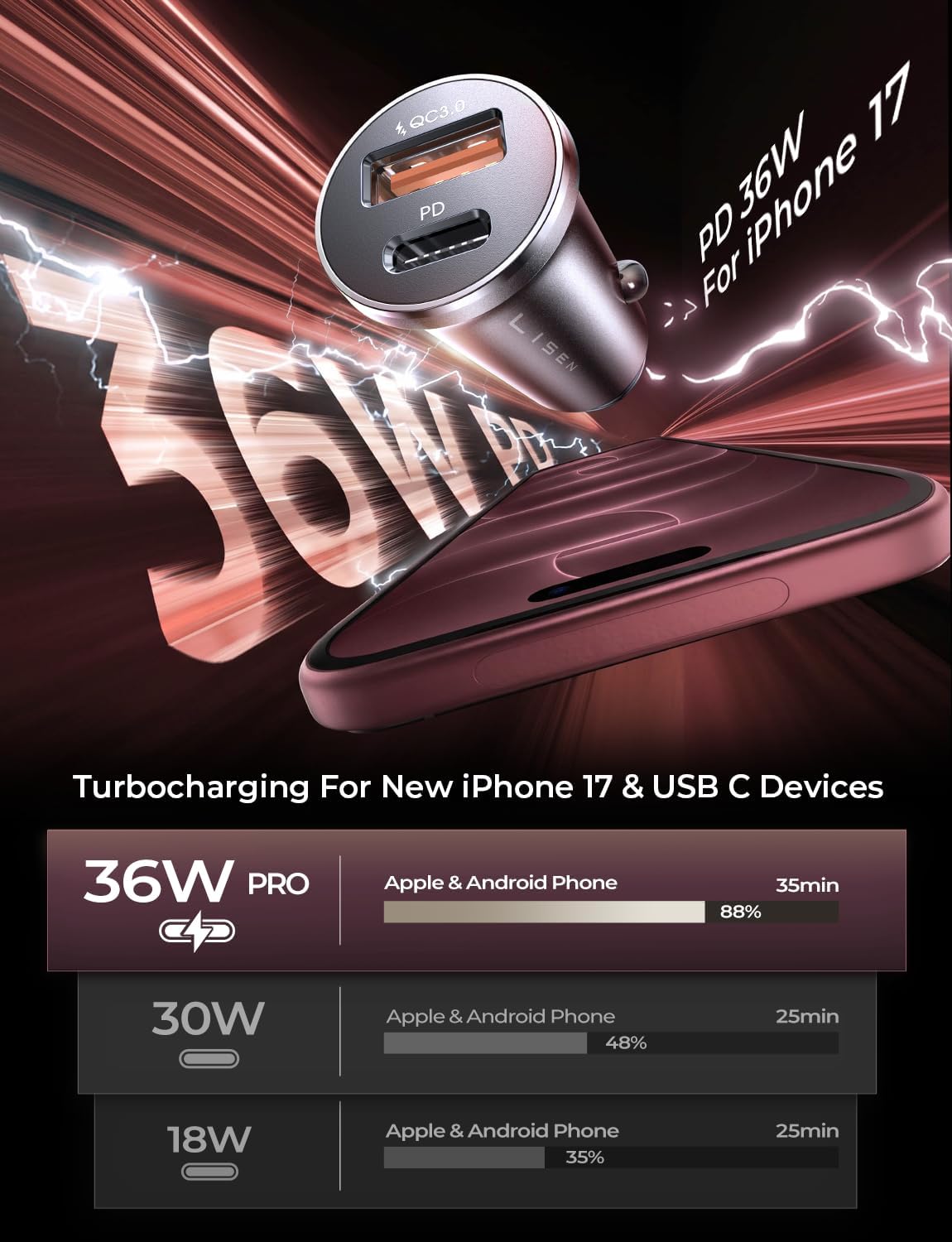
The two ports use PD and PPS fast-charging specifications, and the description also lists PD 3.0, QC 3.0, AFC, FCP, and SCP support. The key tradeoff is that only one port provides maximum fast charging at a time. So it can serve two connected devices, but it isn’t described as delivering peak fast charging to both simultaneously. The listing gives a PD maximum of 36W and a PPS maximum of 33W, alongside its stated 54W total output.
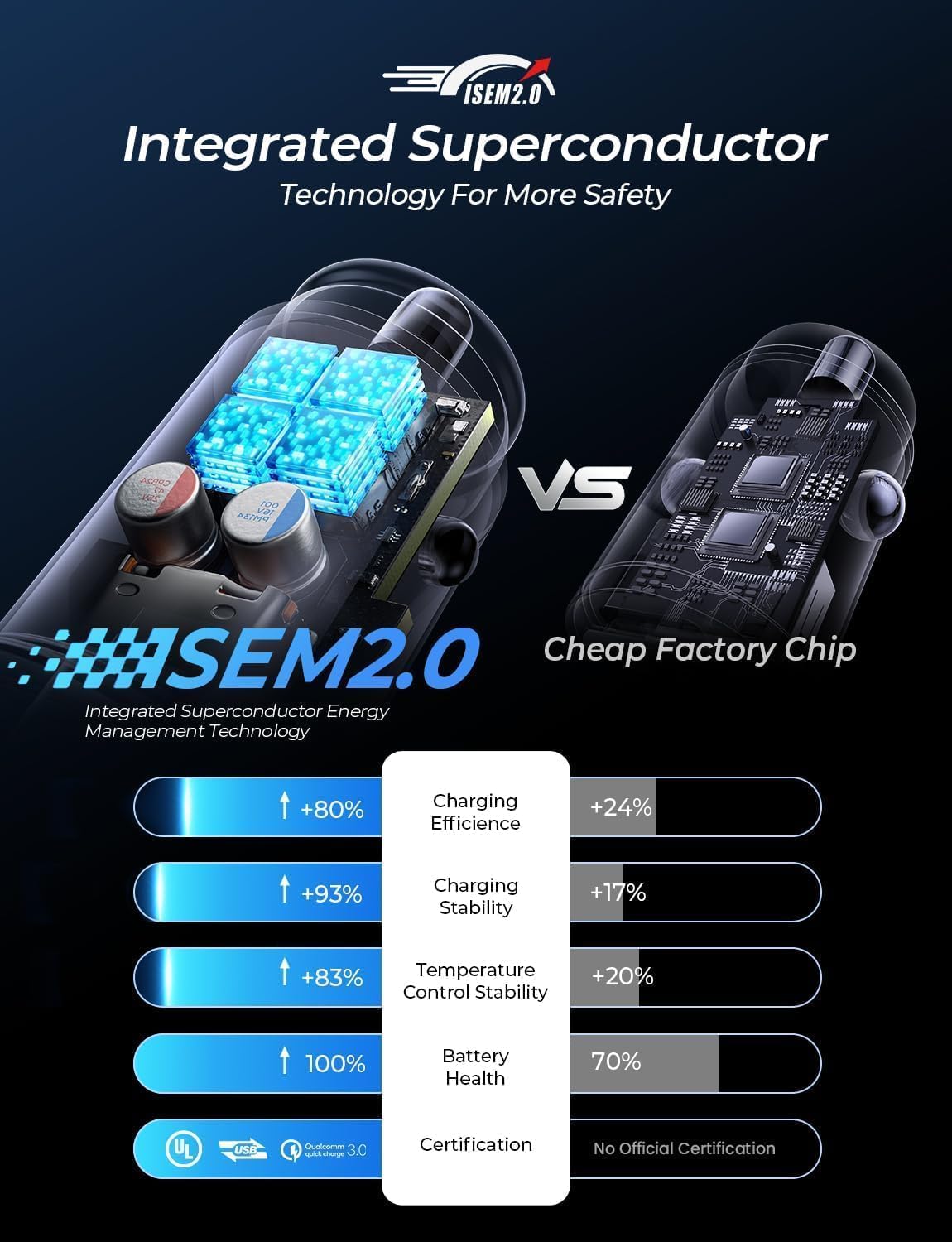
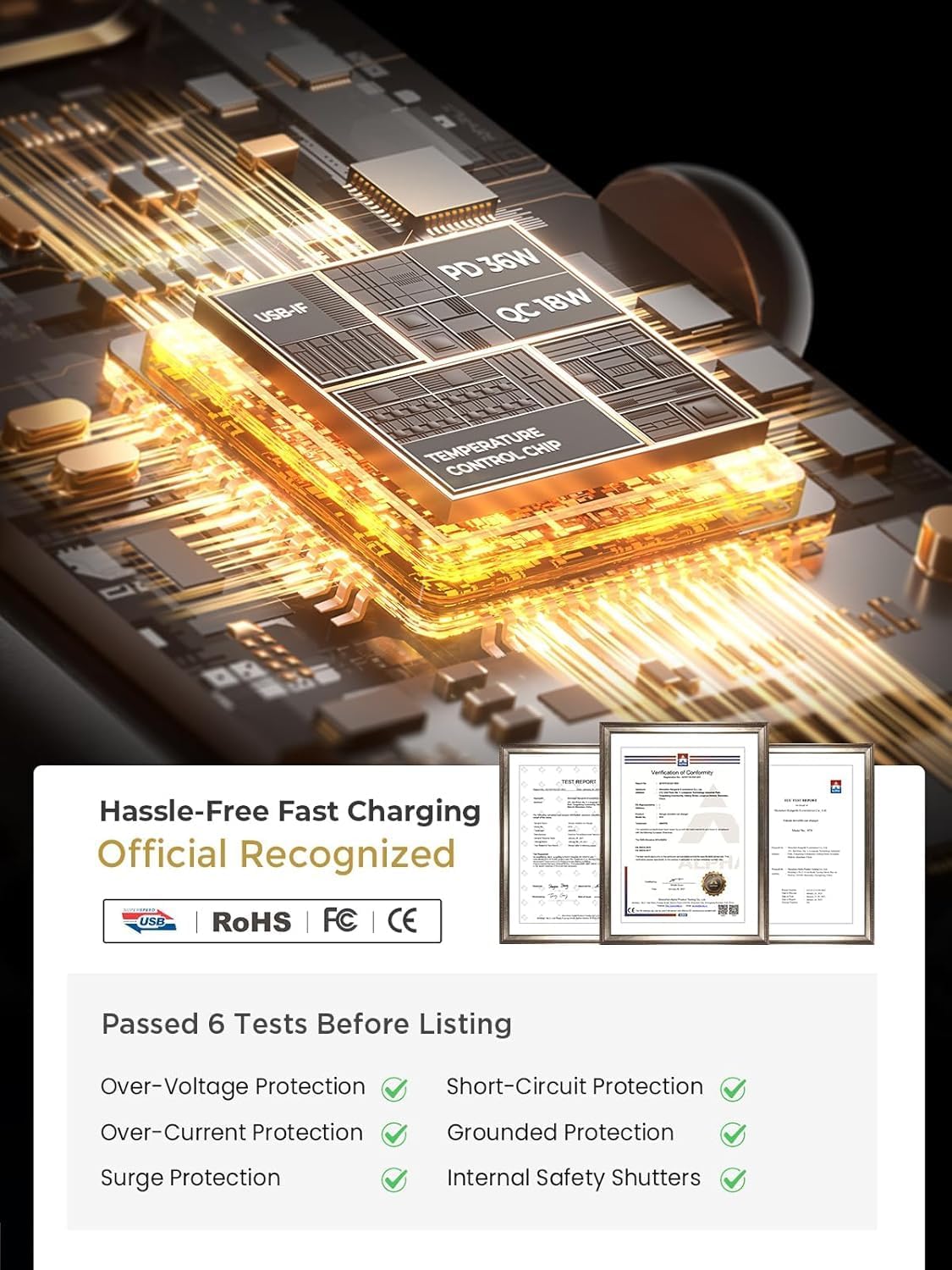
The body is described as aluminum alloy, with flame-retardant PC also listed in its construction. The product details claim built-in protection against overvoltage, short circuits, and overheating, and name UL, CE, FCC, and RoHS certifications. Treat those as listing claims rather than a substitute for checking whether the charger’s output suits your particular device. You’ll appreciate it if you want a small adapter with two port types for everyday driving. Better avoided if your setup depends on both ports charging at their individual maximum speeds at the same time.
Best use cases
This layout makes the most sense for regular drives where one phone is the main charging priority and a second device may need power as well. Think navigation on a phone with a passenger’s device connected, or a phone and GPS sharing the adapter. The aluminum shell and mini form factor favor a discreet, portable setup, someone who needs several devices charging at once or wants more ports should look for a different configuration.
Is it worth it?
The LISEN is worth considering if you want a compact USB-C car charger that also has USB-A and fits 12V or 24V sockets. Its practical appeal is the small footprint, not a promise of maximum-speed charging across both ports. On the spec sheet, the 69W name and the 54W total-output description don’t match, so use the stated output details—not the headline alone—to judge whether it fits your charging needs. Choose it for a simple in-car setup with modest space demands, skip it if simultaneous peak output is essential.