

JULIBA RV Air Conditioner 18,000 BTU
Product description
An RV that swings between stuffy afternoons and chilly nights needs more than a cooling-only unit. The JULIBA rooftop air conditioner combines cooling with heat-pump heating, so one non-ducted setup can serve both jobs in a travel trailer, fifth wheel, or camper. Before choosing it, though, factor in the electrical requirements and make sure its rooftop format suits your rig.
Getting the most from it
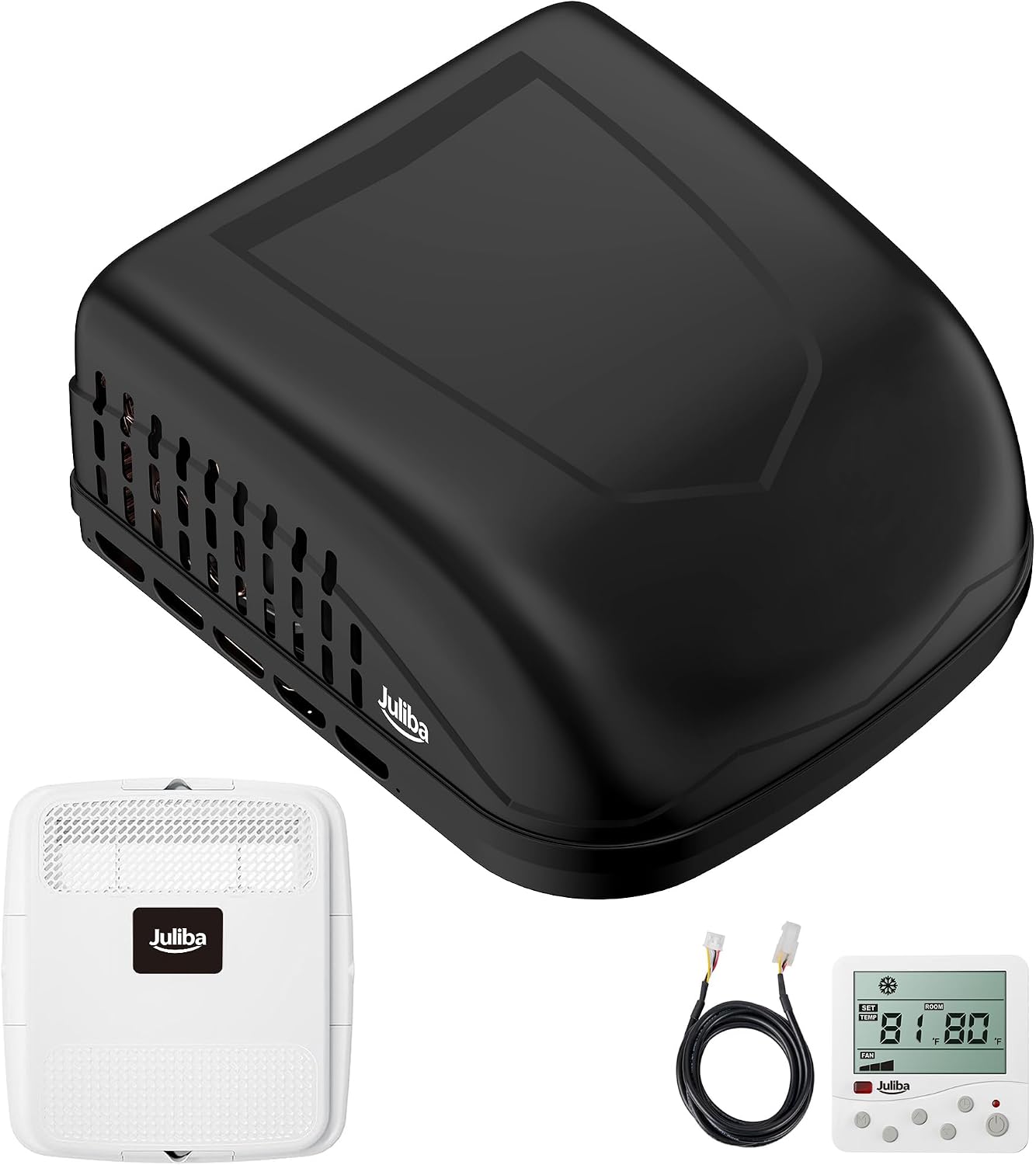
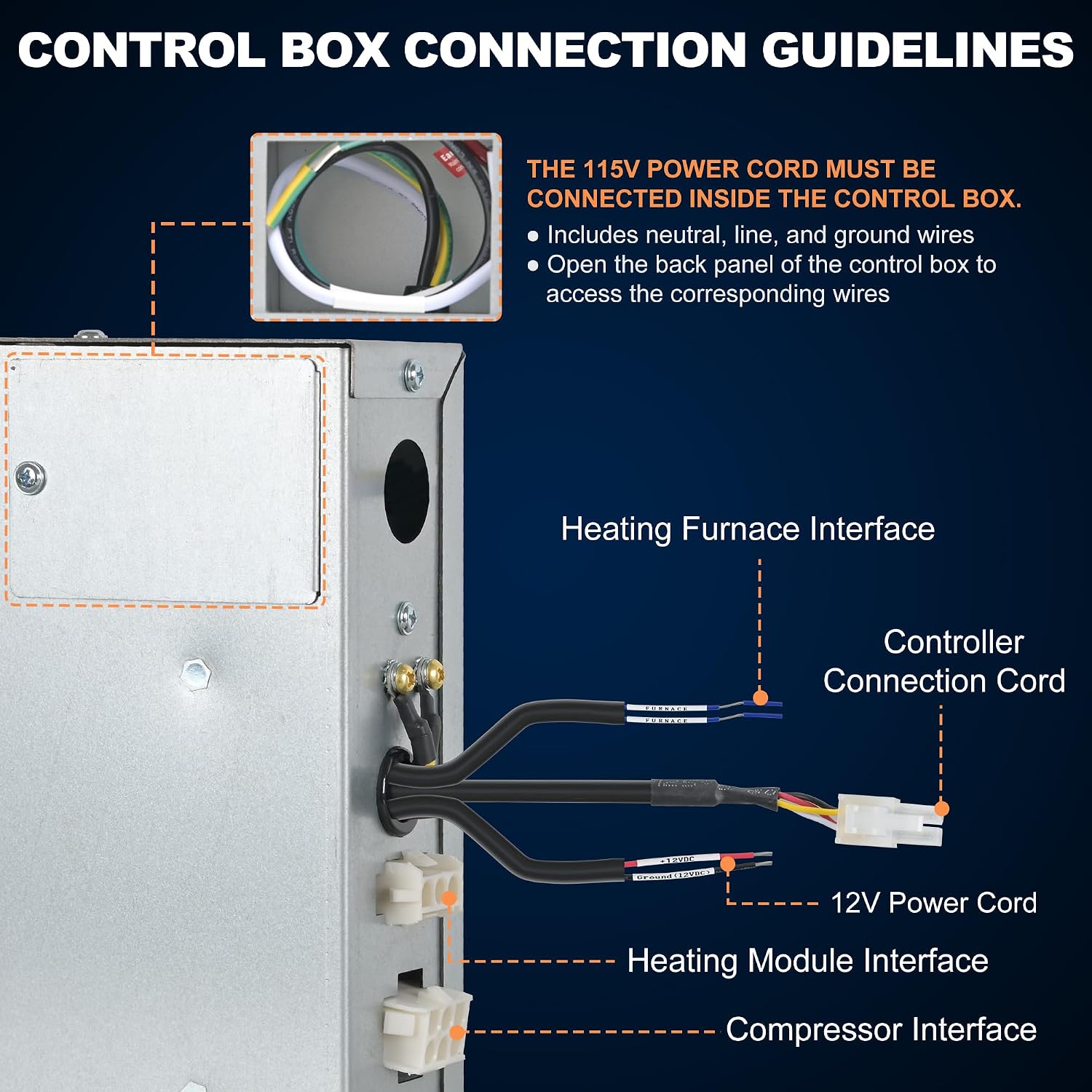
This unit is intended for a roof vent opening measuring 14.25" x 14.25" and does not use ductwork. That makes it worth considering if your RV is set up for a non-ducted rooftop AC, but it is not a replacement for a ducted system. The listing also says the unit requires both 115V AC and 12V DC power to operate properly, so check that your electrical setup can provide both before planning an installation.

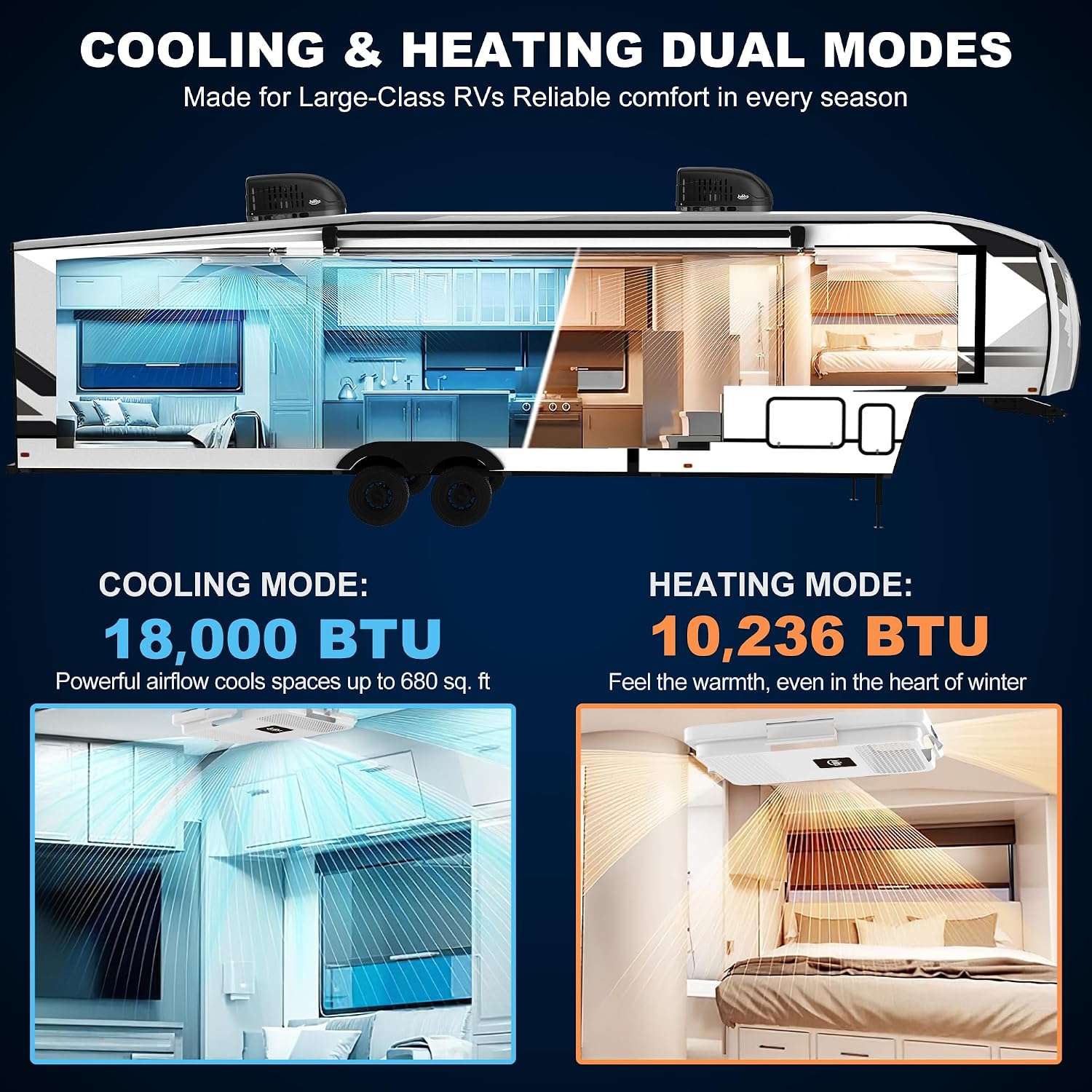
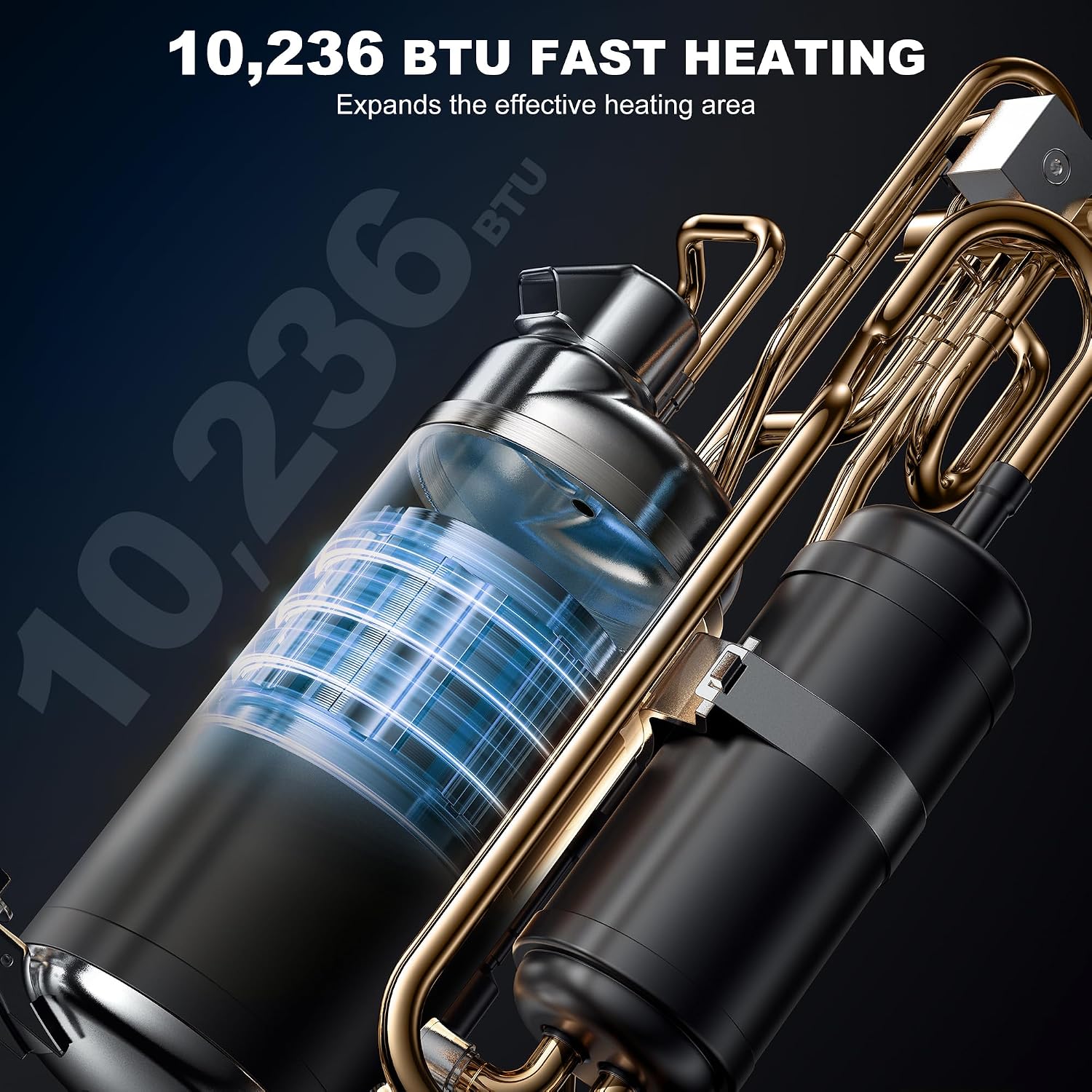
In practice, the appeal is straightforward: after a warm day on the road, you can use the cooling function in the living area, then switch to heat-pump heating when the evening turns cold. The listed output is 18,000 BTU for cooling and 10,236 BTU for heating. Its rooftop placement keeps the unit outside the living space, while the non-ducted design avoids adding ductwork. The unit is described as a fit for RVs from 16 to 40 feet, but that range alone cannot tell you how comfortable it will feel in every floor plan.
Why it’s worth it
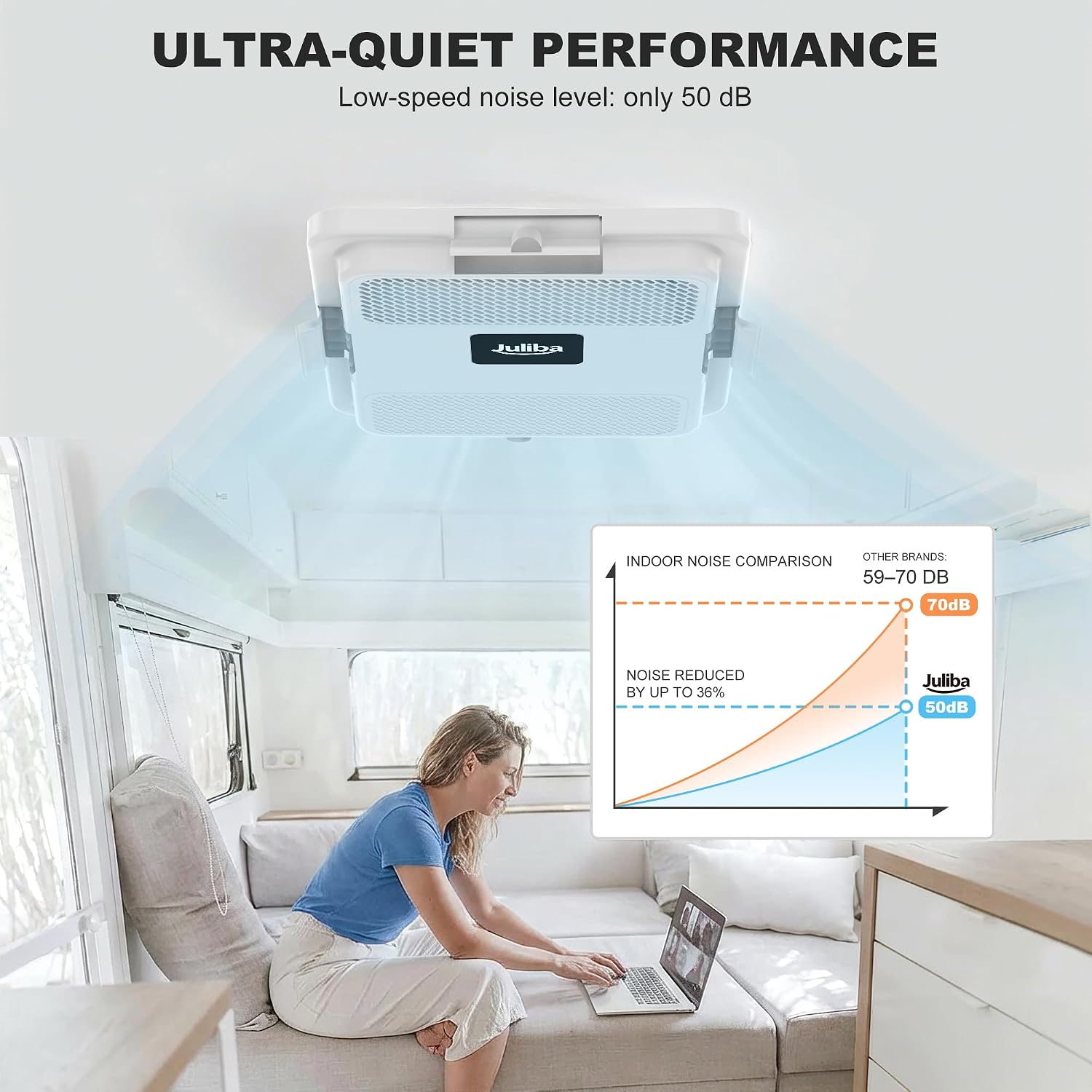
Having both cooling and heating in one rooftop unit is the main reason to consider this JULIBA model, especially for trips that span changing weather. The maker lists coverage up to 680 sq ft, according to the maker, and a 50 dB operating-noise figure. Those details may help narrow your search, but they are not a substitute for checking whether the unit suits your particular RV and expectations for noise or temperature control.

Its UV-resistant housing and low-profile, aerodynamic design are described as features for road use. If you prioritize a single rooftop unit for cooling and heating, this approach may suit you better than choosing a cooling-only setup. If you prefer a system that distributes air through ducts, this non-ducted model is a different kind of purchase, not a like-for-like replacement.
Key features
- Cooling: 18,000 BTU, heat-pump heating: 10,236 BTU.
- Non-ducted rooftop design for a 14.25" x 14.25" opening.
- Requires both 115V AC and 12V DC power.
- Listed operating noise: 50 dB, listed RV range: 16 to 40 feet.
- UV-resistant housing and low-profile design.
It’s a great fit if your RV has the specified roof opening and you want cooling and heating without ductwork. Better avoided if you need a ducted unit or cannot meet both power requirements. The listing identifies this as the AC unit only, so do not assume other installation components are included.
Is it worth it?
The JULIBA makes the most sense for an RV owner who wants one rooftop appliance for warm-weather cooling and heat-pump heating, and whose roof and electrical setup match the stated requirements. Its non-ducted format is a practical distinction: it can suit a compatible vent opening without ductwork, while buyers seeking ducted air distribution should look at that type of system instead. The key tradeoff is fit and setup, not just the BTU figures. If your RV meets the opening and power requirements, this combination is worth considering, if either is uncertain, choosing a unit designed for your existing system is the safer route.