

A-iPower Inverter Generator 7,600W
Product description
Where it shines
When an outage interrupts essentials or a campsite needs power for electronics, a portable inverter generator can be more useful than relying on a basic generator with a single fuel option. This A-iPower model runs on gas or propane and is listed as RV ready.
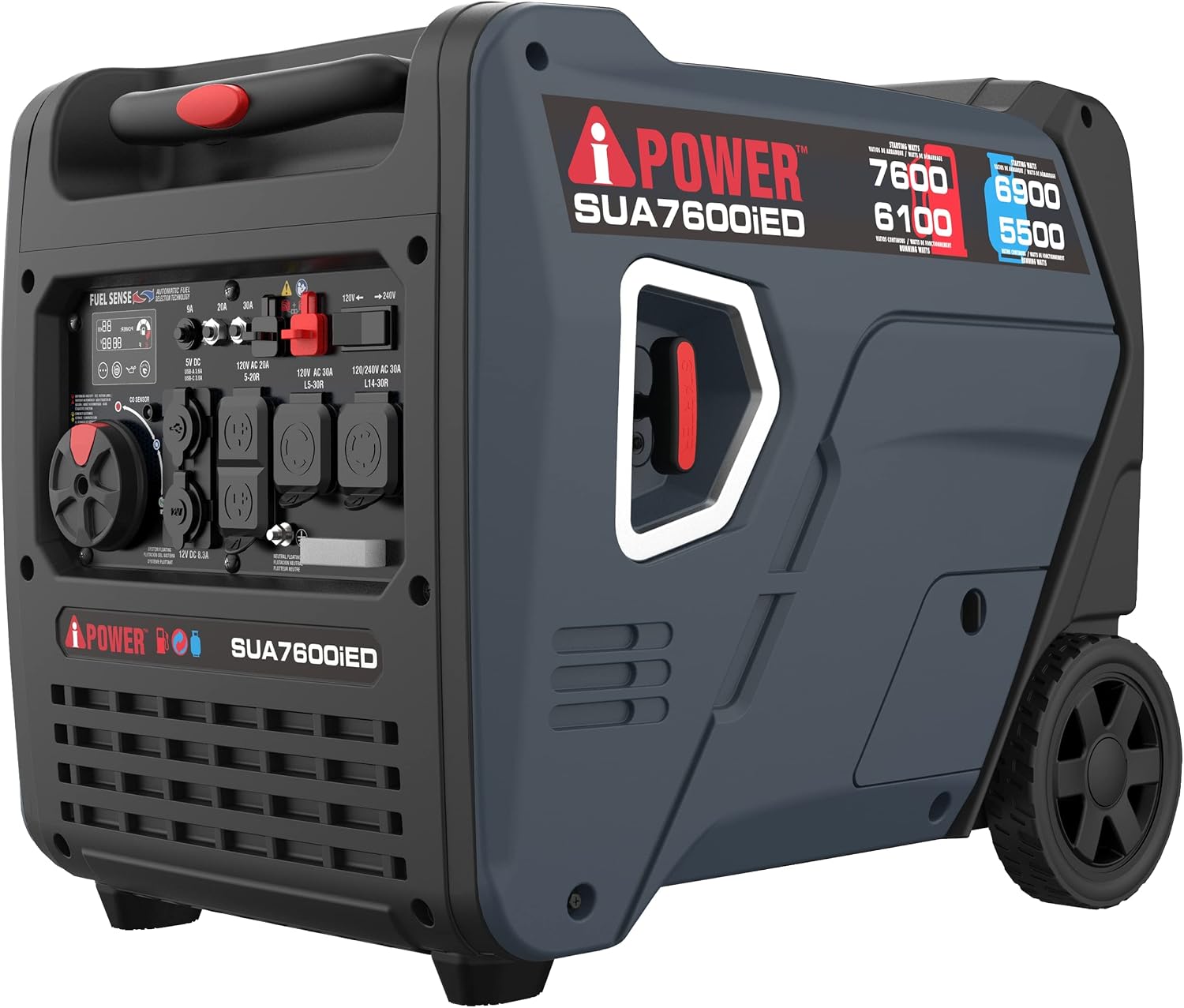
Its gas rating is 7,600 starting watts and 6,100 running watts, on propane, it provides 6,900 starting watts and 5,500 running watts. That distinction matters when deciding what to run at the same time: starting wattage is not the figure to use for steady, ongoing loads.
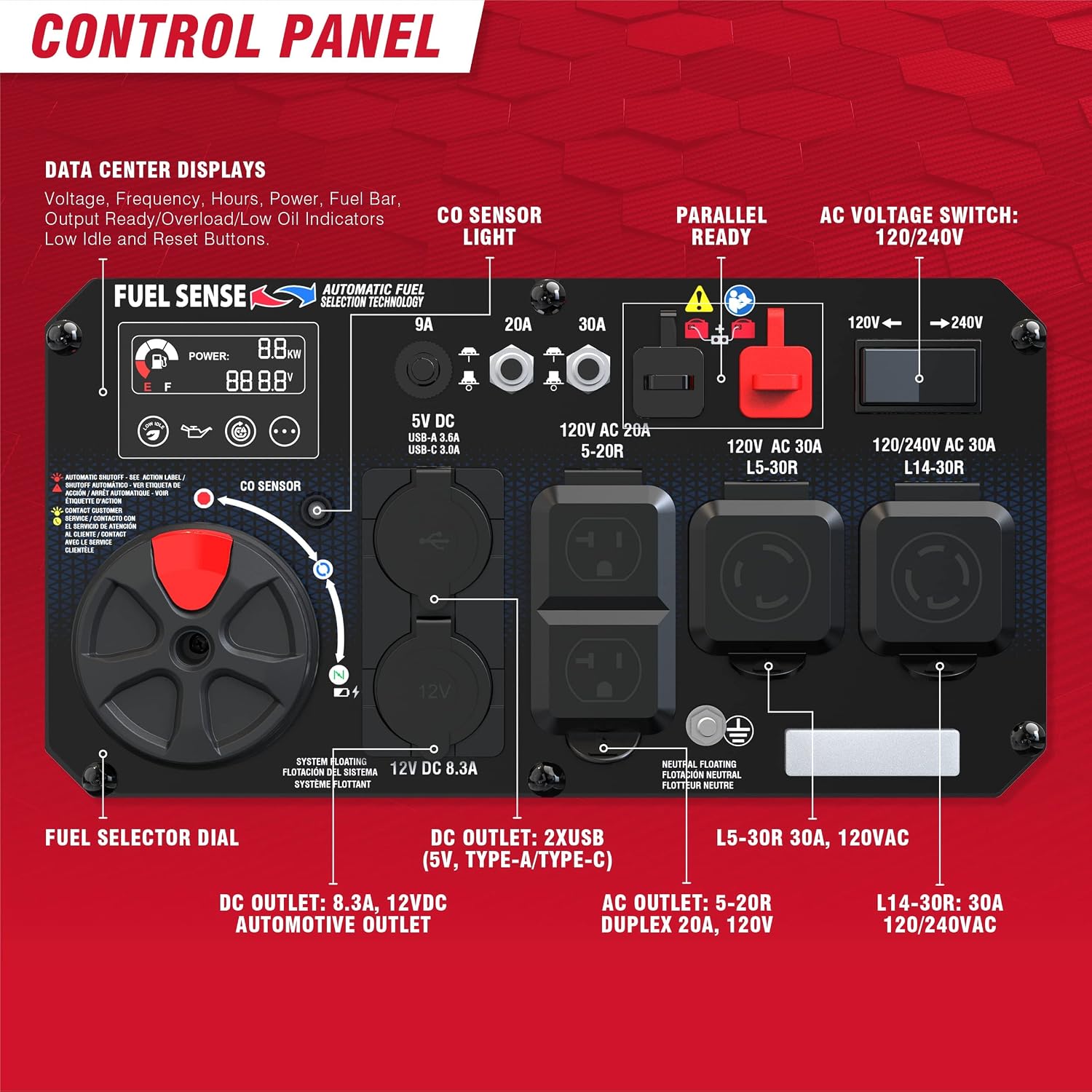
The inverter output is rated at 3% THD, and the listing identifies laptops, TVs, phone chargers, and sensitive power tools as potential uses. For a weekend trip, that could mean powering a charger and a TV while keeping an eye on the combined load, rather than assuming every appliance can run together. The CO sensor and EPA and CARB compliance are also stated features, though the product details here do not explain their operation.
What matters most
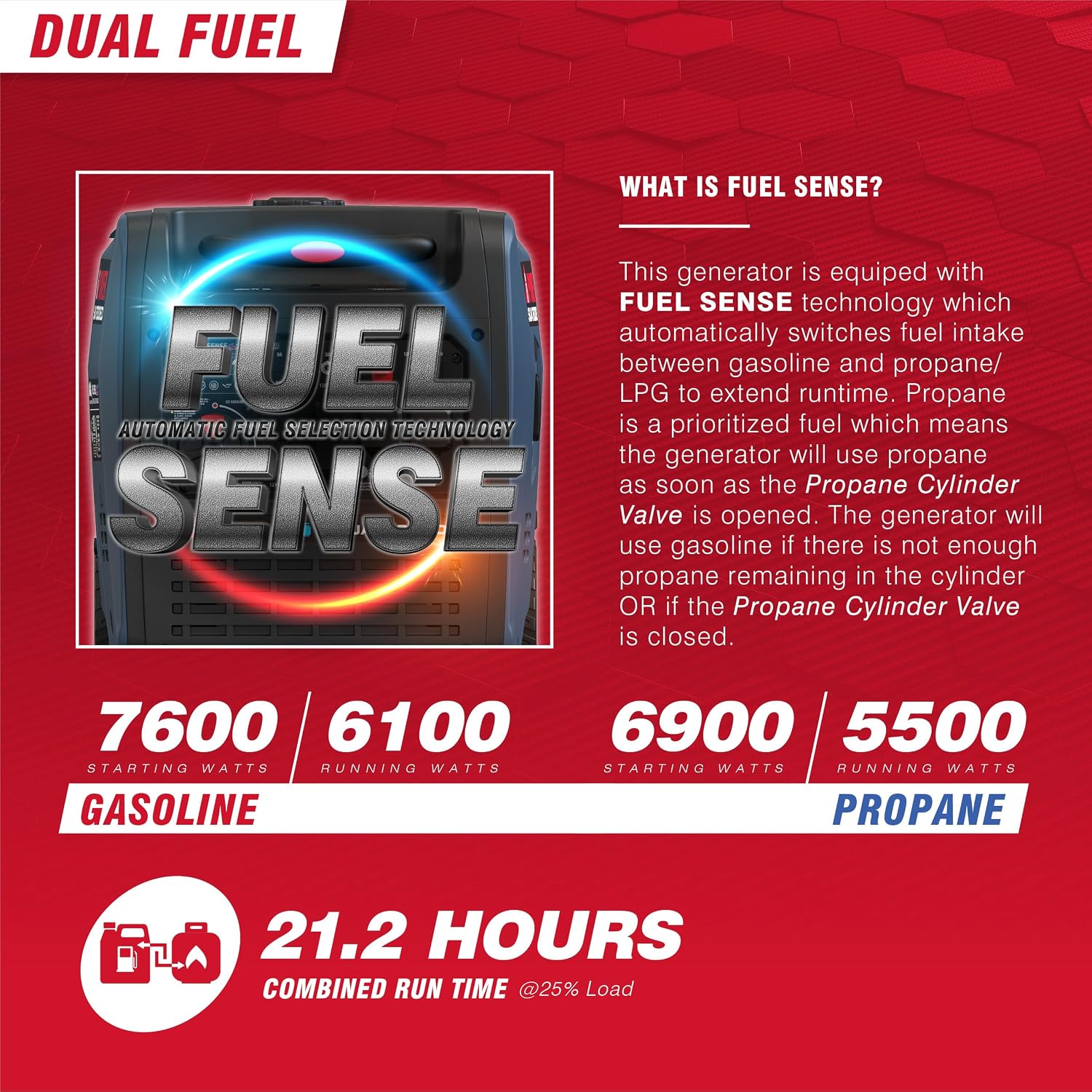
Fuel choice changes the available output and runtime. The 3.6-gallon gas tank is listed for up to 10 hours at 25% load. Fuel Sense technology can automatically switch from propane to gasoline for a combined runtime of up to 21.2 hours at 25% load. Those figures are tied to a light load, so they should not be read as expected runtime when powering several demanding devices.
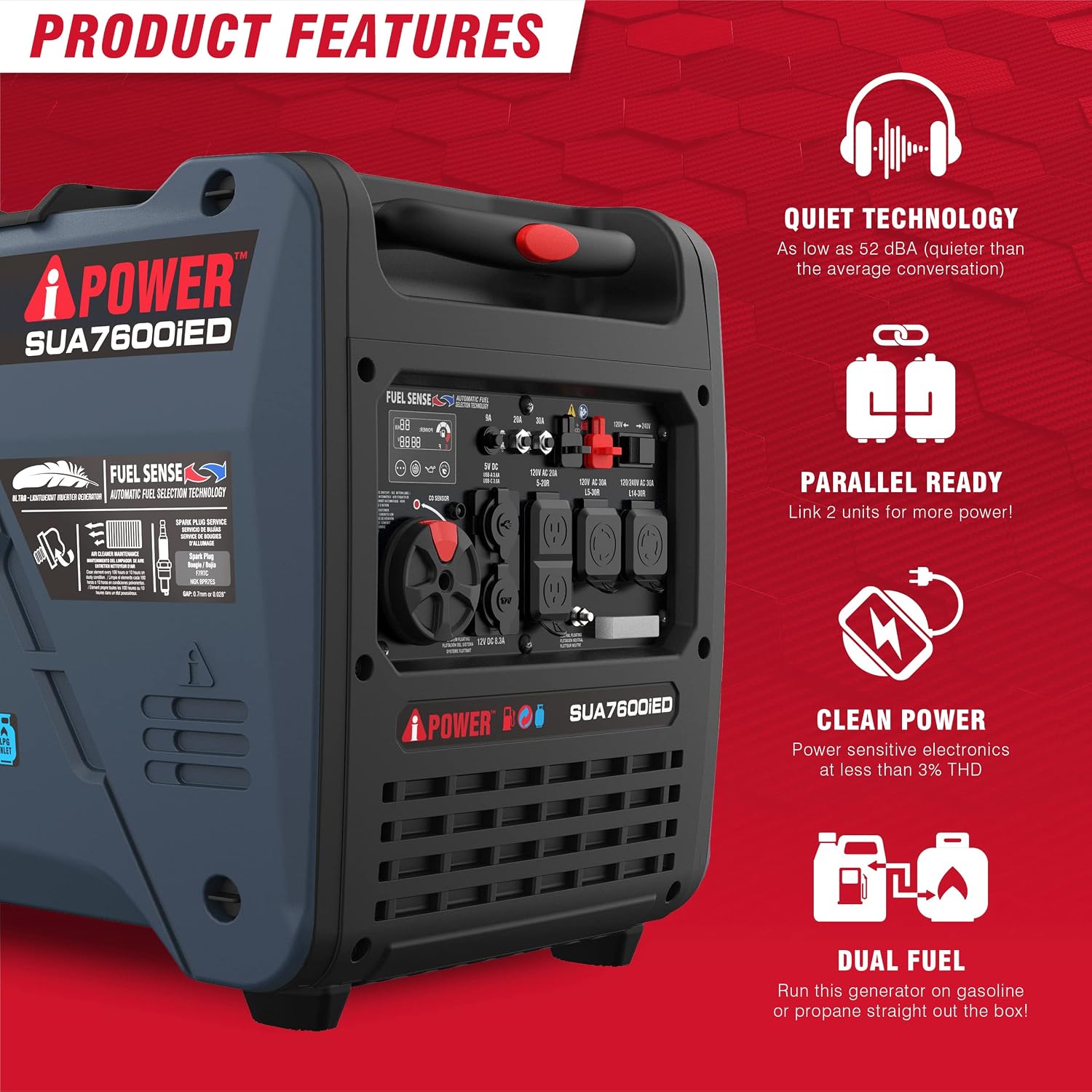
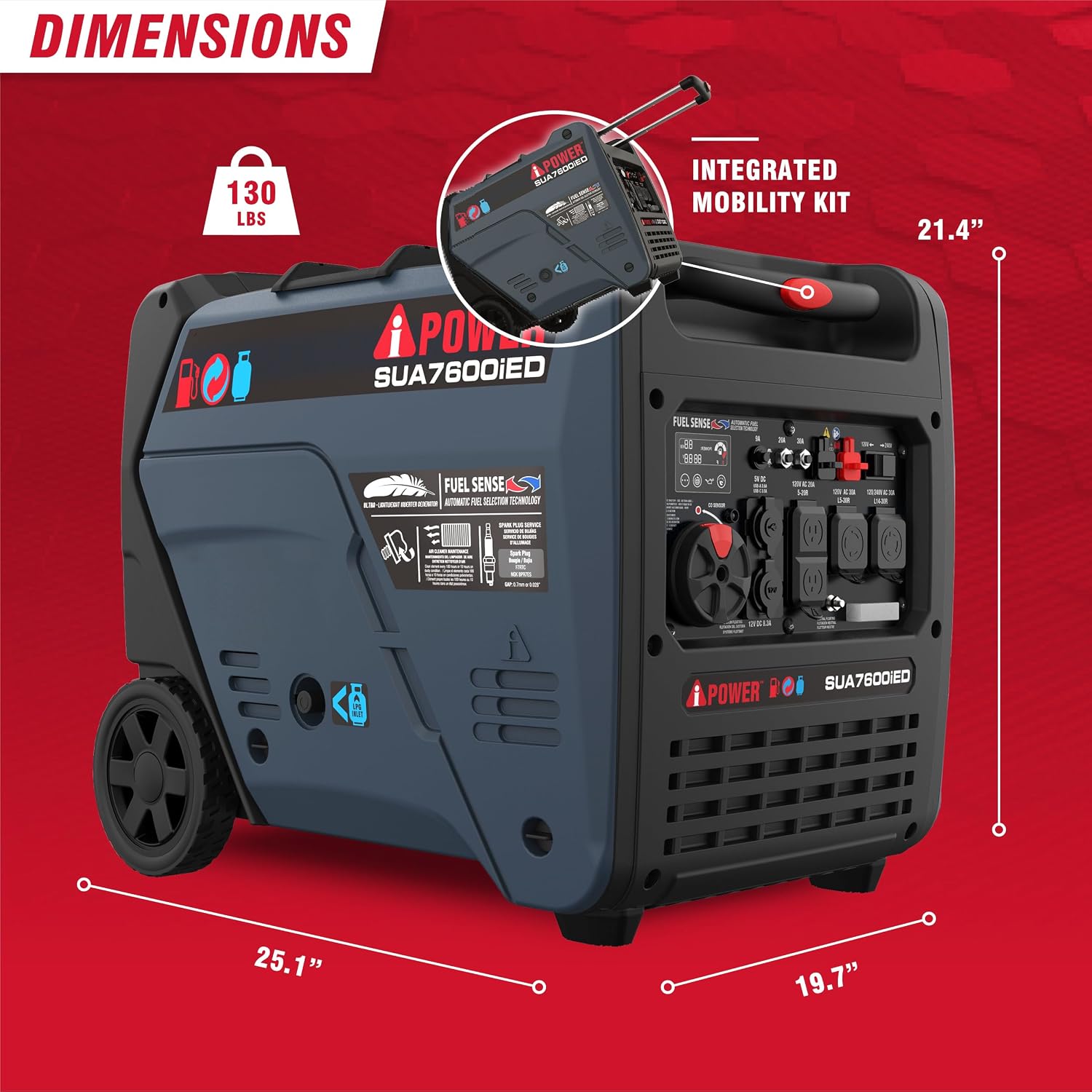
A 322cc OHV four-cycle engine supplies the power, while low-idle technology is intended to support efficiency. The unit also has electric start, a telescoping handle, and flat-free wheels, details that may help when moving it between storage and an RV or campsite. Its sound level is described as low as 62 dB, but the listing does not state a measurement distance, making it hard to translate that number into a real campsite expectation without that measurement.
If you prioritize flexible fuel and cleaner inverter output, this setup has a clear use case, if you prefer a simpler unit for occasional basic loads, its dual-fuel features and higher output may be more than you need. It’s a great fit if your planned devices stay within the running-watt limits and you want a choice of gas or propane.
Best use cases
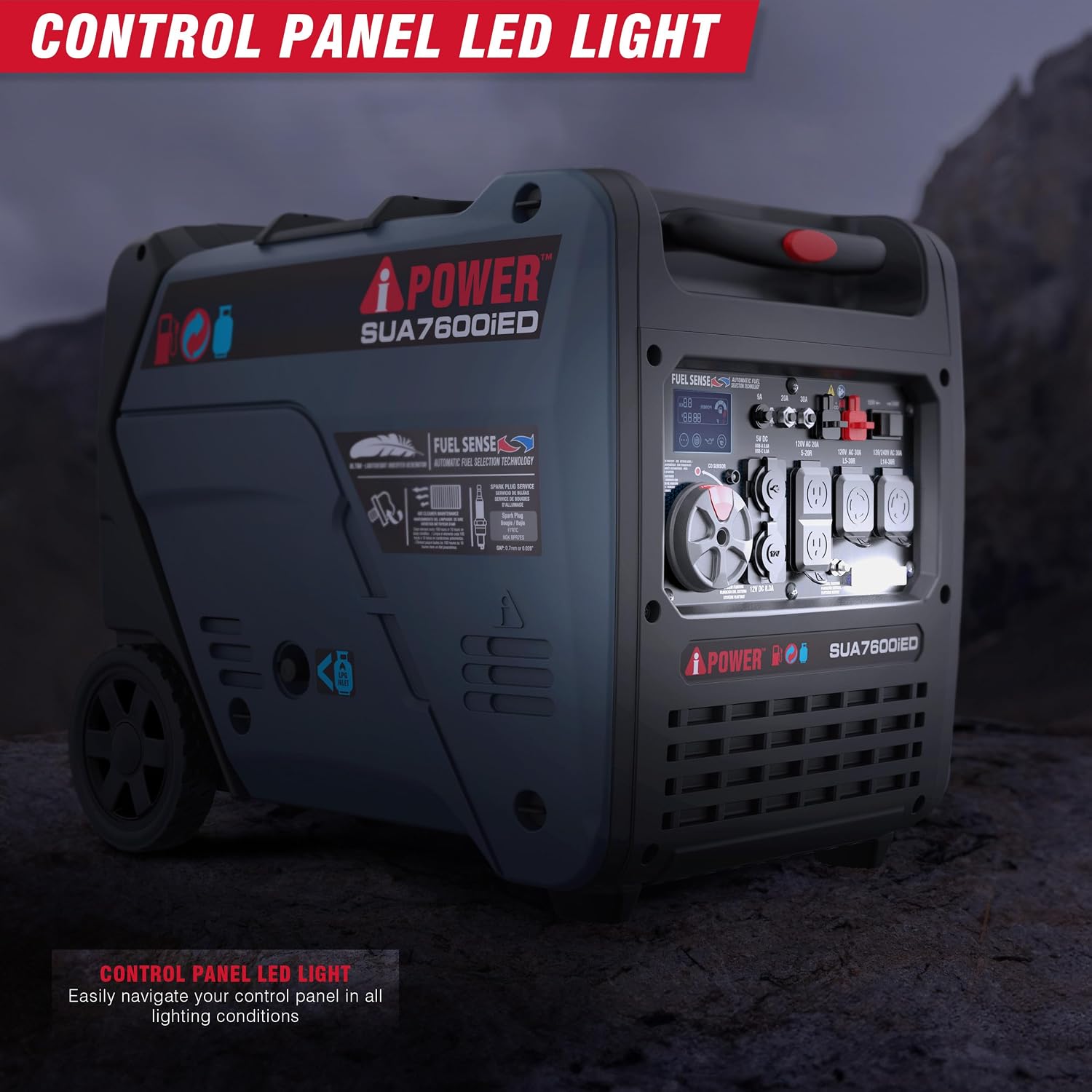
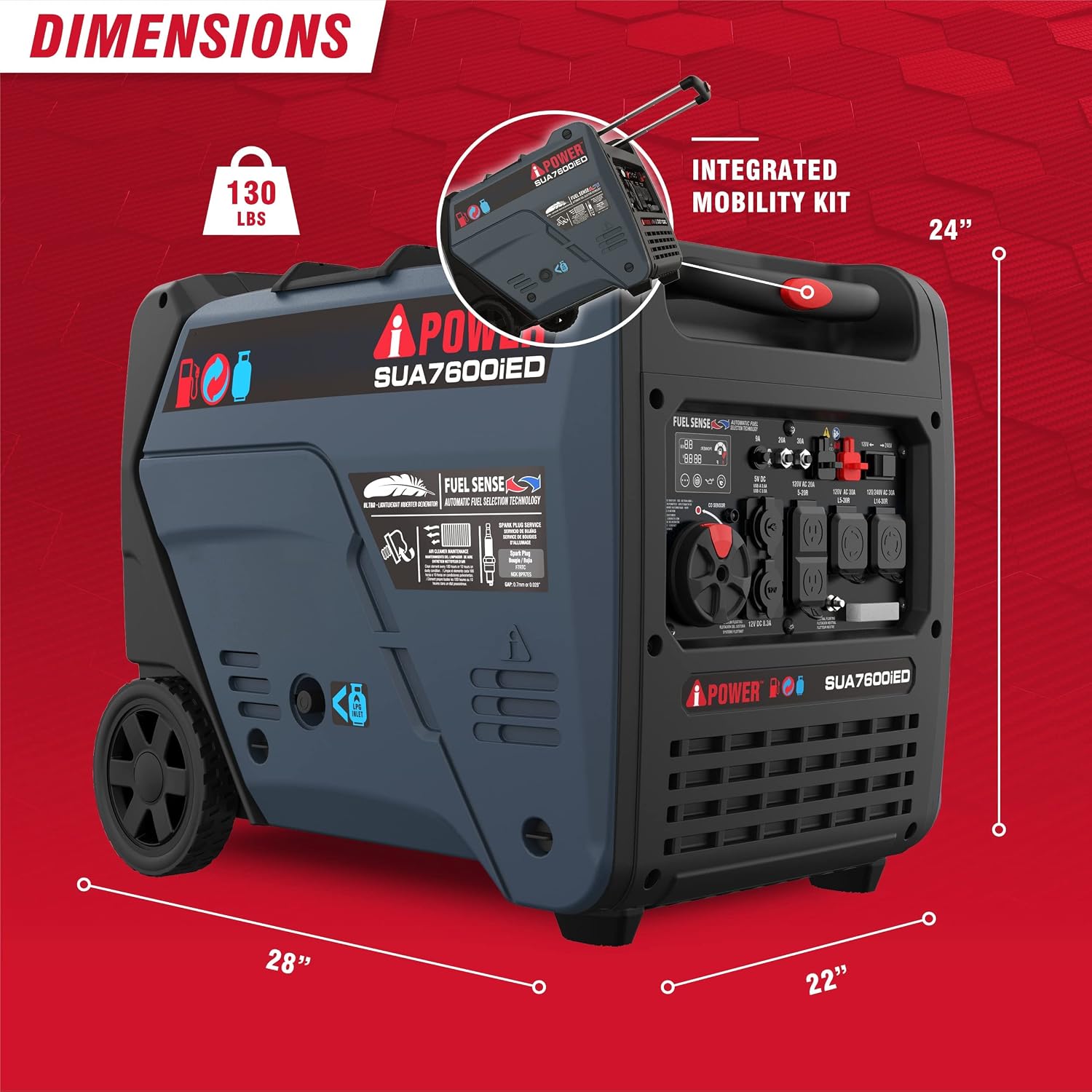
Consider it for backup power, RV trips, camping, or tailgating where portable power and fuel flexibility matter. Before relying on it for home backup, list the appliances you want to run and compare their starting and running demands with the generator’s ratings. That step is especially important for appliances with high startup needs.
The portable design helps with transport, but this is still a generator with a 322cc engine and fuel tank—not a small charger to toss into a day bag. Better avoided if your priority is a lightweight power bank, or if you need confirmed capacity for loads that the listed ratings do not cover.
Buying verdict
This A-iPower inverter generator makes sense for buyers who want gas-and-propane flexibility, RV-ready positioning, and output for a planned mix of devices. The automatic fuel switch and stated combined runtime are useful distinctions from a single-fuel approach, while the fuel-specific wattage ratings give you a practical basis for planning.
The main tradeoff is that its real usefulness depends on your load, not the headline starting-watt figure. Choose it when the listed running output suits your appliances and you value the handle and wheels for moving it. Better avoided if you need a verified runtime at heavier loads, a stated noise level at a known distance, or confirmation that it can handle a particular high-demand appliance, those details are not provided here.