

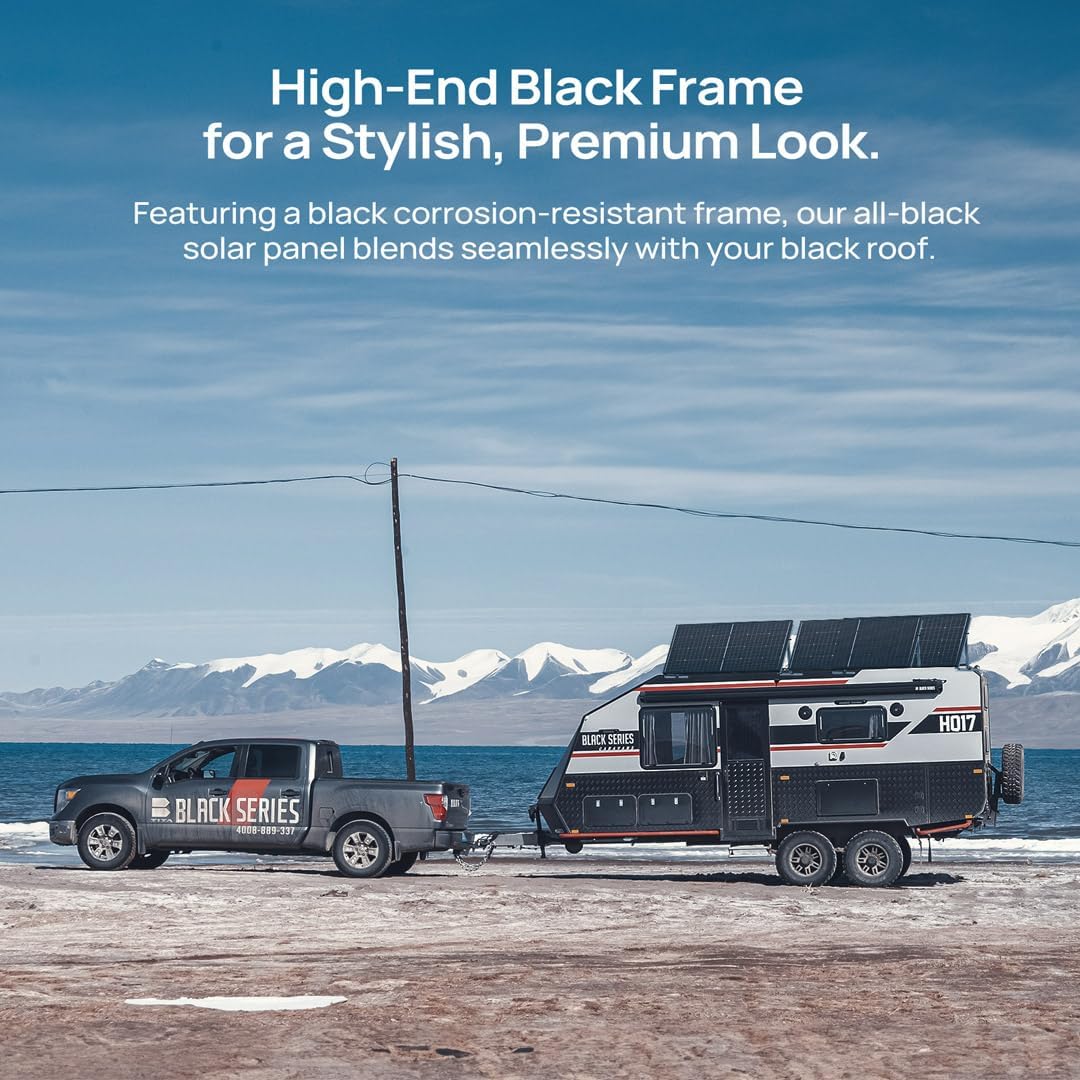
BougeRV 200-watt bifacial solar panel
Product description
If you need to cover a compact solar setup, this panel’s 200-watt rating and bifacial design are aimed at a different priority than simply choosing the largest panel you can fit. BougeRV says its N-type cells and transparent back can collect light from both sides, while predrilled mounting holes are intended to make installation easier. Those features are most relevant when your setup can expose the rear of the panel to reflected or diffuse light, they don’t make the rated output automatic in every location.
Highlights
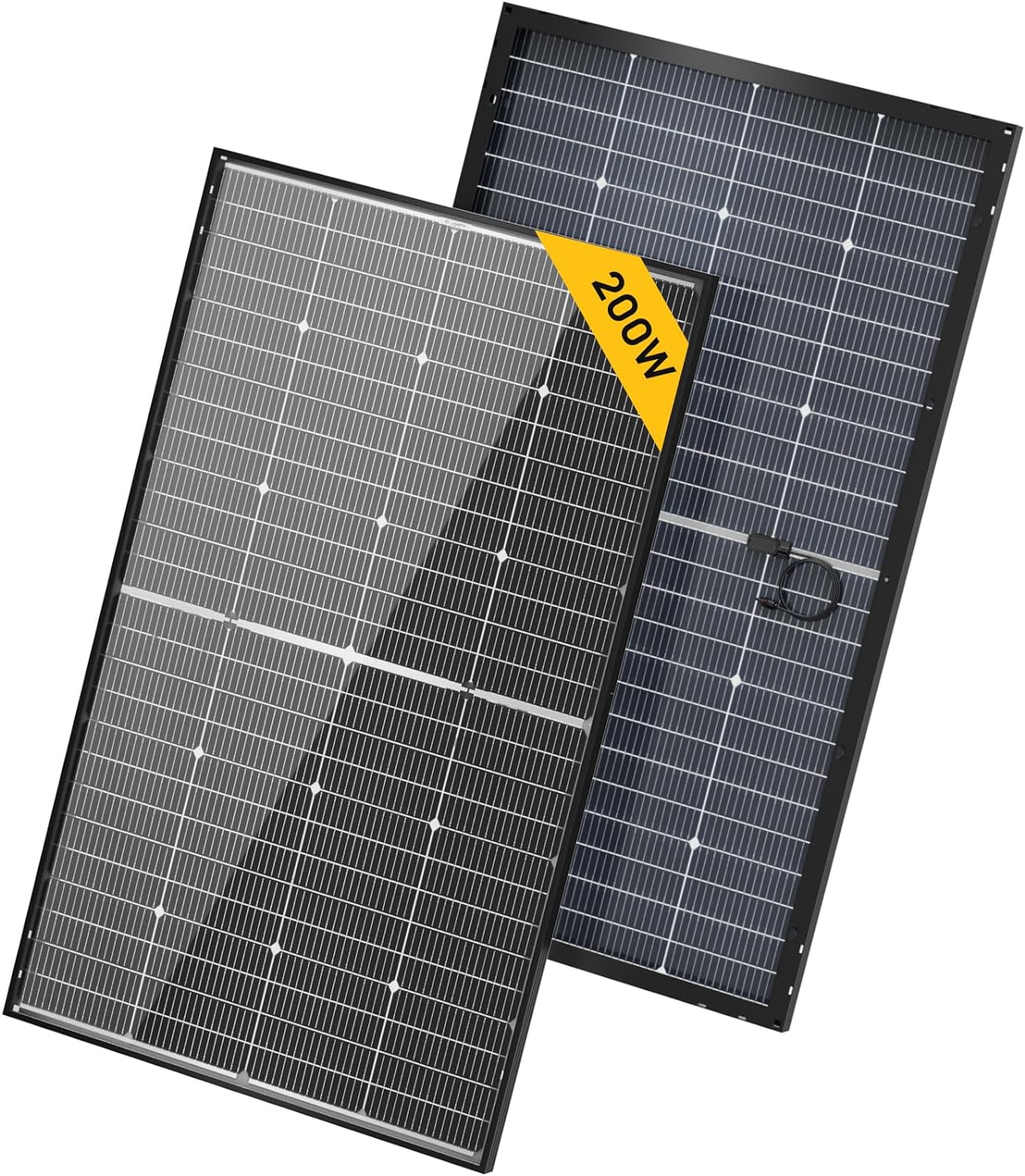
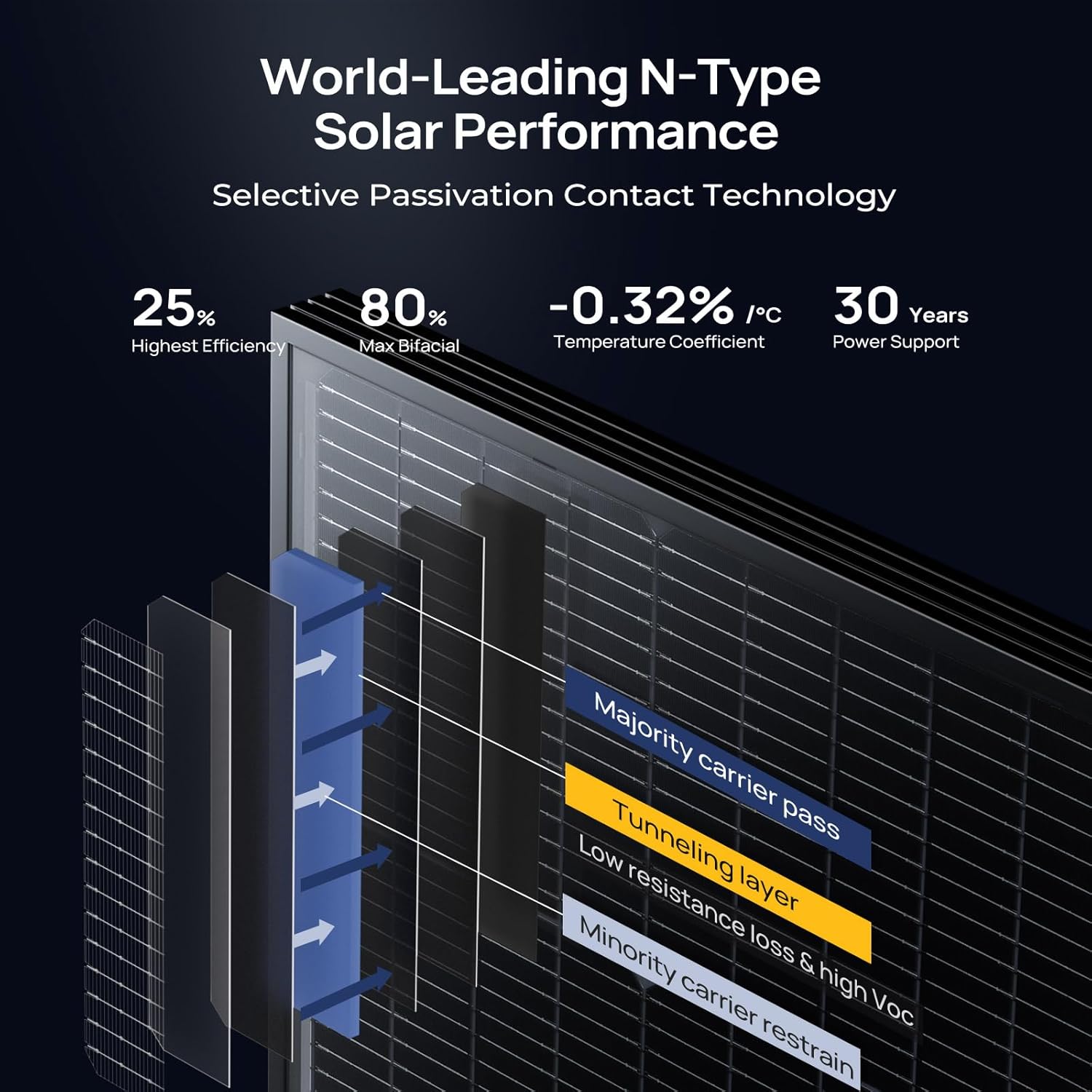
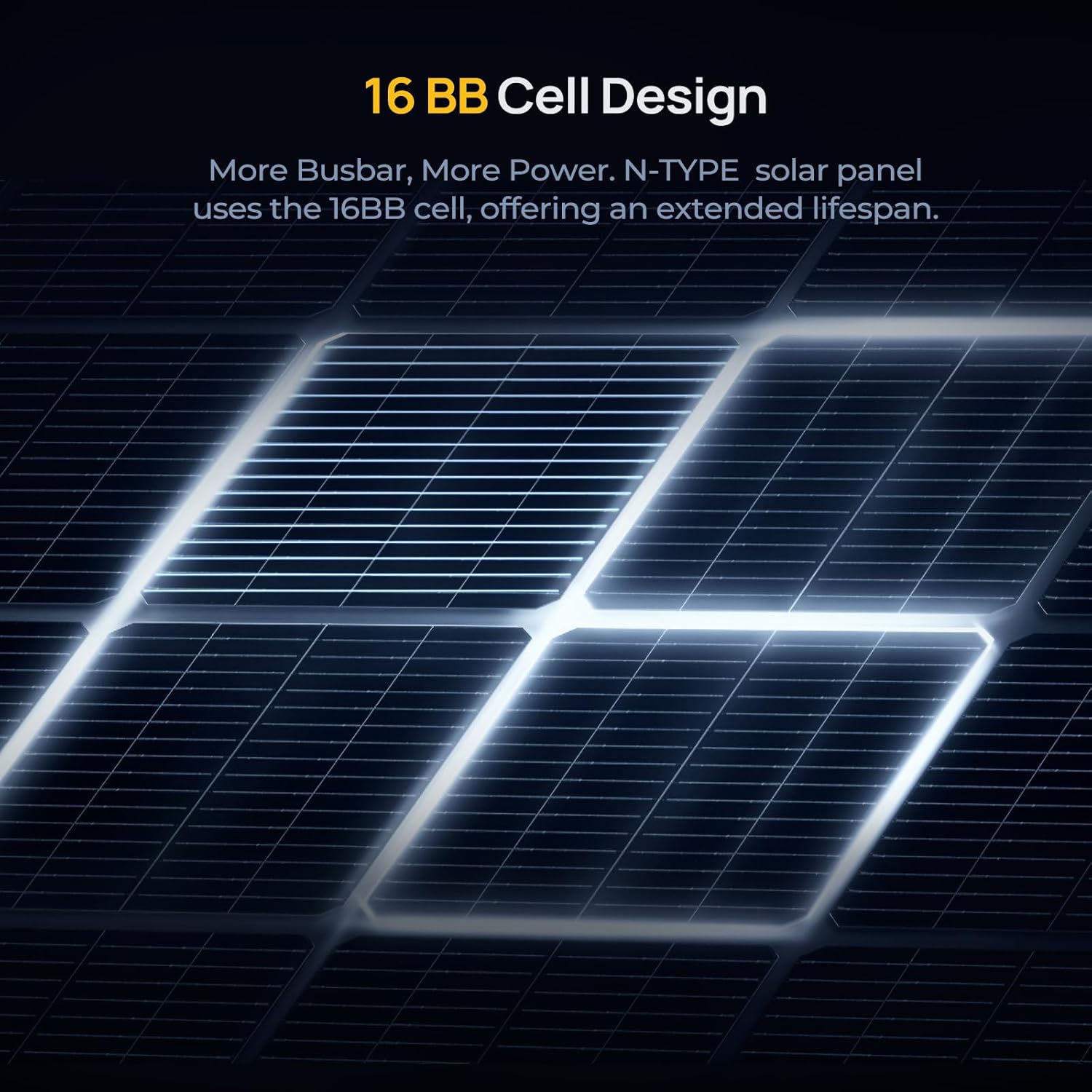
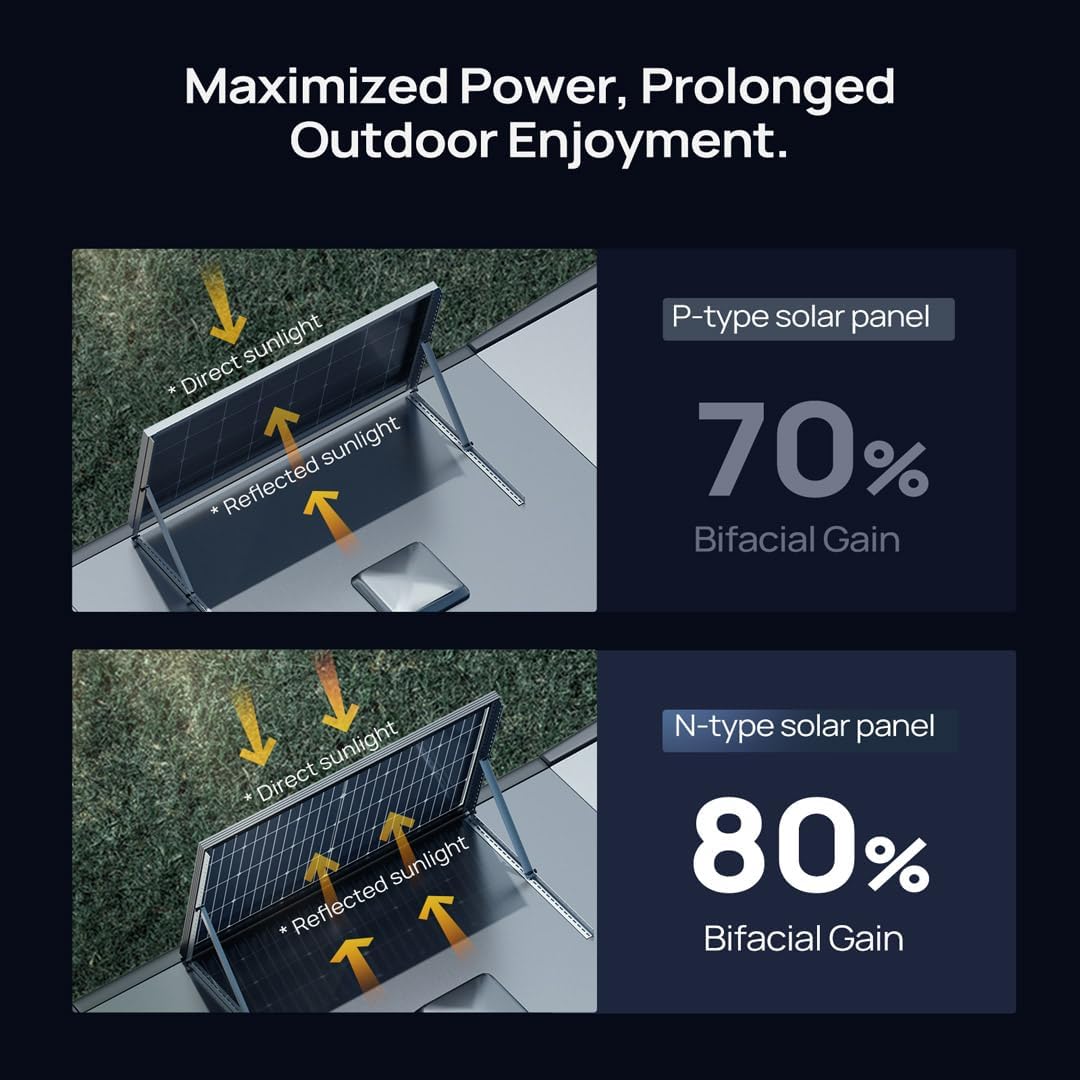
This is a 200-watt, 12V solar panel with N-type cells, a 16BB cell design, a bifacial format, and a corrosion-resistant aluminum frame. BougeRV lists a 25% conversion rate and claims the bifacial design can increase output by 30%. Treat those figures as manufacturer claims, not a promise of what you’ll generate on a particular roof or campsite. The listing itself notes that sunlight intensity, panel angle, and ambient temperature affect real-world output.
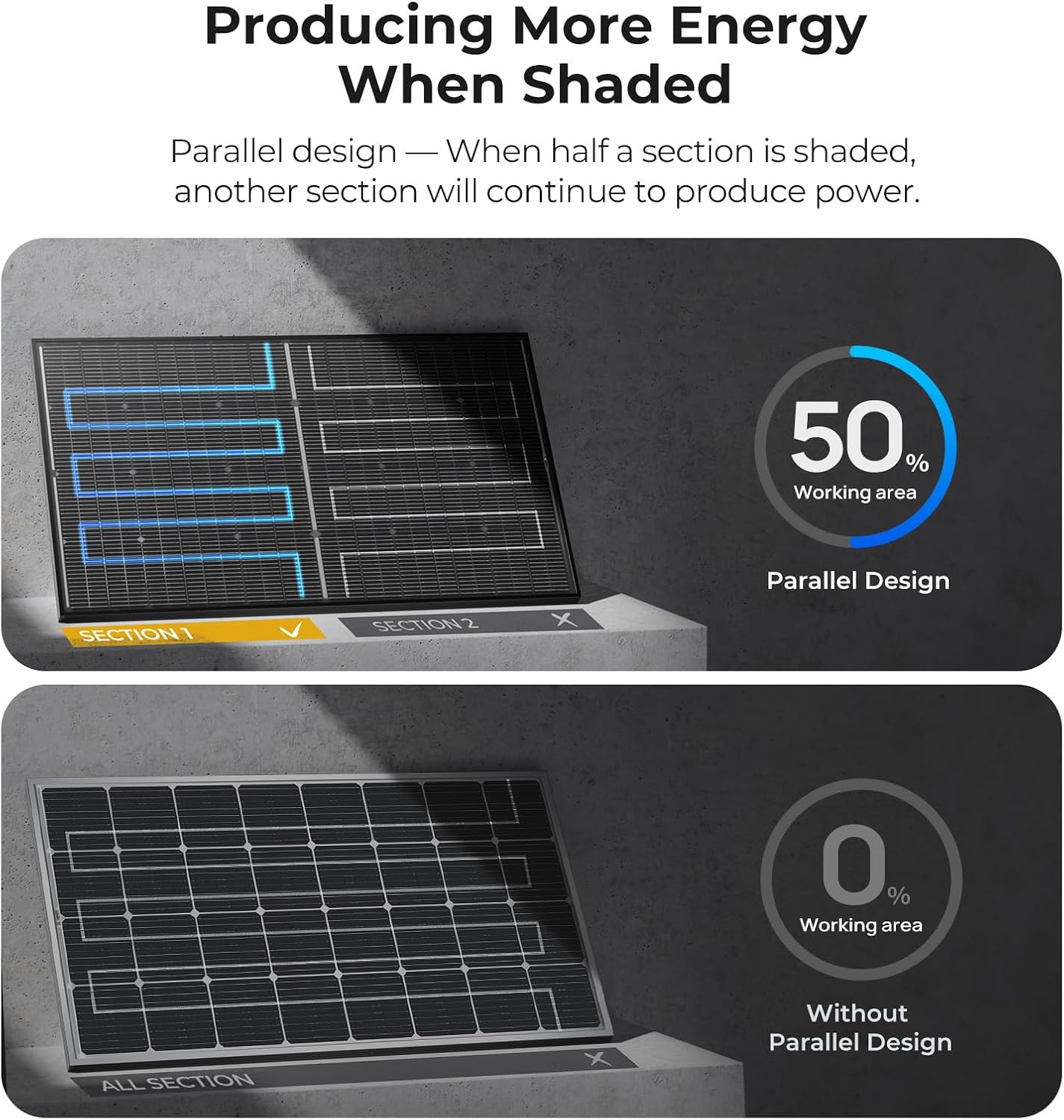
The practical difference from a conventional panel is the transparent back: light reaching the underside may contribute to generation. That could be useful on a boat deck or RV installation where the panel’s rear is not completely blocked, but the benefit depends on the actual mounting surface and light around it. The 16BB design is also presented as improving current collection, though the product details don’t provide dimensions or a measured output comparison for your setup.
Best use cases
This panel is positioned for RVs, vans, boats, off-grid inverters, and other listed outdoor or home uses. It may appeal if you want a single 200-watt panel and have a mounting location that leaves room for light to reach both sides. For example, on a boat with a raised mounting position, the clear rear face may have more opportunity to receive reflected light than it would pressed against an opaque roof.
Keep in mind that the listing gives no panel dimensions, so the reduced-area claim alone won’t confirm a roof fit. If space is tight, get the exact measurements before laying out a roof plan, without that measurement, you can’t tell whether the panel will clear vents or other equipment. A larger panel or a multi-panel setup may make more sense when the priority is higher total rated wattage rather than a bifacial format.
Tips for day-to-day use
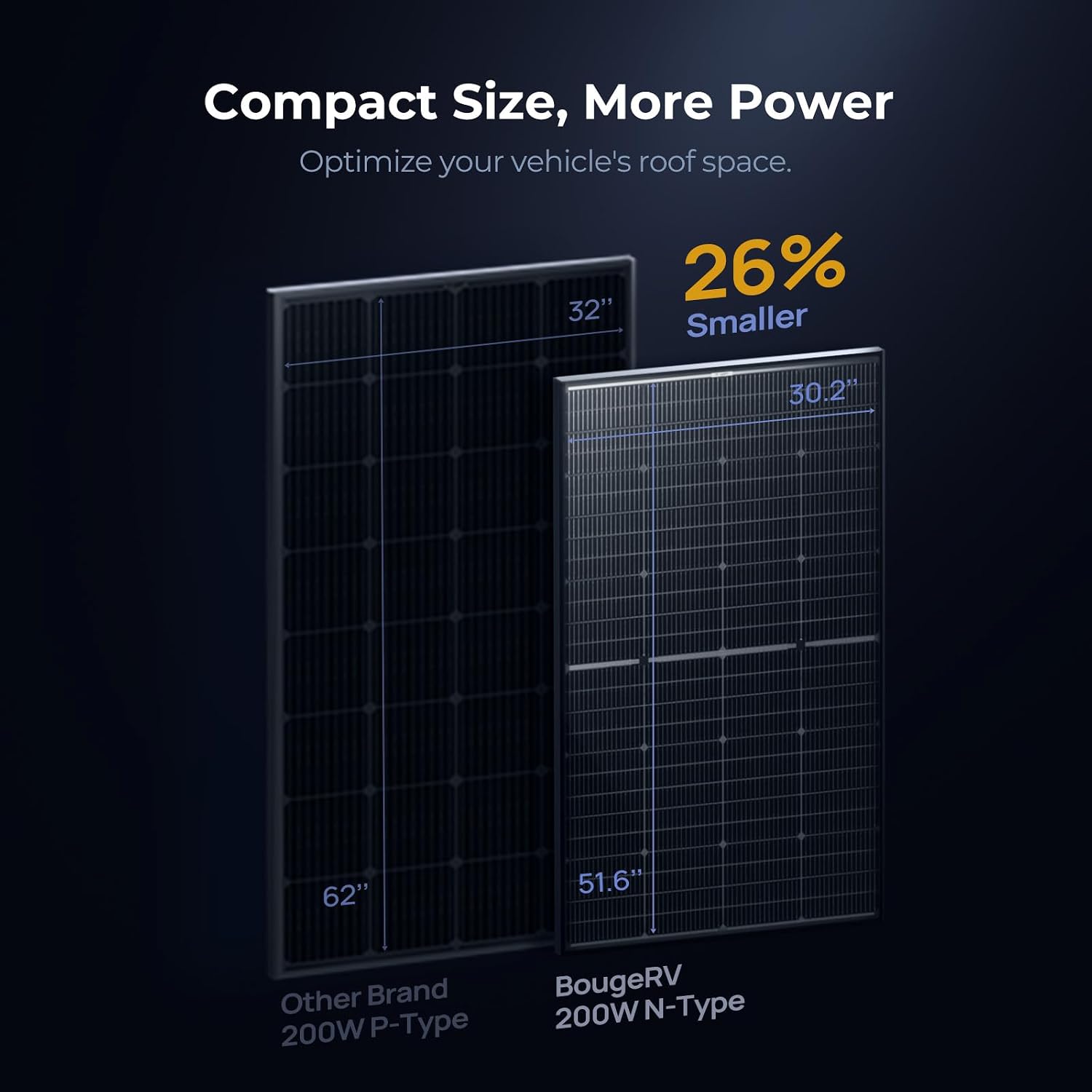
The predrilled holes are intended to simplify mounting, and the aluminum frame is described as corrosion-resistant for changing outdoor conditions. Before choosing a location, think about both the front-facing sun and whether the underside will be shaded or exposed. A solid surface directly behind the panel may limit the practical value of its bifacial design. For a camping setup, that means checking the mounting arrangement, not just the sunniest spot on the roof.
Plan around changing conditions rather than treating 200 watts as constant output. The product information says actual generation varies with sun intensity, angle, and temperature. It also lists compatibility with on-grid and off-grid inverters, but does not specify the other components needed for a complete system. It suits you if those installation details match your plan and you value a panel designed to collect light from both faces. You may want to skip it if you need a guaranteed daily energy figure or a panel with confirmed dimensions before planning your layout.
Before you decide
Does the bifacial design guarantee 30% more power? No. That increase is BougeRV’s stated claim, the listing also says real output varies with conditions, and it doesn’t establish what gain a specific installation will achieve.
Can it work with an inverter? The product information says it is compatible with on-grid and off-grid inverters. It doesn’t identify a particular inverter or describe the remaining system components, so check that your planned setup is suitable.
Is 200 watts the expected output in everyday conditions? It is the panel’s rated power. The listing says actual output depends on sunlight, angle, and ambient temperature, so everyday generation can vary.
Buying verdict
Choose this BougeRV panel if a 200-watt format fits your plan, the mounting position can make use of light at the rear, and you’re comfortable checking system and fit details separately. Its bifacial construction gives it a distinct purpose compared with a basic one-sided panel, but the claimed gain isn’t a substitute for good placement or a realistic output plan. If you need known dimensions, a guaranteed energy yield, or details for a complete solar system, the information provided here leaves those questions open.