

HUBFIVY Talking Flash Cards (Ages 2–8) — 107 CVC and Sight Word Learning Cards
Product description
What these talking flash cards are for
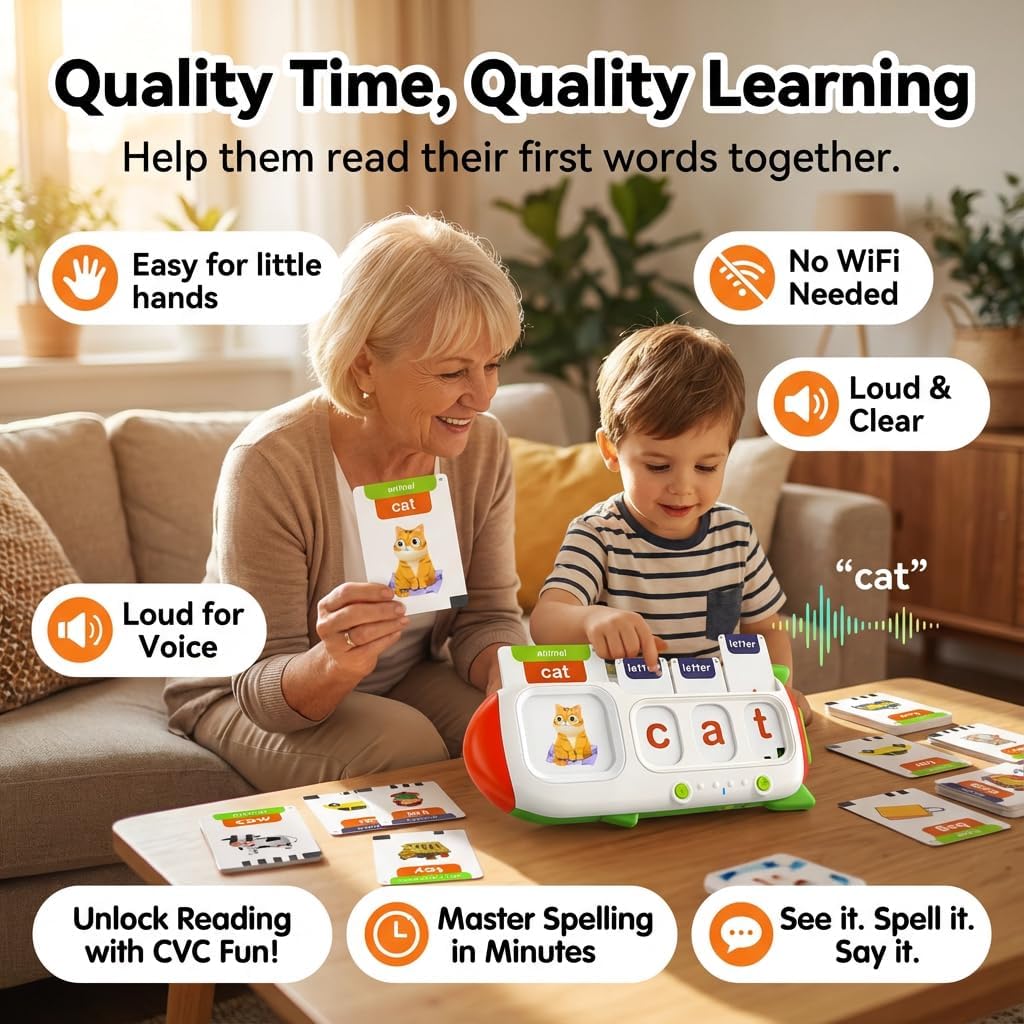
If you’re looking for a hands-on learning toy for early reading, phonics, and vocabulary, these HUBFIVY Talking Flash Cards are built around that “touch, respond, learn” loop. The set is marketed for toddlers through kindergarten-age kids (the pack is for ages 2–8), with a clear emphasis on CVC spelling practice and sight-word style learning.
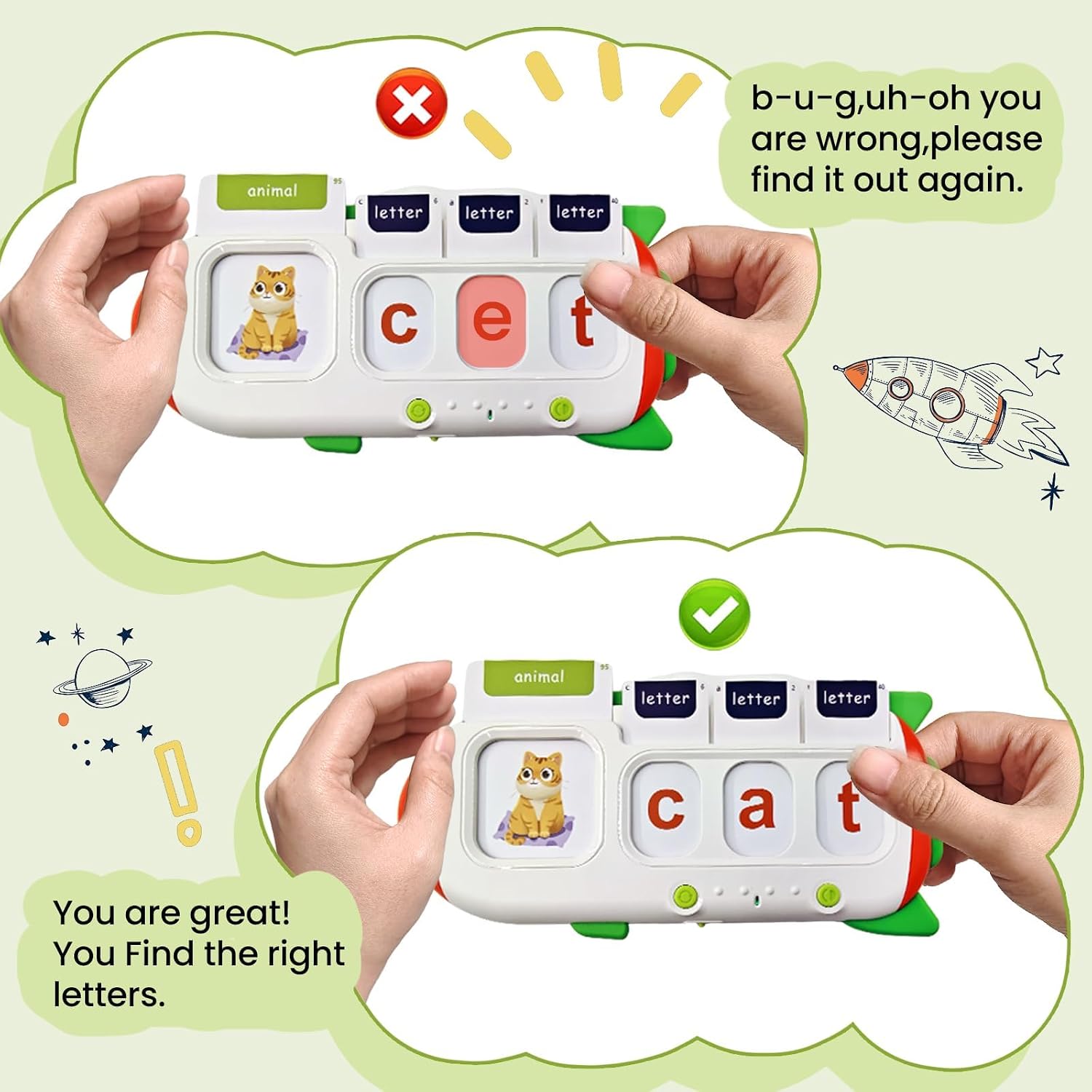
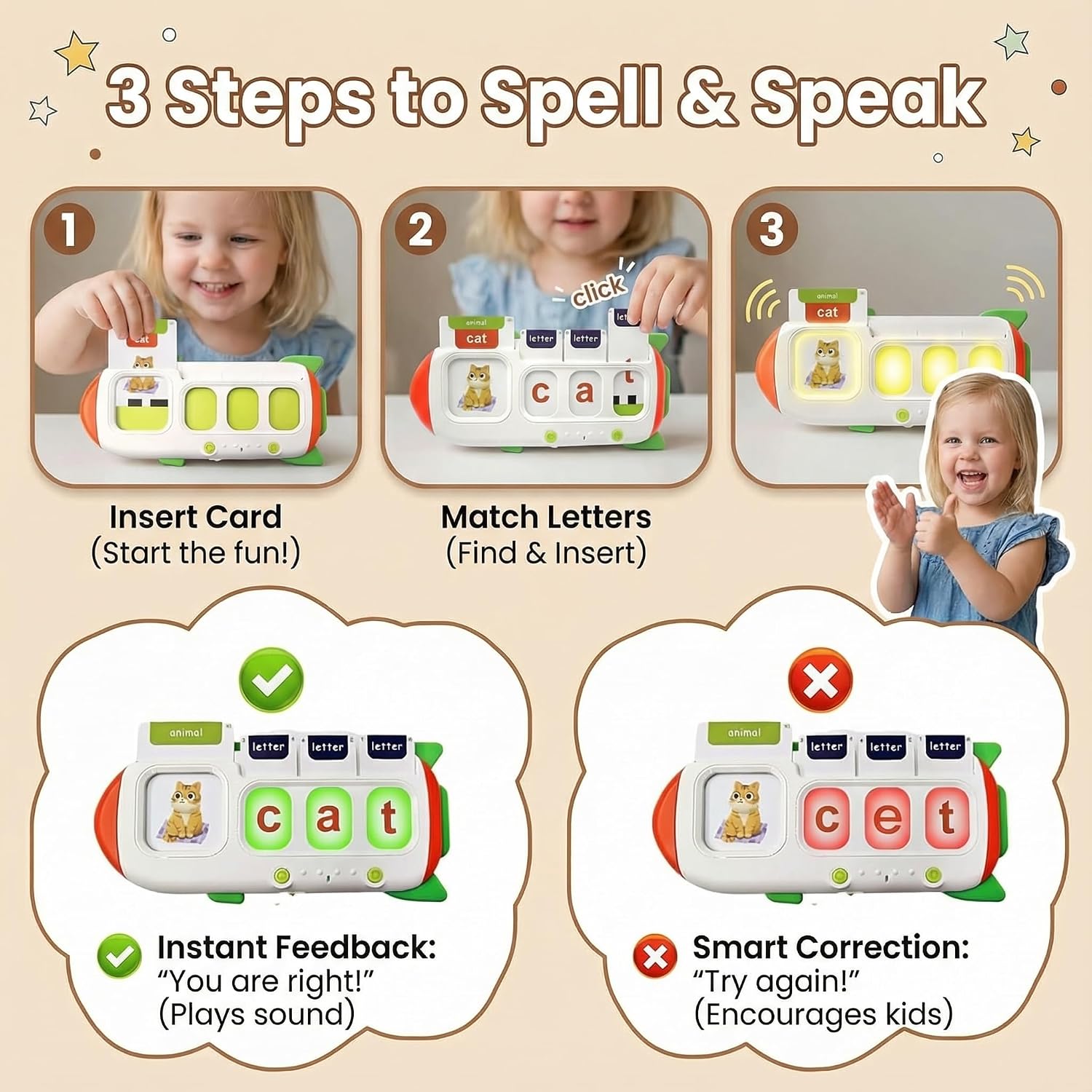
There’s a lot going on here for one set: double-sided CVC learning cards, a second mode that flips to recognition practice, and an interactive “spell-check” style activity where kids touch letters and get immediate feedback through fun sounds. It’s the kind of learning system that can work during short sessions—like 5 minutes after dinner—without needing you to be the constant “teacher.”
The essentials (modes, cards, and how learning plays out)
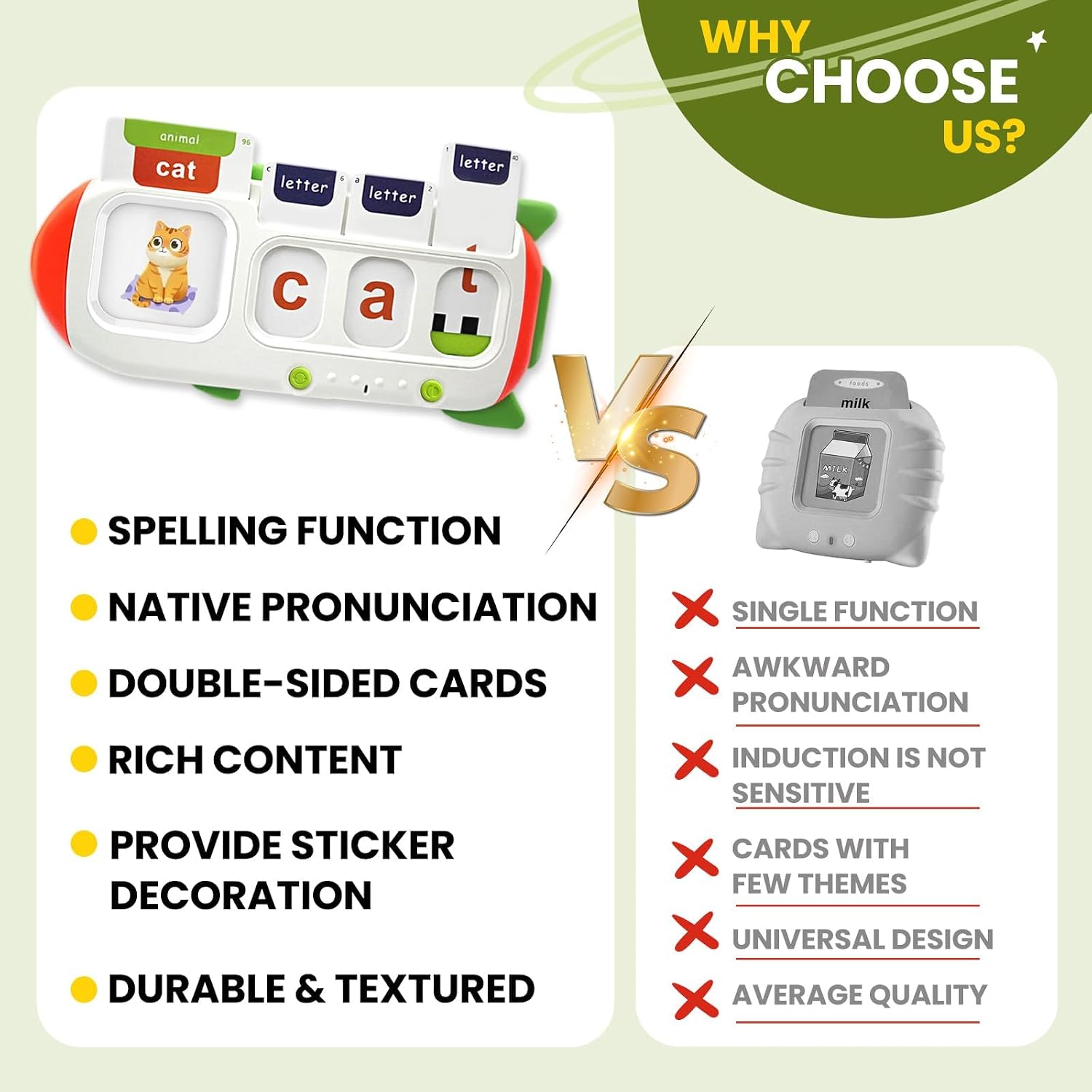
On paper, the learning flow is pretty structured. The cards are double-sided, so you get two different practice types from the same set. One side supports word-picture matching, while the flip side tests recognition using images only. That matters because it nudges kids from “I recognize the picture” toward “I can connect it to the word,” which is a common stepping-stone in early language development.
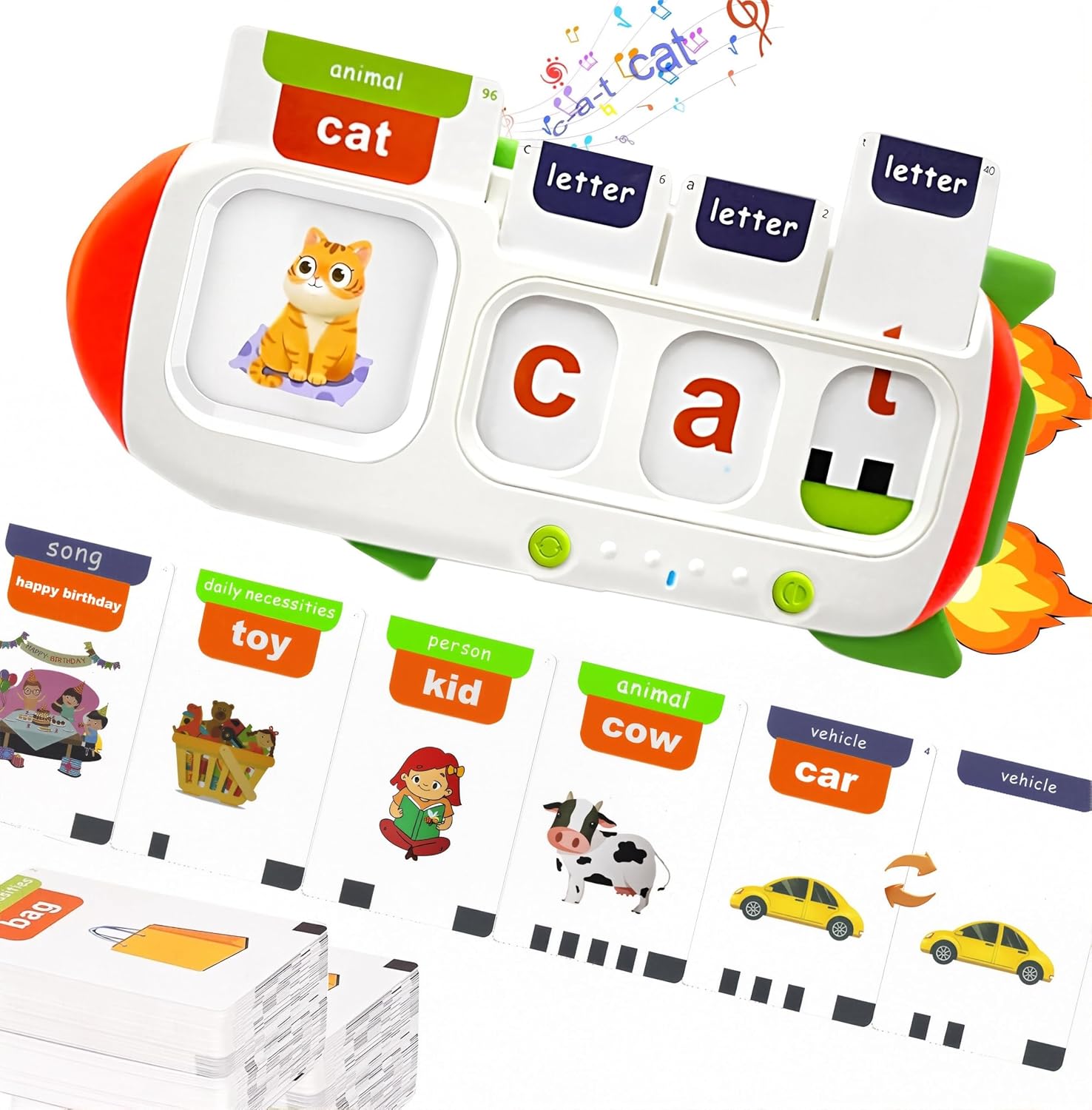
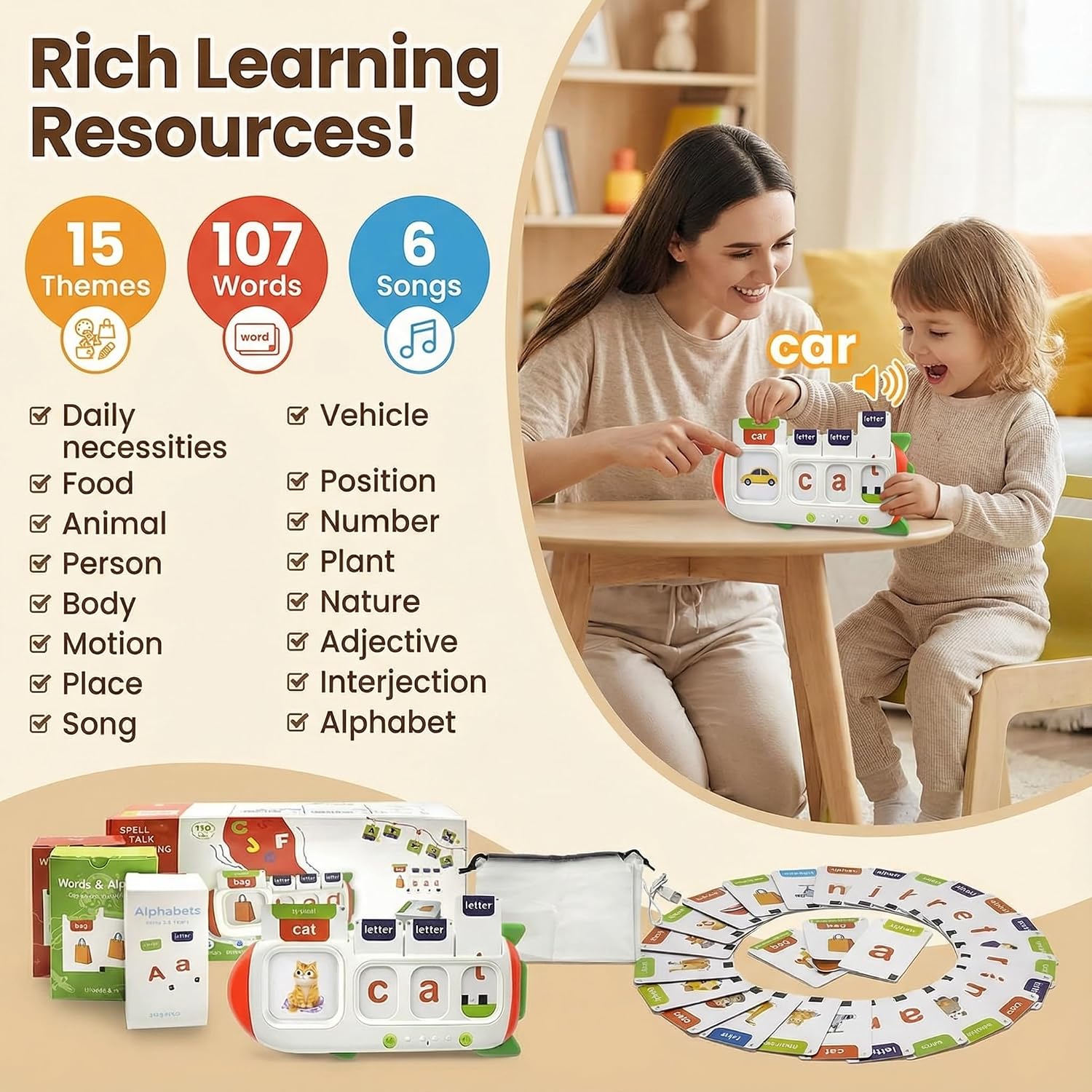
You also get 107 cards across 15 themes, so there’s a decent variety of practice material. The product description also frames it as a resource that can fit speech therapy use and autism-focused learning support, mainly because it’s interactive and game-like instead of purely worksheet-based.
A small practical example: pick one theme (like a basic word set), let your child match the word to the picture on the first mode, then flip to the image-only side and ask them to identify or recognize the target. The goal isn’t perfection—it’s repetition with feedback.
What you’ll notice in day-to-day use
A few design choices stand out in how it’s supposed to feel during use.
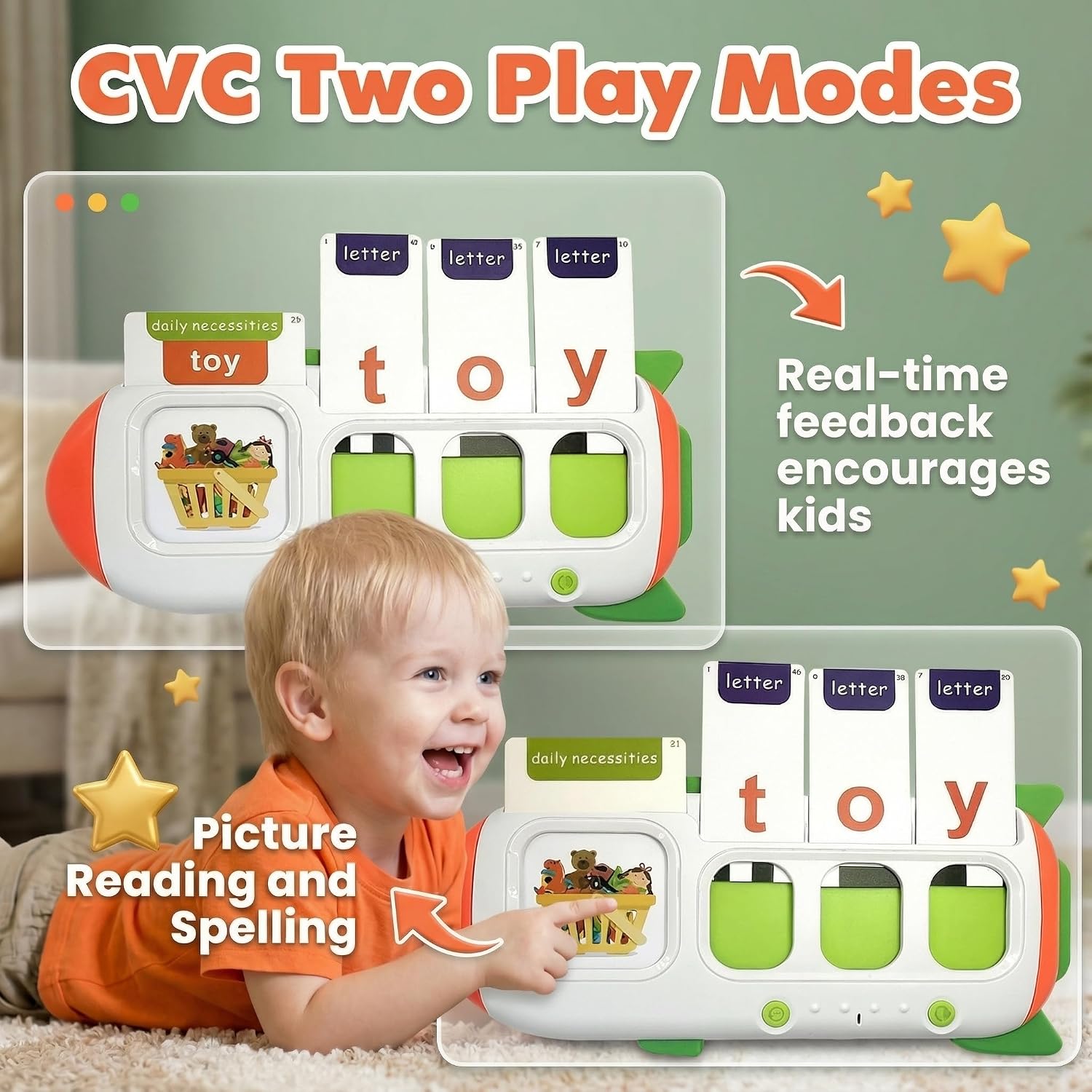
First, the cards use real images instead of relying only on text. That’s aligned with a Montessori-inspired approach and can be helpful if your child is still building foundational language connections.
Second, the “touch letters” idea is meant to make spelling feel like a game rather than a test. The description specifically calls out letters you touch to spell words, with immediate feedback using sounds, plus lights and vibrations. When kids are engaged, you tend to get more practice time—whether that’s with CVC word patterns or alphabet/sounding practice.
That said, keep expectations realistic: this is a learning toy designed for early skills. It may not be the only resource you’ll want if your child needs deeper, teacher-led instruction.
Where it shines vs. where it can fall short
This set seems to be aimed at parents and caregivers who want structured, playful practice for early phonics and word-building, including kids who may benefit from speech/language support activities.
It may be especially useful if: - You want short, repeatable activities that alternate between matching and recognition. - You prefer interactive feedback (sounds, lights, vibrations) rather than waiting for an adult to confirm answers. - You want a rechargeable, portable option for practice away from home.
But it might not be the best match if: - You’re looking for a purely manual flashcard system with no electronics or feedback features. - Your child is far beyond early CVC and sight word stages—at that point, it could feel repetitive. - You need a detailed “lesson plan” for advanced reading—this appears more like practice games than a full curriculum.
Tech specs (only what’s stated)
- Type: Talking flash cards / phonics learning toy
- Format: Double-sided CVC learning cards (word-picture matching and image-only recognition mode)
- Card count: 107 cards
- Themes: 15 themes
- Power: Built-in rechargeable battery (portable, no need for batteries per description)
- Learning focus mentioned: CVC spelling, alphabet/letter spelling, sight-word style learning
- Feedback mentioned: Sounds, lights, vibrations
Who it’s for (and who should consider skipping)
It’s a solid fit if you’re building early language and spelling habits for toddlers, preschoolers, or kindergarteners, especially when you want activities that feel like play. It also makes sense if you’re using structured CVC spelling games and want something that can be adapted for speech therapy materials or autism-focused learning support.
You may want to skip it if you expect it to replace a full reading program, or if your child’s needs are more advanced than basic CVC and early word recognition.
Buying verdict
When it makes sense to buy it
If you want a rechargeable, portable learning toy with double-sided CVC practice, interactive letter spelling with immediate feedback, and a Montessori-inspired approach using real images, this HUBFIVY set is easy to justify. It’s the kind of gift and learning tool that can encourage repeat practice without turning every session into a worksheet moment.
When you might want to hold off
Hold off if you need specifics not covered in the description (like app support, curriculum scope, or exact learning progression), or if your child has already moved past early CVC and basic word recognition.
Final thought for real-world use
This looks most appropriate for early-stage learners who benefit from multi-sensory, game-based repetition. If that’s your situation, it’s worth considering. If not, you may get more value from materials that match your child’s current level more precisely.
Mini FAQ
How do the two card modes work?
One side supports word-picture matching, and the flip side tests recognition using images only.
Is this meant for speech or autism-focused learning?
The description specifically notes suitability as autism toys and speech therapy materials, framed around interactive CVC spelling games and language development.
Does it require batteries?
According to the description, it runs on a built-in rechargeable battery.
What ages is it recommended for?
The product is described for ages 2–8, and the gift use case is framed around ages 3–8.
What skills does it target most?
Based on the description, it targets CVC learning, alphabet/letter spelling, and vocabulary growth through interactive play.