


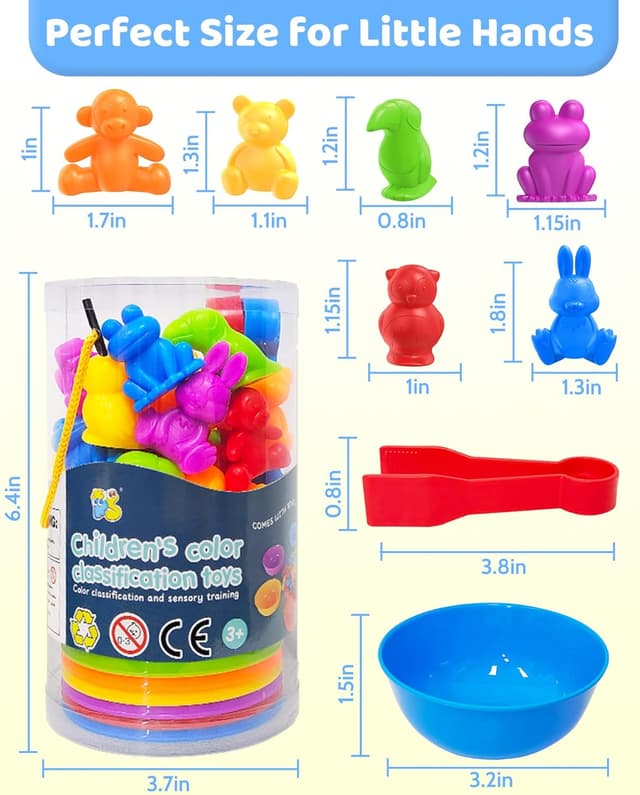

Oomloid Counting Animals Montessori Toy for Ages 3-5
Product description
This Montessori-style counting set turns early math and fine motor practice into a colorful hands-on activity for preschoolers. It combines sorting, counting, and pinching exercises to encourage concentration and coordination while children play with small animal figures at home or in the classroom. Designed for toddlers and young kids, the set helps build basic number sense and color recognition during supervised play.
Key Points
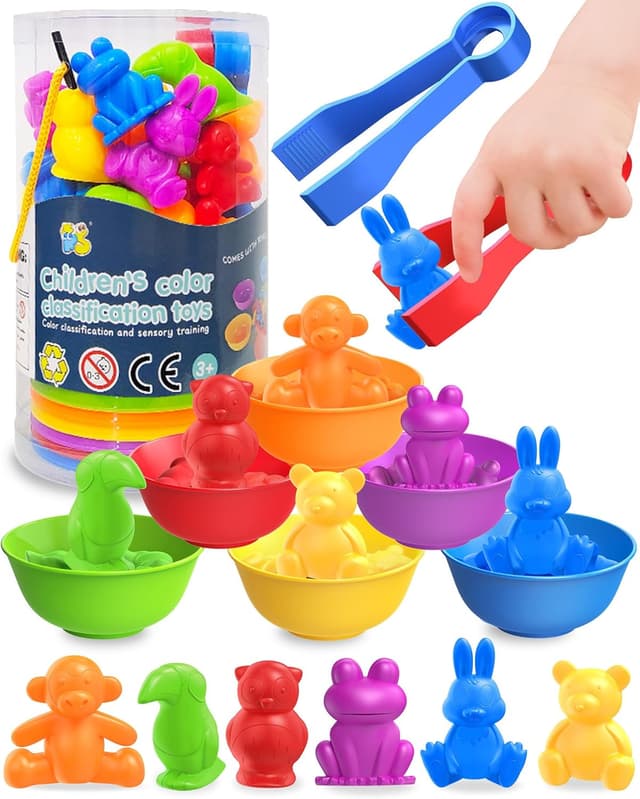
The kit includes small, animal-shaped counters in a variety of bright colors that invite sorting and imaginative play. Children can use included tweezers to pick up pieces, which supports development of hand strength and pincer grasp while they place animals into matching rainbow trays. This tactile approach keeps kids engaged for longer periods and introduces early math concepts in a playful way. 🐵
Materials are non-toxic and washable according to the manufacturer, so the pieces can be cleaned after messy play. The set also comes with a storage container to keep pieces organized and portable for play on the go. Consider that the small parts are suitable only for supervised use with toddlers, and they may not be appropriate for very young children who still mouth objects. 🐸
Technical Specifications
- Name: Oomloid Counting Animals Montessori Toys
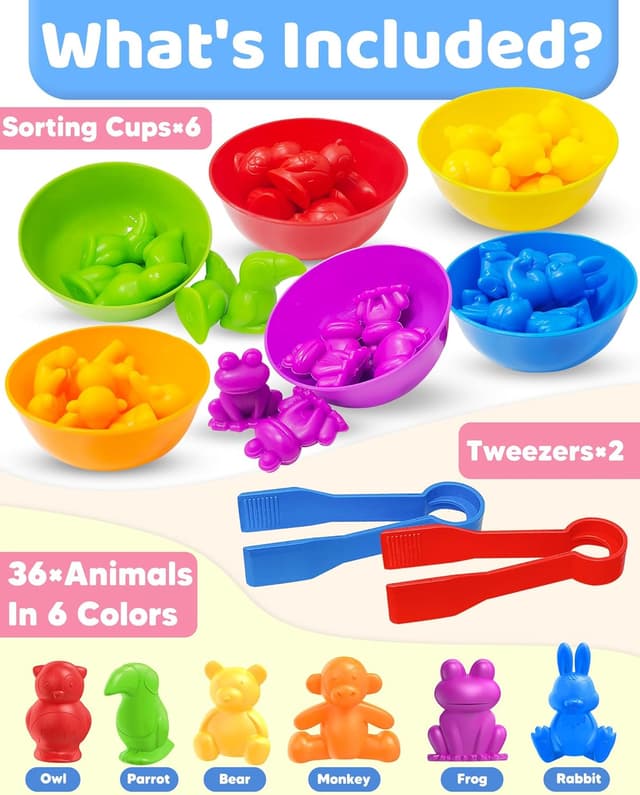
- Number of animal pieces: 36
- Trays: 6 rainbow sorting bowls
- Accessories: 2 plastic tweezers
- Recommended ages: preschool range listed as 2-4, 3-5, 4-8 years
- Material: non-toxic, washable plastic

Usage Recommendations
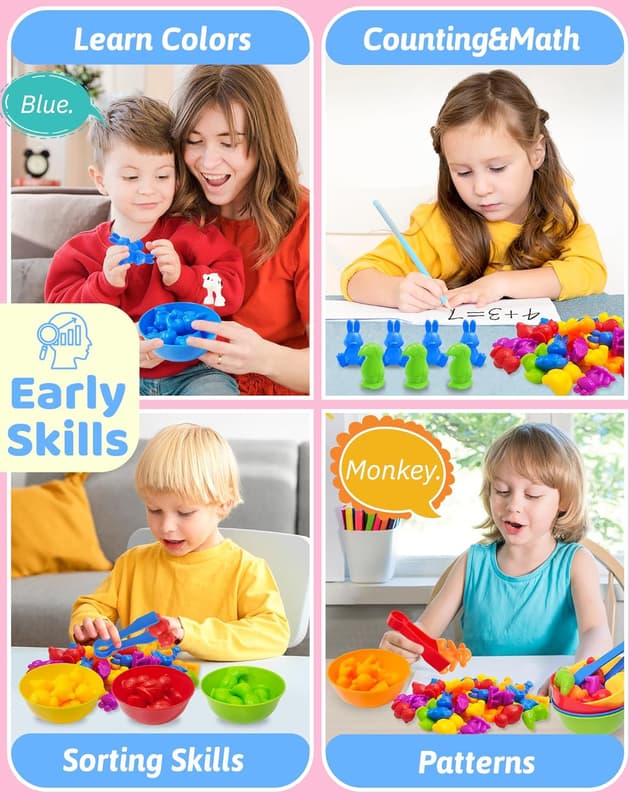
Start with simple sorting tasks by color or species to build attention and vocabulary. For counting practice, encourage children to place a specific number of animals into a tray and count aloud together. Use the tweezers for fine motor challenges and cooperative games where one child describes which animal to pick while another follows instructions. These short guided sessions work well during circle time, small group activities, or quiet play at home.
Introduce simple addition and subtraction activities once basic counting is comfortable. For example, move three animals into a tray and then add two more, asking the child how many are inside now. Rotate trays and animals to vary difficulty and keep the activity fresh. Teachers and parents can also pair the set with story-based prompts to link numeracy with language development.
Practical Tips
Keep the storage container accessible so clean-up becomes part of play routine and so pieces are less likely to be lost. When using the tweezers, demonstrate proper grip and provide practice rounds without time pressure so children feel confident. Some children may prefer sorting by animal type rather than color at first, so adjust tasks to match each child’s current interests and abilities.