

HHLPRO Wireless XLR Transmitter-Receiver F30
Product description
If your priority is a cable-free connection across a performance space, the HHLPRO F30 takes a different approach from a basic wired XLR adapter: it pairs a plug-on transmitter and receiver and adds channel scanning. The listing says it supports dynamic and condenser microphones, with the receiver connecting to an audio mixer, voice processor, or PA system. That makes it relevant for live sound and acoustic measurement, though the advertised range and battery life are details to weigh against your actual setup.
How to use it
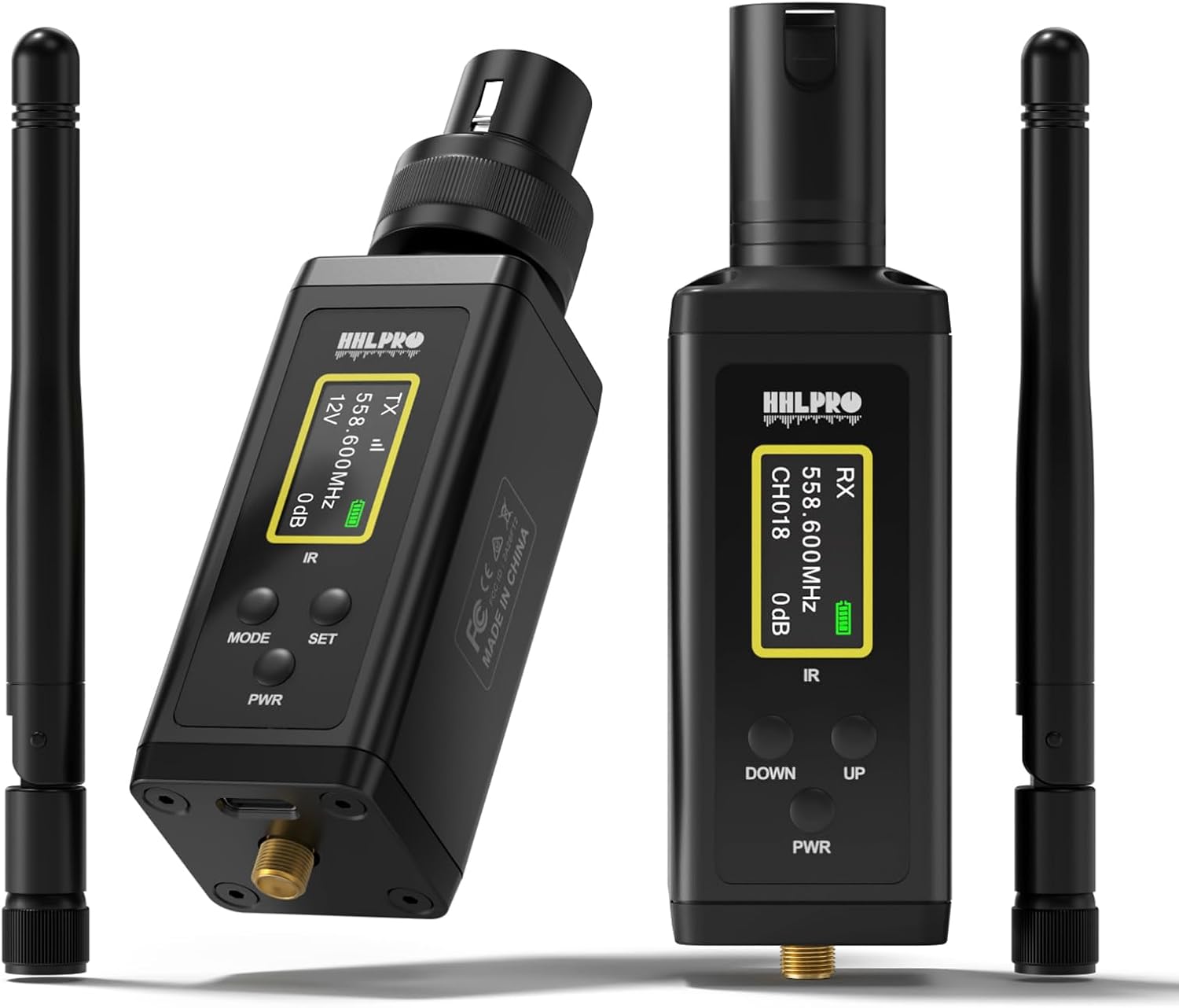
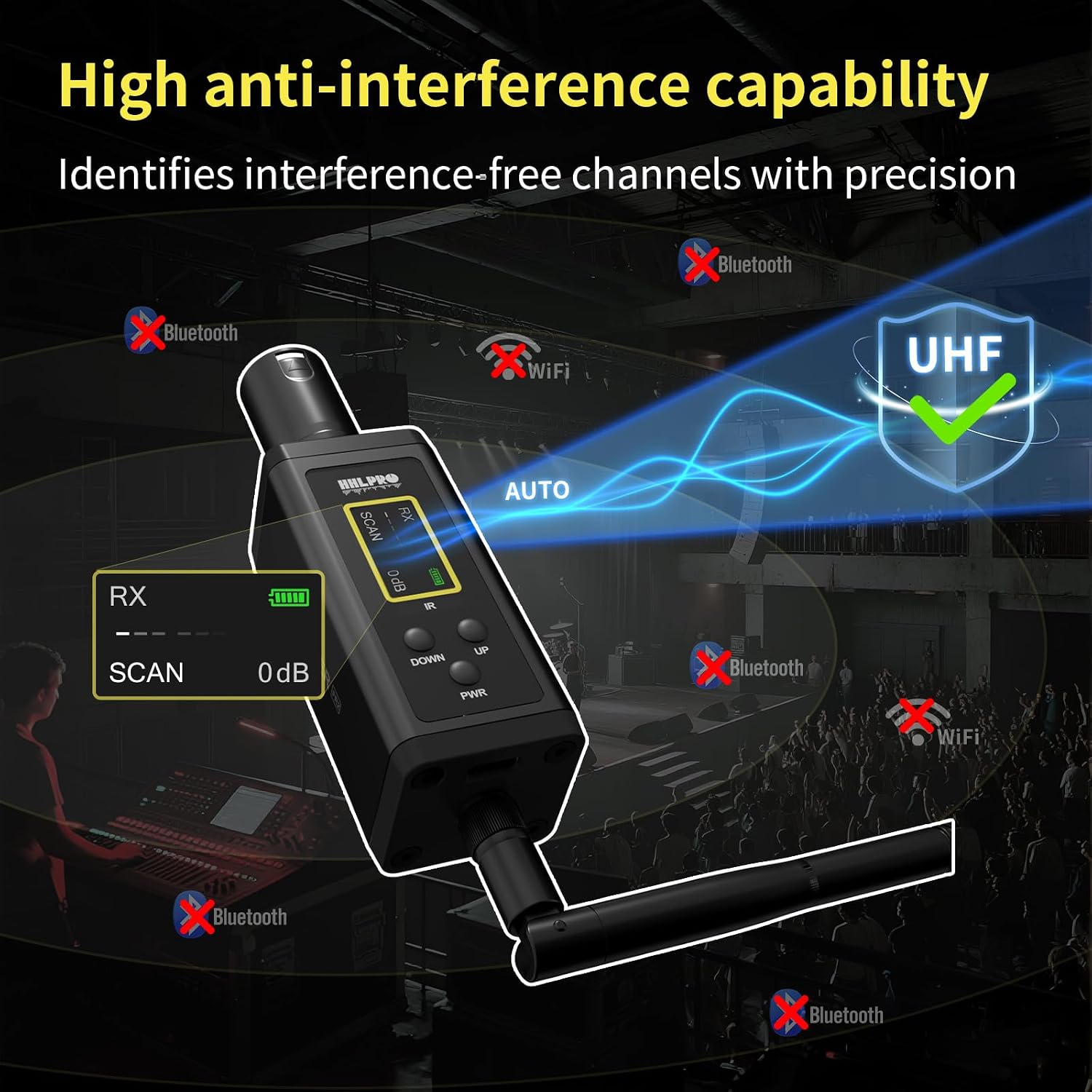
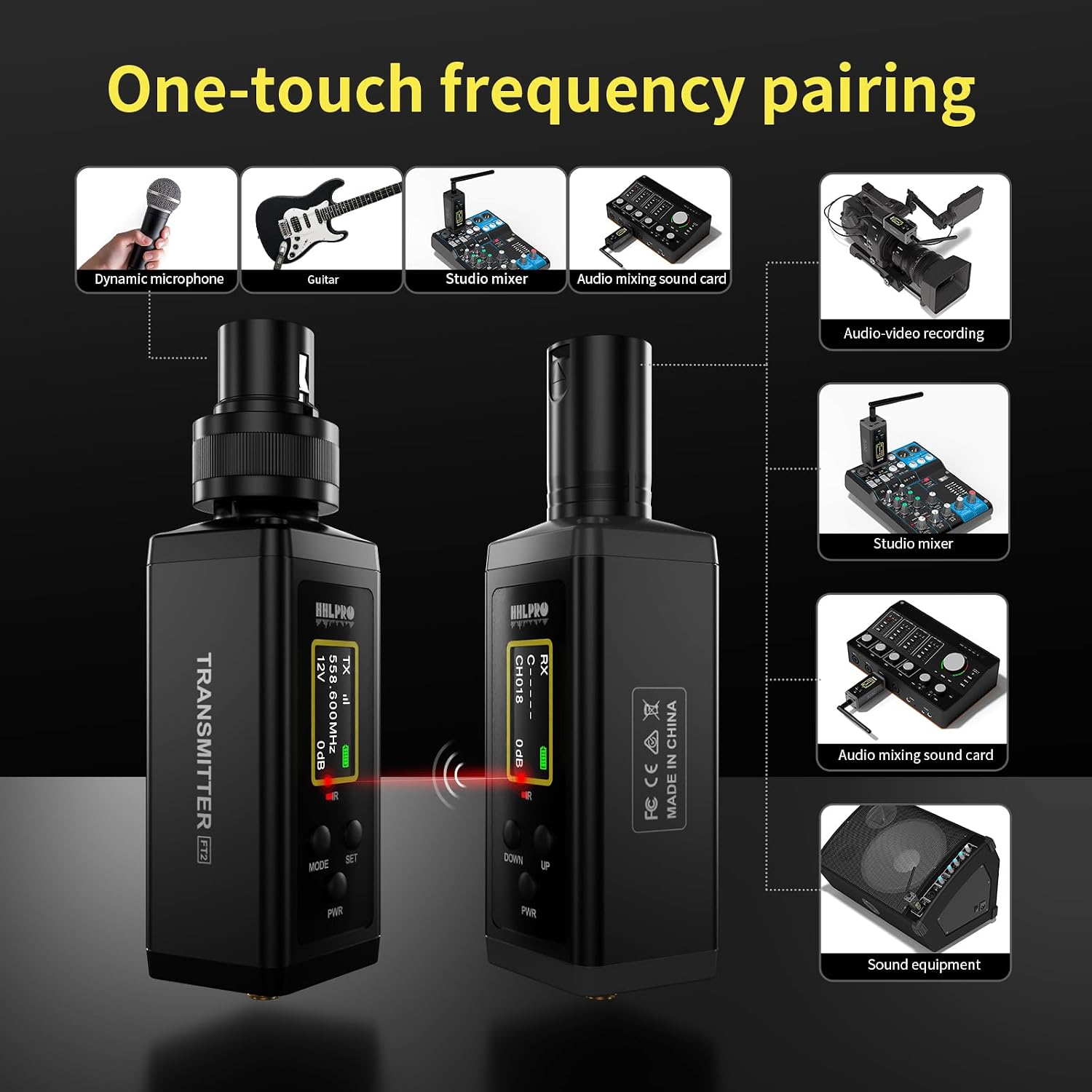
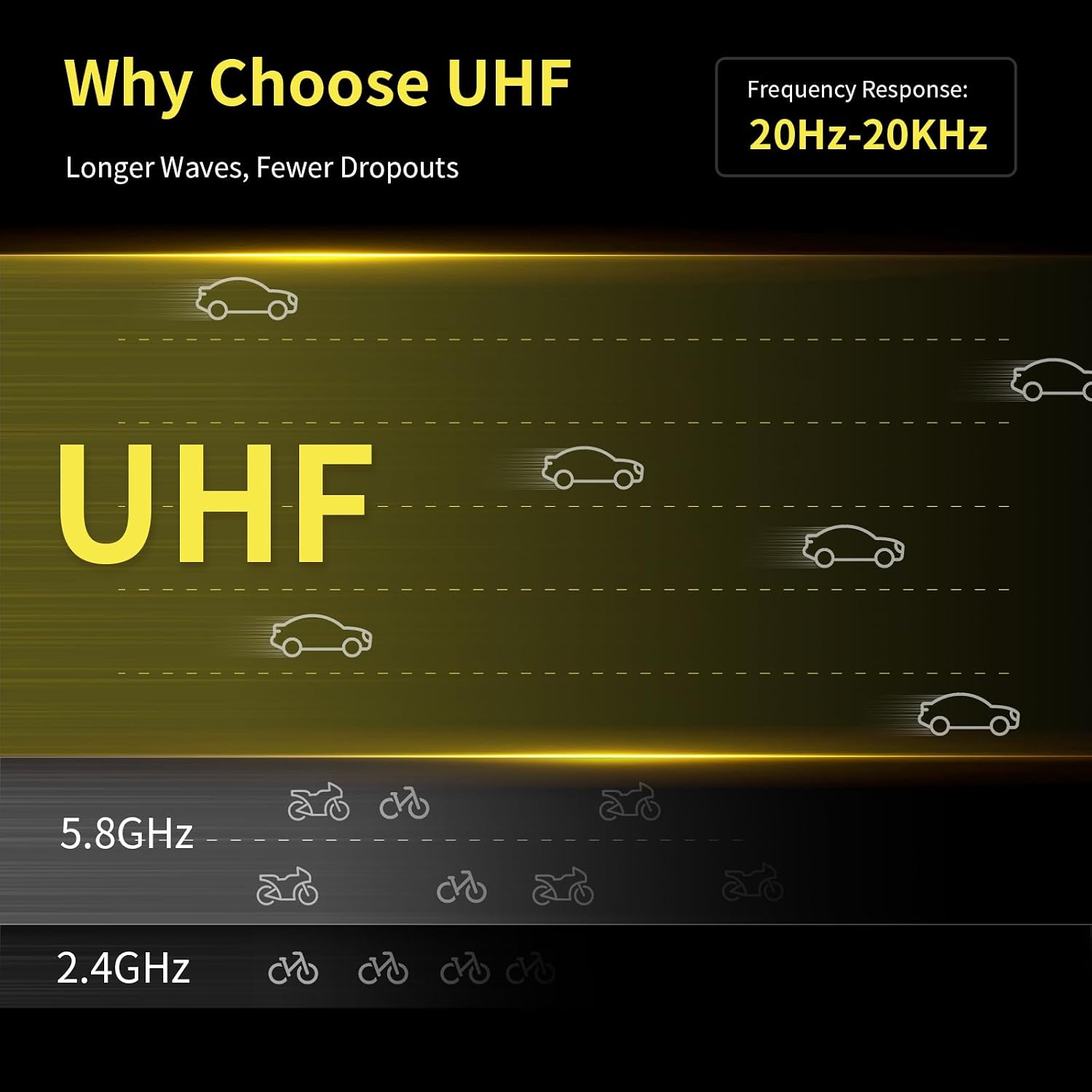
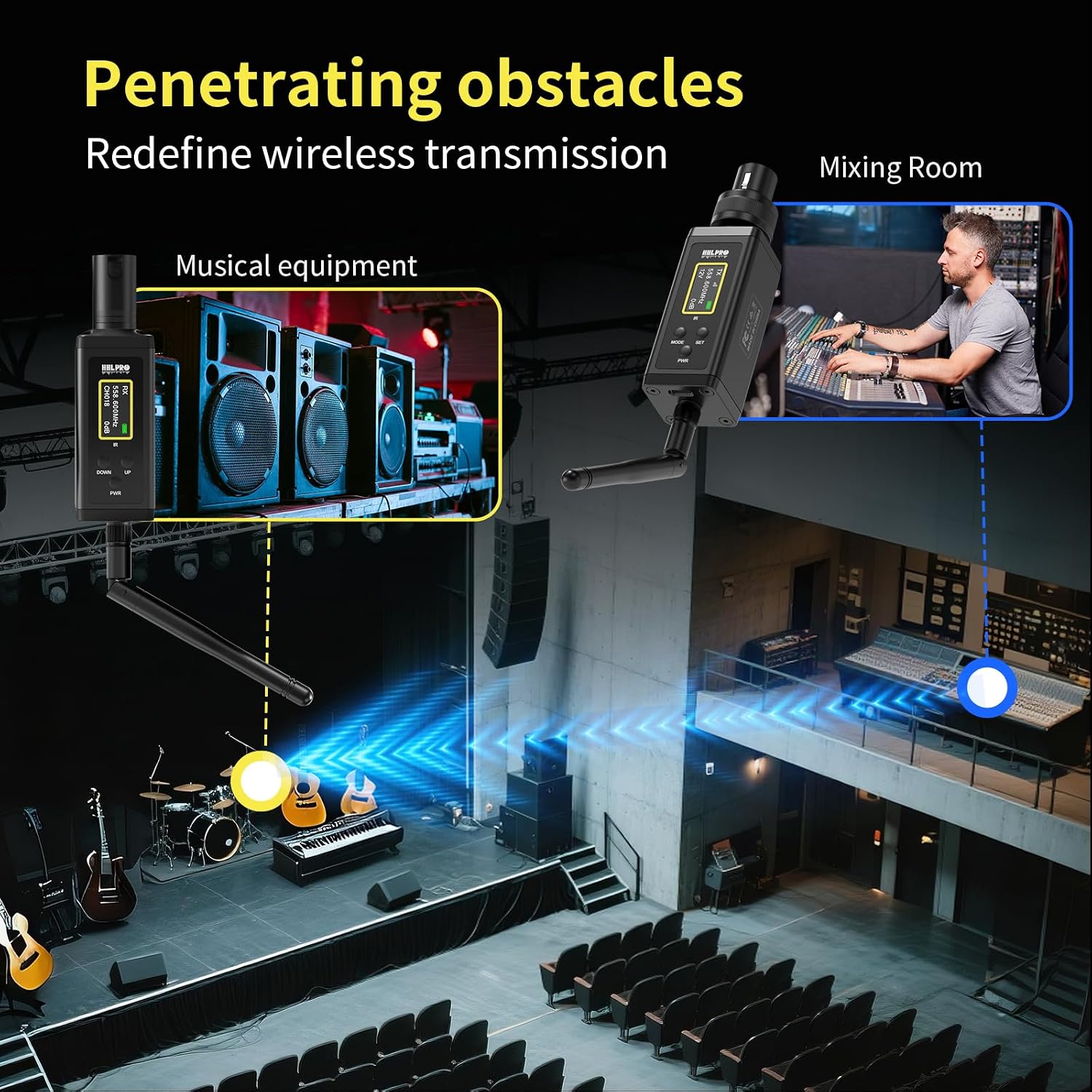
Attach the transmitter to an XLR microphone and connect the receiver to compatible sound equipment, such as a mixer or PA system. For a rehearsal, that could mean moving around the room with a microphone while the receiver stays at the sound desk, for a sound-field test, it offers a wireless link rather than a cable running across the space. The system uses UHF frequencies from 565–588 MHz, and its auto-scan function is intended to find a channel with less interference before one-touch frequency pairing.
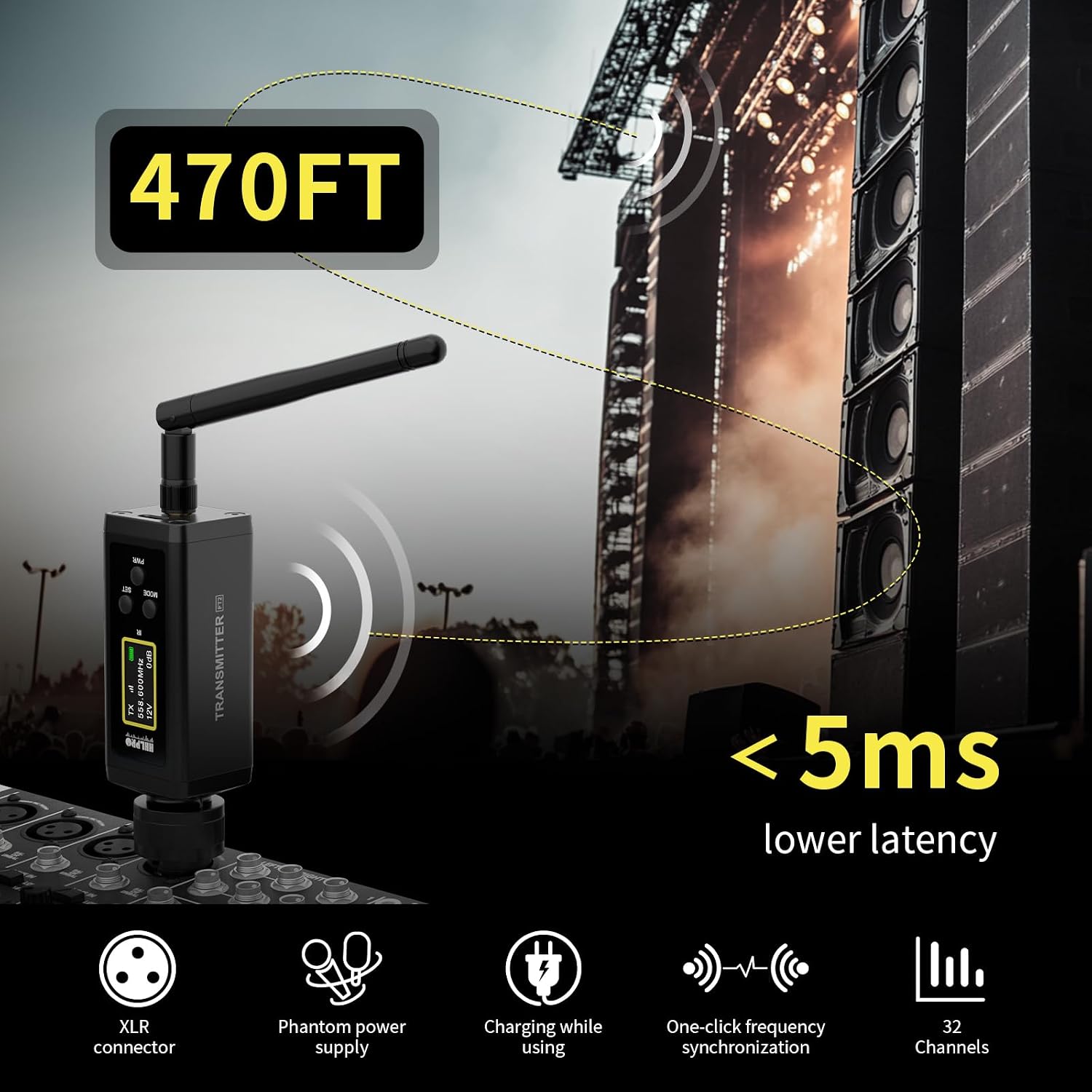
The stated transmission distance is up to 470 feet, and listed latency is less than 5 ms. Those figures describe the system’s claims, not a guarantee of the same results in every venue: walls, layout, and other wireless activity may affect the practical range. Would a long cable be simpler for a small, fixed setup? Often, yes, the F30’s appeal is the freedom to move without laying that cable.
Pros
- Dual antennas and auto channel scanning are designed to support a stable signal in settings where interference matters.
- It is listed as compatible with dynamic and condenser microphones, and the product name specifies 48V phantom power.
- The metal construction is intended to stand up to regular handling better than a lightweight plastic housing.
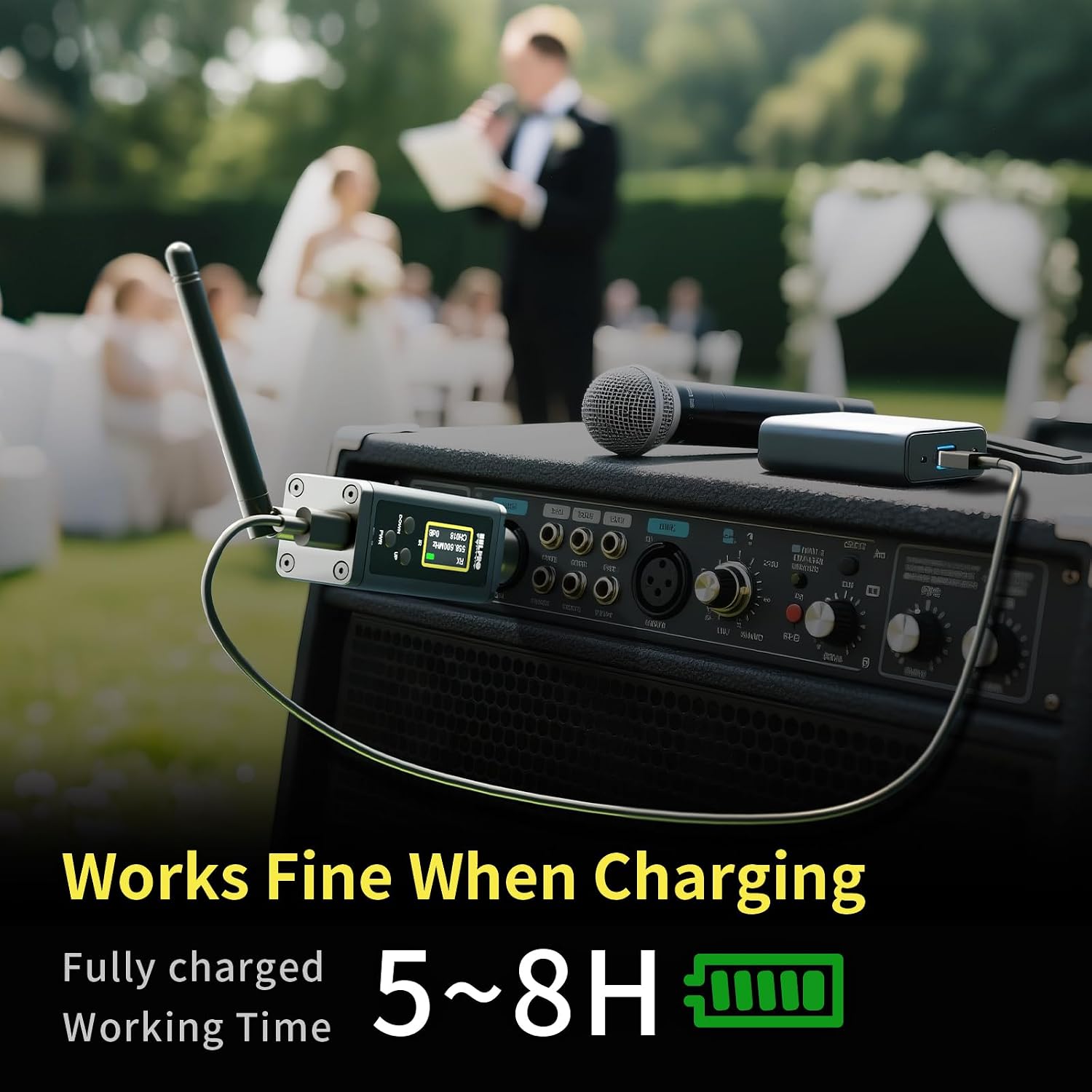
- A built-in rechargeable battery, visible battery level, and included dual-port USB cable make it possible to charge both units at once. The stated continuous runtime is over 5 hours, and operation while charging is supported.
One practical limit: the listing does not give dimensions or weight, so there’s no basis here to judge how bulky the plug-on transmitter will feel on a particular microphone. Without having tried it, the useful distinction is its feature set: it is aimed at wireless mobility and channel selection, not at replacing a wired connection when maximum simplicity is the priority.
Spec sheet
- Name: HHLPRO F30
- Type: Wireless XLR transmitter and receiver
- Format: Plug-on
- Frequency: 565–588 MHz UHF
- Transmission distance: Up to 470 feet
- Latency: Less than 5 ms
- Phantom power: 48V
- Antennas: Dual
- Battery: Rechargeable, over 5 hours of continuous use
- Construction: Metal
Should you buy it?
It’s a great fit if you need to move a microphone around a stage, event space, or measurement area and want auto-scanning rather than a fixed cable run. It may not suit you if your setup stays close to the mixer, you prefer a wired connection, or you need confirmed range in a crowded venue before choosing. Check that the 565–588 MHz operating range and XLR arrangement suit your equipment and location, those details matter more than the headline distance. For mobile sound work, the F30’s combination of channel scanning, rechargeable power, and broad microphone support gives it a clear purpose, but the advertised range should not be the only deciding factor.