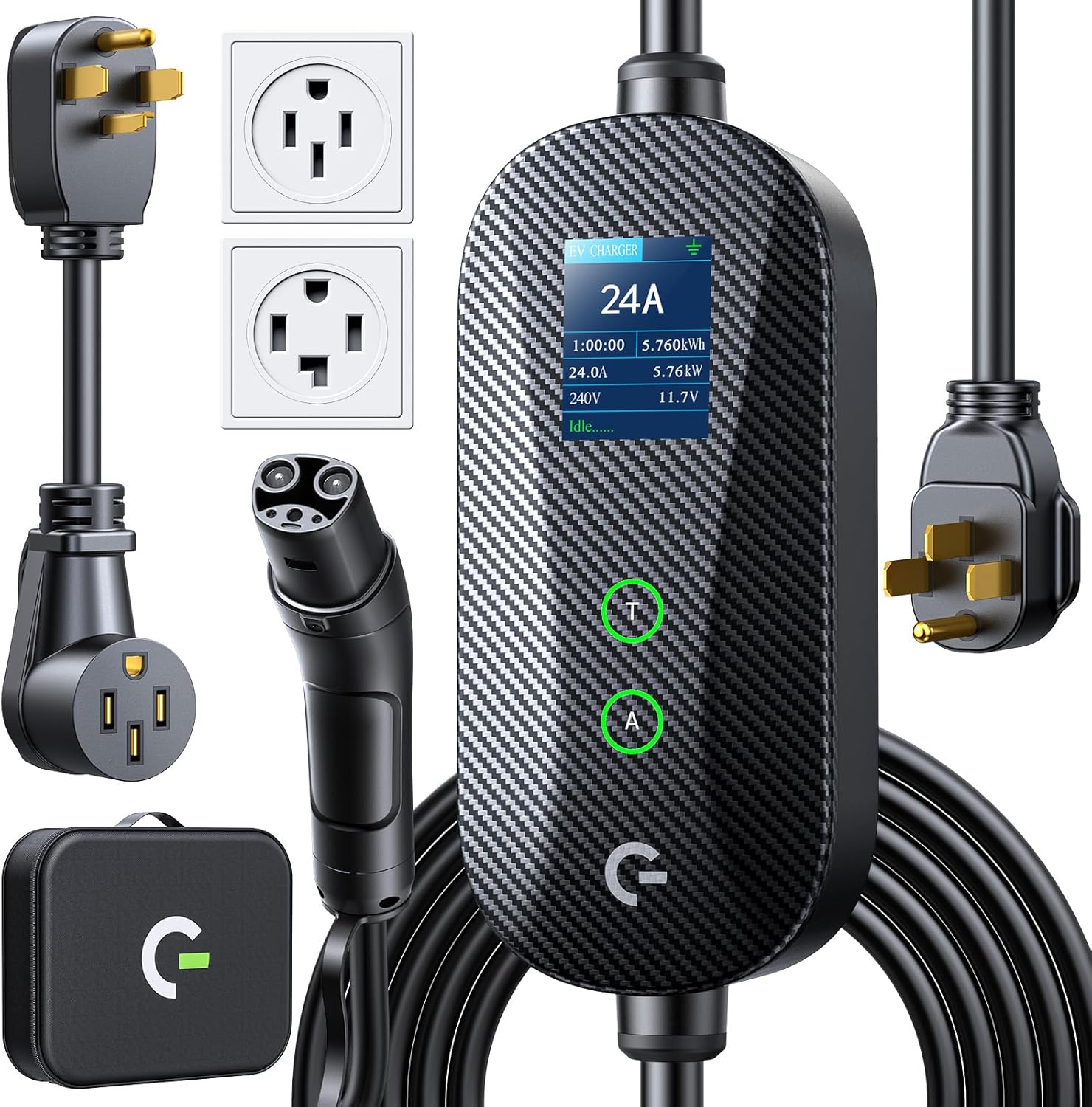
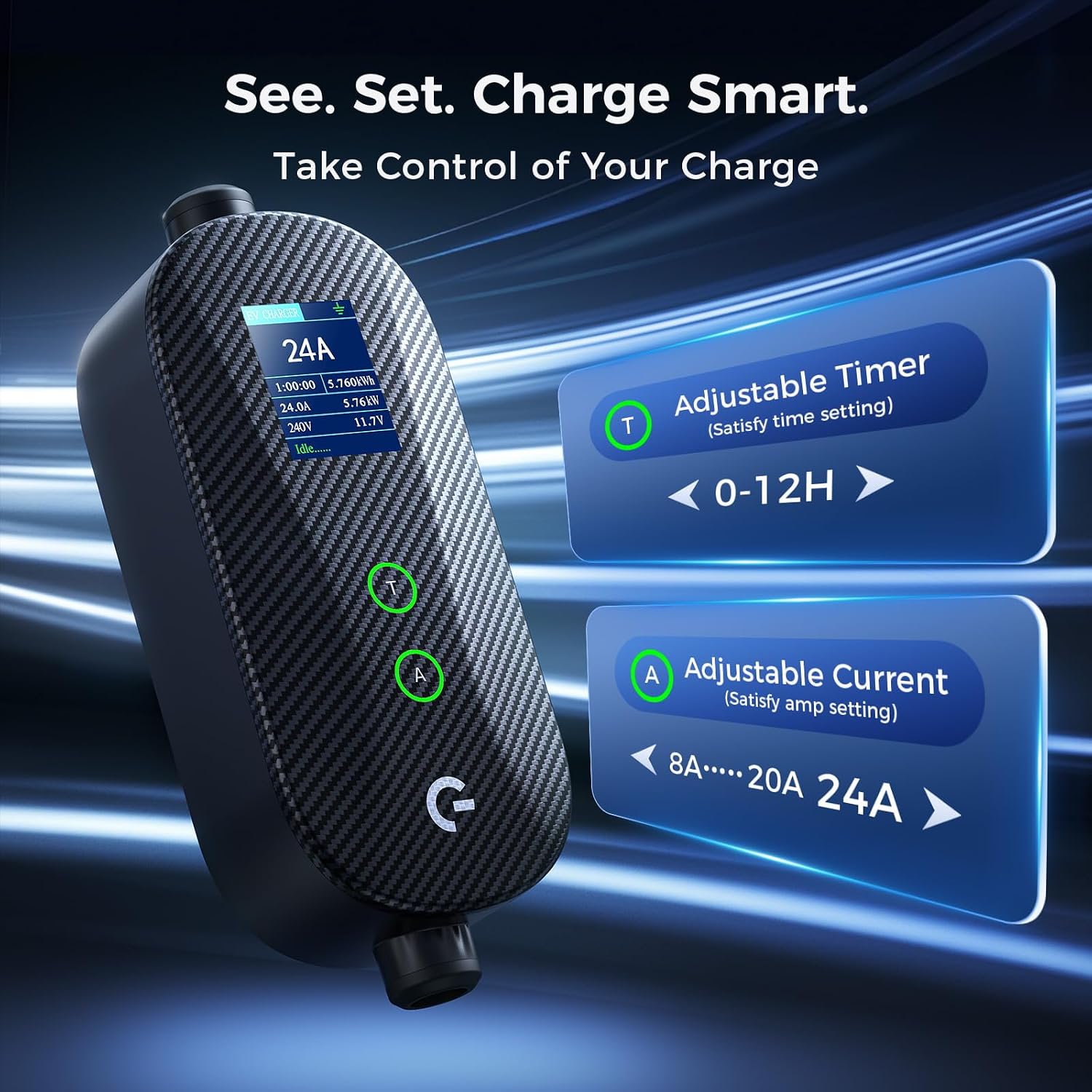
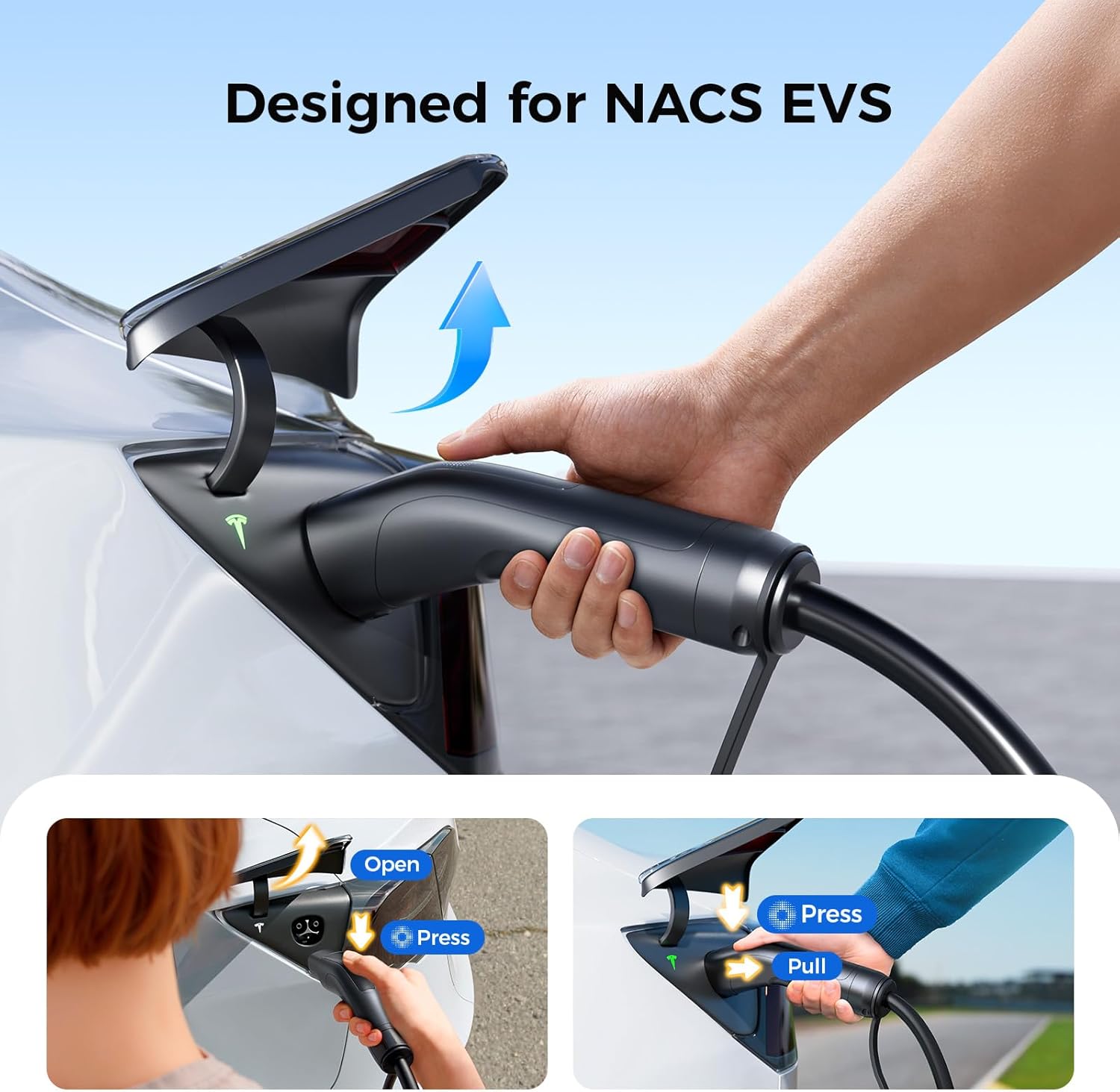
What it is and why it matters\nGrasside’s Carbon Fiber Level 2 Tesla Charger is a home charging solution designed to upgrade daily EV charging without relying on app setups or external hubs. It’s tailored for Tesla owners and claims broad compatibility with Model 3, Y, X, S, and Cybertruck, plus NACS-equipped EVs. On paper, this unit blends a 24A adjustable current with a built-in timer and a bright smart display, all packaged with a sturdy carbon-fiber aesthetic. If your goal is to reduce daily charging time and keep a simple, plug-and-play experience at home, this charger aims to deliver that convenience.\n\n## How it works and who it suits\nThe charger advertises up to 5× faster charging versus Level 1, translating to roughly 20 miles of range per hour under typical conditions. That makes it a practical option for commuters who park at home for overnight sessions or quick top-ups between trips. The adjustable current settings (8A/10A/12A/16A/20A/24A) and a 0–12H delay timer offer a degree of customization to fit different electrical setups and schedules. The LCD screen is meant to show live voltage, current, and power, so you’re never guessing how the session is progressing.\n\n## What stands out in everyday use\nFrom a usability angle, you won’t need a separate app setup to get charging started—simply plug in and choose a setting if needed. The 21-foot cable length adds flexibility for setups where the vehicle is not parked directly next to the outlet, which is a practical perk in many garages. The dual outlet compatibility—NEMA 14-30 (dryer outlet) and NEMA 14-50—offers versatility for different home wiring configurations, which can be useful if you’re upgrading or reusing existing outlets.\n\n## Pros and potential limitations\n- Pros: faster charging than Level 1, clear real-time data on the LCD, adjustable current, built-in timer, broad Tesla/NACS compatibility, long cable, robust casing with IP67 rating and fireproof material, wide operating temperature range.\n- Limitations: once charging starts, you can’t adjust settings mid-session without stopping first. This keeps operation simple but reduces on-the-fly tweaks. The note about reconfiguring only after stopping charging is a practical quirk to plan for when you’re juggling multiple vehicles or schedules.\n\n## Performance expectations and where it fits\nIf you prioritize predictable, at-home charging speed and a straightforward setup, this unit aligns with a daily-use scenario where the charger is plugged in and left to manage the nightly top-up. It’s likely more of a midrange option in the home charging space—not a premium, high-end station, but not a barebones wall plug either. The 2-year care program adds a layer of support that’s comforting for longer-term ownership, especially if you value responsiveness in case of compatibility questions or operational hiccups.\n\n## Who should consider it and who might skip it\n- Consider if you want a versatile Level 2 option that works with multiple NEMA outlets and specifically targets Tesla models with a NACS connector. It’s a sensible pick for a home charger that emphasizes ease of use and reliability in varied climate conditions.\n- It may not be the best fit if you require frequent on-the-fly adjustments during a charging session or if you’re seeking the absolute fastest possible Level 2 charging at a premium price point.\n\n## What to check before buying\n- Confirm your home outlet availability and whether a 14-30 or 14-50 receptacle is more convenient for your space.\n- Consider your typical charging window: a 0–12H delay timer helps align charging with off-peak hours, but you’ll want to plan around not being able to adjust settings mid-charge.\n- Verify climate conditions in your area to ensure the unit’s operating range (-22°F to 122°F) covers your typical temperatures.\n\n## Real-world nuance: how alternatives might feel different\nCompared to plug-in Level 1 or more basic Level 2 options, this Grasside charger emphasizes a blend of extendable cable length, dual outlet compatibility, and a durable build. If you’re deciding between this and a simpler charger, ask whether you need the longer cable and the broader outlet support, or if a lighter unit with fewer features would suit a small garage better.\n\n## FAQ highlights\n- Can I change charging settings while a session is active? No—adjustments require stopping charging first.\n- Is it compatible with non-Tesla EVs? The product notes NACS compatibility, check your vehicle’s connector before assuming universal compatibility.\n- How does the timer work? You set a 0–12 hour delay to start charging at a chosen time.\n\n## Decision: final buying considerations\nIs it worth it? If you want a robust, home Level 2 charger that pairs a practical 24A capacity with clear live data and broad outlet compatibility, it’s worth considering. It suits daily drivers who value predictable charging, a straightforward interface, and solid reliability in varied conditions. It might not be ideal if you need mid-session reconfiguration or crave the absolute fastest possible charging at all times.\n\n## Quick use case example\nImagine pulling into your garage after work. You plug the Grasside charger into a compatible outlet, press and hold a button to adjust to 24A if you’ve got the supply, and the LCD shows a real-time readout while the car begins topping up. By morning, your Tesla is ready with a refreshed range for the next day, and you’ve avoided scrambling for a dedicated charging station.