

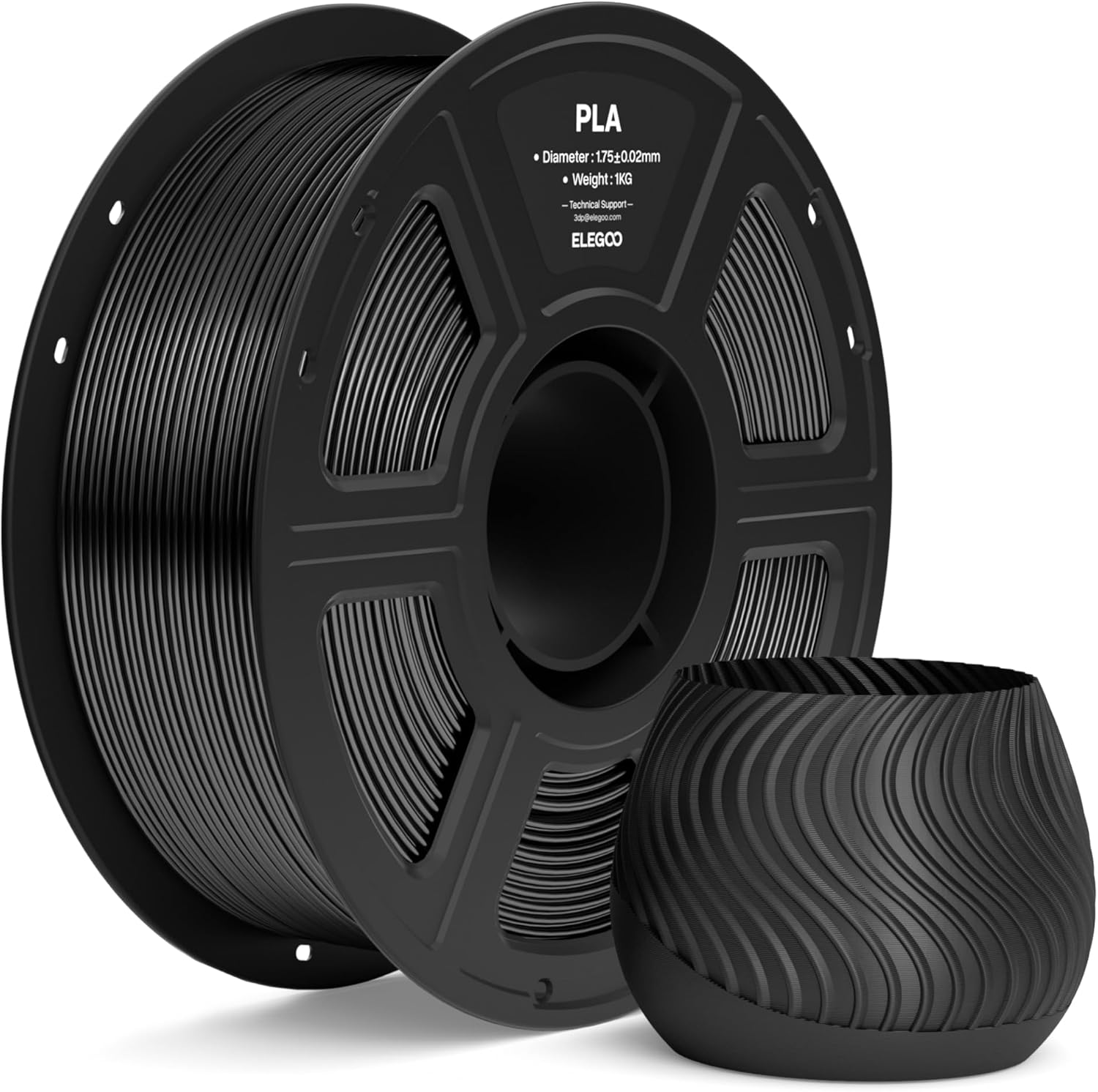
ELEGOO PLA Filament 1.75mm Black, 1kg Spool (±0.02mm accuracy) for Most FDM Printers
Product description
If your FDM prints are coming out a little inconsistent—stringing, uneven lines, or frustrating feeding—PLA is often the first material people reach for. This ELEGOO PLA filament is aimed at the “set it up and print” crowd, with an advertised tight diameter tolerance and a spool that’s meant to stay tidy in storage and during use.
The essentials
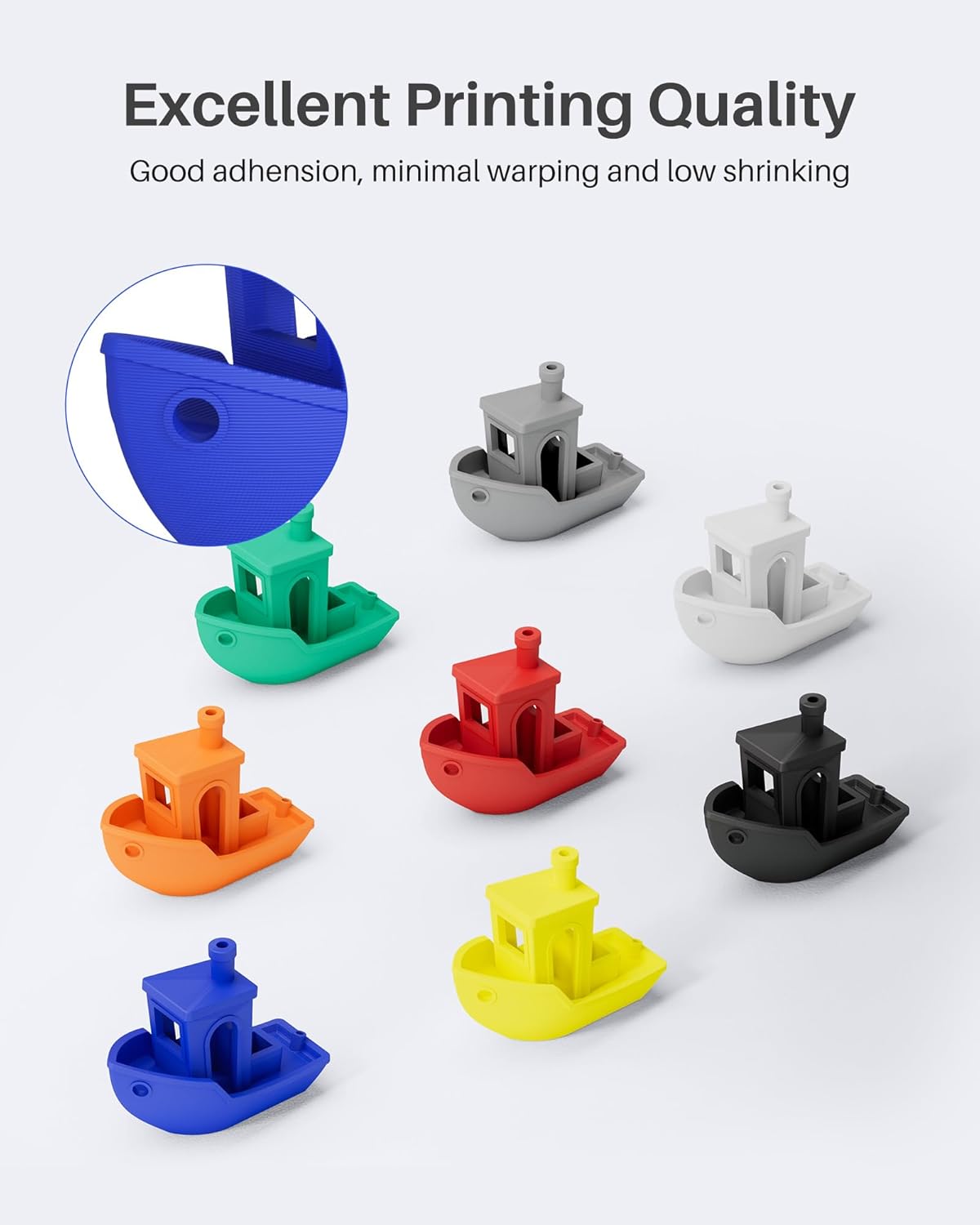
This is a 1.75mm black PLA filament for FDM 3D printers, sold as a 1kg spool. On paper, the story is pretty straightforward: premium PLA, lower melting temperature for easier printing, and manufacturing controls meant to keep the diameter consistent (accuracy listed as ±0.02mm). You also get claims around low warp/shrinkage and good layer adhesion, which are the ingredients that usually separate smooth, reliable prints from the messy ones.
What to know before you buy
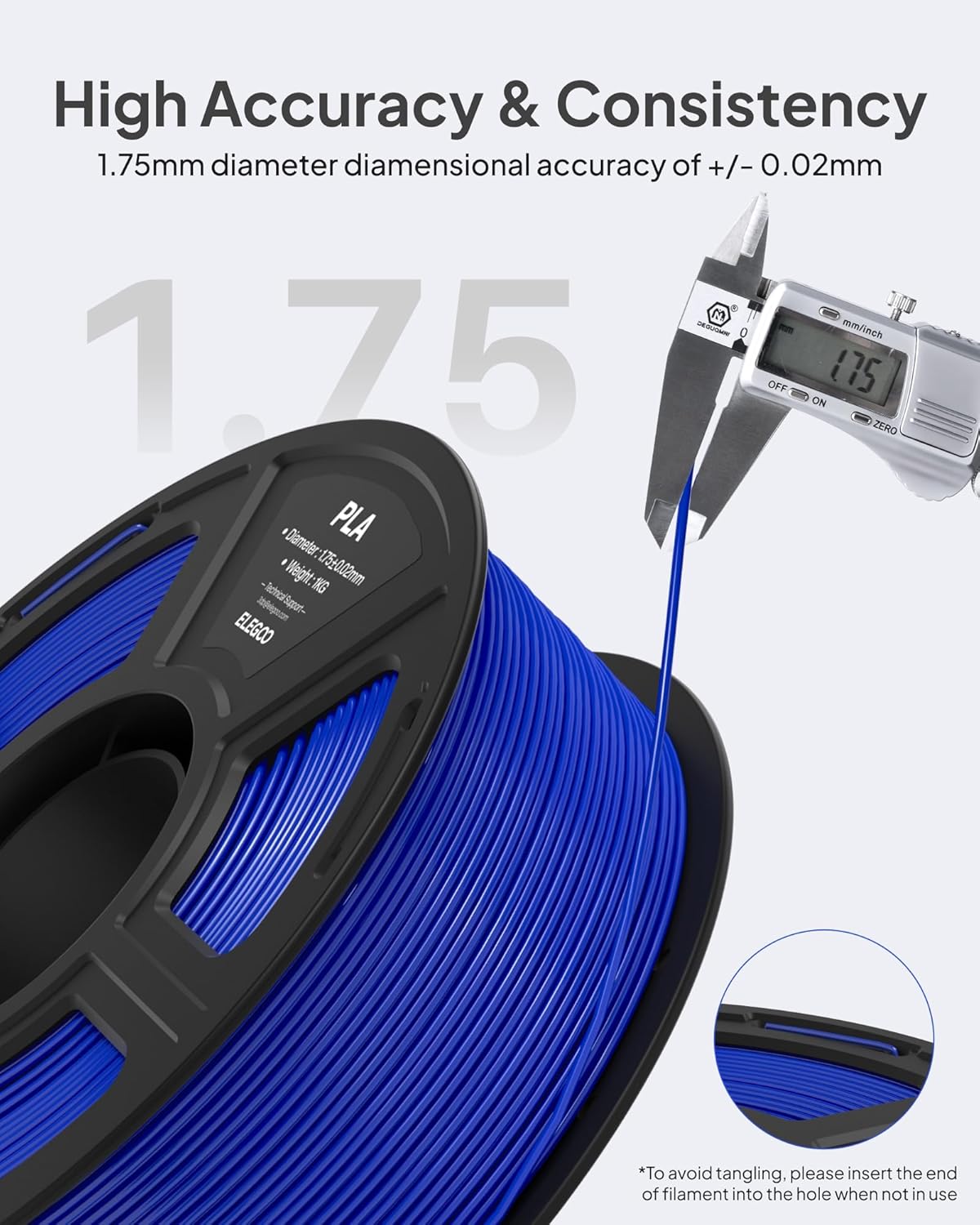
A few things matter more than the marketing wording when you’re buying filament. First, diameter consistency helps your printer feed more predictably—especially if you’ve had trouble with under-extrusion or “hesitation” during longer runs. Here, the filament is measured with advanced procedures so it’s supposed to stay close to 1.75mm.
Second, PLA behavior is heavily influenced by heat and environment. The “lower printing temperature” claim can be a real convenience if you’re trying to dial in quickly, but it still depends on your printer, nozzle, and slicing settings. So it’s not a guaranteed fix for every problem—if your printer is miscalibrated, the filament can only do so much.
Finally, the product emphasizes low warp and shrinkage. That’s useful if you print larger parts where corners want to lift, but you’ll still want a stable bed setup and the usual routine (clean build surface, correct bed leveling, and appropriate cooling).
What it’s like in everyday use
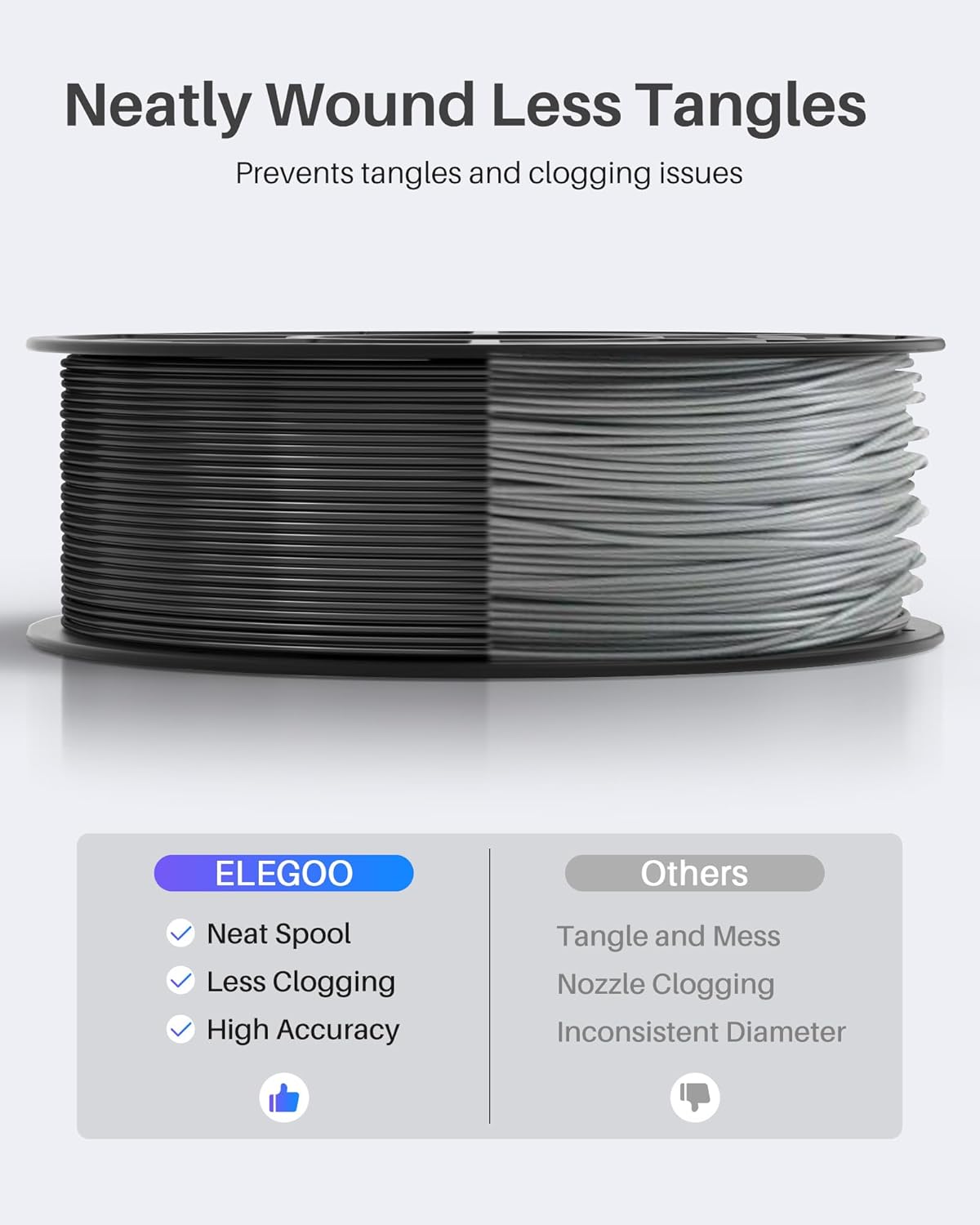
Where this filament is likely to feel good day-to-day is in the “less drama” categories: smoother feeding and fewer interruptions. The spool is described as neatly wound to help prevent tangles and feeding issues. That matters more than people think—untangling filament mid-print is the kind of time sink you can’t really measure until it happens.
The adhesion story also points in a practical direction. Strong layer adhesion can help when you’re printing functional parts or test pieces that need to hold together instead of peeling apart between layers. And the surface finish is described as glossy, which may be a plus if you like a cleaner look on visible prints.
Here’s a common micro-scenario: you print a batch of small brackets or decorative holders. With filament that feeds smoothly and has consistent diameter, you’re more likely to get repeatable results across prints, so your dial-in work doesn’t need to start from scratch every time.
Key specs (the ones that actually affect printing)
- Name: ELEGOO PLA Filament 1.75mm Black, 1kg Spool
- Type: PLA (for FDM 3D printers)
- Format: 1.75mm diameter filament
- Capacity: 1kg spool
- Color: Black
- Dimensions: 1.75mm diameter (as stated)
- Accuracy: ±0.02mm (as stated)
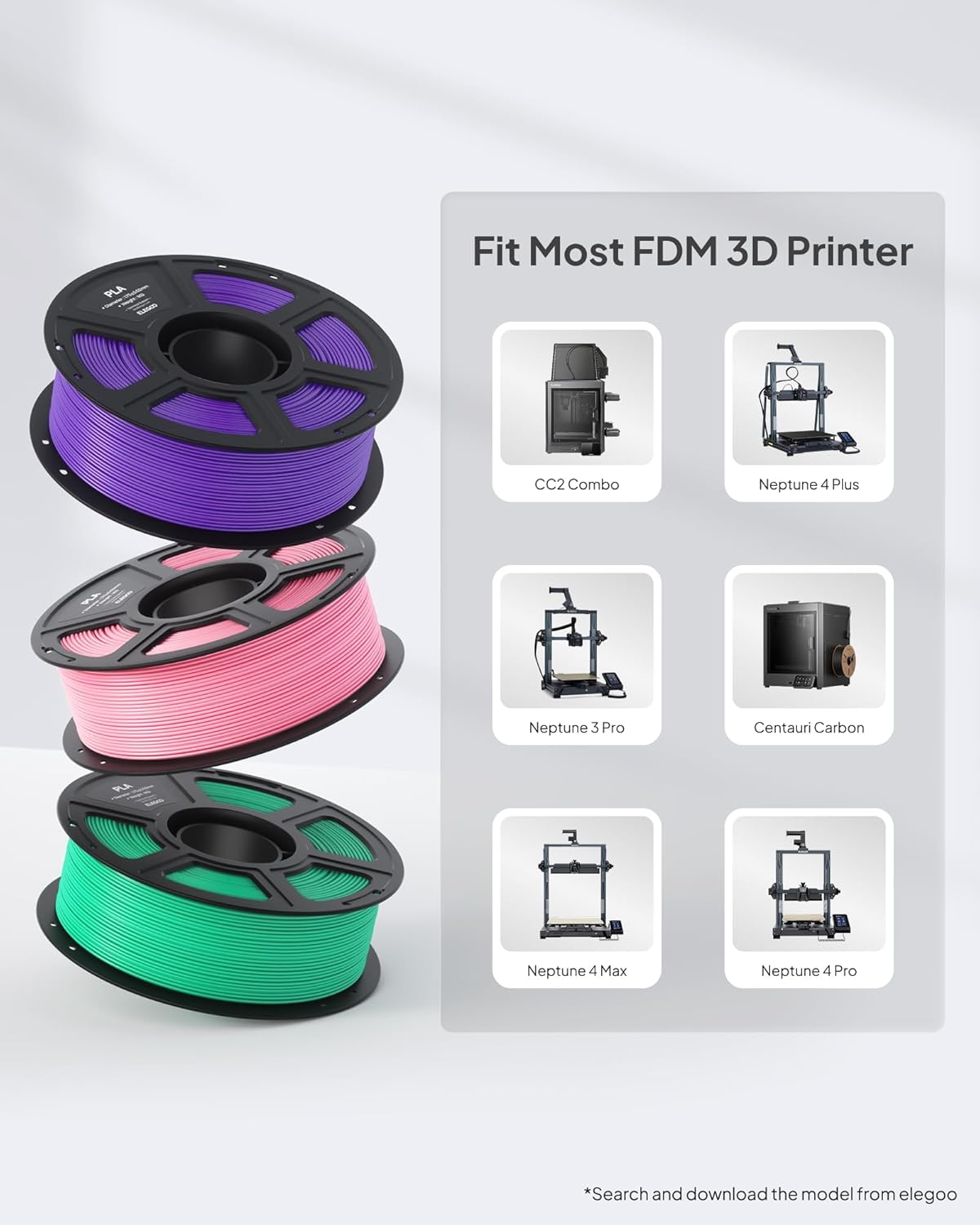
- Compatibility: Designed to fit most common 1.75mm FDM printers
- Fit guidance: Lower melting temperature, low warp and shrinkage (as stated)
Compatibility and setup notes
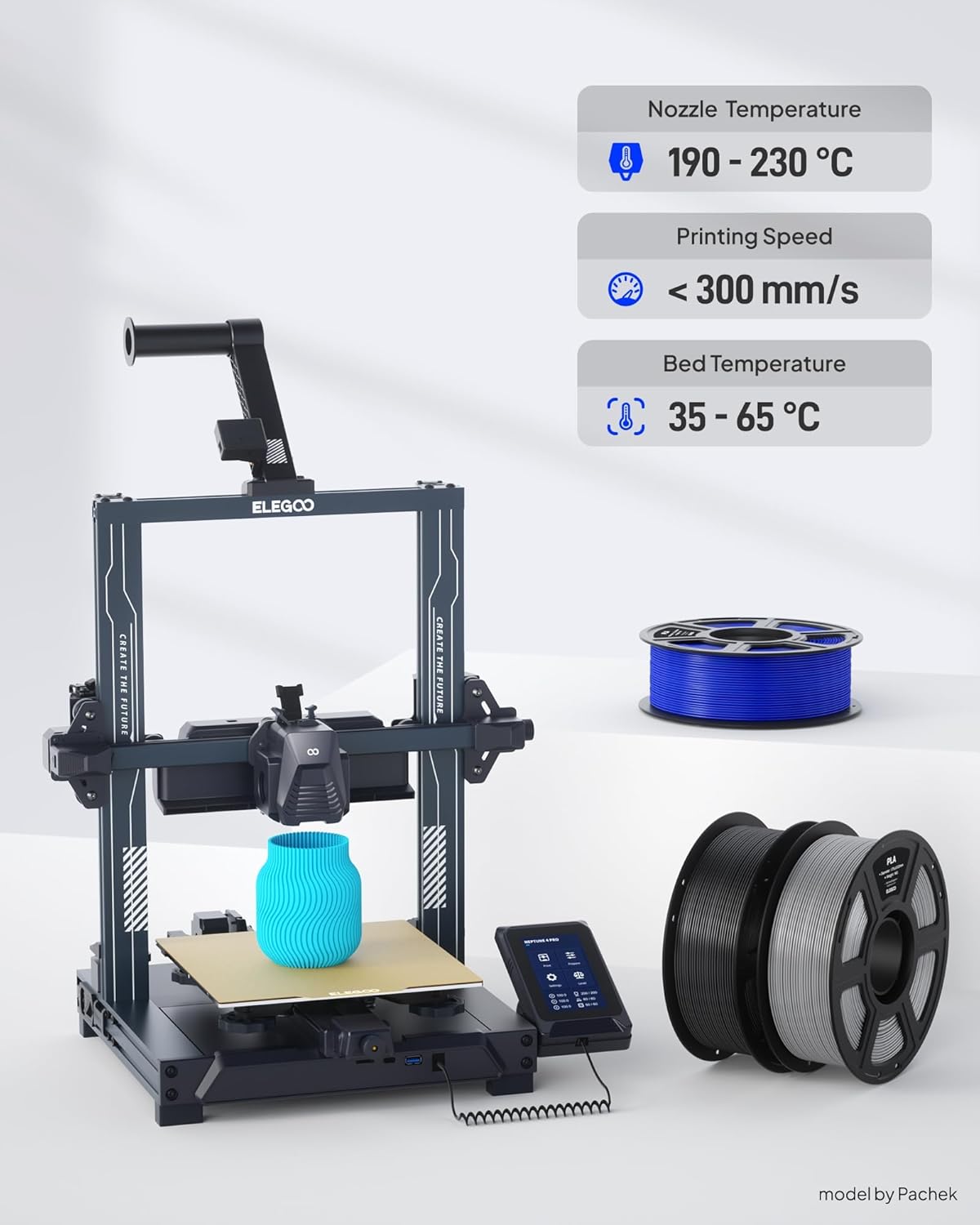
The listing states wide compatibility with most common 1.75mm FDM printers, and it specifically names Neptune series, P1P, P1S, Ender series, Kobra series, and more. So if you’re running one of those ecosystems (or another 1.75mm FDM printer), it’s positioned as a plug-and-play type of PLA.
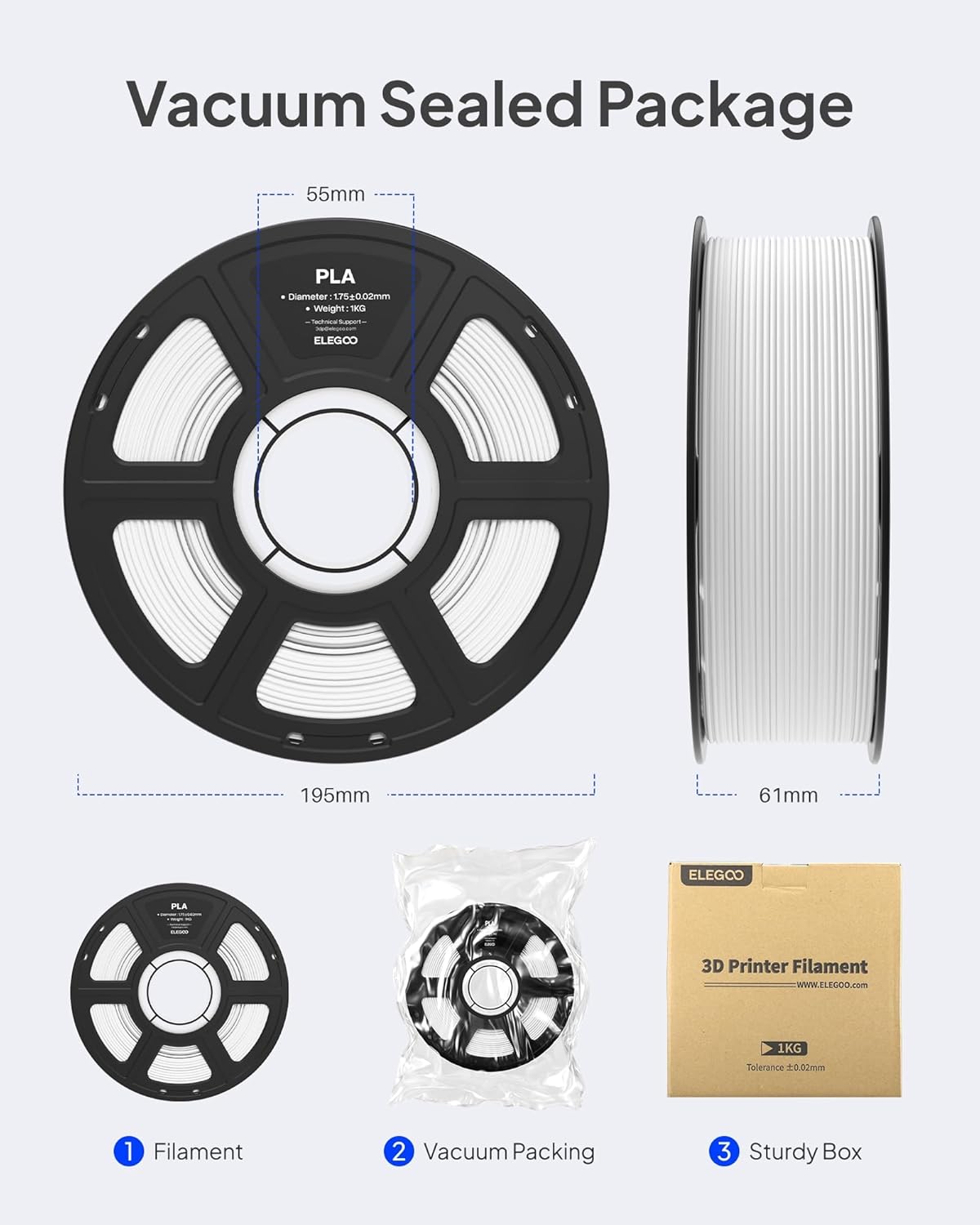
It’s also described as complete dried before packaging and vacuum sealed, intended to protect against moisture. That can help with consistency because PLA that has absorbed moisture is more likely to cause bubbling or clogging. Still, “vacuum sealed” isn’t a force field—how you store it after opening affects results.
Pros, limits, and who it fits best
What stands out: - Consistency focus: diameter accuracy is listed at ±0.02mm, which supports steady feeding. - Beginner-friendly angle: lower melting temperature is meant to make the learning curve easier. - Print stability claims: low warp and shrinkage, plus strong layer adhesion. - Practical handling: neatly wound spool to reduce tangles.
What to keep in mind: - It’s PLA, not a premium high-performance material—if you’re trying to push extreme heat resistance or engineering-grade durability, this may feel like the wrong category. - Printer tuning still matters. Even with consistent filament, results depend on your slicer settings, nozzle type, and calibration. - Glossy surface is mentioned, but your actual surface finish can vary based on cooling and layer settings.
This is a solid pick if you want a reliable PLA option for everyday FDM printing, prototyping, and basic functional parts where ease of use and consistent feeding matter. You may want to skip it if your priority is very specialized performance beyond what typical PLA is known for.
Final verdict
It’s worth considering if you’re shopping for everyday PLA filament that’s built around consistent diameter, easier printing (lower melting temperature), and less headache handling (neatly wound spool, moisture protection). The ±0.02mm accuracy claim and the no-clogging/no-bubble emphasis are the kinds of details that can translate into fewer failed prints when you’re printing regularly.
But if your expectations lean toward advanced, high-heat, or niche material performance, PLA might not be the right tool for that job. In that case, you’ll likely be happier looking for a different material category.
Mini FAQ
Is this PLA only for 1.75mm printers?
Yes. The filament is specified as 1.75mm and is described as fitting most common 1.75mm FDM 3D printers.
Does the listing mention moisture protection?
It says the filament is complete dried before packaging and vacuum sealed to protect it from moisture.
Will it be easier to print than other PLAs?
It’s described as using a lower melting temperature, which is generally meant to make setup and printing easier, but your printer and settings still influence the final result.
Can it help prevent clogging or bubbling?
The product description claims no clogging and no bubble issues, which the moisture-sealing step is intended to support.
What prints is this best for?
Based on the focus on low warp, strong layer adhesion, and glossy surface, it fits well for general-purpose FDM prints, prototypes, and parts where you want consistent feeding and clean results.