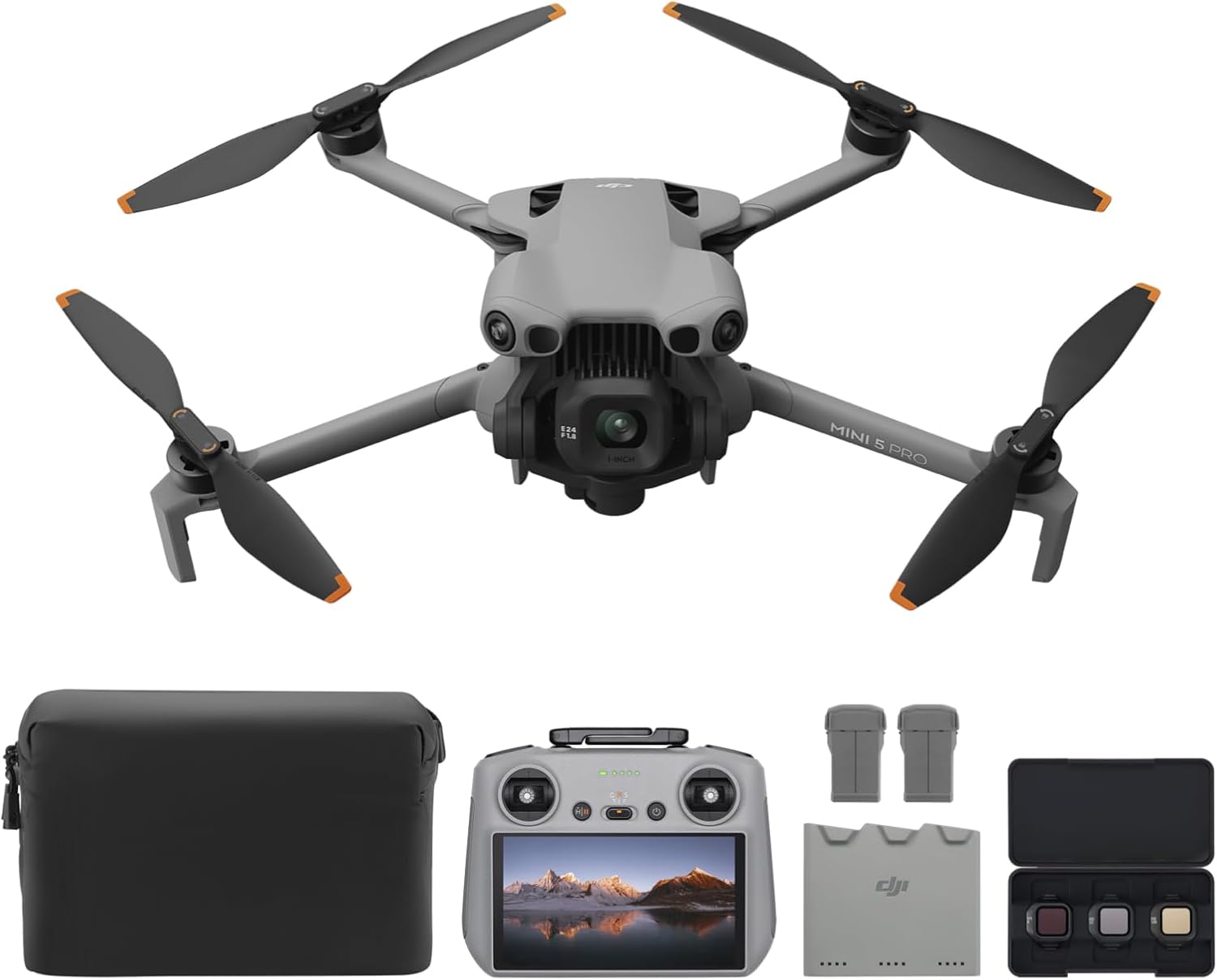
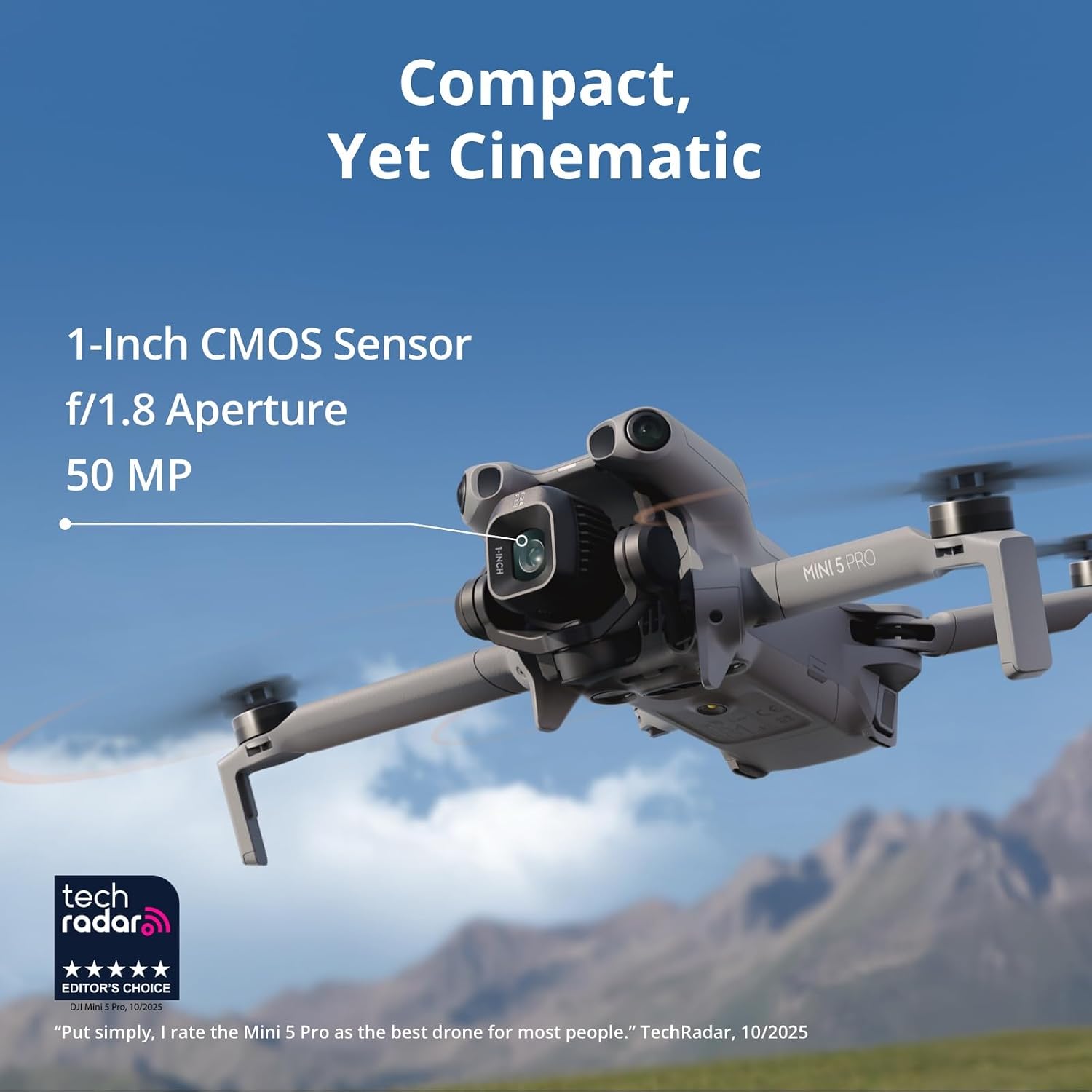
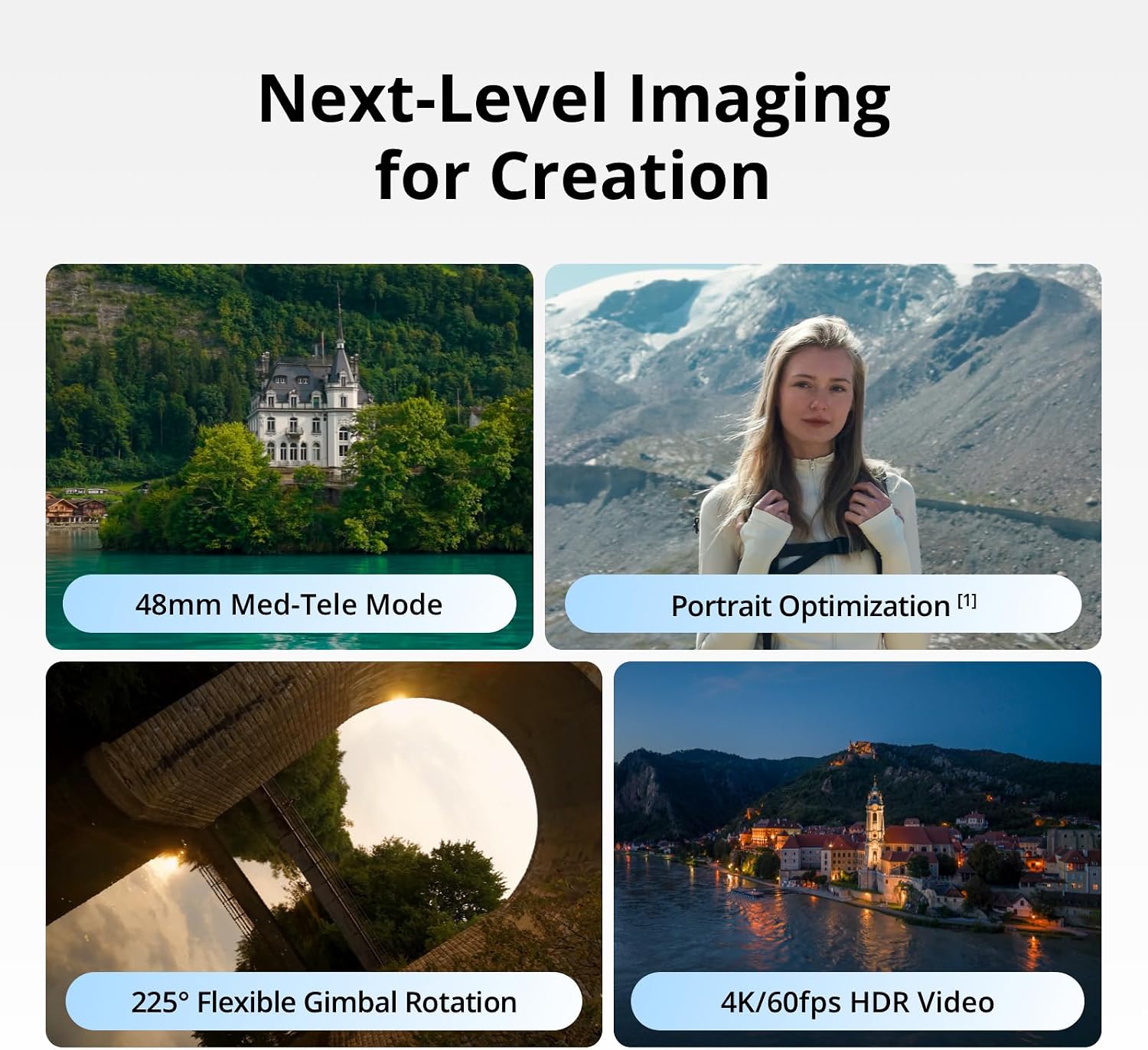
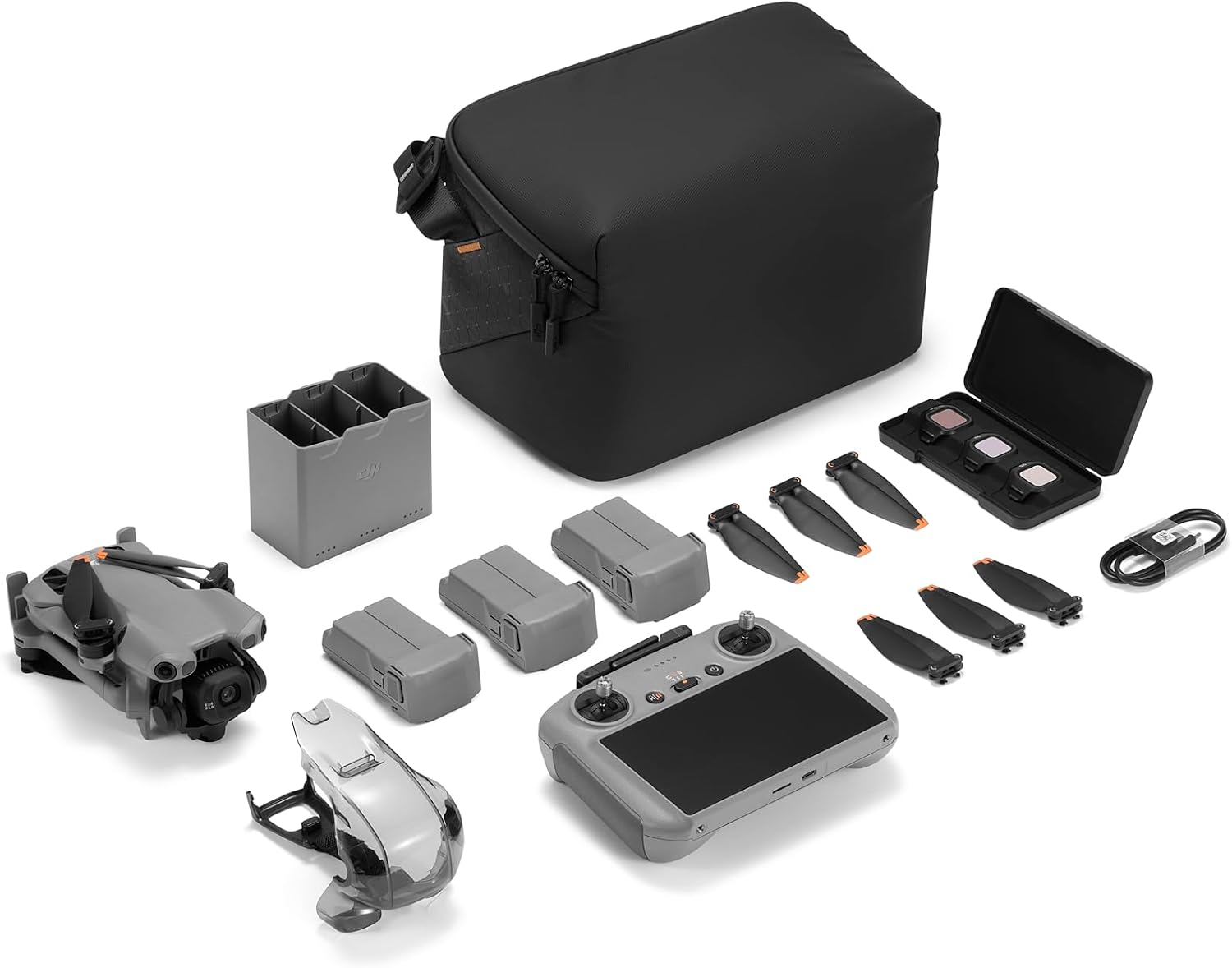
What it is and who it’s for\nIf you’re a beginner stepping up to a more capable compact drone, the DJI Mini 5 Pro Fly More Combo Plus with DJI RC 2 positions itself as a palm-sized solution that’s easy to carry yet ready for more advanced shooting. It’s built around a 1-Inch CMOS sensor capable of 4K/60fps HDR video, which means you can capture detailed footage with vibrant colors without needing a bulky rig. The package includes multiple batteries and a charging hub, so long sessions don’t have to pause for downtime. If your goal is to blend portability with real cinematic potential, this setup leans into that sweet spot.\n\n## Design, portability and what you get\nThe drone emphasizes ultra-light, foldable design, so it fits in pockets and bags without drama. The internal storage of 42GB helps you shoot more before you have to offload, and the 225° gimbal rotation supports creative angles, including true vertical filming for social media formats. The Fly More Combo Plus adds practical value with extra flight time—up to 52 minutes per battery under the right conditions—and faster recharges when you use the charging hub.\n\n## Safety and tracking features that matter\nNight flights are safer with omnidirectional obstacle sensing, combining forward LiDAR and vision sensors to detect obstacles in all directions. ActiveTrack 360° gives you reliable subject tracking with smoother responses, which helps when you’re shooting moving subjects like athletes or cyclists. These capabilities can reduce the learning curve for new pilots while still offering room to experiment as you grow.\n\n## What stands out in everyday use\nOn paper, the combination of a compact form factor, a capable camera, and extended battery life makes it practical for day trips, travel, or on-the-go shoots. It’s not a “budget beginner” drone, but it’s also not an unwieldy professional setup. The actual experience depends on how you balance flight time, wind conditions, and your familiarity with drone controls. For social creators needing quick vertical content, the 225° gimbal rotation and vertical filming support are meaningful.\n\n## The trade-offs to consider\nIt’s not perfect for all scenarios: image quality, while strong for a compact class, won’t necessarily replace a larger, heavier system in high-end productions. Weight is near 250 g, which is impressive, but local regulations and night-flight rules can affect when you can fly. Also, the Fly More Combo Plus elevates cost and complexity, if you don’t need extra batteries or the hub, a simpler setup could be more economical.\n\n## Who this is best for\nIf you prioritize portability, solid image quality, and robust safety features in a travel-ready package, this model fits well. It’s particularly appealing for beginners who want room to grow without stepping up to a bulky pro drone, and for creators who value vertical video capabilities for social media.\n\n## When it might not be your best pick\nIf you’re pursuing the absolute highest image quality, dynamic range, or professional post-production control, you may find bigger rigs with larger sensors or more customizable workflows more suitable. If your use cases don’t require a vertical shooting option or extensive obstacle sensing, you could consider more compact or less feature-rich options.\n\n## What to check before buying\n- Confirm compatibility with your region’s drone rules, especially for night flights and obstacle-sensing usage.\n- Consider whether you’ll benefit from the Fly More benefits (extra batteries, charging hub) versus the base package.\n- Ensure you’re comfortable with the DJI Fly app ecosystem and its availability in your region.\n- Think about how you’ll manage storage and transfer workflows, given the built-in 42GB.\n\n## Practical use example\nImagine a weekend mountain hike where you want sweeping landscape shots and a few fast-following clips of your group. You’d deploy the drone for aerial b‑roll along the ridgeline, switch to vertical framing for a quick Instagram reel, and rely on ActiveTrack 360° to keep a moving subject centered as they cross a meadow. The extra batteries mean you can loop the shoot without returning to base mid-day.\n\n## Quick comparison to nearby approaches\nIf you value portability over absolute cinema-grade performance, this platform makes sense. If you’d rather maximize image quality with fewer flight-time compromises, a larger drone with a bigger sensor and longer flight time could be preferable. It’s about choosing between “pack light and shoot more casually” versus “invest in top-tier specs and more setup.”\n\n## Final decision for purchase\nIs it worth it? It’s worth considering if you want a travel-ready package that still offers real shooting versatility, vertical filming, and longer flight time through the Fly More Combo Plus. It’s a solid pick for newcomers who don’t want to sacrifice features you’d expect from a more premium drone, while still keeping things manageable in practice. If your priority is the absolute highest-end stills and motion capabilities, you might want to explore bigger, more performance-focused rigs.\n\n## FAQ (brief)\n- How long does the battery last in typical conditions? Up to 52 minutes per Intelligent Flight Battery Plus under favorable conditions.\n- Can I fly at night? Night flights are feasible with proper caution and within local regulations, sensors help, but check rules in your area.\n- Do I need the Fly More kit to get good value? The kit adds extra batteries and charging convenience, which is a fair value if you expect to fly longer sessions.