

Corsair M65 RGB Ultra Tunable FPS Gaming Mouse (Marksman 26,000 DPI, Optical Switches, AXON, Black)
Reviews
Price
Product description
The essentials
The Corsair M65 RGB Ultra Tunable FPS Gaming Mouse is built for players who care about repeatable, fast-feeling control—especially when you’re doing quick flicks, micro-corrections, and consistent re-centering after lift-and-place. On paper, it leans into that FPS mindset with a native 26,000 DPI optical sensor, optical left/right click switches, and Corsair’s AXON hyper-processing tech tied to an 8,000 Hz native polling rate.
What makes this mouse stand out isn’t just the sensor spec sheet. It’s the combination of “low-latency style” design choices and the tunable weight system that lets you shift how it feels in motion. If you’re the type who tweaks aim feel like you tweak your settings, this one has a clear angle.
That said, it may still feel like overkill if you mostly play casual titles or you never adjust weight or grip preferences. The included tuning hardware is most valuable to people who actually use it.
What to know about tracking and clicks
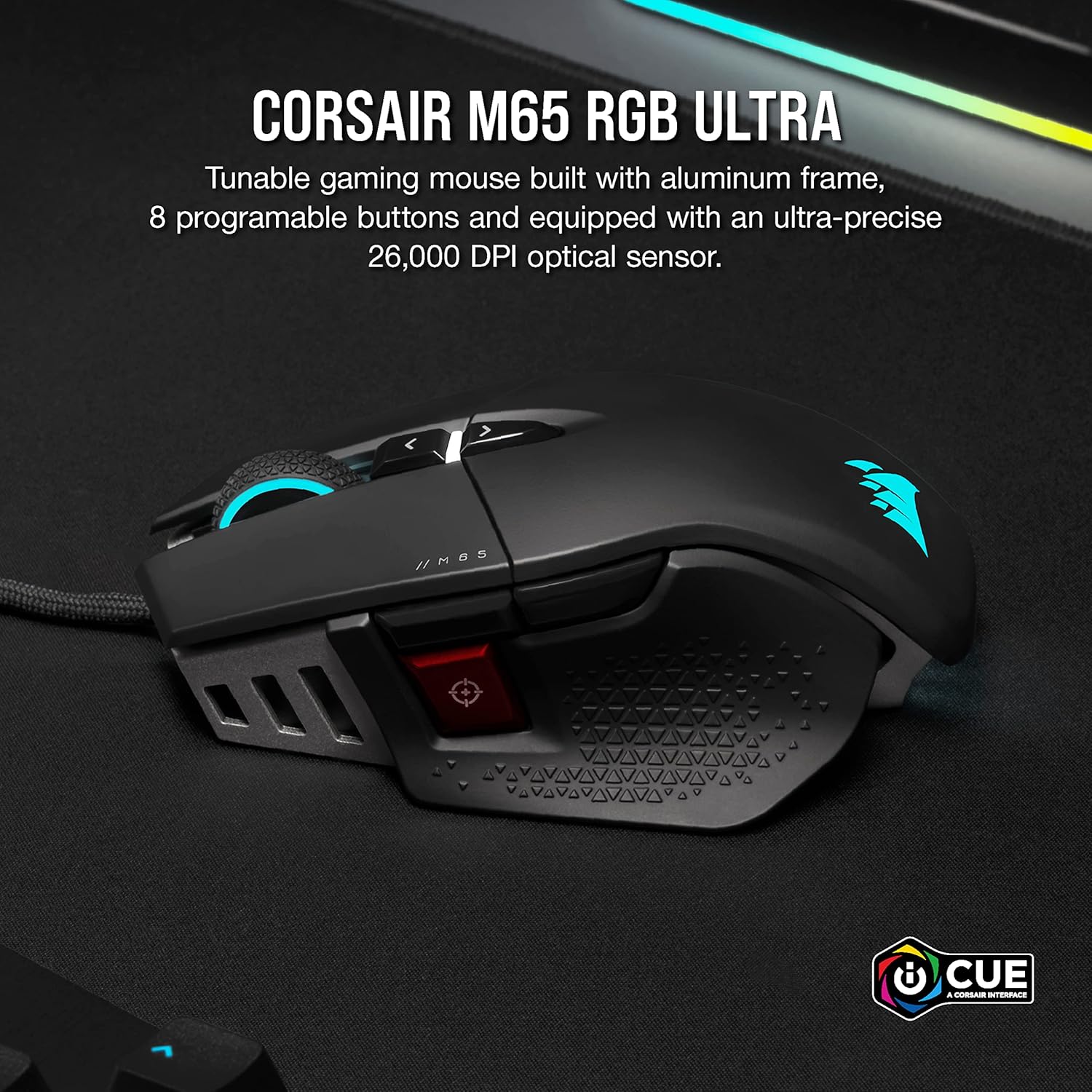
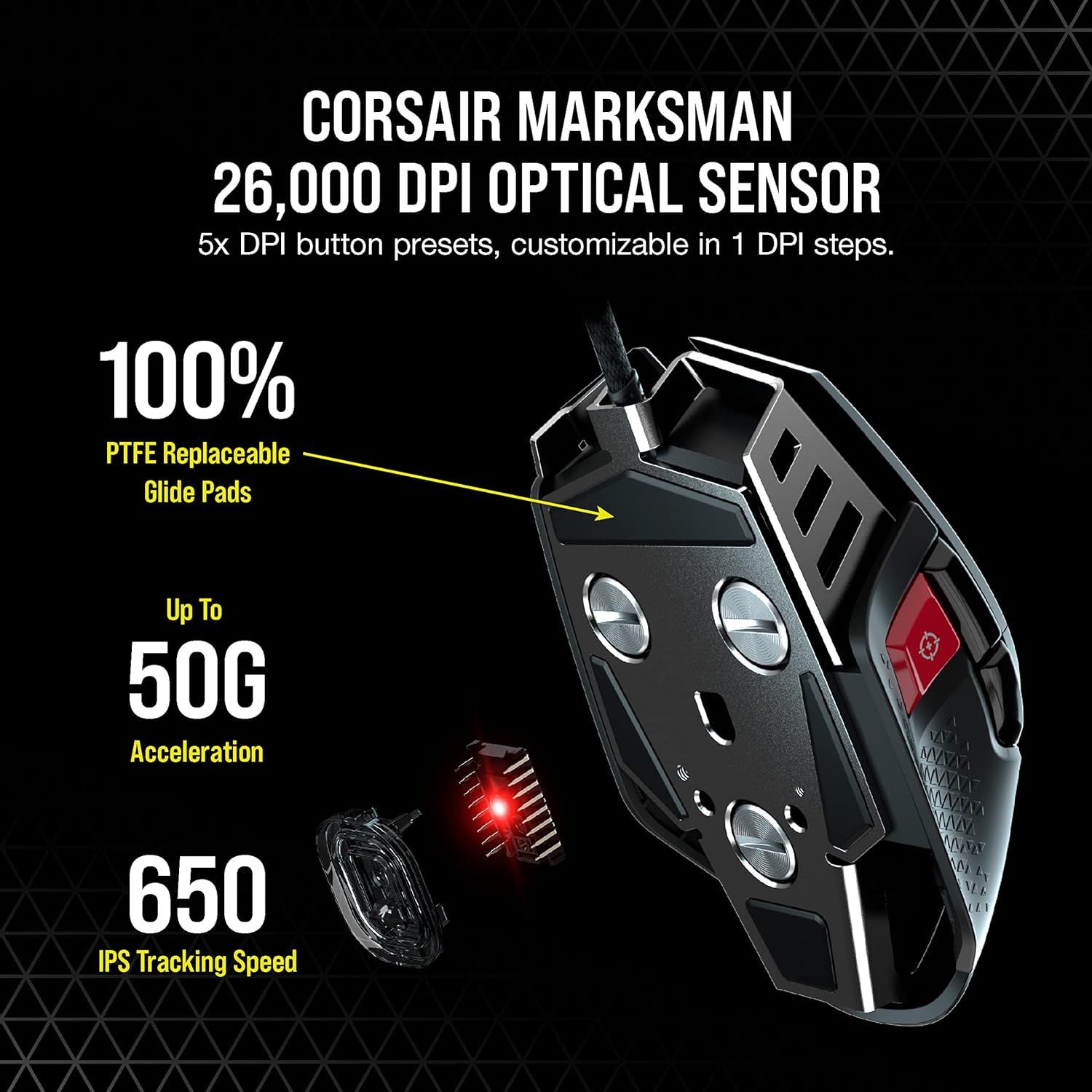
At the heart of the M65 RGB Ultra is the CORSAIR MARKSMAN optical sensor, rated for native 26,000 DPI and 650 inches per second (IPS). In everyday terms, that combination targets two common pain points: (1) tracking that stays stable when you move fast, and (2) responsiveness that doesn’t “fall behind” during sudden direction changes.
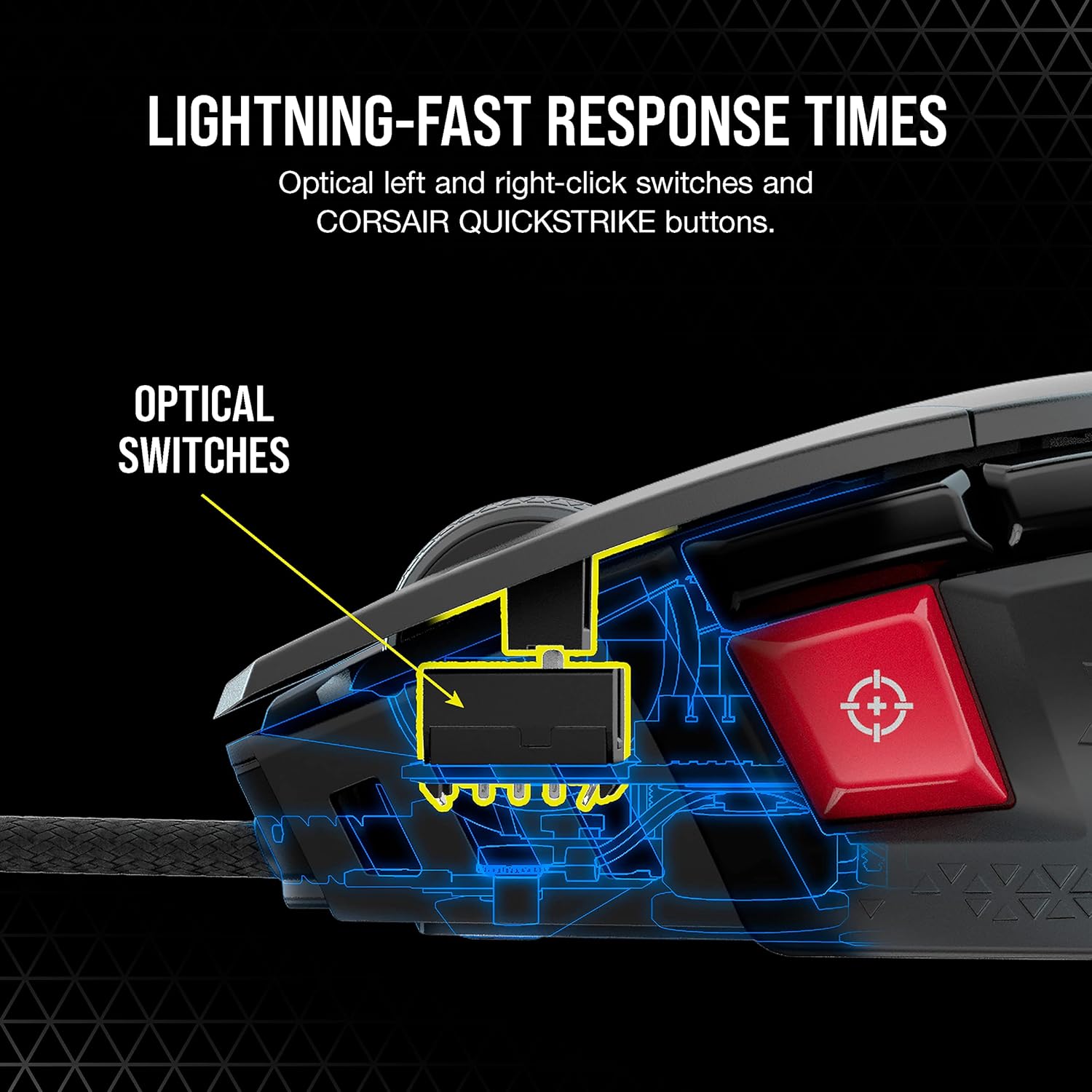
For the buttons, the left and right switches are optical. Optical switches are often chosen for their fast, precise actuation behavior, and Corsair also positions them around long, rigorous use. Over time, that matters because the “click feel” and consistency are part of muscle memory in competitive play.
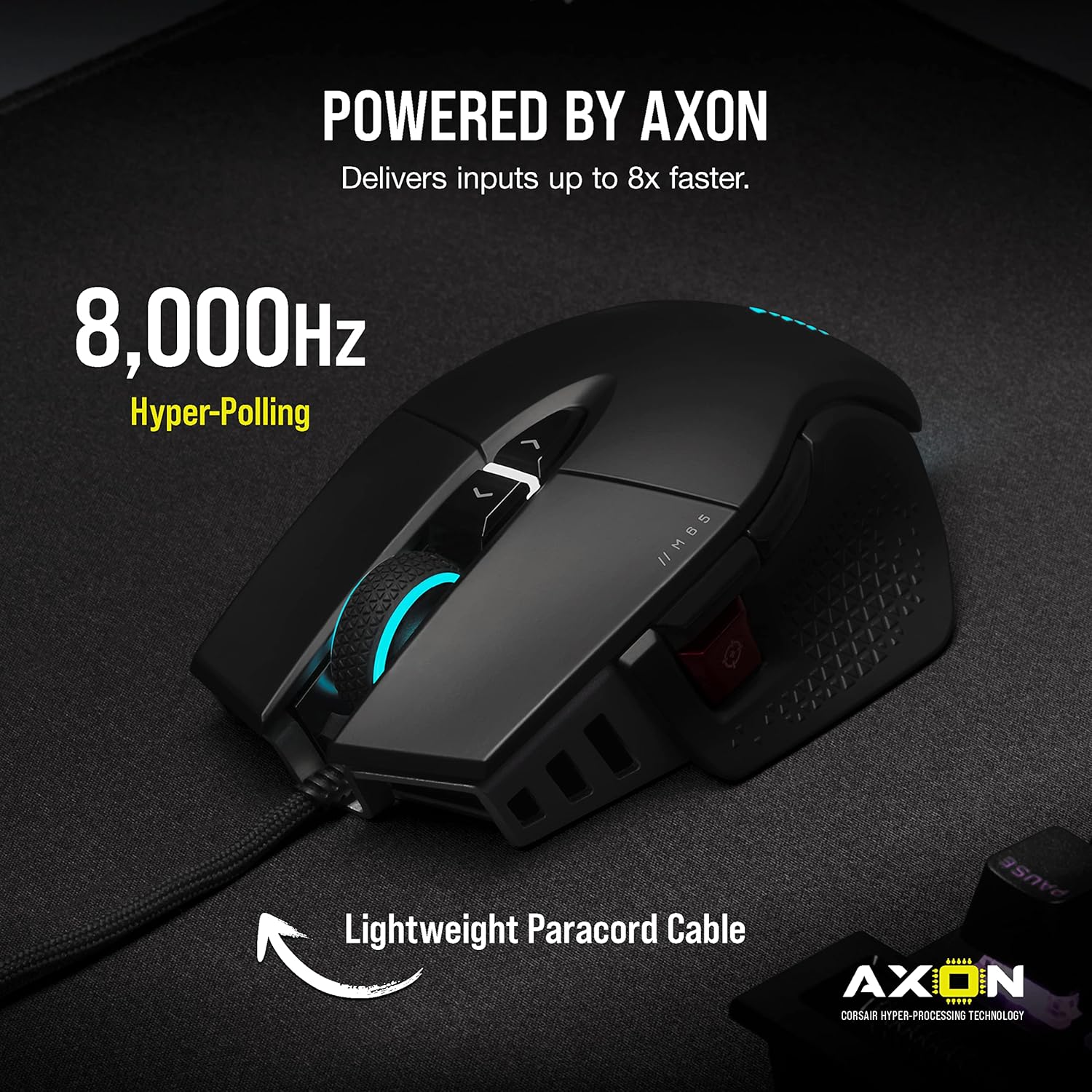
And for latency-minded players, AXON hyper-processing is the big headline: Corsair states it registers and transmits mouse movements and clicks up to 8 times faster than conventional gaming mice, with a native 8,000 Hz polling rate. If you’re chasing competitive responsiveness, this is the part you’ll likely notice first—though the real-world feel still depends on your whole setup (PC performance, settings, and monitor).
Why the sensor fusion system matters in practice
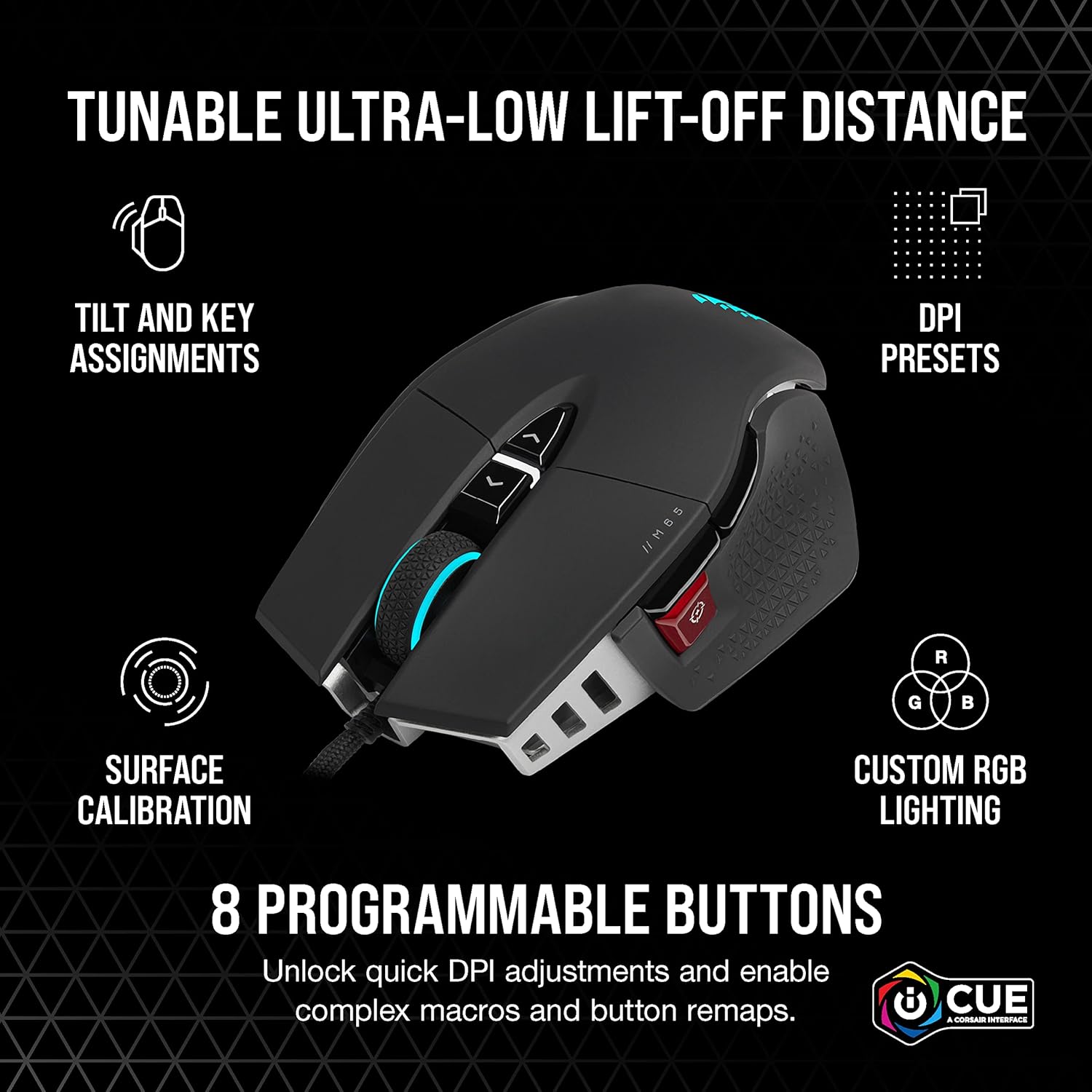
The sensor fusion control is designed around a specific scenario: repositioning the mouse. It combines a six-axis gyroscope and an accelerometer to enable an ultra-low lift-off distance for more accurate tracking when you lift and place the mouse back down.
Here’s the kind of use case this targets: imagine you’re aiming at a target, then you briefly lift the mouse to avoid crossing an obstacle on your desk or to reset your movement. With a low lift-off distance approach, the mouse is more likely to resume tracking smoothly without the “gap” feeling you sometimes get with less advanced lift handling.
Just keep in mind: lift-off distance behavior can still vary based on your surface, your glide habits, and how you move between placements. So it’s a strong design goal, but not magic.
Adjustable weight system for tuning your aim feel
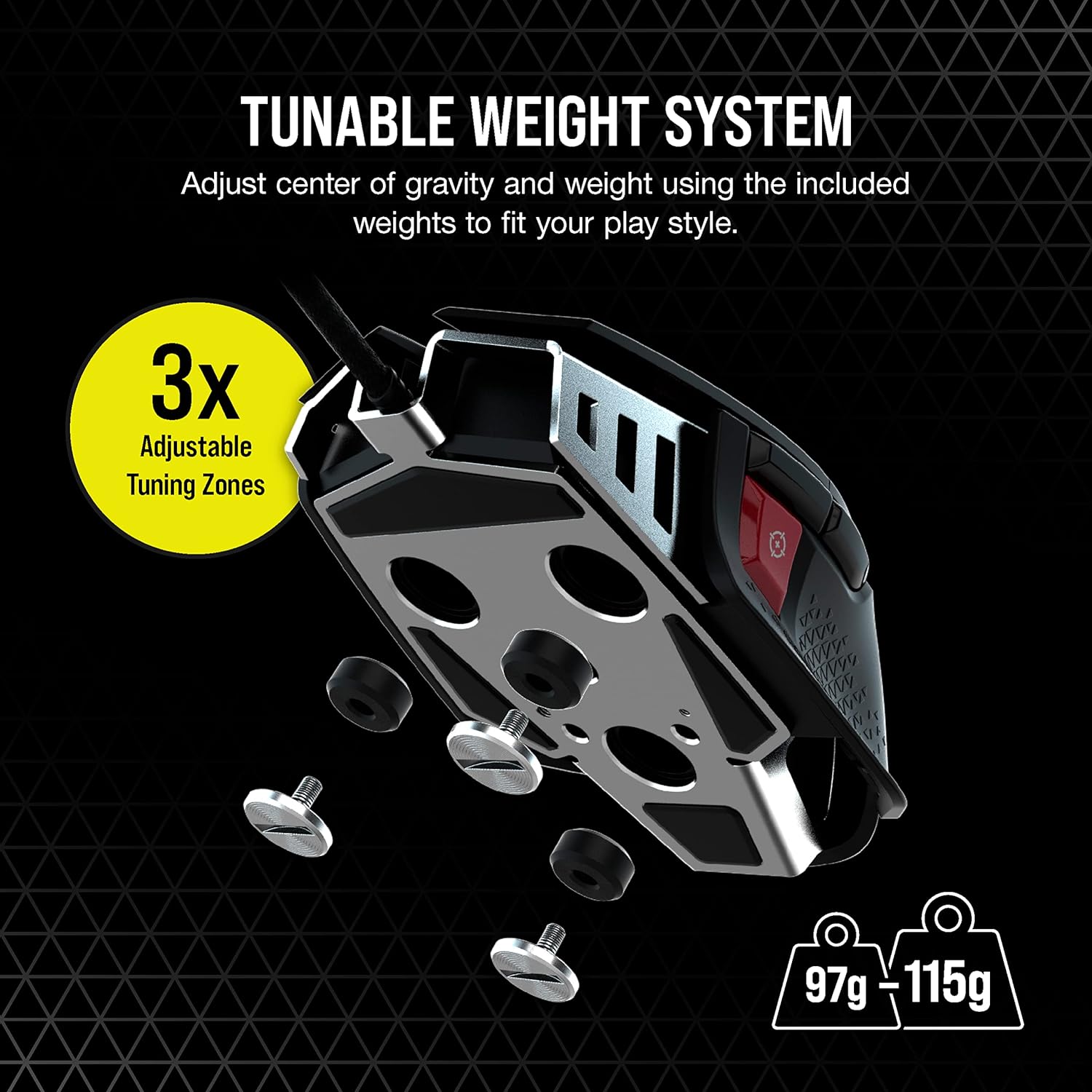
The M65 RGB Ultra uses a tunable weight system with a range of 97 g to 115 g, adjustable with up to six included weights. That range is meaningful because weight distribution changes how the mouse starts, stops, and how it stabilizes during micro-aim.
A practical example: if you play close-range tracking and want smoother stopping power, you might prefer being closer to the heavier end. If you’re more of a flick-and-reset player who wants quicker swings and easier recovery, moving toward the lighter side can feel better.
It’s not perfect for everyone, though. If you dislike tweaking hardware, the tuning approach can feel like extra effort. And if you’re expecting a dramatic “transform overnight” change without adjusting your grip and settings, you may find the benefit more subtle than the marketing implies.
The build and the kind of player it suits
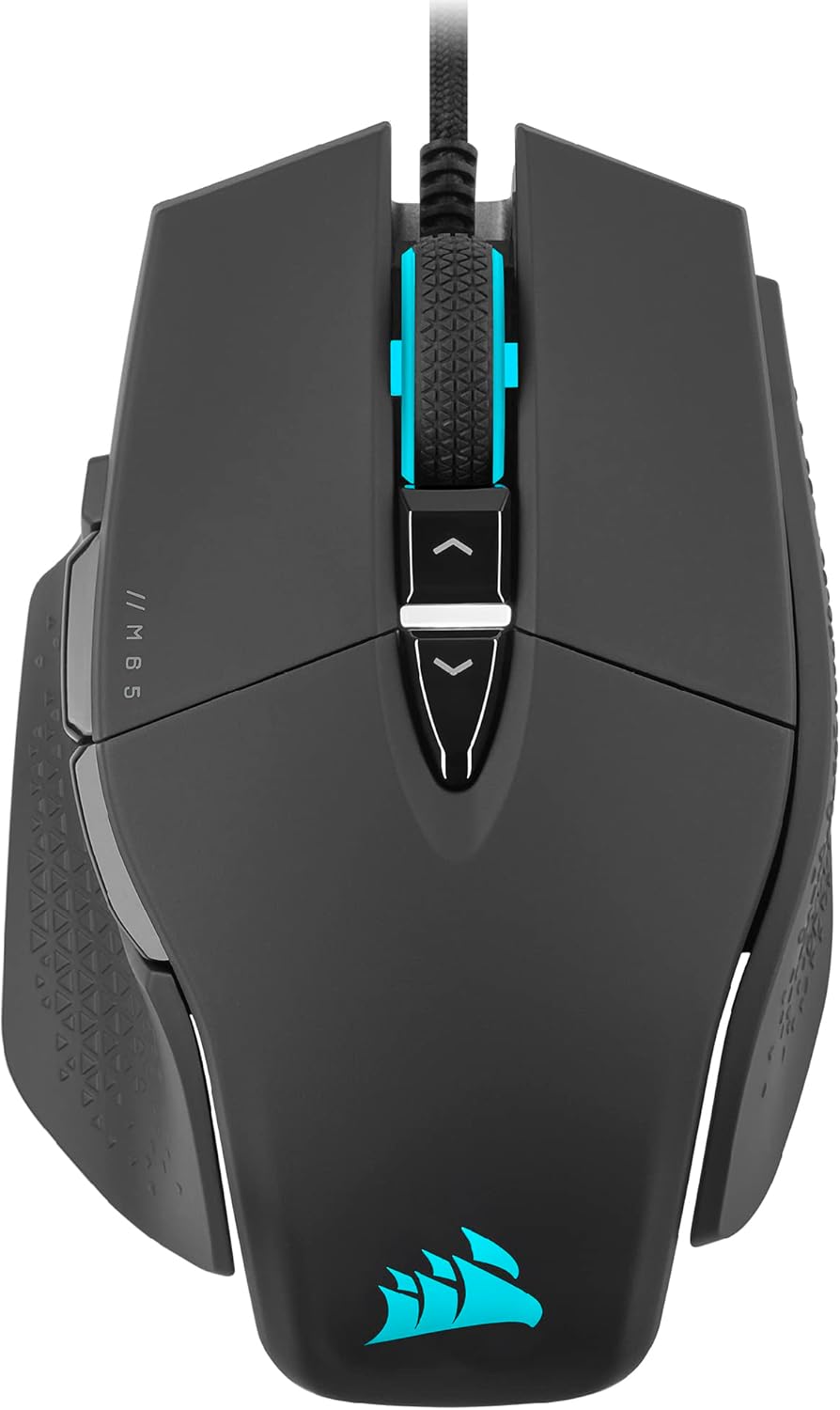
Corsair describes the frame as iconic anodized aluminum, aiming for durability while keeping a familiar shape. That suggests a mouse intended to hold up under long practice sessions, the kind where you’re constantly gripping, repositioning, and relying on consistent button behavior.
It makes sense if you: - Play FPS games where quick movement and precise control matter. - Want an optical sensor with high native DPI and fast tracking behavior. - Care about click consistency and fast response. - Like to tune your mouse weight to match your playstyle.
It may not suit you as well if: - You’re mainly using a mouse for casual browsing or non-competitive gaming. - You don’t want to think about weight tuning or lift/reposition behavior. - You expect this to be a pure plug-and-play experience with no need to adjust habits or settings.
Tech specs
- Name: Corsair M65 RGB Ultra Tunable FPS Gaming Mouse (Marksman)
- Type: Gaming mouse with optical sensor and optical switches
- Resolution: Native 26,000 DPI
- Speed/Tracking: 650 IPS
- Polling rate: Native 8,000 Hz
- Click switches: Optical left/right switches
- Sensor fusion: Six-axis gyroscope and accelerometer
- Tunable weight: 97 g–115 g using up to six included weights
- Frame: Anodized aluminum
- Color: Black
In the end, should you buy it?
Worth buying if you’re looking for an FPS-focused mouse that prioritizes fast-feeling responsiveness, includes optical switches and a high-spec optical sensor, and also lets you tune weight and benefit from a sensor fusion approach for low lift-off repositioning.
You may want to skip it if you don’t plan to tune the weight or if your gaming use is mostly casual, because some of the investment here is aimed at competitive habits.
If you’re the kind of player who notices when your mouse feels slightly off during quick stops or lift-and-place resets, this one is built for that. If you’re not, it can be more mouse than you need.
Quick FAQ
FAQ
Does the M65 RGB Ultra focus on competitive FPS use? Yes—its sensor setup, optical switches, and low-lift repositioning goal point toward FPS-style movement and aiming.
What does “tunable weight” change? It adjusts the mouse’s center of gravity and overall weight within the listed 97 g–115 g range, which can affect how it starts, stops, and feels during micro-aim.
Why mention sensor fusion? Because it’s intended to help tracking accuracy when you lift and reposition the mouse, using a six-axis gyroscope plus an accelerometer.
Is the high DPI and high polling rate something I should chase at any cost? It’s helpful on paper for responsiveness, but the real outcome depends on your overall setup and how you configure and use the mouse.
Is optical switching a deal-breaker? Not necessarily, but it can matter if click consistency and fast response are a priority for your playstyle.