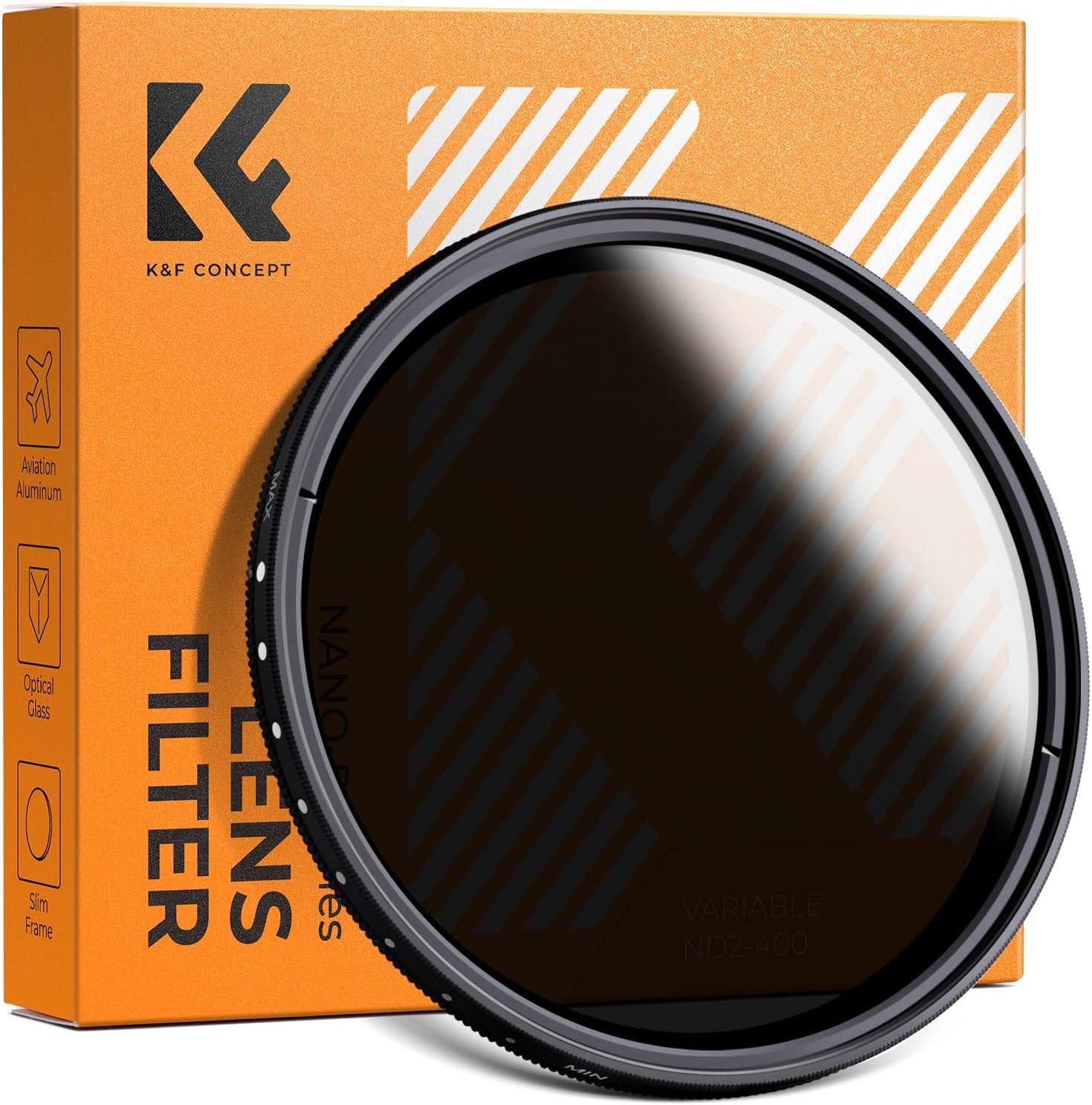
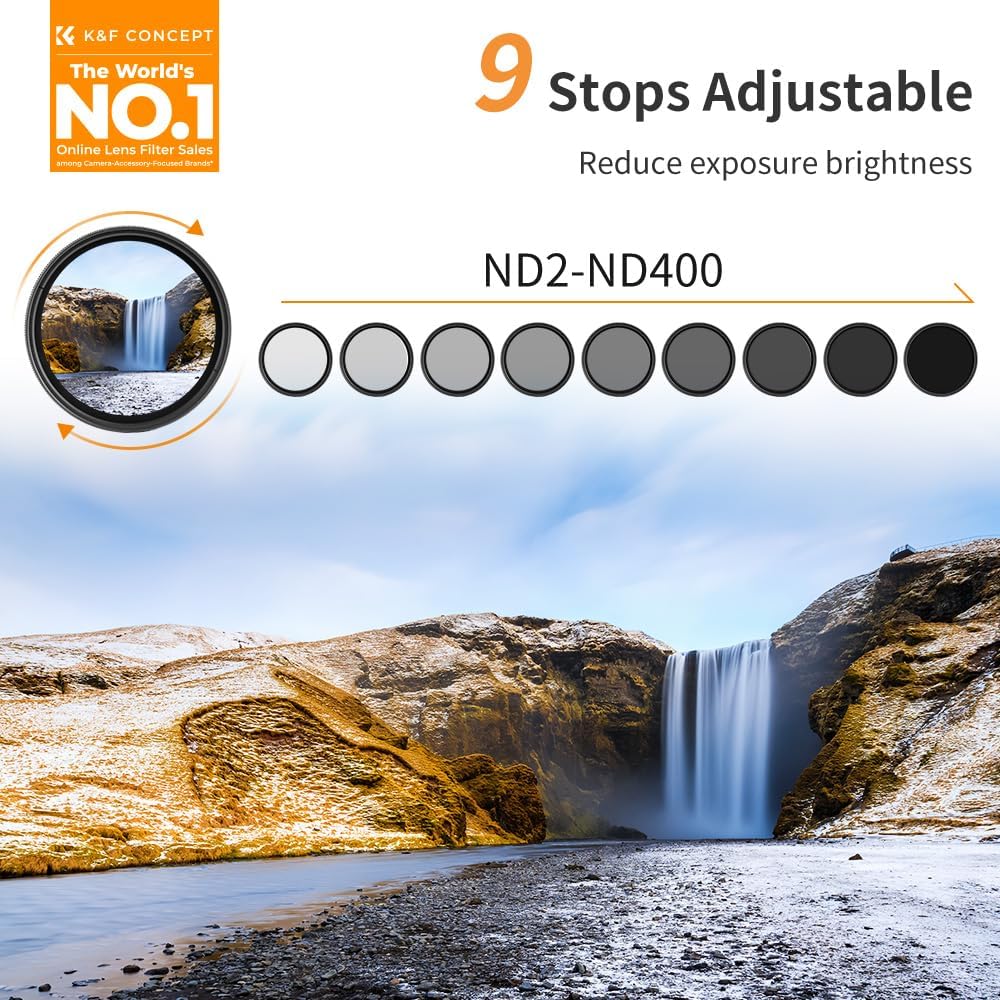
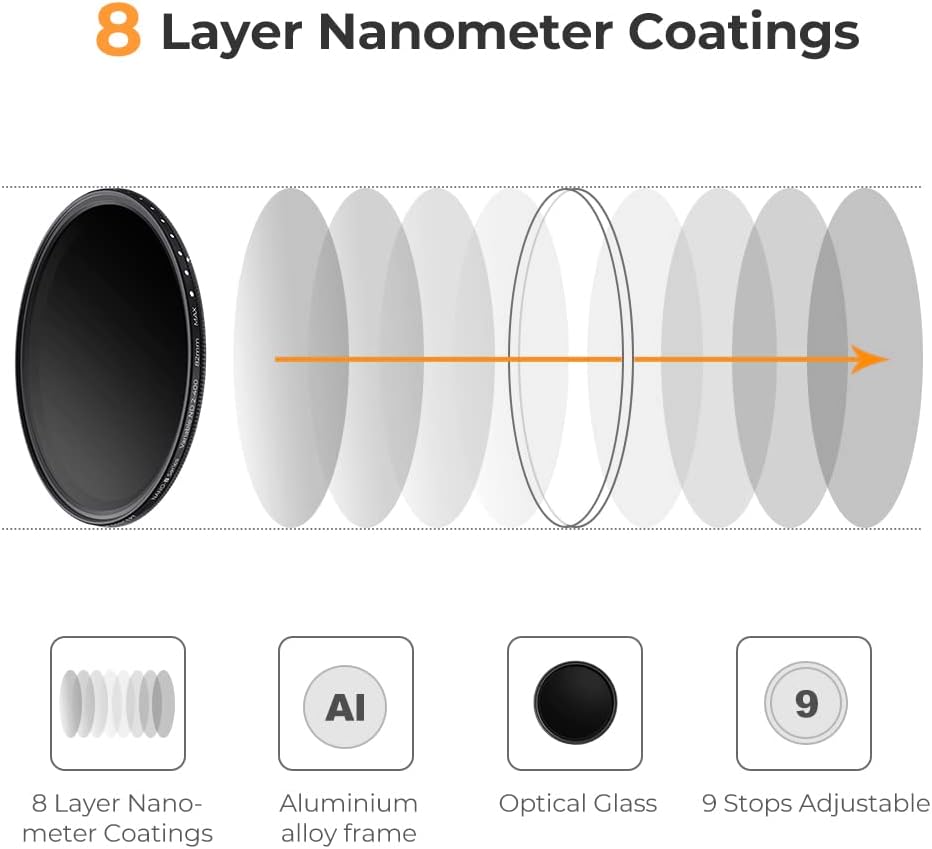
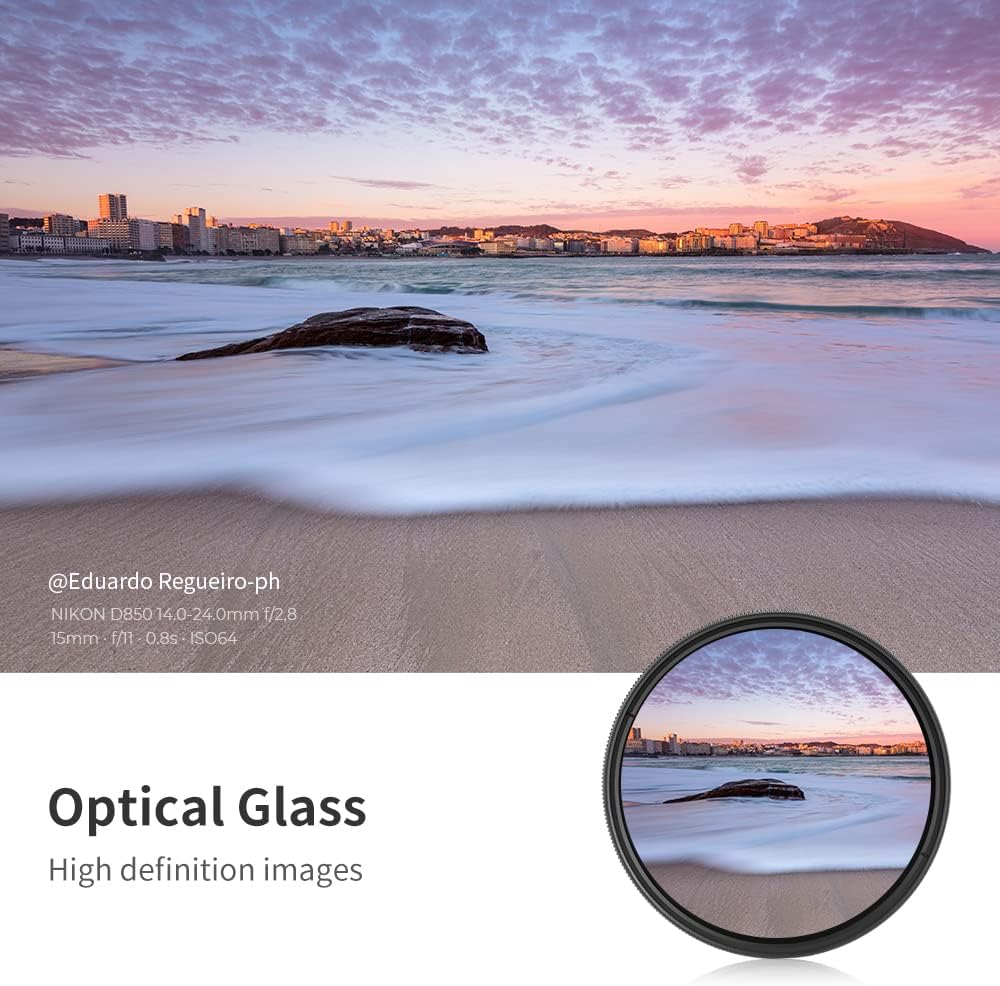
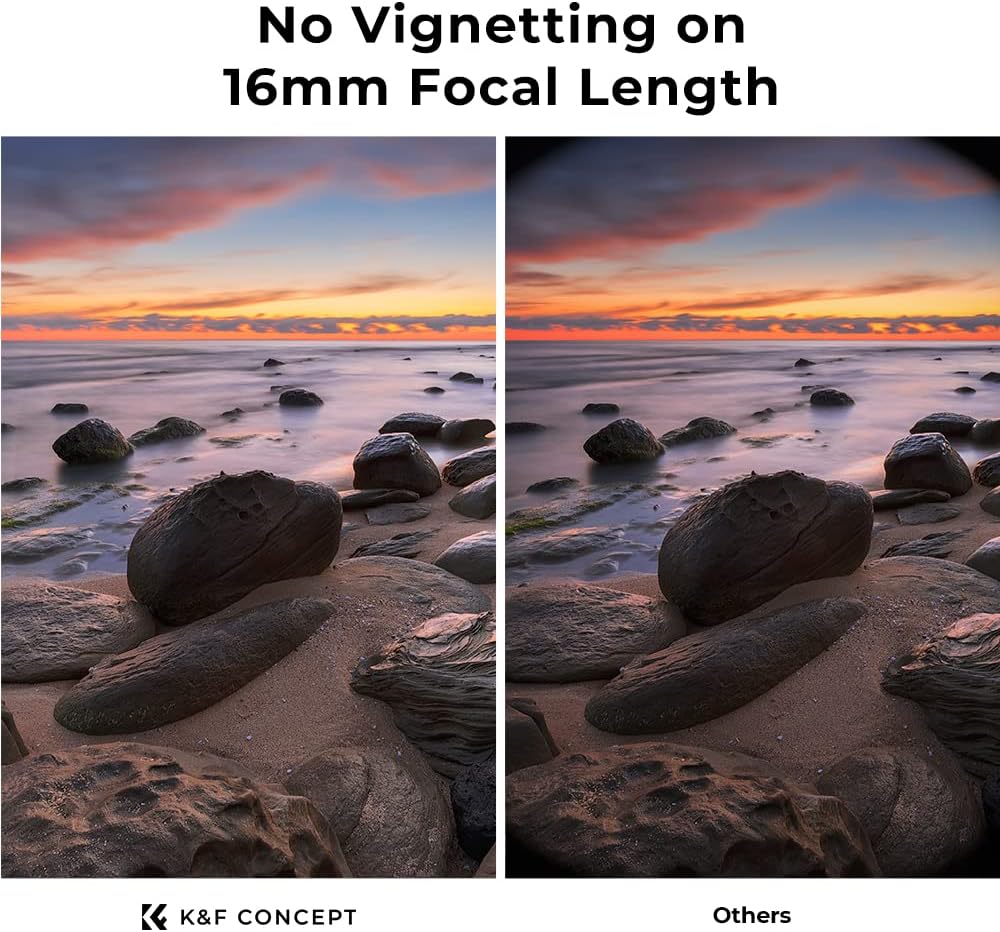
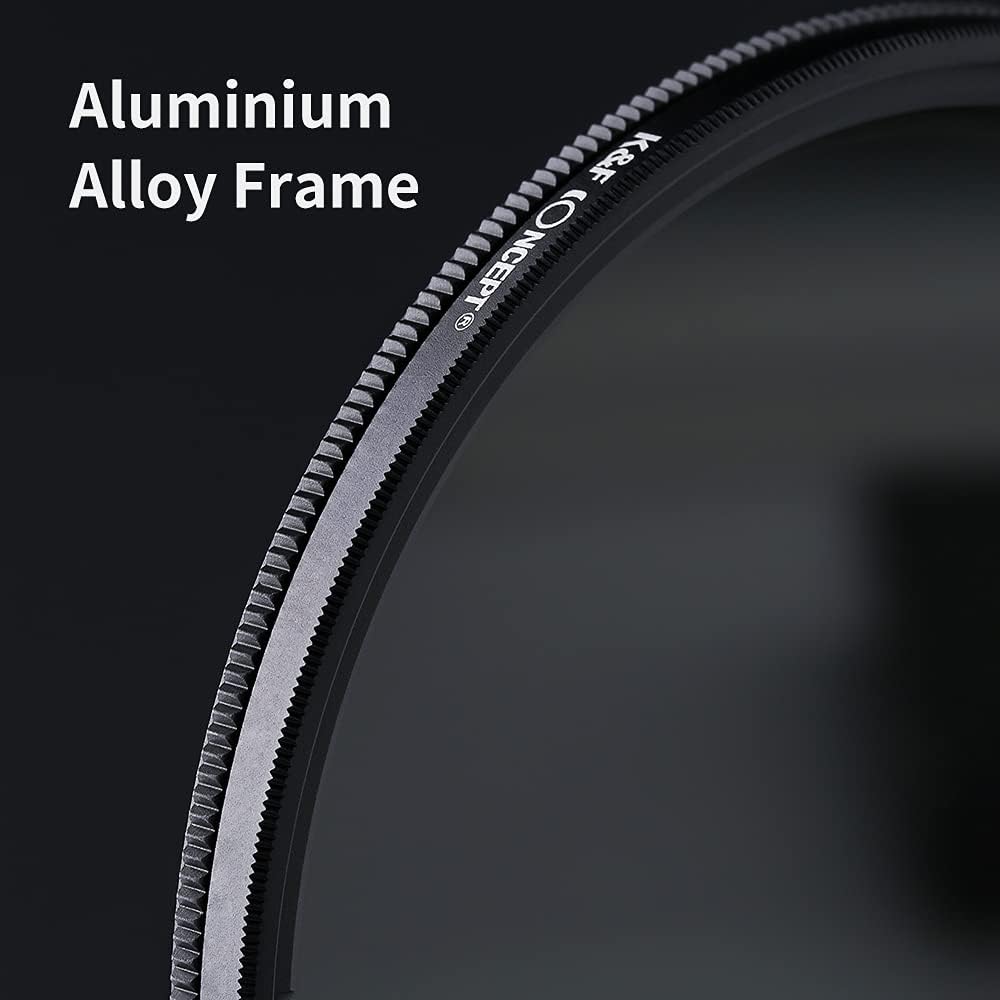
What it is and what it solves\nThe K&F Concept 55mm Variable ND filter is a multi-stop neutral density accessory designed to reduce light intake for camera lenses, enabling longer exposure and controlled depth of field in bright conditions. Crafted from AGC optical glass with multiple coatings, it aims to preserve image quality while letting you dial in light reduction on the fly. If you shoot landscapes, oceans, or moving water and want more creative control without changing exposure time dramatically, this filter is meant to help achieve that balance.\n\n## How it stands out\nOn the surface, the filter offers 1–9 stops of adjustable darkness and a full 360-degree rotation for precise dimming settings. The surface is treated with an oxidized sandblasting process to minimize glare and stray reflections on the metal edge. At 7.4mm thick, the design emphasizes a relatively slim profile with a CNC-patterned grip to improve rotation and handling. A note to keep in mind: at higher stop settings, some lenses can produce a cross-pattern effect (the infamous “X black cross”). This is described as natural and temporary, due to interactions between the adjustable ND element, lens, and focal length.\n\n## What you’ll notice in use\nIf you prioritize keeping the scene bright yet still wanting motion blur (like a silky waterfall under daylight), this filter gives you the range to do so without changing your aperture. It’s compatible with all 55mm lenses, but you’ll want to confirm your camera’s thread size and consider a 58mm cap as noted in setup guidance. The balance between filter density and rotation feel matters, some setups may feel slightly stiffer at higher stops.\n\n## Pros\n- Wide 1–9 stop range for flexible exposure control.\n- 360-degree rotation allows precise adjustments.\n- Multi-layer coatings reduce reflections for cleaner skies and water shots.\n- Slim 7.4mm thickness aids compatibility with many housings and accessories.\n- Glare-free surface helps keep metal reflections to a minimum.\n\n## Cons / Limitations\n- At max stops, you may encounter a cross-pattern effect with certain lenses, which can affect image quality in bright skies or high-contrast scenes.\n- Not a perfect universal solution for every lens pair, check compatibility and do a quick test before critical shoots.\n\n## Who it’s for\nThis is a practical option for photographers who work in bright outdoor environments and want to manage light without stopping down the aperture too much. It’s especially relevant for landscape, seascape, and urban photography where dynamic range is a challenge and motion blur adds a sense of movement.\n\n## Who it isn’t for\nIf you rely on ultra-clean wide-open shots in daylight without the need for motion blur, a fixed ND or a different filter strategy might be simpler. Also, if you frequently shoot with lenses that render heavy vignetting from how the ND element sits, you may want to test first.\n\n## When it makes sense to buy\nWhen you need a single solution for variable light conditions across outdoor sessions, and you want the flexibility of 1–9 stops without swapping filters. For beginners, it may require a little practice to dial in the right stop level without introducing color shifts.\n\n## What to check before buying\nConfirm your lens thread size is 55mm and note that a 58mm lens cap is recommended for this filter. Consider how the filter’s weight and grip feel on your rig, especially if you often mount and unmount quickly.\n\n## Practical example of use\nImagine shooting a cliffside with spray coming off the water and a bright sky. You can rotate the ND to reduce light to a level that preserves motion in the water while keeping the sky from blowing out, then fine-tune with a few extra stops to balance the exposure.\n\n## FAQ\n- Is the X-cross artifact common at high stops? Yes, it can occur with certain lenses and focal lengths, it’s described as natural and temporary.\n- What lens size does it fit? It’s designed for 55mm lenses, a 58mm cap is recommended for correct fit.\n- Does it affect color accuracy? The product uses multi-layer coatings to minimize reflections, but color shifts can still occur depending on lighting and camera settings.\n\n## Decision point\nIs it worth it? It depends on how often you work in bright light and need quick exposure control without swapping filters. If you value a slim, adjustable option with solid coatings and a reasonable stop range, this filter could fit your workflow.